REVIEW · LISBON
Lisbon: Fátima & The Shepherds Children Home Self-Guided Tour
Book on Viator →Operated by Cityrama · Bookable on Viator
Fátima in one easy day is surprisingly manageable. This Lisbon-to-Fátima self-guided outing is built for calm, with round-trip minibus/bus transfers and a smartphone interactive guide so you can move at your own pace. You’ll visit the shepherd children’s birthplace area at Casa-Museu de Aljustrel, then head into the Sanctuary zone for the main basilica and the Chapel of the Apparitions.
Two things I really like: you get free entry at the key sites, and the format is straightforward—no train plans, no timetable stress, and a small max group size (up to 20). One possible drawback: the time is intentionally tight at Fátima, so if you want slow wandering plus extra devotional stops, you’ll need to be efficient.
In This Review
- Key highlights you’ll feel right away
- Self-guided in Fátima: how the phone guide actually helps
- Price and time: what $57.52 buys you (and what it doesn’t)
- Getting from Lisbon: the meeting point, the ride, and a key reality
- Stop 1 at Aljustrel: Casa-Museu and the shepherds’ everyday world
- The church stop in Lisbon: stained glass and a devotion bridge
- Sanctuary time: Basilica de Nossa Senhora do Rosário de Fátima
- Chapel of the Apparitions: the exact spot and the crowd factor
- What to wear and bring: the dress code is real
- Walking, pace, and how to avoid feeling rushed
- Who this Lisbon to Fátima tour fits best
- Should you book it? My practical call
- FAQ
- How long is the Lisbon to Fátima self-guided tour?
- What time does the tour start?
- Where do I meet the tour in Lisbon?
- Does the tour include transport?
- Is admission included for the main stops?
- Is this a guided tour or self-guided?
- What’s the dress code for the religious sites?
- Is there a bathroom on the bus?
- How big is the group?
Key highlights you’ll feel right away

- Self-guided with a phone guide (1 smartphone per person, including children), plus an info folder and map
- Round-trip transfers that get you out of Lisbon and back again without public transit juggling
- Free admission at the main religious stops you’ll visit
- Casa-Museu de Aljustrel gives context in the shepherds’ real-world setting
- Sanctuary circuit in one go, from basilicas to the Chapel of the Apparitions
- Dress code enforced (cover shoulders and knees), so plan your outfit early
Self-guided in Fátima: how the phone guide actually helps
This is a self-guided tour, not a lecture tour. The idea is simple: you’ll ride together, then you explore the sites on your schedule using the interactive smartphone guide (one per customer, including kids). There’s also a guide assistant and printed materials, so you’re not totally on your own.
What I like about this style is that it fits how devotional travel really works. Some people want quiet and time to pray. Others want photos, the architecture, and a quick grasp of the story. With the phone guide, you can pick your rhythm without waiting for a group to finish a conversation or line up.
My practical tip: before you head into the first major stop, make sure your audio/phone guide is working and charged. One small glitch can turn a smooth visit into extra fuss, and in religious sites you don’t want to lose time just figuring out the device.
You can also read our reviews of more guided tours in Lisbon


Price and time: what $57.52 buys you (and what it doesn’t)
At about $57.52 per person for roughly 6 hours 30 minutes, the value depends on what you’re trying to avoid. If your goal is to get from Lisbon to Fátima with minimal planning, this price starts to make sense quickly. You’re paying for transport (by minibus or bus, depending on group size), plus structured stops and the included guide assistant and smartphone content.
You’re also not paying admission at the major stops listed (several have free tickets). That matters because Fátima travel can get expensive fast when you add transportation and entry costs.
What it doesn’t promise: a slow, full-day sanctuary experience. This is a “see the essentials well” format. If you’re the type who wants long hours for everything—candle-lighting, multiple chapels, a relaxed meal, and lingering between points—your schedule may feel compressed. A few hours can still be meaningful. Just don’t expect this to function like a full day on your own.
Getting from Lisbon: the meeting point, the ride, and a key reality
The tour meets at Cityrama Gray Line Portugal, Alameda Edgar Cardoso, 1070-051 Lisboa with a start time of 9:00 am, and it ends back at the meeting point.
A small but important logistics note: there is no bathroom on board the bus. That’s not a dealbreaker, but it changes your planning. If you’re sensitive to timing (or you’re traveling with someone who is), go easy on fluids right before boarding and be ready to use breaks at stops.
You’ll be in a small group (maximum 20), which usually means the ride doesn’t feel like cattle-car travel. The operator mentions minibus or bus depending on the group size, so your vehicle may vary—but the “get in, go, return” structure stays the same.
Stop 1 at Aljustrel: Casa-Museu and the shepherds’ everyday world

Your first major visit is at Casa-Museu de Aljustrel. This is where the story stops being abstract and starts being geographic. You’ll be in the rural village setting where the little shepherds were born, and the museum-home portion is designed to help you connect the narrative to real places.
This stop is scheduled for about 45 minutes, and admission is free. That’s short enough that you won’t get lost, but long enough to cover the essentials without rushing through everything. Expect to focus on:
- the house where Jacinta and Francisco Marto lived
- the House of Lucia de Jesus
- the Arneiro Well, described as the place where the Angel appeared to the children in the summer of 1916
Even if you’re not deeply familiar with the details, the Aljustrel setting adds a grounded feel. You’re not just visiting monuments. You’re stepping into the environment that shaped the childhood setting of the story.
Practical caution: because the allotted time is fairly tight, I’d avoid over-optimizing photos first. Start with the key buildings and the well area, then use the last minutes for pictures and a quick look around the village paths.
The church stop in Lisbon: stained glass and a devotion bridge
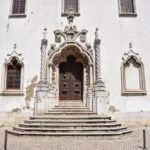
Next is a visit to the Church of Our Lady of Fatima (listed with a context about Lisbon’s Catholic church building in the early 1900s and a notable connection to Primo Valmor in 1938). This is also where you’ll see the extraordinary stained glass of Almada Negreiros.
Why this matters on your day: it acts like a bridge between Lisbon and the Sanctuary experience. Even though Fátima is the headline, this kind of stop helps you understand how devotion spread into Portuguese public religious life—and not only in the sanctuary zone.
It’s scheduled for about 1 hour, with free entry. That’s enough time to take in the church space and stained glass without feeling dragged.
If you’re doing this tour mainly for the Sanctuary circuit, consider this your “context stop.” It won’t replace time in Fátima, but it can make your Sanctuary visit feel less like sightseeing and more like a coherent pilgrimage route.
You can also read our reviews of more tours and experiences in Lisbon



Sanctuary time: Basilica de Nossa Senhora do Rosário de Fátima
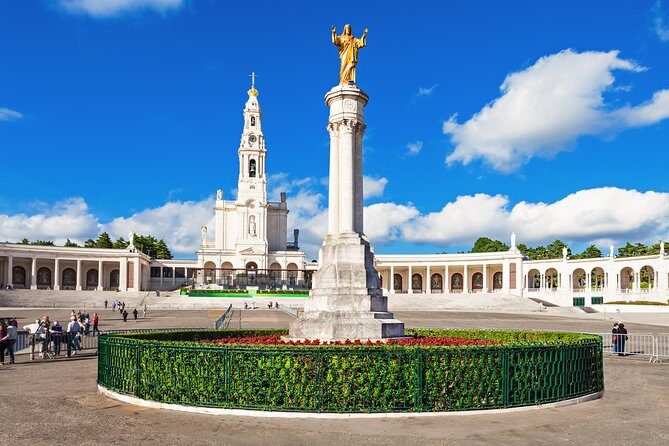
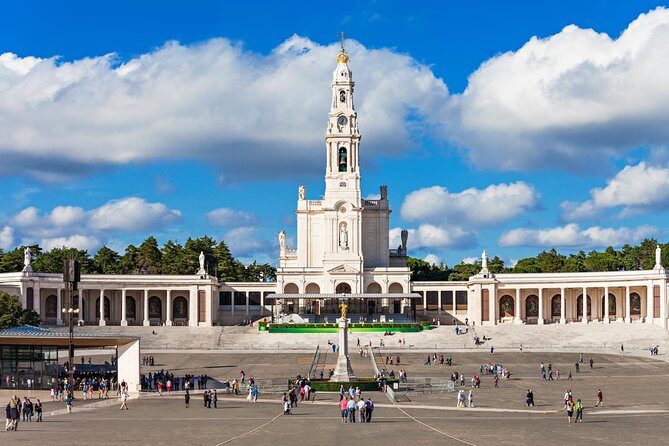
Now you arrive in the pilgrimage center itself: Basilica de Nossa Senhora do Rosário de Fátima. This is where the devotional focus sharpens. The Sanctuary is described as bringing together multiple chapels and basilicas tied to the 1917 apparitions and later recognition.
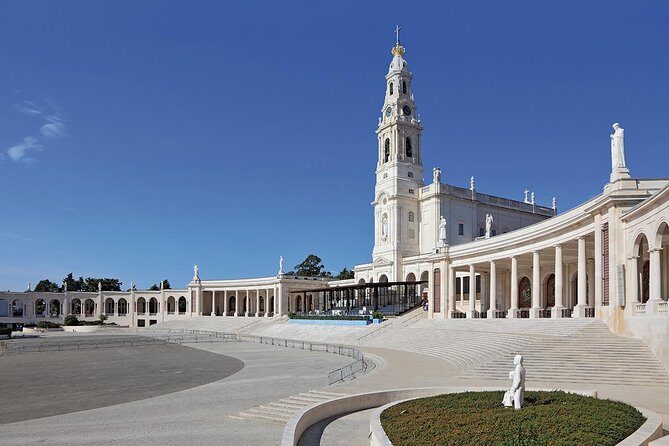
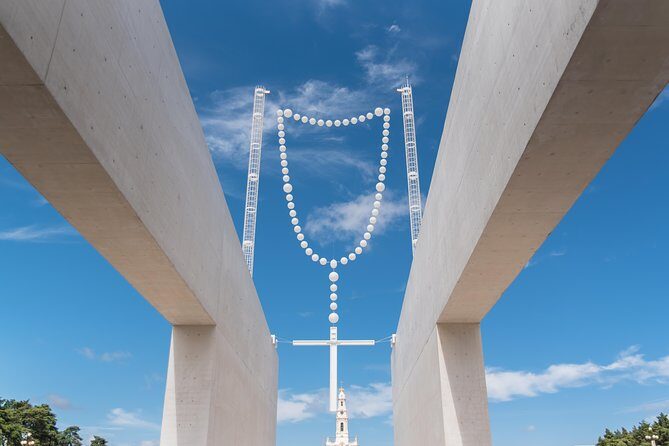
You’ll spend about 1 hour here, again with free entry. The Sanctuary complex includes the Chapel of Apparitions, the Prayer Hall, the Basilica of the Holy Trinity, plus additional retreat houses and the Paul VI Pastoral Center (these are part of the broader complex you may notice around you).
How to make the most of your one hour:
- Prioritize the main basilica space first, so you don’t miss the biggest architectural and devotional element
- If you’re planning to pray quietly, decide where you want that moment before you wander for photos
- Keep movement steady—this is a timed segment, and you don’t want to run out before you reach the Chapel of the Apparitions
I also recommend a quick mental split: think of this stop as the “basilica and order of the space” phase, and the next stop as the “most exact apparition spot” phase.
Chapel of the Apparitions: the exact spot and the crowd factor
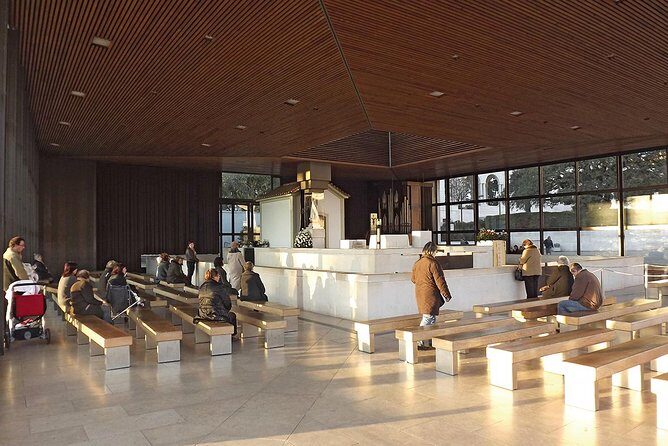
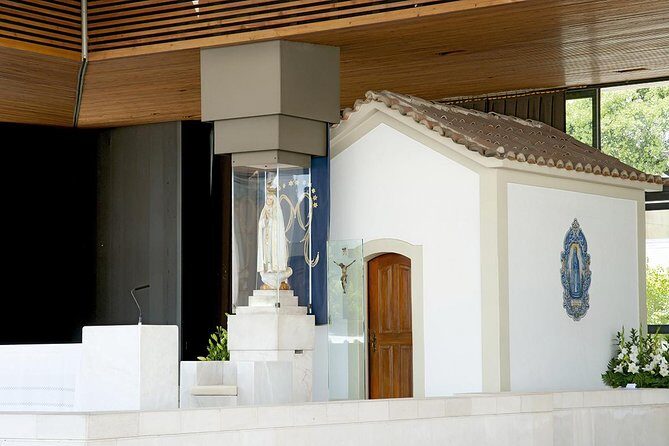
The final scheduled stop is the Chapel of the Apparitions. This chapel is built on the exact spot described as where Our Lady appeared near the holm oak that once stood there (the tree no longer exists because pilgrims gradually took it).
You’ll have about 1 hour here and free entry again.
This is the heart of many people’s emotional reaction to Fátima. Even if you’re not arriving with deep personal devotion, the idea of standing at the exact location described in the story tends to slow people down. In practice, that means you’ll likely feel the rhythm of prayer and movement in the space.
One key practical consideration: on very busy days, waiting can eat into your planned time. If candle-lighting is a priority for you, plan for the possibility of long lines and build in flexibility. The schedule is designed so you can see the essentials, but devotion can turn into a queue fast.
What to wear and bring: the dress code is real
This is not the kind of place where you can wing it with summer outfits. There’s a dress code required to enter places of worship and selected museums. No shorts or sleeveless tops. Knees and shoulders must be covered for both men and women, and you may be refused entry if you don’t comply.
So what works well?
- A light layer that covers your shoulders
- Pants or a skirt that covers knees
- A small scarf or cardigan if you’re wearing a tank top or sleeveless blouse
The good news: this dress code isn’t asking you to dress up for a dinner. It’s about basic coverage so everyone can enter the sacred spaces respectfully.
Walking, pace, and how to avoid feeling rushed
The tour includes a moderate amount of walking. Also, the format is “move from place to place,” so you’ll feel transitions even if each individual stop is manageable.
Here’s how I’d protect your experience:
- Keep your expectations aligned with the schedule (you’re doing key sites, not a marathon of every devotional point)
- Start with the priorities you care about most (Aljustrel first, then Sanctuary basilica, then Chapel)
- Use your free time wisely in each stop instead of dispersing your attention too early
Also, bring a little patience for the Sanctuary crowds. Even with a structured tour, Fátima can be busy, especially if you’re there on a Sunday. That doesn’t ruin the trip. It just changes the feel—more waiting, more shared space, more time spent moving slowly.
Who this Lisbon to Fátima tour fits best
This experience is a strong match for you if:
- you want the direct Lisbon-to-Fátima transport without planning schedules yourself
- you prefer exploring at your own pace instead of following a fast group
- you like a structured visit with enough time to get meaning, not just photos
- you’re traveling with someone who appreciates religious context (Aljustrel helps a lot here)
It may be less ideal if:
- you want a long, fully unhurried sanctuary day with plenty of extra devotional detours
- you’re hoping for heavy live narration in English at every moment (the main guide is built into the phone format, with a guide assistant rather than continuous full commentary)
If you’re Catholic or simply curious about the pilgrimage tradition, this tour can work really well as a concentrated first visit.
Should you book it? My practical call
I’d book this tour if you want a meaningful Fátima day that doesn’t turn into logistics homework. The round-trip transfers, small group size, phone-based self-guiding, and free-entry stops make it a decent value—especially if you’d otherwise spend time coordinating buses or dealing with train schedules.
Skip it (or adjust expectations) if your top priority is maximum time inside Fátima for slow candle time, long mass attendance, and extra side stops beyond the core circuit. This is built to hit the essentials efficiently.
And one last useful move: arrive at the meeting point early enough to get organized before boarding. That alone can turn the morning from slightly hectic to smooth.
If your goal is to see the shepherds’ homes setting and then stand in the Sanctuary spaces that shape the story, this is an efficient, well-paced way to do it.
FAQ
How long is the Lisbon to Fátima self-guided tour?
It runs for about 6 hours 30 minutes.
What time does the tour start?
The tour starts at 9:00 am.
Where do I meet the tour in Lisbon?
You meet at Cityrama Gray Line Portugal, Alameda Edgar Cardoso, 1070-051 Lisboa, Portugal.
Does the tour include transport?
Yes. You get transport by minibus or bus (depending on group size) and the tour ends back at the meeting point.
Is admission included for the main stops?
Admission tickets are listed as free for the Casa-Museu de Aljustrel, the church stop, the Basilica, and the Chapel of the Apparitions.
Is this a guided tour or self-guided?
It is self-guided, with an interactive guide delivered through a smartphone (one per customer, including children) and a guide assistant included.
What’s the dress code for the religious sites?
You must cover knees and shoulders. Shorts and sleeveless tops are not allowed, and you may be refused entry if you don’t follow the rules.
Is there a bathroom on the bus?
No. The tour information notes there is no bathroom on board the bus.
How big is the group?
The tour lists a maximum of 20 travelers.