REVIEW · LISBON
Lisbon City Tour – Half Day Private Tour
Book on Viator →Operated by abc Travel · Bookable on Viator
Belém can feel like a whole day. This tour packs it in. It’s a half-day private ride with pickup options, air-conditioned comfort, and enough flexibility that you can steer the route toward what you care about most. Expect a tight loop through Lisbon’s Age of Discovery landmarks plus the city’s oldest heart.
I especially love two things: the private vehicle keeps you away from the hassle of crowded public transport, and you still get to see major sites without feeling like you’re stuck in transit all afternoon. Second, the tour is paced in a way that makes the big-ticket architecture count, including Jeronimos Monastery, where this schedule gives you free admission time.
One thing to watch: several stops have tickets not included, and the time at each site is limited (with Jeronimos getting the most time). If you want to linger like you’re on vacation-with-no-clock, you may feel slightly rushed.
In This Review
- Key highlights you’ll feel right away
- A half-day private route built for comfort and smart timing
- Monument of the Discoveries (Padrao dos Descobrimentos): more than a pretty landmark
- Jeronimos Monastery: Manueline architecture and the money trail behind it
- Torre de Belém: a “jewel” that was built to fight back
- Lisbon Cathedral (Sé): reconquest layers you can actually see
- Parque Eduardo VII: the quick viewpoint that helps everything click
- Price and ticket planning for a private half-day in Lisbon
- Who this Lisbon private tour is best for
- Should you book this Lisbon City Tour – Half Day Private Tour?
- FAQ
- How long is the half-day private Lisbon city tour?
- How many people are included in a group?
- Is hotel pickup included?
- Are entrance tickets included for the sights?
- What language is the tour offered in?
- Do I get a ticket I can use on my phone?
- Is it fully private?
Key highlights you’ll feel right away
- Private car comfort, quick hops, and air-conditioned travel between neighborhoods
- Flexible shortlist, so you’re not forced into a rigid checklist
- Jeronimos with free admission on this route, giving you more value for your time
- Belém’s Discoveries landmarks in context, from symbolism to defense to ornament
- Torre de Belém climbs are worth it if you like big viewpoints and river views
- A scenic pause at Parque Eduardo VII, for a fast big-picture view of Lisbon
A half-day private route built for comfort and smart timing
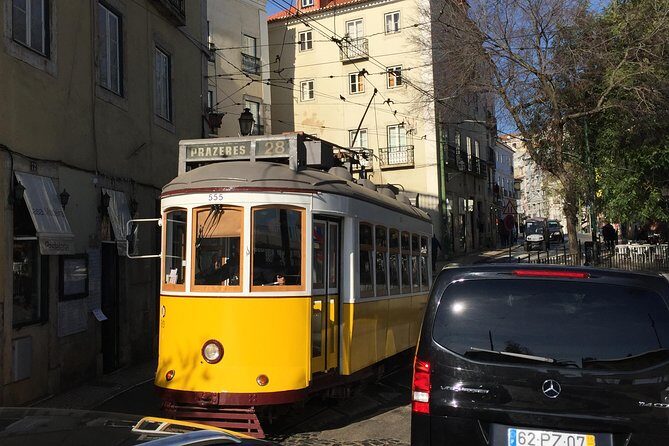
This is a private group tour designed for up to 3 people, which changes the whole feel. Instead of waiting your turn with the mass of people, you move when it makes sense. You get hotel pickup and drop-off if you choose that option, plus bottled water and transport by an air-conditioned vehicle.
The other smart element is flexibility. The tour is described as a flexible experience where you can choose a shortlist of Lisbon sights. In practice, that means you’re not locked into “see everything, feel nothing.” You’re more likely to get your bearings, hit the iconic highlights, and still have time to look closely at what you stop for.
You’ll also notice the pacing matches a realistic half-day. Most stops are around 20–30 minutes, and one is longer. That’s ideal if you want to see key monuments and then decide later what deserves a return trip.
You can also read our reviews of more city tours in Lisbon


Monument of the Discoveries (Padrao dos Descobrimentos): more than a pretty landmark
The tour begins at Belém’s Monument of the Discoveries. It’s impossible to miss: a 52-meter-high structure shaped like a caravel, led by Infante Dom Henrique (Prince Henry the Navigator). The monument’s whole job is to remind you that Portugal’s maritime expansion wasn’t just ships and sailors. It was people, planning, money, and myth-making.
A neat detail here is the monument’s timeline. It was conceived in 1940 for the Exhibition of the Portuguese World, linked to the double centenary of Portuguese nationality (1140 and 1640), but it wasn’t built until 1960, for the 500th anniversary commemoration tied to Prince Henry’s death. That context matters because it explains why the monument feels both historical and national-in-progress.
What to look for in the carvings:
- The procession of 32 historical personalities connected to the Age of Discovery, including Vasco da Gama and Fernão de Magalhães
- The earth-facing façade shaped like a cross, decorated with the Sword of the Order of Aviz, a major travel financier symbol
- The strong symbolism of the caravel form and the leadership figure at the front
Plan for about 20 minutes here. Admission isn’t included on this stop, so consider buying tickets ahead if you want to avoid any time lost later.
Jeronimos Monastery: Manueline architecture and the money trail behind it
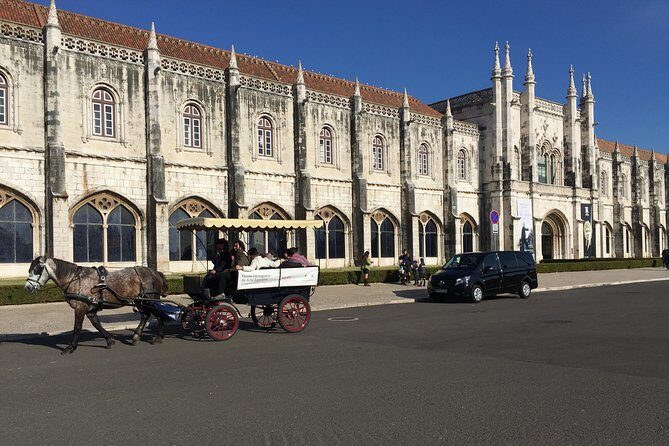
Next is one of Portugal’s most important monuments: Mosteiro dos Jeronimos (Jeronimos Monastery), on the Tagus edge in Belém. This is where the tour becomes more than a drive-by. You get about 1 hour, and admission is listed as free on this schedule.
Why it’s such a big deal: Jeronimos is the peak of Manueline architecture, a style tied closely to the country’s discoveries and overseas trade. The monastery site started as a chapel dedicated to Santa Maria built in 1452 by Infante Dom Henrique. Then the big push came under King Dom Manuel I, with construction beginning in 1501 and lasting about 100 years.
A key detail that helps you understand the stonework: the monastery was funded by trade income, including what’s described as the Vintena da Pimenta (roughly 5% of revenues from trade with Africa and the East). That’s a lot of money poured into craft, carving, and monumental design.
What you’ll want to prioritize once you’re inside:
- The facades, plus the church and cloisters (these are the main focus areas)
- Manueline portals with layered symbolism, including the south façade’s portal and hierarchies of figures
- In the church, the transept vault that isn’t supported by columns, which gives you a clear sense of how daring the design is
- The cenotaphs for Luís de Camões (Os Lusíadas) and Vasco da Gama
- The cenotaphs/tombs connected to the royal family line tied to Dom Manuel I’s era
- The solid silver tabernacle from the mid-17th century (a standout detail mentioned for its craft)
If you care about details, this is the stop where I’d slow down the most within the time limit. It’s also the stop that most clearly benefits from a guide, because you’re not just looking at beautiful stone. You’re reading symbolism.
Torre de Belém: a “jewel” that was built to fight back
After Jeronimos, you head to Torre de Belém. This one changes the tone from worship to defense. From the outside, the tower looks like a carved jewel. But historically, it was a bulwark controlling the river entrance, designed to work with a counterpart fortification across the Tagus.
The tower was commissioned by King Dom Manuel I and built by Francisco de Arruda between 1514 and 1521. It was built on a basalt islet near the right bank, in front of Restelo beach. The waterline has shifted over time, which is why the tower now feels more attached to the shore than it originally did.
Design features to notice:
- A quadrangular tower plus a polygonal bulwark for heavy artillery
- Domed watchtowers at the corners, linked to Moroccan fortification influence
- Manueline decoration layered into a defensive structure: heraldic motifs and stone ornament
- The famous rhino carving, described as the first stone representation of this animal in Europe
- The most decorative face is the south-facing side with the balcony running along it
The best payoff is the climb. The tower’s interior visit includes access to the top floor, and the reward is a wide view over the Tagus estuary and western Lisbon. It’s a great “put it all together” moment after seeing the monument and monastery.
Time is about 30 minutes at this stop, and admission isn’t included here. If you’re doing this in peak season, plan your ticket so you don’t lose your climb opportunity to lines.
Lisbon Cathedral (Sé): reconquest layers you can actually see
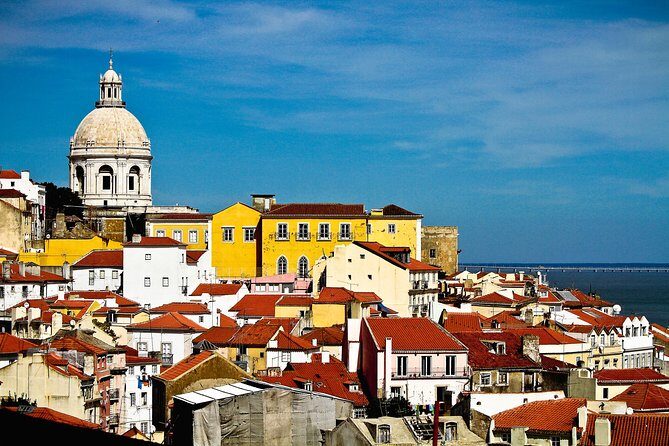
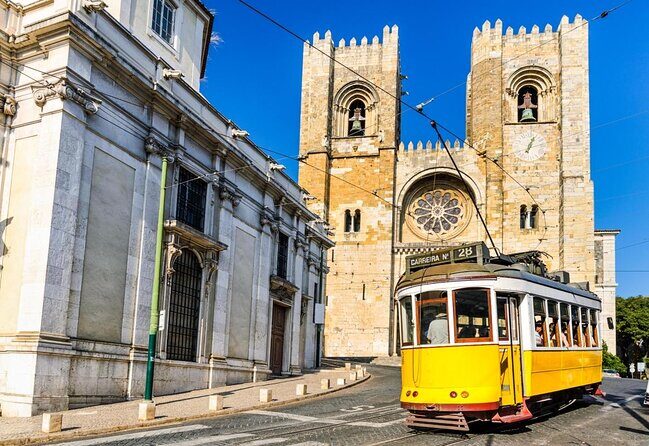
Then you shift from Belém back toward Lisbon’s older roots at Lisbon Cathedral (Sé). This stop is often where visitors feel the change most. One moment you’re in Manueline marble-world. The next you’re in a site that has absorbed multiple eras like it was built to survive history.
The cathedral is dedicated to the Mother of God and is described as one of the city’s ex-libris monuments with major religious, historical, and artistic importance. Construction began in 1147, when the first king of Portugal, Dom Afonso Henriques, reconquered the city from the Moors and built the cathedral on top of a Muslim mosque, which itself was built on a former Visigothic Christian temple. In other words: layers on layers.
What’s also interesting is how the relic story connects to the cathedral’s early mission. Dom Afonso Henriques brought relics of St. Vincent of Zaragoza and deposited them in the see. That helped make the cathedral a magnet for pilgrims.
Architectural evolution you’ll likely spot (and that’s worth explaining while you’re there):
- Romanesque beginning under the first architect, Mestre Roberto
- Later changes in the 13th–14th centuries, plus additions
- A Gothic cloister built during Dom Dinis’s reign
- Chapels expanding the devotional feel over time, including ten chapels with various titles tied to the Virgin
- Baroque works in the 17th and 18th centuries
- A restoration of the medieval character in the 20th century
What to look for inside (based on what’s highlighted for visitors):
- The chapel of Bartolomeu Joanes
- The excavations of the cloister area, which uncovered successive occupations
- A visitable collection described as the Treasury of the Patriarchal See
This stop is scheduled for about 30 minutes, and tickets are listed as not included.
If you’re short on time elsewhere, the Sé is the one stop where even a half hour can feel satisfying because the building’s “story” is visible in its shifts of style.
You can also read our reviews of more private tours in Lisbon





Parque Eduardo VII: the quick viewpoint that helps everything click
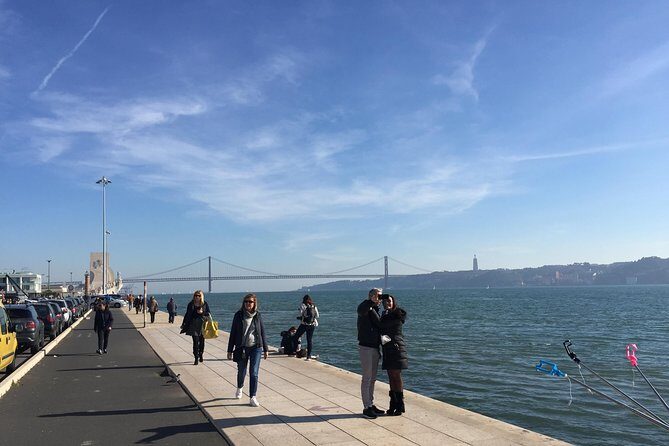
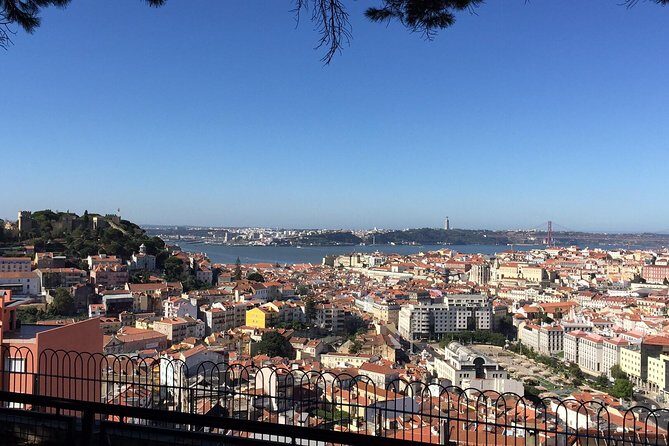
To end the main monuments, the tour includes Parque Eduardo VII for about 20 minutes. This is the breather stop, and it matters more than you might think. After several stone monuments, you get an open view over Lisbon that helps you understand where everything sits on the hills and the river plain.
It’s an easy place to take photos, catch your breath, and refocus before wrapping up. Admission is listed as free here.
If you’re the type who likes mental maps, this is the stop that makes the rest of Lisbon easier to navigate the rest of your trip.
Price and ticket planning for a private half-day in Lisbon
The price is $307.70 per group, up to 3 people, for around 4 hours. That sounds high if you’re thinking per person, but it’s the kind of pricing that works once you split it.
Here’s why the value can make sense:
- You’re getting a private tour, not a shared coach
- The schedule includes transport by air-conditioned vehicle
- Hotel pickup and drop-off are included if you select that option
- Bottled water is included
- A driver/escort handles the driving and timing so you can focus on seeing
Where the value can wobble:
- Tickets are not included for some key stops (Monument of the Discoveries, Torre de Belém, and Lisbon Cathedral). Jeronimos Monastery is free on this schedule.
- With only 4 hours, you’ll feel the time limits if you plan to do museums, extra climbs, or long cafe breaks at every stop.
A smart approach: budget separately for paid entries and decide in advance what you care about most. If climbing Torre de Belém matters to you, prioritize that moment so you don’t lose it to a ticket line.
Also, if you want a sweet Lisbon bonus, plan to ask your guide about a pastries stop when timing allows. One guide highlight includes Luis taking a group to Pasteis de Belém, which turned the day’s history into something delicious at the end.
Who this Lisbon private tour is best for
This tour fits best if you:
- Want a Belém + Sé highlights mix without spending hours on public transport
- Like private pacing and small groups
- Are visiting Lisbon for the first time and want a clean route to get your bearings
- Prefer an air-conditioned plan that still gives you real walking time at the sights
It’s also a good match for couples and small families, since it’s explicitly private and described as suitable for most travelers. If you’re traveling with kids, you’ll want an adult on hand, since children must be accompanied by an adult.
If you’re the type who always wants “more time inside,” this tour is still useful, but treat it as a first pass. You’ll likely come back on your own for deeper museum time where it’s offered.
Should you book this Lisbon City Tour – Half Day Private Tour?
I’d book it if you want a calm, efficient half-day that hits Lisbon’s most recognizable landmarks in a way that’s easy on your feet and your schedule. The private vehicle plus pickup option is the real win, and the Jeronimos Monastery timing adds strong value.
I wouldn’t book it as your only Lisbon plan if your travel style is slow and museum-heavy. The schedule is built for highlights, not marathon exploring. You’ll get plenty of “wow,” but you won’t have time for everything.
If that sounds like you, go for it. Just plan for tickets at the paid stops, and give your guide a clear wish list at the start so the flexible part actually helps you.
FAQ
How long is the half-day private Lisbon city tour?
It runs for about 4 hours.
How many people are included in a group?
It’s a private tour for up to 3 people per group.
Is hotel pickup included?
Hotel pickup and drop-off are included if you select the pickup option.
Are entrance tickets included for the sights?
Admission tickets are not included for some stops (Monument of the Discoveries, Torre de Belém, and Lisbon Cathedral). Jeronimos Monastery is listed as free on this route. Parque Eduardo VII is also listed as free.
What language is the tour offered in?
The tour is offered in English.
Do I get a ticket I can use on my phone?
Yes. You’ll receive a mobile ticket.
Is it fully private?
Yes. This is described as a private tour/activity, so only your group participates.