REVIEW · LISBON
Historical Walking Tour of Lisbon
Book on Viator →Operated by Vibrant City Tours · Bookable on Viator
Lisbon clicks into place on a walk.
This tour threads together big turning points in Lisbon’s story, from 3,000 years of settlement to the 1755 earthquake and the city’s rebuilding. You’ll also get architecture context on how the Enlightenment shaped what you see on Lisbon’s main streets.
I love two things most. First, the stop-by-stop route is an easy way to map the center fast, moving from Rossio Square to Figueira, then down Rua Augusta to the riverfront at Terreiro do Paço, and up toward Chiado and Carmo. Second, the guides add practical, usable advice after the history, with names you might hear like Logan, Nuno, Kiara, Bruno, Andre, and Constança sharing stories and then pointing you to what to eat and where to go next.
One tradeoff: you’ll walk a lot, including uphill stretches, and the sidewalks can be uneven cobblestones, so plan for comfy shoes. The tour also depends on good weather, since it may be rescheduled or refunded if conditions are poor.
In This Review
- Key highlights to look for
- Why this Lisbon walk works so well in real life
- Praça Dom Pedro IV (Rossio): start with the city’s long memory
- Praça da Figueira: earthquake scars and power struggles
- Rua Augusta: the Enlightenment shows up in street design
- Praca do Comercio (Terreiro do Paco): Lisbon at its front door
- Chiado: poets, cafés, theaters, and a legendary bookshop
- Largo do Carmo: Convento do Carmo and the Carnation Revolution link
- Elevador de Santa Justa: take the view break, then use the advice
- Price and value: $3.62 per person for a guided downtown loop
- How to prepare: shoes, water, and timing for Lisbon hills
- Who this tour fits best (and who might skip it)
- A quick decision guide: should you book Historic Lisbon on foot?
- FAQ
- How long is the Historical Walking Tour of Lisbon?
- Where do I meet the guide, and where does the tour end?
- Is the tour offered in English, and do I get a ticket on my phone?
- What is the group size limit?
- Are service animals allowed?
- What if the weather is bad or I need to cancel?
Key highlights to look for
- Rossio Square context: early inhabitants and intricate floor patterns in Praça Dom Pedro IV
- 1755 earthquake storytelling: from a hospital destroyed in 1755 to the city’s rebuilding at Terreiro do Paço
- Rua Augusta, explained: why the Enlightenment left fingerprints on the street and buildings
- Chiado’s culture stops: cafés, theaters, bookshops, and the chance to see the oldest bookshop in the world
- Carmo’s survival + politics: Convento do Carmo and the 1974 Carnation Revolution setting
- Santa Justa viewpoint break: a downtown “from above” moment plus local tips for your remaining days
Why this Lisbon walk works so well in real life
This is the kind of city intro you want early, when Lisbon still feels like a pile of hills and tiles. In under three hours, you cover a tight loop of the downtown core, hitting major squares and the streets that connect them.
The best part is how the guide turns each stop into a mental hook. Instead of dates floating around, you learn why specific places matter, like how Lisbon’s 1755 earthquake reshaped the city and how later events, including the Carnation Revolution, left marks on public spaces.
You can also read our reviews of more walking tours in Lisbon


Praça Dom Pedro IV (Rossio): start with the city’s long memory
You begin at Rossio Square, officially Praça Dom Pedro IV. The guide gets you oriented right away and points out that Lisbon’s story goes back thousands of years, not centuries. There’s also focus on the square’s intricate floor work, which is the sort of detail that’s easy to miss if you just rush to the next photo spot.
What you’ll get here
- A clear beginning point for walking the downtown center
- A quick lesson on early Lisbon settlement and how the city’s layers build over time
- A visual “wow” moment from the square’s floor patterns
Small drawback to note
This first stop is a “settle in” start, so if you prefer nonstop movement from the first minute, you might wish the pace were a touch faster right away.
Praça da Figueira: earthquake scars and power struggles
Next comes Praça da Figueira, a square tied to one of Lisbon’s most disruptive moments. You’ll learn that the largest public hospital once stood here before being destroyed in the 1755 earthquake. The square also sets up another theme that keeps showing up around town: battles over the Portuguese crown involving neighboring powers.
This stop is useful because it explains Lisbon as a place shaped by big shocks, not just pretty façades. When you understand that, later rebuilds and redesigns start making more sense.
What you’ll notice during the walk
- Why certain open spaces feel like chapters in a larger story
- How political conflict can be tied to geography, not just kings and wars
- A smoother transition into Rua Augusta, Lisbon’s main artery
Rua Augusta: the Enlightenment shows up in street design
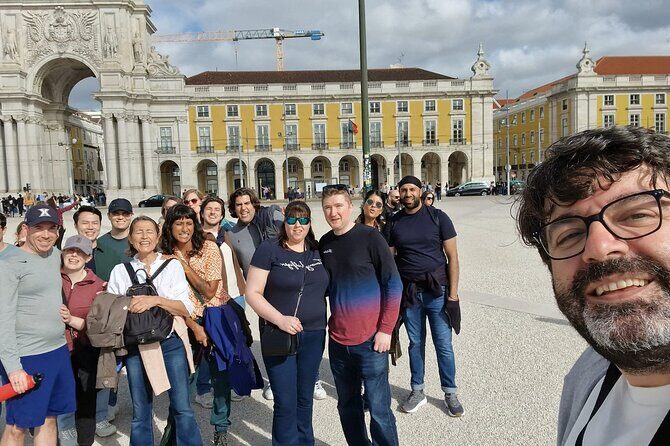
Then you move downtown along Rua Augusta, Lisbon’s emblematic main street. This part is less about stopping and more about walking and looking. The guide explains how Enlightenment thinking influenced architecture, so the buildings you pass become more than a backdrop.
This is a great moment to switch from listening-only to actively spotting details. Even if you don’t catch every architectural term, you’ll start recognizing the logic behind symmetry, planning, and the kind of “public image” cities wanted to project.
Practical tip
Keep your phone out for the photos you’ll actually want later. This stretch is long and central, so it’s easy to waste battery power on shots you won’t revisit.
Praca do Comercio (Terreiro do Paco): Lisbon at its front door
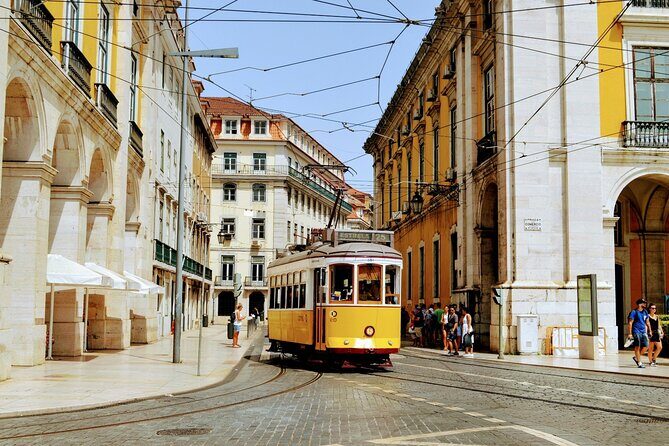
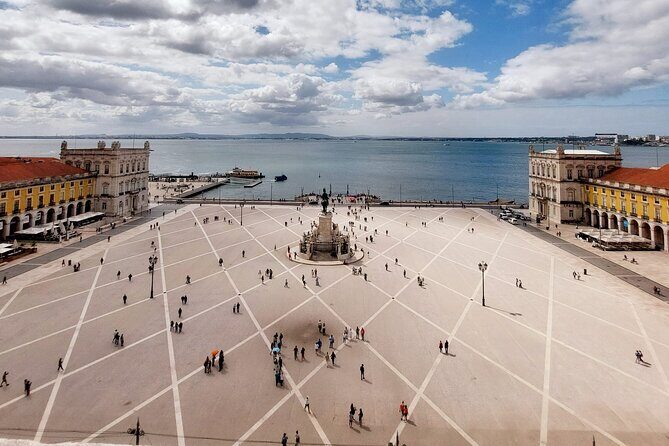
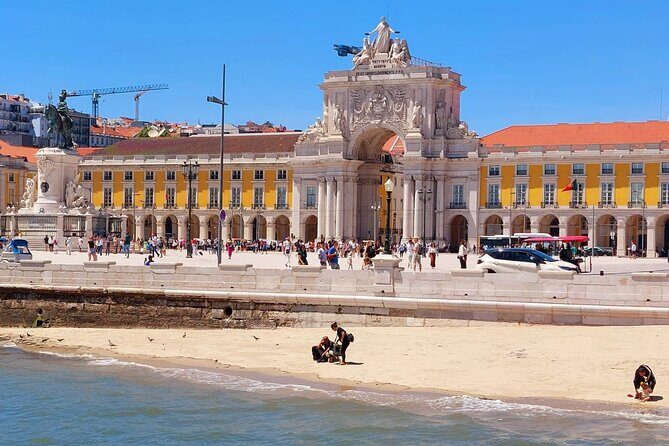
Terreiro do Paço, also known as Praca do Comercio, is the heart-on-display stop. You’re at the main square that has served as an entry point to Lisbon for millennia, which gives you a “front door to the city” feeling as you look around.
Here’s where you connect multiple themes: the Age of Discovery, the 1755 earthquake, and the heroes and rebuild efforts that followed. The guide makes the square feel like a crossroads, not just a wide open place for selfies.
Why this stop is a keeper
- It helps you understand Lisbon’s global connections, not only local streets
- The earthquake story lands harder when you’re standing in the public space involved
- You get a sense of civic pride in how reconstruction unfolded
What to watch for
The square is exposed and busy with foot traffic. If you’re sensitive to crowding, plan to keep moving steadily and don’t overstay at any single viewpoint.
You can also read our reviews of more historical tours in Lisbon





Chiado: poets, cafés, theaters, and a legendary bookshop
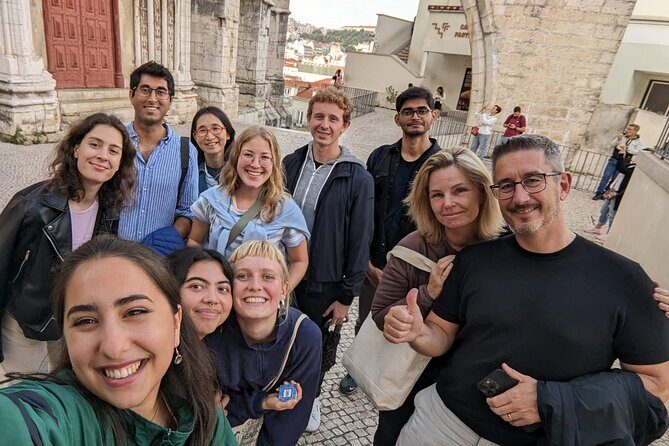
After the riverfront weight, Chiado brings energy. This art district is where you get the culture angle: cafés, theaters, and bookshops, including the chance to see the oldest bookshop in the world. You’ll also hear stories about proclaimed poets and writers connected to the neighborhood.
This is where the tour becomes more than history fact. It becomes a sense of place: Lisbon’s literary and artistic rhythm, and why Chiado still feels like a social hub.
A smart way to enjoy Chiado on this tour
- Use your stop time to look in the windows and at entrances, not only façades
- If the guide offers a moment for the oldest bookshop visit, treat it as your “yes, do it” moment
- Ask questions about what to read or where to linger after the tour, since guides often have strong recommendations
One consideration
This part can include some walking on uneven ground, and you may want to pace yourself so you still enjoy Chiado rather than just “survive the hills.”
Largo do Carmo: Convento do Carmo and the Carnation Revolution link
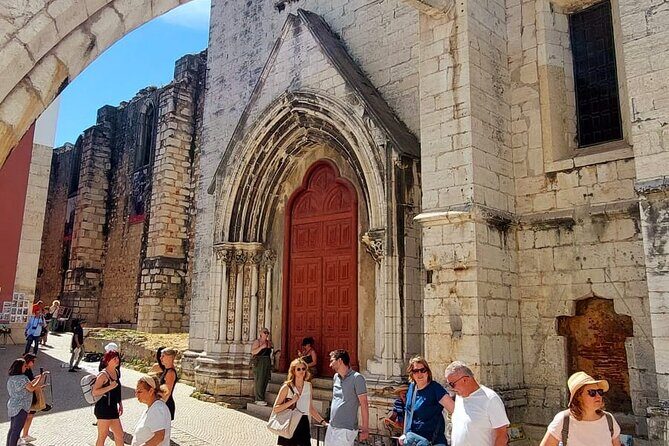
Largo do Carmo is one of those stops you remember because it combines survival, tragedy, and a political turning point. You’ll hear that Convento do Carmo is the second oldest building in the city and that it barely resisted the devastation of the 1755 earthquake.
Then the guide connects the location to the 1974 Carnation Revolution, called the coolest coup in the world in your tour framing. That’s the kind of storytelling that turns a stone structure into a memory of real human choice.
What this stop helps you understand
- How Lisbon’s older buildings carry multiple eras, not just one
- How public squares and religious sites can become political stages
- Why the aftermath of 1755 still influences what you see today
Small practical note
If you’re moving as a group with mixed ages, this is the sort of stop where your guide may slow down or adjust pace to keep everyone together. It’s a good sign when you feel you can ask questions without falling behind.
Elevador de Santa Justa: take the view break, then use the advice
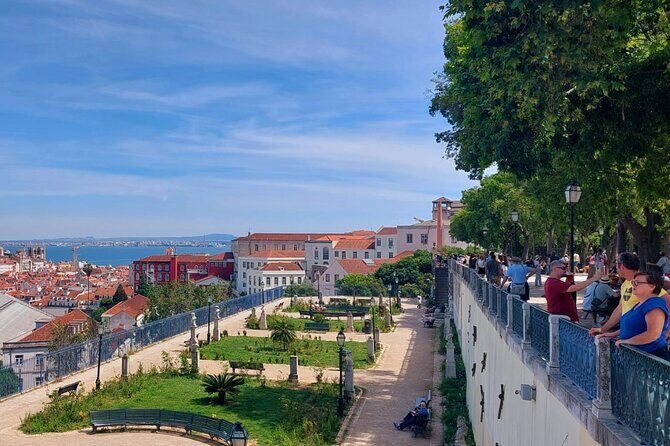
The last stretch includes a break and viewpoint moment at Elevador de Santa Justa. The focus here is the birds-eye view of Lisbon’s downtown core, which helps you “assemble the map” you’ve been learning about.
This stop also tends to come with the most practical tips. Expect local guidance on how to make the most of your stay, including food to try and viewpoints to seek out.
I love viewpoint stops at the end of a walking tour because they turn scattered sightseeing into something organized in your mind. Once you can see where everything sits, the rest of your trip becomes easier.
What to do with those tips
Write down two or three food ideas and one viewpoint that sounds manageable for your schedule. You’ll use the advice faster than you think, especially if you’ve got limited time later.
Price and value: $3.62 per person for a guided downtown loop
The listed price is $3.62 per person, which is shockingly low for a guided, multi-stop downtown experience. Even if you only value the history context, you’re still getting a professional guide, a route that covers multiple landmark squares, and free-entry listed stops along the way.
Add in the practical benefits: a mobile ticket, a route designed for orientation, and hand-picked suggestions to enjoy Lisbon. Also, the group size is capped at a maximum of 20 people, which usually helps keep questions from getting lost in the crowd.
When this pricing makes the most sense
- You’re arriving and want a fast grounding in Lisbon’s layout
- You like your sightseeing with stories, not just photos
- You want a budget-friendly activity that still feels structured
When it might not be your best match
If you dislike walking or want a self-paced, silent experience, a guided route may feel too structured. This tour is built for people who like talking, listening, and asking follow-ups.
How to prepare: shoes, water, and timing for Lisbon hills
Come ready for walking. The sidewalks can be uneven, with cobblestones, and parts of the route feel uphill. A few guides also adjust pace to help the group keep up, but your comfort starts with footwear.
I’d bring:
- Comfy shoes for cobblestones and slopes
- A water bottle, because downtown walking adds up fast
- Sunscreen if you’re going on a bright day
Also, watch the weather. This experience requires good weather, and if it gets canceled due to poor conditions, you’ll be offered a different date or a full refund.
A smart local habit to consider
One helpful tip shared by guides is learning how to navigate Lisbon hills using the metro system. Even if you don’t use it immediately, it’s good mental training for the rest of your days.
Who this tour fits best (and who might skip it)
This tour suits you if you want a guided, story-driven introduction to downtown Lisbon and you like understanding why places matter. If you’re the type who feels history clicks when it’s tied to real street corners and squares, you’ll likely enjoy the way the guide connects the 1755 earthquake, the Age of Discovery, Enlightenment influence on architecture, and the Carnation Revolution.
It’s also a solid choice for a first visit because the route hits major anchors: Rossio, Figueira, Rua Augusta, Terreiro do Paço, Chiado, Largo do Carmo, and a Santa Justa viewpoint finish.
If your trip is short and you prefer only one or two areas, you might choose a smaller neighborhood-focused tour instead. This one is about the city center as a whole, so you need to be willing to walk between scenes.
A quick decision guide: should you book Historic Lisbon on foot?
Given the rating of 4.9 and a recommendation rate of 97%, this is clearly landing well with people who want both structure and story. At this price point, the value is hard to ignore, especially when you’re also getting guide-led tips for food and viewpoints.
I’d book it if:
- You want an efficient downtown map in under three hours
- You’re curious about how Lisbon rebuilt itself after the 1755 earthquake
- You like guides who tell stories and answer questions as you go
I’d skip or swap if:
- You’re struggling with hill walking or uneven cobblestones
- You want totally independent sightseeing with no guided narrative
- Weather is uncertain and you can’t be flexible
FAQ
How long is the Historical Walking Tour of Lisbon?
It runs for about 2 hours 45 minutes.
Where do I meet the guide, and where does the tour end?
You start at Rossio Square (Praça do Rossio, 1100-200 Lisboa, Portugal) and end in the upper part of downtown at Carmo Archaeological Museum (Largo do Carmo, 1200-092 Lisboa, Portugal).
Is the tour offered in English, and do I get a ticket on my phone?
Yes. The tour is offered in English, and you’ll receive a mobile ticket.
What is the group size limit?
The tour has a maximum group size of 20 people.
Are service animals allowed?
Yes, service animals are allowed.
What if the weather is bad or I need to cancel?
The experience requires good weather. If it’s canceled due to poor weather, you’ll be offered a different date or a full refund. You can cancel for free up to 24 hours in advance for a full refund.