REVIEW · LISBON
Full Day Private Tour in Évora and Arraiolos
Book on Viator →Operated by abc Travel · Bookable on Viator
Évora and Arraiolos pack a lot into one day. This private tour takes you from Lisbon in an air-conditioned minivan to UNESCO-listed Évora and then on to Arraiolos, where you’ll see castle walls and the craft behind the famous Arraiolos rugs. It’s designed for a small group and a relaxed rhythm, so you’re not forced through sights at breakneck speed.
I especially like the tight mix of major monuments and hands-on culture. You get Roman-era landmarks like the Temple of Diana, plus the standout Gothic-Manueline São Francisco Church and the famous Chapel of Bones, all with time to actually look, not just point. Then Arraiolos adds something different: the Arraiolos Rug is not just a souvenir idea, it’s a real cultural story you can understand.
The one catch is timing. With an 8-hour day and a private route packed with stops, comfortable shoes and a plan for lunch matter, because meals and some site entry fees are not included.
In This Review
- Key highlights worth your attention
- Why Évora and Arraiolos work so well together
- Lisbon pickup and an 8-hour plan that respects your time
- Évora at first glance: a city built to be looked at
- Temple of Diana in Évora: Roman stone with a surprising resume
- São Francisco Church and the Chapel of Bones: two emotional tones
- Cathedral of Évora: the big medieval landmark you should plan time for
- Arraiolos Rug Center: understand the craft before you buy anything
- Arraiolos Castle: circular fortifications and real 360-degree payoff
- Igreja da Misericordia: baroque style and tile-panel detail
- Getting real value from the $500.33 group price
- Lunch, entry fees, and how to avoid a day trip scramble
- What the guide actually adds (and why the day feels organized)
- Who should book this private tour?
- Should you book this tour?
- FAQ
- How long is the private tour?
- What time does the tour start?
- Where do you get picked up?
- Is the tour private?
- What is the group size limit?
- What is included in the price?
- What isn’t included?
- Which major stops are part of the day?
- Does the tour run in bad weather?
- Can I cancel for a full refund?
Key highlights worth your attention
- Private pacing: You explore Évora at your own tempo instead of being glued to a big group schedule
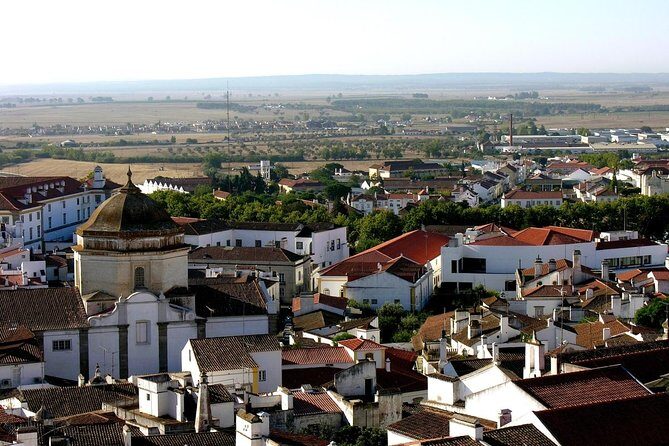
- Temple of Diana: A Roman monument with centuries of repurposing, not just a photo stop
- São Francisco and the Chapel of Bones: Two very different church experiences in the same historic core
- Arraiolos Rug context: You learn how the rug tradition developed and why it matters
- Arraiolos Castle views: Circular fortifications plus a 360-degree look over the Alentejo plain
- Hotel pickup/drop-off: Door-to-door transit from Lisbon keeps the day simple
Why Évora and Arraiolos work so well together
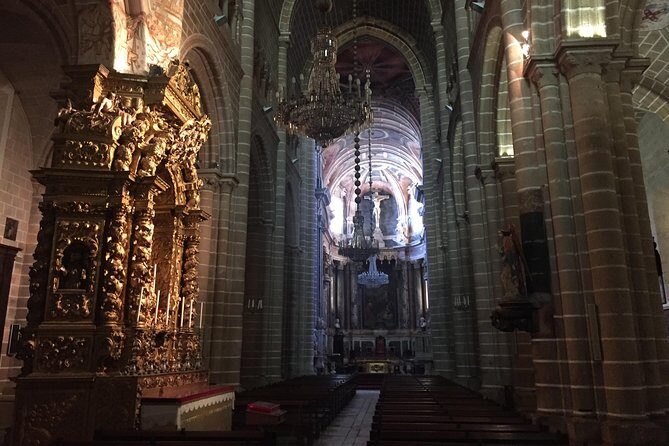
This is one of those Southern Portugal combinations that makes sense immediately once you see it on the map. Évora gives you centuries stacked on top of each other, from Roman remains to medieval churches, and it sits on a hill overlooking the Alentejo plain. Arraiolos is nearby but feels more village-like, focused on craft and local heritage.
The real value of pairing them is contrast. In Évora, you’re reading the big monuments: cathedral silhouettes, Roman stone, and church architecture. In Arraiolos, you slow down for details: the rug tradition and a fortification that still controls the skyline with its circular shape.
If you like your day trips to feel like a story instead of a checklist, this one usually delivers. You’ll get the famous hits, but you also get cultural context and views that help everything click together.
You can also read our reviews of more private tours in Lisbon



Lisbon pickup and an 8-hour plan that respects your time
You start at 9:00 am, and you’ll be picked up from your Lisbon hotel in an air-conditioned minivan. That matters because driving time can steal energy on day trips, especially when you’re crossing out to the Alentejo. Having door-to-door transport keeps you from spending your morning figuring out logistics.
The tour runs about 8 hours total, which is long enough to see more than one historic center, but not so long that it feels like you’re living in a van all day. The schedule is tight, though, so come prepared for a walking day on uneven old-town streets.
One small practical note: dress is smart casual, and the tour operates in all weather, so bring layers. Even when it looks mild in Lisbon, the light and temperature can shift once you’re out in the Alentejo.
Évora at first glance: a city built to be looked at
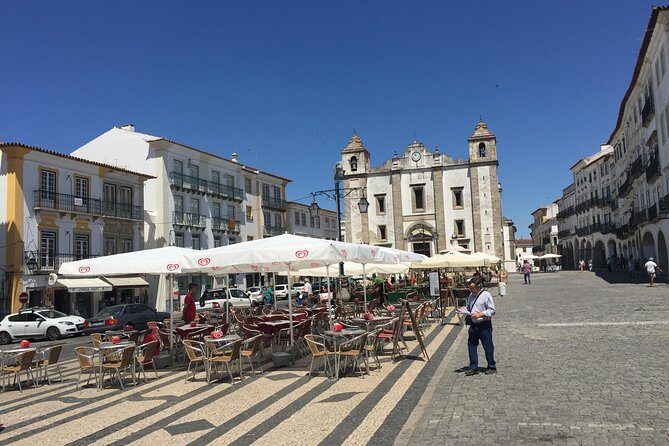
Évora’s historic core rises out of the huge Alentejo plain, and it’s protected by a broad outer wall. Even early on, you’ll notice the way narrow streets with Moorish origins contrast with bright open squares where sunlight lands fast. It’s one of those towns where you quickly start orienting yourself by the shapes and sightlines.
This stop is about getting your bearings, not racing through every alley. You’ll spend around an hour in the city overview, which is enough time to understand the layout before you hit the big-ticket monuments. I like this approach because it makes the next stops feel connected instead of random.
A good mindset here is to watch for layers. Roman influence shows up in the monumental scale and remains; medieval and later periods take over the streets and church presence. Évora is UNESCO-listed for a reason, and you can feel that when you slow down for a few minutes at each viewpoint.
Temple of Diana in Évora: Roman stone with a surprising resume
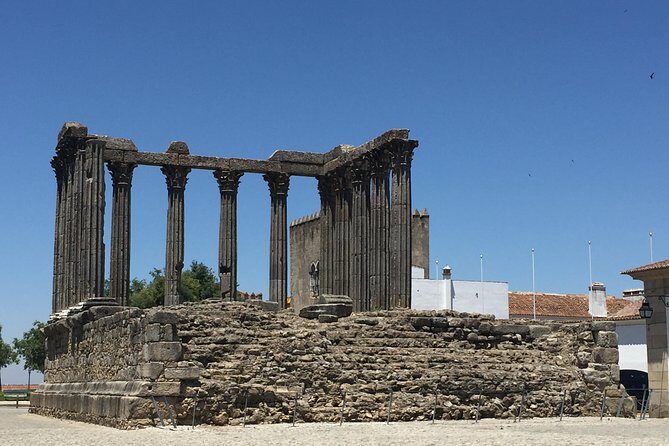
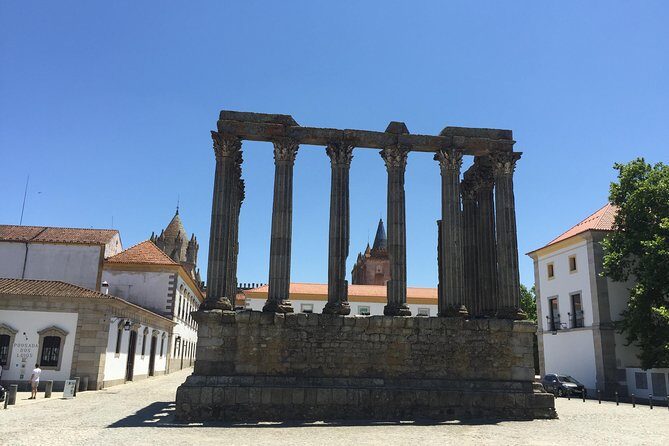
The Roman Temple of Diana is the ex-libris monument of Évora, and it’s easy to see why. Built in the first century during the time of Caesar Augustus, it’s over 2,000 years old. But what makes it more interesting than a simple ruin is its long list of afterlives.
Over the centuries, the temple changed uses. It was practically destroyed when the Iberian Peninsula faced invasions in the 5th century, then later served as storage of sorts: a bank vault and even a butcher’s tied to the castle area in the 14th century. You can walk up to the structure knowing it survived by adapting.
The original Roman design was recovered in the 19th century, in one of the early archaeological interventions in Portugal. When you’re looking at it, try to focus on how it once fit into a Roman forum linked to the imperial cult. It helps you understand why the temple still feels like a center of gravity for the city.
São Francisco Church and the Chapel of Bones: two emotional tones
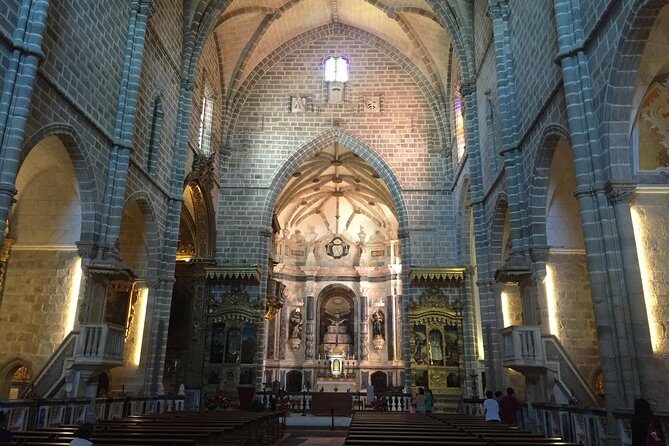
In Évora, São Francisco Church is one of the architectural anchors. It’s a Gothic-Manueline masterpiece built between 1480 and 1510, with decoration credited to royal painters Francisco Henriques, Jorge Afonso, and Garcia Fernandes. The interior symbolism connects the church to Portugal’s maritime expansion, and the nave includes the cross of the Order of Christ plus emblems of King John II and King Manuel I.
This stop gives you a strong sense of national story through religious art. If you’re the kind of traveler who likes to understand why symbols matter, this church is worth your attention. And since entry is noted as free for the tour’s listed time, it’s a strong value moment in the day.
Then comes a tonal shift: the Chapel of Bones. It’s widely known and you’ll likely see it referenced everywhere, but it works best when you treat it as a message monument rather than a shock attraction. Built in the 17th century by three Franciscan friars, it aims to convey the transience and fragility of human life.
Admission for the Chapel of Bones is not included, so you should budget for it. Still, it’s one of those stops that makes Évora feel mentally sharp in a different way, the kind of place where the architecture and the idea hit at the same time.
You can also read our reviews of more tours and experiences in Lisbon




Cathedral of Évora: the big medieval landmark you should plan time for
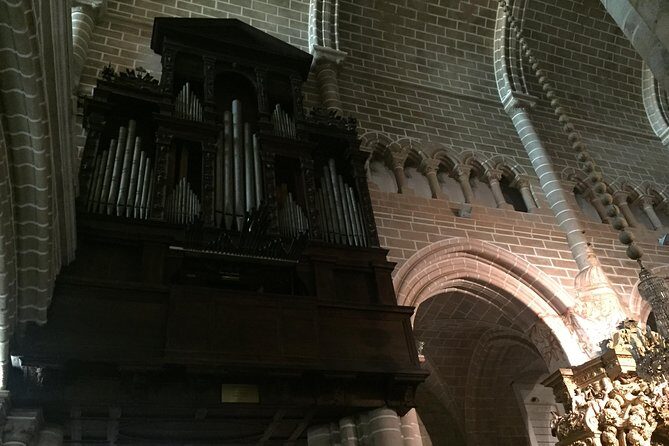
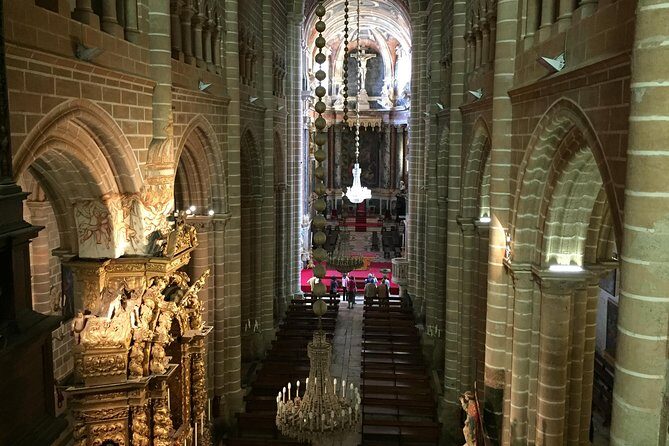
Évora Cathedral, formally the Sé Basilica of Our Lady of the Assumption, is the largest medieval cathedral in Portugal. It’s also one of the key silhouettes you’ll notice from across the city. The construction began in 1186 and was consecrated in 1204, with completion following later.
This stop is about 45 minutes, which is just enough time to understand scale, appreciate the setting, and not feel rushed. A practical bonus: the route to the cathedral climbs via Rua 5 de Outubro, a street known for Alentejo handicrafts. If you want small gifts or textiles that feel more local than mass-market, it’s a convenient place to look.
Cathedral admission is not included, so keep that in mind for your budget. Still, if you’re doing Évora in a single day, the cathedral is one of those sites where skipping would leave a noticeable gap.
Arraiolos Rug Center: understand the craft before you buy anything
Arraiolos is famous for its rugs, and the tour builds in a stop at the Tapetes de Arraiolos – Centro Interpretativo. This is not just a look-and-go storefront. It’s where you get the meaning behind the tradition, and that’s what turns a rug from a decorative item into a story you can actually repeat.
The rug tradition in Arraiolos goes back to a period prior to the 15th century, and you’ll learn that it wasn’t random craft work. The tradition carries cultural and socio-economic weight for the town. The oldest reference noted is from the late 16th century, with municipal inventory details attributed to Dr. Jorge Fonseca, including a 1598 document mentioning a new carpet revaluated in two millers.
You’ll also hear about archaeology connected to the town’s production, including excavations at Praça do Meguesio in the early 21st century, led by archaeologist Ana Gonçalves. It’s a rare thing on a day trip: textile culture explained with dates and evidence.
Admission for this stop is not included, but it often feels like the part of the day where you come away smarter, not just busier.
Arraiolos Castle: circular fortifications and real 360-degree payoff
After rugs, you head to the Arraiolos Castle, built in 1305. What makes it stand out is the circular architecture, one of the few of its kind in the world. Even if the interior building is a bit worn with age, the ellipsoidal walls and the lawn are in excellent condition.
This stop lasts about 30 minutes, and you’ll want those minutes because the payoff is the view. Located on São Pedro hill, the castle offers 360-degree views over the Alentejo plain. That’s one of those moments where the geometry of the fortification suddenly makes sense: it’s meant to watch, control, and spot movement from far away.
Admission for the castle is listed as free in the tour’s plan, which makes it a strong cost-to-experience ratio.
Igreja da Misericordia: baroque style and tile-panel detail
In the village center, you’ll visit Igreja da Misericordia, linked to the Brotherhood of the Holy House of Mercy of Arraiolos, established in 1524. The church is described as an example of Baroque style, founded at the end of the 16th century.
Inside, the highlight is a set of 18th-century tile panels lining the walls. If you’re into Portuguese religious art, tiles are often where you slow down naturally, because there’s so much pattern and storytelling packed into a small space.
This stop is about 30 minutes and admission is listed as free. It also gives your day a calmer ending compared with the monument-heavy intensity of Évora.
Getting real value from the $500.33 group price
The price here is $500.33 per group (up to 3). That number can look high if you’re thinking in per-person terms. But for a private day trip with hotel pickup, a driver/escort, and an air-conditioned vehicle for the whole route, it can become reasonable fast if you’re traveling as a couple or a small family.
Here’s what you get that supports the cost:
- Round-trip transport from Lisbon via a private, air-conditioned minivan
- A private guide/driver setup, rather than joining a larger group
- Dedicated time inside Évora’s key sights and then Arraiolos
What is not covered:
- Food and drinks, including lunch
- Some admissions (notably the Cathedral of Évora, Chapel of Bones, and the Rug Center)
So the best way to think about value is this: you’re paying for convenience plus focused guiding time. If you already plan to do a DIY route and you’re comfortable buying tickets and timing transfers, it might feel pricey. If you want a stress-free day where someone keeps the rhythm and points out what matters, the price starts to feel fair.
Also, the booking notes say a maximum of 8 people per booking, but it’s still a private tour with only your group participating. In practice, that usually means you won’t get the loud, crowded feeling of a mass tour.
Lunch, entry fees, and how to avoid a day trip scramble
Because lunch is not included, plan your meal around the natural pause points in Évora and Arraiolos. You’ll be moving from monument to monument, and the safest strategy is to choose something quick that won’t require a long sit-down if your schedule is tight.
Also, remember which stops have admission marked as not included. The tour lists those as:
- Évora Cathedral
- Chapel of Bones
- Tapetes de Arraiolos – Centro Interpretativo
If you want to keep things smooth, set aside a reasonable budget for these entries and be ready to pay at the site.
One more practical tip: Évora streets involve hills and old paving. Even if you’re only walking moderate distances between stops, wear shoes you trust. The day plan works best when your feet don’t complain.
What the guide actually adds (and why the day feels organized)
A huge part of why this itinerary works is the balance between walking time and “stop time.” In one example of a booked day, a guide named John was praised for being professional and for finding the right moments to explain what you’re seeing while still giving enough time to look around.
That matches the tour design. You’re not just shuffled past the Roman temple or the cathedral. You get context for what you’re looking at, and you still have time to step back, frame photos, and take in the views.
There’s also an interesting detail from that same day: a side trip toward Guadalupe and time at the Almendres cromlechs. That’s not listed in the core stop sequence you’ll see beforehand, so treat it as the kind of add-on your guide may be able to fit if timing allows. If that matters to you, it’s worth asking ahead of time.
Who should book this private tour?
Book it if you want:
- A one-day UNESCO experience without the stress of public transit and transfers
- A blend of architecture, Roman ruins, church art, and the craft behind Arraiolos rugs
- A private pace so you can spend a little longer where your interest spikes
Skip it or rethink it if:
- You want a longer, slower day with long lunch breaks and minimal walking
- You’re trying to keep costs ultra-low per person, since admissions and meals aren’t included
It’s also a great fit for history-leaning travelers who like Roman sites but also want something distinctly Portuguese, like tilework and rug tradition.
Should you book this tour?
If you have one day and you want maximum meaning from it, I think this is a strong choice. The hotel pickup cuts the biggest hassle, and the itinerary balances major monuments in Évora with a very different cultural stop in Arraiolos. Just budget for lunch and the few sites marked as not included, and plan for a day that includes hills and a good amount of walking.
If you’re traveling as two or three, the private-group price tends to feel more like value than sticker shock. And if your guide has flexibility, the chance of an extra moment like Guadalupe and Almendres cromlechs can make the day feel even more personal.
FAQ
How long is the private tour?
The tour runs for about 8 hours.
What time does the tour start?
The start time is 9:00 am.
Where do you get picked up?
Pickup is offered from your Lisbon hotel, and you also get drop-off back at your hotel.
Is the tour private?
Yes. It’s a private tour, and only your group participates.
What is the group size limit?
The booking notes a maximum of 8 people per booking, and the price is per group up to 3.
What is included in the price?
It includes a driver/escort, hotel pickup and drop-off, a private tour, transport by air-conditioned vehicle, and transport by private vehicle.
What isn’t included?
Food and drinks are not included, and lunch is not included. Admission is also not included for some sites listed on the schedule.
Which major stops are part of the day?
You’ll visit key sights in Évora (including the Temple of Diana, São Francisco Church, and the Cathedral) plus Arraiolos (including the Rug interpretive center, Arraiolos Castle, and Igreja da Misericórdia).
Does the tour run in bad weather?
Yes, it operates in all weather conditions, so dress appropriately.
Can I cancel for a full refund?
Yes. Free cancellation is available, and you can cancel up to 24 hours in advance for a full refund. If you cancel less than 24 hours before the start time, the amount paid is not refunded.