REVIEW · LISBON
From Lisbon: Óbidos and Mafra Palace Private Tour
Book on GetYourGuide →Operated by TakingUThere · Bookable on GetYourGuide
One day. Two very different worlds. Óbidos’ walls feel like a time machine, and Mafra National Palace is baroque on a serious scale. I like that this is a true private format, so your guide can pace things for you, and you get a guided walkthrough in both places (not a rushed drop-off). You’ll also get practical moments like photo stops and time to explore on foot, including tasting ginjinha and browsing local goods. The one drawback: national monument closures can happen on public holidays, and Mafra may be affected.
What makes this tour especially worth your time is the combination of place and storytelling. In Óbidos, you’re not just seeing pretty streets—you’re learning why the town matters, including its 1148 conquest by Portugal’s first king, D. Afonso Henriques. In Mafra, you’ll hear how King João V built this vast complex using wealth from Brazil, then watch the design choices come alive as you move through the palace, convent, basilica, and library. If you’re sensitive to walking, plan for a solid day on uneven stone and long corridors.
In This Review
- Key highlights that make the day work
- Why Óbidos and Mafra pair so well in one Lisbon day
- Private pickup and air-conditioned comfort from Lisbon
- Óbidos walled town: medieval streets, walls, and that first taste of ginjinha
- Two hours to explore inside the walls (and why pacing matters)
- Mafra National Palace: baroque scale that you can’t fake
- Inside the complex: the long corridor, the library, and the basilica details
- If Mafra is closed: schedule changes your guide can make
- July timing: Óbidos Medieval Market may add costs
- Skip-the-line entry and real guide time: where the value hides
- Price and logistics: what to plan around (so the day stays fun)
- Who should book this Óbidos and Mafra private tour
- Should you book? My honest call
- FAQ
- How long is the Óbidos and Mafra Palace private tour?
- What’s included in the tour price?
- Is Óbidos guided and do I have time to walk on my own?
- Do I need to buy Mafra Palace tickets separately?
- Is lunch included?
- What languages are available for the live tour guide?
- Is the tour only for small groups?
- What should I bring for the day?
Key highlights that make the day work
- Óbidos walled-town walking with a private guide and time to wander at your own pace
- Ginjinha tasting and a chance to pick up small local crafts and treats
- Mafra Palace scale that’s hard to grasp: about four hectares, nearly 1,200 rooms, and 232 m of corridor
- Skip-the-line entry to the Mafra Palace complex, so you start seeing things faster
- A guide who can adjust when plans change, which matters if a closure hits Mafra
- July medieval market option in Óbidos (extra entrance fee), if your timing lines up
Why Óbidos and Mafra pair so well in one Lisbon day
If you’ve only got one day and you want more than “a stop and a selfie,” this pairing is smart. Óbidos gives you the medieval feel—tight streets inside protective walls, a town you can actually walk through without feeling like you’re trapped in a theme park. Mafra then flips the switch to 18th-century power: a palace-complex built to impress, built to command attention, built to be remembered.
You also get contrast in how the sites “teach.” Óbidos is about everyday life—how a fortified village developed, what survived, and what you can still taste and buy. Mafra is about design and ambition—how a single complex was planned and constructed over years, and how the building’s details reflect political and cultural power.
Finally, doing both with a private guide helps you avoid the usual trap: wandering aimlessly and missing the best connections. Here, the guide ties the places together with historical context, then gives you time to actually enjoy the atmosphere.
You can also read our reviews of more private tours in Lisbon



Private pickup and air-conditioned comfort from Lisbon
This tour starts with pickup from your hotel or cruise port in Lisbon, and you travel by air-conditioned vehicle. For a 6-hour day that includes two walking-heavy stops, this is more than a convenience—it helps you feel human afterward.
Because it’s private (your group), the schedule can feel smoother. You’re not stuck waiting for a big bus of people to finish buying souvenirs. And since your guide is local to the story of both sites, transit time isn’t wasted time. You can ask questions, get orientation, and plan your walking routes.
One practical note: the day can include a fair bit of walking inside historic areas. Comfortable shoes aren’t optional—your feet will decide how much you enjoy the day more than your phone battery will.
Óbidos walled town: medieval streets, walls, and that first taste of ginjinha

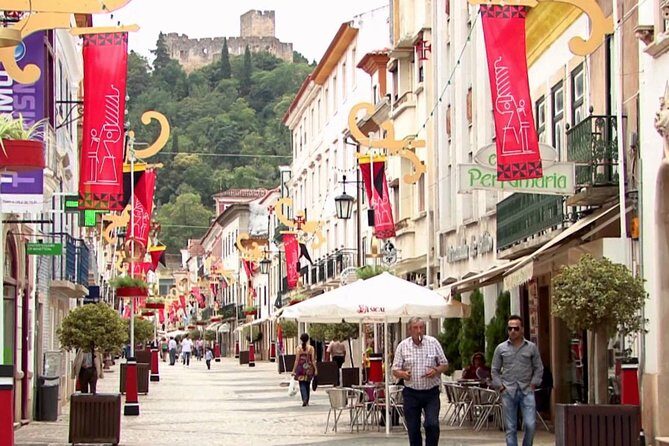
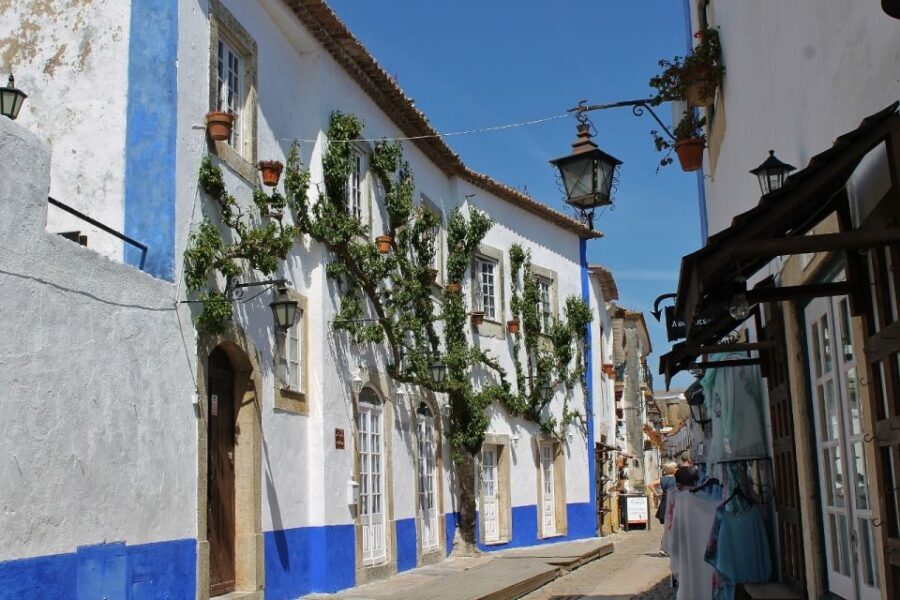
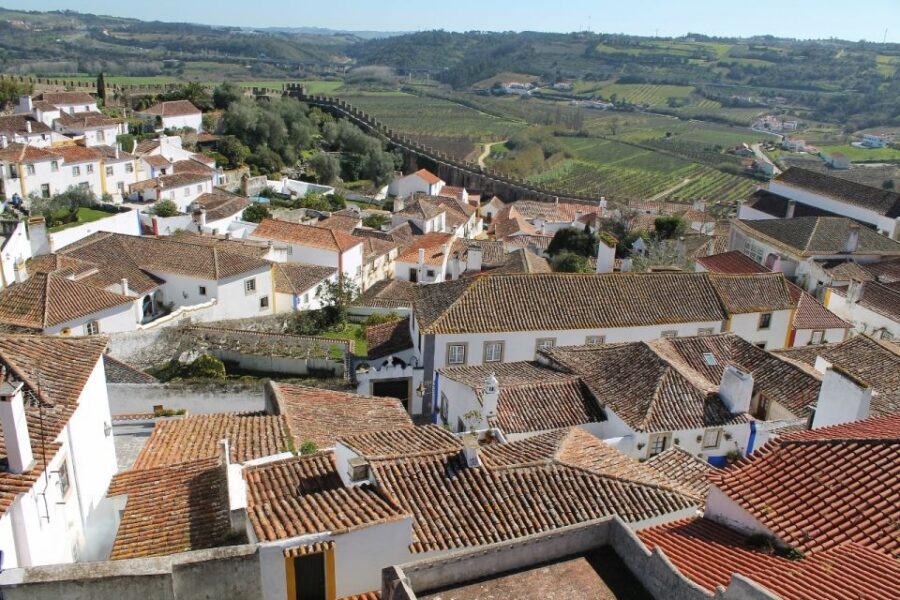
Óbidos is one of Portugal’s best-preserved “museum villages,” and you feel it immediately. The town is fortified, built for defense, and still shaped by its medieval boundaries. Walking inside those walls makes everything more legible: you can see where the village had to fit, and you can understand why this place kept its identity.
Your private guide leads you through the main sights and history, including the fact that Óbidos was conquered in 1148 by D. Afonso Henriques. That date anchors the town in Portuguese origins, and it helps you connect the dots as you move from street to street.
Then comes the fun part: downtime to enjoy the place. You’ll have break time plus guided time, and you’ll get the chance to taste ginjinha. This is one of those Portugal experiences that’s less about “finding the famous drink” and more about taking a break in the exact setting the locals shaped. Along the way, you can also sample other local goods and crafts, which makes Óbidos feel like a living village instead of a display case.
What to watch for: the streets can be tight and busy, especially when events are on. If you’re traveling in peak season, start early in your day mindset—go slow, keep your eyes on the guide for the best photo angles, and don’t try to outrun the charm.
Two hours to explore inside the walls (and why pacing matters)
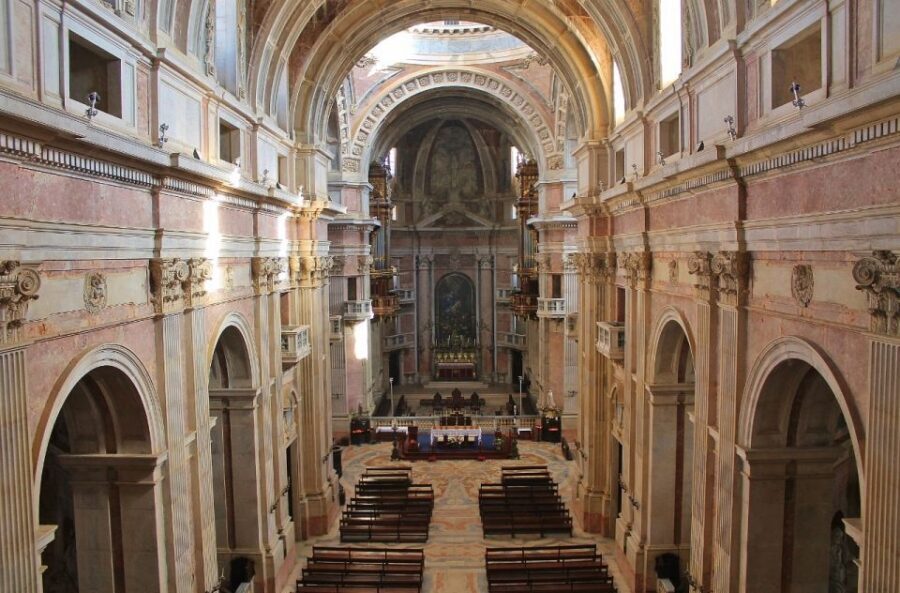
You get around 2 hours for Óbidos, including walking time. That’s enough to feel the town without turning it into a checklist race.
Here’s how to use that time well:
- Take the first stretch to get your bearings. You’ll understand the town faster once you’ve walked a loop.
- Plan one “slow moment.” Sit, taste ginjinha, and look at doorways and tiles like you’re studying a map.
- Leave room for small detours. Óbidos rewards side streets.
One reason this stop feels so worthwhile is the guide factor. A good private guide helps you spot the story details you’d miss on your own: why walls were placed where they were, how the town’s layout served defense, and which landmarks actually matter. It turns the whole walk into a guided history lesson with breaks that feel natural.
And if your day includes stairs or uneven cobblestones, pacing will save you. Slow down for the best views from higher spots on the walls, then you’ll still have energy left for Mafra.
Mafra National Palace: baroque scale that you can’t fake
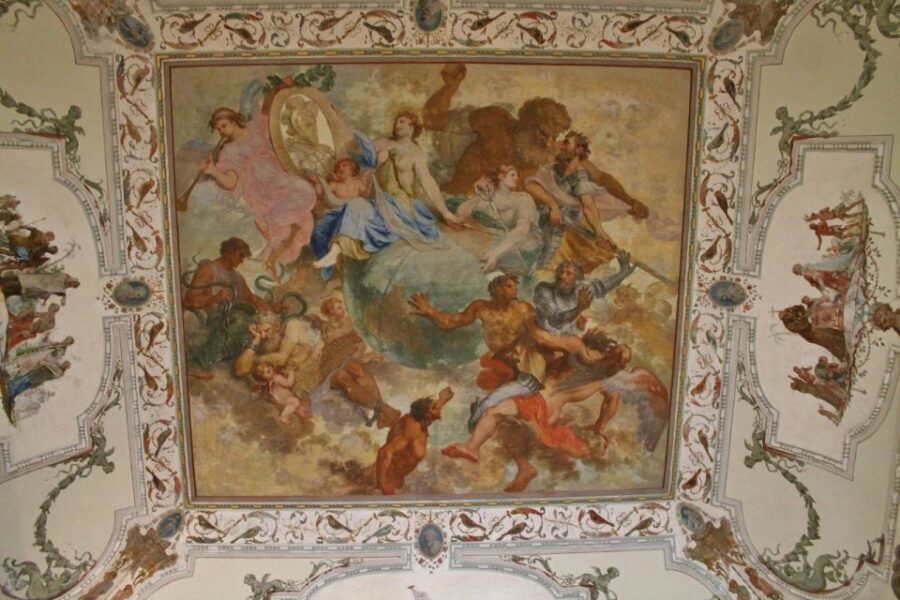
Then you head to Palácio Nacional de Mafra, one of Europe’s biggest baroque palace complexes from the 18th century. The building isn’t just large—it’s layered. It combines four functions in one complex: palace, convent, basilica, and library.
The history behind the construction makes it hit harder. Work began on November 17, 1717, and it was only possible because Brazilian gold poured into Portugal. King João V essentially used wealth to build a statement in stone, and Mafra shows you exactly how far that ambition went.
When you step into the palace, you’ll hear numbers that are almost comical—nearly four hectares of complex area (about 37,790 sqm), around 1,200 rooms, 4,700+ doors and windows, 156 stairways, and 29 inner yards and courtyards. The point isn’t that you should memorize them. The point is that the palace was built to be experienced as a whole system.




Inside the complex: the long corridor, the library, and the basilica details
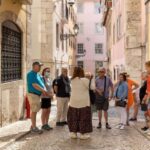
Your guided visit at Mafra runs about 1.5 hours, plus time for a photo stop. It’s a perfect pace for a place this big. You can’t see everything in such a short window, and that’s okay. Instead, the guide highlights the most meaningful spaces so you leave with an understanding, not just photos.
Some of the standout details you’ll likely hear:
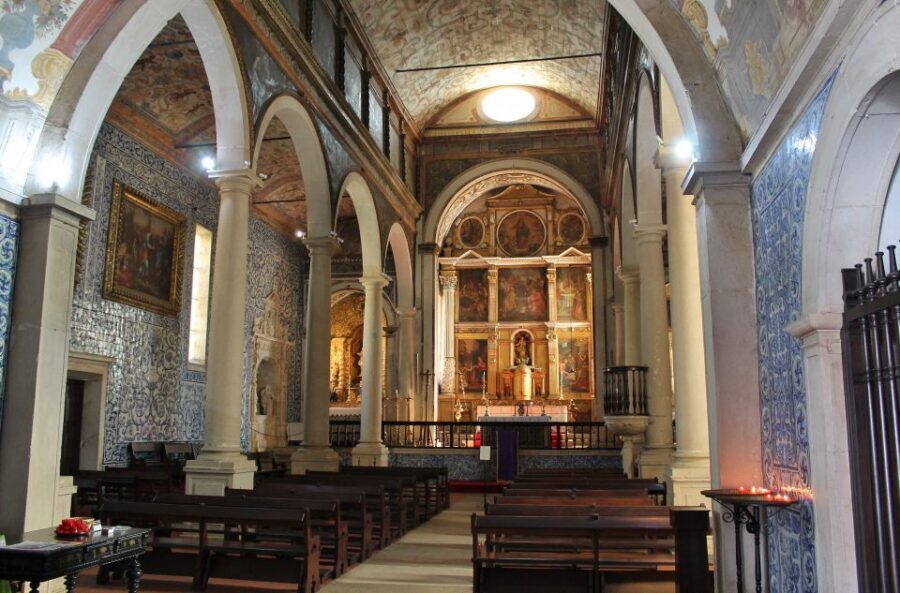
- The longest palace corridor, measuring 232 meters, made of limestone and marble from the Óbidos, Pêro Pinheiro, and Sintra regions
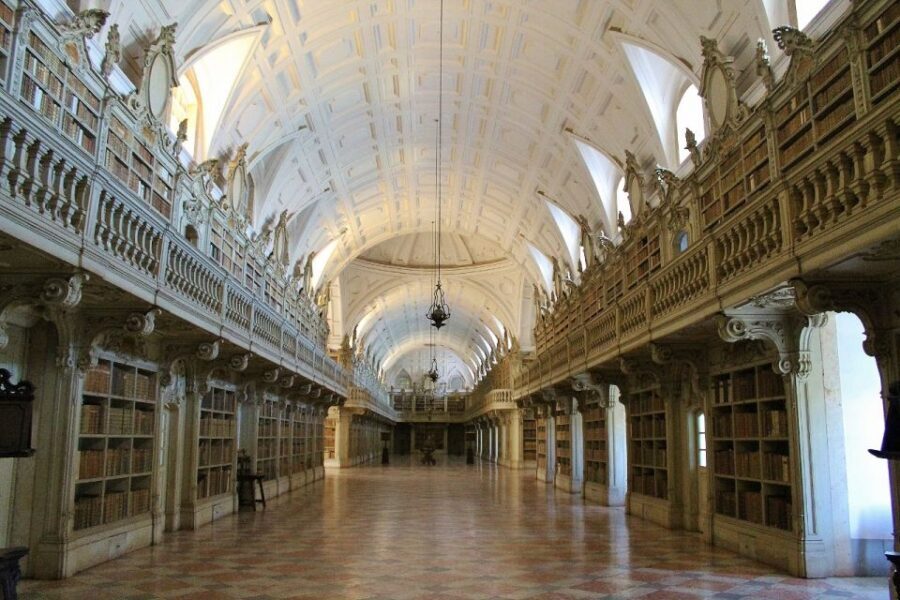
- The library, described as one of the most important in Europe, with over 30,000 volumes dating from the 15th to the 18th centuries
- Two massive towers flanking the palace façade, which frame your view and give you that “monumental” feeling instantly
- The basilica as a centerpiece on the façade, designed by German architect Johann Friedrich Ludwig, commissioned by D. João V
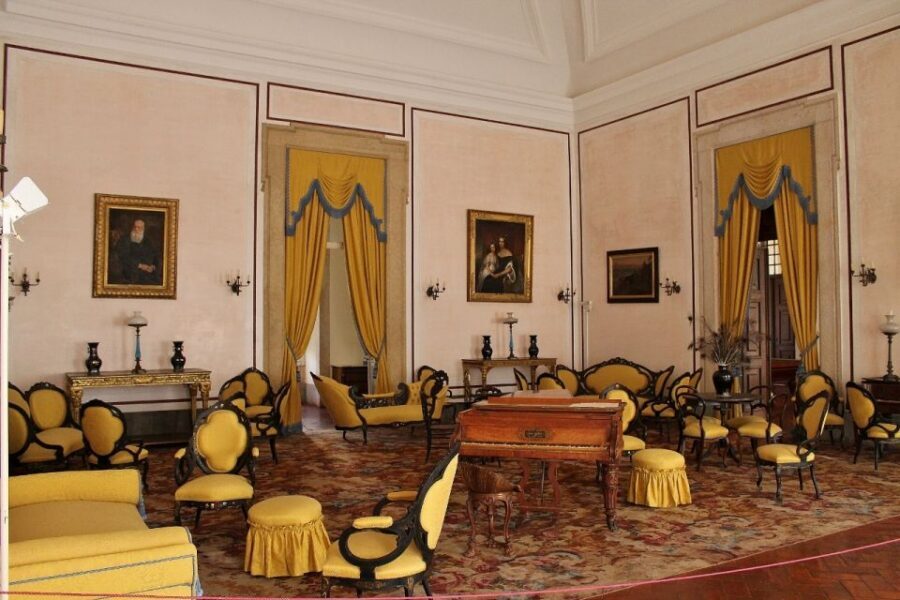
If you care about interior design and old-world craftsmanship, Mafra tends to land well. The palace doesn’t just look grand from the outside. The scale continues inside, especially when you follow the corridor and move through major rooms with a guide pointing out why the building is shaped the way it is.
And honestly, the corridor is the kind of detail that makes people smile because it sounds like an exaggeration—until you’re standing there and realizing it’s real.
If Mafra is closed: schedule changes your guide can make
There’s one logistical consideration that’s worth saying plainly. National monuments can be closed on public holidays or special occasions, sometimes without much notice. If that happens, the tour may adjust based on what’s open.
I’ve seen guides handle this by redirecting the day to another major royal site in the area, like Palácio Nacional de Queluz and its gardens. That kind of swap doesn’t give you the exact Mafra experience, but it can save your day from turning into a long, disappointing ride.
The broader takeaway: your private guide has flexibility. And since your itinerary can be amended for preferences or weather, you’re not stuck with a rigid plan if reality changes.
July timing: Óbidos Medieval Market may add costs
If you’re visiting in July, Óbidos can host a traditional Medieval Market for two weeks in the castle and surrounding town. It’s staged with banners and heraldic flags, plus daily parades, performers, and stall activity. You’ll also see jousting knights and armed combat displays.
Important: the Medieval Market entrance fee is not included during July. So if your trip overlaps those dates, budget extra if you want to go inside the event areas.
On the upside, this can be a great way to experience Óbidos at its most theatrical. On the downside, it can make crowds thicker. If you’d rather have the quiet, walkable medieval vibe, consider aiming for shoulder season.
Skip-the-line entry and real guide time: where the value hides
This tour costs $261 per group (up to 2) for about 6 hours. That sounds like a lot until you compare it to the alternatives. Here’s where you’re actually paying your money:
- A private guide for both towns (not a shared group experience)
- Hotel or cruise port pickup and drop-off
- Air-conditioned vehicle
- Entrance fee to the Mafra Palace complex
- Skip-the-ticket-line access for Mafra
If you’re traveling with a partner or a friend, private value usually shows up in the pacing. You’re not waiting for strangers. Your guide can steer you toward the best parts of each site and adjust time for what you care about—walls, photos, tasting, or inside details.
If you’re a solo traveler, the per-group price can still be worth it if you want the most time possible with a guide and minimal hassle getting between sites.
Also, the language options—English, Spanish, Portuguese, and German—are a practical bonus if you want comfort without translation awkwardness.
Price and logistics: what to plan around (so the day stays fun)
To make this day feel smooth, think about three things: meal planning, sun, and walking.
Lunch and drinks are not included. The good news is you’ll have enough time to grab a quick meal on your terms. Your guide may point you to a local bakery or a simple spot for food that fits the schedule.
Bring sunscreen and comfortable shoes. Óbidos stone + midday sun can be a tough combo if you show up in soft sandals and hope for the best.
And keep expectations realistic about time. Mafra is huge. In 1.5 hours guided time, you’ll cover highlights and key spaces, not every room. That’s normal, and it’s often better. You leave knowing what you saw and why it matters.
Who should book this Óbidos and Mafra private tour
This is a great fit if you:
- Want a guided visit that explains what you’re looking at
- Like medieval towns but also want at least one major baroque interior experience
- Travel in a small group (up to 2) and prefer private pacing
- Value having pickup sorted and transport done for you
It’s less ideal if you:
- Hate walking or struggle with uneven stone and stairs
- Need a very flexible schedule with frequent breaks every 15 minutes (this is a set 6-hour structure)
- Are visiting on a public holiday when closures could affect Mafra, and you’d rather not have any plan changes
Should you book? My honest call
Yes, I’d book this if you want a strong “Portugal highlights” day without the stress of organizing two major stops yourself. The private guide time, the Mafra skip-the-line access, and the fact that entrance to Mafra is included make it feel like real value for the effort you’d spend planning on your own.
If your dates land in July, check whether the Medieval Market matters to you, since it can add costs and crowd energy. And if you’re traveling around public holidays, keep a flexible mindset—your guide can often adjust if a closure affects Mafra.
Overall, you’ll come away with two vivid impressions: one from the walled medieval atmosphere of Óbidos, and one from Mafra’s scale, from the massive towers down to that astonishing 232-meter corridor.
FAQ
How long is the Óbidos and Mafra Palace private tour?
It runs for 6 hours, with starting times depending on availability.
What’s included in the tour price?
You get a private guide, an air-conditioned vehicle, entrance fees to the Mafra Palace complex, and hotel or cruise port pickup and drop-off in Lisbon.
Is Óbidos guided and do I have time to walk on my own?
Yes. You’ll have guided time plus time to walk and explore inside Óbidos.
Do I need to buy Mafra Palace tickets separately?
No. Entrance fee to the Mafra Palace complex is included, and you skip the ticket line.
Is lunch included?
No. Lunch and drinks are not included.
What languages are available for the live tour guide?
The guide is available in English, Spanish, Portuguese, and German.
Is the tour only for small groups?
It’s a private group, priced for up to 2 people.
What should I bring for the day?
Bring comfortable shoes and sunscreen, especially for walking in historic areas.