REVIEW · LISBON
Alcobaça & Óbidos: Self-guided tour
Book on Viator →Operated by Cityrama · Bookable on Viator
A half-day that feels like two trips. You’re guided most of the way by a smartphone route, then given freedom to roam the maze of medieval streets in Óbidos at your own pace. You also get a stop in Alcobaça, home to one of Portugal’s most important Cistercian sites.
What I really like is how efficiently it packs big sights into a short day—especially the Monastery of Alcobaça with its UNESCO status and famous royal tombs. I also like the way you can do Óbidos “slowly,” with the walls, Rua Direita, and church stops spread out so you’re not rushed through everything.
One thing to consider: hotel pickup isn’t included, so you’ll need to make your way to the meeting point in Lisbon. Also, the Castle of Óbidos ticket isn’t included, so plan a little extra time for that stop.
In This Review
- Key things to know before you go
- How the self-guided smartphone day really works
- Alcobaça monastery: UNESCO in a short, meaningful stop
- Arrival in Óbidos: your walled-town walk begins
- Rua Direita and Santa Maria: walking the prettiest main line
- Stroll to Igreja de São Pedro (Church of St. Peter)
- Castle de Óbidos: the views are the point
- Timing, transport, and comfort on the Lisbon–Óbidos day
- Price and value: what $50.88 buys you
- Who should book this tour, and who should skip it
- Should you book this self-guided Alcobaça & Óbidos tour?
- FAQ
- How long is the tour?
- What time does the tour start?
- Where do I meet the tour in Lisbon?
- Is hotel pickup or drop-off included?
- Is there a bathroom on the bus?
- Which entrance fees are included or not included?
- Can I cancel for a full refund?
Key things to know before you go
- Smartphone-guided walking inside Óbidos, with an included map and info folder
- Alcobaça monastery (UNESCO) plus a strong dose of medieval royal story via the tombs
- Rua Direita walk with Manueline porticos and flowered windows along the way
- Walled-town views from the Castle area, with the admission ticket handled separately
- Small group size (max 20) for a calmer day and an easier meeting point experience
How the self-guided smartphone day really works

This tour mixes two modes: bus travel on a schedule, then walk-and-learn at your own speed. You meet a guide assistant in Lisbon, get familiar with your interactive smartphone device, and then you’re free to explore Óbidos independently while the device helps you find your next stop.
That device is the big value play here. Instead of juggling a printed guidebook and trying to decode street signs, you follow prompts in the order that makes sense. You’ll also have a map and an information folder to support what you’re seeing. It’s a nice way to travel without feeling stuck in a loud group rhythm.
One small heads-up: the guide assistant may help with tips, but this isn’t built like a full commentary guided tour every minute. If you want nonstop narration, you might find the smartphone format more “point-to-point.” Still, it’s a great fit if you like stopping for photos, lingering by viewpoints, or tracing the streets at human speed.
You can also read our reviews of more guided tours in Lisbon



Alcobaça monastery: UNESCO in a short, meaningful stop
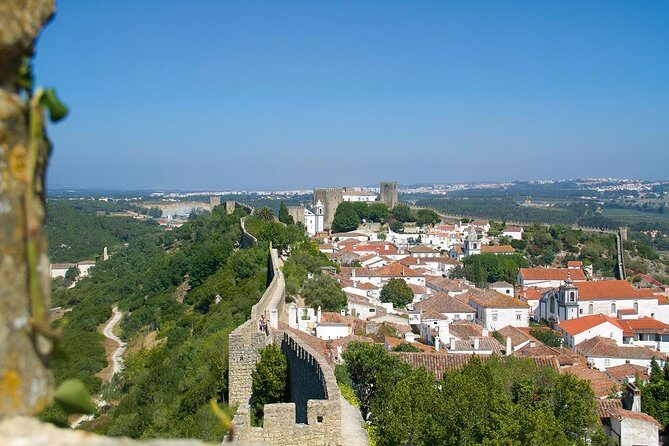
Your day begins with a trip to Alcobaça, where the star is the Monastery of Alcobaça (also called the Royal Monastery of Santa Maria de Alcobaça). This site became a UNESCO World Heritage location in 1989, and it’s one of the largest and best-preserved complexes of the Cistercian Order.
Even with just about an hour here, the monastery gives you real context fast. Construction began in 1178 under King D. Afonso Henriques, and the monks moved in by 1223. That timeline matters because it explains why the place feels both grand and strict—Cistercians weren’t about decoration for decoration’s sake.
The most “can’t-miss” detail is the burial story. King D. Pedro chose the monastery church as his burial site, along with the famous tombs of Inês de Castro. When you stand in the church area, you’re not just looking at old stone—you’re watching medieval power and devotion reflected in who gets remembered and where.
Plan for light movement inside the complex. The stop is short, so pace yourself: focus on the main church space and the tomb area rather than trying to absorb every corner in one go.
Arrival in Óbidos: your walled-town walk begins
Óbidos is the kind of town where your brain resets. The streets don’t behave like a grid; they wind, narrow, and fold back on themselves like a medieval maze. That’s exactly why a self-guided route works so well—your smartphone and map help you move forward without feeling lost.
A quick sense of scale helps, too. Óbidos has layers that go way back: it was likely founded by the Celts in 308 BC, and experts connect it to the ancient Roman city of Eburobrittium. Later came different occupants, including the Moors, before the early kingdom of Portugal pushed the story forward when Afonso Henriques conquered the town from them.
There’s also a more recent royal vibe. In the 18th century, Óbidos remained a place of noble summer holidays, and King João V stayed there for eight years, using nearby Caldas da Rainha for treatments he was advised for—linked to arthritis and obesity. It’s one of those history facts that makes the town feel less like a museum and more like a lived-in resort stop for real people.
When you arrive, you’ll start walking soon after. The tour includes time for the main village area, so you can settle into the medieval walls right away instead of waiting for the “real sightseeing” later.
Rua Direita and Santa Maria: walking the prettiest main line
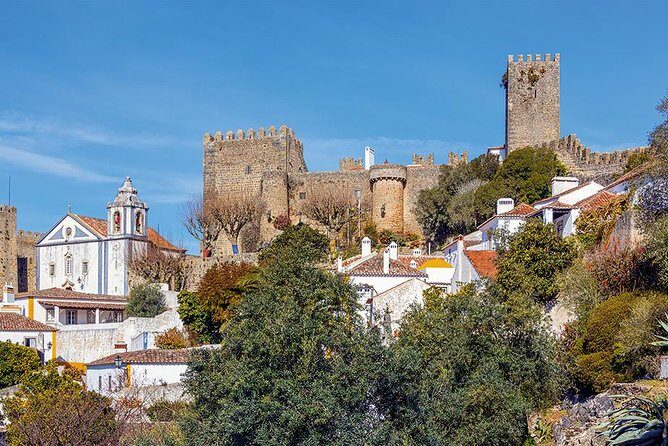
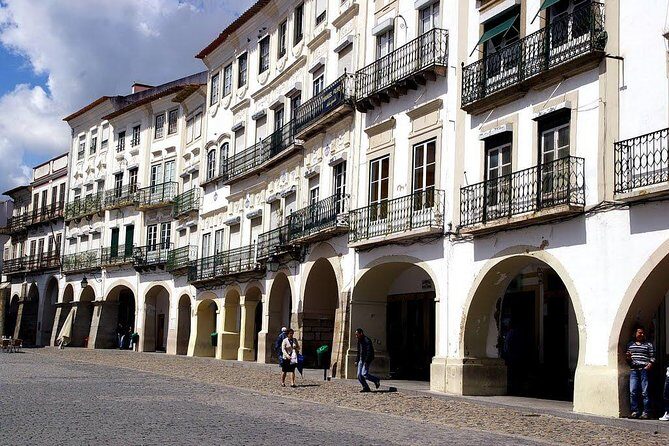
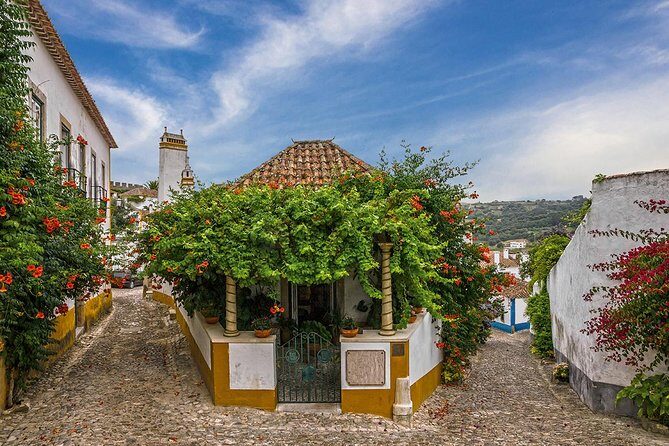
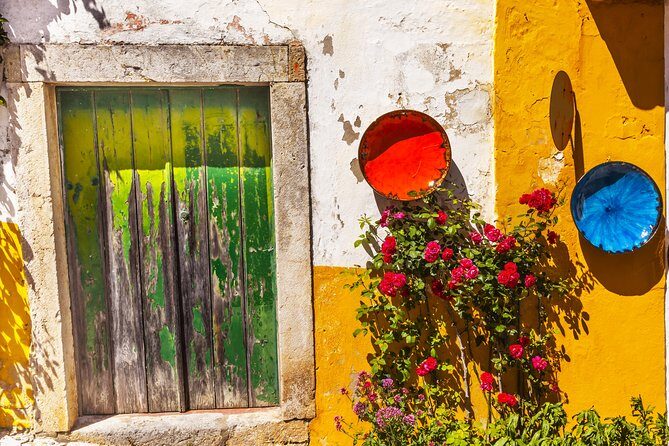
Your route takes you to Rua Direita, the town’s main street. This is where Óbidos starts to look like a postcard, but it’s also where the details matter. The street is framed by Manueline porticos, plus flowered windows and small, narrow openings that keep the town feeling intimate.
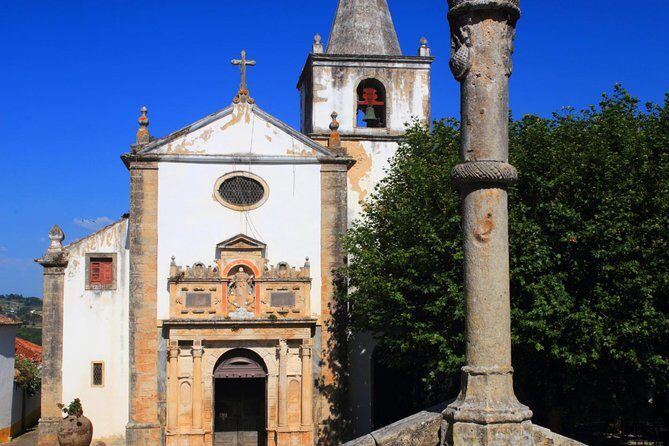
From Rua Direita, the walk leads you toward Church of Santa Maria. This part works well because you don’t just jump between landmarks—you get a visual corridor that connects the dots. You’ll also have time at the church stop itself, which is important because Santa Maria is the kind of place where you’ll notice more the longer you look.
The main church, Igreja Matriz de Óbidos, dates to roughly 1148–1185, meaning you’re standing near the early Portuguese reconquest era. Even if you don’t read every plaque, the age shows in the layout and the feeling of the interior.
I like this structure: you see the street character first, then you arrive at the main church with the town already in your head.
Stroll to Igreja de São Pedro (Church of St. Peter)
Next up is Church of St. Peter, a medieval church with a story that includes change over time. It’s described as being founded in the 17th and 19th centuries and then rebuilt after the 1755 earthquake.
That rebuild detail is worth keeping in mind while you’re there. Portugal’s earthquake history reshaped a lot of buildings and urban plans, so when you see a church like this, you’re seeing not just one moment in time—you’re seeing how people rebuilt, adjusted, and kept using the space.
This stop is also practical. You’ll be walking through dense streets all day, so a church stop gives you a natural break. Take a moment to slow down, sit if you can, and let your feet recover while you look around at how the town kept its spiritual center even after major shocks.
You can also read our reviews of more tours and experiences in Lisbon




Castle de Óbidos: the views are the point
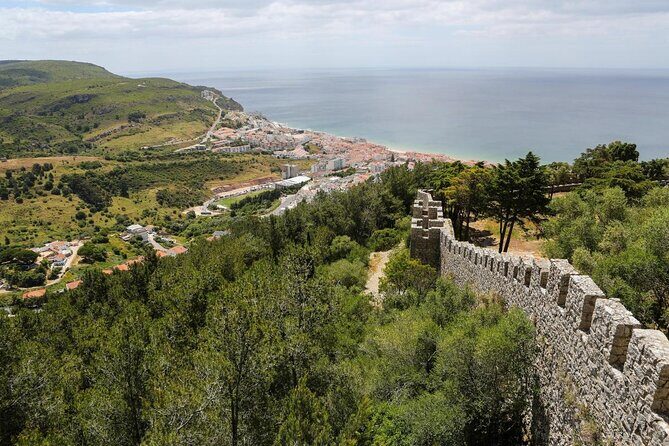
One of the big reasons to include a castle stop is what you get from above. The Castle of Óbidos area is where the walled-town feeling turns into real scenery—views over the countryside and the geometry of the medieval town below.
History-wise, the castle ties into the region’s layered past. It’s described as originally built by the Arabs, on land that had already been occupied by Lusitanians, Romans, and Visigoths. The Portuguese reconquest story continues when D. Afonso Henriques took the castle around 1148.
The castle ticket is not included, so you’ll want to factor that into your timing. If you’re the type who wants photos from every angle, allow extra minutes at the gate and viewpoints. If you’d rather move quickly, you can still get the main views without treating it like a long museum visit.
This is a good point in the day to think ahead: if weather is clear, spend more time up top. If it’s windy or chilly, do the key viewpoints first and come down to regroup.
Timing, transport, and comfort on the Lisbon–Óbidos day
You’re traveling from Lisbon with included transport by minibus or bus (depending on group size). The start time is 9:00 am, and the day runs about 6 hours total, returning you to the meeting point back in Lisbon.
A few practical notes make this easier:
- There’s no bathroom on board the bus, so use rest stops before you get too far into the morning.
- Walking is moderate, but Óbidos’ streets can be uneven and tight, so comfortable shoes matter.
- Dress code is smart casual, which is simple enough—just don’t show up in slick soles if you’re prone to slipping.
This tour caps at 20 travelers, which helps. Smaller groups usually mean less jostling at the meeting point and faster coordination when it’s time to regroup.
One more detail: the meeting point is listed at Cityrama Gray Line Portugal, Alameda Edgar Cardoso, 1070-051 Lisboa. Arrive a bit early. If you show up right at the last second, you can easily lose track of who is organizing the handoff.
Price and value: what $50.88 buys you
At $50.88 per person, this doesn’t feel like an expensive way to get out of Lisbon for a half day. Here’s what you’re paying for in real terms:
- Round-trip transport from Lisbon (bus/minibus)
- A guide assistant to get you started with the flow
- A smartphone device per customer (including children) for the interactive route
- An information folder and map
- Time in Alcobaça plus the full Óbidos walk structure
If you tried to DIY this, you’d still have to solve transport and navigation. Even simple costs add up: a day trip bus fare, plus a museum/monument plan, plus the time and stress of figuring out where to go next. The smartphone-guided format is what makes this feel like a “middle path”—cheaper and freer than a full private guide, but more supported than going it alone with only a map app.
Also, the monastery visit is described as free admission, which is a solid win because major UNESCO sites often come with fees.
The only “extra” likely on your day is the Castle of Óbidos admission ticket, since it’s not included. That’s not a dealbreaker, but it is the one place you should expect to pay separately.
Who should book this tour, and who should skip it
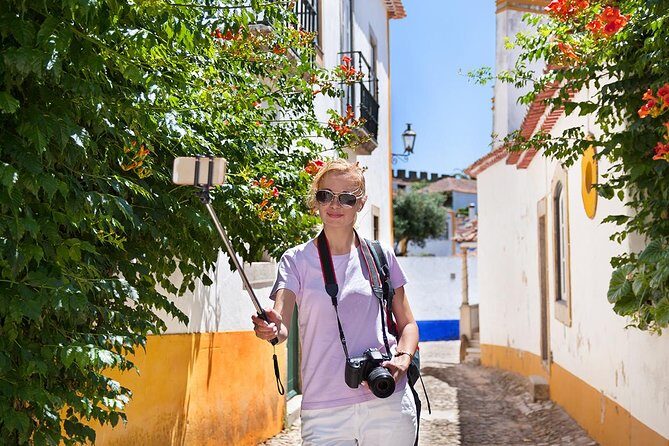
This experience makes the most sense if you want structure without losing freedom. You’ll enjoy it if you like:
- moving at your own pace in a medieval town
- following a clear route with stops that actually fit together
- saving energy by using a guide assistant and route device instead of constant map-checking
It’s also a strong option for first-timers in this area of Portugal. Alcobaça plus Óbidos is a smart pairing: one site gives you Cistercian depth, the other gives you walled-town vibes.
You might want to think twice if you strongly prefer an all-day live guide doing continuous explanations. The format here is assistant + smartphone. If you expect someone to narrate every detail out loud, you could feel a bit underfed.
Also, because there’s moderate walking and no bus bathroom, it’s best for visitors comfortable with a half-day on foot through older streets and steps.
Should you book this self-guided Alcobaça & Óbidos tour?
If you want an easy win—UNESCO Alcobaça + fairytale Óbidos—this is a good match. The smartphone route, included map, and assistant help you get started fast, and the town layout is exactly the kind of place where self-guided works better than forcing a timeline on everyone.
Book it if:
- you like wandering medieval streets but still want a plan
- you’d rather pay for logistics once than DIY transport and navigation
- you’re happy with a short, focused look at a major site like Alcobaça
Skip it (or be cautious) if:
- you need full-time spoken explanations from a guide for every stop
- you’d struggle with meeting a fixed departure point and walking in a walled historic center
- you don’t want to buy a separate castle ticket
If you like “guided freedom,” this is the kind of day trip that turns into real memories: church doors, old stone, and those sweeping views from the castle walls.
FAQ
How long is the tour?
The tour is listed as about 6 hours.
What time does the tour start?
The start time is 9:00 am.
Where do I meet the tour in Lisbon?
The meeting point is Cityrama Gray Line Portugal, Alameda Edgar Cardoso, 1070-051 Lisboa, Portugal.
Is hotel pickup or drop-off included?
No. Hotel pickup and drop-off are not included.
Is there a bathroom on the bus?
No, there is no bathroom on board the bus.
Which entrance fees are included or not included?
Admission for Alcobaça is free, and the tour lists free admission for Óbidos village and the church stops. The Castle of Óbidos admission ticket is not included.
Can I cancel for a full refund?
Yes. You can cancel up to 24 hours in advance for a full refund.