REVIEW · LISBON
Tuk Tuk Tour – Golden Age
Book on Viator →Operated by Otherwise Experiences · Bookable on Viator
Lisbon, but from a golden tuk-tuk. This ride mixes quick driving with story-heavy stops, so you get the landmarks and the why behind them. I like the toast moment at Parque Eduardo VII, and I like the private-group feel. One thing to plan around: it’s a good-weather outing.
You’ll choose pickup if you want, and you’ll get an English guide experience with a mobile ticket. The route is built for about 1–3 hours, moving through classic Lisbon neighborhoods without turning the day into a long slog.
In This Review
- Key highlights you’ll care about
- Golden Age Tuk-Tuk: a route that feels like Lisbon with context
- Price and logistics: what you’re really paying for
- Where you start: making your first 10 minutes painless
- Stop 1: Parque Eduardo VII toast and the 1755 earthquake connection
- Stop 2: the Marquês de Pombal statue and the “what to look for” lesson
- Stop 3: the avenue linking modern Lisbon to the downtown core
- Stop 4: Restauradores Square and the Monumento dos Restauradores (Dec 1, 1640)
- Stop 5: Baixa’s metal tower moment—Santa Justa Lift and the Carmo connection
- Stop 6: Chiado’s poet square and why literature belongs on your route
- Stop 7: a top food stop and the pastéis de nata treat
- Final stop: a majestic political-power square that becomes your favorite
- The guides: why the experience feels fun, not forced
- Time on the clock: how to fit it into your Lisbon day
- Value check: is $123.74 per person worth it?
- Who this tour is best for
- Should you book the Golden Age Tuk-Tuk Tour?
- FAQ
- How long is the Tuk Tuk Tour – Golden Age?
- Is the tour offered in English?
- Do you offer pickup, and where is the meeting point?
- Is this a private tour?
- Is pastéis de nata included?
- What if the weather is bad, or I need to cancel?
Key highlights you’ll care about
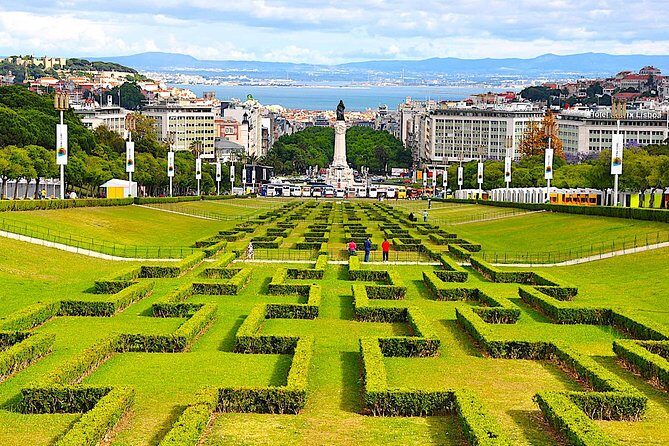
- Toast at Parque Eduardo VII with a time-travel angle on post-1755 rebuilding
- Marquês de Pombal statue stop that explains the city’s recovery and iconography
- Restauradores Square obelisk (Monumento dos Restauradores) tied to Portugal’s 1640 independence story
- Santa Justa Lift view of the metal tower with two circulating cabin sections and the Carmo walkway
- Chiado poet square that puts literature on the street level
- Pastéis de nata included from a major food stop, covered by the tour
Golden Age Tuk-Tuk: a route that feels like Lisbon with context
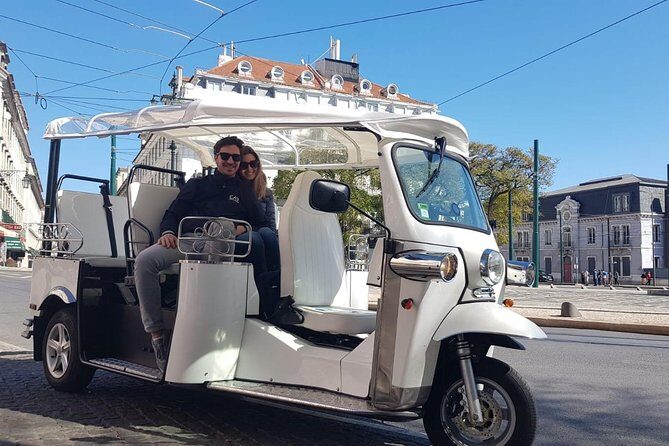
If you’ve ever wandered Lisbon and felt like you’re seeing great views but missing the connective tissue, this tuk-tuk tour is a smart fix. It’s not just a drive-by of monuments. The stops are chosen so the city’s changes, independence moments, and famous landmarks snap into place as one story.
The big win is how the tour blends short scenic pauses with guiding that gives you something to look for. The toast viewpoint, the Restauradores monument, and the Santa Justa Lift are the kind of places you’d normally read about later. Here, you get the background right when you’re standing nearby.
You can also read our reviews of more tours and experiences in Lisbon.



Price and logistics: what you’re really paying for
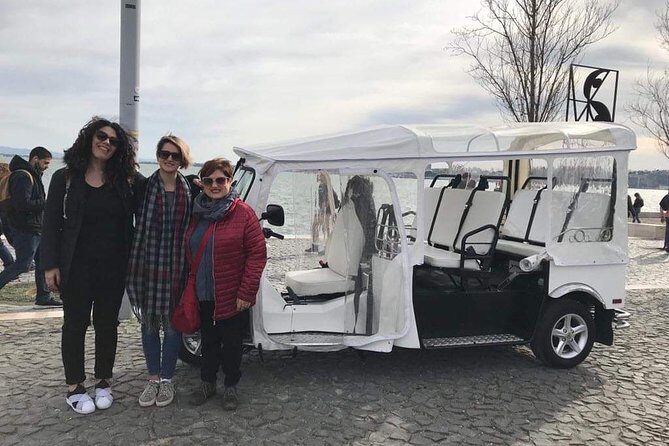
At $123.74 per person, you’re paying for more than transportation. You’re paying for a private route (your group only), an English-speaking guide, and a structured sequence of high-impact sights in a short time window.
Compared with piecing together multiple taxis, ticket lines, and guide apps, this can be good value if you want results fast—especially if you’re tight on time or you’d rather spend your energy looking at Lisbon than figuring out routes.
Practical bits you should know upfront:
- You can get pickup, and the tour ends back at the meeting point.
- You’ll receive a mobile ticket.
- The activity runs 9:00 AM to 6:00 PM every day during the stated operating period.
- Service animals are allowed, and it’s near public transportation.
The tour is also described as requiring good weather. If skies are rough, you’ll want to expect a schedule adjustment or alternative date planning.
Where you start: making your first 10 minutes painless

The meeting point is R. dos Bacalhoeiros 111, 1100-068 Lisboa, Portugal. That matters more than it sounds, because Lisbon’s streets can be a mix of steep, narrow, and full of sudden surprises.
Plan to arrive a bit early so you can settle in. With a tuk-tuk style tour, your early timing sets the mood for the rest of the ride. You’ll be ready to roll when the guide gathers your group and points out the flow for the stops.
Stop 1: Parque Eduardo VII toast and the 1755 earthquake connection

The tour begins with a payoff that feels almost ceremonial: going up to the top of Parque Eduardo VII for a toast. It’s only about 10 minutes, but it’s exactly the kind of short moment that makes a tour memorable.
What makes this stop more than a pretty viewpoint is the story angle. You’ll get a time-translation of Lisbon—especially around the period when Marquês de Pombal helped rebuild the city after the devastating earthquake of 1755. Standing high up, you naturally start looking at Lisbon as a city shaped by rebuilding, planning, and reinvention. The toast puts a little emotion into what could have been only dates and facts.
A small practical bonus: the stop notes admission ticket free, so you’re not hit with extra costs just to see the panorama and hear the context.
Stop 2: the Marquês de Pombal statue and the “what to look for” lesson

Right after the viewpoint, you’ll shift into statue-land. You’ll spend time learning more about this iconic figure and how the statue’s parts connect to Portugal’s history.
This is a subtle but valuable approach. Instead of treating monuments as decorations, you learn to read them. You’ll know what components are telling you, which makes Lisbon’s public art feel less random and more intentional.
Even if you’re not a museum person, this kind of quick visual literacy works well. It keeps your eyes busy while the guide talks, and it makes photos come out better because you know what details to frame.


Stop 3: the avenue linking modern Lisbon to the downtown core

From there, the tour moves into a more city-walk kind of understanding: discovering an avenue that connects the most modern part and downtown Lisbon.
Avenue stops can feel like filler if all you do is look at buildings. Here, the point is to help you understand how Lisbon’s geography works—how the city funnels movement between areas that feel different in style, pace, and architecture.
If you’ve spent time in Lisbon’s older neighborhoods and then later wandered toward modern streets, you already know the experience changes. This is the moment where the guide helps you connect those two moods without you getting lost or turning it into a long afternoon walk.
Stop 4: Restauradores Square and the Monumento dos Restauradores (Dec 1, 1640)
Next up is Restauradores Square, marked by a striking 30-meter obelisk called Monumento dos Restauradores. This monument commemorates the liberation of Portugal from Spanish rule on December 1, 1640.
What I like about this stop is that it gives you a clear anchor date—then ties that date to something you can actually see. You’re not just hearing history in the abstract. You’re watching Lisbon remember itself in stone.
Also, obelisks are one of those forms that look simple until someone explains what they’re doing symbolically. Once you understand the purpose, the scale makes more sense. It’s not a random tall marker. It’s a statement.
Stop 5: Baixa’s metal tower moment—Santa Justa Lift and the Carmo connection

If you like Lisbon’s engineering-style landmarks, this will hit the sweet spot. In Baixa de Lisboa, you’ll get to an especially interesting monument: a metal tower where two cabins circulate, plus a walkway connecting the upper floor to the Carmo area.
This is one of those places that feels theatrical even when you know what’s happening. The tower structure gives you that immediate wow factor, and the description of the circulating cabins helps you picture how it works before you even look closely.
The walkway detail also matters because it explains why the landmark is more than an elevator. It functions like a connector—linking areas and making movement easier. That’s a practical way to think about Lisbon’s design: bridges, walkways, and vertical connections show up again and again in the city.
Stop 6: Chiado’s poet square and why literature belongs on your route
Then the tour turns toward language and identity. You’ll learn about a poet who took Portugal to the world, and you’ll stop in a square in the heart of Chiado.
Chiado is one of those neighborhoods where it’s easy to focus on streets and cafés and forget that it’s also a cultural stage. A poet-focused stop reminds you that Lisbon’s creative power is part of the city’s public story, not only a chapter in a book.
This is a good stop for travelers who enjoy character. You’ll come away thinking about Lisbon not only as a set of viewpoints, but as a place that brands itself through ideas and art.
Stop 7: a top food stop and the pastéis de nata treat
At this point, you get something practical and delicious. You’ll find where one of Lisbon’s main gastronomic centers is located—and you’ll get to try pastéis de nata on the tour’s tab.
I love this style of included food moment. It doesn’t force you into a long restaurant stay. It gives you a quick local taste while you’re already in the historic center lanes where smells and foot traffic can steer your day.
Also, pastéis de nata isn’t a random dessert here. It’s a way to keep your energy up while you finish the route strong.
Final stop: a majestic political-power square that becomes your favorite
The last portion brings you to a beautiful and majestic square that’s described as a historical symbol of political power and a manifestation of Portugal’s capital. It’s also noted as the tour’s favorite place in Lisbon.
I take that kind of statement seriously—because the best final stop is rarely the most “famous.” It’s the one that makes the whole trip click. After you’ve already touched the independence story at Restauradores and the city’s rebuilding context at Parque Eduardo VII, this grand square works like a full-circle moment.
Even if you’re not thinking about politics while you’re sightseeing, you’ll feel the grandeur. The scale helps you picture where authority and public life used to cluster. Then you can step back and see today’s Lisbon with a wider lens.
The guides: why the experience feels fun, not forced
The strongest praise in the reviews isn’t about the vehicles. It’s about the people. The tour is consistently described as having unique, standout service, with a team that’s pleasant, well trained, and professional.
What that means for you: the guide isn’t just reciting facts. They’re making the route feel like a shared laugh, with history coming in through stories and street-level cues. One review even pointed out that the tour felt like a different kind of history lesson—not only a drive in a tuk-tuk.
That matters because Lisbon history can be heavy fast. Here, you get the important ideas without drowning in dates. You get the why, you get the moments to look at, and you get a tour that doesn’t feel stiff.
Time on the clock: how to fit it into your Lisbon day
With 1 to 3 hours total, you can slot this tour into a flexible day. If you’re doing a slower itinerary the same day, treat this as your orientation. If you’ve already done a few neighborhoods on your own, take it as a “connect the dots” session.
If you hate rushed travel, aim for the earlier end of the time window. A shorter tour slot tends to feel smoother because you spend less time moving and more time at each stop’s key viewing point.
And because the tour depends on good weather, check conditions before you lock in a day.
Value check: is $123.74 per person worth it?
Here’s my practical take on the value.
You’re getting:
- a private tour for your group only
- English guiding
- a tight lineup of major sights in central Lisbon
- a viewpoint experience at Parque Eduardo VII
- an included pastéis de nata tasting stop
If you were to hire a private guide for just the history component, or cobble together multiple rides and walking segments while trying to time everything yourself, the cost can look less steep. The included pastry also offsets the “small extras” that add up in Lisbon quickly.
The one caution is simple: if your group already knows the history well and you mainly want long scenic wandering, you may feel you’re buying structure. But if you want a guided, efficient day with personality, this pricing can make sense fast.
Who this tour is best for
This is a strong match if:
- you want major Lisbon sights in a short time
- you prefer your history delivered as stories tied to what you can see
- you like tours where the vibe is upbeat and fun, not formal
- you’re traveling as a couple or small group and want a private feel
If you’re the type who loves to wander without schedules, you might prefer free-form neighborhood time. But if you’ve got limited days and want the city’s highlights with context, this is built for you.
Should you book the Golden Age Tuk-Tuk Tour?
Book it if you want a high-impact route with real guiding and a playful tone—plus a dessert win. The reviews focus heavily on service quality, professionalism, and the sense that you learn something while still having fun. That combo is rare, and it’s usually what makes a short Lisbon tour feel worth it.
Skip it only if you’re traveling with strict time boundaries around unpredictable weather, or if you already know Lisbon’s key historical threads and mostly want unstructured sightseeing.
FAQ
How long is the Tuk Tuk Tour – Golden Age?
The tour runs about 1 to 3 hours, depending on the flow of the route and timing.
Is the tour offered in English?
Yes. The experience is offered in English.
Do you offer pickup, and where is the meeting point?
Pickup is offered. The meeting point is R. dos Bacalhoeiros 111, 1100-068 Lisboa, Portugal, and the tour ends back at the meeting point.
Is this a private tour?
Yes. It’s listed as private, so only your group participates.
Is pastéis de nata included?
Yes. You can try pastéis de nata on us during the tour.
What if the weather is bad, or I need to cancel?
The experience requires good weather. If it’s canceled due to poor weather, you’ll be offered a different date or a full refund. You also get free cancellation up to 24 hours in advance for a full refund.