REVIEW · LISBON
Tour TukTuk 3 hours Lisbon Free Pick-up
Book on Viator →Operated by Chaparru's Tours · Bookable on Viator
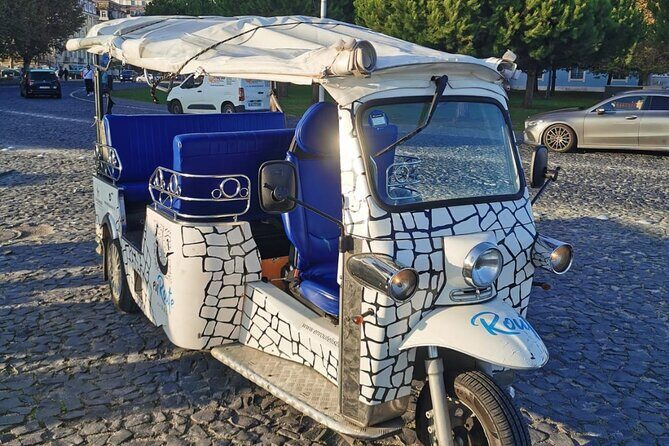
Lisbon on a tuk-tuk saves your knees. I love how this loop hits big miradouros back-to-back, so you get classic views fast, without the hill pain. I also like the history storytelling you can expect from guides such as Rodrigo, Miguel, Fernanda, and Thiago, who explain what you’re looking at in plain language. One thing to plan for: entrances are not included, so if you want inside access at places like the Pantheon or the cathedral areas, you’ll pay more and you’ll have less time there.
This is built for people who want a smart overview in about 3 hours, with private transportation and an English-speaking guide. You’ll also get a mobile ticket, which makes day-of stress smaller. It’s also a good fit if you prefer short stops and then moving on, rather than standing in one spot all afternoon.
Do note the practical limits: no kids under 7, no smoking or alcohol on board, and large suitcases aren’t allowed. And since it’s weather-dependent, you’ll want a flexible mindset if the forecast turns ugly.
In This Review
- Key points worth knowing before you go
- Getting oriented fast with a private tuk-tuk
- Where it starts: Rua do Comércio and Lisbon’s river heartbeat
- Stop 1: Lisbon Cathedral—why 1147 still matters
- A Tagus viewpoint detour: quick photos, big geography
- Stop 2: Miradouro das Portas do Sol—sun gates and the 1755 quake
- Street art stop: Amália Rodrigues face and the paving art
- Stop 3: Miradouro da Graça and the Convent area
- Stop 4: Miradouro da Senhora do Monte—views in every direction
- Stop 5: Church of St. Vincent de Fora—outside views, inside meaning
- Stop 6: Panteão Nacional—Amália and Eusébio under one roof
- Stop 7: Alfama—hot baths, Arabic roots, and living streets
- Stop 8: Chafariz de Dentro—fountains that used to sort society
- House of Brás de Albuquerque (House of Nozzles)
- Stop 9: Igreja de Nossa Senhora da Conceição Velha—earthquake rebuild with a past
- Stop 10: Praça do Comércio and the riverfront legacy
- Cais do Sodré, Pink Street, and Chiado—Lisbon’s social side
- Stop 11: Igreja de Sao Roque—Jesuit survival and plague-era layers
- Stop 12: Miradouro São Pedro de Alcântara—paired views and the convent story
- Final neighborhood flavor: Bairro Alto and Carmo’s earthquake scars
- Price and logistics: is $48.12 a good deal?
- Who this tour suits best (and who should pass)
- Should you book this Lisbon TukTuk tour?
- FAQ
- How long is the tour?
- What’s the price per person?
- Is this a private tour?
- Is the tour offered in English?
- Is admission included for monuments?
- Where does the tour start and end?
- Is pickup included?
- Do I need a mobile ticket?
- Are children allowed?
- What should I know about cancellations and weather?
Key points worth knowing before you go
- A tight 3-hour route: You’ll bounce between viewpoints, historic churches, and neighborhoods without doing the steep stair workout.
- Frequent photo stops: Many stops are quick (often 5–15 minutes), so bring your camera and your patience.
- Views plus real Lisbon details: You’ll hear the stories behind places like Portas do Sol, Graça, Alfama fountains, and Carmo’s leftover walls.
- Some places you’ll see from outside: A few major sights are described with exterior views, with optional entrances that are not included.
- Private group energy: It’s just your group in the tuk-tuk, which tends to make Q&A easier when you care about details.
Getting oriented fast with a private tuk-tuk
The first thing you notice is how quickly the city starts making sense. Lisbon has this talent for turning “where am I?” into “oh, I get it” once you’re moving along the right ridges. This tuk-tuk format helps because it’s not just sightseeing from one viewpoint—it’s a planned route that stitches together neighborhoods, churches, and lookout points that would otherwise take hours to reach on foot or tram.
Your ride is private, so you’re not stuck waiting for other groups at tight stops. That matters in Lisbon, where traffic, pedestrians, and narrow streets can squeeze time. In the past, I’ve found that when you’re riding in your own group, you can ask small questions—like why a view is famous or what a building used to represent—and the guide can answer without rushing you out.
You’ll also get a built-in rhythm: drive up, stop briefly, hear the story, see the angle, take photos, then roll on. If you’re the type who likes a plan but still wants freedom to wander afterward, this works well.
You can also read our reviews of more tours and experiences in Lisbon

Where it starts: Rua do Comércio and Lisbon’s river heartbeat
Your tour begins at Rua do Comércio (1100 Lisboa), and it ends back at the same place. Starting near the water is smart because you can use it as your mental “home base.” Even if your day later turns into wandering, you’ll have that river reference point that keeps the map from spinning.
From there, the route naturally climbs toward Lisbon’s viewpoints. That’s one reason this tour feels efficient: you’re not guessing which way to go. You’re guided from the flat-ish riverfront up into the old quarters where you get the famous angles over the Tagus.
If you’re arriving by metro or tram, you’ll likely find it easy to get to the meeting area since it’s near public transport. The tour company also sends confirmation at booking, and you’ll receive a mobile ticket, which is convenient when you’re bouncing between spots.
Stop 1: Lisbon Cathedral—why 1147 still matters
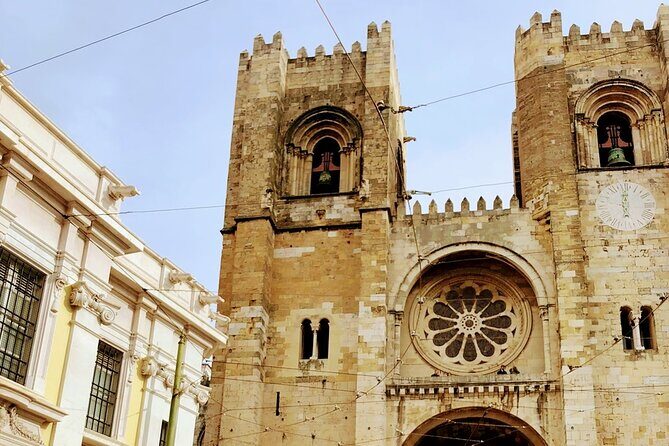
The day kicks off with Lisbon Cathedral, an old cornerstone of Portuguese Lisbon. You’ll spend about 15 minutes here, and admission isn’t included.
What I find useful about this stop is the historical “reset.” The cathedral began under King Afonso Henriques after Lisbon was taken from the Moors, and construction started in 1147. That date helps you anchor everything else you’ll see later, from medieval siege stories to the architectural mix in nearby churches.
Because entrances aren’t included, treat this stop as a “look, orient, and listen” moment. You’ll get the overview so you can decide later if you want more time inside a specific church on another day.
A Tagus viewpoint detour: quick photos, big geography
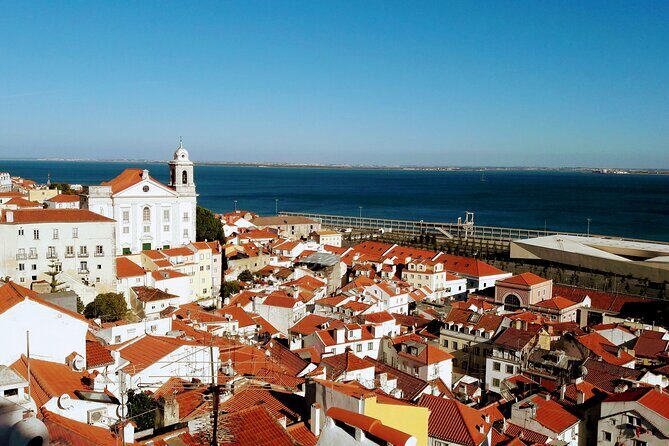
Between major stops, you’ll hit a viewpoint that looks over the Tagus River. It’s short—think a grab-the-view stop—but it’s important. Lisbon’s hills can trick you into thinking everything is random. A river-facing angle gives you the city’s geography in one glance: the water below, the neighborhoods above, and the way routes curve around ridges.
If you like photography, this kind of brief stop is gold. It gives you the “wide shot” without chewing up a big chunk of your 3 hours.
Stop 2: Miradouro das Portas do Sol—sun gates and the 1755 quake
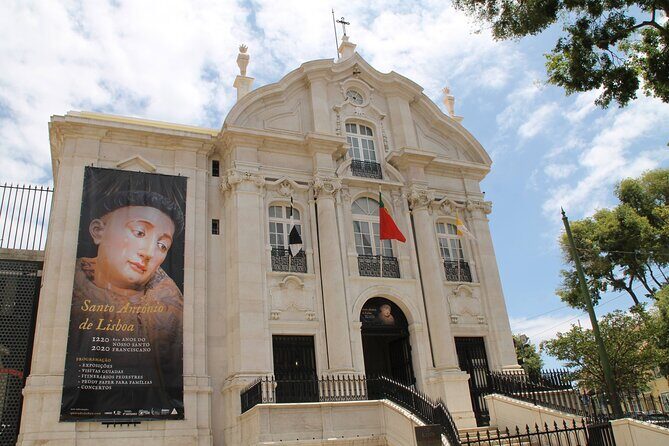
Next is Miradouro das Portas do Sol, about 10 minutes, and it’s free. The name connects to an old connection to a dor of the sun, tied to a Moorish fence line that existed here before it was ruined in the 1755 earthquake.
You’ll also hear why this viewpoint matters beyond the postcard views: you can see parts of the old Cerca Velha wall. That’s a detail that makes the viewpoint feel grounded in history, not just scenery.
This is exactly the kind of stop I recommend early in the day. It gets you thinking about Lisbon as layered—Moorish elements, medieval walls, earthquake aftermath—all sitting in the same sightline.




Street art stop: Amália Rodrigues face and the paving art
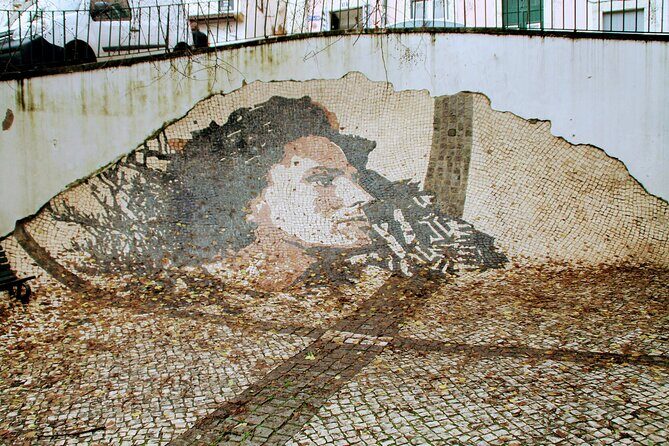
You’ll then pass by a work featuring the face of Amália Rodrigues, created by urban artist Vhils and integrated into the pavement. It’s brief, but it’s a nice reminder that Lisbon’s culture isn’t stuck in stone churches. Music and street art are part of how the city tells its story.
If you like modern Lisbon, don’t skip this moment. The scale can be small, but the impact is strong once you slow down and look at the craftsmanship in the pavement.
Stop 3: Miradouro da Graça and the Convent area
Your next viewpoint is Miradouro da Graça (Sophia de Mello Breyner Andresen), around 15 minutes. Admission isn’t included.
This spot is tied to the Convent of Graça area, and the big hook is the connection to tile panels and the religious history behind the area. It belonged to the Order of Augustinian Hermits, today known as the Order of Saint Augustine, founded in the 13th century.
Even better, you’ll connect the viewpoint to the siege story. The area on Monte de São Gens (Almofala) is where D. Afonso Henriques camped with his troops in 1147. That’s the same “1147 anchor” you started with at the cathedral, and it clicks into place.
After that, the route brings you to Vila Berta, noted as industrial heritage. It was designed and built by Joaquim Francisco Tojal to house factory workers. The goal wasn’t just housing—it was tied to social strata during the industrial era. This is Lisbon telling its more working-life story, not only its royal and religious story.
Stop 4: Miradouro da Senhora do Monte—views in every direction
Miradouro da Senhora do Monte is one of those Lisbon viewpoints that makes you stop talking for a second. You’ll get about 15 minutes, and admission is free.
The view map is impressive:
- To the south: the Palha Sea, Saint George Castle, part of Lisbon downtown
- West: from Bairro Alto toward Monsanto Forest Park
- North: the valley of Avenida Almirante Reis
- Plus the Tagus estuary
Next to this viewpoint is the small, ancient Hermitage of Our Lady of Mount. It’s tied to the tradition that D. Afonso Henriques camped here to conquer the city. Inside, there’s also a legend linked to a stone chair associated with Saint Gens, where pregnant women who sat there were said to have uncomplicated births. The story includes D. Maria Ana from Austria, wife of D. João V, who sat there when pregnant with the heir to the throne.
I like this stop because it gives you three things at once: skyline views, a location that connects to the 1147 siege period, and a human legend that makes the place memorable.
Stop 5: Church of St. Vincent de Fora—outside views, inside meaning
Church of St. Vincent de Fora is next, and you’ll visit mainly from the outside for about 10 minutes. Admission isn’t included.
What’s valuable here is what the guide explains about the architecture and the royal connections. Construction began in 1582, building on an earlier order connected to Afonso Henriques. The church carries different style traces, including Mannerism, Gothic, and Baroque.
Also, this is the place associated with the Pantheon of the Dukes of Bragança, with multiple Portuguese kings of the Bragança dynasty buried here. Even if you don’t go inside, the stop is worth it because it helps you understand why the Lisbon skyline is dotted with monuments tied to power and faith.
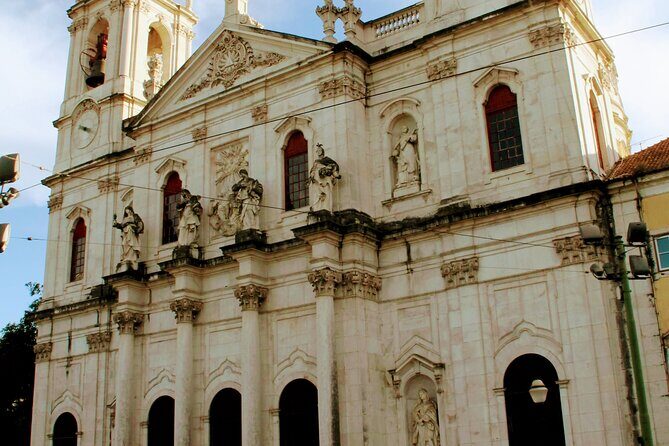
Stop 6: Panteão Nacional—Amália and Eusébio under one roof
Next you’ll reach Panteão Nacional (National Pantheon) for about 30 minutes. Admission isn’t included.
This stop is unusually effective for two reasons. First, it’s cultural beyond politics. The pantheon includes the graves of Amália, the fado diva, and Eusébio, the football player. Second, the building itself has a long, story-heavy timeline: work on the church of Santa Engrácia began in 1682 and ended in 1966—a 284-year span.
If you decide to go inside, plan for that time. Thirty minutes can be enough to see the key parts without feeling rushed, especially if you’re not trying to read every single plaque.
Stop 7: Alfama—hot baths, Arabic roots, and living streets
Then you get into the soul of Lisbon with Alfama, about 10 minutes and free. Alfama is described as the oldest neighborhood and one of Lisbon’s most typical.
Here’s a detail I like because it turns a neighborhood name into a clue: Alfama comes from Arabic al-hamma, meaning fountain or hot water baths. The area was thermal, with water said to run between 20ºC and 34ºC. You’ll hear that the water was chlorinated and had sodium or calcium bicarbonated qualities.
Even though you won’t smell hot springs on the street today, this explanation helps you understand why the neighborhood’s early geography mattered. It also helps your walk later feel less random.
Stop 8: Chafariz de Dentro—fountains that used to sort society
A short stop in Alfama leads to Chafariz de Dentro, free and about 5 minutes. This fountain is described as one of the many that supplied Lisbon, with the oldest record dating to 1285 as the Fountain of Horses.
You’ll also hear the dramatic 14th-century twist: in 1373, the Castilians took the bronze heads of the fountain as a reminder of the sack of Lisbon. In the 17th century it became known as Inside Fountain because it was located on the interior side of the Fernandina fence.
The really eye-opening part is the social system tied to water. Over time, it’s said the fountain had 9 waterspouts, each for different social groups. In 1517, regulation is described with six waterspouts for specific categories—everything from pitchers and jugs to enslaved people, galley Moors, and various groups based on identity and gender. Later, more waterspouts were added in the 19th century.
Even if you only spend a minute looking, this stop gives you a surprising sense of how “everyday infrastructure” once reflected power.
House of Brás de Albuquerque (House of Nozzles)
Right near the fountain area, you’ll have a look at the House of Nozzles, also known as the Museum building for writer José Saramago on the second floor.
The building is noted for layered materials and eras: Roman-era salt tanks at the entrance level, a medieval tower, and Mudejar pavement. It was built in 1523 at the request of D. Brás de Albuquerque, tied to Portuguese India connections. The facade is covered with diamond-shaped stone elements called beaks, with Italian Renaissance influence.
This is a quick stop, but it’s the kind that makes Lisbon feel like one long architectural conversation.
Stop 9: Igreja de Nossa Senhora da Conceição Velha—earthquake rebuild with a past
Next comes Igreja de Nossa Senhora da Conceição Velha, free and about 5 minutes.
This church is a “reconstruction after 1755” story. The first church on the site, Church of Our Lady of Mercy, was described as the second largest Manueline temple in Lisbon after Jerónimos in Belém. After the earthquake, the interior became Pombaline, with a single nave and an altar connection to the Blessed Sacrament chapel of the earlier church.
Even if you don’t enter, you’ll understand why this building is worth noting: it’s a visible marker of Lisbon’s ability to rebuild while keeping layers of memory.
Stop 10: Praça do Comércio and the riverfront legacy
At Praça do Comércio, you’ll spend around 15 minutes, and it’s free.
This square once held the palace of Portuguese kings for about two centuries. It’s described as one of the largest squares in Europe, and it also connects you back to the idea of Lisbon as a port city. The tour also highlights:
- Martinho da Arcada café as the oldest in Lisbon
- The Triumphal Arch on the north side of the square (Rua Augusta)
- The marble steps of Cais das Colunas where heads of state once arrived from the river, with examples like Isabel II of England and Gungunhana
If you’re tired of stairs, this stop is a relief. And it’s practical: after you’ve climbed all day, you get a flat, open space that lets your feet recover.
Cais do Sodré, Pink Street, and Chiado—Lisbon’s social side
From the square area, the route flows toward parts of the city known for eating and nightlife.
You’ll hear about Cais do Sodré next to the river: a lively spot for gastronomy and nightlife, built around the old Ribeira Market, and now known for the Time Out gathering point with restaurants offering both international dishes and local specialties.
Then comes the talk about Pink Street, Lisbon’s nightlife center. It’s also mentioned as being on a New York Times list of twelve favorite streets in Europe. It’s a clear sign that Lisbon likes to celebrate, not just preserve.
You’ll also pass through Chiado, framed as bohemian and historically tied to intellectual gatherings. The tour mentions Brasileira café and a statue of Fernando Pessoa, plus Largo Luis de Camões where the poet behind the Lusiadas is associated with the square.
This section works best if you’re the type who likes a “city personality” mix, not only monuments.
Stop 11: Igreja de Sao Roque—Jesuit survival and plague-era layers
Igreja de Sao Roque is free and about 15 minutes.
This church is described as built at the end of the 16th century, connected to the Society of Jesus, including being the first Jesuit church in Portugal and among the earliest Jesuit churches in the world. It’s also one of the churches said to have survived the 1755 earthquake unscathed.
The guide also connects it to the plague-era world. A cemetery for those who died from the plague is described as being in the area of compassion, outside the walls. The hermitage history includes worship drawing people in quickly, and the church has multiple chapels, mostly Baroque from the early 17th century. One highlight mentioned is the chapel dedicated to Saint John the Baptist, described as an Italian art masterpiece.
Even though you may not go inside during the short stop, the stories you get here make the Baroque details feel purposeful rather than decorative.
Stop 12: Miradouro São Pedro de Alcântara—paired views and the convent story
Miradouro São Pedro de Alcântara is free and about 10 minutes, with views over the east of Lisbon and part of downtown. This is another “look, orient, breathe” moment.
Next to it is the Convent of Saint Peter from Alcântara, founded in the 17th century (1670), and the tour calls out a specific funerary chapel: Cardinal D. Veríssimo de Lencastre. The chapel is noted as being untouched after the earthquake, which gives the place a different kind of credibility—less about rumors, more about physical survival.
Final neighborhood flavor: Bairro Alto and Carmo’s earthquake scars
The route ends with street-level Lisbon atmosphere.
You’ll pass through Bairro Alto, described as old and picturesque with narrow cobbled streets and centuries-old houses. It’s known as Lisbon’s nightlife center since the 1980s, including many bars, restaurants, and fado clubs. It’s also presented as one of Europe’s best-known nightlife districts.
Then you’ll see the Carmo Convent, founded in 1389 by D. Nuno Álvares Pereira. The convent didn’t survive the 1755 earthquake, but some walls were left as they were, with no rebuilding—so the site functions like an open wound turned into memory.
In front of the convent and museum area, you’ll also see the Pombalino do Carmo Fountain, replaced an older fountain on the same site in 1786. That detail makes the ending feel grounded in everyday city life, not just grand monuments.
By the time you roll back to Rua do Comércio, you’ve effectively stitched together Lisbon’s big story: Portuguese power, religious architecture, earthquake aftermath, river trade, and the modern pulse of music and nightlife.
Price and logistics: is $48.12 a good deal?
At $48.12 per person for roughly 3 hours, the value is mostly in two things: time saved and transport handled. You’re getting private transportation and an English guide, plus short stops that cover a lot of “must-see” areas without waiting for taxis or trying to coordinate multiple rides across hills.
The catch is simple: entrances to monuments aren’t included. Some of the most famous places on this route—like the cathedral-related stop and the Pantheon—can cost extra if you want to go inside. If you’re the kind of traveler who prefers just exterior views and viewpoints, you’ll likely feel you got your money’s worth more easily.
It also helps that many viewpoint stops are free, like Portas do Sol, Senhora do Monte, and several Alfama church-and-street moments. So you spend most of your time seeing without a constant tick-tick of paid entry lines.
If you’re traveling as a couple, a small group, or just want your own pace, this price often lands in the sweet spot. If you’re a solo traveler on a strict budget, you’ll want to compare against cheaper transit-based options and accept that walking up Lisbon’s hills can be the “hidden cost” of saving money.
Who this tour suits best (and who should pass)
This is a strong choice if you:
- Want a quick, structured Lisbon overview with less climbing
- Like history explained in a human way, not a textbook format
- Prefer short stops at viewpoints and churches over long museum marathons
- Enjoy a mix of classic monuments and modern Lisbon personality (street art, fado neighborhoods, nightlife streets)
It’s less ideal if you:
- Need lots of time for paid entrances inside major monuments
- Travel with a large suitcase (they say large suitcases aren’t allowed)
- Need a tour that welcomes very young kids (not allowed under age 7)
One more practical note: the experience is said to require good weather. If the day is rainy, the company should offer a different date or a full refund, and scheduling flexibility is something you should expect when weather disrupts sightseeing.
Should you book this Lisbon TukTuk tour?
Book it if you want your Lisbon day to feel organized, story-rich, and easy on your legs. The route gives you a balanced mash-up of viewpoints, church architecture, Alfama’s street-level history, and the riverfront squares that set the tone for the city. With guides like Rodrigo, Miguel, Fernanda, and Thiago getting standout praise, the experience is also likely to feel engaging rather than scripted.
Skip it if you’re mainly chasing inside museum time or you know you’ll only be happy if you spend long hours at paid sites. In that case, you might prefer picking fewer stops and spending extra time where you care most.
If you do book, go with the right mindset: plan for brief stops, lean into the guide explanations, and treat extra entrances as optional upgrades. That’s how you’ll get the best value out of a compact 3-hour loop.
FAQ
How long is the tour?
It’s about 3 hours.
What’s the price per person?
The price is $48.12 per person.
Is this a private tour?
Yes. It’s a private tour/activity, so only your group participates.
Is the tour offered in English?
Yes, it’s offered in English.
Is admission included for monuments?
No. Entrance tickets to monuments are not included.
Where does the tour start and end?
It starts at Rua do Comércio, 1100 Lisboa, Portugal, and ends back at the meeting point.
Is pickup included?
It’s advertised with free pick-up. Your exact start details should be confirmed at booking.
Do I need a mobile ticket?
Yes, it includes a mobile ticket.
Are children allowed?
Children under 7 are not allowed.
What should I know about cancellations and weather?
The experience requires good weather. If it’s canceled due to poor weather, you’ll be offered a different date or a full refund. You can cancel for a full refund if you cancel at least 24 hours in advance.