REVIEW · LISBON
Private Traditional Portuguese Cooking Class in Lisbon with Paula
Book on Viator →Operated by Traveling Spoon · Bookable on Viator
Ferry-to-home dinner starts the fun. This Lisbon experience is interesting because you cross to Almada by ferry, then cook in a real local apartment kitchen with Paula. You’ll work in English and Portuguese, with a meal built around Portuguese comfort food plus Portuguese-Goan favorites.
I especially like two things. First, it feels truly private: only your group participates, and Paula tailors what you cook (including easy vegetarian options). Second, you’re not doing a one-dish demo—you make 2–3 dishes side-by-side and then sit down and eat together.
One thing to think about: it’s an in-home setup. Paula’s home is shared and includes a cat, so it can feel a bit cluttered, and the kitchen may be tight—best if you’re flexible and relaxed about “lived-in” spaces.
In This Review
- Key takeaways before you go
- Almada Ferry Start: Meeting Paula in Cacilhas
- A Welcome Drink and Appetizers at a Lived-In Table
- Starter Focus: Pataniscas de Bacalhau and Goan Bojas
- Main Course Choice: Bacalhau a Braz or Goan Curry
- After Cooking: Where You Eat Matters
- Hands-On Learning: Techniques You Can Use Later
- Price and Timing: Is $84 Worth It?
- Who This Lisbon Class Fits Best
- Should You Book Paula’s Portuguese Cooking Class?
- FAQ
- FAQ
- What languages is the class offered in?
- Where does the class start?
- How long is the cooking experience?
- Is this a private experience or shared with others?
- What dishes will we cook?
- Can the class accommodate vegetarian diets?
- Is this taught in a professional cooking school?
- Will there be a meal to eat, or is it just cooking?
- Is free cancellation available?
Key takeaways before you go
- Start with a ferry ride: meeting in Cacilhas and crossing over gives you instant Lisbon momentum.
- Hands-on, not showroom cooking: you prep and cook multiple courses in Paula’s kitchen.
- Portuguese + Portuguese-Goan range: bacalhau meets Goan flavors like curry and gram-flour fritters.
- Vegetarian can fit: you can expect vegetarian accommodations without derailing the menu.
- A real local home feel: this isn’t a cooking school set-up, so expect a lived-in kitchen.
- Better for food lovers who like questions: you’ll learn techniques you can repeat later, not just eat well.
Almada Ferry Start: Meeting Paula in Cacilhas
Your time starts right on the river. Paula meets you at the ferry area in Cacilhas, near the point listed as Dá Cacilhas (LG Alfredo Dinis, 2800-252 Almada). From downtown Lisbon, you take a short ferry ride—about 7 minutes—then you’re in a calmer, more local rhythm.
After the ferry, Paula guides you on a roughly 10-minute walk through the center of Almada. This walk matters because it gives you context: you’re not just transported to a kitchen. You’re getting oriented to a neighborhood that feels distinct from the tourist core, which makes the meal feel earned.
Also, this is close to public transport, so it’s easier to connect to your day. And if anything is unclear—menu choices, exact meeting timing, or directions—Paula asks that you message her directly via WhatsApp.
You can also read our reviews of more private tours in Lisbon



A Welcome Drink and Appetizers at a Lived-In Table
Once you arrive at Paula’s place, the evening eases in with a welcome drink of Portuguese wine and appetizers. This is a small thing, but it sets the tone. You’re not standing around waiting for instruction; you’re tasting something and getting comfortable before you start cooking.
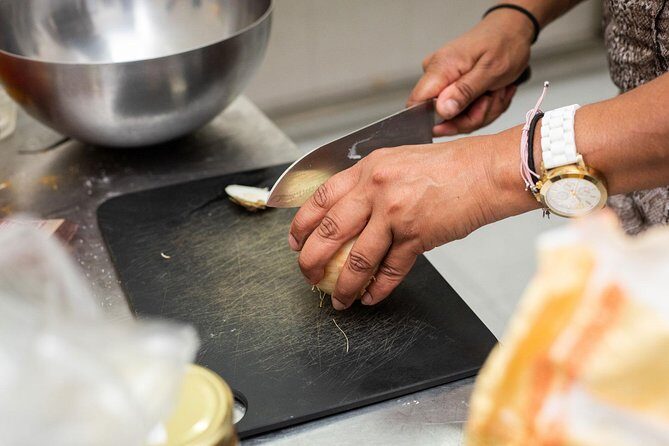
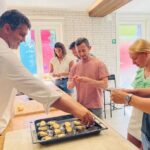
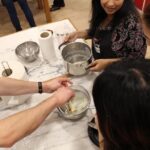
Then you move into the kitchen for the first hands-on step. The experience is built around making appetizers side-by-side, which is the best way to learn Portuguese cooking in a home setting. You watch, you do, you get corrected, and you start picking up the patterns—how ingredients behave, how sauces build, and when to trust the pan.
One practical note: Paula’s home is shared and includes a cat, so expect a slightly cluttered feel. If that kind of setting stresses you out, you’ll want to go in with a relaxed mindset and focus on the food and the lesson.
Starter Focus: Pataniscas de Bacalhau and Goan Bojas
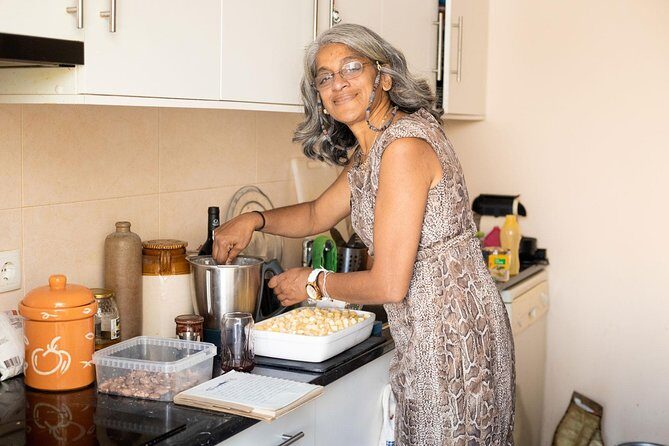
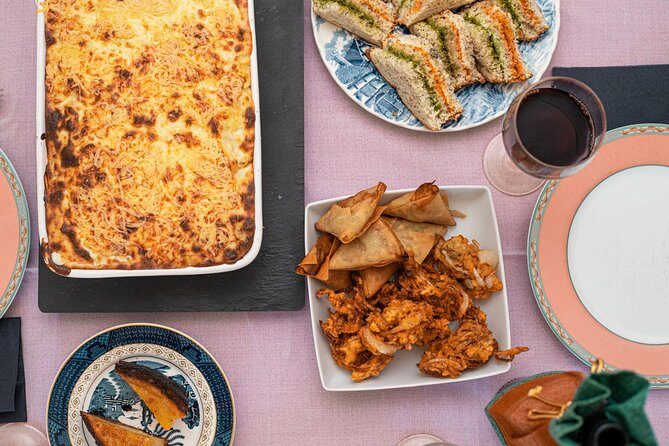
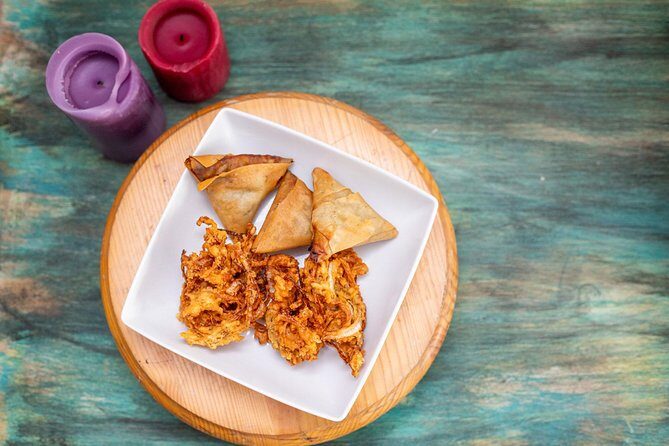
The starter lineup is where you get the most variety per bite. One classic is pataniscas de bacalhau, Portuguese cod fritters. These are hearty, savory, and very “Portugal at home”—and they teach you technique, not just recipes.
On the other side, you can make Goan bojas, which are gram-flour fritters flavored with onion and cumin seeds. Even though it’s a fritter-style dish, the flavor profile is different: the spice direction is Goan, while the cooking approach still feels familiar in a Portuguese kitchen.
You’ll typically cook two starters in parallel, so you’re tasting as you go and comparing how texture changes. This is one of the most satisfying parts because both starters share the same “shape” of cooking (batter, frying, timing), but they come out with distinct character.
If you’re the type who likes understanding why something turns out crunchy or soft, these two starters are a strong match. You get a natural side-by-side lesson on batter consistency and frying rhythm.
Main Course Choice: Bacalhau a Braz or Goan Curry
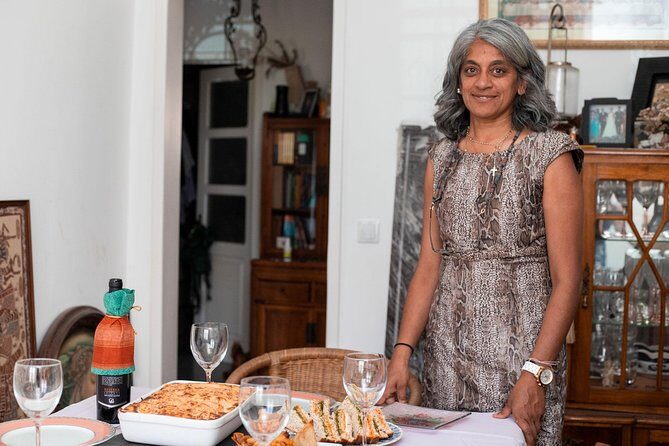
After starters, you shift into the main course. Here you get a real choice between a Portuguese dish and a Portuguese-Goan option, typically bacalhau a braz or a Goan curry.
If you pick bacalhau a braz, you’ll work with the components of this popular comfort meal: shredded potatoes and egg, finished in a way that turns the cod into something rich and filling. It’s the kind of dish that tastes better the more you learn the timing—when to cook down the ingredients and when to finish so it stays satisfying, not dry.
If you choose Goan curry, you’ll work in another direction entirely—warming spices and saucier comfort. The value here is not just the meal. You’ll see how Portuguese home cooking can expand beyond Portugal’s borders while still feeling connected.
Either way, the hands-on structure stays the same: you cook, you adjust, and then you eat. And since Paula can cater vegetarian options, you’re not stuck hoping the menu magically has a plan for your diet.
After Cooking: Where You Eat Matters
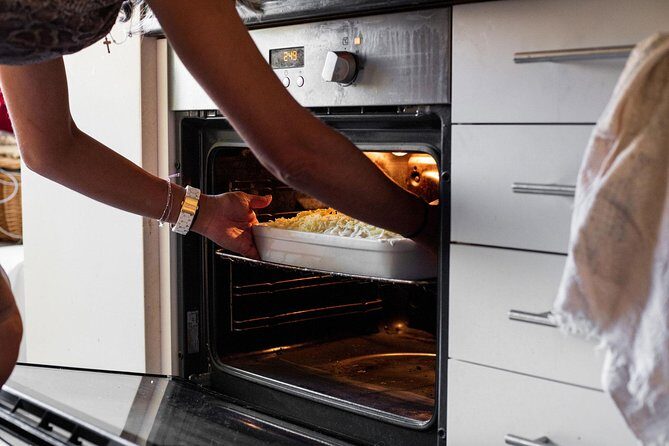
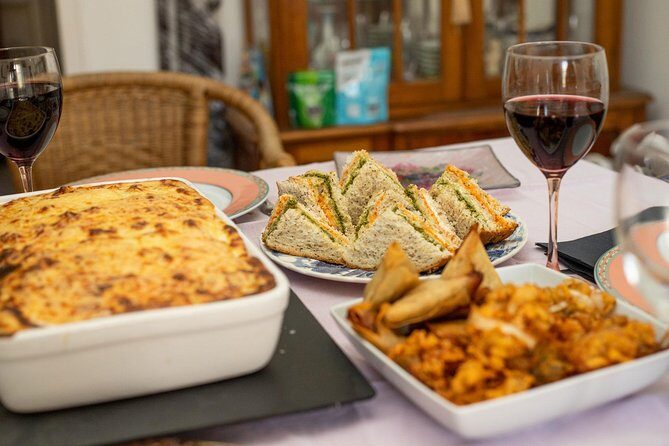
Once everything’s ready, you sit down to eat together at Paula’s dining table. In some cases, especially for larger groups, Paula can use a cooking studio table across the street, which helps keep the experience comfortable.
This detail is more important than it sounds. In a small home kitchen, space affects how much you talk, learn, and actually participate. When there’s enough room to gather for the meal, the whole experience feels more relaxed and less like a shift in a busy workspace.
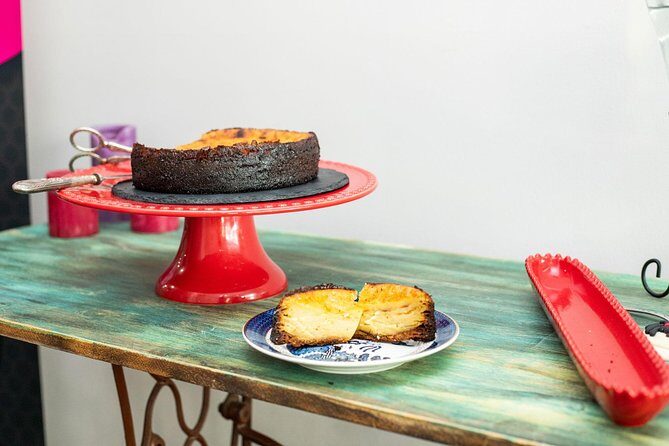
You’ll also get dessert and coffee or tea to close the meal. That final course is part of why cooking classes in homes work better than schools: the meal becomes a full story, not a checklist of tasks.
If you want something you can recreate, this is also when you’ll want to pay attention to the final seasoning. The best learning comes from noticing what tastes “right” on the plate compared to how the food looked in the pan.
You can also read our reviews of more cooking classes in Lisbon



Hands-On Learning: Techniques You Can Use Later
This isn’t a professional cooking school. It’s in-home instruction, and that changes the feel in a good way. You’re learning the Portuguese and Portuguese-Goan way—simple, practical steps, plus Paula’s tips on what to watch for as you cook.
Many people take this class not only to eat well but to leave with know-how. You can expect Paula to explain techniques and offer cooking tips during the prep and cooking, including guidance that helps you get the results later at home.
A couple of practical bonuses show up in real sessions. For example, in at least one experience, Paula provided recipes after the class and shared tips on where to find the tin shapes for pastel de nata. That kind of information is small but useful—because it turns a memory into an actual repeatable project in your own kitchen.
If you’re bringing a family member or traveling with friends, this hands-on, teacher-plus-host format also makes conversation easy. Paula isn’t only teaching; she’s sharing her way of life while you cook.
Price and Timing: Is $84 Worth It?
At $84 per person for about 3 hours 30 minutes, the pricing sits in the midrange for private, hands-on cooking experiences. The value comes from what you actually get to do.
You’re not just watching a cook plate food. You’re making starters—often two—then moving to a main dish with a choice between Portuguese and Goan styles. Add a welcome drink, appetizers, dessert, and coffee or tea, and you’re basically getting a full meal plus instruction in one sitting.
It’s also private. That matters because it affects pace and attention. You can ask questions, you can work at your own speed within the group, and you’re not competing with strangers for standing-room by the counter.
One more value driver: Paula is set up to accommodate vegetarian options easily. Many food-focused experiences become a compromise for non-meat eaters. Here, you can plan around what you’ll actually eat.
Who This Lisbon Class Fits Best
This cooking class is best if you want a genuine home experience, not a performance. You’ll enjoy it most if you like food you can taste and recipes you can repeat, and if you don’t mind that a real apartment kitchen is not a shiny studio.
It also works well for people who want cultural context without lectures. Paula shares stories and cooking tips while you cook, and the menu choice (Portuguese or Goan main) makes it feel personalized.
I’d think twice if you strongly prefer very tidy, professional environments. The home includes a cat and can be cluttered, and kitchens can be small. If you’re okay with that, you’ll likely feel very comfortable and won’t take it as a distraction.
This is also a strong pick for English speakers who want a comfortable language bridge. The experience is offered in English (and Portuguese), so you’re not left guessing.
Should You Book Paula’s Portuguese Cooking Class?
I think you should book if your top goal is hands-on learning in a local home, with a meal that goes beyond one signature dish. The ferry start to Almada adds charm, and the menu structure—two starters plus a main choice—means you’ll leave both full and capable.
If you want a museum-style class in a large cooking school with spotless surfaces, this probably won’t be your vibe. But if you’d rather cook with a real person in a real kitchen, taste Portuguese wine, and learn techniques that fit everyday cooking, this is a very solid bet.
FAQ
FAQ
What languages is the class offered in?
The experience is offered in English and Portuguese.
Where does the class start?
It starts at Dá Cacilhas (LG Alfredo Dinis, 2800-252 Almada, Portugal).
How long is the cooking experience?
It runs for about 3 hours 30 minutes.
Is this a private experience or shared with others?
This is a private tour/activity. Only your group will participate.
What dishes will we cook?
You’ll learn to make 2–3 Portuguese and Portuguese-Goan dishes, typically two appetizers and one main dish. The exact choices can include pataniscas de bacalhau, Goan bojas, bacalhau a braz, and Goan curry.
Can the class accommodate vegetarian diets?
Yes. Vegetarian options are easily catered for.
Is this taught in a professional cooking school?
No. It’s an in-home cooking and cultural experience in Paula’s kitchen, not a cooking school setup.
Will there be a meal to eat, or is it just cooking?
You’ll cook and then sit down to eat together, with dessert and coffee or tea at the end.
Is free cancellation available?
Yes. You can cancel up to 24 hours in advance for a full refund.