REVIEW · LISBON
Private Lisbon Historical Tour on a Tukxi
Book on Viator →Operated by Tukxi Madeira & Lisbon · Bookable on Viator
Lisbon looks different from a tuk-tuk seat. This private ride mixes motion and pauses, so you get neighborhoods like Mouraria, Alfama, and Graça plus key viewpoints and photo moments. The guide-driver keeps the story going as you roll through the cobblestone streets, with stops that make sense even if you only have a short window.
I like that it’s genuinely private: up to 4 people, with a driver-guide who can tailor things to what your group wants to see. I also like the mix of sights, not just viewpoints, including the urban art angle and a major monument stop. One thing to keep in mind is that it’s open-air and depends on good weather, so plan for a backup day if skies turn gray.
You’ll start at Time Out Market and end right back there, which makes this easy to slot into a day of exploring. In the feedback I saw, guides like Claudio (German-speaking) were flexible with timing, even adjusting where you meet so you can roll out a bit sooner. If you’re traveling with kids, the short stop times help; the only drawback is that 2 hours is tight, so you’ll be seeing highlights rather than lingering like a full-day tour.
In This Review
- Quick reasons this Tukxi tour works so well
- Time Out Market to the hills: how the ride starts
- What neighborhoods you’ll actually get, and why it helps
- Lisbon’s 12th-century Romanesque cathedral stop
- Miradouro de Santa Luzia: rooftops, the Tagus, and a ticket-included pause
- The Alfama-to-São Jorge view: why this angle hits differently
- Graça viewpoints: Senhora do Monte and Sophia de Mello Breyner Andresen
- Urban art at street level: Vhils and an Amália Rodrigues portrait
- Panteão Nacional: Portugal’s heroes in 15 minutes
- Price and value: what $189.89 gets you for up to 4
- Timing, pace, and who this tour suits best
- Booking smart: what to watch for before you go
- Should you book the Private Lisbon Historical Tour on a Tukxi?
- FAQ
- How long is the Lisbon Tukxi historical tour?
- How many people are in a group?
- What does the tour cost?
- Where does the tour start and end?
- Is pickup offered?
- Is the ticket mobile?
- Are the viewpoint entrances included?
- Is Panteão Nacional admission included?
- Is this a private tour?
- What if the weather is bad?
Quick reasons this Tukxi tour works so well
- Private, up to 4: you control the pace more than on a shared group ride
- Top viewpoints in one circuit: Tagus River and hilltop views without long stair marathons
- Story stops, not just photos: religious heritage, national heroes, and local identity
- Street art with recognizable names: work by Vhils and an Amália Rodrigues portrait
- Short, timed visits: 10–15 minutes at most stops helps you hit more highlights
Time Out Market to the hills: how the ride starts
Your tour begins at Time Out Market (Mercado da Ribeira) on Av. 24 de Julho, and it finishes back at the same meeting point. That simple loop matters in Lisbon, where getting back across neighborhoods can eat time if you’re coordinating buses, trams, and walking.
This is a mobile ticket experience, so you’re not worrying about printed vouchers. Pickup is offered, which is a nice option if your hotel is a hike away from the meeting point. It’s also noted as near public transportation, so if you do not want pickup, you have alternatives.
The ride itself is in a Tukxi, an open-air tuk-tuk style vehicle. Practically, that means you’ll feel the breeze and take in streets as you pass them. It’s not the kind of tour where you sit in climate control while Lisbon slides by; you’ll be more aware of the city. That’s great for getting your bearings fast, but it also means you’ll want to dress for the day.
You can also read our reviews of more private tours in Lisbon



What neighborhoods you’ll actually get, and why it helps
This tour focuses on Lisbon neighborhoods that are famous for character and viewpoint power: Mouraria, Alfama, and Graça. The order matters less than what it accomplishes. These areas are built on steep hills and older street grids, which can be exhausting if you try to do it all by foot on your own.
A private tuk-tuk ride fixes that problem in a way public transport can’t. You still get the sensory side of Lisbon—cobblestones, curves, narrow lanes—but you’re not burning your energy before you reach the viewpoints. The guide-driver also brings you history and traditions as you go, so the places don’t feel random.
One example from the experience: the meeting point adjustment in the feedback (Claudio being already there and moving the start earlier) is the kind of flexibility that makes a private tour feel more like a plan and less like a ticketed shuffle. That matters when you’re trying to time your day around weather, meals, and other tickets.
Lisbon’s 12th-century Romanesque cathedral stop
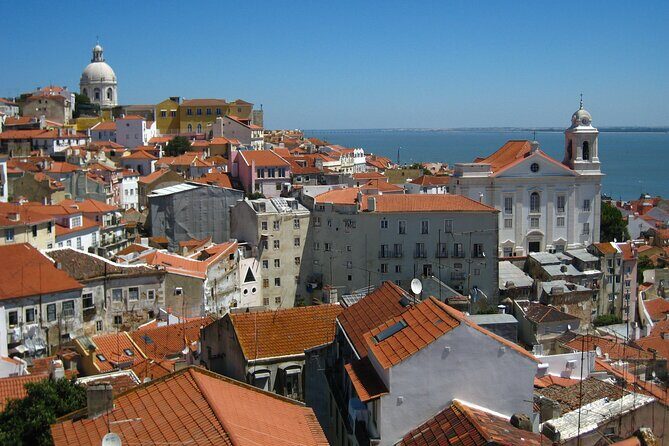
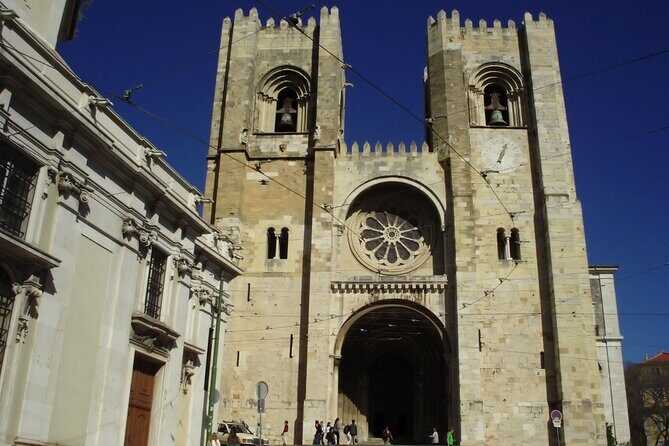
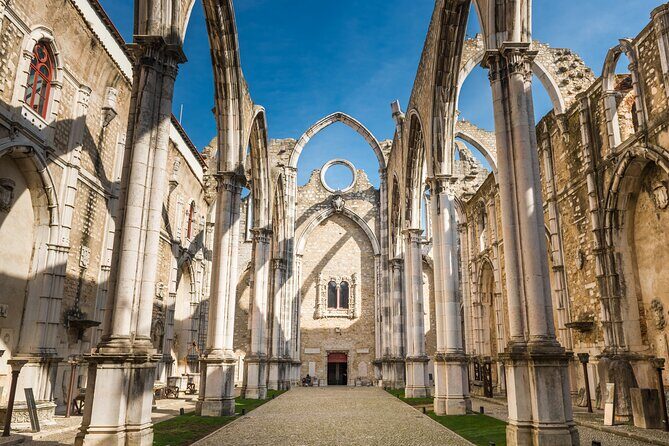
The first big heritage moment is a stop at Lisbon’s Romanesque cathedral dating back to the 12th century. Even if you’re not a church-historian, this kind of structure gives you something hard to get elsewhere: physical evidence of long faith traditions, built walls, and architectural continuity.
You’ll have a chance to witness the cathedral and explore its ancient walls, with the guide framing it as a powerful symbol of faith. The practical value here is that it anchors the rest of the tour. After you’ve seen the cathedral’s older, heavier feel, the lighter, view-focused stops around the hills start to make more sense. Lisbon’s viewpoint culture isn’t just scenery; it grew around lived communities on slopes, with landmarks that mattered.
A consideration: your time is shared across multiple stops, so you won’t get an hour-plus, slow-motion cathedral visit. If you want to take your time reading every corner, think of this as a meaningful introduction, then plan a longer revisit later on your own.
Miradouro de Santa Luzia: rooftops, the Tagus, and a ticket-included pause

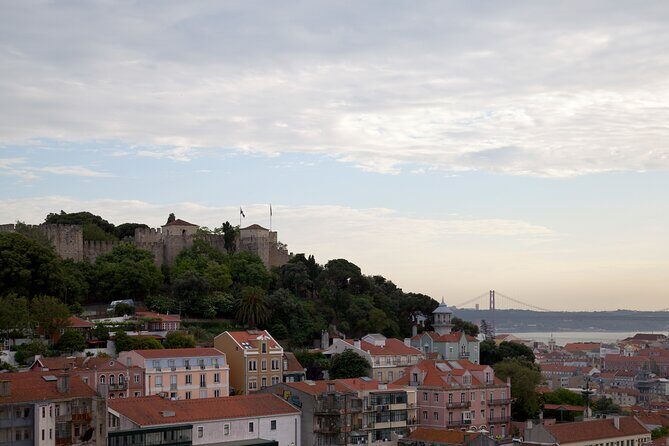
Next up is Miradouro de Santa Luzia, a viewpoint area known for panoramic views over Lisbon. The description emphasizes terracotta rooftops cascading down the hills and the Tagus River glinting in the sun. That combination is why this stop is always a camera magnet: you get a layered scene—foreground rooftops, mid-level streets, and then the water.
You’ll spend about 15 minutes here, and this stop includes an admission ticket. That tells you it’s not just a free pull-off with a view; there’s a managed viewpoint area. For your planning, it’s good news: you won’t need to decide on entrance fees on the spot for this one.
Drawback to consider: like many miradouros, it can be crowded in peak times (even with a private group ride, the viewpoint itself can have other people). Your best strategy is to arrive, grab your bearings, and then take a second look after the first wave moves on. The timed structure helps because you’re not stuck waiting for the crowds to thin.
The Alfama-to-São Jorge view: why this angle hits differently
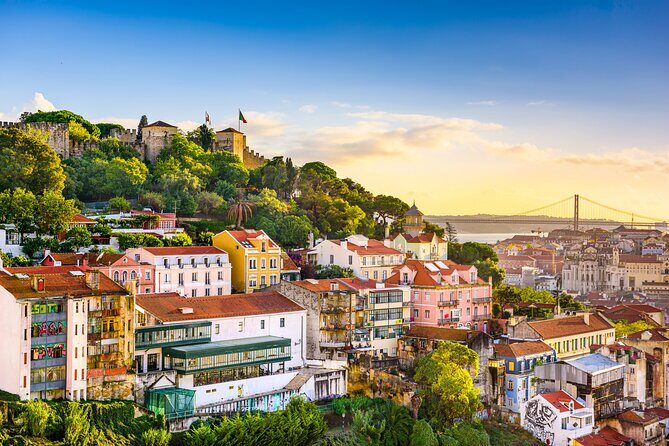
After Santa Luzia, the tour includes another viewpoint moment described as iconic—stretching from the historic Alfama district toward São Jorge Castle. This stop is shorter in the list, but the point is clear: you’re getting a perspective corridor that connects Lisbon’s old heart to its most famous hilltop landmark.
Why it’s valuable: castle views can be repetitive if you’ve seen them from only one side. Here, you’re building a mental map. Alfama is all texture—hills, winding streets, small-scale life. São Jorge Castle gives you the landmark anchor. When you combine those, Lisbon starts to feel like a single place rather than a set of disconnected photos.
One practical note: viewpoints are outdoors, so wind can be real. If it’s windy, keep your phone steady and plan your photos quickly. With limited stop time, quick shots and one slow look usually works best.
You can also read our reviews of more historical tours in Lisbon





Graça viewpoints: Senhora do Monte and Sophia de Mello Breyner Andresen
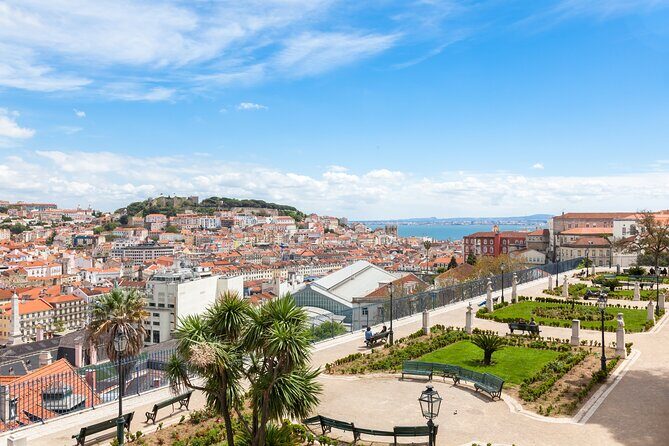
Then you climb into the Graça area, where the views are almost bird’s-eye and the city looks like it folds outward. You’ll hit Miradouro da Senhora do Monte first, with about 10 minutes at the stop. It’s described as one of the most iconic viewpoints, with views across the hills, the Tagus River, and São Jorge Castle. Importantly, it’s listed as ticket free.
After that comes Miradouro da Graca (Sophia de Mello Breyner Andresen), another 10-minute viewpoint. This one is described as a specific kind of scene: Lisbon in full glory, plus the character of Graça itself—19th-century colorful buildings and its own atmosphere. This stop is also listed as ticket free.
What I like about these two Graça stops is that they don’t feel like carbon copies of each other. Even if you’re standing in the same general area, the viewpoint design and angle make a difference. One gives that strong birds-eye sweep; the other adds a sense of place by highlighting the neighborhood visual character.
Possible drawback: because both are free, you might assume you’ll get unlimited time. You won’t. The tour moves on, and that’s a feature for most people. If you’re the type who wants to sit for 30 minutes and sketch, bring a plan to return later.
Urban art at street level: Vhils and an Amália Rodrigues portrait
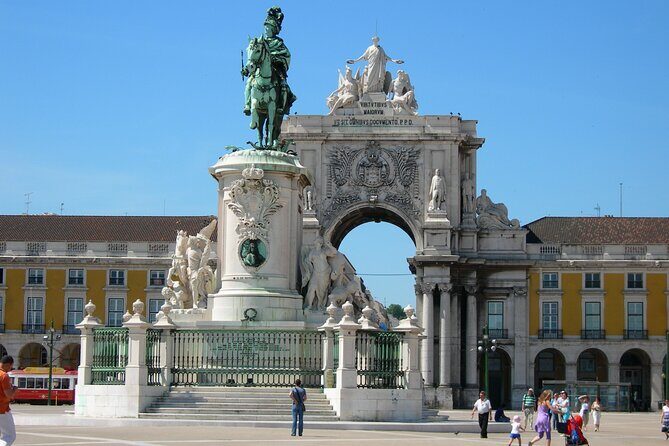
Between the viewpoint rhythm, the tour takes you into Lisbon’s urban art side. You’ll see work by Vhils, a renowned street artist known for turning buildings into art pieces. The description also points to a portrait of Amália Rodrigues, honoring Portugal’s legendary fado singer.
This stop is a smart choice because it changes the pace. From an “I want Lisbon to feel real” perspective, street art offers texture you can’t get from major monuments alone. It also links Lisbon to creativity—how the city talks to itself in public space.
Practical consideration: street art visibility can depend on light and angles, and some pieces are easier to view than others depending on where you stand. Since your time is limited, focus on seeing the art from one good angle, then let the guide point out the specific details they want you to notice.
Panteão Nacional: Portugal’s heroes in 15 minutes
The tour ends with a stop at Panteão Nacional (the National Pantheon). The description frames it as a place honoring Portugal’s most esteemed figures, dedicated to writers, military leaders, and national icons.
You’ll have about 15 minutes at this stop, and admission is listed as not included. That’s important for planning: bring a little mental budget for any entrance fee, and don’t expect everything to be fully covered under the tour price.
Why it’s a good capstone: after cathedral history, city viewpoints, and modern street art, the Pantheon brings it back to national identity. You leave with a sense of how Portugal remembers people who shaped its story—then you can connect that to what you saw in Alfama and Graça.
Possible drawback: Pantheons and similar monuments can be visually busy, and 15 minutes is more of a guided highlight than a full visit. If you feel pulled in, you’ll probably want to return later for a longer look on your own.
Price and value: what $189.89 gets you for up to 4
At $189.89 per group (up to 4), this is priced like a private experience, not a public tour. That matters because you’re buying three things at once: a driver-guide, a private tuk-tuk ride, and a tight route that hits multiple key areas in about 2 hours.
Here’s where the value can really show up:
- If you’re traveling as a family or small group, splitting the cost makes it more comparable to a shared tour, while still keeping the private pacing.
- You’re not just getting views. The route includes a 12th-century Romanesque cathedral stop, multiple miradouros, street art with known artists, and the Pantheon.
- Pickup is offered, which can reduce wasted time getting to the best spots.
If you’re solo or just two people, it’s still reasonable if you care about comfort and efficiency. If you enjoy wandering and are happy walking between viewpoints, a cheaper option might exist. But if you want a guided route that keeps you moving and minimizes the logistical pain of steep hills, this fits.
Timing, pace, and who this tour suits best
The whole experience runs about 2 hours, with most stops around 10 to 15 minutes. That pacing is ideal when your goal is getting the core story of Lisbon quickly, especially if you’ve got limited time between meals, day trips, or other bookings.
It also suits people who want a private experience without needing a custom itinerary. The stops are planned and packed with variety, so you’re not constantly asking what’s next. The guide will also respond to what your group asks for; in the feedback, that adaptability came up with Claudio.
Who it suits best:
- Families who want kids-friendly stop lengths and minimal walking on hills
- Small groups (up to 4) who prefer private guiding
- People who want both classic Lisbon and the street art side
- First-time visitors who need a fast orientation of Alfama and Graça
Who might want to think twice:
- Anyone who hates outdoor viewpoints or is sensitive to wind in an open-air vehicle
- People who want a long, slow monument deep dive rather than a highlights route
Booking smart: what to watch for before you go
A couple of practical points from the tour details that you can plan around:
- Confirmation is received within 48 hours, subject to availability.
- The tour requires good weather. If it’s canceled due to poor weather, you’ll be offered a different date or a full refund.
- You’ll start and end at the same location, which is easy for planning food and transit.
If your trip has only one day with decent weather, this could be a smart bet. If your schedule is flexible, you can let the forecast guide your choice.
Should you book the Private Lisbon Historical Tour on a Tukxi?
I’d book it if you want Lisbon to feel organized on your terms. The private tuk-tuk format makes the steep parts easier, and the route balances classic landmarks with viewpoint culture and modern street art. You’ll get a guided sense of how neighborhoods connect—cathedral heritage, hilltop miradouros over the Tagus, and the Pantheon’s national identity.
I might skip or postpone it if you only want slow, long museum time, or if weather is unreliable during your visit. Otherwise, this is a strong “two-hour highlight engine” for a small group that wants real Lisbon texture without spending the whole day walking uphill.
FAQ
How long is the Lisbon Tukxi historical tour?
It lasts about 2 hours.
How many people are in a group?
The tour is for up to 4 people per group.
What does the tour cost?
It costs $189.89 per group.
Where does the tour start and end?
It starts at Time Out Market (Mercado da Ribeira) and ends back at the same meeting point.
Is pickup offered?
Yes, pickup is offered.
Is the ticket mobile?
Yes, it uses a mobile ticket.
Are the viewpoint entrances included?
Miradouro de Santa Luzia includes admission ticket. Miradouro da Senhora do Monte and Miradouro da Graca are ticket free.
Is Panteão Nacional admission included?
No. Admission for Panteão Nacional is not included.
Is this a private tour?
Yes. Only your group participates.
What if the weather is bad?
The experience requires good weather. If it’s canceled due to poor weather, you’ll be offered a different date or a full refund.