REVIEW · LISBON
Lisbon: Jewish History Private Tour
Book on GetYourGuide →Operated by Essência da Latitude Turismo Lda · Bookable on GetYourGuide
Lisbon has a hidden story worth walking. This private Sephardic Jewish history tour links viewpoints and old streets to the people and events that shaped Jewish life in Portugal. You get a different angle on Lisbon too, thanks to stops in areas most visitors skip.
I especially like how the route balances big-picture history with specific places you can still point to, from Alfama’s old lanes to the Money Museum and the Carmo Museum. In the guide feedback I saw names like Vasco, Diogo, and Daniel praised for making the context click fast. That said, the tour is not wheelchair-friendly, and it does involve walking on uneven historic streets.
You’re paying a premium, but the value is there: hotel pickup and drop-off in central Lisbon, private transportation, water, and entrance fees are included. Still, you’ll want comfortable shoes, and you’ll plan around a couple museum day-of-week limits.
In This Review
- Key highlights to know before you go
- Starting in the best spot to read Lisbon
- Alfama and the feel of old Lisbon neighborhoods
- Baixa/Commerce area and the city’s shifts over time
- “Small Jerusalem” and the 1755 earthquake aftermath
- Money Museum: a medieval wall with 1000 years behind it
- Rossio Square and the Inquisition chapter
- 1506 Jewish Massacre Memorial: remembering through place
- Chiado: influential families and a different Lisbon mood
- Largo do Carmo Square and the walk toward Carmo
- Carmo Convent / Carmo Archaeological Museum: artifacts tied to Jewish life
- Crypto Judaism and Lisbon as a refuge in WWII
- The private format: what it does well (and what to watch)
- Price and value for $152 per person
- Who this tour suits best
- Should you book this Lisbon Jewish History private tour?
- FAQ
- How long is the Lisbon Jewish History private tour?
- What languages are the guides?
- Is hotel pickup and drop-off included?
- What’s the group size limit for a private tour?
- Is it wheelchair accessible?
- Are there days when museum stops might be unavailable?
- What should I wear or bring?
- Is food included during the tour?
- Can children join?
Key highlights to know before you go
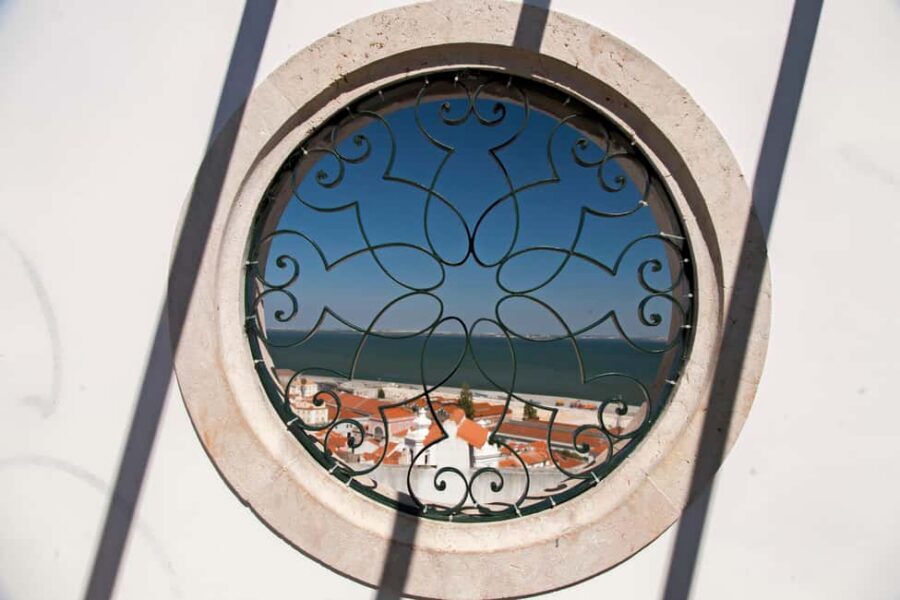
- Alfama: you’ll walk in Lisbon’s older fabric, where traces of Jewish presence still show up.
- Small Jerusalem context: the route frames Lisbon’s largest Jewish quarter before the 1755 earthquake.
- Money Museum’s medieval wall: a stop designed to make history feel physical, not just theoretical.
- Rossio Square and the 1506 memorial: you’ll get the darker Inquisition chapter in a clear, place-based way.
- Carmo Convent and archaeology: you’ll see artifacts tied to Jewish life in Portugal, not just buildings and plaques.
- Private group (max 8): easier pace, more questions, and less rushing between viewpoints.
Starting in the best spot to read Lisbon
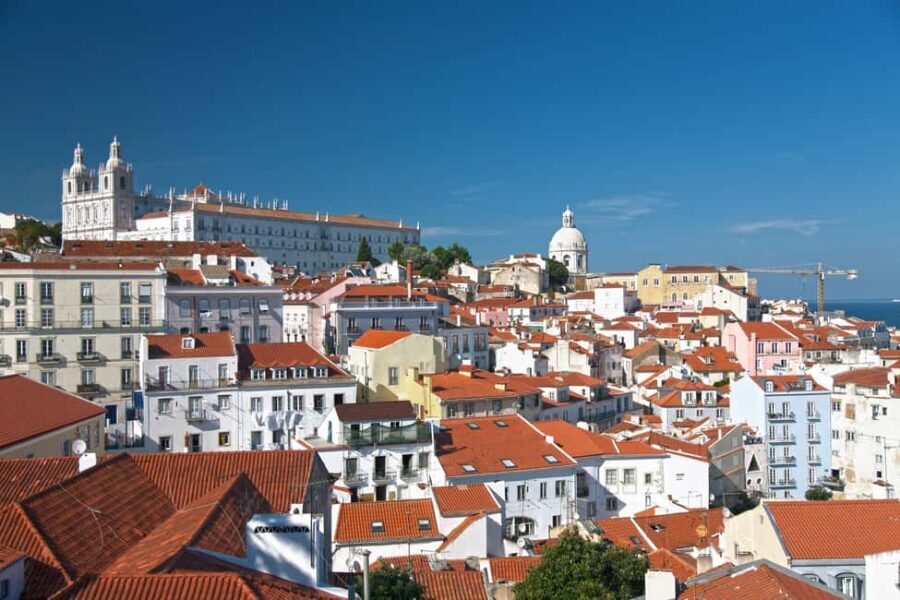
The tour kicks off with hotel pickup in central Lisbon, then heads up to one of the city’s highest viewpoints: Miradouro da Senhora do Monte. This isn’t a random “pretty view” stop. It’s a smart way to get oriented before you start threading through neighborhoods.
From the hill, you can see how Lisbon’s hills and street layers work. That matters once the tour begins talking about Jewish quarters and how communities were spread through the city. From up here, you’ll understand why certain neighborhoods felt connected to trade, power, or religious life.
You also get a gentle warm-up for what’s next: the route shifts from viewpoint to walking streets, and that change happens early on. If you tend to get lost in Lisbon’s hills, you’ll likely appreciate this first.
You can also read our reviews of more private tours in Lisbon



Alfama and the feel of old Lisbon neighborhoods
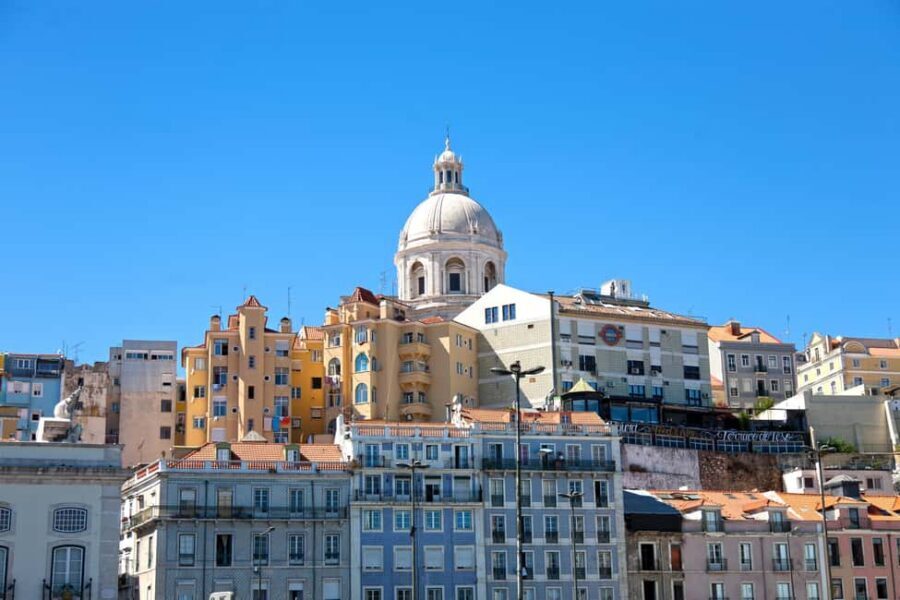
Next comes Alfama, Lisbon’s second-oldest district in Europe. You’ll spend about three quarters of an hour walking with a guide, which is a good time window: long enough to notice details, short enough to avoid burning out before the more museum-heavy parts.
Alfama is where Lisbon still feels “layered.” Narrow streets, older buildings, and winding turns help you sense how daily life might have unfolded long ago. The tour focuses on the physical signs of Jewish presence that still linger here, so you’re not just admiring architecture. You’re practicing reading the city.
A key value of this stop is that it helps you visualize the places tied to Sephardic Jewish heritage in Lisbon. You don’t need to be a history expert. The guide’s job is to point you to what to see and explain why it matters.
Baixa/Commerce area and the city’s shifts over time
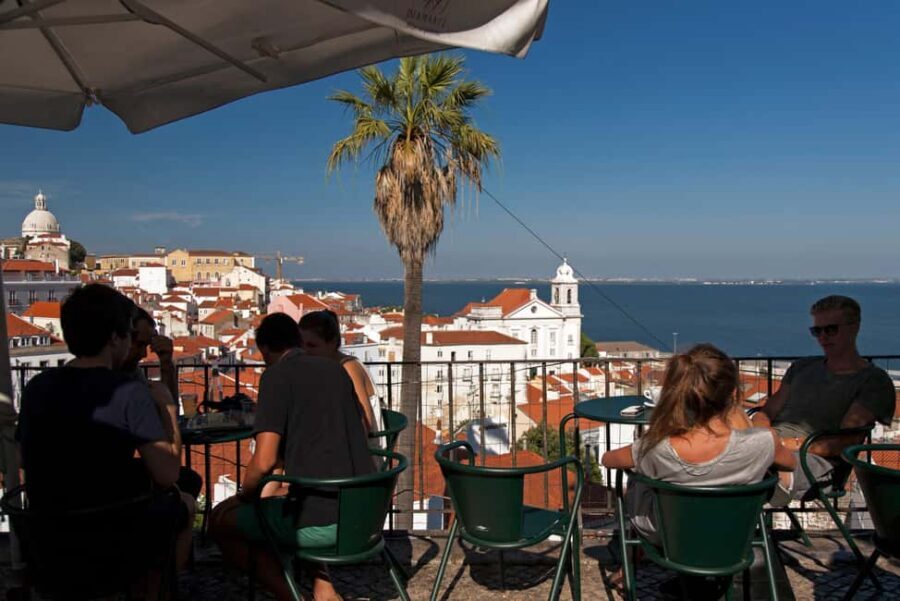
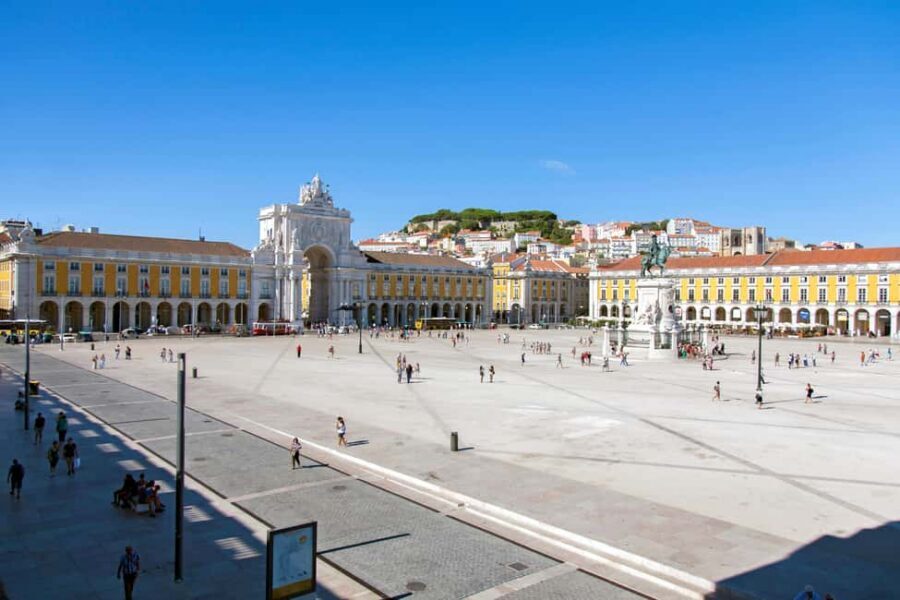
After Alfama, the route moves toward Baixa de Lisboa and the Commerce area (Commerce Square). This is the “city evolution” segment. Lisbon’s story includes rebuilding and reworking, and this part of town helps you understand that the Jewish presence wasn’t frozen in time.
You’ll get a quick orientation here, but the idea is bigger than sightseeing. The tour is mapping how communities fit into Lisbon as a living, changing place. It’s also a way to connect viewpoints and old streets to areas tied to broader civic life.
If you’re the kind of traveler who likes a route that makes sense, you’ll likely like this pacing: you’ve already seen a neighborhood feel, now you’re placed in the bigger city picture.
“Small Jerusalem” and the 1755 earthquake aftermath
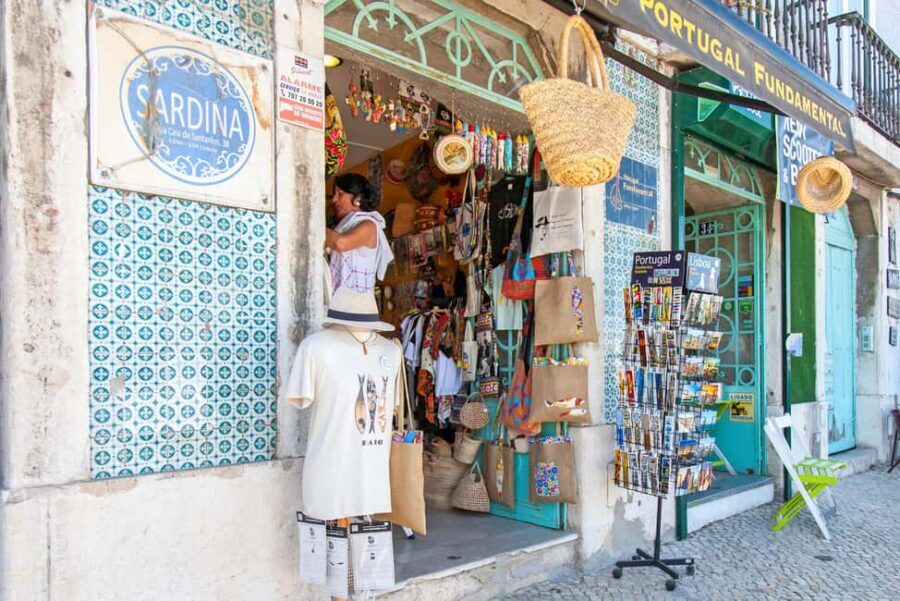
One of the tour’s strongest themes is the story of what was once called Small Jerusalem, described here as the largest Jewish quarter in Europe before it was devastated by the 1755 earthquake.
This is heavy material, but the stops are set up to keep it grounded. The tour doesn’t just throw dates at you. It connects the quake to why so much was destroyed—and how traces still remain even after devastation. That approach can make history more digestible because you’re not only remembering tragedy, you’re also learning how people adapted after it.
For me, the best part of this theme is that it turns a landmark-based sightseeing day into a “why the city looks like it looks” lesson. Lisbon isn’t only pretty. It’s a record.
Money Museum: a medieval wall with 1000 years behind it
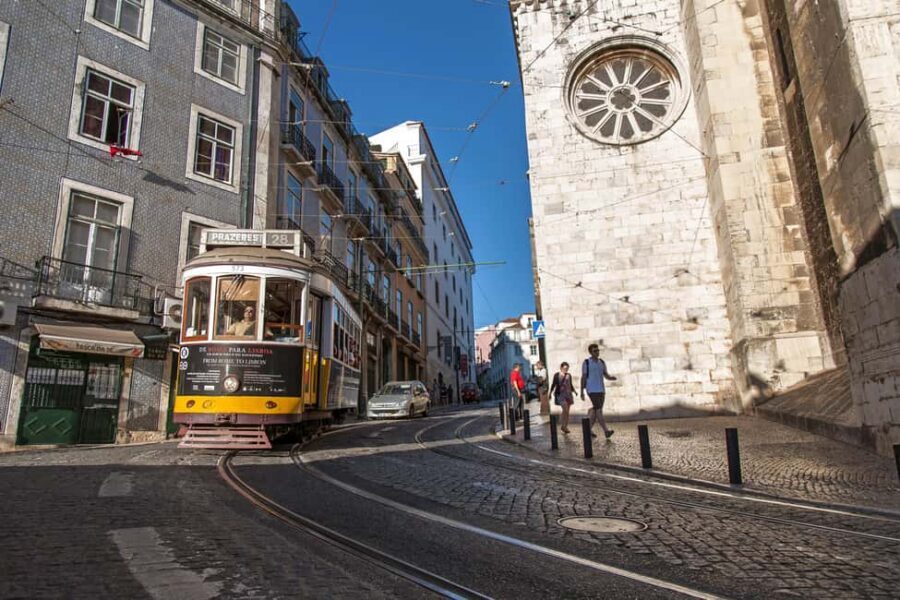
The Money Museum is one of the places where this tour clearly earns its ticket price. You’ll see a medieval wall with a claim of about 1000 years of secrets, and that phrasing matters: it’s about how layers of time can literally be built into structures.
This stop is valuable even if you’re not a museum person. When a museum ties into the day’s theme—Jewish heritage in Lisbon and the city’s historical shifts—you get more than facts. You get a physical anchor. The guide can point out how the built environment preserves stories.
It’s also a useful break from walking the hills. You’ll be inside for about 20 minutes, which helps keep energy steady for the last third of the tour.
One caution: the Money Museum is closed on Mondays and Tuesdays. If you’re planning around those days, check your calendar carefully.
You can also read our reviews of more historical tours in Lisbon
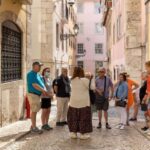





Rossio Square and the Inquisition chapter
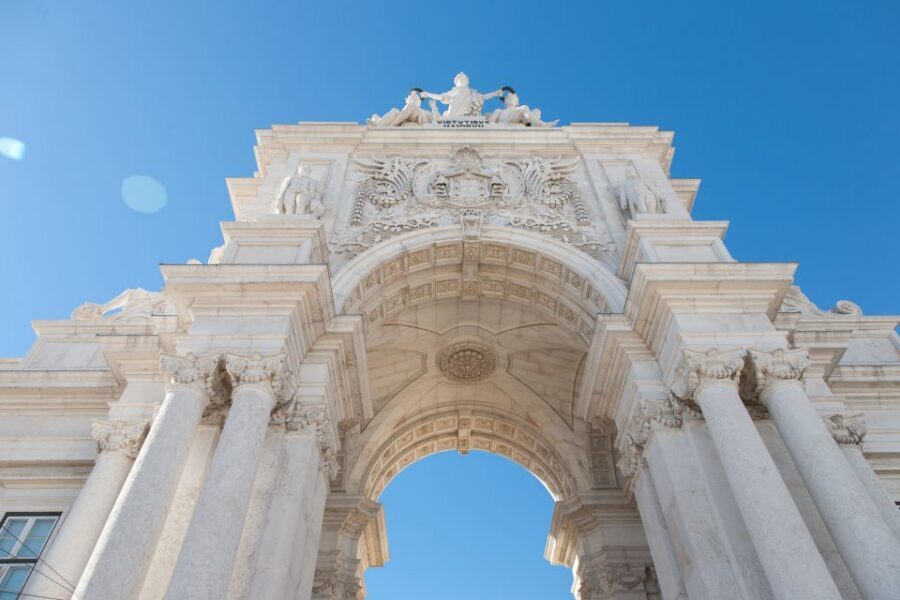
Rossio Square is where the mood turns darker. The tour focuses on the Portuguese Inquisition and explains the events that led to the establishment of a Jewish memorial site here—listed as one of the most significant Portuguese Jewish history landmarks.
This part works because it isn’t vague. You’re in the public space where history unfolded. The contrast between a busy square and what happened there can hit hard, and a good guide keeps it clear without sensationalizing it.
If you prefer responsible, careful storytelling, this is one of the stops that should deliver. The tour sets you up to understand why memorials exist and what they represent in Lisbon’s Jewish story.
1506 Jewish Massacre Memorial: remembering through place
Right after Rossio Square, the itinerary includes the 1506 Jewish Massacre Memorial, with a guided walk-and-talk around 20 minutes. This is one of those stops that can feel emotionally intense. It’s also a key part of understanding why “Jewish Lisbon” history includes periods of fear and violence, not only achievement and scholarship.
You’ll likely come away appreciating how memorials act like reminders pinned to real neighborhoods. Instead of reading history as an abstract chapter, you’re seeing it treated as part of the city’s identity.
If you’re traveling with teens or curious adults, this stop is also helpful for conversation. You can ask questions right there, and the guide can explain in context.
Chiado: influential families and a different Lisbon mood
The tour then shifts into Chiado, with a shorter stop (about 15 minutes) aimed at connecting the Jewish community’s influence to the Portuguese Kingdom. Chiado is known for mixing historical spaces with more modern energy, so it’s a natural place to discuss “how Lisbon connected to the wider country.”
This segment is brief, but it sets up the idea that Sephardic Jews weren’t only a local presence. The tour frames Jewish life in Lisbon as connected to intellectuals, mathematicians, and cabalists during the Renaissance era.
If you like stories that show how people lived and contributed, Chiado helps balance the earlier, heavy parts. It doesn’t erase them; it puts them next to other realities of time and place.
Largo do Carmo Square and the walk toward Carmo
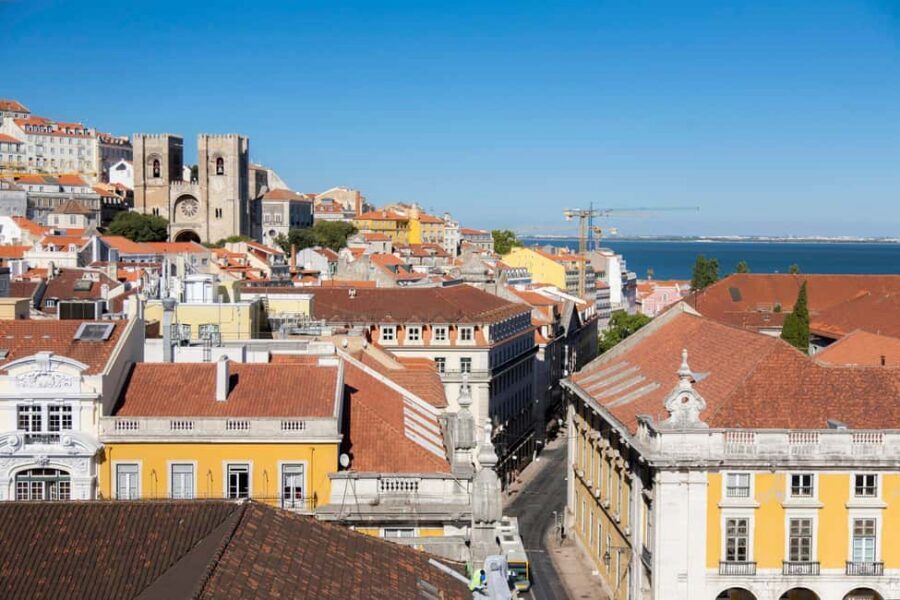
Next comes Largo do Carmo Square for guided context, then a move to the Carmo Convent area. This portion is about transitioning from streets and memorial sites into archaeology and material evidence.
That shift is important. When a tour includes both “what happened” and “what remains,” your understanding tends to stick. A memorial can tell you what to remember. Archaeological finds can show you what everyday life left behind.
You’ll spend about 45 minutes at the Carmo Museum, which is enough time to slow down and look.
Carmo Convent / Carmo Archaeological Museum: artifacts tied to Jewish life
The Carmo Convent visit is described as spanning the 14th–15th century setting, and it includes old Jewish archaeological finds. This is the most “hands-off” kind of evidence in the day. You’re reading the past through objects and exhibits, not just walking past plaques.
The tour’s emphasis here is on everyday life and spiritual practice—how people lived and believed, and how their contributions shaped Portuguese society. That kind of framing turns archaeology into more than a curiosity. It becomes a way to understand community life beyond public events.
Plan for schedule reality: the Carmo Archaeological Museum cannot be visited on Sundays. If your travel dates include Sunday, you’ll need to adjust your plan.
Crypto Judaism and Lisbon as a refuge in WWII
Two bigger themes weave through the tour as you go: Crypto Judaism and Lisbon’s role during World War II.
Crypto Judaism here is presented as an integral part of Portuguese identity, with Jews practicing faith in secret for centuries. The guide’s job is to connect that to what you’ve been seeing in neighborhoods, memorials, and museums. If you’ve ever wondered how religion survives after public life becomes dangerous, this is the part that can give the answer.
The other thread is WWII: Lisbon as a sanctuary for European Jews escaping the Holocaust. That adds modern historical weight to a day that starts with Renaissance identities and moves through Inquisition-era violence.
Taken together, these themes prevent the tour from feeling like a single historical “moment.” It reads like a long story—how communities change, hide, rebuild, and keep going.
The private format: what it does well (and what to watch)
This is a private group capped at a maximum of 8 people. For a history-focused tour, that’s not just a comfort detail. It changes the whole experience. You can ask questions without feeling like you’re holding up a bus-load of strangers. The guide can also adjust pace if you want more context or want to move faster to the next stop.
You’re also getting a driver/guide and transport by air-conditioned vehicle, with water included. That’s especially helpful in Lisbon’s heat and on days when you feel the hills more than you expected.
The main consideration is physical. It’s not listed as suitable for wheelchair users, and you’re walking on historic streets. Wear comfortable shoes—seriously. Even if you’re an experienced walker, Lisbon’s cobbles can be sneaky on a longer, multi-stop day.
Also note: food and drinks aren’t included. The tour includes stops and museum time, but you should plan your meals around it. If you’re prone to getting cranky from low blood sugar, pack a plan.
Price and value for $152 per person
At $152 per person for a 4-hour private tour, you’re not buying a cheap “drive by history” package. You’re paying for a tight loop of viewpoint, walking, multiple guided stops, and several paid entrances.
The value gets stronger because the basics are included:
- Hotel pickup and drop-off in central Lisbon
- Air-conditioned vehicle transport
- Water
- Entrance fees
Add in the private size (up to 8), and it starts to look like a practical deal rather than a splurge. If you’re traveling with a friend or small group, it can feel even more worthwhile compared with piecing together separate tickets and museum entries on your own.
Who this tour suits best
This tour fits best if you:
- Want a route that connects Jewish heritage to specific Lisbon neighborhoods and landmarks
- Like city history explained through streets, memorials, and museum objects
- Prefer a guided pace over wandering around trying to piece things together yourself
It may be less ideal if you:
- Need wheelchair access
- Don’t like walking on older streets
- Are only interested in a light overview and want minimal time inside museums
Should you book this Lisbon Jewish History private tour?
If you care about place-based history, this is one of the stronger ways to spend four hours in Lisbon. The mix of Alfama street context, Rossio Square’s darker chapter, and Carmo’s archaeological evidence creates a story you can actually see as you move.
Book it if you want an organized route with enough time at the key stops to understand what you’re looking at. Skip it (or plan carefully) if you’ll be in Lisbon on a Sunday or on Monday/Tuesday, since museum access can be limited.
Overall, I’d treat this as a “get it right the first time” tour: it helps you understand why Lisbon’s Jewish story lives where it does, and why it wasn’t just one event, but a long, complicated, human history.
FAQ
How long is the Lisbon Jewish History private tour?
The tour runs for 4 hours.
What languages are the guides?
The live tour guide speaks Spanish, English, and Portuguese.
Is hotel pickup and drop-off included?
Yes. Pickup and drop-off are included from hotels in central Lisbon.
What’s the group size limit for a private tour?
The maximum group size is 8 participants.
Is it wheelchair accessible?
No, it is not suitable for wheelchair users.
Are there days when museum stops might be unavailable?
Yes. The Carmo Archaeological Museum cannot be visited on Sundays. The Money Museum is closed on Mondays and Tuesdays.
What should I wear or bring?
Wear comfortable shoes. The tour involves walking.
Is food included during the tour?
No. Food and drinks are not included.
Can children join?
Children must be accompanied by an adult. The tour also notes infant seats are available on request.