REVIEW · LISBON
Pastel de Nata Cooking Class in Lisbon
Book on Viator →Operated by Compadre Cooking School · Bookable on Viator
Egg tarts. Pretty much the best use of two hours. In Lisbon, this class turns a classic Portuguese pastry into a guided, hands-on session in a real kitchen, with small-group focus and an English-speaking instructor like Marta and Anna.
I love that you don’t just watch. You learn the method step by step, then taste what you made with coffee or tea and snacks. I also love that you get recipes to take home, so you can recreate Pastel de Nata (and a second Portuguese treat) after you’re back in your own kitchen.
One thing to keep in mind: depending on how many people show up, you might spend a bit more time at the listening and prep side of things than you’d like. Still, the overall structure is friendly, organized, and built for beginners and families.
In This Review
- Key Things I’d Put on Your Radar
- Pastel de Nata at Compadre: Why This Is a Good Lisbon Stop
- Where You Start at Compadre Cooking School (and What to Expect On Arrival)
- The Main Event: How Pastel de Nata Actually Comes Together
- The Second Portuguese Dish: A Two-for-One That Keeps Things Fun
- Coffee, Tea, and Snacks: The Built-In Reward Loop
- Small-Group Attention: What Max 12 Really Means
- The Instructors and the Atmosphere: Marta, Anna, and the Friendly “You’ve Got This” Energy
- Price and Value: Is $62.89 Worth It?
- Who Should Book This Class (and Who Might Skip It)
- Practical Tips So You Enjoy It More
- Should You Book Pastel de Nata at Compadre Cooking School?
- FAQ
- How long is the Pastel de Nata cooking class?
- Is the class offered in English?
- What’s included in the price?
- How many people are in the class?
- Where does the class meet in Lisbon?
- Are alcoholic beverages included?
Key Things I’d Put on Your Radar
- Small group size (maximum 12), which usually means more attention when you’re shaping and filling.
- English instruction so you can follow techniques clearly without translating in your head.
- Take-home recipes so the class doesn’t end when you wipe your hands.
- Coffee/tea plus snacks during the session, and you get to eat your own results.
- A second Portuguese recipe may be savory (some sessions include cod fritters) or another traditional sweet.
- A real, central meeting point at Compadre Cooking School, easy to get to with public transport.
Pastel de Nata at Compadre: Why This Is a Good Lisbon Stop
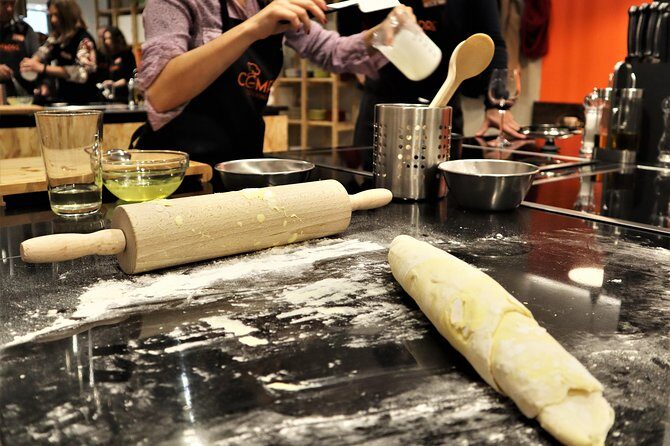
Lisbon is packed with food experiences, but this one feels different because it’s not just about tasting. It’s about technique. Pastel de Nata is one of those pastries that can look simple and still be tricky in practice. In this class, you learn how to handle the dough, manage the filling, and understand the key steps that lead to that signature custardy center and browned top.
What makes it especially appealing is the classroom setup and pacing. The kitchen is set for small groups, and the staff (including instructors like Marta and Anna, plus others such as Angela and Jose in different sessions) keeps things upbeat and practical. You get a short history and context as you go, but it stays tied to what you’re doing, not just an extra lecture.
It’s also a strong option if you’re mixing day trips or sightseeing. At about two hours, it slots into a morning or afternoon without stealing half your itinerary. And since alcohol isn’t part of the class, you can plan this as a normal activity day, not a “night out” plan.
You can also read our reviews of more cooking classes in Lisbon


Where You Start at Compadre Cooking School (and What to Expect On Arrival)
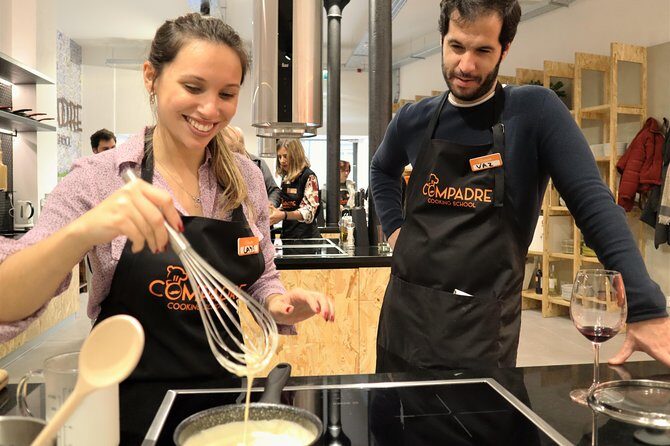
Your session starts at Compadre Cooking School, at R. Heliodoro Salgado nº14, 1170-176 Lisboa, Portugal. It’s described as near public transportation, and multiple people found it easy to find, which matters in Lisbon where some neighborhoods can be a little maze-like.
When you arrive, the vibe is more workshop than stage show. You’ll get oriented to the kitchen space and how stations work. One helpful practical note from the experience: the school has bathrooms and even a small locker for personal items. That’s the kind of detail that seems small until you’re carrying bags, a camera, or you just don’t want pastry smell everywhere later.
The class uses a mobile ticket, and confirmation comes at booking. So once you’ve booked, you can keep things simple on your phone and focus on arriving on time.
The Main Event: How Pastel de Nata Actually Comes Together
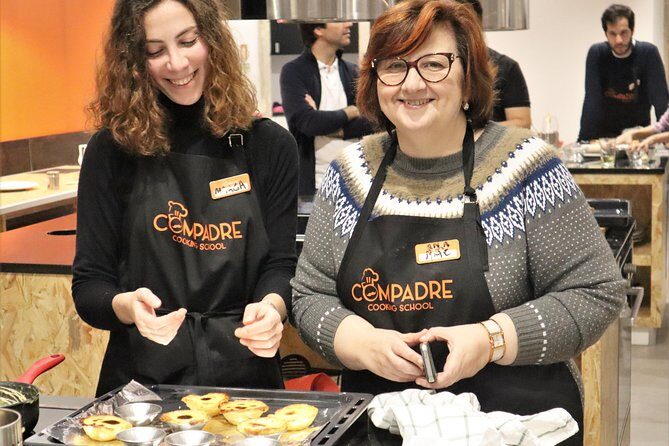
Pastel de Nata is Lisbon’s most traditional pastry, and the whole point here is that you make it. This isn’t a “mix one ingredient and watch a pastry chef do the rest” class. You’re guided through the process with enough structure that a first-timer can succeed.
Here’s what you can expect in practice:
- Dough handling and forming: You learn how to work the pastry so it behaves properly in the pan.
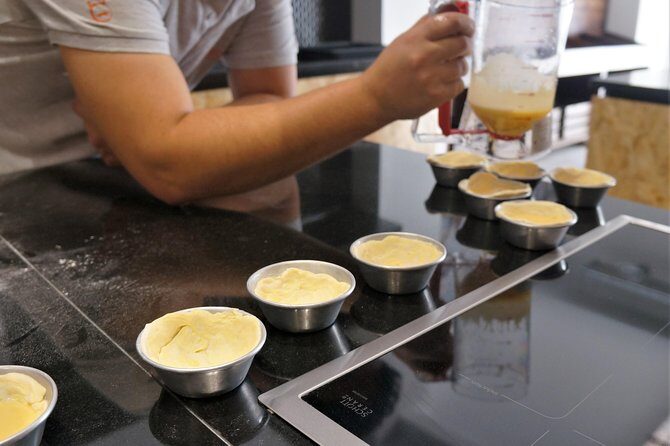
- Filling preparation: You take part in making the custard-like filling.
- Assembly: You portion and place the filling so each tart ends up with the right look and texture.
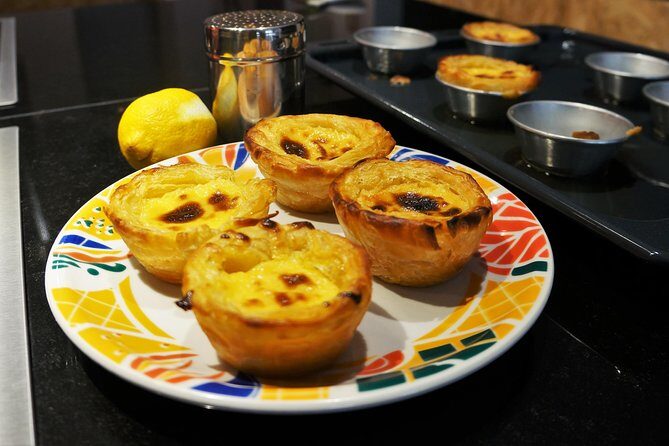
- Baking and finishing: You learn how the pastry changes in the oven, and why that affects the final result.
Even if you’re not a confident cook, the class is designed for beginners. People specifically noted it’s easy to follow, and the instruction style focuses on clear steps rather than food-tech jargon.
One detail worth paying attention to is timing and consistency. Egg tarts can go from perfect to overdone if the custard is handled wrong or the baking is rushed. In a well-run class, the instructor helps you keep things moving without skipping the fundamentals. That’s where the small group size really helps: you get feedback when you need it.
The Second Portuguese Dish: A Two-for-One That Keeps Things Fun
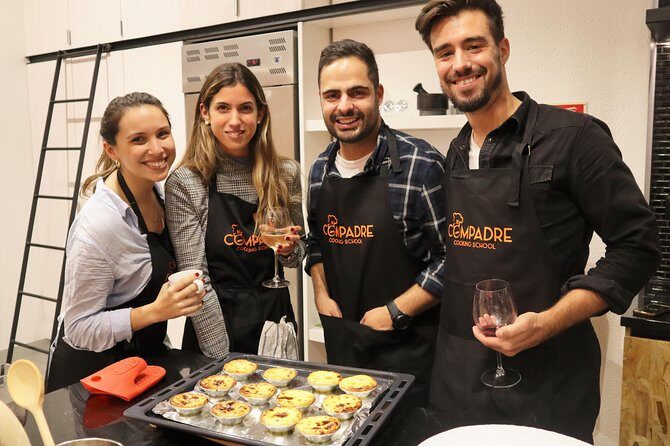
The class doesn’t stop at Pastel de Nata. You also learn another typical Portuguese treat as a two-for-one bonus. The exact second item can vary by session. What you’ll see described is another Portuguese traditional recipe, and some classes include a savory option like cod fritters.
Why this matters for your value:
- You go home not with one recipe, but with a broader sense of Portuguese comfort food.
- It makes the class more interesting if you’re traveling with someone who doesn’t care only about sweets.
- You get practice in a different technique set, which makes it more memorable than a single-dessert workshop.
If your priority is only Pastel de Nata, don’t worry. Pastel de Nata is still the centerpiece. The second recipe is extra, not a replacement.
Coffee, Tea, and Snacks: The Built-In Reward Loop
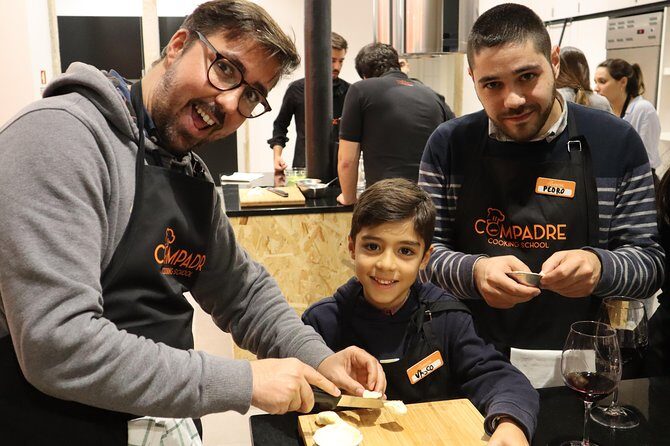
This is one of those classes where the “reward” happens during the session, not just at the very end. You get coffee and/or tea, plus water and snacks. After you master the approach to Pastel de Nata, you get to try your creations.
That food-and-drink pairing matters more than it sounds. Egg tarts are best when served fresh, and you’re tasting yours at the right moment. It also keeps energy up for the work part of cooking, so you’re not hungry while your custard is doing its thing.
And because alcohol isn’t served as part of the experience, it stays family-friendly. The school also notes alcohol won’t be served to participants under 18, with substitutes like water or tea. That makes it easier to plan if you’re bringing teens or traveling with a mixed-age group.
You can also read our reviews of more tours and experiences in Lisbon



Small-Group Attention: What Max 12 Really Means
The class has a maximum of 12 travelers. That’s the big lever behind why so many people recommended it.
In practical terms, small-group cooking means:
- You can ask questions without waiting your turn for a long time.
- You get quick corrections when shaping or filling needs adjustment.
- Instructors can watch multiple people at once and still give real feedback.
That said, one review-style concern still shows up in cooking classes: if stations aren’t perfectly set up, some people might do fewer steps than they hoped. In a session with a full group, you’re more likely to rotate through tasks. In a smaller group, you may do more. Either way, you should go in with the right expectation: this is hands-on, but it’s also a guided lesson with moments of listening and prep.
The Instructors and the Atmosphere: Marta, Anna, and the Friendly “You’ve Got This” Energy
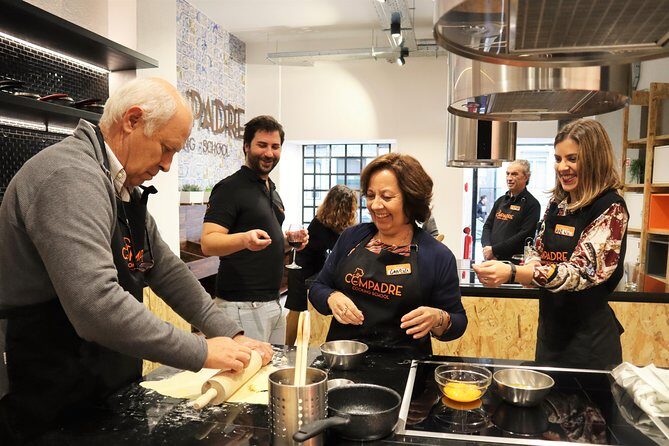
People highlighted the instructors by name, including Marta and Anna, and also mentioned Angela and Jose as welcoming and patient. In this kind of class, instructor personality can make or break the experience. Here, the consistent theme is that the team keeps it fun, explains clearly, and doesn’t make beginners feel behind.
You also get history and origins tied to the pastry. Not a long, classroom-style lecture. More like a story as you work, which helps you remember what you learned and gives the pastry meaning beyond being just sweet.
Even the atmosphere gets mentioned: an informal, hospitable setting, clean kitchen, and a good mood in the room. One person even noted that there’s time and no big rush feeling, which is exactly what you want when you’re learning something that has a timing element.
Price and Value: Is $62.89 Worth It?
At $62.89 per person for about two hours, this isn’t the cheapest thing you can do in Lisbon. But it’s also not priced like a fancy private experience.
Here’s why it can be good value:
- You’re paying for instruction plus ingredients plus equipment that you use in a real kitchen.
- You get coffee/tea, water, and snacks, not just a single bite at the end.
- You take home recipes, so the lesson can keep paying off after the class.
- The session produces a practical result: pastries you can actually eat fresh, plus a second Portuguese dish depending on the session.
Where you should think carefully is if your main goal is pure hands-on baking from start to finish without any breaks for listening. If that’s you, you may want to choose your expectations accordingly. The best-case scenario is you do plenty of shaping and filling yourself. The realistic scenario is you learn by doing, with structured moments to explain key steps.
Who Should Book This Class (and Who Might Skip It)
This class is ideal if:
- You love Lisbon food but want something interactive.
- You’re a beginner and want clear guidance instead of guesswork.
- You’re traveling with kids or teens who can handle an adult-supervised cooking activity.
- You want a low-stress activity that still feels like a real highlight.
It might be less ideal if:
- You want a cooking class that feels like you’re constantly doing every single step yourself with no rotating tasks.
- You’re only interested in sweets and don’t want any chance of a savory second dish, though the Pastel de Nata portion stays central.
Solo travelers also seem to enjoy it. It’s a good way to meet other people without it being a forced social thing. And because it’s in English, you can focus on the cooking rather than the language barrier.
Practical Tips So You Enjoy It More
A few small things can make your class smoother:
- Wear comfortable clothes you don’t mind getting a little flour or kitchen smell on.
- Bring your appetite, because you’ll snack and eat what you make.
- If you’re sensitive to sweetness, pace yourself with the coffee or tea so you don’t feel overwhelmed.
- Keep your phone ready for your mobile ticket, and plan to arrive a few minutes early so you’re not rushed when the session starts.
Also, if you’re booking ahead, note that on average this experience is booked about 26 days in advance. If you’re traveling during a busy time, earlier is better so you can choose a time that works with your sightseeing plan.
Should You Book Pastel de Nata at Compadre Cooking School?
Yes, I’d book it if you want a fun Lisbon food experience with real technique, a friendly team, and a result you can eat immediately. The small-group setting, the recipes to take home, and the fact that you get coffee/tea/snacks make it feel more complete than many “quick tasting” activities.
Skip it only if you’re chasing a class that is 100% nonstop action for every participant. Even then, you’ll likely still learn a lot, and Pastel de Nata is the kind of skill that pays off the next time you’re in the mood for a Portuguese-style treat at home.
If you want to start your trip with something memorable that doesn’t require fancy planning, this is a strong choice.
FAQ
How long is the Pastel de Nata cooking class?
The class is about 2 hours.
Is the class offered in English?
Yes. The experience is offered in English.
What’s included in the price?
It includes coffee and/or tea, water, and snacks.
How many people are in the class?
The group size is capped at a maximum of 12 travelers.
Where does the class meet in Lisbon?
The meeting point is Compadre Cooking School, R. Heliodoro Salgado nº14, 1170-176 Lisboa, Portugal.
Are alcoholic beverages included?
Alcoholic beverages are not included. Alcohol also won’t be served to participants under 18, and water or tea is used instead.