REVIEW · LISBON
Multicultural Lisbon: Stories, Art, Music, Flavor & Secrets
Book on GetYourGuide →Operated by Soul Dreamers · Bookable on GetYourGuide
Lisbon has a quieter side.
This 5-hour, small-group walk follows the city’s multicultural threads through Mouraria and Graça, mixing street art with music and food stops that feel more like meeting neighbors than ticking sights. I like the way the night flows from murals and stories to a sunset viewpoint and then ends with live music. One thing to note: you’ll do some uphill walking, including about 200 steps.
My favorite parts are the live music piece and the fact that you’re not stuck at the postcard level. The route is built around local context—how the neighborhood became what it is, how street art connects to politics and everyday life, and how the food and sound match the communities you’re walking through. One possible drawback: the exact music varies by night, so you’re not guaranteed a specific style like jazz or samba every time.
If you’re the type who likes atmosphere, local voices, and a few memorable tastes, this works really well. If you prefer mostly museums and minimal walking, you may find the pacing a bit more physical and more “scene” than “sites.”
In This Review
- Key moments you’ll notice right away
- Starting at Hotel Mundial in Martim Moniz: the cultural setting is the warm-up
- Mouraria’s street stories: murals, cafés, and the meaning behind the corners
- Graça climb and sunset views: why 200 steps is worth it
- Snacks and a music-first mindset: how the food stop sets the tone
- Castelo’s immigrant-run restaurant: where warmth beats formality
- Ending at Chapitô: Lisbon’s live music scene, on-the-fly
- The guide factor: when Teddy’s leading, you feel the passion fast
- Value check: why $66 can make sense here
- Who should book this tour (and who should skip it)
- If you’re deciding today: should you book
- FAQ
- FAQ
- How long is the tour?
- Where do we meet?
- When does the tour start?
- What is included in the price?
- What is not included?
- What kind of live music will I hear?
- How much walking is involved?
- What should I bring?
- Is the tour rain or shine?
- Is it suitable for kids or people with mobility issues?
Key moments you’ll notice right away
- Martim Moniz as a culture crossroads where the story starts at Lisbon’s symbolic meeting point
- Mouraria’s multicultural layers explained through street-level stops and local cafés
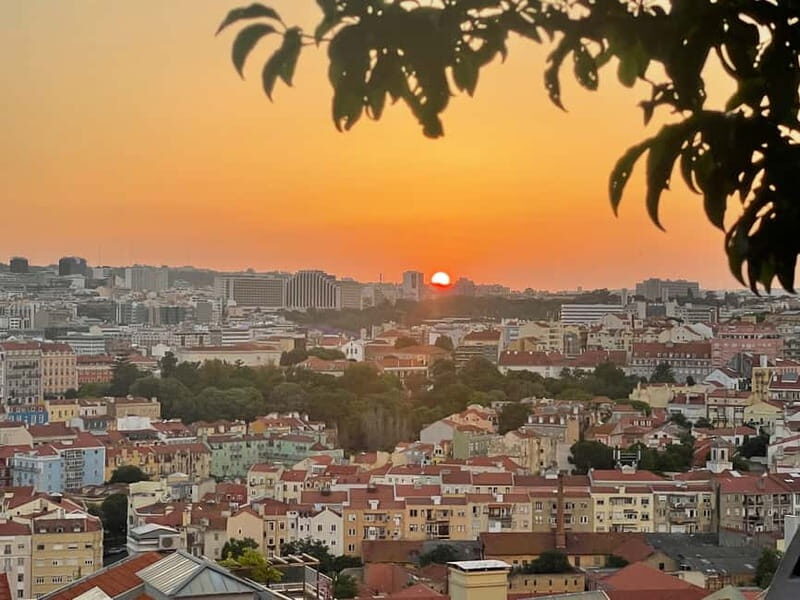
- Graça uphill to a miradouro viewpoint with sweeping sunset views and photo-ready angles
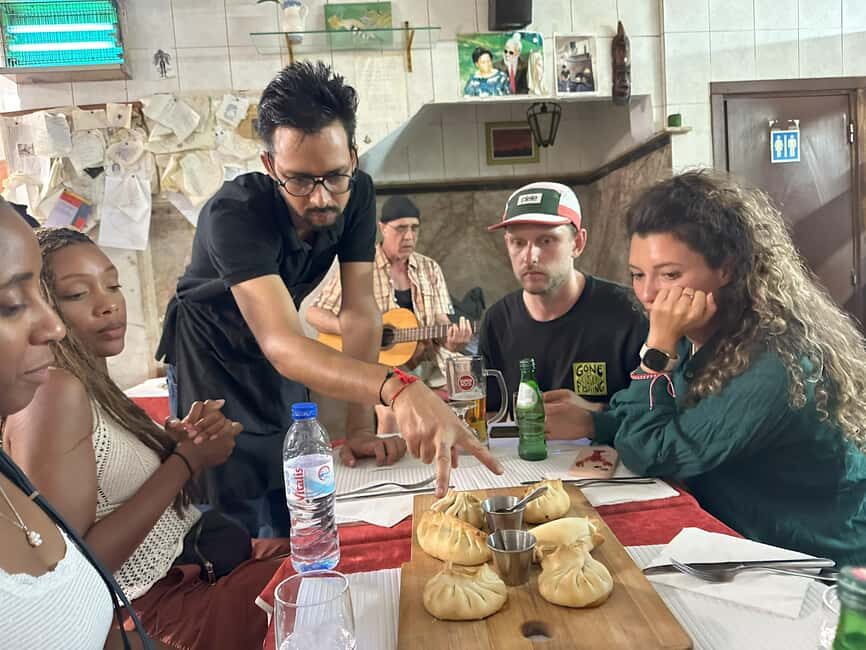
- Snacks plus a restaurant stop at an immigrant-run or family-run place in Castelo
- A night that ends in live music that can range from guitar sessions to Brazilian samba roda and more
- Small group energy (up to 10) that keeps the walk personal and conversational
Starting at Hotel Mundial in Martim Moniz: the cultural setting is the warm-up
The walk kicks off outside the main entrance of Hotel Mundial, in Martim Moniz square. This is a clever choice because the area already reads like a map of Lisbon’s mixing zones—immigrant communities, old neighborhood life, and today’s street culture all sharing the same blocks.
Timing matters here. The tour begins about two hours before sunset, which means you’re not dragging yourself through the warmest part of the day. You’re also lining up the most scenic moment—sunset—from the Graça area later, when the light makes the city look softer and more cinematic.
Meet up with your guide and group, then you’ll head into the neighborhoods at an easy walking pace that still keeps momentum. This isn’t a silent wander. You’re there to listen, ask questions, and connect the visual stuff (murals, corners, cafés) to the human stories behind it.
You can also read our reviews of more tours and experiences in Lisbon.



Mouraria’s street stories: murals, cafés, and the meaning behind the corners
Mouraria is one of Lisbon’s oldest multicultural quarters, and this tour treats it like a living place rather than an “area to visit.” You spend about an hour in Mouraria with a guided walk that’s focused on how the district’s identity formed, and how resilience and transformation show up in ordinary street scenes.
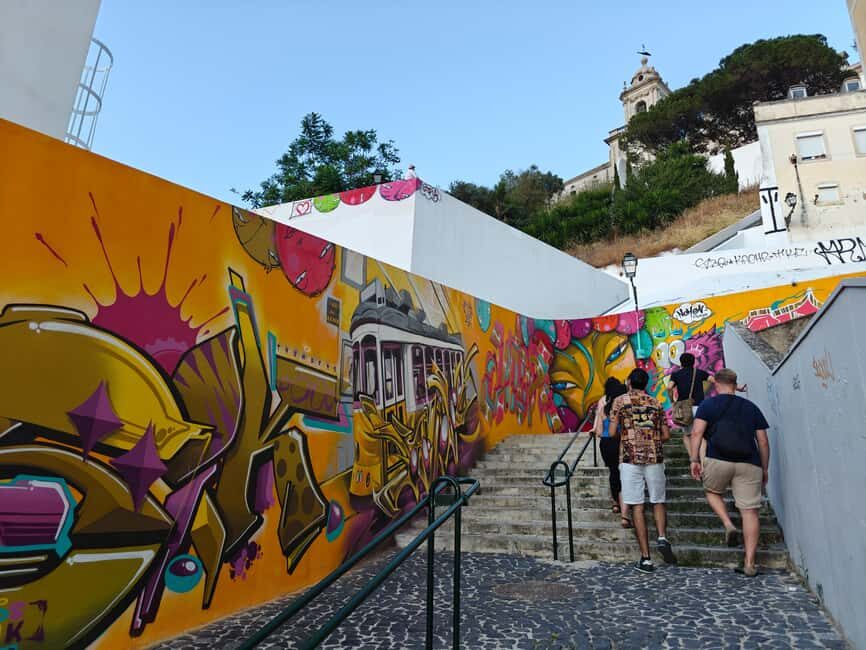
Expect to see and discuss street art and graffiti, but the key is the local context. The guide doesn’t just point at paint. You learn what the messages are trying to say—political and poetic voices that show up on walls because that’s where the conversation happens in real life.
After that, you get a short pause back around Praça do Martim Moniz—about 15 minutes. It’s a useful reset before the climb toward Graça. Think of it as a chance to catch your bearings and maybe grab a sip of water before the steps start stacking up.
Two practical notes if you’re planning your comfort:
- Lisbon streets can be uneven, so comfortable shoes matter more than your “best looking sneakers” plan.
- Photos are great, but keep your eyes up too—some of the storytelling lives in signage, doorways, and tiny details you miss if you’re only looking at big walls.
Graça climb and sunset views: why 200 steps is worth it
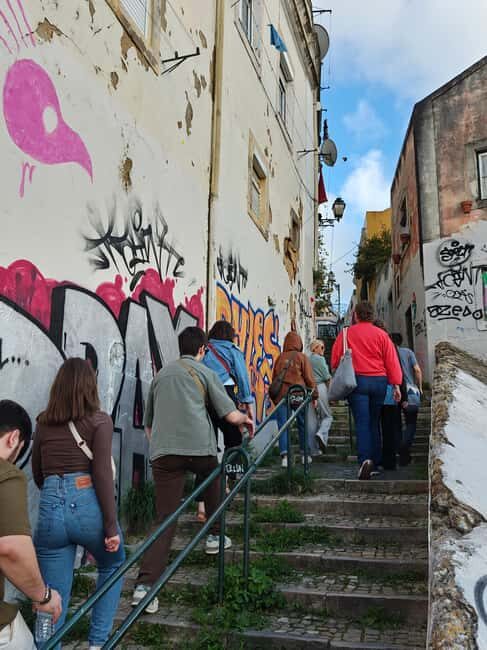
Graça is where the walk turns from “street scene” into “city scale.” As you head uphill, you’ll see bold street art and urban murals, plus little flashes of color that feel like punctuation marks across the neighborhood.
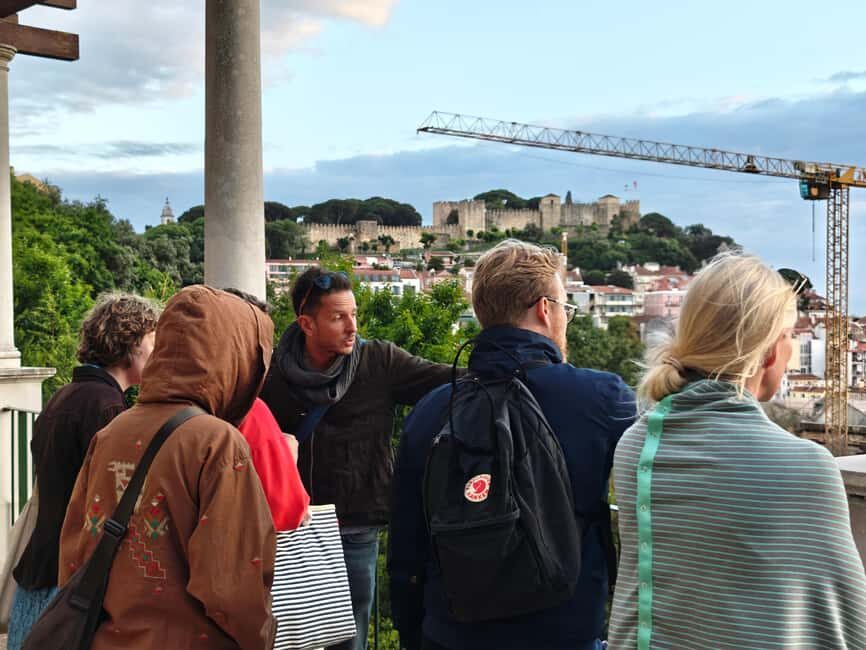
The important logistics detail is that you’ll climb about 200 steps to reach the miradouro. There’s no elevator, so if stairs are hard for you, this part will be the deciding factor. The upside is that you’re rewarded with one of Lisbon’s best panoramic views, timed for golden hour.
In plain terms: you’re walking uphill for the payoff shot. The miradouro stop is also paced so you’re not sprinting for photos. You get a scenic window to look over the rooftops, watch how the light changes, and take a breath before the tour shifts into the food-and-music phase.
Layers help here. Even in shoulder seasons, the light is cooler at sunset, and Lisbon weather can turn quickly.
Snacks and a music-first mindset: how the food stop sets the tone
You’ll taste local snacks during the walk, and snacks are included. This is a smarter setup than a “big meal” approach because it keeps you moving while still feeding you. You’ll get flavors that match the neighborhood’s identity, not just convenience food.
There’s also a wine stop scheduled as a secret stop along the way, with about 30 minutes there. Wine details aren’t specified, so don’t go in expecting a formal tasting menu. But the purpose is clear: you’re spending time in a local rhythm before the tour lands at live music.
One more note you’ll appreciate: main meals and drinks are not included. The restaurant stop is where you’ll likely want to budget a bit extra if you’re hungry at the end. This is also why the snacks matter—so you don’t arrive at dinner with the energy of an empty phone.
Cash is recommended. Bring some, even if your card works most places, because small cafés and intimate venues can be unpredictable.
Castelo’s immigrant-run restaurant: where warmth beats formality
After the view, the tour shifts toward Castelo for an authentic meal stop. You’ll visit a restaurant that’s handpicked for its soul and authenticity—specifically described as immigrant-run or family-run.
This is one of the most valuable parts of the whole experience because it anchors the cultural stories in real hospitality. Street art is powerful, but food is how you really remember a place. In this case, the emphasis is on warmth from the hosts and the comfort of the meal—not on fancy presentation.
Dinner itself isn’t included, and additional drinks are at your own cost. That said, the stop is still worthwhile because you’re getting access to a place you wouldn’t easily find on your own, plus a guided “story” context so the neighborhood makes more sense when you’re sitting down.
The pacing here also makes sense for an evening walk: about an hour for dinner in Castelo. You’re not rushed out of the chair, and the group can settle and talk.

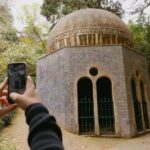



Ending at Chapitô: Lisbon’s live music scene, on-the-fly
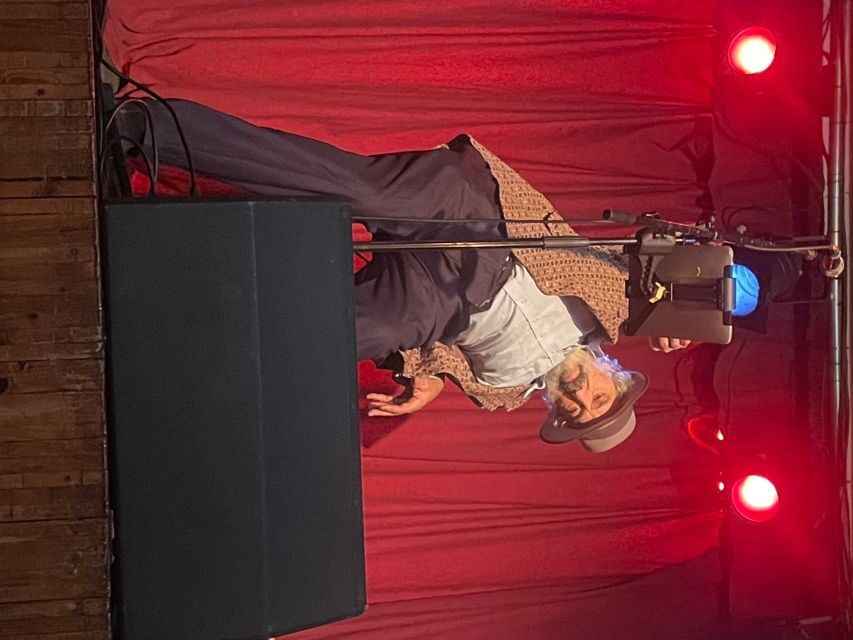
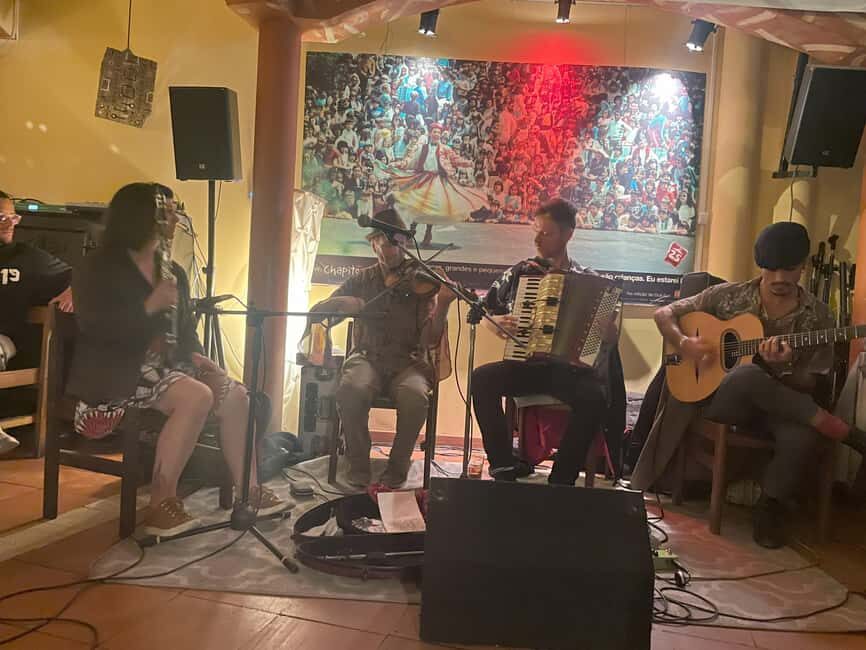
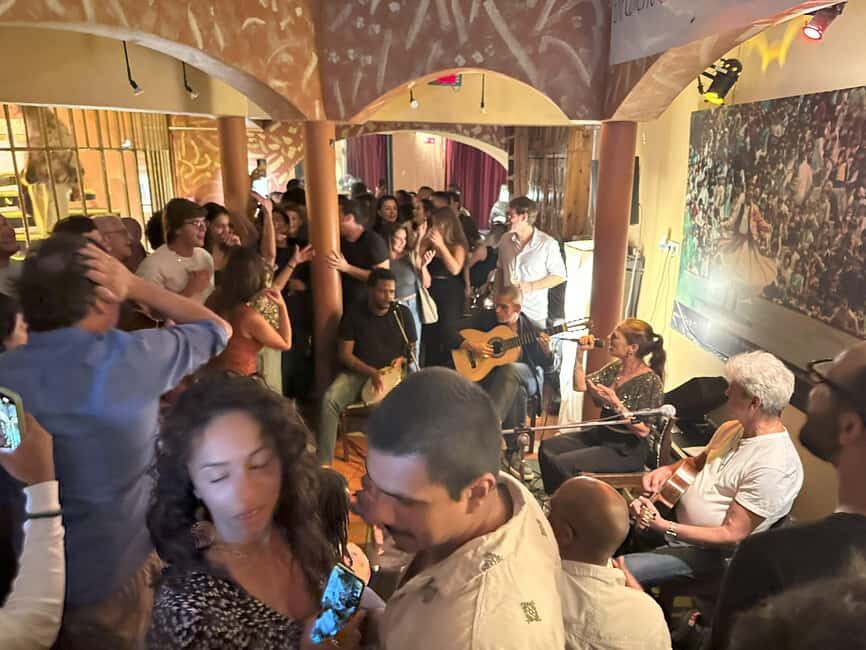
The tour typically ends back at the meeting point area, but the night’s big finale is time at a carefully selected live music venue. Depending on the day, you might catch anything from an Afro-Lusophone guitar session to a Brazilian samba roda, Cumbia or Forró rhythms, or a jazz vibe at a tucked-away venue only locals know.
This “varies by night” structure is a big deal if you like surprises and you’re flexible. You’re not paying for one guaranteed concert ticket. You’re paying for access to Lisbon’s real-time music culture—what people are playing when they’re not performing for tourists.
And yes, there can be spontaneous moments like jam sessions. That’s part of the appeal: Lisbon at night feels like it’s made for casual music-making, not just scheduled shows.
Chapitô is listed as the finish location. It’s a fitting end point for a tour about Lisbon’s under-the-radar cultural pulse.
The guide factor: when Teddy’s leading, you feel the passion fast
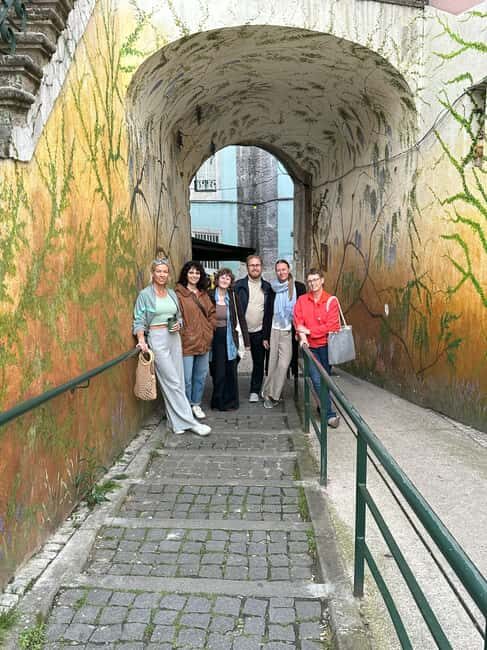
One of the strongest themes from the people who loved this tour is the guide’s connection to the city. A guide named Teddy comes up in feedback as being excellent—comfortable, knowledgeable, and clearly enthusiastic about exploration and connection.
You can use this as a small expectation check: if your ideal guide is someone who talks like a person (and not like a brochure), you’ll likely enjoy the energy. The small group size (limited to 10 participants) also supports that. You’re not lost in a crowd, and the guide can actually respond to your questions.
Value check: why $66 can make sense here
At $66 per person for about five hours, this isn’t the cheapest option in Lisbon. But it can be good value because you get multiple “bundled” pieces:
- Guided walk with contextual storytelling
- Street art and graffiti interpretation (not just sightseeing)
- Snacks included
- Sunset viewpoint time at the Graça miradouro
- Live music stop where the style varies by night
If you tried to recreate this on your own, you’d be paying for a guide plus dealing with the timing puzzle of sunset viewpoints plus finding a live music venue that fits the neighborhoods you just walked. This tour handles the sequencing for you.
Still, keep your expectations practical: dinner and extra drinks cost extra, and you should expect walking time and stairs.
Who should book this tour (and who should skip it)
This is best for you if you want:
- A multicultural Lisbon experience that focuses on neighborhood identity
- Street art with meaning, not just pretty murals
- An evening that ends with local music rather than a museum stamp
- A small-group walk where conversation is part of the product
Skip it if:
- You have limited ability with stairs or longer uphill walking (the miradouro climb is a real factor)
- You need a guaranteed music genre every night
- You prefer mostly indoor or fully level walking routes
It’s not positioned for very young kids. It’s also noted as not suitable for older travelers beyond a certain age threshold.
If you’re deciding today: should you book
Book it if you want Lisbon with an edge—neighborhood stories, food that matches the scene, and live music you can’t easily replicate from a guidebook. The start time (around two hours before sunset) and the sunset viewpoint are a smart combo, and the small group limit helps the walk feel personal.
Don’t book it if your priority is “see the big landmarks fast with minimal effort.” This tour spends its time in streets, corners, cafés, and music spaces. That’s the trade. The payoff is a Lisbon that feels like it has people inside it, not just sights outside them.
FAQ
FAQ
How long is the tour?
The tour lasts about 5 hours.
Where do we meet?
You meet outside the main entrance of Hotel Mundial in Martim Moniz square.
When does the tour start?
It begins approximately 2 hours before sunset.
What is included in the price?
Included are the guided cultural walk through Mouraria and Graça, street art/graffiti context, a sunset viewpoint stop, snacks during the walk, and a visit to an immigrant-run or local hidden-spot restaurant. Live music is also included as part of the night’s ending.
What is not included?
Dinner and additional drinks at the restaurant stop are not included, and hotel pickup/drop-off is not included either. Entry tickets to formal live music concerts or special events (if any apply) are also not included.
What kind of live music will I hear?
It varies by night. Options can include spontaneous jam sessions, an Afro-Lusophone guitar session, a Brazilian samba roda, Cumbia or Forró rhythms, or a jazz vibe at a tucked-away venue.
How much walking is involved?
There is some uphill walking, and you’ll climb about 200 steps to reach the miradouro. Bring comfortable shoes.
What should I bring?
Wear comfortable walking shoes, bring an umbrella, and bring cash.
Is the tour rain or shine?
Yes, it runs in rain or shine.
Is it suitable for kids or people with mobility issues?
It’s not suitable for children under 14, and it is not suitable for people with mobility impairments.