
REVIEW · LISBON
Lisbon: Street Art Tour
Book on GetYourGuide →Operated by City Guru · Bookable on GetYourGuide
Street art in Lisbon isn’t just decoration. It’s a map of ideas, neighborhoods, and local memory, and it’s best seen on foot. I like that this tour moves street-to-street with a guide who can point out what most people miss, often including artists’ techniques and context (I’ve heard this from guides like Erica and Maria). I also love the way it keeps you away from the big crush and groups, so you can actually look closely. One drawback: it’s still a walking tour on uneven ground, so you’ll want solid shoes and a fit-for-hills mindset.
You’ll get a smart mix of stops across multiple areas instead of one “photo mural” zone. The route is built around Lisbon’s changing vibe—modern energy around Bairro Alto, then the quieter, historic feel as you work your way toward Graça. If it’s raining, you might still see plenty, but plan for weather and cobbles. And if you’re traveling with a lot of gear, note that oversize luggage isn’t allowed.
Key Points at a Glance
- Street-artist leadership: you’re guided by a street artist, not a generic sightseeing script
- Neighborhood-by-neighborhood art: each district’s culture shapes what you see and how it’s read locally
- Smaller crowd feel: designed to stay away from large crowds and big group chaos
- Focused walkthroughs: long stop in Bairro Alto and Graça, with shorter hits in Chiado, Baixa, and Mouraria
- Close-looking mindset: you’ll come away noticing details you normally walk past
- English guide: tours run in English, with time to ask questions
In This Review
- Start at Interpress: Meeting Point, Walking Shoes, and Real Terrain
- Bairro Alto (1 Hour): The Modern Street Art Pulse
- Chiado (20 Minutes) and Baixa de Lisboa (20 Minutes): Central Stops That Change Your Eye
- Mouraria (30 Minutes): Smaller Streets, Better Listening
- Graça Historic District (1 Hour): The Longer Finish With Neighborhood Charm
- How the Street-Artist Guide Changes What You See
- Pace and Crowd Level: A Walk You Can Still Enjoy
- Price and Value: $40 for a 3-Hour Guide That Rewires Your Sight
- Who This Tour Fits (and Who Might Want a Different Plan)
- Should You Book the Lisbon Street Art Tour?
- FAQ
- FAQ
- How long is the Lisbon Street Art Tour?
- How much does it cost?
- Where do I meet the guide?
- What’s included in the price?
- Is hotel pickup and drop-off included?
- What language is the tour guide?
- What should I bring?
- Is the tour accessible for wheelchair users?
- Are oversize luggage allowed?
- Can I cancel for a refund?
Start at Interpress: Meeting Point, Walking Shoes, and Real Terrain
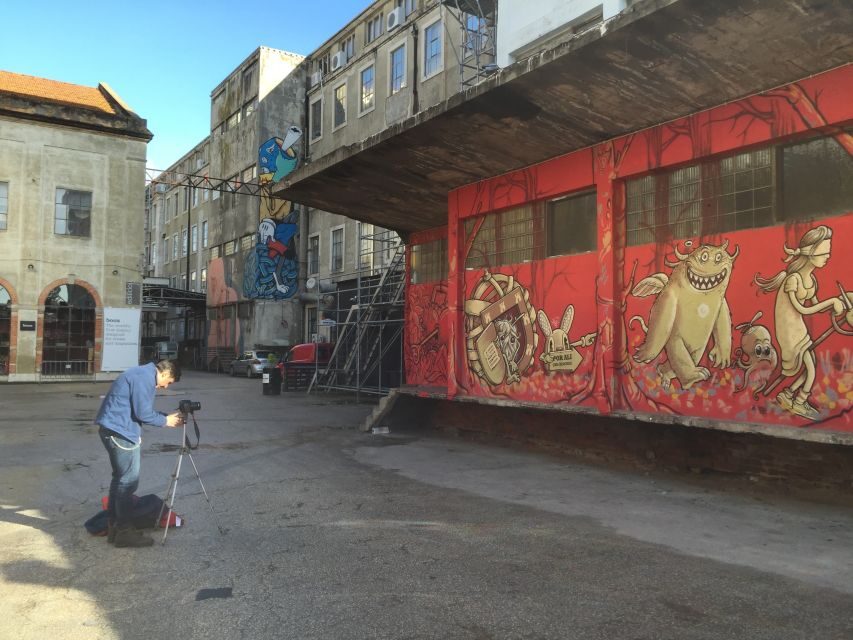
You meet your guide in front of the Interpress building, near R. Luz Soriano 67. From there, it’s straight into walking time—no hotel pickup, no waiting around for a minibus.
Bring comfortable shoes. This is Lisbon, so expect uneven pavement and stretches of terrain that aren’t smooth. The tour is also not suitable for wheelchair users, and you need to be able to walk on unpaved or uneven terrain. If you’re the type who counts steps, good news: this one will do the cardio work for you.
Also plan light. Oversize luggage isn’t allowed, so keep it simple—daypack, water, maybe a snack for later since food and drinks aren’t included.
Bairro Alto (1 Hour): The Modern Street Art Pulse
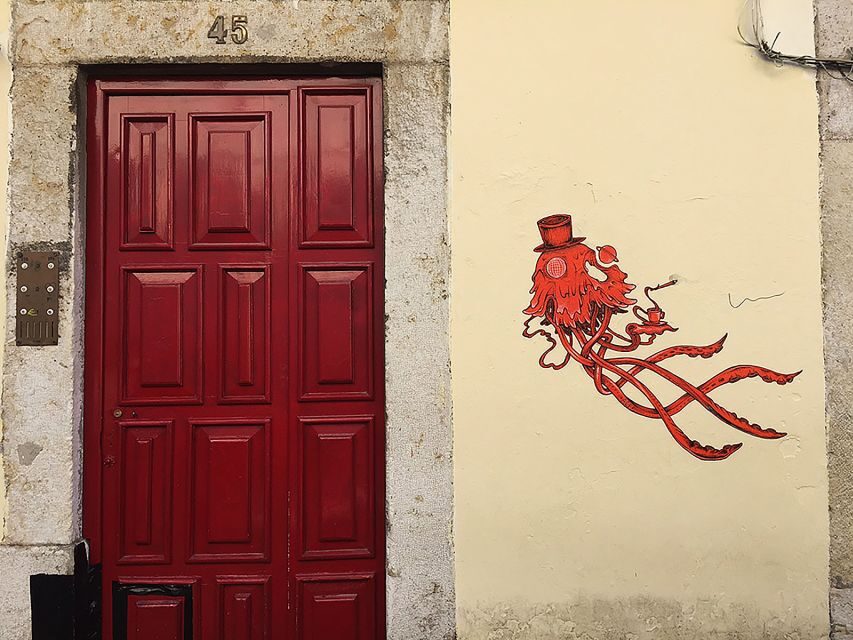
Bairro Alto gets the longest first main block, about an hour. That matters because it gives you time to see more than one style and more than one wall—your guide can slow you down just enough to notice how the work fits the street it’s on.
Bairro Alto is described as having modern vibes, and that shows up in the feeling of the art: the kind of street pieces that feel current, tied to today’s conversations, not just yesterday’s decoration. If you’re new to street art, this is a strong place to start because you can learn the basics of how to read murals and sculptures through the neighborhood’s energy.
A practical note: this first section is also where you’ll warm up to your guide’s rhythm. You’ll probably be asking questions by the halfway point, especially if you’re curious about how different artists use color, scale, or placement.
You can also read our reviews of more tours and experiences in Lisbon



Chiado (20 Minutes) and Baixa de Lisboa (20 Minutes): Central Stops That Change Your Eye
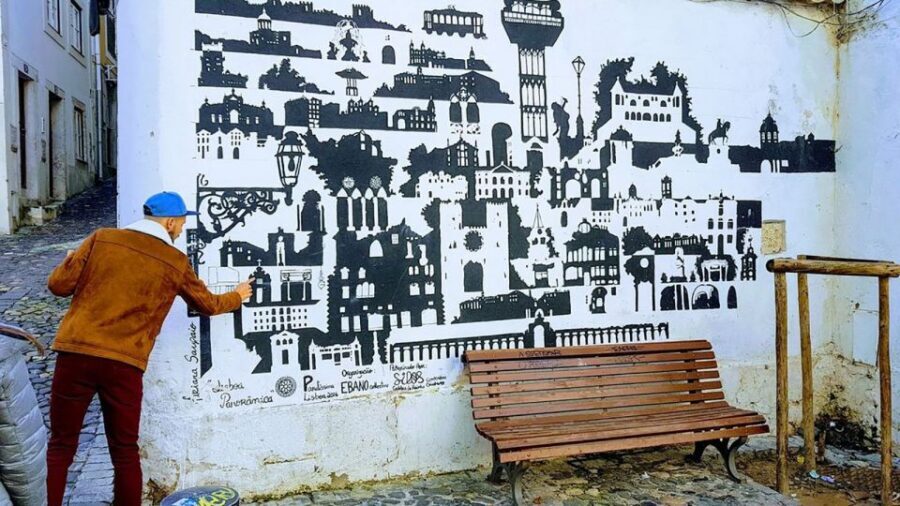
After Bairro Alto, you get two shorter guided blocks: Chiado and then Baixa de Lisboa, each around 20 minutes. The goal here isn’t to linger on one street forever. It’s to train your eyes to spot how street art shifts as the neighborhood shifts.
These quick stops are useful if you’re trying to connect street art to everyday city life. In a short window, you learn what to look for first: the message, the technique, and how the community seems to accept—or argue with—the artwork. Your guide is also likely to weave in Portuguese and Lisbon context, which can turn a “pretty mural” into something more personal and specific.
Drawback to keep in mind: because these are shorter, you won’t have the same deep time as Bairro Alto or Graça. If you find one wall you love, you’ll have to enjoy it and move on. Think of these segments like visual calibration, not a full museum-grade pause.
Mouraria (30 Minutes): Smaller Streets, Better Listening
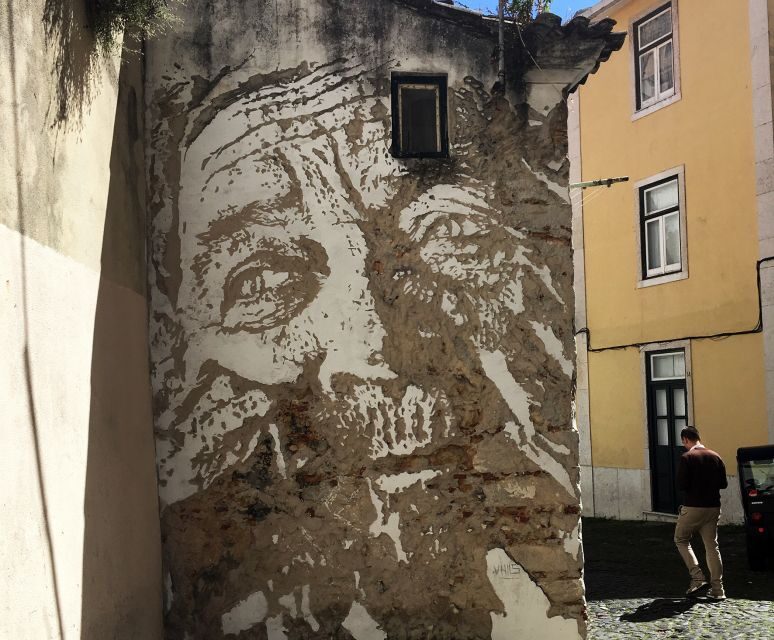
Mouraria comes next with about 30 minutes. This stop is a good reminder that street art isn’t always about the biggest mural. It’s often about what’s tucked into side streets and what rewards slow attention.
This part of the tour is where your guide’s storytelling can really pay off. The neighborhood-by-neighborhood approach matters because street art changes meaning depending on where you stand and what daily life looks like there. You’re not just seeing art—you’re learning how locals might interpret it, and why the same style can feel different when the neighborhood mood changes.
If you’re the kind of person who loves details, this is where you start noticing tiny pieces you would have missed without guidance. Several guides (like Erica, Maria, and Laith) are praised for directing attention to unexpected work—Mouraria is an excellent place for that kind of “wait, look up” moment.
Graça Historic District (1 Hour): The Longer Finish With Neighborhood Charm
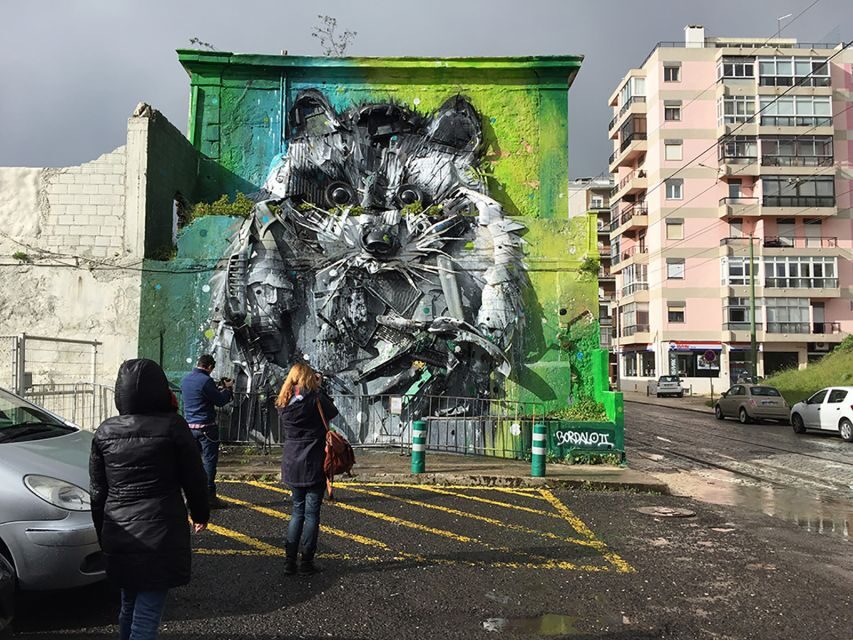
You finish with about an hour in the Graça Historic District. This is the “slow down and breathe” section of the walk, and it’s where the tour’s neighborhood approach really clicks. The description frames Graça as having charm, and you feel that in the pacing and atmosphere.
Graça is also where you can pick up more of the cultural context. Some guides connect street art to Lisbon’s broader cultural identity, including references to fado—seen in guide-led explanations shared by guests on tours. That connection doesn’t mean the whole walk becomes a music history lesson. It means the art gets placed in a larger Lisbon story: voices, identity, and expression.
End-of-tour bonus: after walking several districts, the art starts to look less random. You’re more likely to recognize patterns in how artists respond to the city—how they react to streets, walls, and the public space around them.
How the Street-Artist Guide Changes What You See
This tour is led by a street artist guide, and that’s not a small detail. It changes the type of explanations you get.
Instead of hearing only about the final artwork, you’ll likely learn about the thinking behind it: the social and cultural context, what the work communicates, and how it connects to Portugal’s present-day creative voice. Multiple guides credited on tours—Erica, Maria, Laith, and Leith—are described as weaving history and art together in a way that feels connected, not academic.
Here’s what that means for you in real terms:
- You’ll learn how to look. Placement, technique, and scale suddenly matter.
- You’ll hear why it’s there. The neighborhood context becomes part of the artwork.
- You’ll probably ask more questions than you planned. The guide can answer without making you feel rushed.
There’s also a fun possibility: if conditions align, you might even catch sight of artists working nearby. That’s not something to count on like it’s guaranteed—but it’s the kind of thing that can happen on a street-art-focused route.






Pace and Crowd Level: A Walk You Can Still Enjoy
The tour is designed to be away from large crowds and groups, which is a big deal in Lisbon. When you’re not fighting for sidewalk space, you can stand still long enough to actually read a mural.
Still, it’s 3 hours of walking. That’s not a problem if you’re comfortable with cobbles and uneven spots. If you’re not, then you’ll feel it. The tour is not labeled as wheelchair-friendly, and the uneven-terrain requirement is clear—so don’t treat this as a stroll for flip-flops and optimism.
Weather is also a factor. On rainy days, you’ll likely keep moving, and the walk can still work. Do yourself a favor and pack a light rain layer if your trip timing is unpredictable.
Price and Value: $40 for a 3-Hour Guide That Rewires Your Sight
At $40 per person for a 3-hour walking tour, the value comes from three things: time, context, and guide-led attention.
You’re paying for:
- A guided route across multiple districts, not just one photo stop
- A live English guide who can explain what you’re seeing
- Street-art expertise from someone close to the culture
If your goal is to “see some murals,” this could feel overpriced. But if your goal is to learn how to read street art in Lisbon—why it appears where it appears—then $40 starts to look fair.
Also, you’re getting a strong return on your effort. You’ll walk a good chunk of the city, then leave with a new habit: looking up, noticing details, and understanding how neighborhoods shape creative expression. Several guests mention that the tour helps them spot artwork even after the walk ends, which is the best kind of value. Not a souvenir. A skill.
Who This Tour Fits (and Who Might Want a Different Plan)
This tour is a great fit if you:
- Like street art and want more than a basic mural list
- Want neighborhood context, not just city facts
- Prefer smaller crowds and a slower, look-at-things pace
- Enjoy asking questions and getting story-based explanations
It’s less ideal if you:
- Can’t manage uneven or unpaved terrain
- Need wheelchair access
- Want a mostly flat route with minimal walking
If you’re pairing this with other Lisbon activities, consider booking it early in your stay. Learning how to read street art gives you a better filter for everything you see later—especially in Lisbon’s more residential and side-street corners.
Should You Book the Lisbon Street Art Tour?
If you’re excited by the idea of street art with neighborhood context, book it. The price is reasonable for a live guided walk, and the street-artist leadership is the difference between passive sightseeing and meaningful looking.
The only hard stop is physical reality: you’ll need comfortable shoes and the ability to handle uneven terrain. If that’s you, you’ll likely leave with more than pictures. You’ll leave with a way of seeing Lisbon that makes your next walk feel like a scavenger hunt for stories.
FAQ
FAQ
How long is the Lisbon Street Art Tour?
The tour lasts 3 hours.
How much does it cost?
It costs $40 per person.
Where do I meet the guide?
Meet your guide in front of the Interpress building.
What’s included in the price?
You get a walking tour and a live guide.
Is hotel pickup and drop-off included?
No, hotel pickup and drop-off are not included.
What language is the tour guide?
The tour is in English.
What should I bring?
Wear comfortable shoes.
Is the tour accessible for wheelchair users?
No. It is not suitable for wheelchair users.
Are oversize luggage allowed?
No. Oversize luggage is not allowed.
Can I cancel for a refund?
Yes. You can cancel up to 24 hours in advance for a full refund.