REVIEW · LISBON
Lisbon Sintra Cascais (Best Solution Tour) Private Tour
Book on Viator →Operated by Yellow Cab TT Tours, Unipessoal, Lda. · Bookable on Viator
One day, three Portugal classics. This private route strings together Lisbon’s waterfront icons, Sintra’s famous palaces, and the Atlantic charm of Cascais, with guide-led stops timed so you see more than you could on a self-drive plan. I really like the door-to-door pickup (you start right from your Lisbon hotel) and the way your guide keeps the whole day moving with flexible pacing so you’re not stuck in somebody else’s schedule.
The trade-off is simple: the day is busy. You’ll get smart, efficient time at each highlight, but you might feel a bit rushed if you want long, slow museum-style stays everywhere—and lunch is not included.
In This Review
- Key highlights to notice before you book
- A smart full-day plan: Lisbon to Sintra to Cascais, with no car stress
- Belem: Pastéis de Belém and Tower photos without rushing your taste
- Torre de Belém: The quick “must-photo” stop
- Estoril and the casino-era glamour by the coast
- Cascais old center: a coastal break with royal summer roots
- Cabo da Roca: the western edge view that makes people stop talking
- Sintra “forest palaces” start: Monserrate and its Francis Cook makeover
- Quinta da Regaleira: the Palace of Monteiro and its symbols
- Sintra historic center: cobbled streets and the sweets you should try
- Sintra National Palace: icons outside the free time, tickets inside
- Moorish Castle: a protected hilltop with early-defense roots
- Pena Palace: Sintra Romantic architecture at full volume
- Back to Lisbon viewpoints: Miradouro da Senhora do Monte and the city reset
- Sé de Lisboa and Terreiro do Paço: old church and big square
- Price and value: is $278.33 per person fair?
- Guides make or break the day: what stands out from real experiences
- Who this tour is best for
- Quick tips to make the most of your day
- Should you book the Lisbon Sintra Cascais private tour?
- FAQ
- How long is the tour?
- Is pickup and drop-off included?
- What’s included in the price?
- What isn’t included?
- What language is the tour offered in?
- Can I cancel for free?
Key highlights to notice before you book
- Hotel pickup and drop-off in Lisbon city, using an air-conditioned minivan
- Fast route between Sintra and Cascais without the stress of renting and parking
- Photo-first stops like Torre de Belém and Cabo da Roca, timed for good moments
- Sintra focus with multiple famous sites, from the National Palace area to the Pena Palace view zone
- Guides get called out for clear English and friendly patience, with examples like Jorge, Paula, Guy, David, and Isabel
- A private setup means you can adjust timing, as long as you’re flexible with what fits the day
A smart full-day plan: Lisbon to Sintra to Cascais, with no car stress
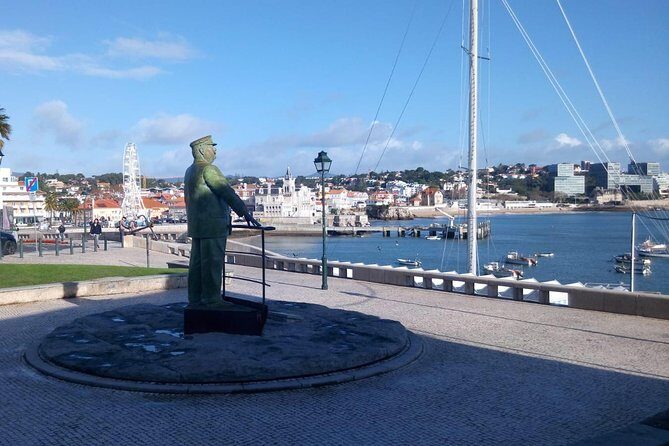
This is the kind of day trip that makes sense if you only have one day in the region. You get a guided loop that takes you from Lisbon’s historic riverfront to Sintra’s hilltop palaces and then down to the coast at Cascais and Estoril. The big practical win is transportation: you’re in an air-conditioned minivan with hotel pickup and drop-off, so you avoid the two classic headaches in this area—parking and navigating slow roads.
Because it’s private, your guide can also fine-tune the order and timing to match your energy level. That matters in Sintra, where walking between viewpoints and palaces can add up fast, especially if you’re not used to cobblestones and steep changes in elevation.
You can also read our reviews of more private tours in Lisbon



Belem: Pastéis de Belém and Tower photos without rushing your taste
Belem is where Lisbon starts feeling like a storybook. You begin with time in the area for pictures and the famous custard tarts: Pastéis de Belém. The bakery has been operating since 1837, and the tarts have a worldwide reputation for a reason. If you’re a first-timer, this is the stop where you can match the postcard moment with a real, still-hot snack.
You’ll also get a look at the Jerónimos monastery, known for Portuguese Late Gothic Manueline style. You’re not stuck in a lecture—this is more about orienting you to why Belem matters historically, tied to Lisbon’s seafaring era and the big wealth and power that followed.
Practical tip: if you want to buy tarts, go early in your free time. It’s a simple way to avoid the busiest moments.
Torre de Belém: The quick “must-photo” stop
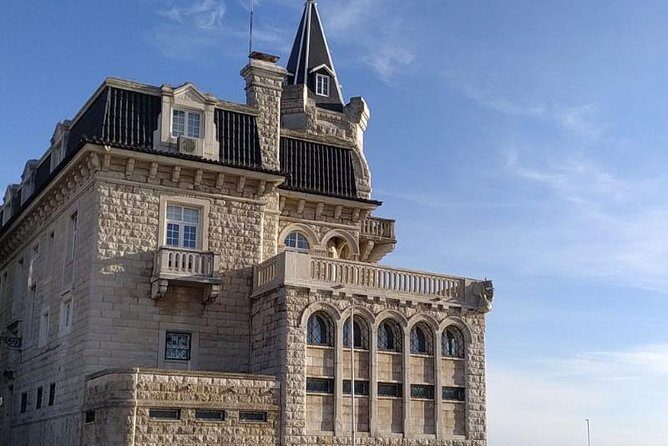
Torre de Belém is the camera magnet of Lisbon. Built in 1520 and commissioned by King Manuel I near the harbor, it was designed to help protect Lisbon from overseas departures. In other words, it’s not just a pretty tower—it’s tied to the era when Portuguese caravel ships were heading out across the Atlantic.
In this tour format, you get a focused stop (about 10 minutes) for photos. Admission is noted as not included, so you’re mostly there for outside views. That’s still worth it. Even from the outside, the tower’s shape and waterfront setting are instantly recognizable.
If your group loves photos, make this moment a priority. The time is short, so you’ll want to be ready to shoot.
Estoril and the casino-era glamour by the coast
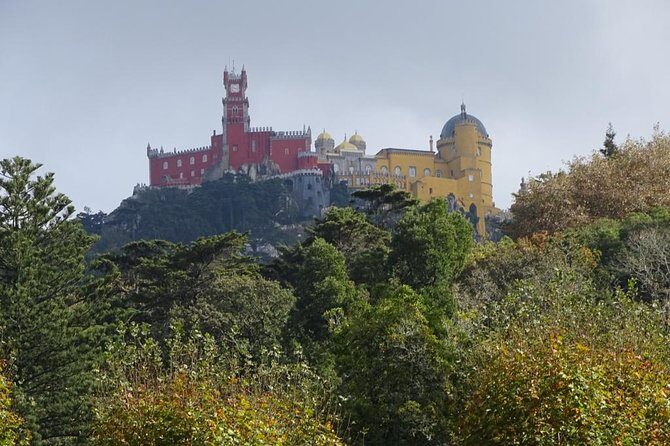
From Lisbon’s monuments you’ll move toward Estoril, a place that grew into an international resort vibe in the early 20th century. The tour’s description highlights the area’s big casino history and how it pulled in royalty and business figures. During World War II and after, Portugal’s neutrality meant Estoril and nearby spots became a safe refuge for people with high profiles across Europe, including intelligence services—linked in popular culture to Ian Fleming, later famous for James Bond novels.
This stop is brief, but it gives you useful context: Estoril isn’t just a beach town. It’s tied to a specific chapter of 20th-century Europe, when neutrality and leisure combined in a very particular way.
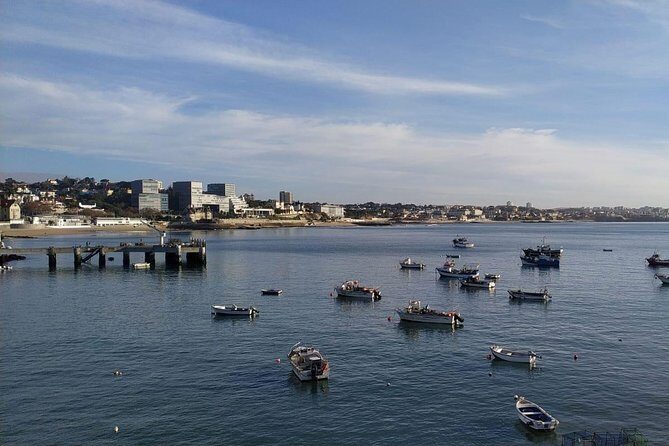
Cascais old center: a coastal break with royal summer roots
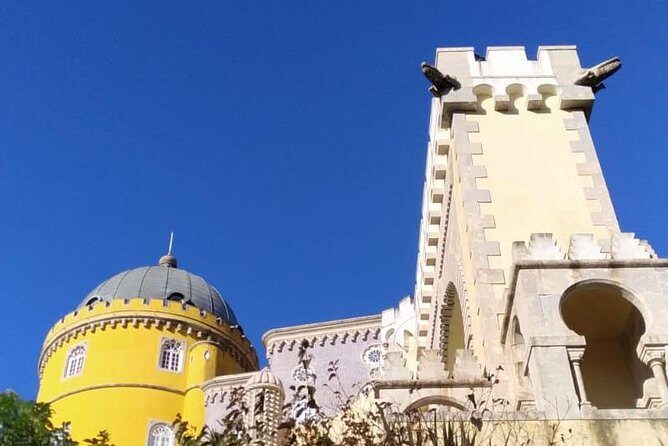
Cascais is often described as the Portuguese Riviera, and the tour’s framing explains why. In the late 19th century, King Luis I and the royal family made Cascais a summer residence. That royal connection grew even stronger during and after World War II, when European royalty and deposed monarchs found refuge in Portugal’s neutral stance.
Your time here is designed for a relaxed wander—about 30 minutes—so you can reset before the bigger Sintra portion. If you like strolling, taking photos of the sea front, and grabbing a quick bite, this is a good pause.
The only real “consideration” is expectations. Cascais is charming, but the day’s heavy hitters are in Sintra. Think of this as a cool-down stop, not a full second destination.




Cabo da Roca: the western edge view that makes people stop talking
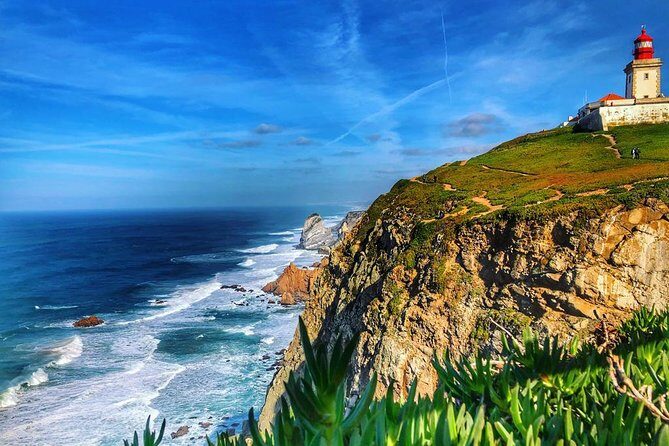
Then you reach Farol do cabo da Roca, the westernmost point of continental Europe. The lighthouse is the visual anchor, and the whole point of the stop is the meeting of land and sea—Portugal’s dramatic Atlantic energy in one place. This is timed at about 30 minutes, with admission noted as free, so you can spend your time on the viewpoint rather than tickets.
This is also one of those places where your guide’s background knowledge matters, because it’s not only about the dramatic view. It’s a geographic and poetic reference point tied to Portuguese literature. Even if you don’t care about poems, you’ll care about the wind, the light, and the way the coastline looks from the cliff line.
Bring a light layer if it’s breezy. You’ll be glad you did.
Sintra “forest palaces” start: Monserrate and its Francis Cook makeover
Sintra’s appeal is the contrast—storybook buildings and romantic gardens rising out of green hills. One of the stops described here is an estate connected to Lord Byron’s admiration and later shaped by Francis Cook, a wealthy English merchant who acquired the property in the mid-19th century. Cook worked on the remains of an older house and created an impressive summer residence.
Architecturally, the tour notes Romanticism and Mudéjar Moorish Revival influences, plus Neo-Gothic elements. That mix is part of why Monserrate-style places feel so different from typical European palaces. You’re not just looking at “a pretty building.” You’re seeing how 19th-century taste, trade wealth, and exotic design ideas blended into real stone and garden paths.
How to enjoy it: don’t rush. Even if your time is limited, you’ll get more out of it if you look at details—arches, colors, and how the building sits within the grounds—rather than just chasing wide angles.
Quinta da Regaleira: the Palace of Monteiro and its symbols
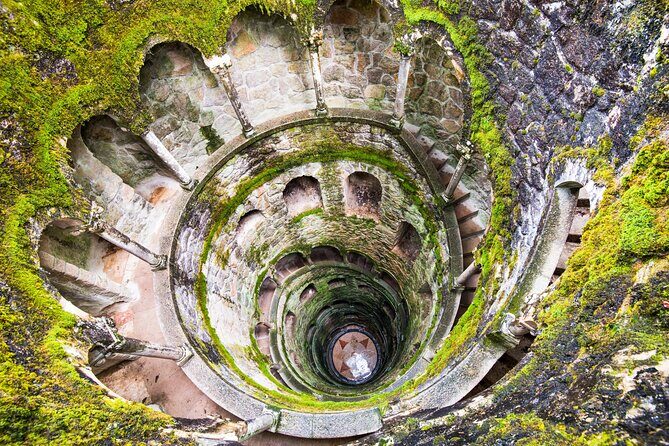
Next comes one of Sintra’s more mysterious names in the tour description: the estate known as the Palace of Monteiro the Millionaire, tied to António Augusto Carvalho Monteiro. This property features a romantic palace and chapel with Neo Manueline architecture, plus a park with lakes, grottoes, wells, fountains, and many small constructed surprises.
The tour specifically calls out symbolism linked to alchemy, Masonry, the Knights Templar, and Rosicrucians. That’s a big clue for how to experience this place. If you love spotting meaning in design, you’ll have fun. If you’re more of a “just show me the views” person, you’ll still enjoy the park setting and the cinematic atmosphere.
Practical note: if you’re visiting in warm months, plan for walking. Sintra’s charm is partly built on foot movement.
Sintra historic center: cobbled streets and the sweets you should try
You’ll also get time in Centro Histórico de Sintra, about 45 minutes. This is where Sintra feels like a real town rather than just a palace lineup. You’ll find traditional shops and cafés and cobbled streets where it’s easy to wander without feeling like you’re behind schedule.
The tour also points to local sweets like Travesseiros and Queijadas. If you want a quick, authentic souvenir-level snack without overplanning, this is the moment. It also helps you keep your energy up for the palace portion that follows.
Try this approach: pick one sweet, buy a water, and give yourself a short route so you’re not zig-zagging for too long.
Sintra National Palace: icons outside the free time, tickets inside
Sintra National Palace is one of the big names, and it’s noted as one of the main palace locations in the historical center. The tour explains the building’s background: it began as a Moorish governor residence and later became a residence after Christian conquest led by King Afonso Henriques. Over time, the palace became a mix of Gothic, Manueline, Moorish, and Mudéjar styles due to building campaigns across centuries.
You’ll also hear why it’s visually distinctive: the palace chimneys are visible from distances far away. Even if you only get a “start point” view, they help you recognize you’re in the right place.
Important for planning: admission tickets for the Sintra National Palace are noted as not included, so you’ll need to decide on entry based on your group’s interests and your available time.
Moorish Castle: a protected hilltop with early-defense roots
The Moorish Castle stop connects Sintra’s palace glamour to the older, defensive history underneath it. The tour notes the castle dates back around the 8th century during Muslim Iberia, used as the central protective site for a mostly agricultural region.
After Lisbon was conquered by D. Afonso Henriques, the castle was surrendered to Christian forces. The tour also mentions a handover to inhabitants with privileges in the foral system, tied to regional security and development.
This stop is great if you like history that doesn’t feel like museum glass. Hilltop ruins and old walls can be more memorable than indoor rooms, especially when your guide connects architecture to the landscape’s purpose.
Pena Palace: Sintra Romantic architecture at full volume
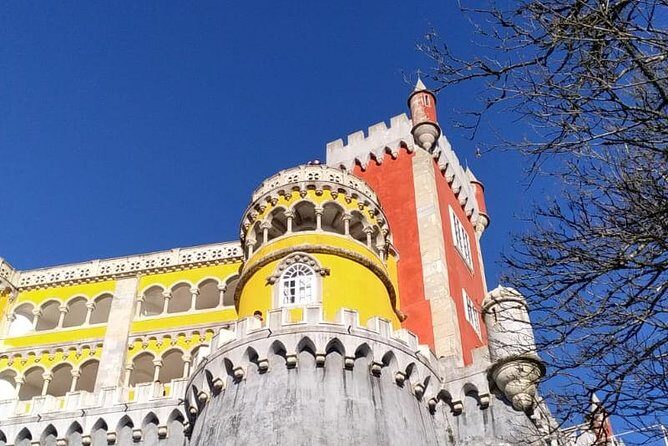
Pena Palace is described as the crown jewel of Portugal’s Romantic architecture. It sits atop Sintra mountain, built in the mid-19th century in connection with King Ferdinand II’s love for his wife and love for Portuguese cultural heritage.
You’ll hear it presented as a colorful masterpiece of romantic design, with an immense and luxurious garden. This is the place where you’ll want to slow down just a little and take in the contrast of bright walls, high viewpoints, and the big feel of the surrounding grounds.
Because your day is timed as one continuous loop, your time here will likely be structured. Still, it’s the kind of stop where even a partial visit gives you a strong sense of why Sintra earned its reputation.
Back to Lisbon viewpoints: Miradouro da Senhora do Monte and the city reset
After Sintra, you’ll return to Lisbon for viewpoint time. Miradouro da Senhora do Monte is one of the highest viewpoints in Lisbon, with panoramic views over Mouraria and Graça and landmarks on the horizon. It’s marked as a mandatory picture stop and lasts about 15 minutes.
This is a smart pivot point in the day. After hours of palace hills, you get a wide, breathing view that helps your brain reset. If your legs are tired, this is still valuable because the best part is the view, not a long hike.
Sé de Lisboa and Terreiro do Paço: old church and big square
The late-day Lisbon stops round things out with classic “walkable center” anchors.
First is the Sé de Lisboa, the oldest church in the city. The tour notes it was built after the conquest of Lisbon in 1147 and it has survived earthquakes over time. It’s also described as a mix of architectural styles and was classified as a national monument in 1910.
Then comes Terreiro do Paço, also called Terreiro do Paço for the Royal Ribeira Palace location before the 1755 earthquake. After the rebuilding, the square was remodeled under Marquês de Pombal and Sebastião José de Carvalho e Melo, and it remains one of Europe’s biggest city squares.
If you’re the kind of traveler who likes a day to end with a sense of place, these stops help. You finish with a Lisbon image that feels grounded and real, not just coastal or hilltop.
Price and value: is $278.33 per person fair?
At $278.33 per person for about 8 hours, this is not a budget “hop-on, hop-off” option. But you are paying for three things that are hard to replicate cheaply:
1) Private transport in an air-conditioned minivan
2) Hotel pickup and drop-off (you’re not figuring out meeting points with public transit)
3) A guide who can manage timing across three areas that are far less smooth without help
If you’re traveling as a duo or small group, private door-to-door logistics usually starts to feel more reasonable. If you’re solo, it costs more, but you’re also buying convenience and time saved. The value is strongest when you want a lot of highlights in one shot and you care about explanations, not just photos.
Guides make or break the day: what stands out from real experiences
This tour is built around people guiding the flow, and the reviews you shared consistently praise the guides for clarity and personality. Names that come up include Jorge, Paula, Guy, David, and Isabel. You’ll notice the same themes: guides with clear English, strong historical explanations, patience with questions, and a friendly approach.
One standout detail: the day can be tailored. That matters in Sintra, where weather, walking pace, and ticket decisions can shift your ideal plan. If you want a guided day that adapts to your mood, this is the right format.
Who this tour is best for
I’d point you toward this tour if:
- You have one day and want Lisbon, Sintra, and Cascais covered in an organized loop
- You’d rather pay for comfort and planning than deal with driving and parking
- You like history explanations as you go, not just standing in front of monuments
- Your group includes mixed interests (coasts, palaces, viewpoints, food snacks)
You might choose a different style if:
- You want long stays in indoor sites and museums, with slow breaks
- Your group hates structured timing and prefers unplanned wandering
Quick tips to make the most of your day
- Wear shoes you trust for uneven and sloped places in Sintra.
- Expect a day with photos plus short explanations; plan to enjoy, not exhaust yourself.
- Since lunch isn’t included, bring a simple snack or plan to buy something during the Sintra village time.
- For ticketed stops marked as not included (notably Torre de Belém and the Sintra National Palace), decide early whether you want to enter or focus on outside views.
Should you book the Lisbon Sintra Cascais private tour?
If your goal is to squeeze the best-known highlights into one day without the hassle of logistics, I think this is a smart choice. The private setup, hotel pickup/drop-off, and the guide-led pacing make it feel like a well-managed “greatest hits” day—especially if you only have a short window in Portugal.
Book it if you want: easy transportation, strong explanations, and a route that hits Lisbon riverfront icons, Atlantic viewpoints, and multiple Sintra palaces. Skip it if you’re looking for slow travel or if your group needs lots of unstructured free time at every site.
FAQ
How long is the tour?
It runs for about 8 hours.
Is pickup and drop-off included?
Yes. The tour includes hotel pickup and drop-off within Lisbon city, and you just tell them where you’re staying.
What’s included in the price?
The price includes a private tour, transport by air-conditioned minivan, and hotel pickup and drop-off.
What isn’t included?
Lunch is not included. Also, admission tickets are noted as not included for Torre de Belém and Sintra National Palace.
What language is the tour offered in?
The tour is offered in English.
Can I cancel for free?
Yes, you can cancel for a full refund if you cancel at least 24 hours in advance of the experience’s start time.