REVIEW · LISBON
Lisbon: Private Guided Tour of Historical Center by Tuk Tuk
Book on GetYourGuide →Operated by Tejo Tourism - Guided Tours · Bookable on GetYourGuide
Lisbon’s hills feel easier in a tuk tuk. This private 100% electric tuk tuk tour turns steep streets into a quick, comfortable circuit, with stops built around iconic sights and the small alleys that larger vehicles can’t reach.
I really like two things about this experience. First, it’s a smart way to get your bearings fast—you’ll pass major landmarks and viewpoints without spending the whole day climbing on foot. Second, the route can be tailored, so you can lean more toward places like Praça do Comércio or the miradouros instead of doing a one-size-fits-all checklist.
One consideration: in at least one case, the tuk tuk’s plastic cover was visible in the driver’s viewing area, which could make it a bit awkward for photos. It can still help with sun, but if camera angles are a big priority for you, plan a little flexibility.
In This Review
- Key things that make this tour worth your time
- 100% electric tuk tuk: the smart way to move in Lisbon
- Where you start: Rossio Square behind Teatro D. Maria II
- Baixa and Praça do Comércio: the classic starting square energy
- Chiado and Largo de Camões: theaters, streets, and a different Lisbon mood
- Iglesia de São Roque and Largo stops: small monuments, big orientation value
- Miradouros: how to ask for the views that actually define Lisbon
- Elevadores and quick “wow” transport moments
- Príncipe Real, Calçada streets, and Poço dos Negros: texture instead of just monuments
- Convento do Carmo, Rossio station, and the center back-and-forth
- Sé de Lisboa, Castelo de São Jorge, and the hilltop story
- Alfama and Igreja stops: slow lanes, named landmarks, and local geography
- How customization works in real life (and how to get the best route)
- Price and value: $242 for up to 3 people, not per head
- Who this tuk tuk tour suits best
- Should you book it?
- FAQ
- How long is the Lisbon private tuk tuk historical center tour?
- What is the group size and price for this tour?
- Where do we meet for the tour?
- Is the tuk tuk electric?
- What languages are available for the live tour guide?
- Can I customize the stops and neighborhoods?
Key things that make this tour worth your time
- Private group up to 3: your own tuk tuk time, not a crowded ride.
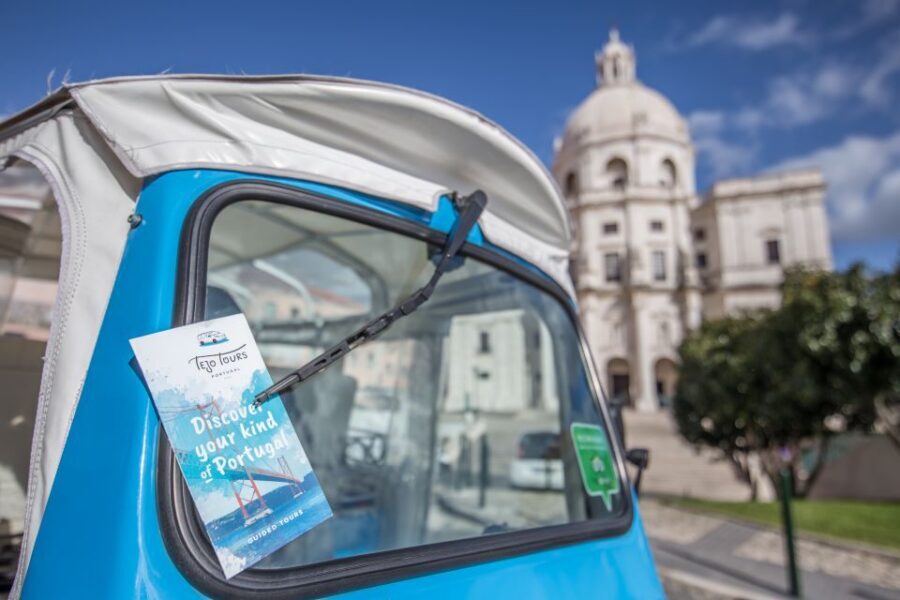
- 100% electric vehicle with lithium batteries: smoother in motion, and lighter on the air than gas.
- Built for Lisbon’s hills: you get those steep-city views without burning your legs.
- Miradouro-focused options: ask to include multiple viewpoints like Santa Catarina, Portas do Sol, and Graça.
- Access to small streets: the route can reach lanes that bigger vehicles can’t handle.
- Guides with real Lisbon context: people have specifically praised guides such as Diogo, Bruno, Beatrice, and Rio for mixing directions, history, and good pacing.
100% electric tuk tuk: the smart way to move in Lisbon

Lisbon rewards the patient traveler, but it also punishes the unprepared one—especially on a first visit. The biggest practical win here is the vehicle. The tuk tuk is 100% electric, powered by lithium batteries, which means you’re riding in a clean, efficient way while still moving through the city at a comfortable pace.
And because the tour is designed for Lisbon’s layout, it’s not just a scenic ride. The whole point is to connect neighborhoods and landmarks with a route that can handle narrow streets. That matters because Lisbon’s charm is often in the sideways details: small squares, short street segments, and viewpoint stops that you only notice when you’re not stuck walking long distances between them.
For a first timer, I think this kind of tour is less about ticking off sites and more about learning the “shape” of the city. Once you see where the viewpoints sit relative to the major squares, you can plan your next day with way less guesswork.
You can also read our reviews of more guided tours in Lisbon



Where you start: Rossio Square behind Teatro D. Maria II
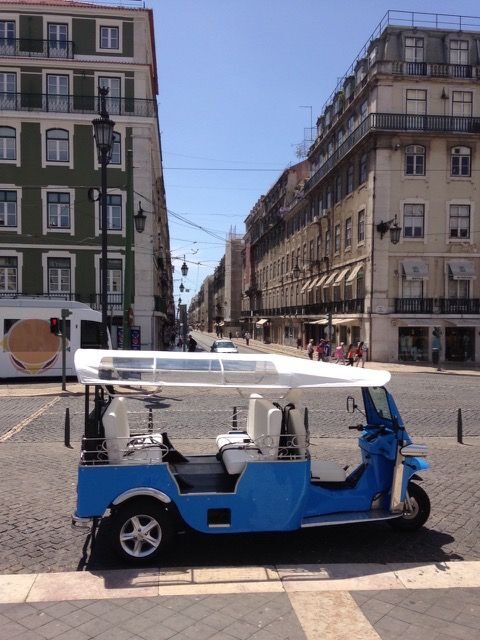
The meeting point is D. Pedro IV Square (Rossio Square), behind the D. Maria II National Theatre. This is a helpful place to start because it’s central. You’re not hunting for an out-of-the-way address across town, and you can quickly connect the tour to what you’ll likely do before or after.
You’ll also return to the same meeting point at the end, which is nice when you’re juggling meals and museum time. One less transit step means you can actually spend your saved energy enjoying Lisbon instead of managing it.
Baixa and Praça do Comércio: the classic starting square energy

A lot of Lisbon’s “welcome mat” moments cluster in the Baixa area, and Praça do Comércio is one of them. This is a huge open square by the water, and even if you don’t plan to linger, it sets a visual anchor. It helps you understand how Lisbon’s grand spaces connect to the older, hillier quarters above.
From the tour options, you might also stop at Praça do Município. That’s the kind of place that helps reinforce the civic center feel of the city—useful for orientation when you later wander into side streets on your own.
Why this is valuable in a tuk tuk: when you’re viewing wide, open spaces from street level, you can take a breath and reset your bearings before the city tightens into alleys and viewpoints.
Chiado and Largo de Camões: theaters, streets, and a different Lisbon mood
The tour can include Chiado and Largo de Camões, plus major performance stops like Teatro São Carlos and Teatro São Luiz. Even if you’re not buying tickets, these are strong landmarks that help you picture where culture “lives” in Lisbon’s core.
Chiado often feels a bit more refined and urban than the older hill neighborhoods. That contrast is good. It keeps your tour from turning into one long set of stone alleys. You get a sense of Lisbon as both historic and everyday—full of streets you could imagine shopping, browsing, and pausing for coffee.
If your focus is architecture and city rhythm, tell your guide you want more time around the theater district and less time bouncing from viewpoint to viewpoint. This kind of private tour makes that adjustment easy.
Iglesia de São Roque and Largo stops: small monuments, big orientation value
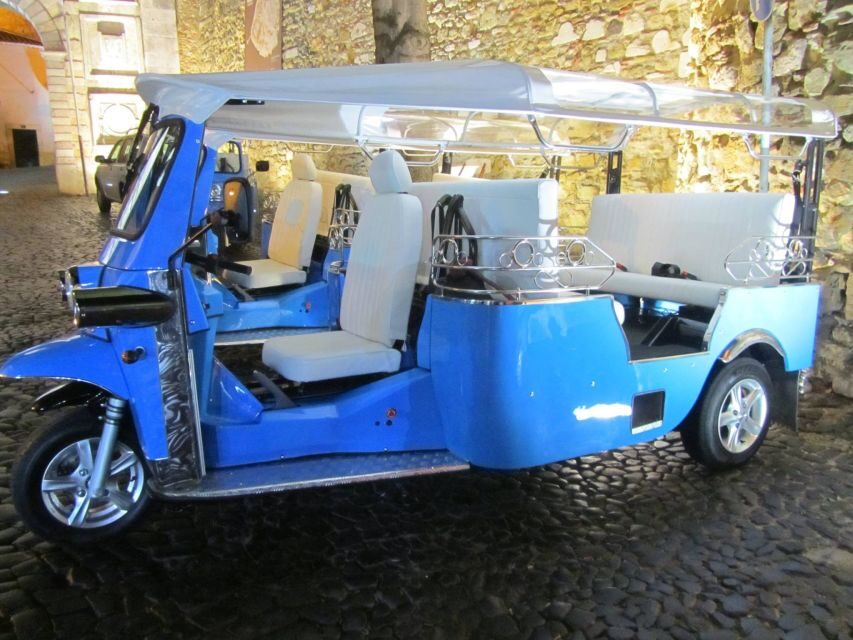
The tour options also mention Igreja de São Roque, along with squares like Largo de Camões and Largo do Rato. Churches in Lisbon often act like navigation tools, even when you’re not going inside. They’re placed where streets naturally feed into them, so they work well as “landmark anchors” for a ride that includes narrow lanes.
I like using stops like these for two reasons:
1) You learn what’s important to Lisbon’s layout, not just what’s photographed most.
2) You get a better sense of direction for later walks.
A small note: because this is a 2.5-hour private circuit, you won’t have unlimited time at every stop. Treat these as “see, understand, decide” moments. If one place grabs you, you can always return later under your own schedule.
You can also read our reviews of more private tours in Lisbon





Miradouros: how to ask for the views that actually define Lisbon

Lisbon is a city of viewpoints, and the miradouro stops listed here are the kind that make the entire tour feel worth the effort. The options include:
- Miradouro de São Pedro de Alcântara
- Miradouro de Santa Catarina
- Miradouro de Santa Luzia
- Miradouro Portas do Sol
- Miradouro da Graça
- Miradouro da Senhora do Monte
Here’s my practical advice: don’t treat viewpoints as identical. If you include several, ask your guide to help you compare them. For example, you might want one viewpoint that feels closer to the historic core, then another that shows a wider sweep.
This matters because Lisbon’s views aren’t just pretty—they explain the city. You’ll start to see how neighborhoods stack and how streets curve and climb. Once that clicks, your independent exploring becomes much less stressful.
One guide-specific tip that comes up in the experience notes: ask to go to the various miradouros. The tour format supports it, and it’s a great way to build in photo time without doing a ton of waiting.
Elevadores and quick “wow” transport moments
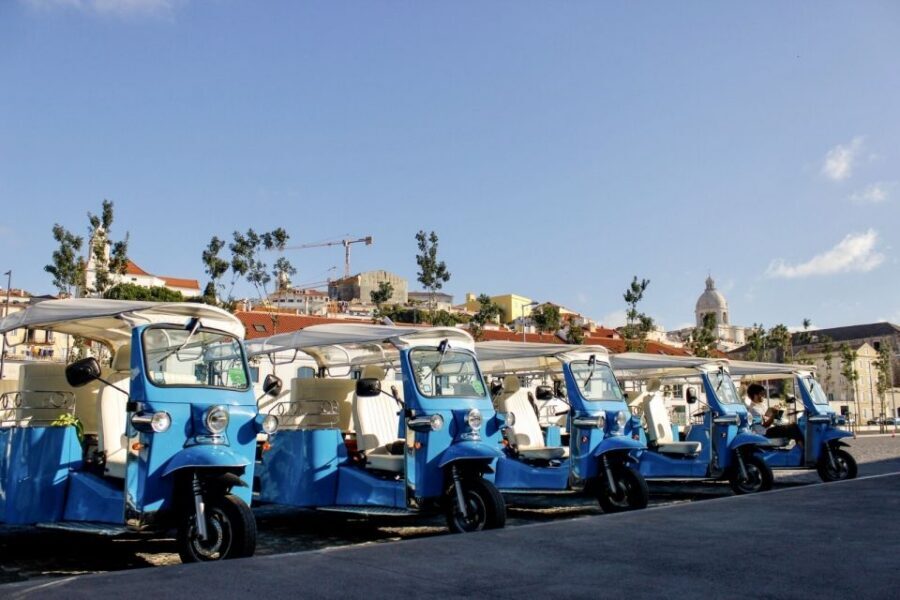
The tour can include famous elevators like Elevador da Glória, Elevador da Bica, and Elevador de Santa Justa. Even when you’re not riding them as a tourist attraction, seeing them on the tour helps you understand how Lisbon handles height.
Why this is good on a first visit: elevators are basically Lisbon’s cheat code. They’re proof that the city is built around slopes, stairs, and clever connections. When you spot them during the ride, you’ll later recognize them when you’re walking and think, Oh, that’s how you get up there.
The tradeoff is time. If you choose multiple vertical-city stops, you might have less time to linger elsewhere. If your priority is deep sightseeing, tell your guide which viewpoint matters most and keep the number of elevator stops tight.
Príncipe Real, Calçada streets, and Poço dos Negros: texture instead of just monuments
The experience options also include places that add texture:
- Jardim do Príncipe Real
- Calçada do Combro
- Poço dos Negros
This is where the tour can feel more “Lisbon” and less “postcard.” Jardim do Príncipe Real gives you a calmer break from nonstop streets. Calçada do Combro and Poço dos Negros are the kind of named spots that reflect Lisbon’s quirky, specific street identity—exactly the kind of detail you miss if you only base yourself in a straight-line walking plan.
If you like color, street character, and quick stops for photos without a full detour, these are worth prioritizing.
Convento do Carmo, Rossio station, and the center back-and-forth
A route option includes Convento do Carmo and Estação do Rossio, plus Igreja de Santo António. These stops help connect Lisbon’s older layers to the more “motion” side of the city. Rossio station is also one of those landmarks that makes you feel like you can navigate the city better after the tour.
If you plan to do additional train trips or simply want Lisbon to feel less complicated, these are useful markers. They also offer a nice pacing break: churches and stations can be quick stops that still add meaning.
In a couple of the experience notes, the pacing includes opportunities for a snack and drink along the way. That’s the kind of practical comfort that makes a short tour feel more doable.
Sé de Lisboa, Castelo de São Jorge, and the hilltop story
If the tour includes the hilltop cluster, you’ll likely see:
- Sé de Lisboa
- Castelo de São Jorge
- Teatro Romano
- Alfama
- Casa dos Bicos
This is the part of Lisbon that feels like it has layers. The ride helps you see how the historic center climbs and how the top end connects back to the neighborhoods below.
For me, the value is simple: you get the big-picture hilltop experience without spending a full day getting from one end to the other on foot. Castelo-area stops also pair well with miradouros. You can connect the “high ground” viewpoints to the actual historic spaces up top.
There’s no guarantee every stop will be included, since your itinerary can be tailored. But if you want the classic Lisbon hilltop feel, this is the section to push for.
Alfama and Igreja stops: slow lanes, named landmarks, and local geography
Alfama is listed as a possible stop, along with churches such as Igreja da Graça and Igreja de São Vicente de Fora. The big value here is not just the sights themselves. It’s the geography: you start to understand why these areas feel different from Baixa and Chiado.
Even if your plan is mostly photo and orientation, Alfama-style areas tend to reward slow looking. The tuk tuk can get you to the right lanes and viewpoints without turning your day into a stair marathon.
Also listed are:
- Casa dos Bicos
- Panteão Nacional
- Feira da Ladra
Those add options depending on what you’re most curious about—neighborhood character, a major landmark, or a market-area stop. If Feira da Ladra matters to you, ask whether it fits your day’s timing and priorities.
How customization works in real life (and how to get the best route)
The tour is private and planned around your interests, with the guide able to adjust which neighborhoods and attractions you visit. That’s a real advantage in Lisbon, where the city’s “must sees” can pull you in ten directions.
Here’s a simple way to get better value from the 2.5 hours:
- Choose one major square you want for orientation (Praça do Comércio is a common pick).
- Pick 2–4 viewpoint/miradouro stops as your photo goal.
- Decide whether you want more culture stops (theaters, churches) or texture stops (gardens, named streets like Calçada do Combro).
One strong theme in the experience notes is flexibility—guides have been described as patient and good at letting you decide where to focus. People have also praised specific guides (Diogo, Beatrice, Bruno, Rio) for blending directions with personality and making it easy to customize on the fly.
If you’re traveling with someone who gets tired, this format can help you keep the trip fun. At least one guide was noted as patient with getting on and off when someone had difficulty, which is exactly the kind of practical kindness you want in a short tour.
Price and value: $242 for up to 3 people, not per head
The price is $242 per group up to 3 passengers for a 2.5-hour guided tour. That means you’re not paying solo-style rates for a private ride. If you’re traveling as a small group, the value can be strong because the vehicle and guide time aren’t divided across strangers.
Think of it like this: you’re buying time and comfort. Lisbon’s hills can chew up a day, especially on your first visit. Paying for a guided ride that connects major landmarks and viewpoint areas can save your legs for later—and save your brain from figuring out the city’s “stacking” all on your own.
If you’re solo, it might still be worth it if you want a guided, low-effort introduction. But if you’re the type who loves long walks and doesn’t mind working up hills, you could do it cheaper on your own. The difference is that this tour is built for efficiency and access to tight lanes.
Who this tuk tuk tour suits best
This experience fits best if you:
- want a first-day orientation without doing a stair workout
- like having a guide to explain what you’re seeing as you move
- prefer a private group setting over a crowded bus or tram
- care about viewpoints (and want help selecting which ones)
It’s also a good option when your schedule is tight. Two and a half hours can give you enough context to build the rest of your Lisbon days with confidence.
Should you book it?
I’d book this tuk tuk tour if your top goal is to understand Lisbon quickly and comfortably—especially if you want miradouros, iconic squares, and the older neighborhoods without spending hours commuting uphill. It’s also a strong call if you appreciate flexibility: you can steer the route toward what you personally want, whether that’s theaters, churches, squares, gardens, or hilltop areas.
If you’re the kind of traveler who wants long museum time at one place, this may feel too short. But for getting your bearings, catching the city’s major landmarks, and seeing the layout of the hills in one guided circuit, it’s a smart use of your time.
FAQ
How long is the Lisbon private tuk tuk historical center tour?
It lasts 2.5 hours.
What is the group size and price for this tour?
It’s a private group priced at $242 per group up to 3 passengers.
Where do we meet for the tour?
The tour starts at D. Pedro IV Square (Rossio Square), behind the D. Maria II National Theatre.
Is the tuk tuk electric?
Yes. The tuk tuks are 100% electric, using lithium batteries.
What languages are available for the live tour guide?
The guide is available in Spanish, English, and Portuguese.
Can I customize the stops and neighborhoods?
Yes. You can personalize the itinerary to include attractions and neighborhoods of interest to you, with options such as Praça do Comércio, Alfama, and multiple miradouros.