REVIEW · LISBON
Lisbon: Jewish History Tour of Lisbon
Book on GetYourGuide →Operated by Lisbon Walker · Bookable on GetYourGuide
Lisbon hides a Jewish map in plain sight. This 1-day walking tour strings medieval life, forced conversions, and even WWII-era refugee stories into the streets you already want to see. You start in the grand setting of Praça do Comércio, then work your way through the city’s older neighborhoods where names and borders still echo.
I especially like two things. First, the route ties big, famous squares to smaller streets in a way that makes the timeline feel real. Second, the guide work is a big deal here, and you may meet fluent local storytellers such as José, Filipa, Rita, or Sofia, all praised for keeping people engaged while answering questions.
One consideration: there are very few physical remnants of Lisbon’s Jewish community to point at. Expect mostly an interpretive, street-level history—still valuable, but not a museum-with-artifacts experience.
In This Review
- Key takeaways before you go
- Entering Lisbon’s Jewish Story at Praça do Comércio
- The 3-Hour Walking Route That Actually Makes Sense
- Baixa District: When Conversions Were Forced
- Alfama Jewish Quarter: Medieval Segregation Up Close
- Rossio and the 1506 Pessah Events
- Casa dos Bicos, Mouraria, and Other Stops That Build the Timeline
- WWII Refugees and Lisbon’s Resistance Museum Thread
- What You’ll Actually See: Neighborhoods, Names, and Few Artifacts
- Guides Make the Difference: How You’ll Feel on This Walk
- Price and Value: What $106 Buys You
- Who Should Book This Lisbon Jewish History Tour
- Quick Before-You-Go Tips
- Should You Book This Tour?
- FAQ
- How long is the Lisbon Jewish History tour?
- What does the tour cost?
- Where do I meet the guide?
- Is the tour private?
- What languages are available?
- What is included in the price, and what is not?
- What parts of Lisbon does the tour cover?
- Will I see lots of physical remains of Lisbon’s Jewish community?
- Can I cancel and get a full refund?
Key takeaways before you go
- Start at Praça do Comércio to frame the story with Lisbon’s central waterfront setting
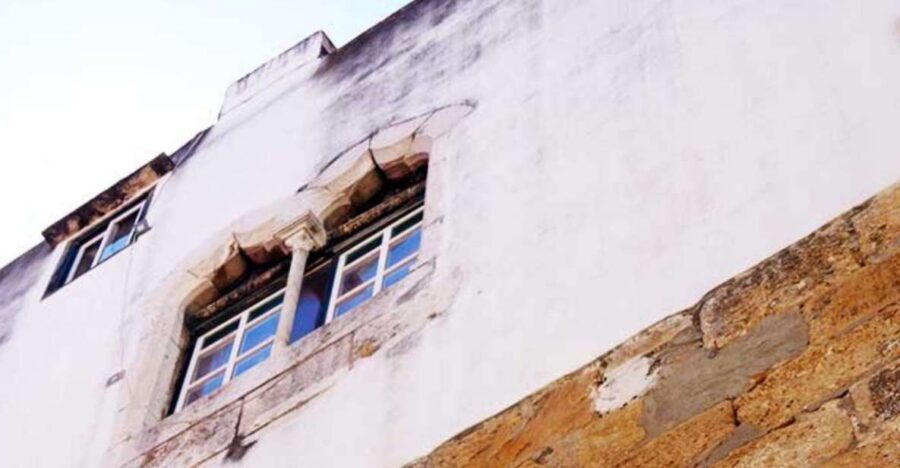
- Alfama on foot for the medieval reality of Jewish quarters and segregation
- Baixa and forced conversions for the hard turn in the timeline
- Rossio and the 1506 Pessah massacre to understand how tragedy reshaped lives
- WWII refugee passage and Resistance Museum for the modern thread in Lisbon
Entering Lisbon’s Jewish Story at Praça do Comércio
This tour gives you a strong launch point: Praça do Comércio. It is one of those places where the city feels built for arrivals—boats in the past, travelers now—and your guide uses that sense of entry to connect Jewish history to the broader Lisbon story. You’ll hear about the Exodus origin linked with this area, and you’ll start learning how Lisbon’s role in movement of people and ideas shaped Jewish life over centuries.
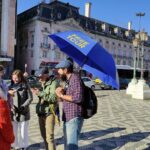
The meeting setup is simple and easy to find. Look under the big triumph arch at Praça do Comércio, and spot the guide by an orange backpack or a Totebag with the Lisbon Walker logo. For first-timers, this matters because you can get your bearings fast, then focus on the walking and the explanations instead of playing finder-game with landmarks.
You can also read our reviews of more historical tours in Lisbon
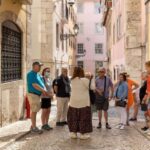


The 3-Hour Walking Route That Actually Makes Sense
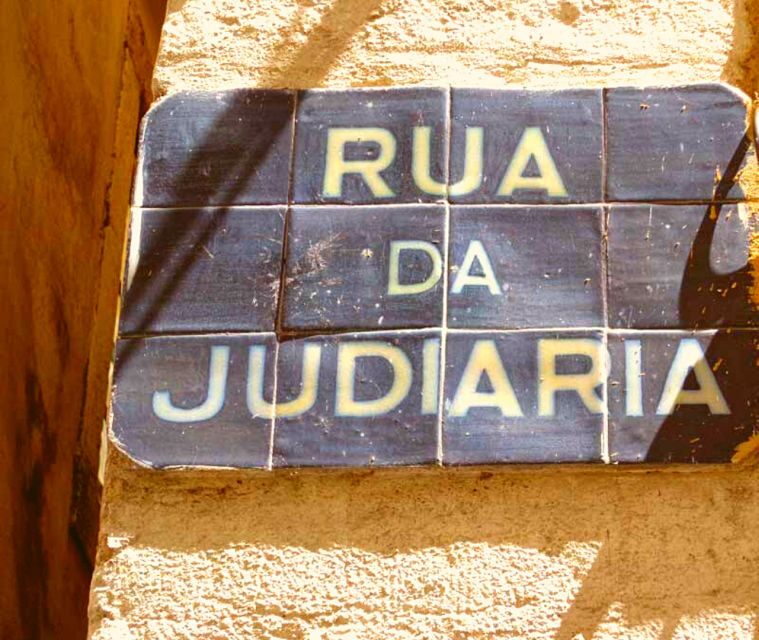
The whole experience runs for about 3 hours guided. The tour covers key central areas and then ranges into older districts, including the castle hill area, Alfama, and the Baixa. You also pass through named stops like Praça do Município, Rua do Comércio, Casa dos Bicos, Ribeira, the Resistance Museum, Mouraria, Praça da Figueira, and Rossio.
Here’s why I think the pacing works: each stop isn’t just a photo opportunity. The guide uses the city’s layout to show how Jewish life was pulled along by power, trade, and changing rules. If you like history that feels attached to place—rather than history that lives only in books—you’ll appreciate this approach.
One practical note: it is real walking. Comfortable shoes are the main requirement listed for a reason. Even if the tour doesn’t feel like a hike, you are moving through multiple neighborhoods, and you’ll want your feet to cooperate.
Baixa District: When Conversions Were Forced
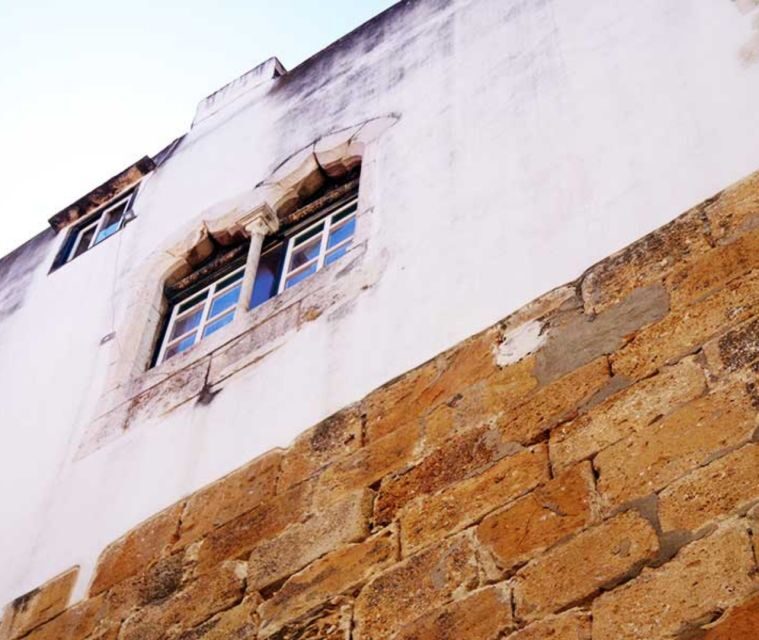
After the central waterfront and downtown streets, the tour brings you into the Baixa District theme: forced conversions. This is where the story turns darker, and Lisbon’s street plan becomes part of the explanation. You’ll hear how the city’s Jewish presence changed under pressure, and how people were reshaped by laws and persecution.
What’s useful for you here is that this section reframes what you might see in Lisbon as an outsider. You’ll stop treating buildings and squares as generic city scenery. Instead, you’ll start noticing how the city’s layout and institutions connect to coercion—who had access to what, who was pushed out, and how identities could be changed without the person actually choosing it.
This is also a good segment for questions. If you care about how communities survive policy shocks—through adaptation, secrecy, or migration—your guide’s job is to help you connect the historical dots without flattening the human side of it.
Alfama Jewish Quarter: Medieval Segregation Up Close
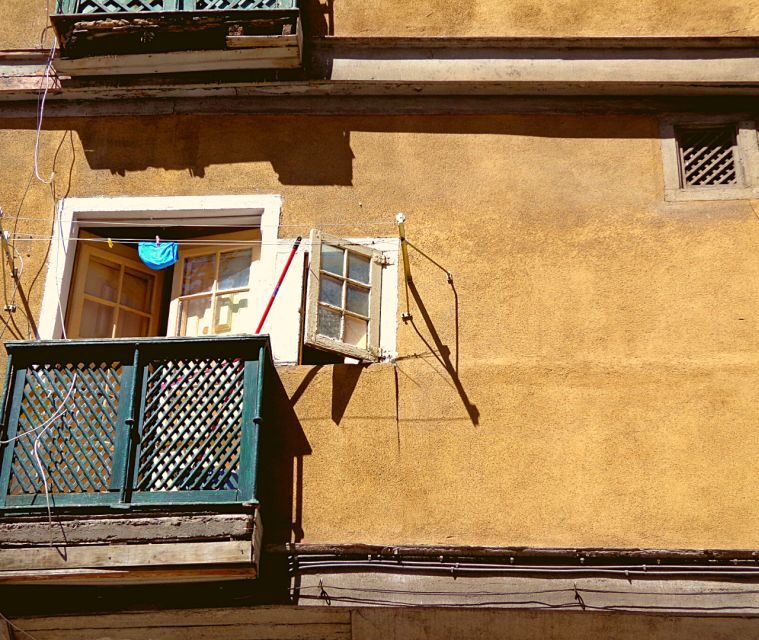
Then comes Alfama, including the Jewish quarter and the reality of medieval segregation. Alfama is one of Lisbon’s most atmospheric neighborhoods for a reason: it feels older, tighter, and more layered than the modern city core. That’s perfect for a story about boundaries—what lived inside certain areas, who was kept separate, and how daily life was shaped by enforced rules.
Your guide uses figures and names to help connect the timeline moments to Portuguese culture, science, and even gastronomy. You won’t just hear a list of events. The tour is structured so you can understand how Jewish and Jewish-related communities left marks on Portugal beyond the obvious history books.
And yes, you’ll get the chance to return to the repeated theme from the reviews: in Lisbon, you often won’t see much leftover stone that screams Jewish history. But the flip side is that Alfama’s streets make the spoken history easier to picture. Even without visible artifacts, you can sense the constraints that shaped where people could go and what they dared to do.
Rossio and the 1506 Pessah Events
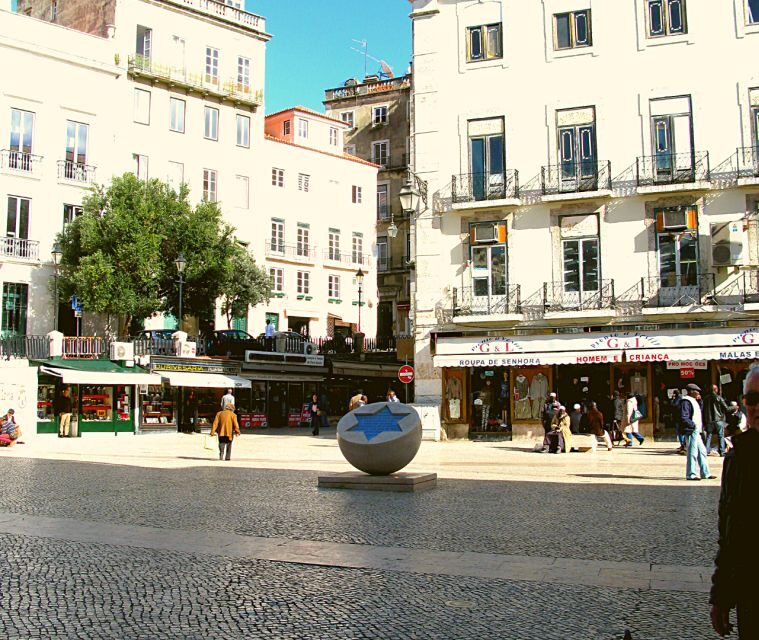
Rossio is another key stop, and this part is emotionally heavy. Your guide covers the 1506 Pessah massacre, and you’ll learn how that event fits into the broader story of persecution and the destabilizing effect it had on community life.
I like that the tour does not skip the painful chapters. When you’re learning Jewish history in Europe, it is tempting to focus only on thriving periods. This tour keeps you honest by showing how quickly security could collapse, and how a calendar celebration could turn into a flashpoint.
Also, Rossio helps the tour connect two worlds: the older city fabric and the space that feels central to Lisbon’s public life. That contrast is useful. It makes the message clear: even in major shared spaces, violence and exclusion could reach in and change everything.


Casa dos Bicos, Mouraria, and Other Stops That Build the Timeline
Between the big themes—Baixa, Alfama, Rossio—you’ll pass through places that help you build the timeline in your head. Stops like Praça da Figueira, Ribeira, and Mouraria help you understand Lisbon as more than one neighborhood. The tour is working as a map of movement: people, laws, refuge routes, and cultural influence.
Casa dos Bicos is one of those central landmarks you’ll pass on the way. The important thing is not treating any one building as a stand-alone clue. The guide is using these points like mile markers. Each one supports the story’s next step.
Mouraria is especially helpful if you like seeing how Lisbon neighborhoods overlap and influence each other. The tour uses it to connect cultural layers to Jewish history in a way that feels grounded in the city’s geography rather than trapped in theory.
WWII Refugees and Lisbon’s Resistance Museum Thread
A big reason I’d recommend this tour is that it doesn’t stop at the medieval era. It also covers the 1940s passage of WWII refugees through Lisbon, and it includes a stop at the Resistance Museum.
This modern thread matters because it shows Lisbon as a transit city in real historical times—not just a postcard setting. Jewish history in Lisbon isn’t only about synagogues and old streets. It is also about escape, arrival, and the choices people made when the world collapsed around them.
Even if you mainly planned this for the medieval story, this part often changes the way people read Lisbon. You start seeing it as a place where global events touched local streets quickly, and where Lisbon’s role in movement wasn’t abstract.
What You’ll Actually See: Neighborhoods, Names, and Few Artifacts
I’ll be straight with you: you likely won’t find many physical remains of Lisbon’s Jewish community. That theme comes through strongly in guide performance too. The best guides here work like teachers of interpretation, not curators of ruins.
In practice, that means you’ll rely on the guide’s narration to bring the sites to life. You’ll learn what happened where, why segregation and conversion policies mattered, and how later Jewish life and new Christian life connected back to earlier communities.
This isn’t a dealbreaker. In fact, for the right traveler, it can be the point. If you enjoy reconstructing history from context—streets, names, and political shifts—this tour will land well. If you want to see synagogue remains, tombstones, or preserved objects, you might feel frustrated.
Guides Make the Difference: How You’ll Feel on This Walk
The tour is led by a live guide in English or Portuguese, and the group is private. The guides praised most often—José, Filipa, Rita, Sofia, Jorge, Philippa, and others—share a common skill set: they keep people moving through questions and explanations without turning it into a lecture that loses the room.
If you’re someone who stops often to ask why a certain event happened, you’ll likely enjoy the back-and-forth. Many of the comments highlight that the guide answered questions and paced the story for engagement. That matters because Jewish history in Lisbon can feel complex fast: you have medieval segregation, forced conversions, and then the later refugee story, all within one day.
The best part is that the walking format helps you stay with it. You’re not parked in one spot for three hours. You see Lisbon as you listen.
Price and Value: What $106 Buys You
At $106 per person for a 3-hour guided tour, this isn’t a cheap impulse buy, but it is also not overpriced for what you get on the street.
Here’s the value math I’d use: you’re paying for a specialist guide, a private group format, and a curated route through multiple neighborhoods in one go. The tour also includes features like skip the ticket line (if a ticket line applies on-site) and English or Portuguese live guidance, which are the kinds of details that can save time and confusion.
Food and drinks aren’t included, and there’s no hotel pickup or drop-off. That’s a normal setup for walking tours, but it means you should budget your own breaks and refreshments outside the tour. If you already plan to do a big meal after, this structure can actually be convenient.
Bottom line: you’re paying for direction and interpretation. If that’s what you want—someone to connect the dots across Lisbon’s Jewish timeline—this price can feel fair.
Who Should Book This Lisbon Jewish History Tour
This tour fits you best if you:
- want a one-day overview that connects medieval and modern Lisbon
- like walking through neighborhoods and learning how history shaped street-level life
- care about forced conversion history and the 1506 Pessah events
- want WWII context, including WWII-era refugee passage and a Resistance Museum stop
- appreciate guides who can explain what’s missing, since physical artifacts are limited
It may not be your best match if you came to Lisbon hoping to tour a synagogue complex or see extensive preserved Jewish remains. This is a story told on streets and in context. The tour is still meaningful—but the format is interpretive.
Quick Before-You-Go Tips
If you book, plan for a day where shoes matter. Wear comfortable footwear because you’ll be walking across neighborhoods and hills typical of Lisbon’s old areas.
Also, check that you’re comfortable with a tour that can be tailored to different time frames and starting points. That flexibility can help if you’re trying to fit Lisbon into a tight itinerary.
Should You Book This Tour?
I’d say yes—if you want Lisbon to make sense through the lens of Jewish life, persecution, and survival, from medieval times to the 1940s. The tour’s strongest advantage is that it gives you a clear route and a guide who can explain how Jewish history connects to Portuguese culture, politics, and later refugee movements.
The main reason to hesitate is also clear: you need to be okay with limited physical artifacts. If you enjoy spoken history grounded in real places, you’ll likely come away with a much sharper view of Lisbon. If you want lots of preserved Jewish sites to point at, keep expectations realistic.
Either way, you’ll walk away with a better sense of how this city has carried—and reshaped—Jewish stories for centuries.
FAQ
How long is the Lisbon Jewish History tour?
It’s a 1-day tour with a 3-hour guided walking experience.
What does the tour cost?
The price is $106 per person.
Where do I meet the guide?
Meet at Praça do Comércio. Look for the guide under the big triumph arch. The guide will wear an orange backpack or a Totebag with the Lisbon Walker big logo.
Is the tour private?
Yes, it’s listed as a private group.
What languages are available?
The live guide is available in English and Portuguese.
What is included in the price, and what is not?
The price includes the 3-hour guided tour. Food and drinks are not included, and hotel pickup and drop-off are not included.
What parts of Lisbon does the tour cover?
The tour focuses on areas such as the castle hill, Alfama, and the Baixa, covering key sites including Praça do Comércio, Praça do Município, Rua do Comércio, Casa dos Bicos, Ribeira, the Resistance Museum, Mouraria, Praça da Figueira, and Rossio.
Will I see lots of physical remains of Lisbon’s Jewish community?
The tour is largely based on historical storytelling and context, since there are few physical remains and artifacts to look at in Lisbon prior to later periods.
Can I cancel and get a full refund?
You can cancel up to 24 hours in advance for a full refund.