REVIEW · LISBON
Tuk Tuk Tour in Lisbon’s Old Town – Tram 28
Book on Viator →Operated by Live Portugal · Bookable on Viator
Lisbon’s hills, handled smartly. This private Tuk Tuk tour strings together the classic Old Town stops in a way that feels easy on your legs, with big “wow” views and quick photo time along the way. I especially like the miradouros (viewpoints) that let you see Alfama and the Tagus without a steep climb, and I love that the tour includes a port wine tasting moment so you get a real taste of Portugal, not just pictures.
One thing to plan for: monument entry tickets are not included, and with a tight 2-hour schedule you’ll be choosing highlights over slow wandering. Also, this tour is built around central neighborhoods, so if you’re also dreaming of Belem, you’ll want a separate day for that.
In This Review
- Key things I’d focus on before you go
- A Tuk Tuk route that actually matches Lisbon’s real vibe
- Starting at Hard Rock Cafe and building the day from there
- Sé Cathedral: Lisbon’s oldest church and a great “first anchor”
- Miradouros in fast succession: Portas do Sol and Senhora do Monte
- The 1755 earthquake moment: history you can literally point at
- Bohemian streets with a past you’d miss on your own
- Chiado: where Lisbon’s style meets practical planning
- Miradouro São Pedro de Alcântara: a different kind of postcard
- Squares, architecture icons, and street-level “secrets”
- Mosteiro de São Vicente de Fora: architecture and time on display
- Feira da Ladra: a bonus stop on Tuesday or Saturday
- Alfama at the end: Lisbon’s oldest neighborhood leaves the strongest impression
- Where this Tuk Tuk tour is a great fit (and where it isn’t)
- Value check: Is $77.43 per person worth it?
- Final call: Should you book it?
- FAQ
- How long is the Tuk Tuk tour in Lisbon’s Old Town?
- What is the price per person?
- Is this tour private or shared?
- Is pickup offered?
- Does the tour include port wine?
- Are monument entry tickets included?
- What language is the tour offered in?
Key things I’d focus on before you go
- Private Tuk Tuk pacing: You stay with your group and set a relaxed tempo for photos and short stops.
- Port wine included: One stop is built for a tasting, so it’s not all sightseeing-only.
- Viewpoints without the grind: Miradouros are mostly quick, and several are free to enjoy.
- History you can see, not just hear: The 1755 earthquake impact is explained through what you’re looking at.
- Chiado + Alfama mix: Oldest lanes and a modern-feeling shopping/restaurant area in one loop.
- Flea market option: On Tuesday or Saturday, there’s a chance to see the Feira da Ladra.
A Tuk Tuk route that actually matches Lisbon’s real vibe

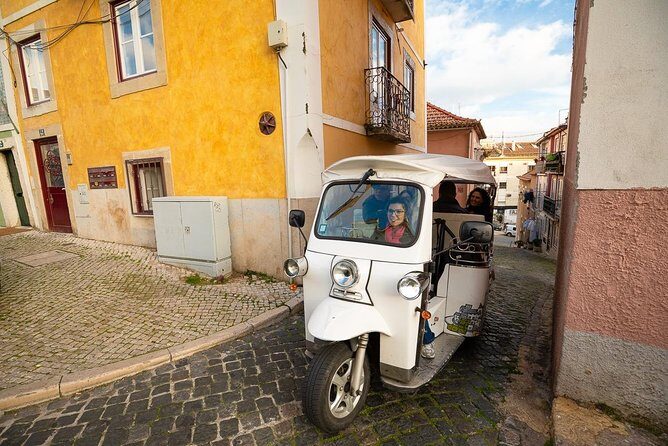
Lisbon is a city of steep streets, sudden lookouts, and neighborhoods that feel like they’re layered on top of each other. That’s exactly why this style of tour works. You’re not fighting stairs for every view. Instead, you jump between viewpoints and key squares, then get enough time to look around, take photos, and move on before you’re exhausted.
I also like that the tour is built around the same old-town streets people chase on Tram 28—so if that’s on your Lisbon “must-do” list, you can get a smart head start. You’re not doing the entire tram experience the whole time, but you’re getting the essence: the winding historic core, the classic perspectives, and the sense of how the city is stitched together.
And the guide factor matters here. The tour has a strong reputation for friendly, adaptable guides—names that show up again and again include Tiago, Joanna, Claudio, Pepe, Jefferson, Ingo, Marco, Vasco, Diego, Lauren, Margarida, and Diogo. You’re likely to get someone who won’t just rattle facts, but who can adjust when you want more time at a lookout or when your group has different energy levels.
You can also read our reviews of more tours and experiences in Lisbon.



Starting at Hard Rock Cafe and building the day from there
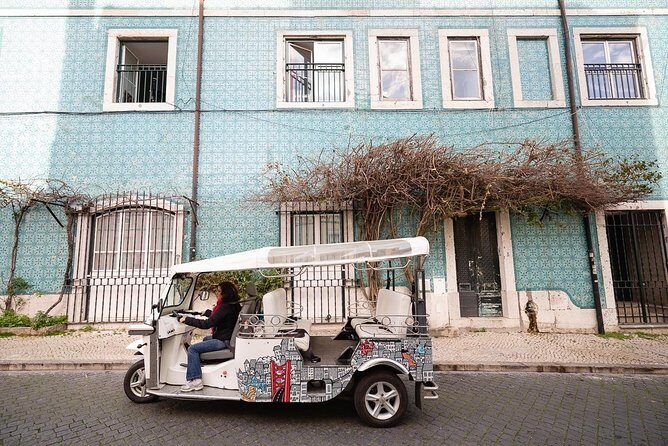
Your meeting point is the Hard Rock Cafe in Lisbon (Av. da Liberdade 2). It’s a convenient landmark in a central area, and the tour ends back at the same spot, so you’re not left trying to navigate back after a long loop.
If you’re staying in downtown Baixa, you may have free pickup for hotels and apartments in that area. That’s a practical plus because you can show up ready to go, rather than spending your morning figuring out transit or waiting for a taxi during peak time.
Since the tour lasts about 2 hours, you should treat it like an orientation plus highlights. It’s not meant to replace longer neighborhood exploring. It’s meant to help you understand what kind of Lisbon you want to return to next—Alfama’s old-world alleys, Chiado’s cafés and shopping streets, or the lookouts that will make you stop mid-walk.
Sé Cathedral: Lisbon’s oldest church and a great “first anchor”
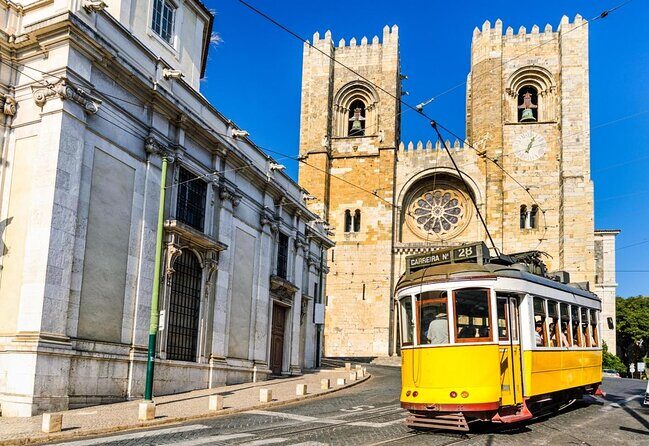
The tour kicks off with Sé Cathedral, often described as the oldest church in Lisbon. Even if you’re not a church-detail person, it’s a strong way to start because it gives you a real sense of age. From here, you can connect the dots between history and what the city looks like today.
A key practical note: you’ll be seeing monuments and viewpoints along the route, but entry tickets are not included. So if Sé Cathedral requires tickets during your visit window, you’ll have to decide on the spot whether it’s worth paying to go inside.
What I like about starting at Sé is that it sets the tone: this tour isn’t only about postcard angles. It also gives you context—how Lisbon’s layers formed, and why the neighborhoods feel the way they do.
Miradouros in fast succession: Portas do Sol and Senhora do Monte

One of the best parts of this tour is how it uses time. The schedule includes multiple viewpoints, and most of them have free admission (you’re there to look and take photos, not to spend the whole time standing in ticket lines).
Miradouro Das Portas Do Sol is a quick stop—think about it as your first big panorama moment over Alfama. This is the spot that often feels like a living postcard: tightly packed buildings, winding streets, and the Tagus off in the distance.
Then comes Miradouro Da Senhora Do Monte, which is described as the high point of the tour. This is where you get an especially dramatic sense of Lisbon’s layout. If you’re the type who wants to understand geography, this stop is a win. You’ll see how neighborhoods sit relative to the river, and you’ll start picturing which areas are worth returning to on foot.
These viewpoint stops also explain why many people choose a Tuk Tuk here: you can see a lot, without turning your day into a stair workout.
The 1755 earthquake moment: history you can literally point at

Lisbon is famous for what it survived, and this tour includes a stop tied to the 1755 earthquake. It’s described as giving you a perspective on what the quake caused in the city—so the guide is pointing out how that event shaped what you’re seeing now.
This kind of stop is worth it because it makes history feel physical. Instead of memorizing dates, you learn why certain areas look the way they do and why rebuilding mattered.
The limitation: you’ll be moving through quickly, since the tour is only around 2 hours. So if you’re someone who loves to linger, you’ll want to take note of the spots that catch your eye most—then build a longer return visit later.
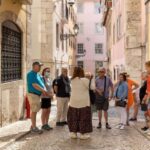

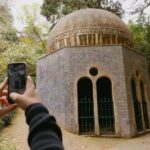
Bohemian streets with a past you’d miss on your own
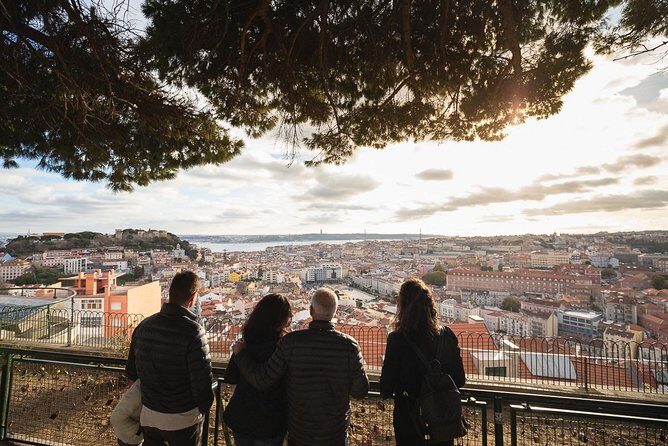
After the viewpoint-heavy stretch, the tour shifts into the streets of a bohemian nightlife neighborhood—the idea is that the lanes are lively, but they also hold history.
Even without needing a long lecture, this part helps you avoid a common first-time mistake: treating certain areas as only one thing. Lisbon neighborhoods often have day-and-night personalities, and the best way to understand that is to see both the vibe and the story behind it.
If your group likes food and late evenings, this segment can give you a shortlist of what to explore later. If you prefer quiet sightseeing, it still works because the guide’s job is to show what’s worth looking at even when the streets feel busy.
Chiado: where Lisbon’s style meets practical planning
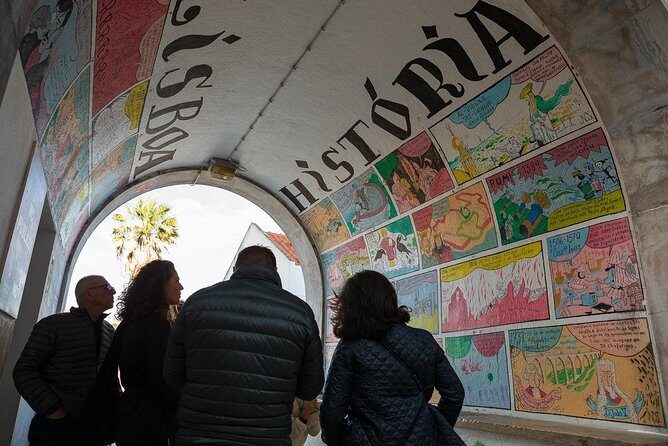
Next up is Chiado, a neighborhood known for being one of the best areas for shopping, eating, and being entertained. This is a nice pivot because it brings you from the older, tight-knit feeling of Alfama into a more central, everyday Lisbon scene.
In practical terms, Chiado is also useful for your next steps. After a tour like this, you’ll probably want to know where to eat without guessing. A good guide will help with that—many guides associated with this tour have a reputation for giving solid food and drink recommendations, and for building in calm time for photos and short breaks.
Keep in mind: this isn’t a full shopping expedition. It’s a snapshot. If you want to shop, linger at cafés, or browse boutiques, Chiado is a strong choice for an extra couple of hours after the tour.
Miradouro São Pedro de Alcântara: a different kind of postcard
Miradouro Sao Pedro de Alcantara is another quick viewpoint stop with a unique angle on Lisbon. What makes it valuable is variety. After Portas do Sol and Senhora do Monte, you start to see how different lookouts frame the city differently—streets appear tighter or wider, the river seems closer or farther, and neighborhoods overlap in new ways.
This is one of those moments where time matters. If you rush, you miss the “aha.” If you take your 5–10 minutes seriously—stand still, look around, and rotate your view—you’ll understand Lisbon’s shape.
As with other monuments on the route, you might not need tickets just to enjoy the view, but anything beyond the viewpoint area could require payment.
Squares, architecture icons, and street-level “secrets”
The itinerary includes a stop featuring an architectonic icon of Lisbon, plus another moment where the guide shares secrets hidden in a famous square. Since entry details aren’t spelled out here, treat these as “look closely” stops: watch how the buildings frame the street, notice how the square functions as a gathering space, and ask your guide what to notice.
This is also where a great guide can add personality. Some of the guides linked to this tour style themselves as storytellers—Tiago and Jefferson come up often for that mix of history and humor, and Lauren is often praised for being energetic while still making the facts make sense.
Mosteiro de São Vicente de Fora: architecture and time on display
The tour then reaches Mosteiro de Sao Vicente de Fora, described as an architectonic treasure. Monastery stops can go two ways: either you feel like you’re rushing through details, or you slow down because the building pulls you in. In a short tour, the trick is that your guide keeps you focused on what makes the place special.
The tour also references a monument whose construction took almost 300 years. That kind of time scale changes how you perceive the building. It’s not a quick project; it’s a long commitment—so the stones are like chapters.
Again, entry tickets are not included. If you want to go inside and you know it charges admission during your visit, you may need to budget a bit extra. If you’re skipping interiors, you’ll still get value from the exterior architecture and the historical context.
Feira da Ladra: a bonus stop on Tuesday or Saturday
If your dates line up, there’s an exciting add-on: on Tuesday or Saturday, you may see the Feira da Ladra, described as the oldest flea market of Lisbon.
This can be a fun change of pace from viewpoints and monuments. Markets add texture: you see what people are actually buying and selling, and you get a better sense of daily life.
The best part is timing. Since the tour is only about two hours, this market stop is a bonus, not a time sink. You can enjoy the atmosphere and still complete the main highlights.
Alfama at the end: Lisbon’s oldest neighborhood leaves the strongest impression
The final major neighborhood stop is Alfama, Lisbon’s oldest neighborhood. Ending here makes sense because Alfama is where Lisbon’s identity feels most concentrated: tight streets, historic character, and a lot of the skyline energy that you saw from the miradouros.
If you have energy left after the tour, Alfama is where you’ll want to wander next. If you’re tired, at least you’ll know where to go for a calm return walk.
Even better, the way the tour is structured means Alfama doesn’t feel random by the end. You’ll connect what you saw at Sé Cathedral, the earthquake-era perspective, and the different viewpoint frames. Then Alfama feels like a place you understand, not a blur of buildings.
Where this Tuk Tuk tour is a great fit (and where it isn’t)
This tour suits you if:
- You want an Old Town overview fast, without turning your trip into a hill climb.
- You care about photo-ready viewpoints but also want some story behind them.
- You’re traveling with mixed ages, since the pace is flexible and the stops are short (and at least one family group has mentioned a booster seat for a child).
It may not be the best fit if:
- You want long interior visits. With entry tickets not included, and time kept tight, you’ll likely only scratch the surface.
- You want full-day neighborhood immersion. This is an intro and highlights loop, not a deep dive into one district.
- You’re expecting Belem. This tour is aimed at central neighborhoods.
Value check: Is $77.43 per person worth it?
At $77.43 per person, the value comes from combining three things most DIY plans don’t do well in a first day: transportation that reduces hill fatigue, guided interpretation that helps you understand what you’re looking at, and built-in moments you’d otherwise have to plan around (like port wine and the Feira da Ladra option on Tue/Sat).
You’re also getting a private setup for your group, which usually matters in Lisbon because crowds can make self-guided timing feel chaotic. A private Tuk Tuk loop helps you move without fighting bottlenecks.
The one trade-off is that it’s still only around two hours. If you’re hoping to cover everything in Lisbon, you won’t. But if you want to start the trip with a strong mental map and a short list of where to return, this price often feels fair.
Final call: Should you book it?
Yes—if you want a smooth introduction to Lisbon’s Old Town and you like the idea of stacking viewpoints efficiently. This tour’s biggest strength is how it makes Lisbon feel manageable: you get dramatic panoramas, key historic areas, and neighborhood context without wearing yourself out early.
I’d especially book it if:
- You only have one day (or one half-day) to get oriented.
- You want to return to Alfama or Chiado later with a plan.
- You’d like a guided tasting moment, not just photo stops.
Skip it or supplement it if:
- You’re hoping for long museum time inside monuments.
- You want to add Belem in the same day.
If you’re on the fence, pick it as your first-day move. In a city like Lisbon, getting the geography right early makes everything else feel easier.
FAQ
How long is the Tuk Tuk tour in Lisbon’s Old Town?
The tour lasts about 2 hours.
What is the price per person?
The price is $77.43 per person.
Is this tour private or shared?
It’s private. Only your group participates.
Is pickup offered?
Yes. Free pickup is offered for hotels and apartments in the downtown area (Baixa). The start location is Hard Rock Cafe in Lisbon.
Does the tour include port wine?
Yes. There is a stop where you can sample Portugal’s famous port wine.
Are monument entry tickets included?
No. Entry tickets to monuments are not included.
What language is the tour offered in?
The tour is offered in English.