REVIEW · SINTRA
Private Tour Sintra, Cabo Da Roca E Cascais
Book on Viator →Operated by Fantastic Ride · Bookable on Viator
Sintra in one private day is the right kind of busy. This tour strings together UNESCO Sintra palaces, a western-edge cliff stop at Cabo da Roca, and an afternoon along the coast in Cascais. I especially love the private group setup (just you and your people) and the way onboard Wi‑Fi keeps you connected for directions and timing as you bounce between viewpoints.
The main thing to consider is that the day runs on tight timing, and service quality depends a lot on the driver/guide. One unhappy story in the mix includes a late pickup and concerns about vehicle cleanliness and comfort, so I’d plan to double-check your pickup window and stay flexible.
In This Review
- Key things to know before you go
- A private Sintra-to-coast route that actually feels efficient
- Pickup, timing, and why the 8–9 hour window feels real
- Moorish Castle: early ruins with cistern secrets
- Pena Palace: the 19th-century Romantic highlight (and timed entry matters)
- Sintra National Palace and Centro Histórico: royal rooms plus the famous chimneys
- Quinta da Regaleira and Monserrate: gardens with myths, a spiral staircase, and a lake below
- Cabo da Roca: where the coast stops being polite
- Cascais and Boca do Inferno: fishing town roots and sea-rock drama
- Price and value: what you pay for (and what you don’t)
- A note on guides and vans: your comfort depends on the day’s operator
- Should you book this private Sintra, Cabo da Roca and Cascais tour?
Key things to know before you go
- Private, door-to-door transfers: pickup from hotels and other agreed locations, plus return drop-off
- Onboard Wi‑Fi helps you coordinate on the fly across Sintra and the coast
- Big-ticket sites are split smartly: Pena and Regaleira get dedicated time, not quick photo grabs
- Cabo da Roca is a fast hit: a short stop with big views over the Serra de Sintra and Atlantic
- Cascais adds variety: seaside stroll + Boca do Inferno for dramatic sea-and-rock energy
- Guides can make or break it: some are praised for safety, timing, and handling timed tickets well
A private Sintra-to-coast route that actually feels efficient
This is the kind of itinerary that works because it respects geography. Sintra is all hill towns, palace entrances, and short rides between elevations. Cabo da Roca and Cascais are the opposite: open air, cliff edges, and “stop and stare” viewpoints.
The private format matters here. In a shared bus day, you’re often stuck waiting for late arrivals and doing math in your head about who’s holding the group up. With a private minivan, the pace can be smoother—especially at timed entrances like Pena Palace.
You also get real comfort value: air-conditioned transport, bottled water, and pickup/drop-off from your lodging (or other agreed starting points). Add Wi‑Fi onboard and you’ve got a day that’s less stressful when you’re trying to coordinate ticket timing, photo stops, and where you’ll meet your driver again.
You can also read our reviews of more private tours in Sintra

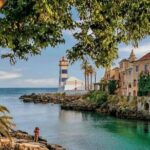
Pickup, timing, and why the 8–9 hour window feels real
The tour starts at 9:00 am and runs about 8 to 9 hours. That’s long enough to see a lot, but not long enough to recover if something goes sideways—like heavy traffic, a delayed pickup, or a late return after a timed entry.
Here’s how I’d think about your day:
- Late morning to mid-afternoon is Sintra-heavy (palaces, historic centers, and gardens on slopes).
- Mid-to-late afternoon is coastal (Cabo da Roca, Cascais, Boca do Inferno).
This matters because you’ll be doing frequent walking—sometimes on uneven surfaces—and you’ll want to keep your footwear comfortable. The tour info even calls out comfortable walking shoes for that reason.
Dress-wise, smart casual is the guideline. I’d still bring layers. Sintra hills can shift from cool to windy quickly, and the coast is famously not interested in your plans.
Moorish Castle: early ruins with cistern secrets
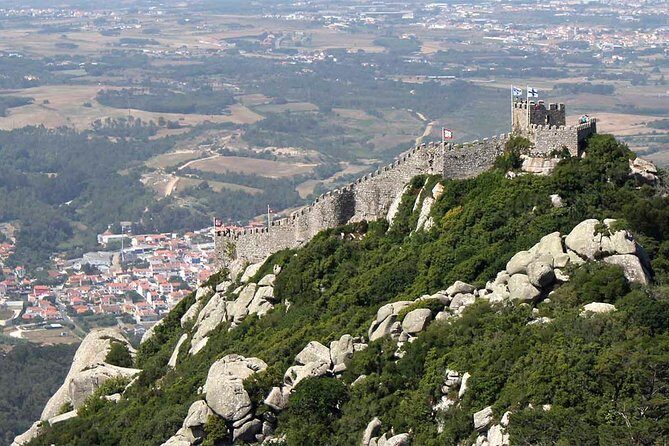
Moorish Castle sits about 3.5 km from Sintra’s historic center, and that distance often explains why it feels quieter than the main palace zones. It’s a dramatic slice of layered history: dating back to the eighth century during Moorish occupation, then taken by Dom Afonso Henriques in 1147.
What I like about this stop is that it doesn’t feel like a checklist. You’re walking in an area with specific standout features:
- The Moorish cistern inside the complex
- The Royal Tower
- The story of how restoration in the romantic period (notably around 1860, supervised by Dom Fernando II) gave older medieval ruins a new dignity
If you enjoy ruins that still look like ruins—rather than polished “theme park” spaces—this stop is a great tonal shift before the big palace moments.
Pena Palace: the 19th-century Romantic highlight (and timed entry matters)
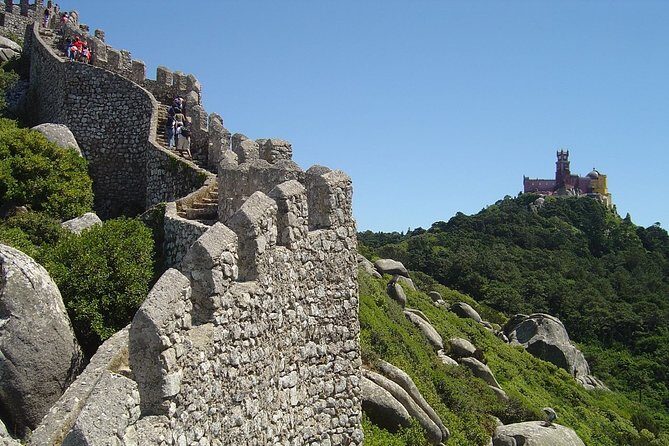
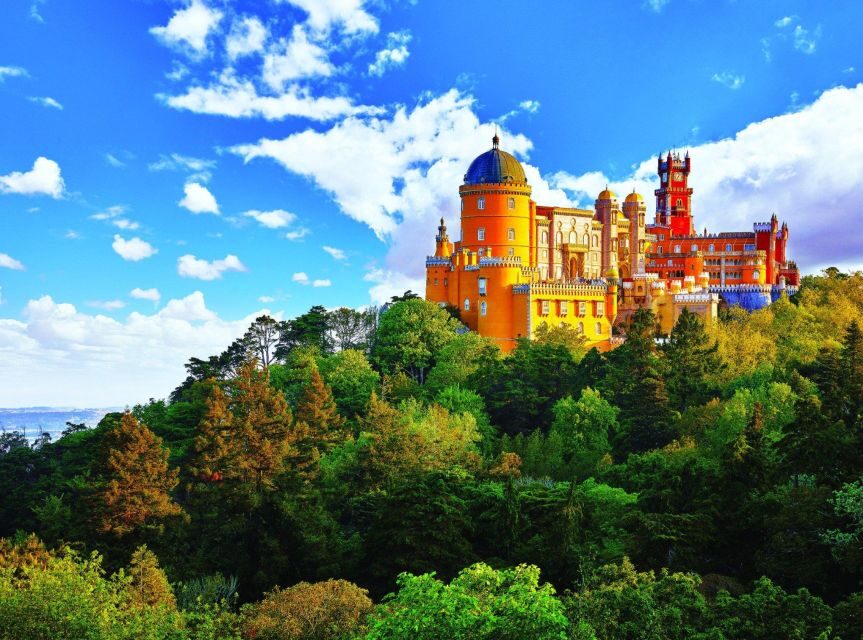
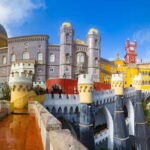
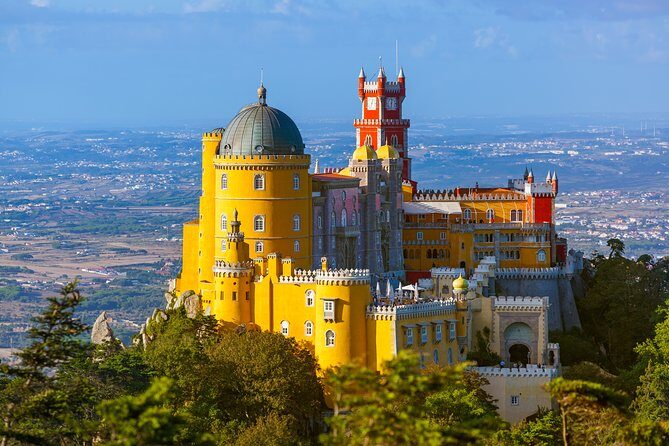
Pena Palace is the big visual payoff in Sintra. It’s set high on Monte da Pena, built on the site of a former monastery, and designed as a royal summer palace after D. Fernando de Saxe Coburg-Gotha married Queen Dona Maria II in 1836.
The palace itself is praised as an example of 19th-century Romanticism in Portugal, and the layout is part of the experience: you’re visiting parks + the palace, and you can catch panoramic views over the Sintra Mountains and coast from terrace areas (including one wing area where a restaurant is installed).
One practical caution: Pena Palace admission tickets are not included, and they’re often timed. In the feedback you shared, a late arrival story still resulted in being allowed in, but that’s not something I’d bet your whole day on. Aim to be ready early and keep your meet-up instructions clear.
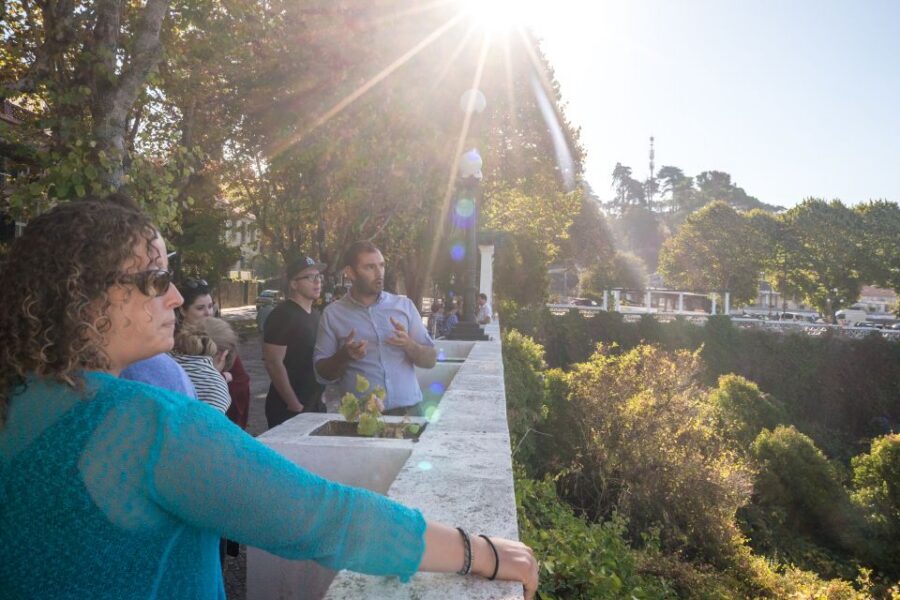
If you’re lucky with your guide, this is where it can really click. One guide (Jorge, in the feedback) was specifically praised for helping people with Pena tickets so they could walk right in.
Sintra National Palace and Centro Histórico: royal rooms plus the famous chimneys

After Pena’s mountain top drama, Sintra’s historic center brings you back to human scale. The plan includes time in the Centro Histórico de Sintra—a place that’s UNESCO-listed and packed with buildings and remnants from different periods.
Then comes Sintra National Palace, described as unique among royal medieval palaces in Portugal. The palace you see today was shaped by major Portuguese monarchs: Dom João I rebuilt it, and Dom Manuel I added and enriched decorative character with a new wing.
What to pay attention to inside:
- The decoration blends artistic styles tied to each king’s tastes
- Rooms with distinctive identities, including the Swan Room, Armory Room, Magpie/Reading Room, and the chapel
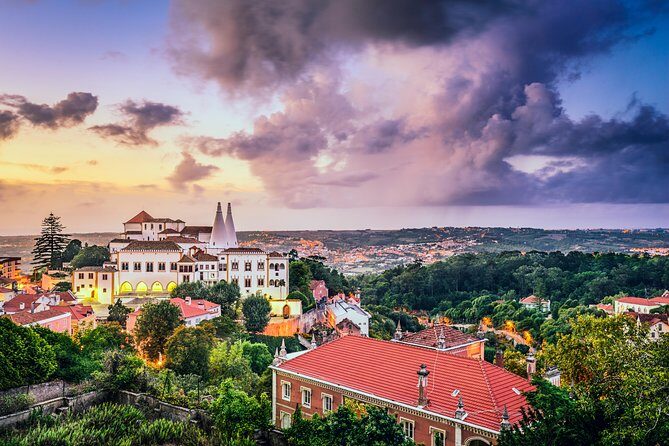
- Outside, the most striking feature is the kitchen’s two huge conical chimneys, each about 33 meters tall, now a symbol of Sintra
I love this palace because it feels like a concentrated history lesson without being a lecture. It also keeps your day from turning into “just pretty buildings.” You start noticing how these rulers used architecture and interior design to show power and taste.


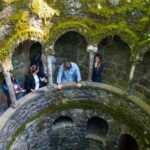


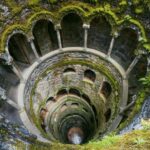
Quinta da Regaleira and Monserrate: gardens with myths, a spiral staircase, and a lake below
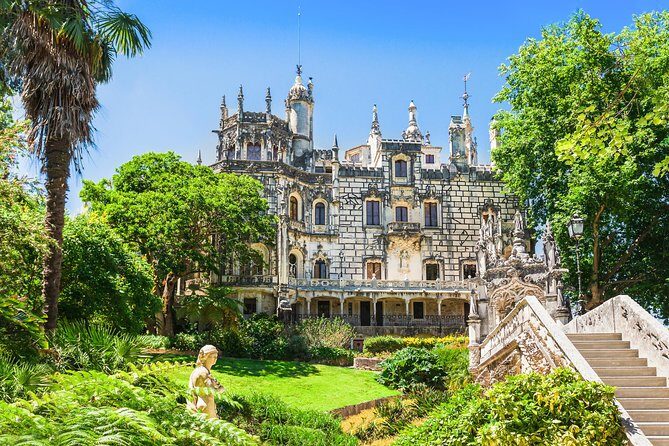
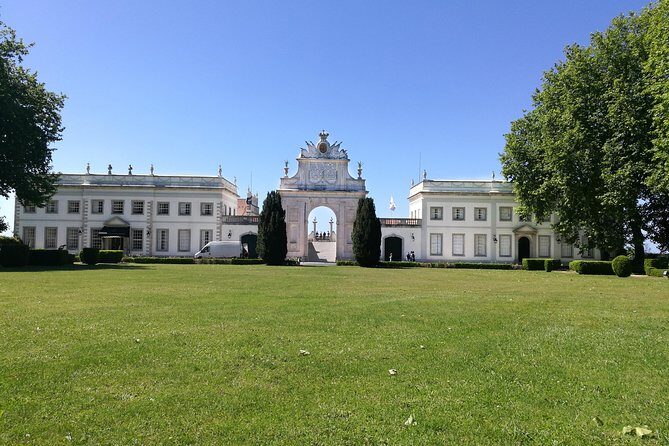
Quinta da Regaleira is the kind of place you remember later because it doesn’t read as a normal palace garden. It was built in the early 20th century by millionaire Antonio Augusto Carvalho Monteiro (1848–1920) with scenographic architect Luigi Manini (1848–1936).
The architecture mixes styles—romantic revival forms that imitate Gothic, Manueline, and Renaissance features—then adds esoteric symbolism. It’s not just pretty landscaping. It’s designed like a puzzle you walk through.
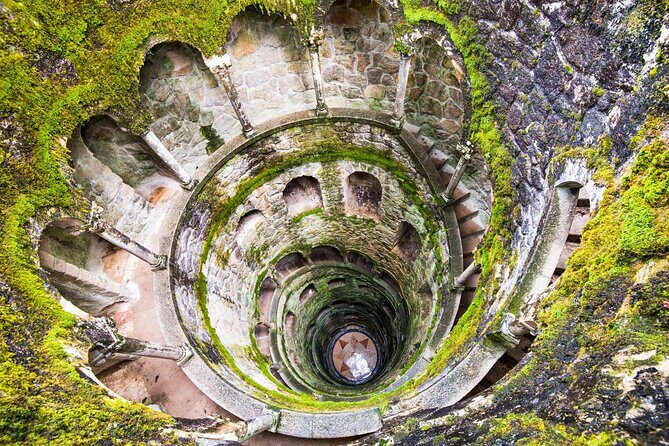
The standout technical moment:
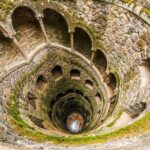
- The Holy Trinity Chapel has a spiral staircase down to the crypt
- That leads to an initiation pit
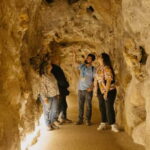
- From there, it connects through a cave to an amazing lake hidden deep within the gardens
The stop is planned for about 2 hours, and again, admission tickets are not included.
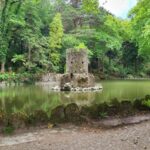
The itinerary also folds in Park and Palace of Monserrate. This romantic park was created by William Beckford, and the story here is straightforward: he fell in love with the Sintra Mountain. If you’re the type who enjoys atmosphere—paths, viewpoints, and “why does this feel cinematic?” scenery—Monserrate fits right in.
Cabo da Roca: where the coast stops being polite
Cabo da Roca is a short stop—about 30 minutes—but it delivers a very specific feeling: the Atlantic takes over.
You’re visiting the westernmost point of mainland Europe, at roughly 38°47’N, 9°30’W, about 150 meters above the sea. There’s a lighthouse and historical traces of a 17th-century fort that guarded the entrance to Lisbon’s harbor. Today, you mostly see the coastline’s strength rather than fort walls.
This stop is also in Parque Natural de Sintra-Cascais, and it connects to walking trails along the coast. So even with limited time, you can get that “I stood here and looked at the edge” effect.
It’s a free admission stop, which helps. Bring a camera strap you trust. Wind here doesn’t care about your Instagram plan.
Cascais and Boca do Inferno: fishing town roots and sea-rock drama
Cascais starts as a classic Portuguese story: fishing village roots, then status and tourism. It grew during the 14th century as a busy port stop for boats heading toward Lisbon. Later, in the second half of the 19th century, sea bathing became fashionable.
A big turning point was Dom Luís I, who in 1870 converted the Fortaleza da Cidadela into a summer residence for the monarchy. Nobility followed—building villas and palaces—and the town shifted from working port energy to seasonal prestige.
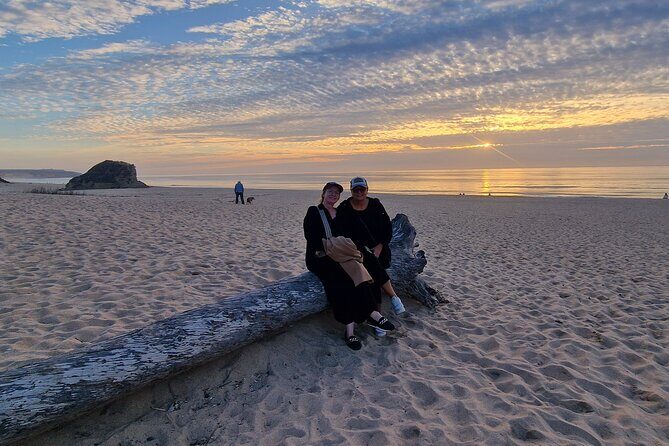
Today, you’ll get time for a seaside stroll and a look at cafés and shops, plus a sense of the town’s mix: still aristocratic in mood, but livelier and more cosmopolitan.
Beaches are a highlight too:
- Options in the sheltered bay
- Or out toward Guincho area in the natural park, where conditions suit surfing and windsurfing
Then comes Boca do Inferno on the Costa da Guia, west of Cascais. The name fits because the sea hits these cliffs with real force. The geology story is fascinating: the cliff rock is carbonated, and rainwater with dissolved carbon dioxide dissolves it over time, forming cavities and caves inside the limestone.
If you like “why does this place look like this?” moments, this stop delivers. There’s also historical trivia tied to the site, including an 1896 film by Henry Short showing the sea’s impact against the rocks.
The practical side is simpler: watch your footing, stay away from cliff edges, and treat the area like a natural hazard zone. That’s not a buzzkill—it’s part of being there.
Price and value: what you pay for (and what you don’t)
At $210.84 per person for a day around 8–9 hours, you’re paying for three things:
- Private door-to-door transport in an air-conditioned minivan
- Guided time through multiple major sites
- Convenience upgrades, including Wi‑Fi, bottled water, and the handling of taxes and fees
What’s not included is crucial: food and drinks and tickets. The plan explicitly lists ticket exclusion for Pena Palace and Quinta da Regaleira. Since tickets aren’t included, you should plan on that extra cost and treat timed-entry management as part of your day planning.
So is it good value? For a private day with pickup plus a full route, yes—especially if you’re traveling with family or friends and want to avoid wasted time. It can be less cost-effective if you’re solo and comfortable with public transport and buying tickets yourself. But if you value comfort, timing, and a guide who can manage the flow, this price starts to make sense fast.
A note on guides and vans: your comfort depends on the day’s operator
The overall rating is 4.8 with 27 reviews, and 96% recommend this tour. Still, your experience can swing depending on who drives and how they handle the schedule.
Positive patterns in the feedback include:
- Friendly, warm guides who answer questions and keep things moving
- Safe driving and a clean, comfortable vehicle
- Real flexibility when weather changes (one guide brought umbrellas when conditions turned)
- Help with timed entrances and practical guidance at each stop
- Local perspective and pacing so you don’t feel rushed
Names that came up: Miguel, Jorge, and João.
The negative note to take seriously:
- One detailed complaint described a late pickup, a van that felt poorly maintained, and moments that made the writer feel unsafe
- Another described a guide overwhelmed by the program, complaining about traffic and parking, and the day feeling rushed with an older van
So how do you protect yourself? You can’t fully control the operator, but you can control your expectations and preparedness:
- Confirm your pickup details clearly before morning
- Keep your ticket plan realistic (arrive early enough for timed entries)
- If you have boundaries about conversation topics, set a simple tone early: you’re there for history and sights
- Be ready for Sintra driving realities: narrow roads, traffic, and parking can slow anyone down
When the guide is on form, this itinerary can feel like a best-of Portugal day without the stress.
Should you book this private Sintra, Cabo da Roca and Cascais tour?
I’d book it if you want a private, structured day that covers Sintra’s major palaces plus coastal viewpoints, and you value pickup, Wi‑Fi, and guided pacing. It’s also a strong choice for groups who don’t want to fight tickets and transit across steep hills.
I’d hesitate if you’re extremely schedule-sensitive or you’re worried about vehicle cleanliness and punctual pickup. In that case, I’d message the provider the day before and confirm the pickup window and meeting expectations.
If you’re aiming to see Pena, Regaleira, Cabo da Roca, and Cascais in one go, and you like the idea of getting help with timing and transitions, this is a solid way to do it.