Lisbon keeps its receipts in stone.
This 2.5-hour walk strings together roughly 3,000 years of layers—Celts, Romans, Visigoths, Arabs, and the Portuguese—so you start seeing the city as one long story instead of separate landmarks. I especially like how it connects big events (like the 1755 earthquake) to real places you can stand on, and how it mixes the history with the street art you’d miss if you only followed postcards.
Two things I’d put at the top: first, the stop-by-stop focus on Lisbon’s turning points—including earthquake damage and a prison from the dictatorship. Second, the street art moment with a portrait of singer Amália Rodrigues, plus a taste of Lisbon classics like pastel de nata or ginginha.
One consideration: this is an almost entirely history-led route. If you’re mainly in the mood for modern nightlife, trendy viewpoints, or current-day shopping streets, this tour may feel like a class—just one with good shoes.
In This Review
- Key highlights worth planning around
- Why this route makes Lisbon click fast
- Starting in Graça: church stones, working neighborhoods, and street-level Lisbon
- São Vicente Monastery: the royal connection and the Queen of England detail
- Amália Rodrigues street art: Lisbon’s music history on the wall
- Castle area time: Roman theatre, Moorish walls, Cathedral stables, and views
- The 1755 earthquake chapter: the buried street and earthquake-resistant Baixa
- Praça do Comércio finale: former Royal Palace ground and statue meanings
- Street-level Lisbon tastes: pastel de nata or ginginha
- Small group, live guide: why the pacing feels fair
- Price and value: getting more than landmarks for $40
- Who this Lisbon tour is best for (and who should skip it)
- Should you book this tour?
- FAQ
- How long is the Lisbon Highlights and Hidden Gems tour?
- How much does the tour cost?
- How many people are in the group?
- What languages are offered?
- What is included in the price?
- Where does the tour start and end?
- Is this tour suitable for wheelchair users?
- Is it suitable for people with mobility impairments?
- Is it okay for young children?
- Can I cancel and get a refund?
Key highlights worth planning around
- Graça church and old workers’ housing set the tone for the city’s everyday past
- São Vicente Monastery and the burial link to the Portuguese royal family and the Queen of England
- Amália Rodrigues street art gives Lisbon a soundtrack moment, not just dates and rulers
- Roman theatre and medieval walls in the Castle area, plus a look at the Cathedral and its stables
- 1755 earthquake damage and a buried street that makes the disaster feel physical
- Praça do Comércio finale at the former Royal Palace site, with explanations of the statues
Why this route makes Lisbon click fast
The best part of this tour is how it helps your brain “file” what you see. Lisbon isn’t flat in theme—one street can be Roman, another Moorish, then you hit an earthquake scar, then a dictatorship-era reminder. This walk keeps you oriented with stories that tie those eras together.
You also get a small group experience (up to 8 people), which matters in Lisbon’s tight lanes. You’re not just standing behind someone’s camera; you can actually ask the guide to repeat a detail or point out what you’re looking at.
And since it ends at Praça do Comércio—one of the most important public squares in Europe—you finish with an easy-to-navigate “landing pad” for the rest of your day.
You can also read our reviews of more tours and experiences in Lisbon.



Starting in Graça: church stones, working neighborhoods, and street-level Lisbon
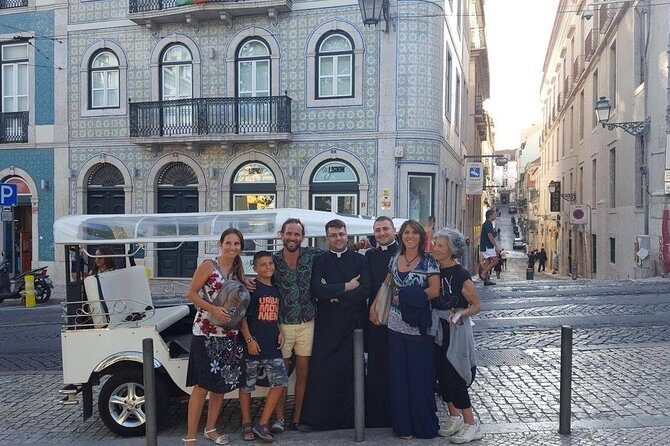
The tour begins in the Graça area, and that choice is smart. This is not the part of Lisbon that most first-time walks sprint through. You start with a church and old workers’ housing, which gives you a grounded sense of who lived here before the city became a sightseeing list.
As you move, you’ll notice how Lisbon’s neighborhoods feel like they grew in layers. Streets don’t behave like a grid; they bend because the city adapted. The guide uses those bends to teach you how different peoples and powers left marks—whether it’s a physical structure or an idea about how the city should function.
What I like for you: this start makes the later history stops easier to understand. You’ll already feel the city before the tour starts pointing out the major monuments.
What to watch for: this section is still part of a walking tour, so comfortable shoes aren’t optional. The city’s streets can be uneven, and you’ll cover about 2.5 hours overall.
São Vicente Monastery: the royal connection and the Queen of England detail
Next comes São Vicente Monastery, one of those places where Lisbon’s history stops being abstract. The tour highlights that the Portuguese royal family and the Queen of England are buried here. That single detail gives you context for how Lisbon fit into European power networks.
Even if you don’t consider yourself a museum person, burial grounds have a way of slowing you down. You start noticing how people use architecture and ceremony to communicate importance. In Lisbon, religion, monarchy, and international relationships all overlap here.
This stop also works as a emotional pivot. Early on, you’re collecting eras. Later, you’ll hit darker chapters, like dictatorship-era traces and 1755 earthquake damage. São Vicente helps you understand why Lisbon preserved so much—sometimes with reverence, sometimes with survival in mind.
Amália Rodrigues street art: Lisbon’s music history on the wall
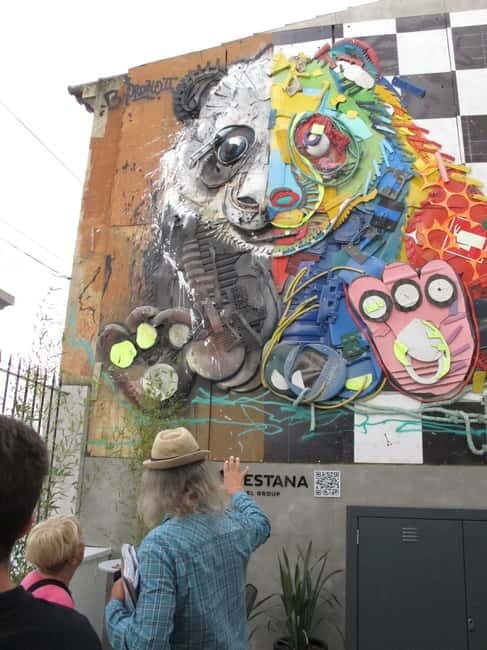
After the monastery, the tour leans into a Lisbon that’s alive. You’ll see street art, including a portrait of Amália Rodrigues, one of the most famous names linked to fado.
This matters because it stops the walking tour from becoming a march through dates. Amália isn’t just a famous singer; she’s part of how Lisbon expresses identity. The guide’s stories help you connect the art to the wider cultural history of Portugal—so you don’t just see a mural. You understand what it’s doing there.
Practical tip for you: keep your phone ready, but don’t live behind it. The guide will explain what to look for. If you follow their pointing, you’ll leave with more than a photo.
Castle area time: Roman theatre, Moorish walls, Cathedral stables, and views
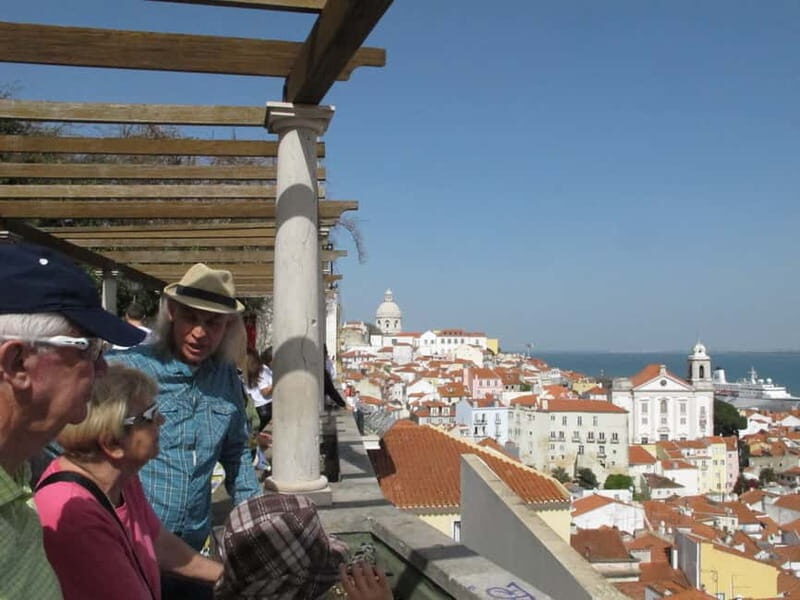
Then you shift into the Castle area, where the city’s defensive past gets real. You’ll walk past medieval walls, which is the kind of structure that explains itself. When you see those walls, you instantly understand why people built them where they did.
The tour also calls out Roman theatre remains in the area. That’s a huge clue about Lisbon’s long life: entertainment and civic space showed up early, and later layers didn’t erase that—they built around it.
You’ll also encounter the Cathedral and its stables. The point isn’t just “see a building.” It’s to understand how Lisbon’s major institutions—religious and civic—worked together across centuries.
If you want one takeaway from this section: Lisbon’s geography forces stories to overlap. The Castle area is where you feel that overlap most strongly.
Watch-outs: this is still a walking tour. Expect stair-like changes in grade and narrow paths. If you’re sensitive to hills, plan breaks as needed.

The 1755 earthquake chapter: the buried street and earthquake-resistant Baixa
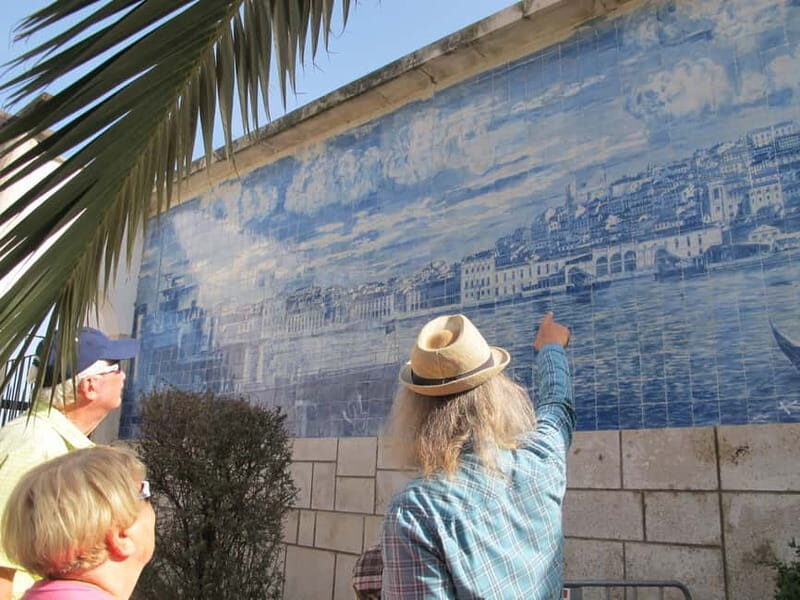
This is the section that usually sticks with people. Lisbon’s big turning point wasn’t only political—it was physical. The tour points out ruins from the 1755 Lisbon earthquake, including a buried street, and you’ll also see earthquake-resistant buildings in the Baixa district.
The buried street is especially powerful because you get the idea that the city didn’t just rebuild on top. It rewrote its map. Standing there, you can understand why Lisbon’s rebuilding efforts became part of how the city would behave afterward—how fast it could recover, what it decided to change, and what it chose to preserve below.
The guide also brings in a prison from the dictatorship, adding a second layer of pressure: not only natural disaster, but human power and control. Together, these stops help you see Lisbon’s scars as both survival and governance.
For value: this is why the history-led focus pays off. You’re not only learning what happened—you’re learning how those events shaped the built city you’re walking through today.
Praça do Comércio finale: former Royal Palace ground and statue meanings
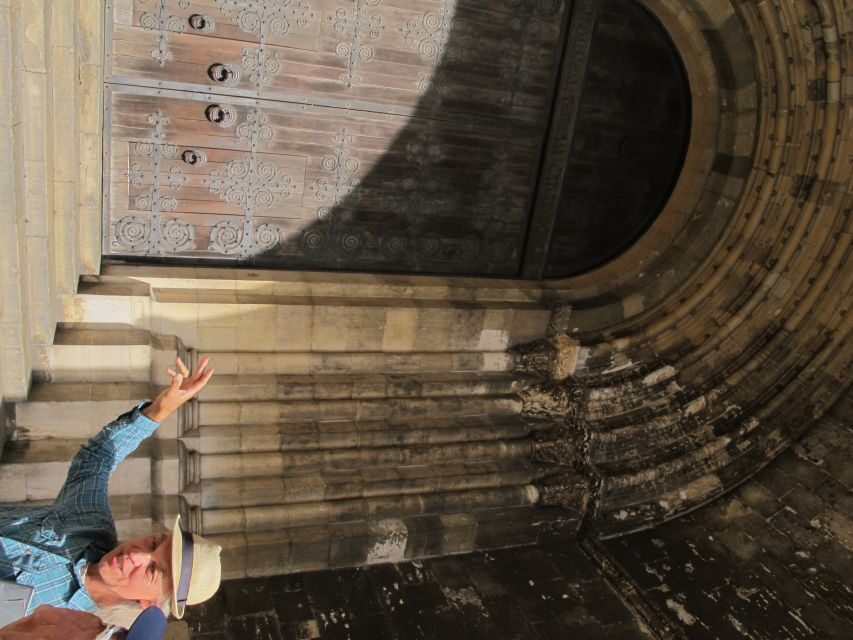
You end at Praça do Comércio, and it’s a satisfying finish. This square is open, bright, and easy to orient yourself in after the tight lanes of earlier stops.
The tour explains that the Royal Palace used to be on this site. That detail changes how you see the square. It’s no longer just an attractive backdrop; it’s a former center of power and planning.
The guide also covers the meaning of the statues, which is one of those things that’s hard to figure out on your own. Many visitors photograph the figures and move on. Here, you learn what the symbols are pointing to—so the square becomes a history lesson in public art form.
For planning your day: after this tour, you’ll be well positioned to explore nearby areas on your own, with a clear sense of how the city’s core shifted over time.
Street-level Lisbon tastes: pastel de nata or ginginha
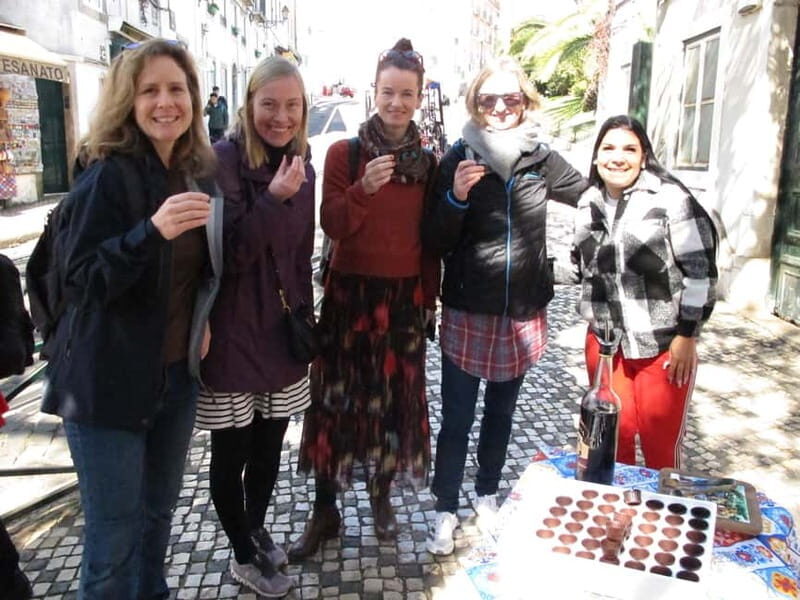
The price includes one Lisbon classic: pastel de nata (cream tart) OR ginginha (cherry liqueur). It’s a small inclusion, but it’s the right kind of food stop: quick, local, and not derailing your walking time.
I like this because it gives you a simple Lisbon takeaway. The tour teaches you how the city survived and rebranded itself across eras. Then you try a dessert or liqueur that feels distinctly Portuguese, not generic tourist food.
Small group, live guide: why the pacing feels fair
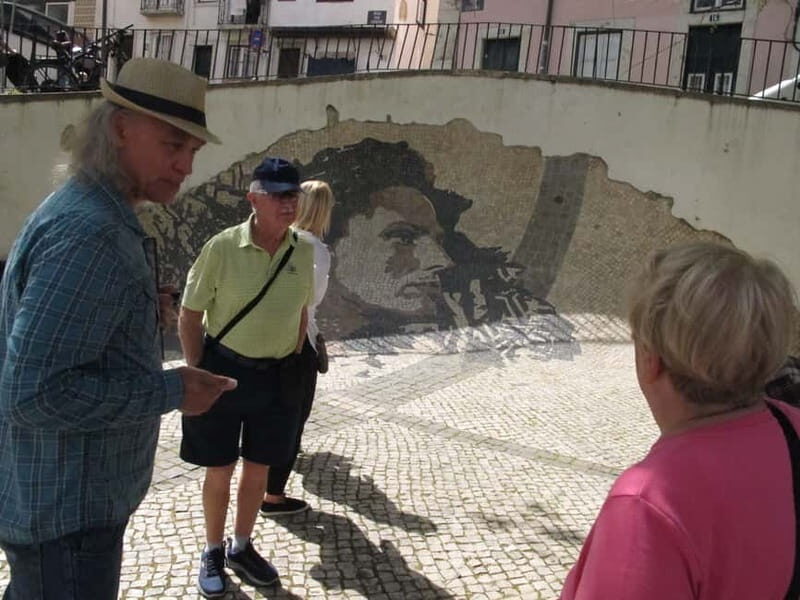
This is a live tour led in English or French, with groups limited to 8 participants. That small size affects the entire experience. You can follow into smaller spaces without losing the guide, and you’re more likely to hear your question answered clearly instead of politely ignored.
It also helps the flow. This route relies on you noticing details—stone textures, wall lines, street art context, and visible remnants. A larger group can turn that into a blur.
If you’ve ever done a big-bus tour and left with a memory of crowds and audio, you’ll likely appreciate this one’s slower, more conversational rhythm.
Price and value: getting more than landmarks for $40
At $40 per person for 2.5 hours, the value depends on what you want from Lisbon.
If you want a checklist of “big hits” only, you might find cheaper options. But if you want the why behind what you see—Roman remains explained, Moorish and medieval layers interpreted, and 1755 earthquake damage made understandable—this price starts to look fair fast.
You’re also getting:
- a small group setting
- a history-first narration style
- a included tasting (pastel de nata or ginginha)
For me, that combination is the point. You’re paying for interpretation, not just movement.
Who this Lisbon tour is best for (and who should skip it)
This tour is a strong match if you:
- like city history that connects to the street
- want context for Lisbon’s major landmarks
- enjoy seeing how culture shows up in things like street art
- want a guide who’s prepared and keeps the story organized
It’s less ideal if you’re traveling with limited ability for stairs and uneven walking, because it’s not suitable for wheelchair users or people with mobility impairments. It’s also not for children under 5, and you should plan around the walking time.
Also, keep your expectations aligned: this tour is almost all history-based. If you’re in a mood for contemporary neighborhoods and modern Lisbon scenes, you may feel a mismatch.
Should you book this tour?
I’d book it early in your trip. Getting the historical map first makes everything else you do—self-guided walks, museum stops, even casual street wandering—start to make more sense.
If you love Lisbon’s darker chapters as well as its beauty, you’ll like how the route treats 1755 earthquake scars and dictatorship-era traces as part of the same city story. And if you enjoy small group touring, the cap of 8 people is a major plus.
Skip it only if you dislike long history narration, can’t handle uneven streets, or you’re mostly looking for modern entertainment and shopping energy.
FAQ
How long is the Lisbon Highlights and Hidden Gems tour?
The tour lasts 2.5 hours.
How much does the tour cost?
It costs $40 per person.
How many people are in the group?
The group is limited to 8 participants.
What languages are offered?
The live tour guide speaks French and English.
What is included in the price?
You get either pastel de nata (cream tart) OR ginginha (cherry liqueur).
Where does the tour start and end?
It starts at a meeting point that may vary depending on the option booked, and it ends back at the meeting point.
Is this tour suitable for wheelchair users?
No. It is not suitable for wheelchair users.
Is it suitable for people with mobility impairments?
No. It is not suitable for people with mobility impairments.
Is it okay for young children?
It is not suitable for children under 5 years old.
Can I cancel and get a refund?
Yes. You can cancel up to 24 hours in advance for a full refund.