REVIEW · LISBON
Lisbon: Electric Tuk Tuk Private Tour of the Seven Hills
Book on GetYourGuide →Operated by SPR Tours · Bookable on GetYourGuide
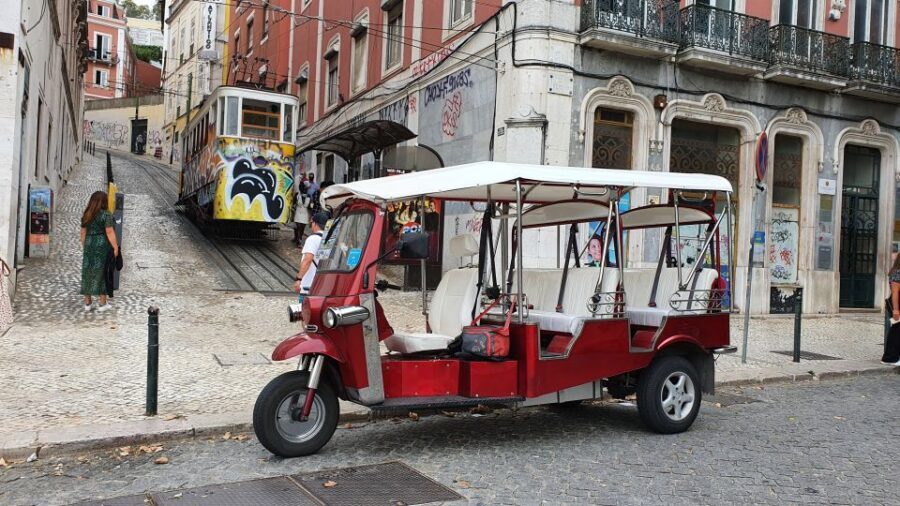
Lisbon on wheels is a great idea. This private electric tuk tuk tour is built for Lisbon’s hills and tight streets, so you spend less time fighting stairs and more time actually seeing the city. I also like the glass-free design, which makes photos easier as you roll past viewpoints and landmarks.
One thing to consider up front: this tour isn’t suitable for kids under 7 or for people with mobility impairments.
In This Review
- Key Things You’ll Notice on This Lisbon Seven Hills Tour
- Electric Tuk Tuk Reality Check: Why This Works on Lisbon’s Hills
- Where You Start and How You Get Oriented in the First Stretch
- The Photo-Stop Chain: Lifts, Squares, and a Quick Taste of the Upper City
- Rossio to the Major Viewpoints: Castelo Area, Alfama Signals, and Tile Details
- Graça and Mouraria: Churches, Pantheon Views, and the Parts That Feel Real
- The Built-Up Viewpoints: São Pedro de Alcântara to Parque Eduardo VII
- Marketplace Break: Mercado da Ribeira and a Quick Food Moment
- The Route Back Down: Praça da Figueira and a Classics Finish at Restauradores
- Price and Value: What $114 Buys You in 2.5 Hours
- Who This Tour Fits Best (and Who Might Prefer Something Else)
- Should You Book This Lisbon Seven Hills Electric Tuk Tuk Tour?
- FAQ
- How long is the electric tuk tuk tour of the Seven Hills?
- Where does the tour start and end?
- Is this a private tour?
- What languages are the live guides?
- Is hotel pickup included?
- Are food and drinks included?
- Who is the tour not suitable for?
Key Things You’ll Notice on This Lisbon Seven Hills Tour
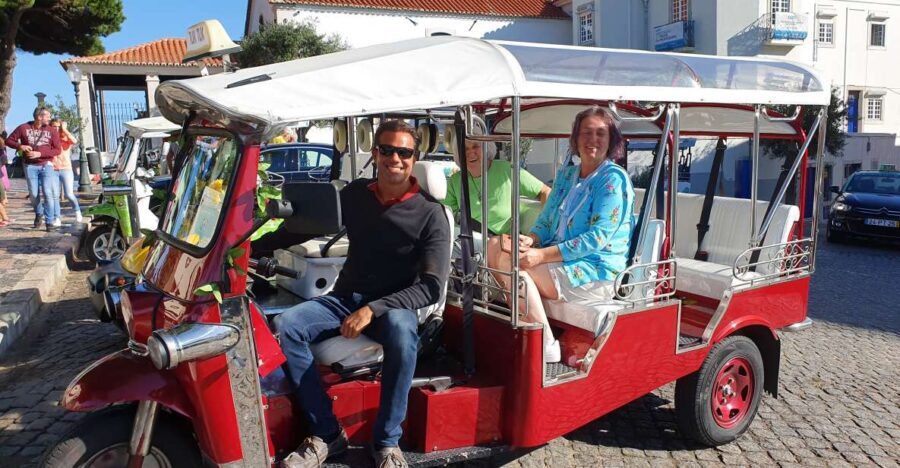
- Electric and quiet, with no exhaust fumes and less road noise than a typical vehicle
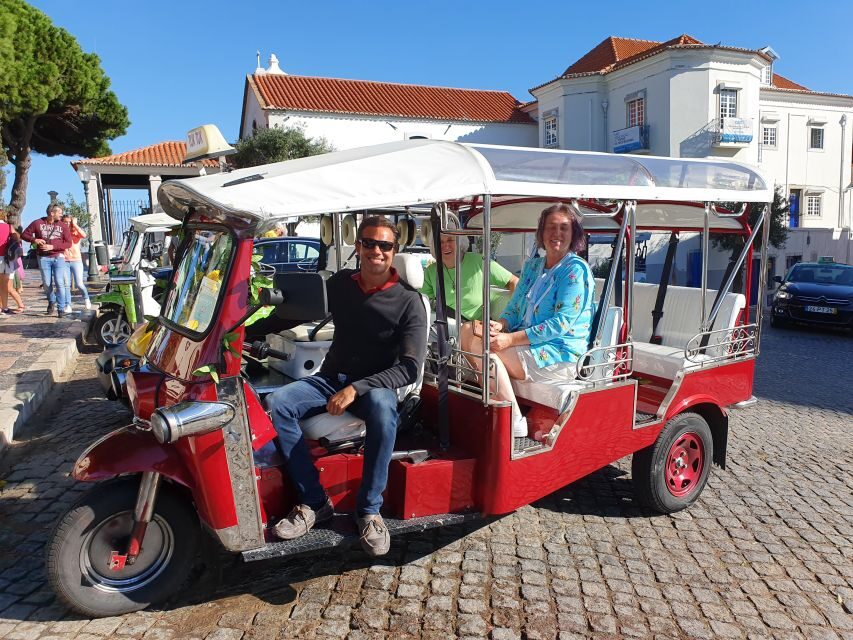
- No-glass windows, so you can take clean photos from the ride
- Stops chosen for viewpoints, including Castelo area views and multiple miradouros
- You get to the best parking spots, meaning less walking between sights
- A short, well-paced 2.5 hours, with photo stops plus a few brief walks
- Guides can make it personal, with praise for flexibility and local know-how (you’ll hear names like Jorge, Pedro, Fabio, Guilermo, Romeo, and Sarah)
Electric Tuk Tuk Reality Check: Why This Works on Lisbon’s Hills
Lisbon is gorgeous, but it’s also determined. The city’s streets can feel like a slalom course—steep, narrow, and full of corners that make big vehicles less practical. That’s where the electric tuk tuk earns its keep.
Because it’s small, you can get close to the places you want to see. And because it’s parked in more convenient spots, you don’t waste your precious 2.5 hours walking just to get to the next viewpoint. You’re still walking some at miradouros, but the heavy lifting is handled for you.
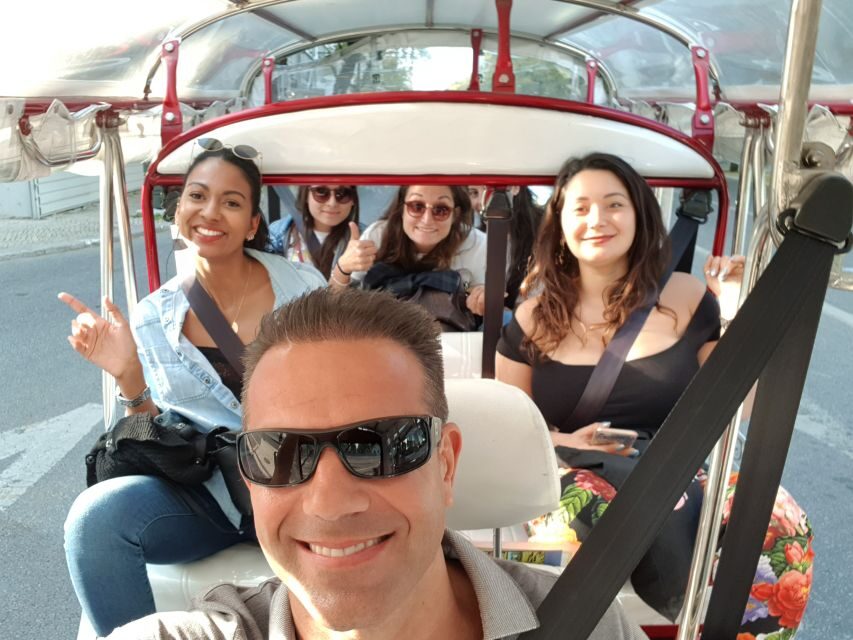
Then there’s the camera-friendly part. This tuk tuk has no glass, which matters more than you’d think. When you’re trying to frame viewpoints, the biggest photo killer is reflections. With no glass between you and the scene, your shots come out more naturally.
It’s also quiet and emissions-free by design—helpful on Lisbon’s packed streets, and nicer for your ears when you’re listening to the guide’s explanations.
You can also read our reviews of more private tours in Lisbon



Where You Start and How You Get Oriented in the First Stretch
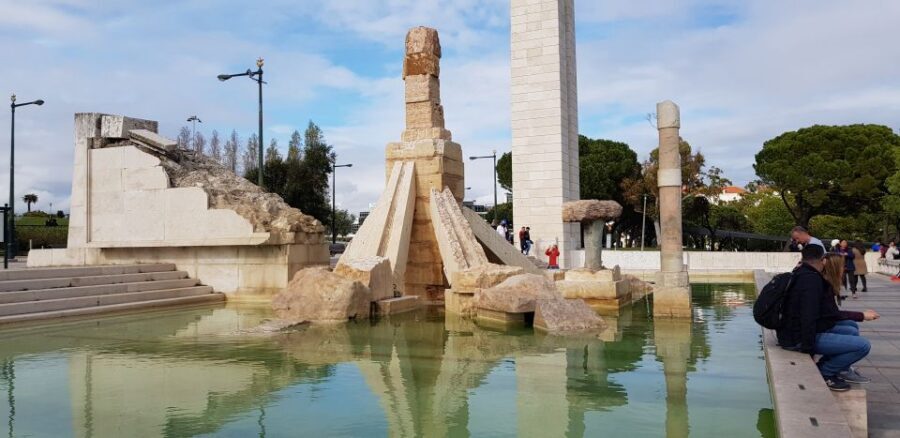
Most Lisbon tours start with a line and a map. This one starts with action. You begin at Restauradores, right where you’ll find the Obelisk and the Elevador da Glória. Even before you hit the big viewpoints, you’re already watching Lisbon do Lisbon things: strong contrasts between grand monuments and tight street life.
From there, you roll through the historic core toward Rossio Square. This is a good way to get your bearings fast. Rossio is a central reference point, so once you’ve seen it from the tuk tuk and heard what you’re looking at, you’ll understand where you are later when you walk on your own.
As you continue, you’ll pass by places that connect Lisbon’s layers—squares, lifts, and street textures—so the city starts making sense as a whole. This tour isn’t trying to make you memorize everything. It’s built to help you place sights in your mental map.
The Photo-Stop Chain: Lifts, Squares, and a Quick Taste of the Upper City
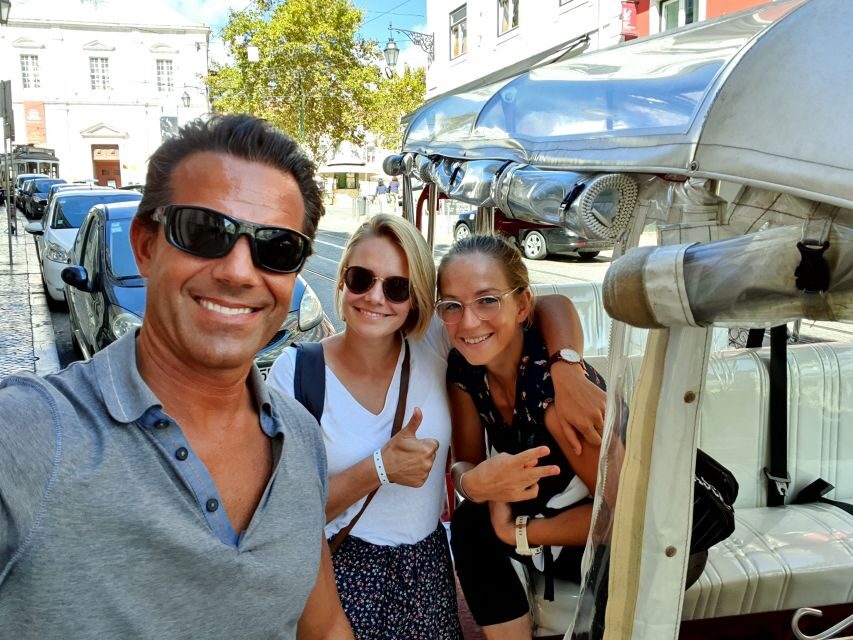
One of the smartest parts is how the tour strings together landmarks that people usually see at random times. Here, you get them as a continuous route.
You’ll pass by the Santa Justa Lift, and you’ll also encounter the Rua Augusta Triumphal Arch along the way. These are the kinds of sights that can look impressive but confusing if you’re not sure how they connect to the surrounding city. On this route, the guide helps you understand why they’re positioned where they are.
You’ll also stop near Largo do Carmo Square for a photo stop and a short walk (about 10 minutes). That pattern repeats: pause, look, and then move on. It keeps the pace from dragging, while still giving you time to step out for the shots.
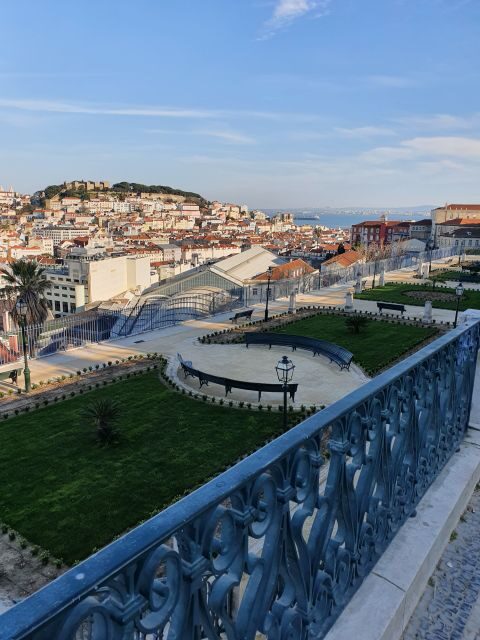
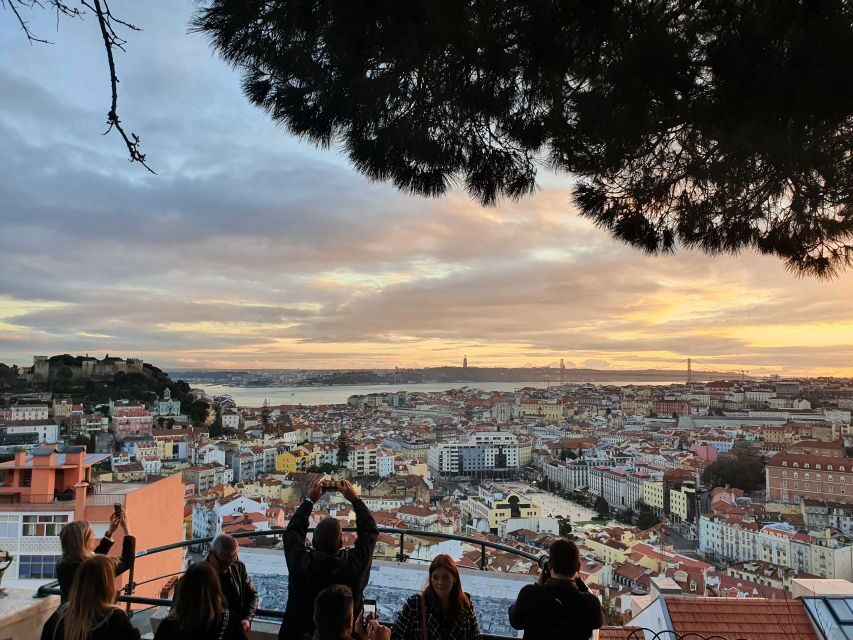
Next up is Miradouro de São Pedro de Alcântara, another photo stop with a short walk (around 10 minutes). Miradouros are where Lisbon really shows off. From these spots, you see how neighborhoods layer over the hills and how the city’s geometry shifts from street level to skyline.
You’ll also get stops that are less famous than the big “postcard” views but still useful for understanding Lisbon. Expect to see church squares and viewpoints in the middle of regular neighborhood streets, not just the obvious tourist corridors.
Rossio to the Major Viewpoints: Castelo Area, Alfama Signals, and Tile Details
As you move toward the highest viewpoint zone, the tour leans into classic Lisbon atmosphere: churches, scenic overlooks, and streets that feel like they were designed for turning corners slowly.
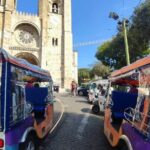
You’ll go through the Castelo area viewpoint conceptually and also pass Lisbon Cathedral and Santa Luzia. In the Lisbon puzzle, these places help explain how the city grew and what changed as power moved over time.
One memorable stop is Largo Portas do Sol, with both a photo stop and about a 10-minute walk. This is a prime spot for sweeping city views. It also acts like a checkpoint for the neighborhoods you’ll hear about again later—São Vicente and Alfama are pointed out as key parts of what makes Lisbon Lisbon.
You’ll also see the unique tiles at the Church of Santa Luzia mentioned on the route. Tiles might sound like a minor detail, but in Lisbon they’re a whole language—color, pattern, and storytelling that works especially well when you’re looking up close after a viewpoint.
Another fun, very Lisbon detail: the route includes a pass where the face of the fado singer Amália Rodrigues appears in paving stones. It’s the kind of small street-level clue you’d probably miss if you were just power-walking between stops.
Graça and Mouraria: Churches, Pantheon Views, and the Parts That Feel Real

After the big views, you head toward the neighborhoods where Lisbon feels less like a checklist and more like a lived-in city. You’ll pass through places tied to both culture and everyday life.
Expect stops connected to:
- Graça Historic District
- Monastery of São Vicente de Fora
- National Pantheon of Santa Engrácia
- Mouraria
The route also includes Miradouro da Nossa Senhora do Monte, with a longer photo stop and walk (about 15 minutes). That’s one of the key “hill top” moments on the tour. If your legs are okay, take the extra time here. A hilltop view is one thing; a hilltop view where you can actually stand back, reframe your photos, and look around is a different experience.
You’ll also pass the Fado Museum. Even if you’re not diving deep into fado today, seeing where the music is housed helps you connect what you hear at night with what you see in daylight.
Other named stops along the way can be interesting simply because they’re so Lisbon:
- Feira da Ladra (the market area)
- Casa dos Bicos (a distinctive building)
- Chafariz D’El Rei (a fountain stop point)
- The narrowest street in Lisbon (a quick check of how tight the city can get)
- Ruins of the Church and Church of São Roque
- Cristiano Ronaldo Hotel (yes, it’s on the route)
If you’re the type who likes context more than just landmarks, this section is where you’ll feel the tour doing its job. It’s not only “pretty views.” It’s also “this is how the city is structured.”



The Built-Up Viewpoints: São Pedro de Alcântara to Parque Eduardo VII
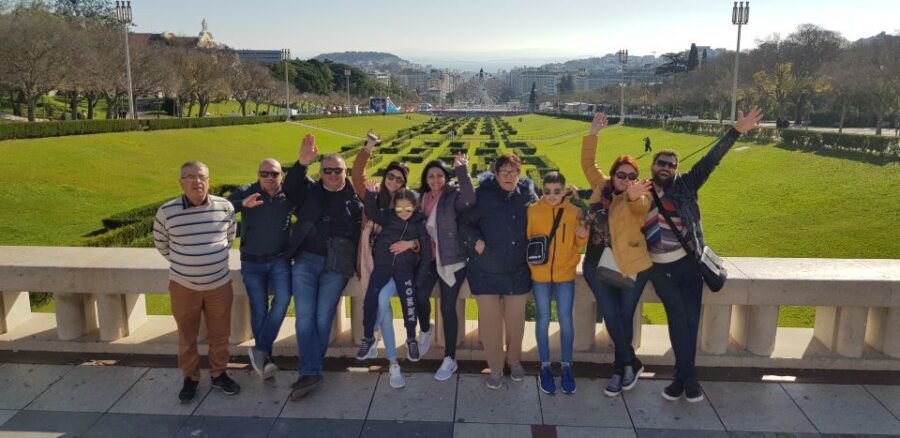
Lisbon’s viewpoints work best when they come at different angles. That’s why the tour returns you to more open skyline perspectives after the tighter neighborhood streets.
You’ll stop at São Pedro de Alcântara earlier for a view across the city. Then later you reach Parque Eduardo VII, again with one of the tour’s key “big picture” moments. This is a different kind of viewing angle—more open, more skyline, and often easier for photos where you want a broader sweep instead of a steep, cramped street composition.
If you’re planning the rest of your trip, these wide views help you decide what to revisit. After you’ve seen both “close hill” and “open city” angles, your next walks become more intentional.
You’ll also pass through Príncipe Real, Assembleia da República, and areas around Largo do Carmo and Largo de Camões. Seeing where government and major squares sit in relation to nearby neighborhoods makes Lisbon feel less like separate attractions and more like one connected city.
Marketplace Break: Mercado da Ribeira and a Quick Food Moment
This tour includes a short stop for regional food time at Mercado da Ribeira (about 10 minutes). Food itself isn’t included, so treat it as a chance to grab something small and local if you want.
This is practical for your schedule. By the time you reach the market area, you’ve already spent time looking up at views and down at streets. A quick bite gives you a reset before the tour continues through the remaining city highlights.
Also, some guides are praised for being thoughtful with timing—so if your group wants a quick snack window, it may work out better than it would on a super-rigid schedule.
The Route Back Down: Praça da Figueira and a Classics Finish at Restauradores
As you finish, you move through cultural and theater streets and major squares—places that help tie the day’s story together.
Expect stops/passes around:
- Largo do Chiado
- Teatro S. Carlos
- Teatro S. Luiz
- Praça da Figueira
- The Pink Street (photo stop)
Then you return to the end point: Restauradores again. Ending where you started is underrated. You’re not stuck guessing how to get back, and you can easily transition to dinner plans afterward.
At this point, you’ll have a strong sense of where the city’s major “anchors” sit—squares, viewpoints, and lifts. That’s a big win if you’re visiting for the first time and you want fewer detours later.
Price and Value: What $114 Buys You in 2.5 Hours
At $114 per person for 2.5 hours, you’re paying for three things: access, pacing, and guidance.
Access: the electric tuk tuk can park near sights where bigger vehicles can’t. That reduces the amount of walking you have to do just to get from one point to the next.
Pacing: a compact route means you hit multiple viewpoints—Castelo, Bairro Alto, and Parque Eduardo VII are all called out in the tour concept—without exhausting yourself before you even start exploring on foot.
Guidance: the tour is private with a live guide in Portuguese, English, or Spanish. Based on guide feedback names like Jorge, Pedro, Fabio, Guilermo, Romeo, and Sarah come up often, and the common thread is flexibility plus lots of small local details.
You also get environmental benefits: quiet ride, no exhaust fumes. That’s not the headline reason most people buy tours, but it makes the experience more pleasant in the middle of busy Lisbon traffic.
If you’re expecting museums and long interior time, this won’t be that kind of tour. This is a “see the city and understand it quickly” experience, built around moving viewpoints and street-level landmarks.
Who This Tour Fits Best (and Who Might Prefer Something Else)
This is a great fit if you:
- want an efficient orientation to Lisbon’s hills and neighborhoods
- like photo stops but don’t want to spend half the day walking uphill
- appreciate history and city explanations tied to the places you’re seeing
- are visiting on a short timetable and want maximum return on a single morning or afternoon
It’s less ideal if you:
- need an accessible setup beyond the limits stated (this isn’t suitable for people with mobility impairments)
- are traveling with children under 7
- want a slow, long sit-down tour with long museum time
Should You Book This Lisbon Seven Hills Electric Tuk Tuk Tour?
Yes, if your priority is getting your bearings fast while still enjoying real viewpoints and classic Lisbon street scenes. The electric tuk tuk approach is genuinely practical here: narrow streets, hill climbs, and close-to-sight parking all work in your favor.
If you’re comfortable with short walks at photo stops and you want a guide to connect the dots—from Restauradores through key viewpoints and back—this tour is a smart use of time. The fact that it’s private also matters. You’ll get a smoother experience because you’re not sharing the tuk tuk flow with a crowd.
Skip it only if your group can’t handle the short walks and the tour’s stated suitability limits. Otherwise, this is the kind of Lisbon intro you can build the rest of your trip around.
FAQ
How long is the electric tuk tuk tour of the Seven Hills?
The tour lasts about 2.5 hours.
Where does the tour start and end?
It starts and ends at Restauradores.
Is this a private tour?
Yes. It’s a private group tour.
What languages are the live guides?
The guide is available in Portuguese, English, and Spanish.
Is hotel pickup included?
Hotel pickup and drop-off are included if your hotel is within 1 km of the city center, with the pickup point noted at Hard Rock Café.
Are food and drinks included?
No. Food and drinks are not included, though there is a short stop at Mercado da Ribeira for regional food time.
Who is the tour not suitable for?
It isn’t suitable for children under 7, and it’s not recommended for people with mobility impairments.