REVIEW · LISBON
Lisbon: Alfama and São Jorge Castle Quarters Walking Tour
Book on GetYourGuide →Operated by LISBOA AUTÊNTICA LDA · Bookable on GetYourGuide
Alfama tells stories on every corner. On this 150-minute walk, I love how Alfama turns into a real map of the city’s layers, from Roman clues to Moorish walls, and I love the start at Casa dos Bicos, a rare survivor from the 1755 Lisbon Earthquake. One heads-up: the tour focuses on the castle area, but São Jorge Castle entry is not included, so you won’t go inside.
This is the kind of half-day tour that helps you get your bearings fast. You’ll thread through tight lanes, interior patios, and hidden squares, then finish with architecture in Lisbon Cathedral and sweeping views from Portas do Sol. Expect a good amount of uphill walking, and it’s not suitable for mobility impairments—this is very much a walking experience.
In This Review
- Key highlights worth showing up for
- Casa dos Bicos Meeting Point: the House of Spikes
- Lisbon’s Alfama maze: walls, patios, and the slow reveal
- Tracing Olisipo: Roman salting tanks and thermal water clues
- Jewish Quarter routes and the power of hidden squares
- Largo do Chafariz de Dentro: why fado started in daily life
- Lisbon Cathedral: 12th-century roots with visible mix-and-match styles
- Portas do Sol: the viewpoint payoff for all the uphill steps
- How long is 150 minutes, really, and who it suits
- Price and value: why $23 can feel like a bargain
- What to wear and how to prepare for Alfama comfort
- Should you book this Alfama and São Jorge walking tour?
- FAQ
- How long is the tour?
- What is the meeting point?
- Is the entrance to São Jorge Castle included?
- Is Lisbon Cathedral entry included?
- Does the tour include a live guide?
- What languages are offered?
- Is it suitable for people with mobility impairments?
- What should I bring?
- Is personal protection equipment included?
- Is free cancellation available?
Key highlights worth showing up for

- Casa dos Bicos (House of Spikes): meet at an iconic landmark tied to the 1755 earthquake era
- São Jorge walls, not the castle interior: see the historic fortification viewpoint without paying for separate entry
- Roman Olisipo traces: spot evidence of old salting tanks at Cetária
- Fado’s roots in everyday tradition: learn the story behind the music and pass through Largo do Chafariz de Dentro
- Lisbon Cathedral visit: get an included guided look at a 12th-century church with mixed architectural styles
Casa dos Bicos Meeting Point: the House of Spikes
Meet at Campo das Cebolas, outside Casa dos Bicos, the building covered in spikes. It’s an easy landmark because it looks like someone dropped a row of tiny pyramids onto Lisbon’s stone. The best part is what the building represents: it’s a rare survivor of the 1755 Lisbon Earthquake, which makes your whole walk feel grounded in real time. Even before you start climbing, you’re already standing in a piece of the city’s survival story.
Look for the guide holding a black bag with the Lisboa Autêntica logo. This helps because Alfama’s streets can feel like a maze even when you’re not lost yet. The guide lead-in also helps you understand the route logic—where you’re going, why you’re going there, and what to notice while you walk.
You can also read our reviews of more walking tours in Lisbon


Lisbon’s Alfama maze: walls, patios, and the slow reveal

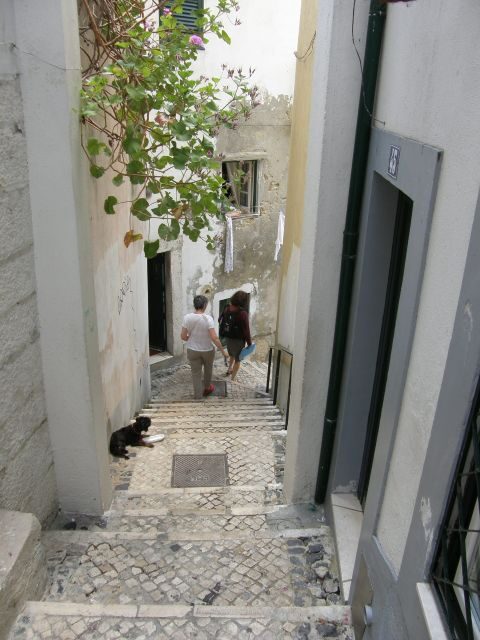
Alfama is Lisbon’s oldest neighborhood, and the tour treats it like a living puzzle. You’ll follow the path tied to the city walls and the Moorish presence around São Jorge. That means lots of turns, lots of changes in elevation, and plenty of chances to look into the spaces locals actually use—alleyways, interior patios, and little pockets of street life.
This is where you’ll get your favorite kind of historical clue: not a plaque, but a sense of structure. Walls and terraces shape how people built homes. Alleys funnel you past old edges of the city. Hidden squares pop into view like someone opened a door you didn’t know existed. And because this is a guided walk, the “what am I looking at?” moments get answered in real time.
One of the most praised parts of this experience is the guide’s storytelling. Guides on this tour have included people like Ricardo, Agatha, Helena, Elena, Lucy, Fatima, and Beatrice, and the common thread is strong engagement—clear explanations, good pacing, and routes that make sense for seeing more in less time.
Tracing Olisipo: Roman salting tanks and thermal water clues

Lisbon didn’t start as Lisbon. Here, you’ll learn how Romans shaped the city’s identity, when the area was known as Olisipo. The tour points out traces connected to Roman life, including evidence of old salting tanks at Cetária. That matters because it’s not just “the Romans were here.” It’s an everyday industry clue—how food and coastal commerce likely worked in this part of town.
Then you’ll connect it to something Alfama is still known for: thermal waters. The Romans discovered these waters, and later Muslims gave them the name Al-Hamma. It’s one of those details that instantly changes how you read the neighborhood. You start seeing why people settled here, not just when they did. Instead of history being a date list, it becomes a reason the city grew the way it did.
If you like history that shows up in real physical remnants—materials, locations, and building patterns—this portion delivers. It also keeps the walk moving so you don’t get stuck in one “look and read” stop.
Jewish Quarter routes and the power of hidden squares
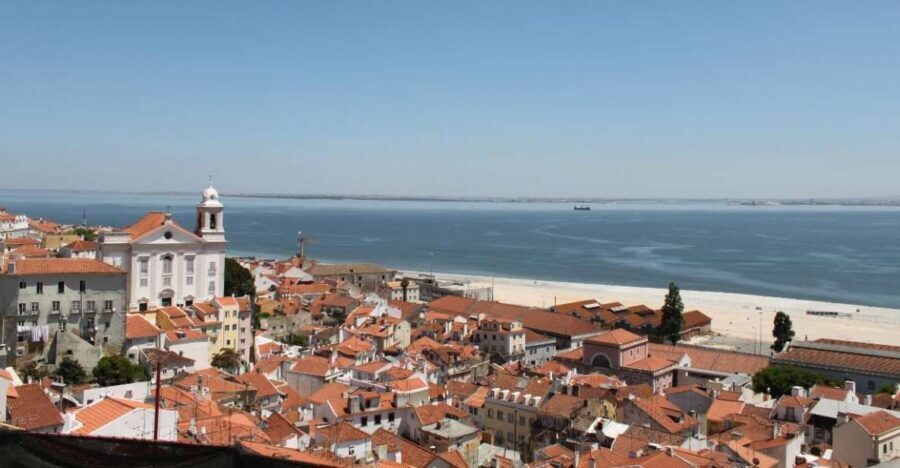
As you wander Alfama’s maze, you’ll also learn how the streets connect to what used to be the Jewish Quarter. The tour doesn’t just mention it—it shows you the kind of urban logic that allowed communities to live close together while still creating privacy and separation. You’ll pass by places that lead to hidden squares and secret stairways, which is exactly what makes Alfama feel like a city you can actually experience, not just tour.
This section is especially useful on a first trip, because Alfama’s layout can make you feel like you’re constantly in the wrong direction. The guide helps you “read” it. You’ll end up understanding where you are, even if the streets keep changing names.
I also appreciate that this portion ties together cultural layers without turning the walk into a lecture. You get the story, then you walk through it. And when you’re done, you’re more likely to return on your own, because you’ll know what’s worth searching for.
Largo do Chafariz de Dentro: why fado started in daily life
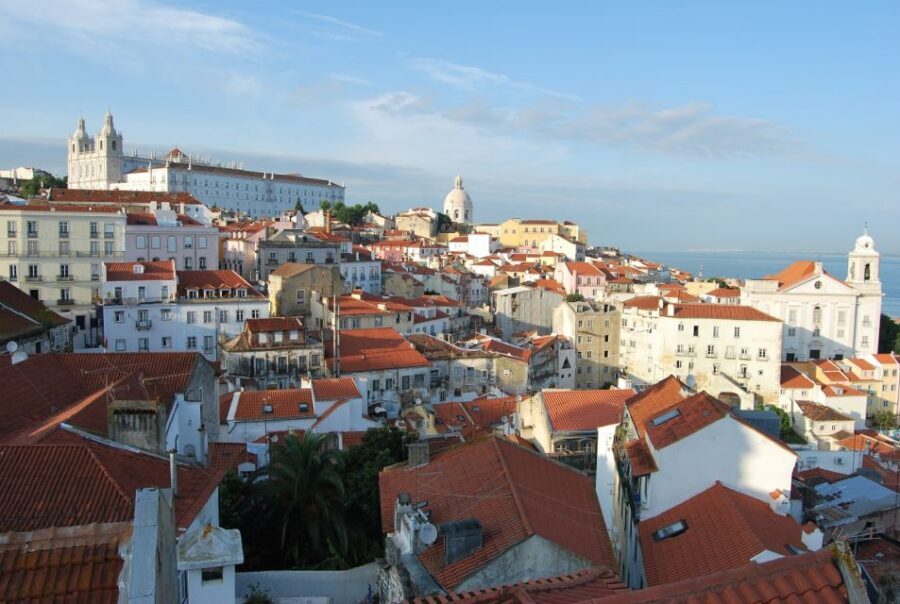
You’ll hear the story behind fado—its birth and the customs that helped shape it. The tour connects the music to the neighborhood’s rhythms rather than treating fado like a stage show you buy tickets for. You’ll also pass through Largo do Chafariz de Dentro, an important stop for understanding how local tradition and public spaces supported everyday community life.
This is a strong “culture plus context” moment. It gives you something to carry into the rest of your Lisbon days. If you later catch a fado performance, you’ll have a clearer sense of why it fits here and how it grew out of neighborhood life.
A small but meaningful detail: the tour’s approach doesn’t oversell. It gives you enough background to understand what you’re seeing, without turning fado into a trivia contest. That balance is why people rate this tour so highly.




Lisbon Cathedral: 12th-century roots with visible mix-and-match styles
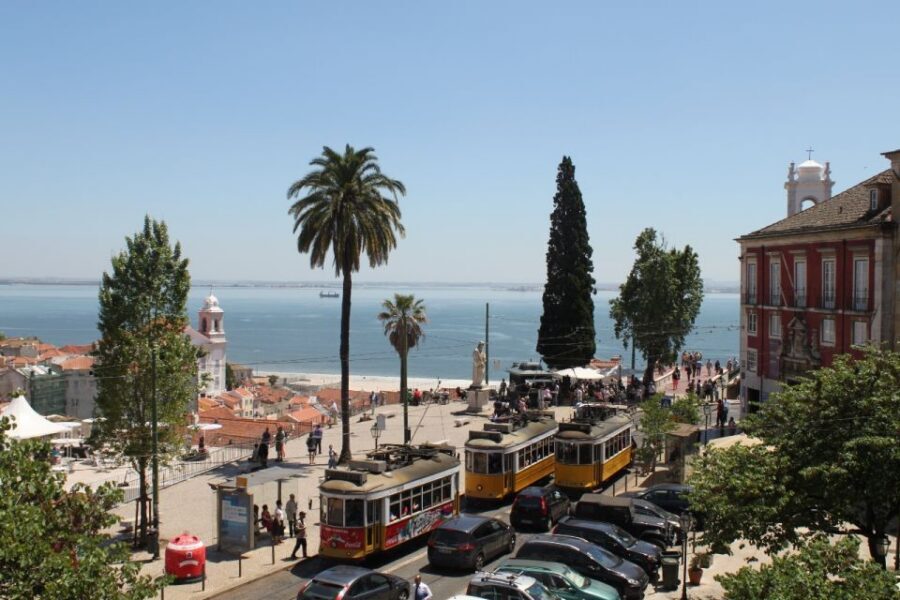
Next comes Lisbon Cathedral, built in the 12th century and modified over time with a mix of architectural styles. You get the entrance and a guided look, which helps because cathedrals can feel like they blend into one giant stone block if you don’t know what to focus on.
The guided part is what makes the visit worth carving out. Instead of wandering, you’ll get pointing-questions answered: what’s older, what changed, and how different influences left their fingerprints. And because you’re in an older quarter already, the cathedral stops feel like part of the same story rather than an unrelated museum detour.
This is also a nice “pause” for your legs. You’ll still walk afterward, but inside the cathedral you can slow down, look closely, and reset before the viewpoints.
Portas do Sol: the viewpoint payoff for all the uphill steps
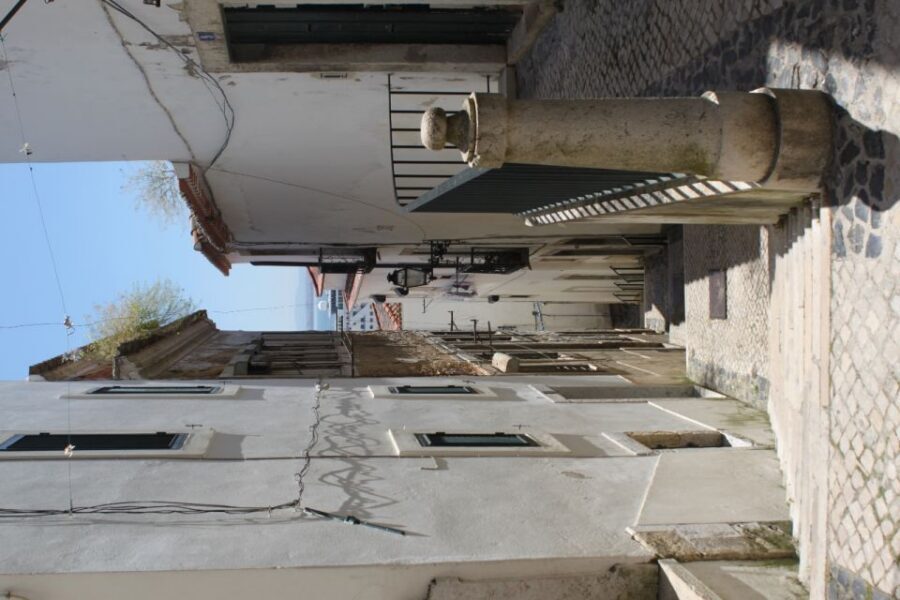
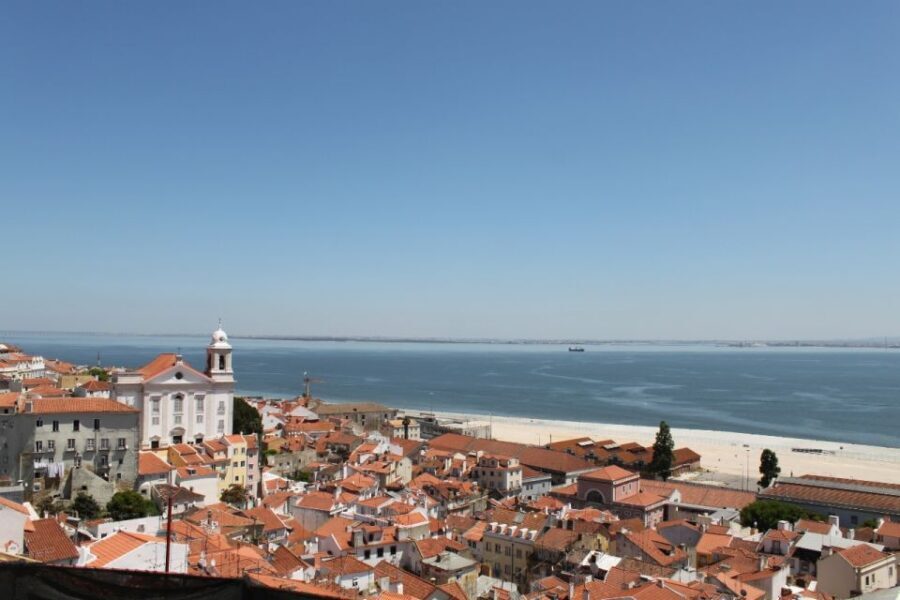
After the cathedral, you’ll enjoy panoramic views from Portas do Sol. This is the part where the walking effort turns into payoff. From here, Lisbon’s hills, rooftops, and the bend of the city feel obvious. You’ll finally see how Alfama sits in relation to the rest of Lisbon—why it’s built the way it is and why the views are what they are.
Photography is the obvious reason to like this stop, but the better reason is orientation. After Portas do Sol, you’re more likely to understand where you are compared to major landmarks and viewpoints you’ll want to revisit. It turns the whole day from a sequence of streets into a mental map.
How long is 150 minutes, really, and who it suits

150 minutes sounds compact, and it is. The route is built for a half-day experience that helps you cover a lot of ground without eating your whole morning or afternoon. You’ll walk through multiple micro-neighborhoods, learn the story behind them, and still end with big views.
But it is still Lisbon walking—tight streets, uneven surfaces, and uphill stretches. If you’re comfortable on foot and you like getting your bearings early, it’s a great fit. If you need step-free routes or regular breaks with minimal stairs, you should probably skip this one; it’s listed as not suitable for people with mobility impairments.
Language options are good, and the tour guide can work in Spanish, Portuguese, German, English, or French. That matters because the quality of a walking tour rises or falls on communication, and here you’ll get guided explanations rather than silent headsets.
Price and value: why $23 can feel like a bargain
At $23 per person for a 150-minute guided walk, this tour can be excellent value—especially if you’re using it to do three things at once: learn Alfama’s layers, get inside Lisbon Cathedral, and end with panoramic viewpoints. Since Lisbon Cathedral entrance and guided tour are included, that part helps justify the cost. Meanwhile, the big iconic expectation—São Jorge Castle entry—is not included, so you should mentally budget for separate castle plans if you want to go inside.
The tour’s value is less about one landmark and more about how the guide connects them. A strong guide turns a handful of buildings into a story you can remember. And based on the experiences shared by people who booked it, the guides tend to be flexible with the route when needed, which is a real plus on streets that can throw curveballs.
Also: the tour provides personal protection equipment (mask and disinfectant gel). That’s a small practical inclusion, and it’s good to know without having to track it down.
What to wear and how to prepare for Alfama comfort
Wear comfortable clothes. That’s the one instruction I treat as serious here. Alfama’s streets reward good shoes and clothing that can handle sun, shade, and stairs without slowing you down.
Bring water if it’s warm—this detail isn’t listed, but walking in Lisbon can get sunny quickly, and you don’t want to be hunting for a drink mid-route. Also plan to take your time at photo stops. The viewpoints are where your legs will want a breather, so don’t rush them.
If you can, do this tour early in your stay. You’ll come back to Alfama with a better sense of where everything fits.
Should you book this Alfama and São Jorge walking tour?
Book it if you want a guided walk that helps you understand Lisbon’s layers—Roman Olisipo clues, Moorish influence around São Jorge walls, and fado’s cultural roots—while still delivering real payoff views from Portas do Sol and a guided visit to Lisbon Cathedral.
Skip it (or pair it with other plans) if going inside São Jorge Castle is your top priority. This experience is about the streets and the castle area from the outside, plus Alfama and the cathedral. You’ll get a lot, but not the castle interior ticket.
One more practical thought: if you like meeting a guide who can explain the city clearly in your language—English and others are available—this is a good way to start. You should walk away with not just photos, but a mental map you can use for the rest of your trip.
FAQ
How long is the tour?
The tour lasts 150 minutes.
What is the meeting point?
Meet at Campo das Cebolas, Casa dos Bicos (the House of Spikes). The guide will be holding a black bag with the Lisboa Autêntica logo. Nearest Metro: Terreiro do Paço.
Is the entrance to São Jorge Castle included?
No. São Jorge Castle entrance is not included. The tour focuses on seeing the castle area, not going inside.
Is Lisbon Cathedral entry included?
Yes. Entrance and a guided tour of Lisbon Cathedral are included.
Does the tour include a live guide?
Yes, it includes a live guide.
What languages are offered?
Spanish, Portuguese, German, English, and French.
Is it suitable for people with mobility impairments?
No, it is not suitable for people with mobility impairments.
What should I bring?
Comfortable clothes.
Is personal protection equipment included?
Yes. Personal Protection Equipment (PPE) is included, including mask and disinfectant gel.
Is free cancellation available?
Yes. You can cancel up to 24 hours in advance for a full refund.