
REVIEW · LISBON
LISBOA: Escape IN City – The Antidote
Book on GetYourGuide →Operated by Escape IN Games · Bookable on GetYourGuide
Lisbon can be a puzzle you solve. Escape IN City – The Antidote turns the streets into a 120-minute mission where you follow icons, tackle tasks, and keep moving at your own speed. I like that it works as a self-guided, team-based experience, and that your photos and videos get saved to your phone so the best moments don’t disappear after you finish.
The setup is simple, but it’s not a passive tour. You’ll need to stay on top of your phone, and the game starts counting the moment you log in—so if you’re slow at the start, you’ll feel it. It’s also more suited to people over 15, and it isn’t a good fit if you need wheelchair access or help navigating with low vision.
In This Review
- Key things to know before you play
- The Antidote premise: why this game feels like sightseeing
- How the 2 hours actually work (and how not to waste your time)
- Teams, pacing, and the walking-or-biking choice
- The phone is the star: photos, videos, and hints
- Language and clarity: what to plan for
- Pasteís de Belém: the included recharge stop
- What you’ll do at each “icon moment” (no two minutes are the same)
- Accessibility and who this is (and isn’t) for
- Price and value: $47 per group up to 5
- The biggest pros: creative puzzles, good organization, and laughs
- The main watch-outs: setup friction, difficulty, and language fit
- Should you book Escape IN City – The Antidote?
- FAQ
- How long is Escape IN City – The Antidote?
- How much does it cost?
- Do I need to buy in advance?
- What app do I need?
- When do the 120 minutes start?
- Is the tour available in multiple languages?
- Is there a break during the experience?
- What should I bring?
- Is it suitable for wheelchair users or people with mobility impairments?
Key things to know before you play
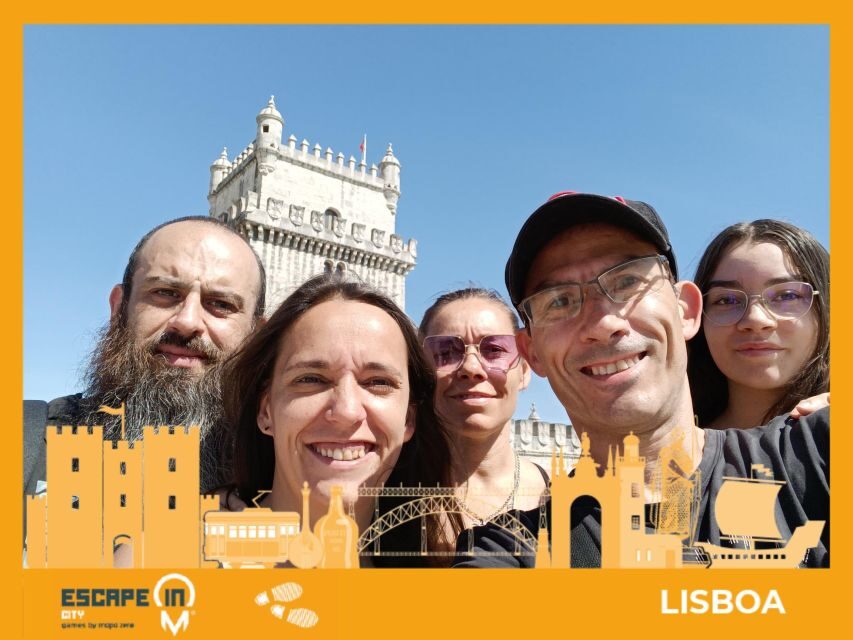
- LOQUIZ app game flow: login credentials arrive by email and you start the clock when you log in.
- City navigation via icons: you follow map markers, then complete puzzles that pop up on your mobile.
- Photo/video part of the fun: capture clues right on your phone, then revisit the results later.
- Two movement options: you can do it walking or on a bike (choose what fits your pace).
- Pasteís de Belém reset stop: you can recharge during the experience with the included break.
- Language options are limited: Portuguese, English, Spanish, and French are available, so plan around that.
The Antidote premise: why this game feels like sightseeing

This isn’t a guided lecture. It’s a story-driven walk-or-ride through Lisbon where the “plot” is a timed hunt for an antidote. You’re split into teams, and you’re given a run-through that basically says: get to the starting area, begin decoding the potion, and let the next clue lead you onward.
That framing matters. When Lisbon becomes a series of small decisions—go here, check that symbol, answer this puzzle—you start noticing details you’d usually miss. Instead of trying to cover everything in a rush, you’re moving in short spurts, solving one thing at a time, then naturally drifting toward the next area the clues point to.
The best part is the built-in momentum. You don’t have to “figure out what to do next,” because the app keeps pushing you toward the next icon. If you like active travel—short tasks, quick laughs, and a bit of friendly arguing about the right answer—this hits the mark.
You can also read our reviews of more city tours in Lisbon



How the 2 hours actually work (and how not to waste your time)
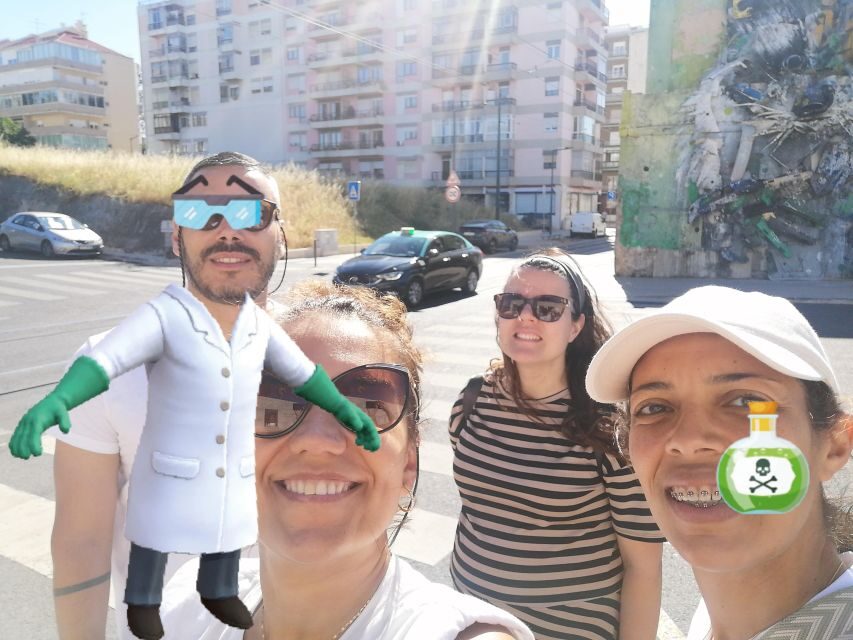
The experience is built around 120 minutes, and time doesn’t start when you arrive at the meeting point. It starts when you login inside the LOQUIZ app. That one detail changes everything.
Here’s how you’ll want to handle the start:
- Get to the meeting point and be ready with a charged smartphone.
- Download the LOQUIZ app ahead of time.
- Be prepared to log in using the credentials emailed to you (you’re advised to buy in advance so you don’t run into timing issues).
- Choose your language in the app before you begin.
If you show up and spend the first 20 minutes struggling with login, you’ll feel rushed for the rest of the route. This is a “smart planning beats smart answers” kind of game.
Once you’re live, the map shows icons like test tubes and chemical molecule-style symbols. You then walk into the nearby area so a task appears on your phone dashboard. The puzzles can involve text decoding plus photo and video elements, which is why it’s not just a normal scavenger hunt.
Teams, pacing, and the walking-or-biking choice

It’s designed for teams and you can play with family or friends. The rules are simple: teamwork helps, and if you’re stuck, you can use hints.
One practical note: because the puzzles appear as you reach certain areas, the “correct pace” is mostly about keeping your team together. If one person sprints ahead and another is still solving on the phone, you’ll spend time waiting. I’d rather see you agree on a basic strategy—who checks the clue, who watches navigation, and who handles the phone photos.
You can do it on foot or by bike. If you’re choosing walking, wear comfortable shoes; Lisbon has plenty of uneven pavement and steep bits. If you choose biking, you’ll likely move faster between zones, which can help with timing, but only if your group is comfortable biking in the city environment.
The phone is the star: photos, videos, and hints
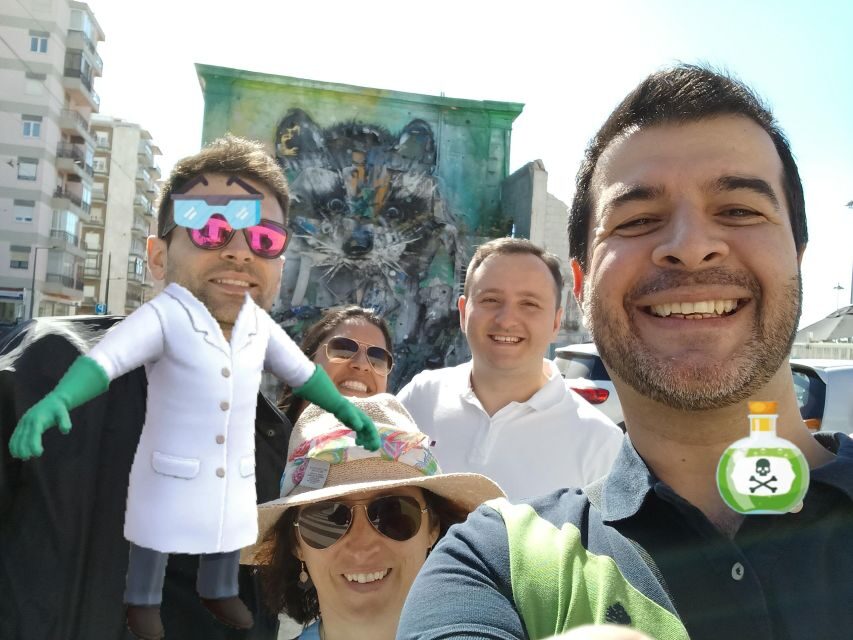
This game leans hard on your smartphone, in a good way. Your photos and videos get saved directly to your phone gallery. That’s not just a technical detail—it changes the vibe. You’re not trying to screenshot something you’ll forget later. You can replay the funny moments after you finish and share them while they’re still fresh.
The hints system is another key point. If you’re struggling to solve a puzzle, you can use hints without losing points. If you can’t get the correct answer on the third attempt, you’ll be given the answer so you can move to the next icon.
That keeps the game from turning into a dead end. It also means you don’t need to be a math genius or a codebreaker. You need patience and good team communication. If someone is stuck, let them try, use a hint, then shift focus so nobody slows the group down too long.
Language and clarity: what to plan for
The app supports Portuguese, English, Spanish, and French. That’s helpful, but it also means you should check what you can read comfortably before you start—especially because puzzles and answer choices matter.
There are also reports of occasional setup and translation issues affecting the experience quality. Some players felt the beginning wasn’t smooth or that the scenario details didn’t match the translations. I’d treat this as a real planning consideration:
- If you’re traveling with mixed language comfort, align early on which language you’ll select.
- Bring a backup mindset for the first few tasks; the first couple puzzles set the rhythm.
- If you’re the type who hates tech friction, plan extra time for the initial login and language selection.





Pasteís de Belém: the included recharge stop

There’s one clear “break moment” built into the experience: a stop at Pasteís de Belém to reset your energy. You buy a box of pasteis, and they offer another one. It’s a practical reward that also keeps the game from feeling like nonstop brain-work.
Why it’s valuable: timed escape games can get draining. A real snack stop means you can regroup, refill your energy, and refresh your thinking before you head back into the clues.
Timing-wise, you’ll want to assume this break could extend the total feel of the two hours. That’s not automatically a problem. In fact, it often makes the game more enjoyable because your team can shake off frustration and reset.
What you’ll do at each “icon moment” (no two minutes are the same)
Because the route is clue-driven, the exact sequence of locations can vary by how you navigate and where the icons appear for your path. Still, the rhythm is consistent:
- You spot an icon on the map.
- You move into the surrounding area.
- A task pops onto your phone.
- Your team solves it, sometimes using hints.
- You move to the next icon.
A lot of the fun is in those micro-challenges. You’re not just reading plaques or checking viewfinders. You’re solving something while standing in a real place in Lisbon. The photo/video component adds another layer: it turns normal sightseeing “images” into evidence for the puzzle.
If you’re traveling with teenagers, this style can work well because it feels like a game, not a history test. For adults who like Lisbon at street level, it also has a great advantage: it keeps you moving without forcing you to walk the whole city in one day.
Accessibility and who this is (and isn’t) for
This is not suitable for people with mobility impairments or wheelchair users. It also isn’t a good match if you’re visually impaired, which matters because the puzzles and map navigation depend heavily on phone interaction.
Age-wise, there’s no strict age limit, but the experience is more indicated for over 15 years old. That’s likely because puzzles can require reading, phone typing, and team problem-solving under time pressure.
Who I think will enjoy it most:
- Groups who want a fun alternative to a standard walking tour
- People who like solving riddles with friends
- Travelers who enjoy Lisbon at a slower, clue-by-clue pace rather than a checklist
Who may struggle:
- Anyone who expects a traditional, instructor-led guide style
- People who want a mostly relaxing stroll with minimal phone work
- Groups who dislike time pressure or tech setup at the start
Price and value: $47 per group up to 5
The price is listed as $47 per group (up to 5 people) for about 2 hours. That pricing structure can be a good value if you have a full team, because the cost doesn’t scale linearly with the number of people.
One complaint points to this clearly: a larger group felt the experience was priced like multiple separate group entries. If you’re traveling with more than five people, think carefully about how you’ll split into teams so the total cost matches the value you expect. In other words, don’t assume more people always means a better deal.
For smaller groups (1 to 5), this can work out fairly well because you’re essentially buying a self-guided, interactive Lisbon game for a fixed group cost. You’re also getting that included break at Pasteís de Belém, which adds a tangible element beyond the puzzles.
If you’re the kind of traveler who cares about having a guide actively managing the experience, you might find it less satisfying, especially if you run into a slow start or you prefer a more structured route.
The biggest pros: creative puzzles, good organization, and laughs
Several standout strengths come through in the way the experience is described:
- It’s organized and creative, with original riddles that feel designed for exploring.
- It’s genuinely fun, not just a serious “escape room” imitation outdoors.
- You can do it with family or friends, and the team format makes it social.
The hint system is also a pro. It prevents the game from stalling when your group hits a tricky question. And the phone media saving is a surprisingly nice touch. It gives you something to look back on after you stop walking.
The main watch-outs: setup friction, difficulty, and language fit
There are also clear caution signs worth taking seriously:
- Some players abandoned early because they found the puzzles hard to follow and not very enjoyable.
- Others flagged issues around launch/setup and felt the translations didn’t always match the precision they expect when puzzle details matter.
- Language support is limited to four languages, so if your comfort zone is different, you might lose nuance.
So how do you protect your experience? Simple:
- Agree on a language before you start.
- Make sure your phone is charged and you have enough battery for photos/videos.
- Budget time for the login and first tasks.
- If you get stuck, use hints quickly, then focus on keeping momentum.
This game rewards the teams that treat it like a friendly challenge, not a test of expertise.
Should you book Escape IN City – The Antidote?
If your ideal day in Lisbon includes puzzles, team problem-solving, and a little silliness in the middle of sightseeing, I think this is worth your time. The best case scenario is a group that clicks with the structure: icons on the map, tasks on your phone, and that satisfying sense of progress as you move clue to clue.
I’d skip it or approach carefully if you hate tech setup at the start, you’re traveling with more than five people without a plan to split teams, or you need strong accessibility support. It’s also less ideal if you want a traditional guide-style history tour, since this is built around autonomous play.
If you do book, do it with one mindset: treat it like a game session. Show up ready, read the intro text, log in on time, and keep your team moving. That’s when the antidote hunt turns into a genuinely memorable Lisbon afternoon.
FAQ
How long is Escape IN City – The Antidote?
It lasts about 2 hours, designed around a 120-minute mission.
How much does it cost?
The price is listed as $47 per group, up to 5 people.
Do I need to buy in advance?
You’re advised to buy in advance so you don’t run into problems receiving your credentials by email.
What app do I need?
You need the LOQUIZ app. After downloading it, you’ll use the login credentials sent by email.
When do the 120 minutes start?
Time starts when you login on the game in the app, so be at the meeting point ready to start.
Is the tour available in multiple languages?
Yes. The app supports Portuguese, English, Spanish, and French.
Is there a break during the experience?
Yes. There’s a stop at Pasteís de Belém to reset your energy. You buy a box, and they offer another one.
What should I bring?
A charged smartphone and comfortable clothes and shoes.
Is it suitable for wheelchair users or people with mobility impairments?
No. It’s not suitable for people with mobility impairments or wheelchair users, and it’s also not suitable for visually impaired people.