REVIEW · LISBON
Knights Templars Private Tour from Lisbon
Book on Viator →Operated by walkborder · Bookable on Viator
A day in Portugal where Templars, kings, and a Jewish community all leave fingerprints.
This private tour turns Tomar into more than a stop on a map. You’ll see the fortress-like world of the Templars at Almourol, then move through Portugal’s major Templar-to-Order-of-Christ landmarks, including the UNESCO-listed Convent of Christ.
I especially like two things: the mix of big monuments with very specific details (think named builders, symbolic architecture, and the way one order morphs into another). I also like that the transport is handled for you, with hotel pickup and drop-off by private vehicle, so your day feels like a guided outing instead of a logistics test.
One thing to consider: you’ll be walking around older stone sites, and Tomar can mean steps and steep spots. If mobility is a concern, tell your guide your limits early.
In This Review
- Key points to know before you go
- Knights Templar in Tomar: why this route feels different
- The real value: private pickup plus an efficient 8-hour day
- Getting to Almourol from Lisbon without turning it into a project
- Entering Castelo de Almourol: the fortress on the Tagus
- Igreja de Santa Maria dos Olivais: where the masters were remembered
- Convento de Cristo in Tomar: Manueline art over older Templar bones
- Synagogue of Tomar: symbolism you can actually spot
- What you pay for: included items and the entrance-fee reality
- The guide can make or break your experience
- Who this tour is best for (and who should skip it)
- Should you book the Knights Templars Private Tour from Lisbon?
- FAQ
- How long is the Knights Templars private tour from Lisbon?
- Is hotel pickup and drop-off included?
- Is the tour private?
- What language is the tour offered in?
- Are entrance fees included?
- Is lunch included?
- What’s included in the price besides the guide?
- Is this tour suitable for travelers with limited mobility?
Key points to know before you go
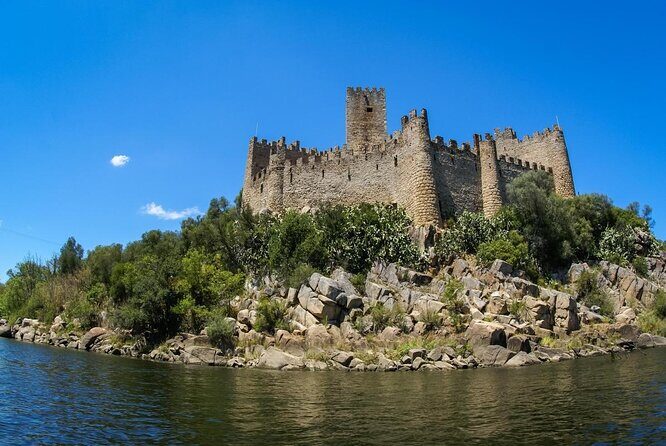
- Almourol Castle on a river island: fortress walls and a Templar association tied to the Tagus River line.
- Tomar’s Convent of Christ has layered styles: Romanesque, Gothic, Manueline, Renaissance, and more under UNESCO protection.
- You’ll visit the oldest synagogue in Portugal with symbolism in the columns, arches, and even the jars in the corners.
- Two free stops help value: the Igreja de Santa Maria dos Olivais and the Synagogue of Tomar have free admission.
- Private pickup from Lisbon keeps the day efficient and lets you focus on the sites, not timing trains and buses.
Knights Templar in Tomar: why this route feels different
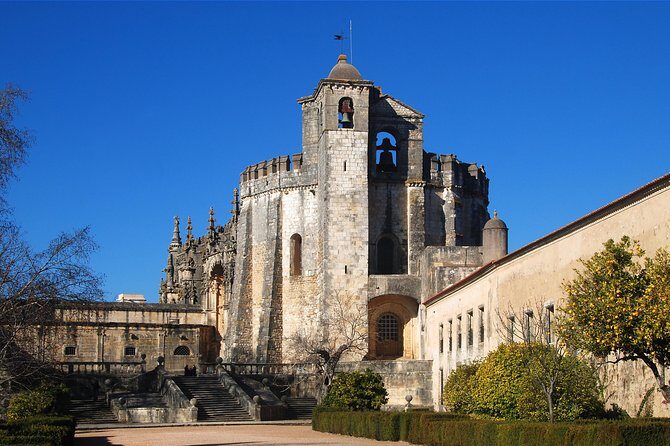
Portugal loves a good layered story. This tour follows one of the most interesting threads: the Knights Templar influence, then the shift toward the Order of Christ, and how that connected to Portugal’s early overseas ambition. You’ll see how military goals, royal power, and religious life all overlapped in one region.
What I like is that you don’t just get broad facts. You get the “how and why” tied to places. At Convento de Cristo, for example, the architecture tells you who was in charge across centuries, from the early Templar master Gualdim Pais to later Manueline renovations under King D. Manuel.
There’s also a human angle. The tour doesn’t ignore a major part of Portugal’s past: the Jewish community in Tomar. The synagogue stop brings a different lens to the day’s big Christian monuments, which makes the whole experience feel more complete.
You can also read our reviews of more private tours in Lisbon



The real value: private pickup plus an efficient 8-hour day
At $312.76 per person for an 8-hour private tour, you’re paying for more than entry to a couple famous buildings. You’re paying for a guide in your group, a private vehicle from Lisbon, and a clear order to the day so you don’t waste time figuring it out.
The schedule is built for “see and understand” rather than “rush and hope.” You’ll spend about 2 hours at Almourol Castle, then roughly 1 hour at the Church of Santa Maria dos Olivais, another 2 hours at the Convento de Cristo, and about 1 hour at the Synagogue of Tomar. That pacing matters because these are stone-heavy sites. You need time to look up, not just walk through.
Also, the included extras are small but useful: bottled water plus a driver/guide and personal accidents insurance. Entrance fees aren’t fully covered, but at least the two Tomar stops listed as free help keep costs more predictable.
One more practical point: the tour runs in English, and it uses a mobile ticket. You won’t be scrambling for paper tickets at each gate.
Getting to Almourol from Lisbon without turning it into a project
Your day starts with hotel pickup (or another meeting point). That’s a big deal on a long outing like this because your energy stays with you. You’re not spending the morning negotiating transit, and you’re not arriving too early or too late for the best parts of each site.
The ride itself is part of the value. You’ll be heading toward the Santarém district for Almourol, which sits on a small island in the Tagus River. That setting isn’t a quick scenic stop. It’s central to why the castle mattered, and having a guide on board helps you understand what you’re seeing when you arrive.
Plan for a full day. Even with pickup and drop-off handled, the day will feel like an outing, not a half-hour museum visit.
Entering Castelo de Almourol: the fortress on the Tagus
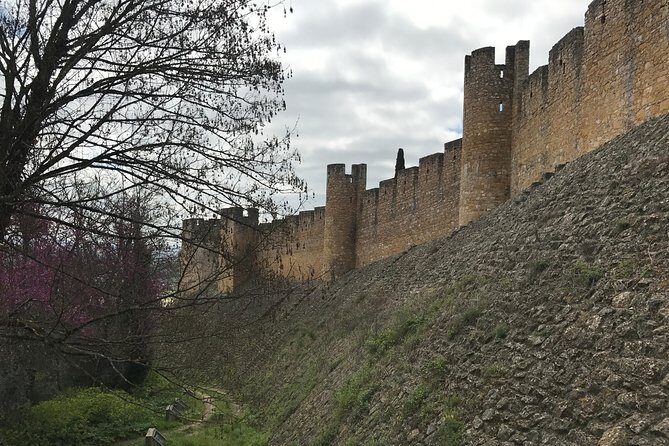
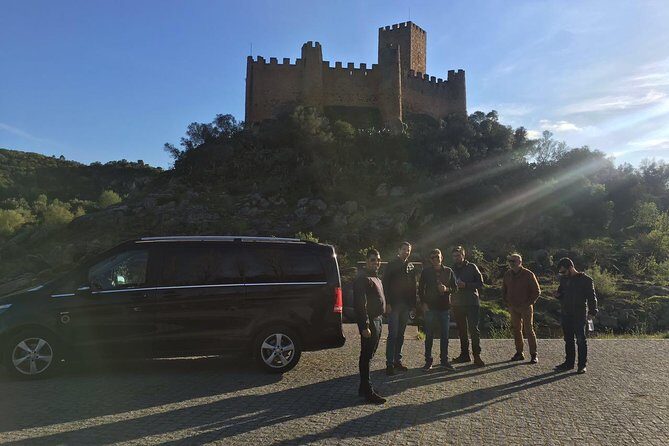
Almourol Castle is the kind of place you remember because it looks like it’s been watching the river for centuries. It sits on a small island—about 310 meters long and 75 meters wide—in the middle course of the Tagus River, near Santarém.
This is also where the Templar thread becomes visible in the landscape. The castle was part of the Tagus River line, tied to the Knights Templar’s role in defending and settling territory between the Mondego and Tagus rivers, and in protecting Coimbra as Portugal’s capital evolved.
What to look for when you enter:
- The quadrangular plan and tall walls give you that fortress logic immediately.
- The castle is reinforced with towers attached to the walls.
- A keep dominates the core, which helps explain why people would treat this place as a stronghold, not a palace.
There’s a famous rumor attached here: some people repeat the idea that the Templars left behind a hidden treasure. The interesting part is that the site explanation itself acknowledges there’s no proof—so you get the story without being told to swallow it whole.
You’ll have about 2 hours at Almourol. That’s enough time to walk the key areas and absorb the setting, especially if your guide points out how military architecture matched the era’s needs.
Igreja de Santa Maria dos Olivais: where the masters were remembered

Then you move into Tomar, where the day starts shifting from defense to legacy. The Church of Santa Maria dos Olivais—also known as Igreja de Santa Maria do Olival—sits near the left bank of the Nabão River.
This isn’t a quick side stop. It ties directly into the Templars’ presence in Portugal. The church was founded around 1160 by D. Gualdim Pais, a master associated with the Knights Templar. Before later developments, there was a Benedictine monastery on the site, and the church served as the seat of the Order’s presence in Portugal, including functioning as a pantheon for the Order’s masters.
Then the story changes with the politics of the early 1300s. After the Order was extinguished by the Church under Pope Clement V and by royal action linked to King François Philip IV, this place became connected with the Order of Christ—and it’s described as becoming a kind of head office for the churches of the Portuguese Empire, with cathedral-like honors.
The practical upside: admission here is free, and you only spend about 1 hour. You get a meaningful piece of the puzzle without burning your whole schedule.
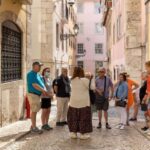

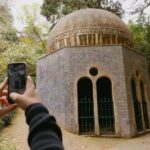


Convento de Cristo in Tomar: Manueline art over older Templar bones
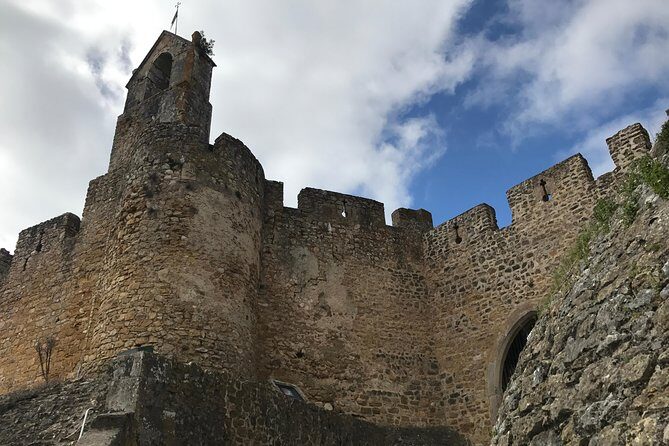
If you want one stop that makes the whole tour click, it’s Convento de Cristo. This complex is tied to the Templar world through the early church associated with Gualdim Pais, then pushed forward through centuries of art and power.
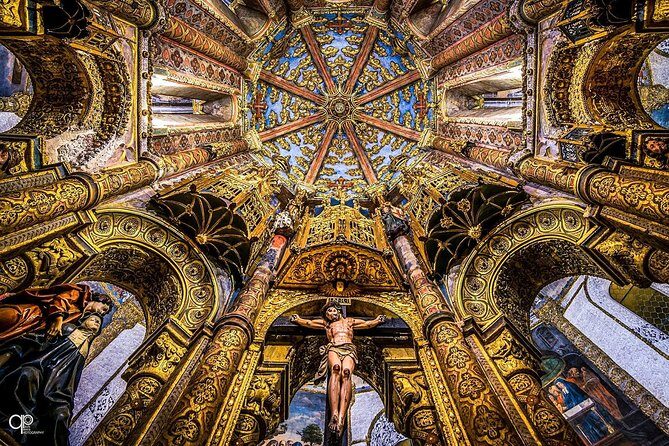
You enter through a portico created by sculptors João and Diogo de Castilho. Then your attention goes to the first church built by the Templar master. A key feature is the Charola, an octagonal oratorio—rare in form—where monks could walk around praying. This “designed for ritual movement” detail is the kind of thing you miss if you rush.
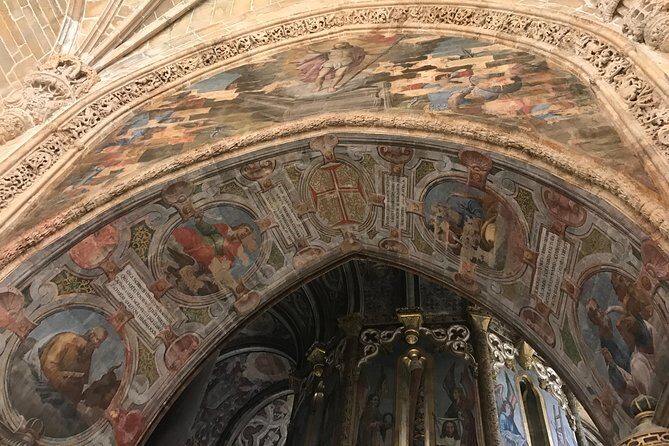
In the 16th century, King D. Manuel added magnified sculptures and decorative elements, including gilded carving. As Portugal’s maritime expansion grew, renovation continued in lush Manueline style, with one standout feature: the Window of the Chapter.
This is also one of those places where the Templar-to-Order-of-Christ transformation is more than a date. In 1312, the Templars had already transitioned into the Order of Christ, under the care of Infant D. Henrique (Henry the Navigator). The explanation tied here connects that heritage to Portugal’s overseas push—so when you see ornate Manueline work, you’re also seeing ambition.
And yes, UNESCO protection matters here. The complex is listed as a World Heritage site since 1983. You’re seeing multiple styles stacked in one spot—Romanesque, Gothic, Manueline, Renaissance, and Baroque—so the architecture becomes your timeline.
You’ll have about 2 hours. I’d use that time to slow down at the big architectural moments: the entry portico, the Charola area, and the Manueline chapter-window focus. Those are the elements most likely to turn scattered facts into something memorable.
One more note: if a site is unexpectedly closed due to local holidays, the day can still work. I’ve seen guides adjust the flow and keep the story moving even when a door doesn’t open. That’s when having a good guide becomes more important than the perfect checklist.
Synagogue of Tomar: symbolism you can actually spot
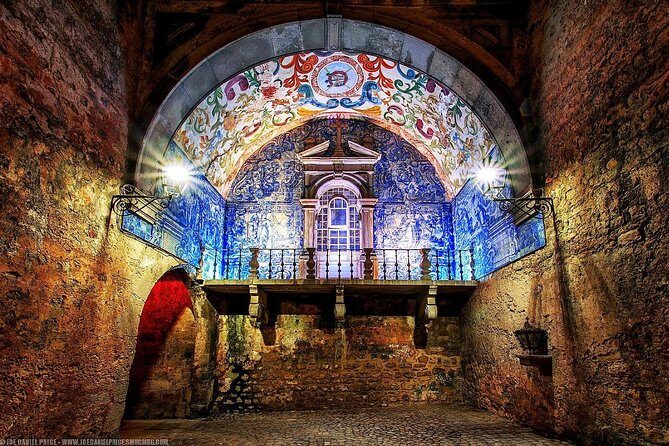
The Synagogue of Tomar is short in time—about 1 hour—but it carries a lot of meaning. It’s described as the oldest synagogue in Portugal, and the building shows that history in a very visual way.
Here’s what to look for:
- The roof is supported by four columns representing the mothers of Israel: Sarah, Rachel, Rebecca, and Leah.
- Those columns connect through 12 arches, symbolizing the 12 tribes of Israel.
- In the corners sit four terracotta jars, used as natural amplifiers.
That combination of symbols is the kind of architectural storytelling that makes you feel like you’re inside a language. It’s not just decoration. It’s meaning built into the structure.
This synagogue was commissioned by Infante D. Henrique (Henry the Navigator), and the Jewish community is described as financing much of the discoveries project. Then the political reality hits: in 1496, Jews were expelled from Portugal following King Dom Manuel I marrying the daughter of the Spanish Catholic Kings, and the synagogue was closed. Over the centuries, it was used for various purposes.
Later, it was bought by Dr. Samuel Schwarz, who donated it to the state with the condition that the Museu Luso-Hebraico would be installed there. Even if you only get the synagogue itself, the backstory helps explain why the site survived at all.
Admission here is listed as free, which makes it an especially strong value moment. It also balances the day: after big Christian monuments, this stop reminds you Portugal’s medieval story had more than one religious thread.
What you pay for: included items and the entrance-fee reality
This tour includes bottled water, a driver/guide, private transportation, and personal accidents insurance. The tour uses a mobile ticket, and it’s explicitly private (only your group participates).
Not included: entrance fees and lunch. Based on what’s listed for the stops, you’ll likely pay at Almourol Castle and Convento de Cristo, while the Church of Santa Maria dos Olivais and the Synagogue of Tomar are free.
So how do you judge value?
- You’re not paying for four paid entrances in the same way you would on a tour where every stop is ticketed.
- You are paying for private transport and guided context across four major landmarks, including a UNESCO site and Almourol’s dramatic river setting.
For most people, the “private” part is the big cost driver. If you love historic places but hate crowds, that’s where you’ll feel your money doing something.
The guide can make or break your experience
I’m a big believer that the guide is the engine on tours like this. These sites are packed with details—symbolic columns, changing orders, specific builders. You’ll enjoy the monuments more when someone explains what you’re seeing before you get lost in the walls.
From the guide names connected to this tour, you’ll often see strong picks like Diego, Pedro, Nono, Ruben, and Alex. The common thread in the feedback is storytelling quality and a strong grip on history, with guides willing to tailor the day to how your group moves.
If stairs and steep spots are an issue, tell the guide. One guide is described as being accommodating to avoid stairs, which suggests they take needs seriously rather than forcing everyone to follow a rigid route.
Who this tour is best for (and who should skip it)
This tour fits best if you want:
- A private day trip out of Lisbon with a guide doing the connecting-the-dots work
- UNESCO-level sightseeing plus a less-typical stop (the synagogue)
- A full historic day, not just a quick photo stop
It may be less ideal if you:
- Want a laid-back stroll. Tomar’s sites can involve stairs and steep climbs.
- Prefer unguided travel. You’ll likely miss the meaning behind the architecture if you don’t have someone explaining it.
If you’re traveling with teens or adults who like history, this is also a good fit because the story has clear turns: Templars to Order of Christ, then Portugal’s overseas ambition, plus the synagogue’s own survival and symbolism.
Should you book the Knights Templars Private Tour from Lisbon?
I’d book it if you want a guided day that’s both visually impressive and story-driven. Almourol gives you the dramatic Templar fortress setting, Convento de Cristo gives you the major UNESCO monument with layers of style, and the Synagogue of Tomar adds a side of Portuguese history most people don’t plan for.
I’d think twice if you’re sensitive to stairs or you want minimal walking. If that’s you, plan to communicate mobility needs early and be ready to adjust expectations.
One smart way to decide: check how much you care about guided context. If you like your history explained while you’re standing in front of the stone—this tour is built for that. If you’d rather read at home and move on, you might enjoy the region more at your own pace.
If you’re going to spend a day away from Lisbon, this is a strong use of it.
FAQ
How long is the Knights Templars private tour from Lisbon?
The tour runs about 8 hours.
Is hotel pickup and drop-off included?
Yes. Pickup is from your hotel (or another meeting point) and you’ll be dropped back in Lisbon.
Is the tour private?
Yes. It’s a private tour, and only your group participates.
What language is the tour offered in?
The tour is offered in English.
Are entrance fees included?
No. Entrance fees are not included (other entrance fees may apply), though the Church of Santa Maria dos Olivais and the Synagogue of Tomar are listed as free.
Is lunch included?
No. Lunch is not included.
What’s included in the price besides the guide?
Bottled water, a driver/guide, private transportation, and personal accidents insurance are included.
Is this tour suitable for travelers with limited mobility?
Most travelers can participate. One guide experience notes accommodating a need to avoid stairs, but you should expect walking around stone sites and possible steps depending on the route.