REVIEW · LISBON
Half Day Historical Walking Tour about the Slave Trade in Lisbon
Book on Viator →Operated by My Lisbon Tours · Bookable on Viator
Lisbon has a side most postcards ignore. This half-day walking tour connects Portugal’s Age of Discovery to the human cost of the transatlantic and earlier slavery systems, using real street-level locations in Lisbon. I love how the guide (Rui Fernandes) teaches with sources and clear explanations, and how the small group size keeps room for your questions. One thing to consider: the theme is heavy, and the walk can feel long if you’re not used to tough historical discussions.
You’ll also get a tour that’s practical, not just academic. The route takes you through neighborhoods and city spaces where enslaved people lived, worked, and moved through Lisbon’s commercial and religious networks. If you’re expecting a quick “highlights” stroll, this isn’t that. Plan for moderate walking and come ready to think, not just look.
In This Review
- Key Takeaways Before You Go
- Why This Lisbon Walk Hits Harder Than the Usual “Discovery” Story
- Meeting Point, Timing, and a Realistic Pace in Old Lisbon
- From Largo do Chafariz de Dentro to Alfama: Starting With Context
- Campo das Cebolas: A Future Memorial Anchors the Present
- Praca do Comercio (Terreiro do Paco): Where Colonial Trade Becomes Visible
- Baixa, Rossio & Restauradores: Daily Life and the Human Scale
- Igreja De S Domingos: Religion, Institutions, and Complicated Power
- Largo do Carmo: Linking Lisbon’s Revolutionary Moments to Colonial Decline
- Price and What You’re Really Paying For
- Who This Tour Suits (and Who Might Want a Different One)
- Should You Book the Slave Trade Walking Tour in Lisbon?
- FAQ
- FAQ
- How long is the Half Day Historical Walking Tour about the Slave Trade in Lisbon?
- How much does the tour cost?
- Where does the tour start and where does it end?
- What language is the tour offered in?
- How big is the group?
- Is the walking easy or hard?
- Are tickets mobile?
- What is included in the price?
- What is not included?
- What should I know about cancellation?
Key Takeaways Before You Go
- Small group (max 8) means more Q&A and a calmer pace through tight old streets
- Rui Fernandes’ preparation comes through in his factual, balanced handling of sensitive history
- Place-based history: you learn by standing at the very sites tied to Lisbon’s trade and institutions
- Religion + commerce + politics are linked in a way that actually explains how slavery worked
- Moderate walking with scheduled breaks, best done with comfortable shoes
Why This Lisbon Walk Hits Harder Than the Usual “Discovery” Story
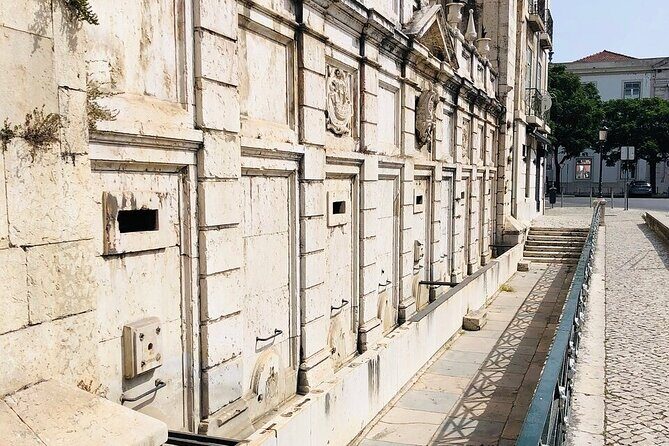
Portugal’s maritime story is often told like it’s all sails, maps, and clever ideas. This tour treats that era as what it was: a global system that helped make slavery profitable and, in many places, socially normalized. You’ll learn how Portuguese involvement grew in the mid-15th century and how Lisbon’s role fit into wider Atlantic networks.
What I like most is the way the walk connects big history to city geography. You’re not stuck in a classroom. You’re moving through Alfama, Baixa, and the downtown areas where power and trade concentrated. That matters because slavery wasn’t an abstract event—it was embedded in institutions, laws, religion, and day-to-day economic life.
And yes, the subject is emotional. But the tone is grounded and respectful. Rui doesn’t hand-wave or soften the facts. That makes the experience feel honest, not performative.
You can also read our reviews of more walking tours in Lisbon


Meeting Point, Timing, and a Realistic Pace in Old Lisbon

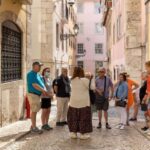
You meet at Largo do Chafariz de Dentro 30, 1100-605 Lisboa. The tour runs about 3 hours, designed as a half-day walk with short stops and built-in switching from site to site. The group is capped at 8 people, so you won’t be trying to hear over a crowd.
You’ll end at Largo do Carmo, 1200-092 Lisboa. That’s useful because it gives you a “natural finish” in central Lisbon. If you like to keep your day efficient, you can often plan your next activity without backtracking across town.
This isn’t described as an ultra-straight sprint. It’s best for people with moderate physical fitness. You’ll want comfy shoes, since old streets and uneven sidewalks are part of Lisbon. If you have walking difficulties, it’s not the best match. The tour also notes that it’s near public transportation, which is a big plus in a city full of hills and tight routes.
From Largo do Chafariz de Dentro to Alfama: Starting With Context
The tour opens at Largo do Chafariz de Dentro, where you get an introduction that sets the frame. The goal is to understand slavery not as one single event, but as a process—shaped by earlier forms of enslavement and later expanded by Atlantic trade.
Then you head into Alfama, Lisbon’s oldest neighborhood. This is where the tour feels especially “Lisbon,” because Alfama’s streets give you a sense of continuity—centuries of people passing through the same urban space. You’ll learn that different civilizations that settled in Portugal—from the Romans to the Moors—had their own systems that involved enslaved people. From there, the tour moves toward how Portuguese participation developed and how the Atlantic Slave Trade became part of Portugal’s power and wealth-building.
This section works well if you want more than a single headline story. It explains the longer buildup: how slavery’s presence and justifications didn’t appear out of nowhere.
Campo das Cebolas: A Future Memorial Anchors the Present
Next comes Campo das Cebolas. This stop focuses on the site where a monument to the victims of the Slave Trade is planned for the future. That simple idea—history isn’t only buried in archives—lands in a powerful way.
It also gives the tour a practical emotional rhythm. After discussing systems and institutions, you’re reminded that memory and accountability still matter today. The emphasis isn’t just on the past as tragedy. It’s also about what the city is trying to acknowledge and rectify now.
You’ll likely find this moment a good time to slow down, read the space around you, and absorb the fact that public history is still under construction.
Praca do Comercio (Terreiro do Paco): Where Colonial Trade Becomes Visible
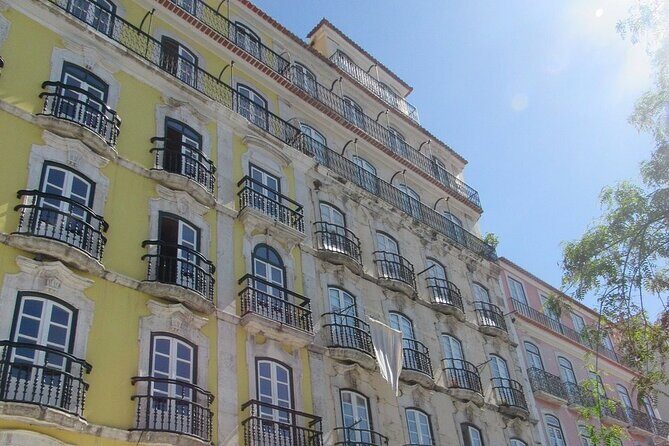
At Praca do Comercio (Terreiro do Paco), you move into the historic commercial heart of Lisbon. This is a key stop for understanding the mechanics: the slave trade wasn’t only about ships and voyages. It was tied into the broader colonial trade that ran through Lisbon’s economy.
Standing in a place that once concentrated commerce helps you connect theory to geography. You begin to see how the city’s wealth depended on global exploitation—and how enslaved people were treated as part of the “business model,” not as human beings outside the system.
A drawback to know: because this is a busy, public area, you’ll want to pay attention early and keep your questions for moments when Rui can fully respond. It’s not a quiet museum lane; it’s a living city space.
You can also read our reviews of more historical tours in Lisbon




Baixa, Rossio & Restauradores: Daily Life and the Human Scale
The tour then moves through Baixa, Rossio & Restauradores. This is where the story shifts toward the day-to-day reality of enslaved captives in Lisbon.
You’ll learn about how people from Africa and around the globe lived in Lisbon under slavery conditions shaped by Lisbon’s social and economic structure. This part is valuable because it doesn’t treat slavery as only something that happened on distant coasts. It shows how it could touch everyday spaces—work routines, institutions, and city life.
One reason this gets strong praise is pacing. Stops are planned, and the walk doesn’t feel like one long lecture march. The format helps you digest heavy material without losing the thread.
If you like tours that are fact-forward and respectful, you’ll probably appreciate that Rui’s approach stays balanced. He’s not trying to shock you; he’s trying to explain how the system worked and why it lasted.
Igreja De S Domingos: Religion, Institutions, and Complicated Power
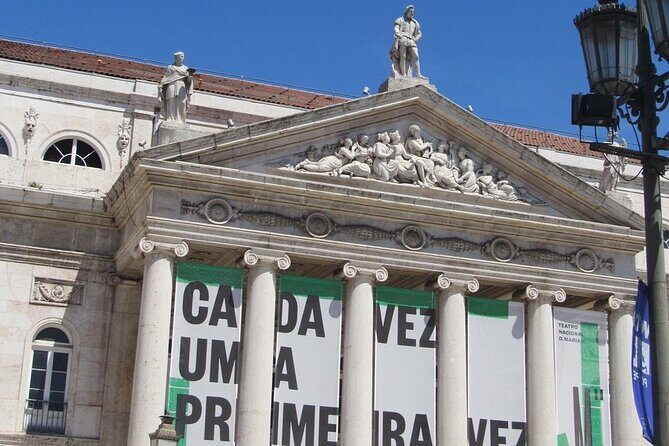
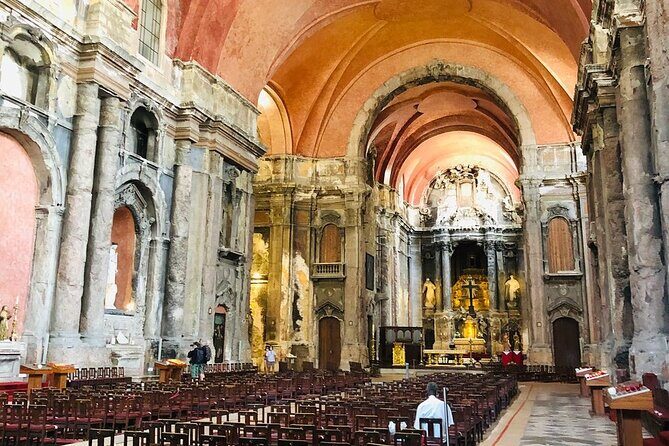
At Igreja de S Domingos, you focus on how Lisbon’s enslaved captives interacted with the city’s religious organizations. This isn’t presented as simple good-versus-bad. Instead, you learn how religion and power often coexisted with—rather than automatically opposed—systems of slavery.
That angle is especially important because it challenges the comforting myth that cruelty was just “someone else’s problem.” If religious institutions were part of the environment, then the cultural and institutional pathways mattered.
You might find this stop emotionally tough, but it’s also one of the most clarifying parts of the tour. It helps you understand why ideas about race and hierarchy didn’t just come from politics or economics. They were reinforced culturally too.
Largo do Carmo: Linking Lisbon’s Revolutionary Moments to Colonial Decline
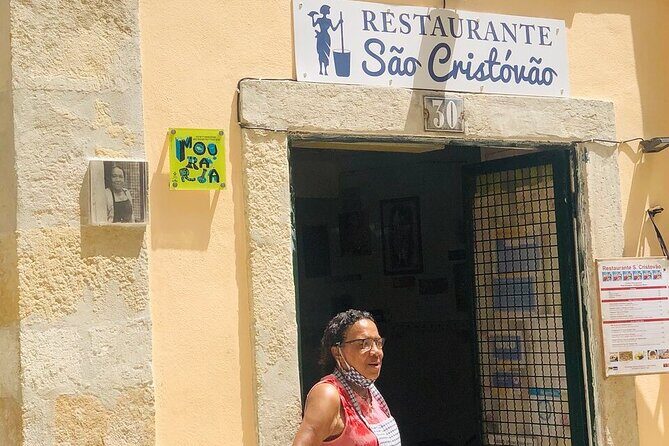
The walk ends at Largo do Carmo, tied to the 25th of April coup and the later demise of Portugal’s colonial empire in the mid-1970s. This stop gives the tour a time-arc: you start with earlier systems and Atlantic expansion, then you end with a modern political break.
What I like about ending here is that it stops the story from feeling trapped in the past. You’re shown how Lisbon’s colonial era didn’t end quietly. It changed through political upheaval, and that shift helps explain why the legacy still shows up in modern debates about identity, memory, and history.
Price and What You’re Really Paying For
The price is $39.78 per person for about 3 hours with a professional guide, and local taxes are included. Food and drinks are not included. Hotel pickup and drop-off aren’t included either, which means you’ll start and end at the street locations on the route.
Is it good value? For Lisbon, yes—especially because the guide-to-group ratio is strong. A max of 8 people means you get more time with Rui Fernandes and a better chance to ask follow-up questions. Several reviews also mention visuals and historical documents, which suggests the tour isn’t only spoken story. That combination—small group + prepared teaching + a theme many tours skip—makes the price feel fair.
You’ll also save time. Instead of piecing together fragile bits from different places, the walk gives you a single coherent narrative across multiple parts of town.
Who This Tour Suits (and Who Might Want a Different One)
This is a great fit if you want:
- a thinking tour, not a postcard tour
- history connected to actual neighborhoods
- the chance to ask questions and get straight, factual answers
- a small-group experience with Rui Fernandes
It may not be ideal if:
- you want only light or scenic walking
- you struggle with mobility and uneven old-town streets
- you’re not ready for the emotional weight of slavery and its legacy
If you’re traveling with teenagers, this can work well. Some families specifically mention that their kids stayed focused, which is a good sign that Rui explains with clarity and doesn’t talk down.
Should You Book the Slave Trade Walking Tour in Lisbon?
If you’re serious about understanding Lisbon beyond the usual “Age of Discovery” glow, I’d book it. The tour’s biggest strength is that it takes the topic seriously without turning it into a vague lecture. You move through Lisbon, and the city does part of the teaching.
Choose this tour if you want a respectful, factual guide and a route that links slavery to religion, commerce, and modern memory. If you’re sensitive to heavy historical content, plan your day with care and maybe pair it with something soothing afterward. But don’t skip it just because the subject is hard.
FAQ
FAQ
How long is the Half Day Historical Walking Tour about the Slave Trade in Lisbon?
It lasts about 3 hours.
How much does the tour cost?
The price is $39.78 per person.
Where does the tour start and where does it end?
You start at Largo do Chafariz de Dentro 30, 1100-605 Lisboa and end at Largo do Carmo, 1200-092 Lisboa.
What language is the tour offered in?
The tour is offered in English.
How big is the group?
The tour has a maximum of 8 travelers.
Is the walking easy or hard?
It’s listed as moderate physical fitness and is not recommended for travelers with walking difficulties.
Are tickets mobile?
Yes. You get a mobile ticket.
What is included in the price?
You get a professional guide and local taxes.
What is not included?
It does not include food and drinks, and it does not include hotel pickup and drop-off.
What should I know about cancellation?
You can cancel for a full refund up to 24 hours in advance of the experience start time.