REVIEW · LISBON
From Lisbon: Alcobaça & Óbidos Self-Guided Tour
Book on GetYourGuide →Operated by Gray Line Portugal · Bookable on GetYourGuide
You get medieval Portugal in one packed day. This self-guided tour is interesting because it mixes a UNESCO heavyweight (Alcobaça) with the candy-colored, walled streets of Óbidos, and you call the pace with an interactive audio guide and a map.
I like the way the itinerary gives you focused time at the key sights: Alcobaça’s big monastery complex, then Óbidos’ church-and-castle loop at your own speed. One thing to consider, though: the total day is about 6 hours, and that means timing can feel tight if you want a slow stroll everywhere.
In This Review
- Key highlights worth knowing
- Lisbon to Alcobaça and Óbidos in a single, self-guided loop
- Alcobaça in about one hour: UNESCO monastery and the Inês de Castro connection
- The monastery that started in 1178
- The church as a burial place
- Practical approach for your hour
- The Óbidos walls: self-guided wandering with the right kind of structure
- Why Óbidos feels like history you can walk through
- What to aim for once you arrive
- Timing and transport: the 6-hour math (and why it can feel rushed)
- A real-world consideration
- Comfort on the coach
- Using the audio guide so you actually enjoy it
- Price and value: is $50 a good deal for this format?
- Why it can feel like a good deal
- When it might not be a great match
- Who this Lisbon-area tour suits best (and who should skip it)
- Quick practical checklist before you go
- Should you book the Lisbon to Alcobaça & Óbidos self-guided tour?
- FAQ
- Where does this tour start and end?
- How long is the tour?
- How much time do I get in Alcobaça and Óbidos?
- Is the tour completely self-guided?
- What languages are available for the audio guide?
- Can I cancel, and do I need to pay immediately?
Key highlights worth knowing
- UNESCO Alcobaça: a Cistercian monastery whose construction began in 1178 and later became the monks’ home in 1223
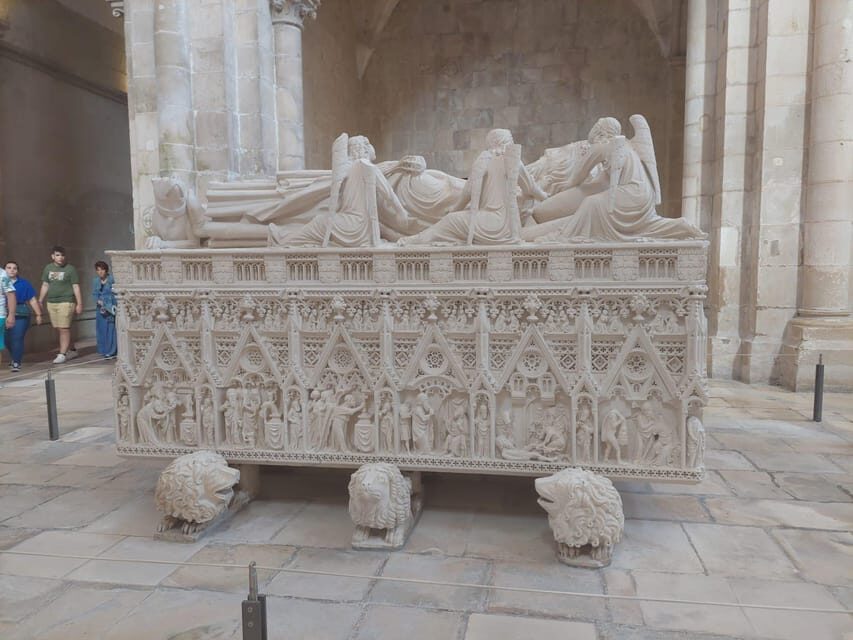
- Inês de Castro tombs: a major draw inside the monastery church area
- Óbidos medieval walls: explore at your pace with a built-in audio guide
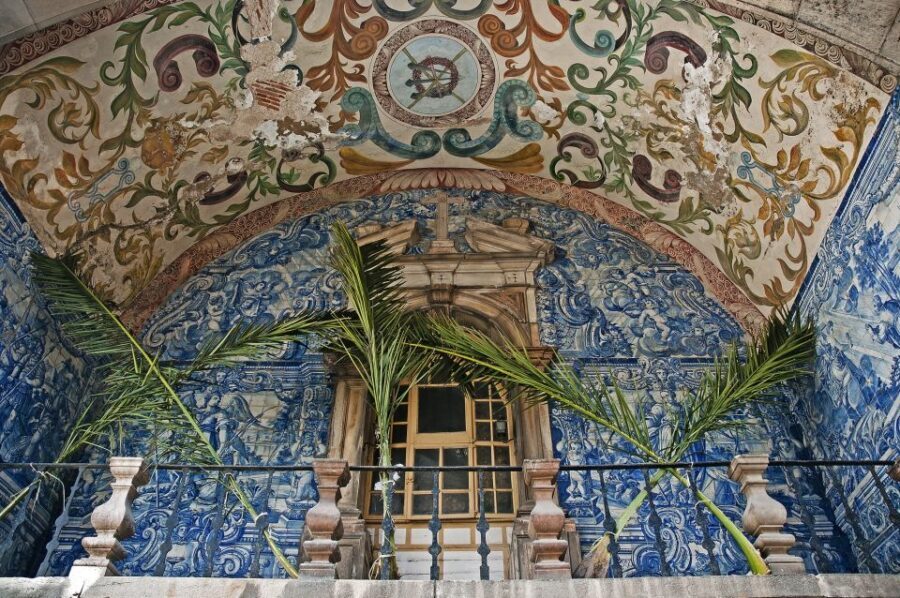
- Church tile interiors: multiple churches in Óbidos are known for wall coverings with religious scenes
- Heaven sweets time: planned free time in Alcobaça to try the local specialty
- Tight schedule reality: you get only about an hour in Alcobaça and about two in Óbidos, so plan your must-sees first
Lisbon to Alcobaça and Óbidos in a single, self-guided loop
This is a straightforward day trip format. You start in Lisbon at Terminal Marques Pombal Square, down by the bottom of Park Eduardo VII, then you head out by coach. The ride is about 75 minutes to Alcobaça, with a short transfer later to Óbidos.
The big idea here is autonomy. You’re not relying on a group pace, and you’re not waiting around for guided narration at every corner. Instead, you have an interactive audio guide you can follow as you walk, plus a map to keep you oriented in the right order.
That autonomy is exactly what makes this trip a good fit for people who like to linger. It’s also the reason you need to be a little disciplined, because the clock is on your side only up to a point. With limited sightseeing hours, you’ll get better results if you decide up front which sights you really care about most.
You can also read our reviews of more guided tours in Lisbon



Alcobaça in about one hour: UNESCO monastery and the Inês de Castro connection
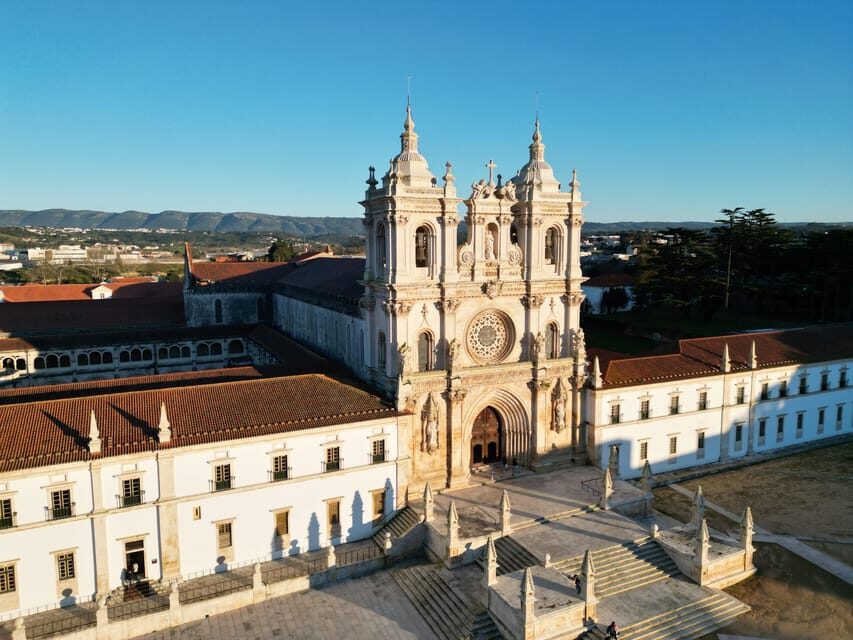
Alcobaça is the UNESCO anchor of this trip, and it’s a smart choice for a short visit. Even with just about one hour on the ground, the monastery complex packs in the kind of landmarks that make you stop mid-walk and say, OK, I get why this is famous.
Here’s what makes Alcobaça special from a “where should I look first?” point of view:
The monastery that started in 1178
The Monastery of Alcobaça (officially the Royal Monastery of Santa Maria de Alcobaça) traces its origins to King D. Afonso Henriques’ order in 1178, with the monks taking occupation in 1223. It’s considered one of the largest and best-preserved Cistercian complexes of its order, so even a quick visit feels meaningful.
The church as a burial place
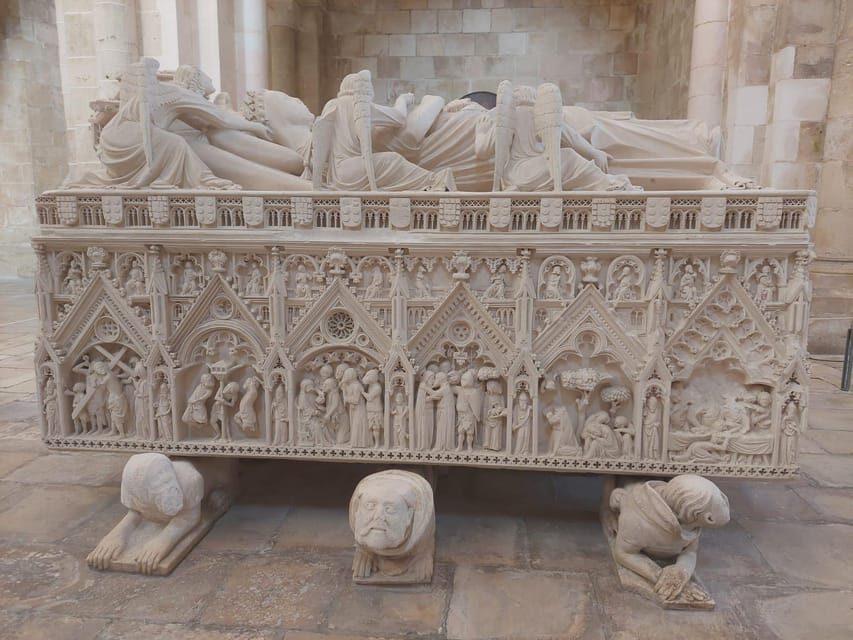
King D. Pedro selected the monastery church as the burial site for himself and for Inês de Castro. If you only have time to focus on one storyline here, make it that one. Their tombs are part of what you can visit, and it ties a lot of the monastery’s importance to the later history of Portugal.
Practical approach for your hour
Since you only get about an hour, don’t plan to “see everything.” Instead:
- Start with the burial-site story (D. Pedro and Inês de Castro) so you catch the main payoff.
- Then do a quick circuit for the big architectural impressions—this is one of those places where standing still for a minute beats rushing through doors.
- If you’re a fan of dramatic literary history, this is where the real-life Romeo and Juliet connection fits into the timeline.
And yes, you’ll get free time to taste local sweets during the Alcobaça stretch. Use that time to recharge with something genuinely local, but keep an eye on the clock so you don’t cut into your Óbidos walking time later.
You can also read our reviews of more tours and experiences in Lisbon




The Óbidos walls: self-guided wandering with the right kind of structure
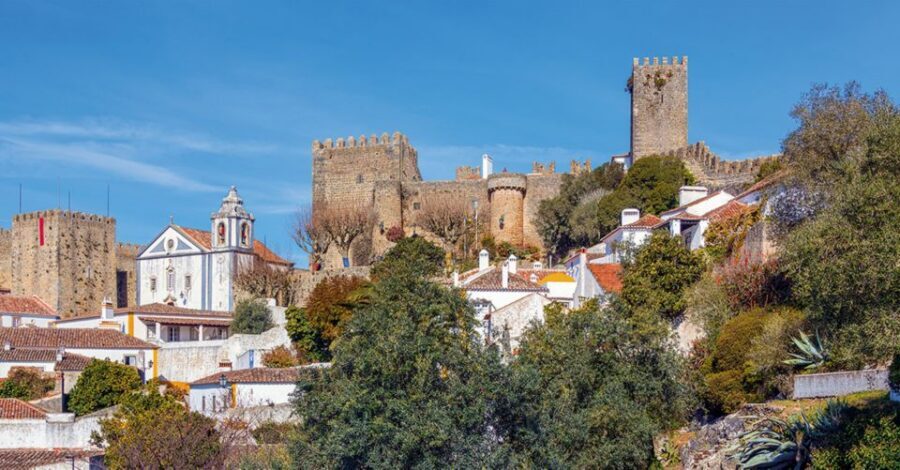
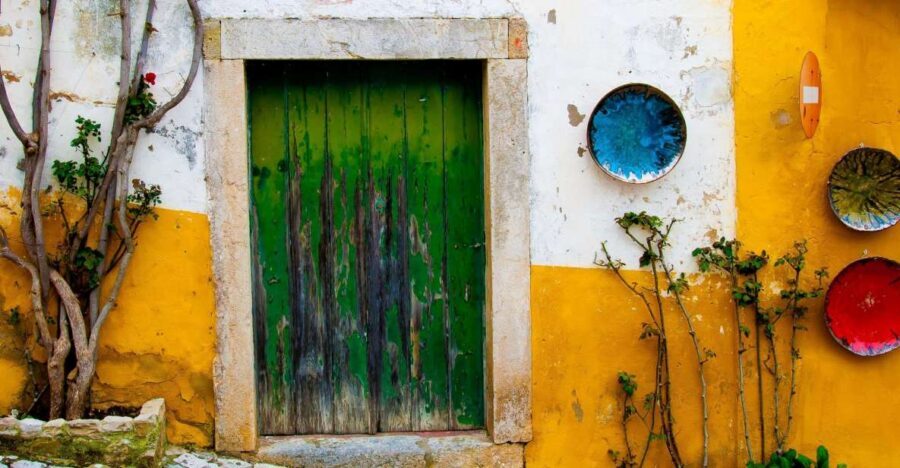
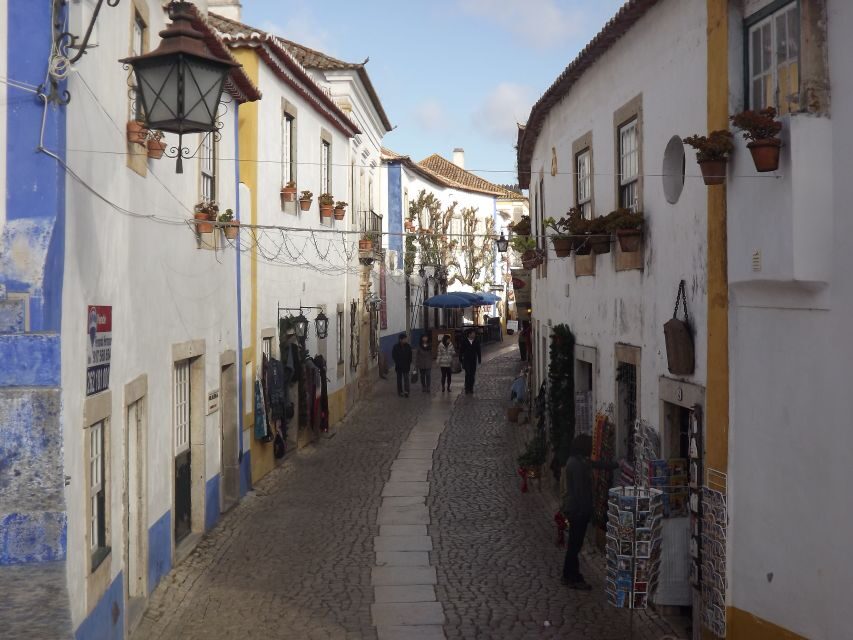
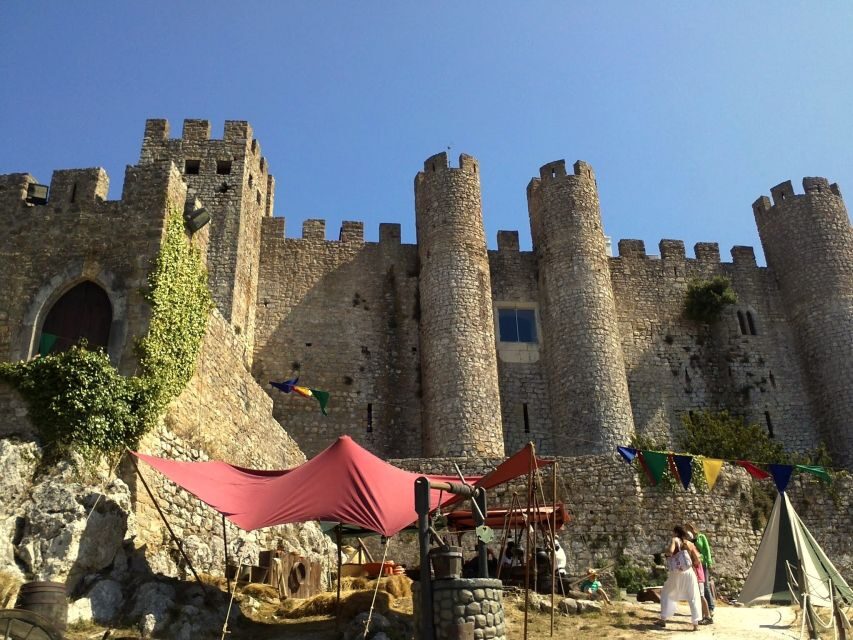
Óbidos works well as the second stop because it’s built for wandering. You’re walking through medieval walls and past clustered churches, colorful houses, and castle views. You’re not searching for one museum after another—you’re absorbing the town.
You’ll have about two hours in Óbidos, and that’s enough time if you pick a route and keep moving. The audio guide helps you do that without feeling like you’re stuck in a rigid group tour.
Why Óbidos feels like history you can walk through
Óbidos’ past runs deep. It was likely founded by Celts in 308 BC, and later connected to the Roman city of Eburobrittium. After that came periods of barbarian occupation and Moorish control, then the Christian conquest by Afonso I.
Then, in the 18th century, Óbidos had royal status as a summer place. King John V reportedly stayed for eight years on doctors’ advice, tied to the idea of bathing in Caldas da Rainha for arthritis and obesity. It’s not the kind of detail you’d guess from postcard streets—but it adds a human layer to why the town mattered beyond just stone walls.
What to aim for once you arrive
Even though it’s self-guided, the audio guide makes it easier to hit the highlights. These are the sights it helps you connect with:
- Town Gate / Our Lady of Sorrow: Look for an inscription tied to the 17th century and John IV, with the text about the Virgin being conceived without original sin. The town gate also connects you to a religious tradition that still shapes local identity.
- Passion Christ tile scenes: In the same area, you’ll see 18th century tiles that depict scenes from the Passion of Christ. Tiles are a big deal in Portugal, and here you can actually see the storytelling style.
- St. Peter’s Church: Medieval foundation with an original portal, later renovated in the second half of the 16th century. Inside you’ll find a baroque-style wooden altarpiece from the era of King John V.
- Pousada of Óbidos: This is especially fun if you like historic buildings repurposed well. It was the first Portuguese pousada built from an older historic structure, located in what used to be the Paço do Alcaide. Notice the Manueline windows and the doorway with an ornate lintel formed like intertwined tree-trunks.
- St. James Church: A royal-family favorite over the centuries; the church was founded by King Sancho.
- St. Mary’s Church: Built on the exact site of an older Visigoth temple, later turned into a mosque. After the Christian conquest led by Afonso I, it became a Catholic church. Inside, the tile collection and the tomb of D. João de Noronha (16th century mayor of Óbidos) is attributed to sculptor Nicolau Chanterene.
That’s a lot of detail for a self-paced walk, so don’t try to memorize every date. Instead, let the audio guide give you context as you see each place, then just enjoy the streets between stops.
Timing and transport: the 6-hour math (and why it can feel rushed)
This trip is priced as a half-day plan, and it behaves like one. The schedule is approximately:
- Lisbon to Alcobaça by coach: about 75 minutes
- Alcobaça: about 1 hour of visit time
- Transfer to Óbidos: about 45 minutes
- Óbidos: about 2 hours of self-guided exploration
- Return to Lisbon: about 1 hour
So, yes—your walking time is meaningful, but it’s not huge. This matters because it shapes what kind of experience you’ll have.
A real-world consideration
There’s a valid risk that churches and quieter corners won’t be at full “open and welcoming” mode if your arrival is late or you get delayed. With limited time in town, you can end up spending more of your Óbidos window on storefronts and cafés if you can’t access interiors you hoped to see.
If you’re the type who wants to sit inside and take your time, you’ll need to prioritize. Plan one or two churches to be your must-visits, then let the rest be bonus if timing allows.
Comfort on the coach
The transportation is by bus/coach, and at least one past experience flagged discomfort with the vehicle. This doesn’t mean it’ll be terrible for you—but it’s enough of a hint to bring what you need for a long-ish ride. Comfortable shoes matter for the walking, but a comfortable posture matters for the ride too.
Using the audio guide so you actually enjoy it
The audio guide is included and available in multiple languages: Spanish, Chinese, English, French, German, Italian, and Portuguese. The key is how you use it, not just that it exists.
Here’s a simple way to make it work:
- Start the guide as soon as you’re oriented in the area, so you’re not listening while hunting for the next stop.
- Treat it like a set of short “chapters.” Pause briefly at the places it points to, then walk away and enjoy the street views between.
- Don’t try to catch every historical detail. The best moments come when the dates and legends help you understand what you’re seeing right now.
The interactive nature also helps if you’re the kind of traveler who hates reading small print. You can focus on the monastery stonework and the tile stories in Óbidos without constantly stopping to search.
Price and value: is $50 a good deal for this format?
At about $50 per person for a roughly 6-hour day, the value depends on your travel style.
Why it can feel like a good deal
- You get two major stops—Alcobaça and Óbidos—without needing your own transportation planning from Lisbon.
- The audio guide and map are included, so you’re not paying extra for tools to navigate.
- For the UNESCO draw alone (Alcobaça), the time allocation can be worth it if you’re focused on key sights rather than trying to do everything.
When it might not be a great match
If you’re hoping for a slow, deep exploration day with lots of interior time, the schedule can feel short. You also need to be realistic: with only about two hours in Óbidos, it’s not a “stay forever” kind of town day. It’s a “get the essentials and walk the walls” kind of day.
Overall, it’s good value for people who want structure without losing freedom.
Who this Lisbon-area tour suits best (and who should skip it)
This tour is best for you if:
- You like self-guided travel but still want a clear path so you don’t waste time.
- You want a quick UNESCO hit plus a classic medieval town day.
- You’re comfortable choosing priorities and moving between them.
You might want to skip it if:
- You hate tight schedules and need long, relaxed stops.
- You’re mainly interested in many church interiors and worry about arrival timing.
- You’re not comfortable with coach transport and the idea of a compressed day.
If you’re traveling as a couple or solo, this kind of autonomy is especially rewarding. Families can enjoy it too, but the timing will depend on kids’ walking stamina and attention to audio pacing.
Quick practical checklist before you go

You’ll do better with a few basics:
- Comfortable shoes
- Sunglasses and a sun hat
- A camera (you’ll want it in Óbidos)
- Keep an eye on the fact that pets aren’t allowed
Also note: there’s no hotel pickup or drop-off listed. You’ll meet at Terminal Marques Pombal Square, at the bottom of Park Eduardo VII, and you’ll return to that same meeting point.
Should you book the Lisbon to Alcobaça & Óbidos self-guided tour?
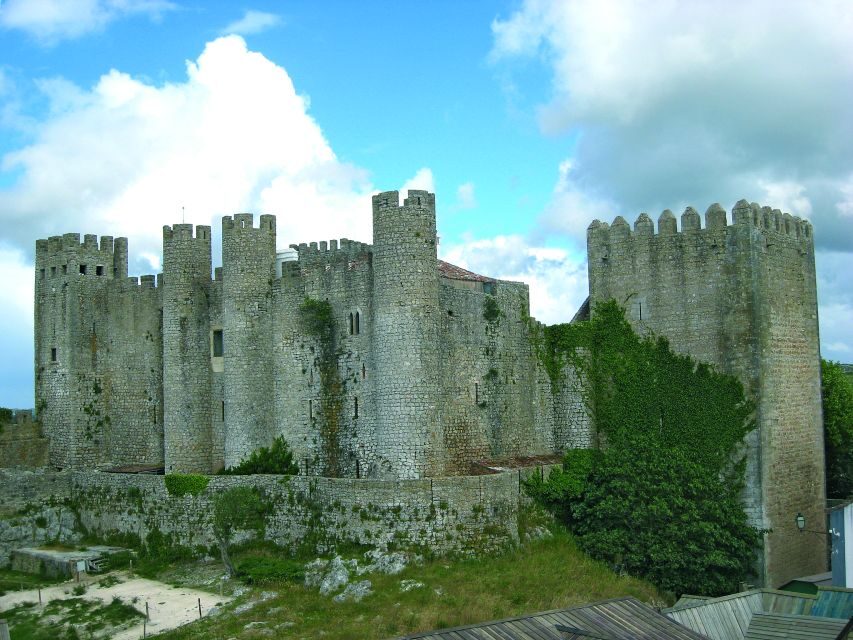
Book it if you want a structured, easy day trip that still lets you roam. The UNESCO monastery in Alcobaça gives you the big historical centerpiece, and Óbidos delivers the postcard streetscape plus specific church-and-tile stops you can follow with the audio guide. At around $50 for two major towns, it’s a solid use of a half day.
Skip it if you want a long, unhurried visit with lots of interior time and you’d be annoyed by a tight schedule. With limited time in each place, you’ll enjoy it most if you go in with a plan for what you absolutely don’t want to miss.
FAQ
Where does this tour start and end?
The tour starts at Terminal Marques Pombal Square, at the bottom of Park Eduard VII, and it ends back at the same meeting point.
How long is the tour?
The duration is listed as 6 hours (approximate).
How much time do I get in Alcobaça and Óbidos?
Itinerary timing is about 1 hour in Alcobaça and about 2 hours in Óbidos for self-guided exploration.
Is the tour completely self-guided?
Yes. You’ll use an interactive audio guide and a map, and you explore the stops at your own pace.
What languages are available for the audio guide?
The audio guide is available in Spanish, Chinese, English, French, German, Italian, and Portuguese.
Can I cancel, and do I need to pay immediately?
It offers free cancellation up to 24 hours in advance for a full refund, and it also offers reserve now & pay later.