REVIEW · LISBON
Fatima, Batalha, Nazare and Obidos Private Tour
Book on Viator →Operated by walkborder · Bookable on Viator
A private day tour can feel like the fast lane. This one strings together four big-name stops with enough time to actually look, not just pose for photos. You get easy hotel pickup and drop-off, plus free in-vehicle Wi-Fi and fresh water to keep the day from turning into a hydration math problem.
Two things I really like: the focus on major sites (Fatima, Batalha, Óbidos) without rushing, and the extra texture in between with Nazaré’s streets and stories. One drawback to keep in mind is simple: it is a full 8-hour day on the move, and Batalha’s admission is not included.
In This Review
- Key reasons this tour is popular
- Private 8-hour value: four stops without the group chaos
- Price and logistics: what $305.56 per person really buys
- Fatima Basilica and the Sanctuary: where optional mass changes the feel
- Batalha Monastery: late Gothic meets Manueline storytelling
- Nazaré: churches, traditional houses, and the wave that put it on the map
- Óbidos old town: UNESCO walls, medieval streets, and ginja tasting
- Making the day smoother: timing, comfort, and your guide matters
- Who this tour fits best (and who might want something else)
- Should you book the Fatima, Batalha, Nazare and Óbidos private tour?
- FAQ
- Is this tour private?
- How long is the Fatima, Batalha, Nazare and Óbidos tour?
- Do I get hotel pickup and drop-off?
- Is Wi-Fi included during the tour?
- Is ginja tasting included in Óbidos?
- Do I need to pay for entrance tickets at each stop?
- Can I cancel for a full refund?
Key reasons this tour is popular
- Private means your pace: only your party, traveling with a driver/guide.
- Hotel pickup and drop-off: you skip the “where do we meet?” scramble.
- Free in-vehicle Wi-Fi: useful for maps, messaging, and sharing the day instantly.
- Ginja tasting in Óbidos: a small local ritual you don’t have to hunt down.
- Church-and-old-town mix: Sanctuary of Fatima, Monastery of Batalha, Nazaré, and UNESCO Óbidos in one run.
Private 8-hour value: four stops without the group chaos
This is built for people who want variety without juggling multiple tickets, multiple buses, and multiple schedules. You leave Lisbon and spend the day moving through very different parts of Portugal: pilgrimage sites, dramatic Gothic/Manueline stonework, coastal town texture, and a medieval walled town you can wander like it’s still 500 years ago.
The private format is the real selling point. Instead of getting dragged along with a big bus group, you travel with your own driver/guide and only your own group onboard. That matters in places like Fatima and Óbidos, where timing and foot traffic can make or break your experience.
I also like that the tour is set up with comfort basics: fresh water in the car and free Wi-Fi on board. When you’re doing four stops in one day, it’s the little stress reducers that help you stay calm and observant.
You can also read our reviews of more private tours in Lisbon



Price and logistics: what $305.56 per person really buys
At about $305.56 per person for roughly 8 hours, this is not a budget day trip. But when you price out private transport plus a driver/guide plus the targeted stops, the math starts to make sense—especially if you’re traveling as a small group that wants control.
A couple of details help you judge value:
- You get hotel pickup and drop-off, and that saves real time if you don’t want to wrangle trains or taxis mid-day.
- Mobile ticket support makes day-of entry easier.
- Group discounts are offered, which can soften the cost if you’re booking with others.
- Not everything is included the same way: Fatima and Nazaré stops note free admission, Óbidos is also free entry, but Batalha’s admission is not included. So budget a bit for that one.
One more planning note: the tour is commonly booked around 63 days in advance on average. If your dates are fixed, don’t treat that as a suggestion.
Fatima Basilica and the Sanctuary: where optional mass changes the feel
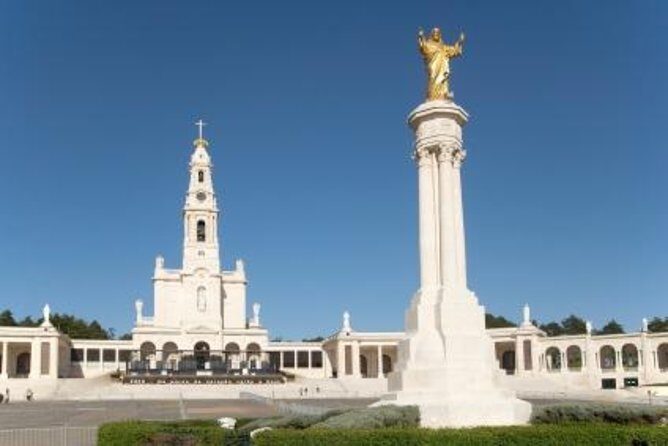
You start with Fatima, about an hour from Lisbon by drive. This isn’t a quick photo stop. You arrive at the Sanctuary of Fatima and then move through key points where you can either attend Mass (optional) or focus on the main chapels and basilicas.
Here’s what you’re looking at, and why it matters:
- The main Basilica of Our Lady of the Rosary (built in 1928 in Neo Baroque style) is where the story becomes personal and grounded. It houses the tombs of the children and also the tomb of Sister Lucia, who passed away in 2005.
- The Chapel of the Apparitions is central to the experience—small and precise in layout, and important for understanding what pilgrims come for.
- The tour also includes the first chapel built after the apparitions, noted for its location more than its size or grandeur.
- You’ll also see the Basilica of Santissima Trindade (built 2007), with seating for more than 8,000 people and a footprint of 40,000 m². It was designed by the Greek architect Alexandros Tombazis, and it feels modern and imposing compared with the older parts of the Sanctuary.
Practical tip: churches and sanctuaries can be emotionally intense and crowded at certain moments. The private format helps you avoid feeling herded. If you choose to attend Mass, expect your pacing to shift slightly since you’re tying the schedule to the service.
Batalha Monastery: late Gothic meets Manueline storytelling
Next up is the Monastery of Batalha, a stop that feels different the moment you see the stone. The tour describes it as a landmark from Portugal’s period of independence reaffirmation from Castile. In other words, this place isn’t just pretty architecture—it’s tied to Portuguese identity.
What you’ll notice with the right framing:
- It’s a late-Gothic building, shaped by multiple masters over time.
- Names get built into the architecture story: Afonso Domingues (founder/master), then Huguet, and finishing with Mateus Fernandes, linked to the Manueline style.
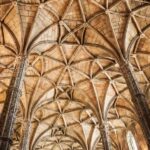
- You’ll pass major spaces like the Founder’s Chapel and the Imperfect Chapels.
- The monastery also works as a kind of royal pantheon, described as the burial place for kings and princes, influenced by Dominican friars and the idea of the Celestial City.
The only real downside for your planning is financial rather than cultural: Batalha admission is not included. So bring a little extra budget or plan to handle the ticket on the spot.
This is the stop that’s often worth slowing down for. The tour pacing keeps it smooth, but you’ll get more out of it if you take a few minutes to look up at the details instead of just walking through.
Nazaré: churches, traditional houses, and the wave that put it on the map
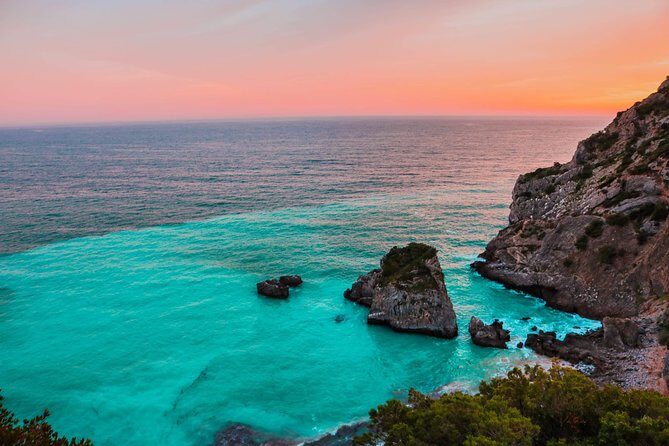
After Batalha, you shift into Nazaré, and the vibe changes quickly. Nazaré is described as a pictorial village with an intense past, shown in its architectural heritage—traditional houses and many churches create a very walkable, story-heavy feel.
What you’ll connect with here:
- Nazaré is noted as the first place of worship in Portugal, so it’s not just a seaside town with a good marketing team.
- The town gained global fame through the phenomenon of the Nazaré Cannon—massive waves made Nazaré famous worldwide.
- A headline detail: in 2013, American surfer McNamara reportedly broke the world record by surfing a wave about 30 meters high.
- You’ll also hear about the local image of the seven skirts worn by the wives from Nazaré, proudly shown to visitors.
This stop works well if you want a break from big monuments. You can treat the hour here as part sightseeing, part people-watching, and part letting the coastal atmosphere reset your brain after the monastery stonework.



Óbidos old town: UNESCO walls, medieval streets, and ginja tasting
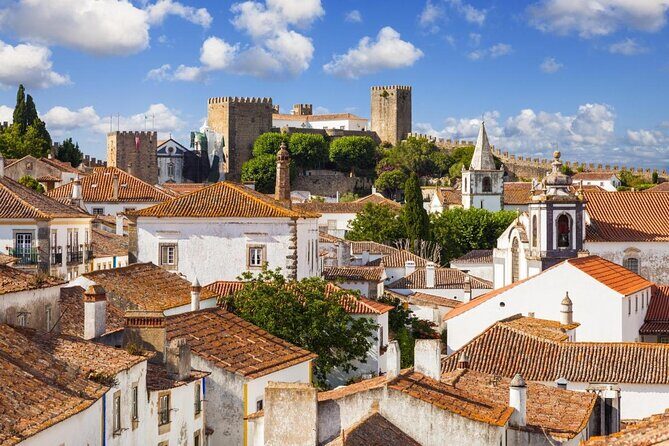
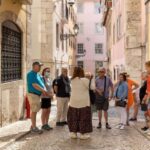
Óbidos is the walking portion of the day that feels like a movie set—without needing you to pretend. The tour takes you through narrow streets and traditional shops tucked into white-painted old houses, plus the sense of medieval life built into the town walls.
Why it’s more than scenic:
- Óbidos is listed as a UNESCO world heritage site.
- There’s a royal backstory: Óbidos was used as a wedding gift from D. Dinis to D. Isabel. It later became part of the Casa das Rainhas (the queens’ house), remaining until 1834, and many Portuguese queens passed through, leaving benefits.
- D. Catarina is tied to building an aqueduct and fountains, another way the town’s identity connects to daily life, not just castles and coats of arms.
And yes, you get the tasting. The tour includes a ginja tasting in Óbidos, which is a fun, easy way to bring the day’s flavor home. Even if you only take a small sample, it’s one of those moments that feels authentically local and not staged for tourists.
Making the day smoother: timing, comfort, and your guide matters
Because you’re covering four areas, you’ll feel the long-day structure even with private transport. A typical rhythm here is: drive, arrive, walk through the key spaces, then reset in the car for the next stop. That’s why the tour’s pacing and driver efficiency matter.
The guides linked to this experience are repeatedly praised for being safe and organized, with a theme of patience and clear explanation. You might get a guide such as Manuel, Paula, Diogo, or Ruben—and across the names, the common thread is that you’ll get factual context without feeling rushed.
What you can do to make it easier:
- Wear comfortable shoes. You’ll do real walking in Óbidos and around the Sanctuary areas.
- Keep your phone charged. With free Wi-Fi on board, it’s easy to plan your next steps and share photos right away.
- If you care most about one stop, prioritize the time you spend looking rather than moving fast. Private format makes it easier to shift attention, especially if your guide senses what you’re most curious about.
Also note a subtle but important detail: confirmation is received at booking, and the tour can be operated by a multi-lingual guide, so you should still confirm language expectations when you book.
Who this tour fits best (and who might want something else)
This is a strong choice if you want:
- A single day that mixes major religious/pilgrimage sites and classic Portuguese towns.
- A private format with pickup and drop-off to reduce logistics stress.
- A guide-led experience where you get meaning behind what you’re seeing—not just names on a sign.
It may be less ideal if you:
- Prefer a slower pace with fewer moves.
- Don’t like long driving days. Even with a comfortable car and water, the schedule is full.
- Are strict about ticket budgets, since Batalha admission is not included.
Should you book the Fatima, Batalha, Nazare and Óbidos private tour?
I’d book it if you want maximum variety with minimal planning. The private setup, hotel pickup/drop-off, and free in-car Wi-Fi do real work in making a long day feel manageable. Fatima and Óbidos are the emotional and visual anchors, Batalha adds serious architecture, and Nazaré gives you coastal texture plus the wave-fame story.
I’d think twice if you’re hoping for a relaxed, half-day outing or if you prefer to control every ticket and entry point yourself. Also keep in mind that the day is structured tightly enough that you’ll benefit from good footwear and a flexible attitude.
If your goal is a well-paced day that connects Portugal’s faith sites, royal-era towns, and coastal legend in one smooth loop, this one fits the brief.
FAQ
Is this tour private?
Yes. It’s a private tour/activity, meaning only your group participates.
How long is the Fatima, Batalha, Nazare and Óbidos tour?
It runs about 8 hours (approx.).
Do I get hotel pickup and drop-off?
Yes. Pickup is offered from your hotel or other meeting point, and the tour includes drop-off afterward.
Is Wi-Fi included during the tour?
Yes. The tour includes free Wi-Fi in the vehicle.
Is ginja tasting included in Óbidos?
Yes. The tour includes ginja tasting in Óbidos.
Do I need to pay for entrance tickets at each stop?
Fatima and Nazare are listed as having admission ticket free. Óbidos is also free. Batalha admission is not included.
Can I cancel for a full refund?
Yes, you can cancel for a full refund up to 24 hours in advance of the experience’s start time.