REVIEW · CASCAIS
Évora: Flexible Walking Tour in Historic Center
Book on GetYourGuide →Operated by Travelbox, Lda. · Bookable on GetYourGuide
Évora begs for a slower pace. This Walkbox experience lets you explore a UNESCO-listed historic center at your own speed, with stories and directions delivered right on your phone. I like the flexible stop-start style because you can linger where you care most, then keep moving when you’re ready. I also like that it reliably routes you through the big names and the quieter corners, from the Roman Temple to the Capela dos Ossos. One watch-out: you’re responsible for phone battery, and it’s not suitable for mobility impairments.
You’ll cover about 5 km and plan for roughly 4 to 6 hours depending on your pace. The app content is available in English, Portuguese, French, and Spanish, and it works offline with audio that plays automatically as you follow the route.
In This Review
- Key things to know before you go
- Why Évora’s walls and town squares fit an app-guided walk
- Walkbox app: offline audio that keeps you in control
- Porta Velha da Lagoa and the Água de Prata Aqueduct start
- Roman baths under Praça de Sertório, then Praça do Giraldo’s fountain
- Rua 5 de Outubro to the cathedral area: medieval scale and terrace views
- Colegiais Garden and Espírito Santo College: a calmer university stretch
- Páteo de São Miguel viewpoints, then Igreja da Graça
- São Francisco Church and Capela dos Ossos: prepare your senses
- Finishing with a romantic garden and the medieval wall return
- Price and time: why $8 feels like good value here
- Who should book this Walkbox experience
- Should you book the Évora flexible walking tour?
- FAQ
- How long is the Évora flexible walking tour?
- Is there a live guide included?
- What languages are available in the app?
- Can I do the tour in parts instead of all at once?
- Where does the tour start and end?
- What should I bring?
Key things to know before you go
- Offline audio, auto-playing as you walk so you don’t miss the story at each stop
- Start and finish at Porta Velha da Lagoa with a nearby recommended free car park
- A practical route through major monuments plus streets like Rua 5 de Outubro for real local shopping
- Panoramic viewpoints built into the walk including terrace views near the cathedral area
- The São Francisco bones chapel is part of the route if you’re comfortable with that kind of visit
Why Évora’s walls and town squares fit an app-guided walk
Évora’s center works on foot because the city is compact, layered, and visually dense. You move from ancient defenses to grand public squares in minutes, then into lanes that feel like they’ve been carrying the same routines for centuries. With an app-led format, you get to choose how long you stay at the places that pull you in.
What makes this experience feel especially practical is the mix of spaces: you get the open drama of plazas like Praça do Giraldo and the more intimate pacing of streets and church areas. In other words, you’re not just ticking boxes—you’re getting a walk that matches how a real morning or afternoon in Évora flows.
If you like seeing famous highlights without being rushed, this is a strong match. The only downside is also simple: you won’t have a live guide to answer spontaneous questions, so you’ll rely on what the app tells you at each point.
You can also read our reviews of more walking tours in Cascais


Walkbox app: offline audio that keeps you in control
This tour is built around the Walkbox app, which is a big part of the value. You follow a route with audio that plays automatically as you explore, and you can pause and restart as needed. The content is provided in multiple languages—English, Portuguese, French, and Spanish—so you’re not stuck if you’re traveling with someone who wants a different language.
Another reason this works well: it’s offline. That matters in old city streets where cell service can be spotty. You also get natural-sounding audio, and the app helps you navigate so you’re not constantly checking maps.
Timing is flexible too. You can do the tour in full or in parts, and you have up to 5 days from your booking date to finish. For a city like Évora—where you might want to pair this with lunch, a museum, or a slow coffee—this kind of freedom is genuinely useful.
Just remember: you’ll want a charged smartphone and comfortable walking shoes. No phone, no audio.
Porta Velha da Lagoa and the Água de Prata Aqueduct start
The walking loop begins and ends at Porta Velha da Lagoa, near a recommended free car park. That’s a smart setup if you’re driving into the historic area for part of the day. It also gives you an easy reset point—start, wander, and return without needing a complicated transit plan.
From the start, the route continues along Rua do Cano, walking alongside the ancient Água de Prata Aqueduct. Even if you’re not a “Roman infrastructure” person, aqueducts are a great early-stage reveal. They tell you right away that Évora isn’t just old buildings—it’s older systems, built to move water and support life.
The first stop is Praça de Sertório, and it sets up the pattern for the day: public space on top, archaeology and surprises just beneath your feet. This area is a good warm-up before you head into the larger monuments.
Roman baths under Praça de Sertório, then Praça do Giraldo’s fountain
At Praça de Sertório, you’ll see Roman baths hidden inside the Town Hall. That detail alone is worth the stop because it shows how often Évora’s past is literally built into the city’s present-day fabric. It’s not always obvious from street level, so having the route guide you here helps you catch the layers without guesswork.
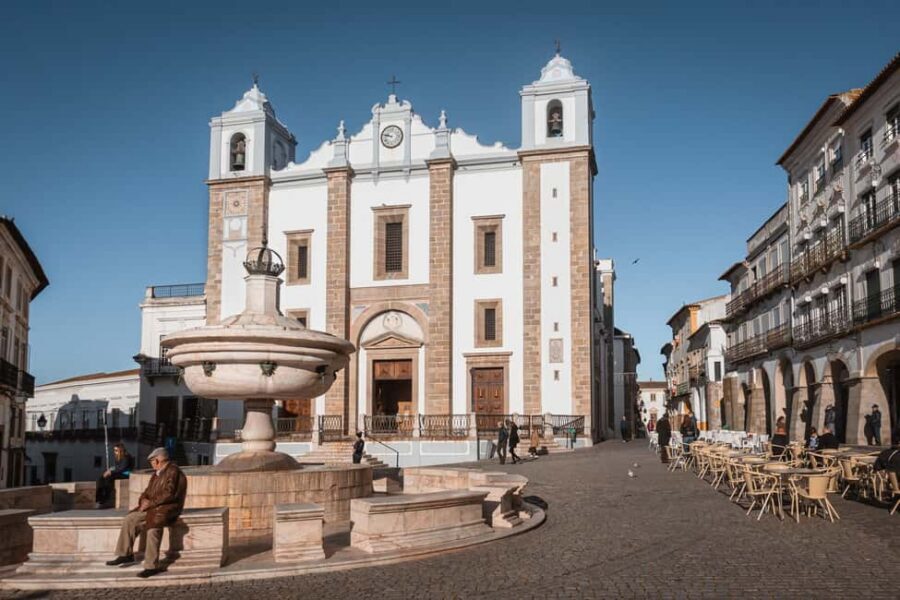
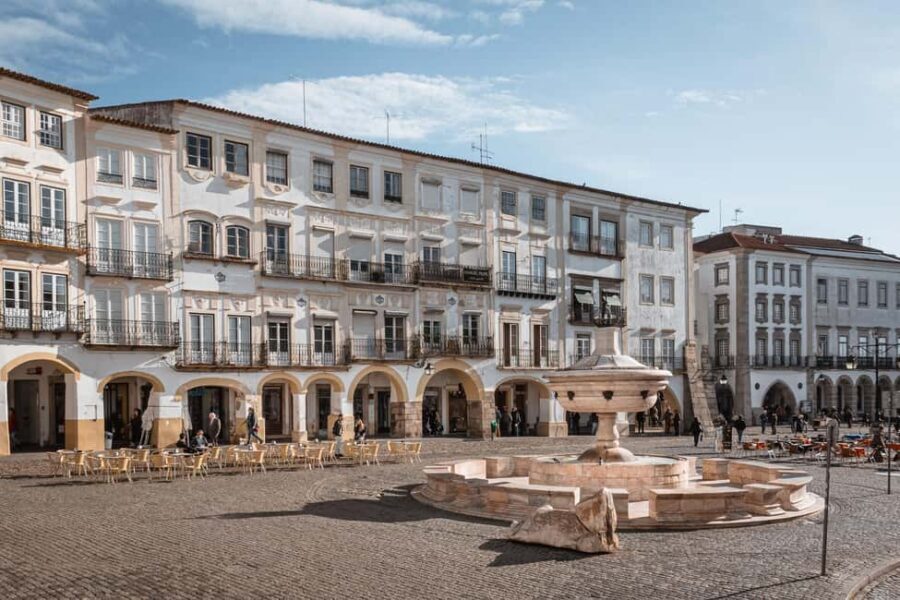
From there, you move into Praça do Giraldo, which is a visual statement. The neoclassical facades frame a grand fountain with eight spouts. This is the kind of square where you’ll naturally slow down. People gather, kids run around, and the light changes on stone quickly.
If you want a small practical tip for pacing: treat this plaza as your mid-walk reset. Grab water, check your phone battery, and decide whether you want to move on fast or take a longer break before the cathedral area.
Rua 5 de Outubro to the cathedral area: medieval scale and terrace views
After Praça do Giraldo, the walk continues to Rua 5 de Outubro, Évora’s main street for crafts and local shops. This section is where the day becomes more than monuments. It’s a real street with a shopping rhythm, so it’s easier to match your walk with a coffee break or a small browse.
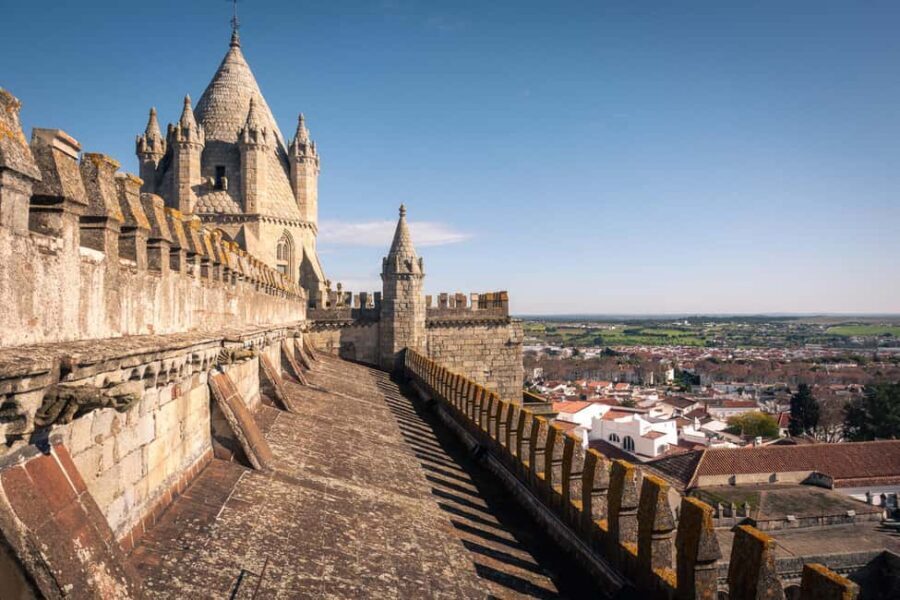
Then comes the monumental zone: the route leads you toward the largest Portuguese medieval cathedral, and the experience includes panoramic views from the terrace area. Even if you don’t climb high or stop for a long indoor visit, the terrace view helps you understand why Évora feels so commanding from above.
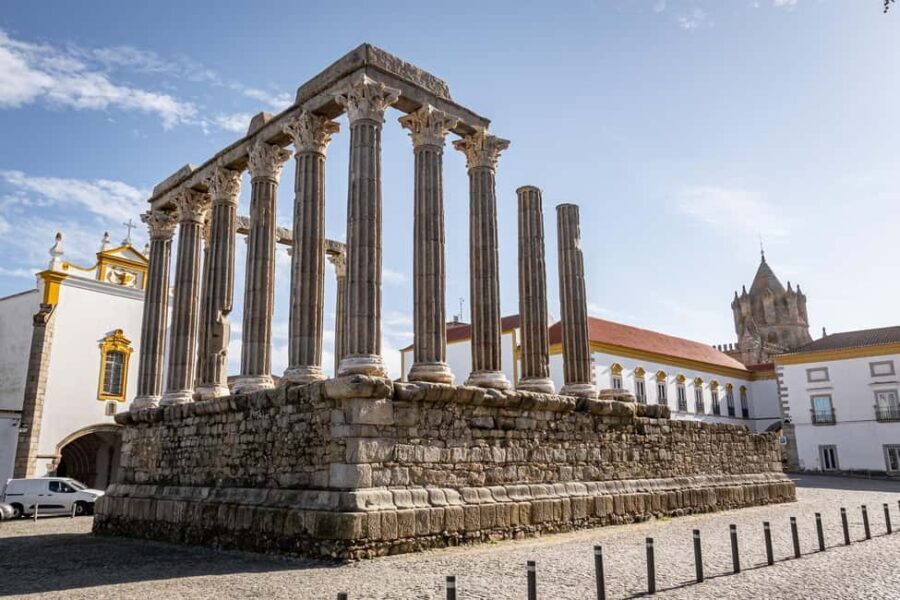
You’ll also find the Roman Temple nearby, including a highlight that stands out for its preservation: it’s a 1st-century structure that still looks remarkably intact. In the same “visit cluster,” you get Roman and medieval references side by side, which is exactly why Évora is so memorable.
Also in this zone: the Church of Loíos. It’s another stop that helps you shift from outside monuments to the quieter, more spiritual side of the historic center.






Colegiais Garden and Espírito Santo College: a calmer university stretch
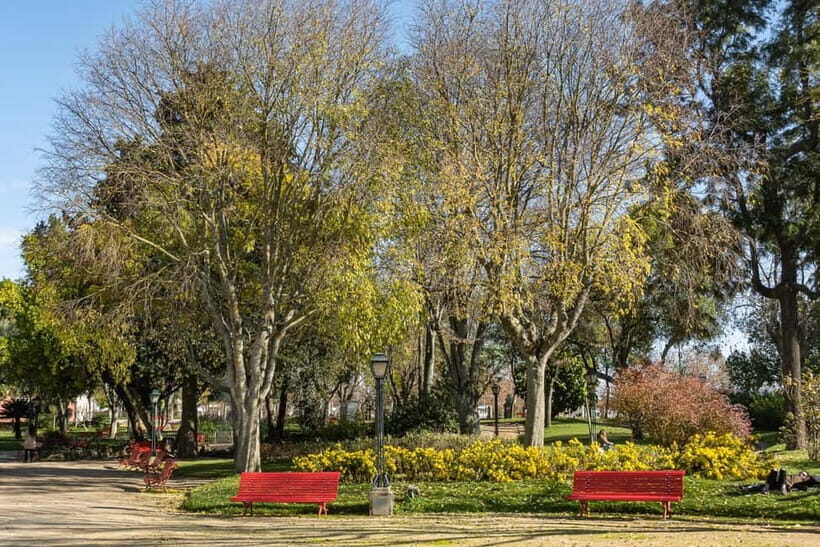
Once you’ve handled the heavier monument moments, the route shifts into quieter scenery. You’ll wander through the Colegiais Garden, which gives you a break from the crowds and the stone density. Gardens in historic towns work like breathing spaces—they help you digest what you just saw and reset your legs.
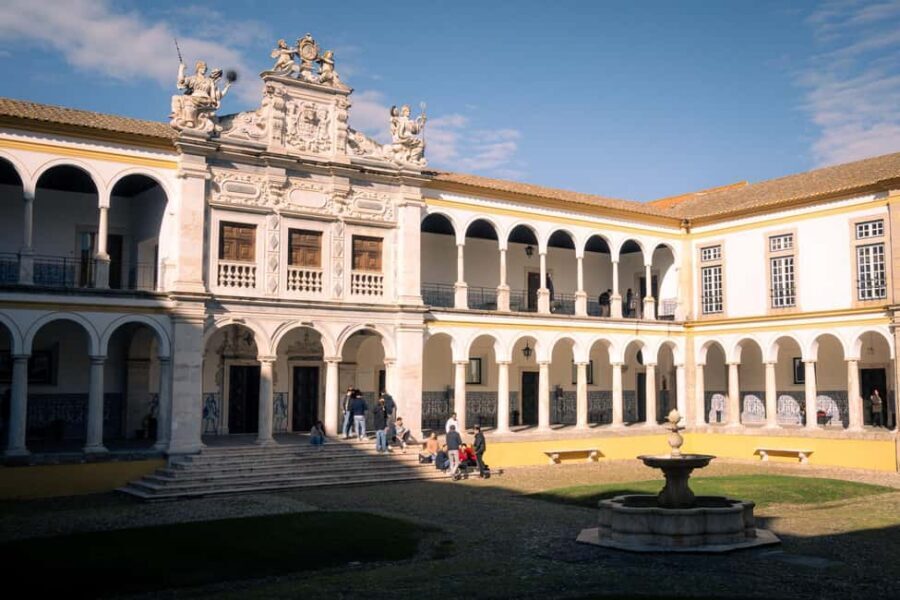
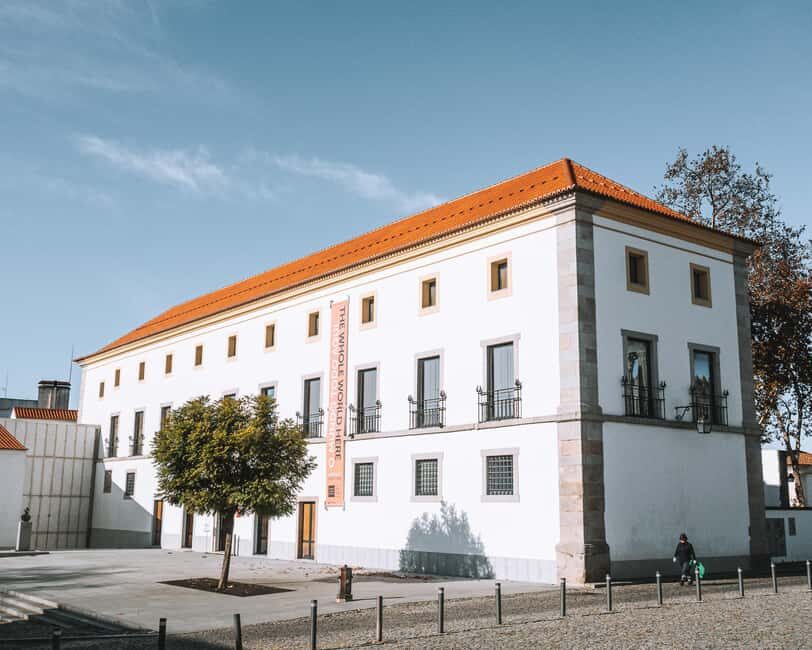
Next, you head to the university area to see Espírito Santo College. This is valuable because it brings a different “era” into the mix. You’ve already walked through Roman and medieval landmarks; now you get a sense of Évora as a living educational center, not just a preserved museum.
If you prefer walking routes that alternate intensity—big sights, then quiet moments—this part of the loop is a good match. It keeps the day from feeling like a rushed parade.
Páteo de São Miguel viewpoints, then Igreja da Graça
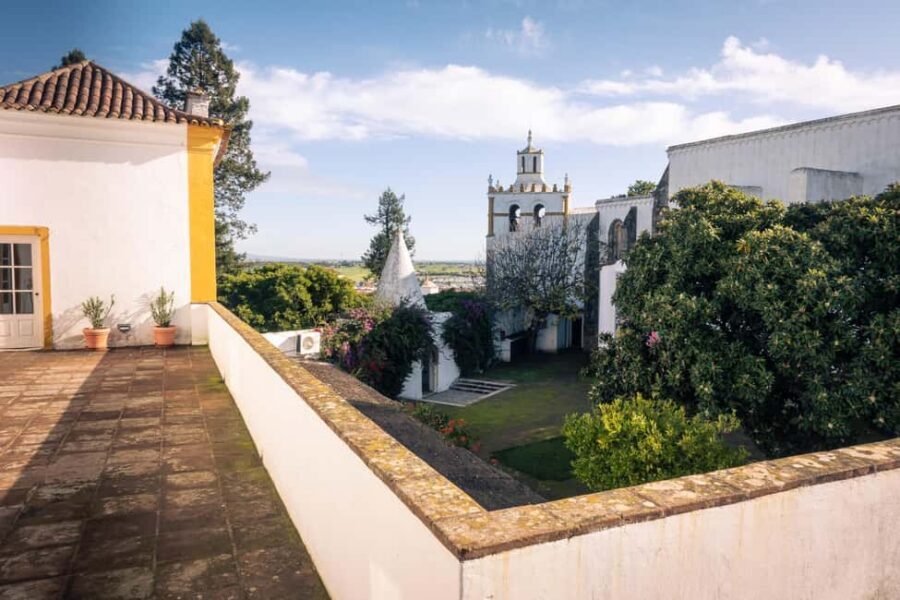
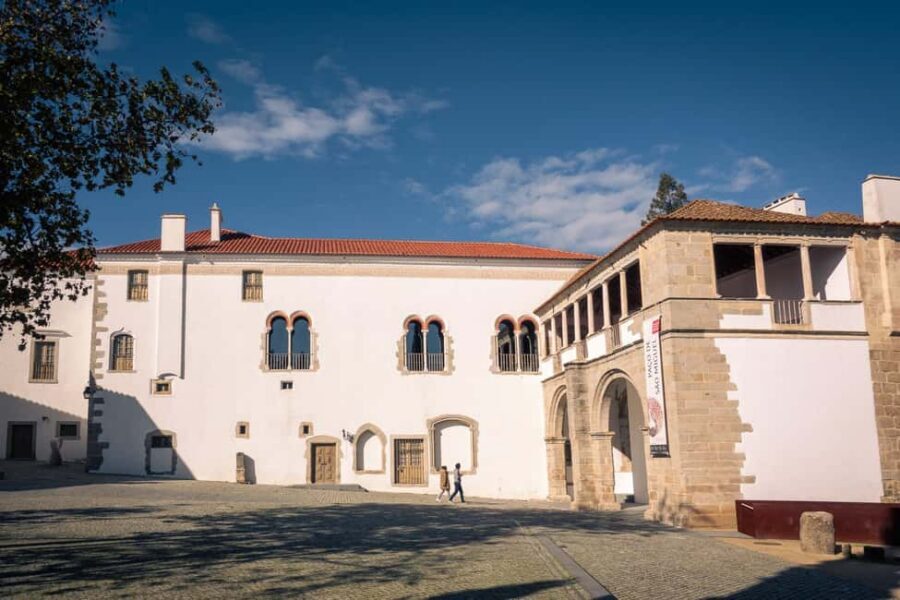
After the university area, the route includes Páteo de São Miguel, known for its terrace offering panoramic views. This is another moment that makes the walk worth it even if you only look for a few minutes. High points in cities like Évora help you see how the streets fold back into the historic walls.
From there, you’ll visit Igreja da Graça. Churches like this add texture to your timeline. They’re not just places to look at from the outside—you’re guided into the experience so you can make sense of what you’re seeing within the broader walk.
This segment is where the route starts to feel like a story arc: square and street life, grand monument cluster, university calm, then more religious sites before you reach the most intense stop of the day.
São Francisco Church and Capela dos Ossos: prepare your senses
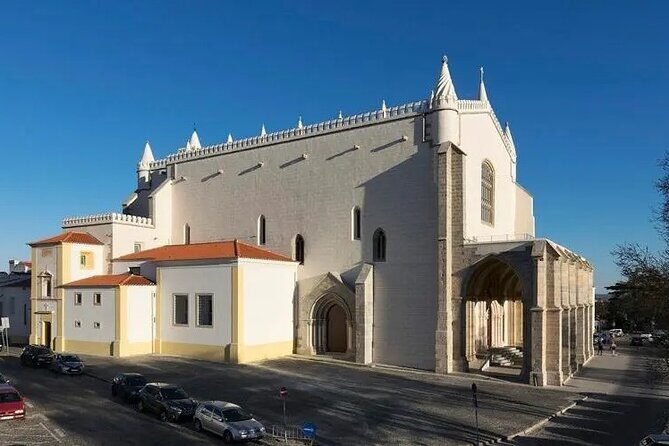
The route’s most unforgettable stop is the São Francisco Church, including the Capela dos Ossos. This is the bones chapel—the one that people remember even if they’re not sure they’ll like it.
What’s helpful here is that the tour is self-paced, so you’re not forced to rush through. If you’re sensitive to unusual imagery, you can decide how much time to spend. If you’re curious and want to see it properly, you can slow down and follow the audio content as you move through the space.
Either way, I’d treat this as a “mental gearing” moment. Don’t schedule it right after a long heavy lunch. Give yourself a little time to absorb the atmosphere, then keep walking while the rest of the route resets your energy.
Finishing with a romantic garden and the medieval wall return
After the bones chapel visit, you’ll wrap up with a peaceful walk through Évora’s romantic garden, then return to Porta Velha da Lagoa along the medieval wall. Ending this way matters. The route doesn’t just stop at another stone landmark—it transitions you out, with calmer scenery and a clear path back.
Walking the medieval wall stretch is a satisfying final touch because it ties the day’s start and finish together. You get that full-circle feeling: you began at the gate, you walked through the city’s major layers, and now you return along the ancient defensive line.
This ending is also practical. It helps you end while your legs still feel okay, and it keeps you from having to figure out a last-minute exit plan through the old streets.
Price and time: why $8 feels like good value here
At $8 per person, this tour is priced like an entry ticket to a better way of sightseeing, not like a guided-group experience. Since there’s no live guide included, you’re paying for the route design and the app content—offline audio, language options, and step-by-step navigation across more than 50 points of interest.
The time commitment is realistic: about 4 hours, but you should plan for 4 to 6 hours depending on pacing and the stops you choose to enjoy. That’s a good match for people who want a solid afternoon without losing an entire day.
Also, the ability to do it in parts within 5 days adds value. If you start late one day, you don’t lose the whole experience. And because tickets to paid attractions aren’t included, you’re not paying twice for entry fees you can choose to buy only when you’re ready.
Bottom line: this is value if you’re the type of traveler who likes control, likes reading the city at street level, and is comfortable leaning on your phone as your guide.
Who should book this Walkbox experience
I think this tour fits best if you:
- want flexibility to stop, start, and move at your own pace
- like a planned route that still feels personal, not rigid
- prefer visiting monuments in a self-guided style while still getting context
It’s also a good pick for groups traveling with mixed language needs, because the app content is available in English, Portuguese, French, and Spanish.
One more honest note: it isn’t suitable for people with mobility impairments, based on the activity’s info. And because it’s a smartphone-first experience, it’s not ideal if you don’t feel comfortable managing offline audio and directions.
Should you book the Évora flexible walking tour?
Book it if you want an easy-to-follow plan through Évora’s UNESCO historic center, with strong highlights like the Roman Temple, the medieval cathedral area with terrace views, and the Capela dos Ossos—without being stuck on a fixed group schedule.
Skip it if you need a live guide for answers, or if you’d rather avoid phone-based navigation. Also skip if walking is hard for you; this one is built for an active pace over uneven old-city ground.
If you’re a practical sightseer who likes major landmarks plus the in-between streets, this is a smart, low-cost way to experience Évora your way.
FAQ
How long is the Évora flexible walking tour?
The tour duration is listed as 4 hours, but the route covering about 5 km usually takes approximately 4 to 6 hours depending on your pace and which stops you enjoy.
Is there a live guide included?
No. Guidance is provided through the Walkbox app, not by a live tour guide.
What languages are available in the app?
The tour content is available in English, Portuguese, French, and Spanish.
Can I do the tour in parts instead of all at once?
Yes. You can do the tour whenever you like and you can complete it in full or in parts within 5 days of your booking date.
Where does the tour start and end?
It starts and ends at Porta Velha da Lagoa, near the recommended free car park.
What should I bring?
Bring comfortable shoes and clothes, and make sure your smartphone is charged. The tour is not suitable for people with mobility impairments.