REVIEW · CASCAIS
Cascais: Glamour and Decay by The Lisbon Coastline – Private Tour
Book on Viator →Operated by Lisbon Art & Soul · Bookable on Viator
Cascais can look elegant and worn-out—at once. This private walk through the former fishermen’s village turns that contrast into a story you can actually see, stop after stop. I like the personal pace (you’re not herded) and the way the guide keeps things practical, from where to look to what to notice. My one caution: it’s still a walking tour, so you’ll want moderate fitness—especially for the coastal stretch toward Estoril.
What really makes this worth it is the combination of people and craft. You get a professional guide plus a professional photographer guide, and the route is packed with landmarks that explain why Cascais went from harbor town to court-town glamour. Also, food and drinks aren’t included, so plan to handle your own breaks and hydration.
In This Review
- Key things I’d bet on before you book
- Cascais in 3–4 hours: what you’re really buying
- Starting at Estação de Cascais: getting the day right
- Praia da Rainha: the photogenic opening that tells you where you are
- Centro Histórico de Cascais: citadel walls, fishing memories, and real scale
- Palácio Seixas: from harbor town to court-town glamour
- Fortaleza de Nossa Senhora da Luz: fortifications plus contemporary art
- Centro Cultural de Cascais: architecture, the Sommer House, and a revamp
- Marina de Cascais: the Count of Arnoso meets the modern waterfront
- Casa de Santa Maria: seeing why design matters by the sea
- Santa Marta Lighthouse Museum: drama, then a modern makeover
- Museu Condes de Castro de Guimarães: a style-mix you can spot
- Marechal Carmona Park: romantic gardens with free-roaming birds
- Pace, crowd-proofing, and why the guide matters
- Price and value: is $36.04 per person fair?
- Who should book this Cascais private walk?
- Should you book this Cascais: Glamour and Decay private tour?
- FAQ
- How long is the Cascais private tour?
- What is the price per person?
- Is this tour private?
- What’s included in the tour?
- Are entrance tickets included for the stops?
- Where does the tour start and end?
- Is hotel pickup or transportation included?
- What language is the tour offered in?
- Is free cancellation available?
- Does the tour require a lot of walking?
Key things I’d bet on before you book
- Private, max 12 in your group: only your party on the tour, with a size that stays conversational.
- Photo-minded guidance: a professional photographer guide helps you frame the sea, citadel, and mansions.
- Free stop-by-stop admissions: multiple key sights are listed as admission ticket free.
- A route that mixes eras: beaches, fortress walls, cultural spaces, and coastal mansions in one loop.
- A guide who answers questions well: you’re encouraged to ask, and the pacing leaves room for it.
Cascais in 3–4 hours: what you’re really buying
This is a private walking tour in Cascais that runs about 3 to 4 hours. It’s priced at $36.04 per person, which is a fair deal when you look at what you get: a trained guide, a second professional who’s focused on photography, and a route that hits a lot of “you must see this” spots without charging you separately at each stop (many of the sights listed are admission ticket free).
It also has good “tour value” timing. You’re not spending the whole day on a bus. You’re getting the essentials of Cascais—beach, historic center, fortress, cultural sites, and the showpiece mansions along the coast—in one walk. If you only have a half day and you want the town to make sense fast, this is the kind of plan that helps.
One more practical note: there’s no hotel pickup/drop-off unless you selected that option. Transportation to and from the attractions is also not included. The tour starts at Estação de Cascais and ends at R. Visc. Luz 21, 2750-414 Cascais—so you’ll likely want to build in an easy way back to your hotel or next stop.
And yes, it’s walking. The route is described as moderate fitness. If you’re carrying a backpack, bring only what you’ll use. Wear shoes you trust on uneven sidewalks near the sea.
You can also read our reviews of more private tours in Cascais

Starting at Estação de Cascais: getting the day right
You meet at Estação de Cascais (2750-334). That’s a smart choice because it puts you near the action without wasting time. After the first few minutes, the guide’s job is to do what you want most on Day One in a place: help you orient fast.
Expect the guide to set up the “why” early—Cascais’s location and story—then you move from viewpoint to viewpoint with stops built in for explanation. Reviews repeatedly highlight punctual arrivals and clear communication, including the guide confirming details ahead of time. That matters because it keeps your first steps from feeling chaotic.
If you hate rushing, you’ll like the way this tour is paced. The walk is structured with short time blocks at each stop, and the guide leaves room for questions rather than treating the whole day like a checklist.
Praia da Rainha: the photogenic opening that tells you where you are
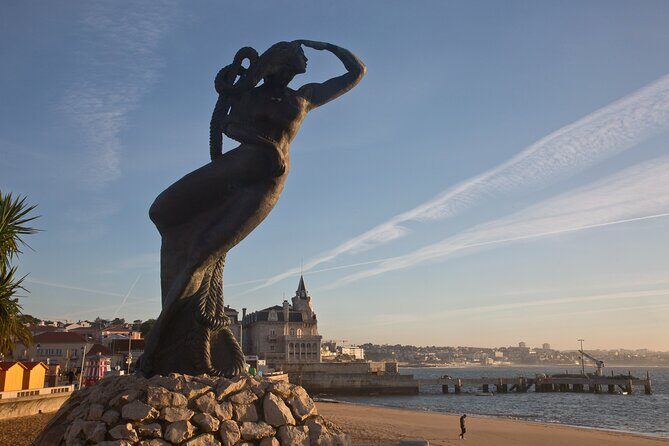
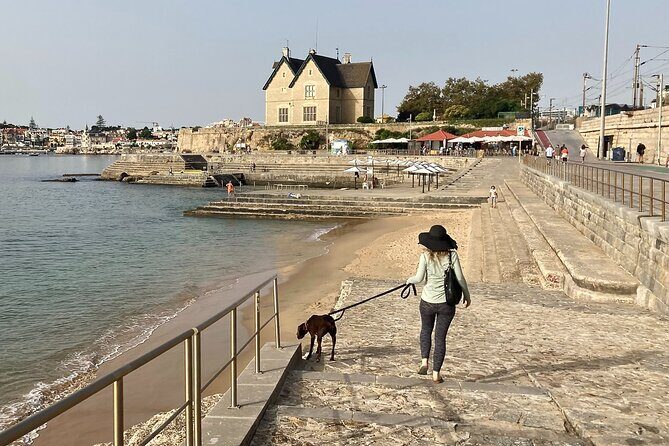
Stop one is Praia da Rainha. This beach is described as one of the most photogenic in Cascais, and it’s not just there for pretty photos. It’s a clean starting point: the sea, the town’s coastal position, and the way the coastline “frames” the harbor area.
This is where you’ll get the initial talk track—how Cascais sits along the Lisbon coastline and why the sea has shaped everything from daily life to later glamour. The time here is short (about 15 minutes), so you don’t get stuck waiting around. It’s more like a launchpad.
Practical photo tip: since you have a photographer guide on board, use this first stop to calibrate what you want. If you like wide shots, ask for a spot that shows both coastline and architecture cues. If you like close detail, ask for angles where textures (rocks, façades, promenade edges) read well.
Centro Histórico de Cascais: citadel walls, fishing memories, and real scale
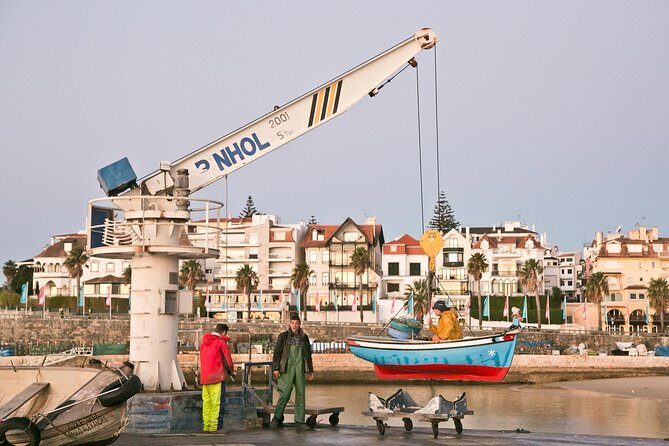
Next you move to Centro Histórico de Cascais, the former fishing village heart with the citadel and the beach close by. The big value here is understanding how close “everyday life” used to sit to fortifications. From this area, you can grasp the town’s layout as a place built around the water and defended for a reason.
This stop is also around 15 minutes. That tells you how this tour is designed: you’re not lingering to the point where you lose momentum. You’re getting enough context to recognize patterns as you walk—citadel logic, coastal defenses, and the way the town’s important buildings cluster.
One possible drawback here: if you prefer slow museum-style time, the historical explanations may feel fast. The tradeoff is you’ll still cover a lot of ground and avoid the “I saw nothing because we only stood at one corner” problem.
Palácio Seixas: from harbor town to court-town glamour
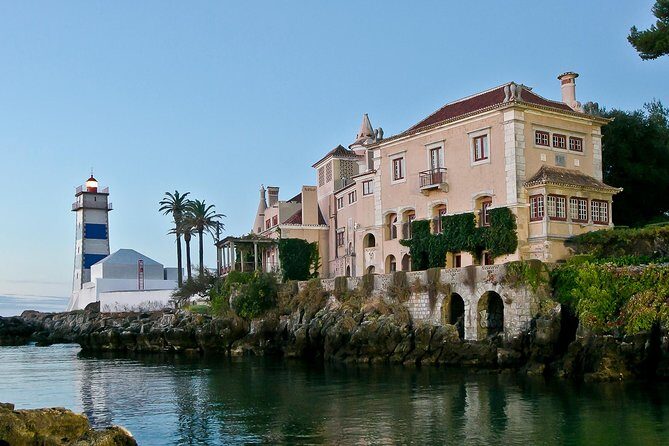
Stop three is Palácio Seixas, and it exists in the middle of the story you’re going to be hearing all day: how Cascais shifted from small fishing harbor to a more glamorous court town.
This stop is about 10 minutes. Short time doesn’t mean short impact. In fact, it’s useful: the guide uses the palace setting to show the leap in lifestyle and power—from working coastline to a place the influential wanted to occupy.
If you like “before and after” contrasts, this is one of the best stops on the route. Cascais doesn’t just have old buildings. It has old buildings that are proof of changing eras.





Fortaleza de Nossa Senhora da Luz: fortifications plus contemporary art
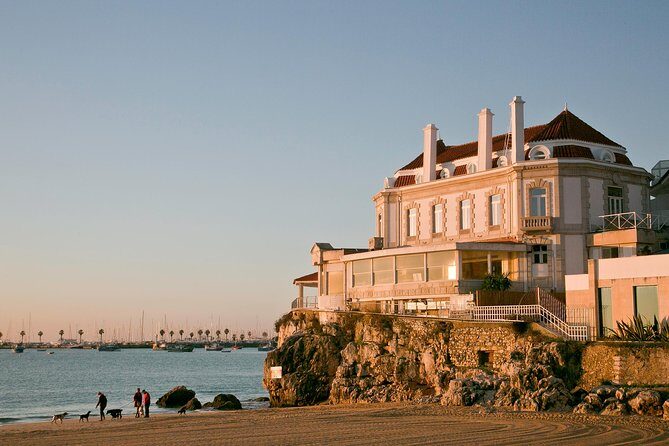
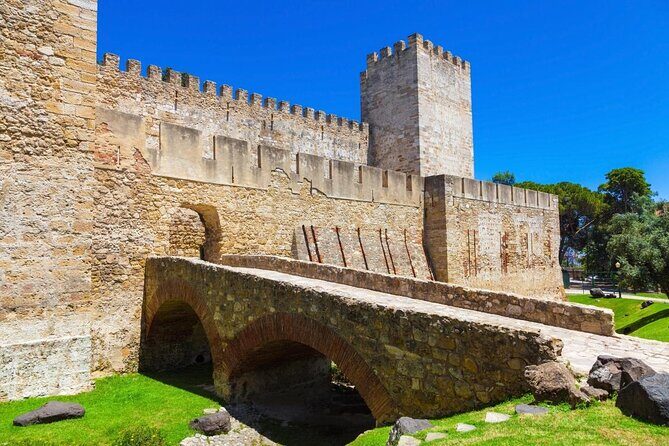
Now the tour leans into the dramatic side of Cascais. Fortaleza de Nossa Senhora da Luz brings you back to the citadel feel—historical landmarks, sea-facing views, and the kind of thick-walled presence that makes coastal defense make sense.
The twist: the stop also notes contemporary art developments. That’s the Cascais character in one sentence—something old and something newly interpreted, both visible from the same vantage points.
You’ll likely spend about 15 minutes here. This is another good photo stop because fortresses naturally create strong lines and elevated angles.
One consideration: this part can feel more exposed to wind near the coast. If you’re doing this in cooler months, bring a light layer.
Centro Cultural de Cascais: architecture, the Sommer House, and a revamp
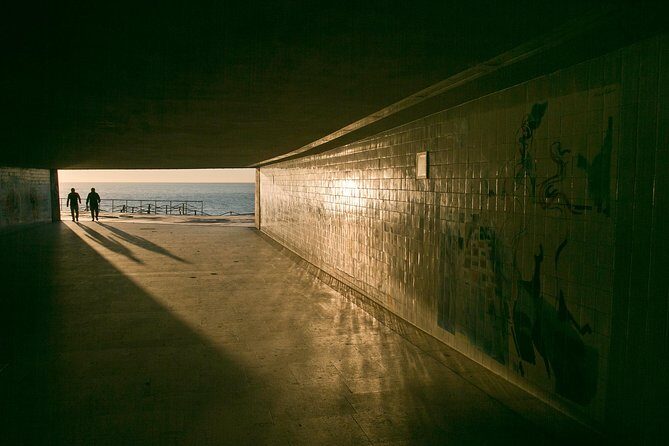
Stop five is Centro Cultural de Cascais, including the Sommer House and the cultural center. This is where the tour gets less “defensive walls and old palaces” and more “how the town reuses and reframes buildings.”
The description highlights the architecture and the recent revamping, which is a polite way of saying you get to see how modern Cascais manages its heritage spaces. You’ll get stories tied to these buildings, not just a list of what’s there.
Plan for about 20 minutes. This is long enough for the guide to point out design details you might otherwise walk past.
If you care about why towns update historic places instead of freezing them, you’ll like this stop. It answers the question: how does a seaside town stay alive when it’s full of old stone?
Marina de Cascais: the Count of Arnoso meets the modern waterfront
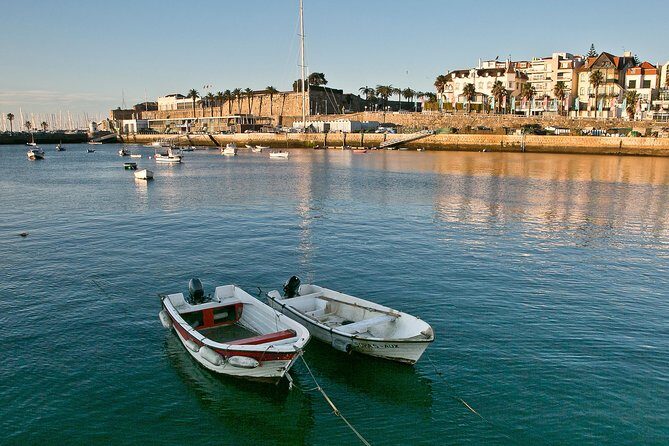
Stop six is Marina de Cascais, and it’s framed around two stories. First, the legacy tied to the Count of Arnoso. Second, the later story of the marina growing beyond his property.
This is a smart transition point, because it helps you understand Cascais as both aristocratic past and present-day leisure space. You’ll be looking at how the waterfront functions now—boats, promenades, and the busy energy of a marina—while the guide links that to earlier land ownership and planning.
Time here is brief (about 10 minutes), but it’s a high-payoff stop if you’re the type who likes to connect dots between “old names” and “what you see today.”
Casa de Santa Maria: seeing why design matters by the sea
Stop seven is Casa de Santa Maria, described as one of the most amazing houses by the sea in Cascais, with the genius of architect Raul Lino explained for you.
This is one of those stops where the photographer guide becomes extra valuable. Houses like this aren’t only about history; they’re about angles, lines, and how buildings meet the coast. In a short window, you’ll get guidance on what to notice so it looks more than pretty.
Expect about 15 minutes here. If you’re into architecture (even casually), ask the guide to show you what specific features make the house stand out. The time limit forces sharp focus, which is good.
Santa Marta Lighthouse Museum: drama, then a modern makeover
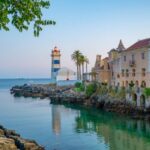
Next is the Santa Marta Lighthouse Museum. The lighthouse is described as dramatic, and the tour also notes that the recent revamping is impressive.
Even if you don’t spend ages indoors (the stop is about 10 minutes), you’ll walk away with a better grasp of why lighthouses matter beyond navigation. They’re symbols of a coastline’s identity.
This is also a good moment to check the light. Depending on the time of day, the coast lighting can make stone and water textures pop. Use this stop to reset your photo settings or just enjoy the views.
Museu Condes de Castro de Guimarães: a style-mix you can spot
Stop nine is Museu Condes de Castro de Guimarães, described as a dream house somewhere between a castle and a manor. The big reason it’s memorable: it mixes several styles, including Romanesque, Gothic, Manuelino, and Moorish Revival.
That’s not trivia for trivia’s sake. If you like architecture, you’ll enjoy how the building becomes a visual “catalog” of influences. And you’ll likely understand why this kind of mash-up makes sense in Cascais, where international taste came to the coast.
Time here is around 15 minutes. Again, it’s enough to catch the patterns without forcing you into a long interior slog.
Marechal Carmona Park: romantic gardens with free-roaming birds
The last stop is Marechal Carmona Park, a Romantic garden and one of the most popular green spaces in Cascais. It also has a quirky charm: cocks, chicken, and poultry roam freely.
This is the mental cool-down after all the stone and sea views. The park gives you a softer environment, and the animals add a human, everyday feel—even though you’re in a formal garden setting.
Plan for about 15 minutes. This is also a good time to ask for restaurant ideas or nearby detours, because the guide has already built the day’s context and can recommend what fits your interests.
Pace, crowd-proofing, and why the guide matters
The standout praise across experiences centers on the guide—especially Luís. People highlight punctual starts, excellent English, and a guide who answers questions thoroughly without losing the flow. One review even notes that the tour handled major crowds during a high-profile moment, with the route still managed well.
That tells me something important for your planning: this isn’t a “read signs and move on” guide. It’s a guide who understands how to adapt when conditions change, while keeping explanations clear.
You’ll also notice reviews praising follow-up tips after the tour. Even if you don’t need more planning, it’s a useful bonus: you end up with ideas for restaurants and other nearby areas in Cascais beyond the route you walked.
Price and value: is $36.04 per person fair?
For $36.04 per person, you’re getting:
- a private walking tour
- a professional guide
- a professional photographer guide
- a structured route with many stops listed as admission ticket free
- about 3 to 4 hours of guided orientation and landmark interpretation
That’s good value if your goal is to understand Cascais quickly and get photos that actually reflect the setting. It’s also good value because private tours often cost more per person once you add transportation, timed tickets, and long transit time. Here, the structure is built around short walking segments and included guidance.
It may be less ideal if you’re allergic to walking or you mainly want to lie on a beach with no history talk. This tour is built for seeing and learning, with photo moments baked in.
Who should book this Cascais private walk?
This tour fits you if:
- you’re spending half a day to a day in Cascais and want the town to make sense fast
- you like photos, but you also want help knowing what to photograph
- you enjoy architecture and coastal history (even if you’re not a deep-history nerd)
- you want a private experience with a small-group feel (max 12)
It may not be your best match if:
- you have very limited mobility or expect long flat surfaces only
- you hate explanations and prefer self-guided wandering
- you need lots of long stops and don’t want a time-managed route
Should you book this Cascais: Glamour and Decay private tour?
If you want Cascais to feel like more than a pretty shoreline, I’d book it. The itinerary is built to show you the town’s contrasts—beach beauty, citadel strength, court-town glamour, and modern culture—without making you spend the day in transit. The guide angle is the real selling point: you get clear storytelling, a comfortable pace, and strong photo support.
One last piece of advice: do this earlier in your stay. The tour gives you orientation, and the restaurant and next-area ideas you’ll leave with make the rest of your time in Cascais easier.
FAQ
How long is the Cascais private tour?
The tour lasts about 3 to 4 hours.
What is the price per person?
The price is $36.04 per person.
Is this tour private?
Yes. It’s a private tour/activity, and only your group participates.
What’s included in the tour?
You get a professional guide and a professional photographer guide as part of the private tour.
Are entrance tickets included for the stops?
The listed stops are shown as admission ticket free.
Where does the tour start and end?
It starts at Estação de Cascais (2750-334 Cascais) and ends at R. Visc. Luz 21 (2750-414 Cascais).
Is hotel pickup or transportation included?
No. Transportation to/from attractions and hotel pickup/drop-off are not included (unless you selected a pickup option).
What language is the tour offered in?
The tour is offered in English.
Is free cancellation available?
Yes. You can cancel up to 24 hours in advance for a full refund.
Does the tour require a lot of walking?
It’s listed as requiring moderate physical fitness, since it’s a walking tour.