REVIEW · CASCAIS
Beginners, intermediate and advanced surf lessons
Book on Viator →Operated by Ericeira Waves Surf School · Bookable on Viator
Surfing starts with the basics.
This 2-hour lesson in Ericeira is built for real progress: you get a land check-in first, then practice in the water for about 1 ½ hours. I like that it’s taught in English, in a small max group size of 6, and that you’re not just sent to the beach with a board. It’s a solid value because the lesson includes your Billabong wetsuit, boards (pranches), and boots.
One thing to keep in mind: this experience depends on good weather, so plan to be flexible if conditions change.
In This Review
- Key highlights
- Ericeira World Surfing Reserve: a smart place to learn
- The real timeline: land practice first, then 1 ½ hours in the ocean
- What you’re actually taught: technique, materials, and safety in plain language
- Technique: learning to stand with the right movement
- Materials: understanding the board and how it affects you
- Safety rules: the unglamorous stuff that keeps you going tomorrow
- Billabong gear and what to wear so you feel comfortable
- Getting coached at the right level: beginners to advanced surfers
- Getting there: the meeting point, group size, and simple logistics
- Price and value: why $66.38 can make sense for what you get
- Weather matters more than your wish list
- Who should book this surf lesson (and who might skip it)
- Should you book Ericeira Waves Surf School?
- FAQ
- What skill levels are offered?
- How long is the surf lesson?
- Where does the lesson start?
- Where does the activity end?
- What’s included in the price?
- Are meals and drinks included?
- How many people are in the group?
- Is the lesson offered in English?
- What happens if weather is poor?
Key highlights
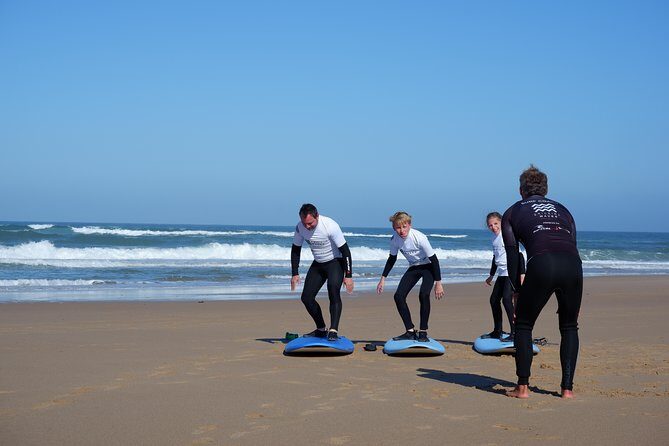
Small group lessons (max 6) mean more coaching time.
About 1 ½ hours in the ocean so you practice, not just watch.
Safety and stand-up technique on land before you paddle out.
Billabong gear included: wetsuit, boards (pranches), and boots.
Beginner to advanced options so the pace matches your level.
Ericeira World Surfing Reserve: a smart place to learn
Learning surf is easier when the setting makes you take it seriously. This lesson runs in the Ericeira World Surfing Reserve, so you’re training in a surf-focused environment where technique, etiquette, and safety are part of the deal. You’re not guessing what to do or when to do it. You show up, get organized, and start learning in a structured way.
Another reason I like this setup is the group size. With a maximum of 6 travelers, you get more direct attention from the instructors. Even if you’re a total beginner, you’re less likely to get lost in the shuffle.
And you can match your level. The course is offered as beginner, intermediate, and advanced surf lessons, which matters because surfing is full of small details. The wrong level group can feel frustrating fast. Here, the goal is to keep your instruction aligned with what you’re trying to improve.
You can also read our reviews of more tours and experiences in Cascais


The real timeline: land practice first, then 1 ½ hours in the ocean
The schedule is simple and logical, and it’s one of the best parts of the lesson. You start with instruction out of the water, then you earn your time on the waves.
Here’s what the flow typically looks like:
- Brief presentation: You’ll get a short history of surfing, plus guidance on the materials you’ll use.
- Safety rules: Before anyone paddles out, you learn how to handle risk in the surf zone. This is the part that makes the rest of the lesson click.
- Stand up technique: You practice the correct movement patterns so standing on the board isn’t just luck.
- Warm-up: You prep your body before you go into the ocean.
Then comes the part you came for. You put the instruction into practice in the ocean for about 1 ½ hours. That time split is key. If you spend all your time on land, you only learn theory. If you jump straight into the water without the movement basics, you end up stuck doing the same mistakes over and over.
The lesson structure helps you avoid both traps. You learn a motion, then you test it. You get feedback quickly because your coaching can connect what you did in the water to what you practiced on land.
One small drawback: because it’s weather-dependent and aims for proper surf conditions, the pacing can shift slightly day to day. But that’s normal for any surf lesson that takes safety seriously.
What you’re actually taught: technique, materials, and safety in plain language
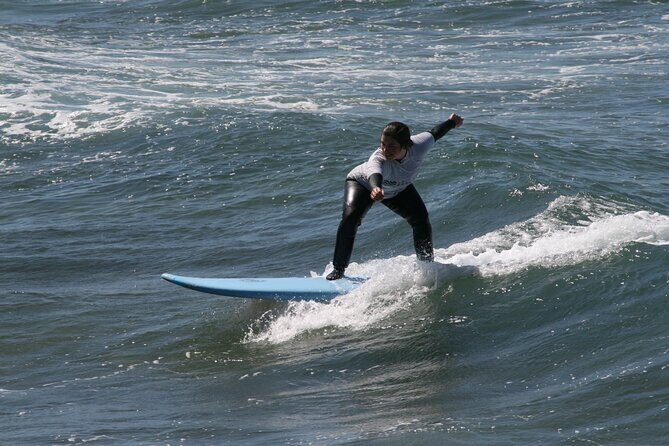
Surfing gets easier when the instruction is clear. This lesson doesn’t treat you like a mystery. It’s organized around three practical buckets: technique, what you’re using, and how to be safe.
Technique: learning to stand with the right movement
Standing up is the biggest hurdle for beginners, and for intermediates it’s where small errors steal your wave progress. You’ll warm up, then you’ll practice the correct movement sequence before you go into the water. That means when you’re out there, you’re not reinventing the process while the ocean is moving everything around you.
Materials: understanding the board and how it affects you
You’ll get material guidance as part of the class. While the details may vary by instructor and conditions, the idea is consistent: you learn how your board setup changes your ride, stability, and paddling experience.
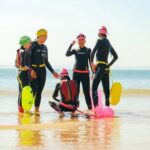


Safety rules: the unglamorous stuff that keeps you going tomorrow
Safety rules are included in the out-of-water portion. That includes how to behave around other surfers, how to handle situations in the surf zone, and how to reduce risky moves. It’s not the most exciting topic in the room, but it’s exactly what you want right before you spend time in the ocean.
This is also where you benefit if you’re not super confident yet. Even if you’re physically able, surf has a mental component. Safety instruction helps you relax because you know what to do when conditions change.
Billabong gear and what to wear so you feel comfortable
You don’t have to track down rental gear. Your Billabong surfing suit, boards (pranches), and boots are included. That’s a big value point, because buying the right wetsuit and accessories is expensive, and rental boards vary in quality.
The wetsuit matters because it helps you stay comfortable long enough to actually practice. The boots are helpful too, especially for grip and comfort when you’re moving around before and after paddling out.
What you should plan around:
- You’ll still want to wear something sensible underneath your suit so you can get moving easily.
- Bring dry clothes for after the session, because ocean time tends to end with you needing a quick reset.
- If you have your own surfing rashguard or similar base layer, you might prefer it, but the core gear is already provided.
If you’re the kind of person who hates last-minute gear stress, this inclusion list is a win.
Getting coached at the right level: beginners to advanced surfers
One lesson that tries to do everything for everyone usually ends up coaching no one well. This one offers beginner, intermediate, and advanced surf lessons, which changes the coaching emphasis.
For beginners, expect more time on foundation: paddling basics, how to position yourself, and how to execute the stand-up sequence. For intermediates, the focus usually shifts toward cleaner technique and making the movement work more consistently. Advanced surfers, if scheduled, are typically there to fine-tune and improve wave control and form.
From the feedback, coaching style is a strong point. One instructor named Ricardo is specifically praised for clear explanations and encouragement. That matters because surfing progress can feel slow at first. A teacher who breaks things into doable steps keeps you learning instead of just getting tossed around by the ocean.
No matter your level, the best part is that you learn a movement on land and then repeat it in the ocean during those 1 ½ hours of practice. That is how skill actually sticks.
Getting there: the meeting point, group size, and simple logistics
Your meeting point is at Estacionamento Praia de Ribeira d’Ilhas, 2655-319 Ericeira, Portugal. You’ll end back at the meeting point, so there’s no mystery about where you’ll land after you’re tired and wet.
A couple logistics notes that help you plan:
- You’re in a max of 6 travelers, so the day doesn’t feel like a cattle call.
- There’s an air-conditioned vehicle included, which can be a real comfort if the day is warm.
- You’ll have a mobile ticket, and confirmation is received at booking.
- It’s near public transportation, which is helpful if you’re building your day without a car.
- The lesson is offered in English.
Also, the experience runs during a broad window (8:00 AM to 9:00 PM, daily). In practice, your exact time will come from your booking details, but that range is useful if you’re trying to fit surfing into an already planned itinerary.
Price and value: why $66.38 can make sense for what you get
At $66.38 per person, this isn’t a bargain-price stunt. But it also isn’t a luxury price. It sits in a reasonable middle, mainly because the lesson includes a lot of the expensive stuff for you: Billabong gear (wetsuit, boards, boots) plus transportation via the air-conditioned vehicle.
What you’re not paying for:
- Meals and drinks are not included, so budget for a snack or a drink before or after.
The value sweet spot here is time in the water and instruction style. You’re getting about 2 hours total, with roughly 1 ½ hours in the ocean. That’s the part you can’t fake. A lower-cost lesson that gives you 20 minutes in the water usually won’t help you improve fast.
It also appears to sell out for planning purposes: on average it’s booked about 21 days in advance. If your schedule is fixed, waiting too long can limit your options.
Weather matters more than your wish list
Surf lessons are weather talks, not weather prayers. This activity requires good weather. If conditions don’t work out due to poor weather, you’ll be offered a different date or a full refund.
Here’s how I’d think about it: you’re buying instruction plus ocean time. If the ocean isn’t cooperating safely, they won’t force it. That’s a good sign, not a hassle.
You’re also covered with free cancellation up to 24 hours in advance for a full refund, which helps if your plans are still moving around. Just make sure you’re looking at the local timing for cutoff.
Who should book this surf lesson (and who might skip it)
This lesson fits best if you:
- Want structured coaching, not just board rental.
- Are okay with a moderate physical level and the basics of paddling and getting up on a board.
- Prefer small-group attention.
- Want a course that can work for beginner to advanced skill levels.
You might consider skipping if you’re looking for a long guided tour with lots of downtime, because this is training-heavy. It’s designed to move from explanation to practice quickly.
It’s also a good pick if you travel light. With wetsuit, boards, and boots included, you don’t need to bring heavy gear or hunt for rentals at the last second.
Should you book Ericeira Waves Surf School?
Yes, if you want a short, structured surf lesson where you get real coaching and meaningful time in the ocean. The gear inclusion is a big part of the value, and the small max group size keeps instruction practical.
Book it if you’re the type who learns better with clear steps: safety first, stand-up technique on land, then immediate ocean practice. If you’re sensitive to weather changes, plan with flexibility since this activity depends on good conditions.
If your main goal is to have fun while learning in a controlled way, this one is a strong match.
FAQ
What skill levels are offered?
The experience offers beginner, intermediate, and advanced surf lessons.
How long is the surf lesson?
The duration is about 2 hours.
Where does the lesson start?
The meeting point is Estacionamento Praia de Ribeira d’Ilhas, 2655-319 Ericeira, Portugal.
Where does the activity end?
The activity ends back at the meeting point.
What’s included in the price?
Included items are Billabong surfing suits, pranches (boards), and boots, plus an air-conditioned vehicle.
Are meals and drinks included?
No. Meals and drinks are not included.
How many people are in the group?
There is a maximum of 6 travelers.
Is the lesson offered in English?
Yes. The experience is offered in English.
What happens if weather is poor?
If the activity is canceled due to poor weather, you’ll be offered a different date or a full refund.