REVIEW · LISBON
Lisbon: Graça Church | Convent & Terrace viewpoint access
Book on GetYourGuide →Operated by Sé de Lisboa and Torre da Igreja · Bookable on GetYourGuide
One ticket, two Lisbon moods. I love how Graça Convent mixes old-world faith and everyday craft work like tilework, and I love the payoff of a terrace viewpoint that makes the whole city feel close. The only real catch is that this is a stair-and-walk visit, so it is not the easiest stop if you hate climbs.
For a short 1 hour visit, this $7 ticket gives you more than a photo stop. You get into the church and convent areas (including the high choir and upper cloisters) and then you climb up to the terrace view over São Jorge Castle, the Tagus River, the old bridge, and all the way toward Cristo Rei.
In This Review
- Key highlights you’ll care about
- Graça Church and Convent Terrace: Why This One Works in 1 Hour
- Price and what $7 buys: more than a viewpoint ticket
- Stepping into the Graça story: 700+ years in one complex
- Cloister and tile panels: the best reason to slow down
- Inside the church: gilded woodwork and a ceiling you should actually look at
- The Senhor dos Passos connection and the Graça-to-São-Roque procession
- Climbing up to the terrace: São Jorge Castle, Tagus River, bridge, and Cristo Rei
- Making the most of the visit: how to plan your 1 hour well
- Who should book this Graça access, and who should skip it
- Practical logistics: vouchers, language, and what to expect on-site
- Should you book Graça Church and Convent Terrace access?
- FAQ
- How long is the Graça Church and Convent terrace access experience?
- How much does it cost?
- What is included with the ticket?
- What should I bring for the terrace?
- Where do I need to use my voucher?
- Is this experience suitable for wheelchair users?
- Is it suitable if I have altitude sickness?
- What languages are available?
- Is free cancellation available?
- FAQ
- Is drinks included?
- What is the best part for photos?
Key highlights you’ll care about
- Graça Convent access to the church, cloisters, and parts many people skip
- Stunning terrace viewpoint with São Jorge Castle, Tagus River, old bridge, and Cristo Rei in view
- Cloister + tile panels that reward slow looking
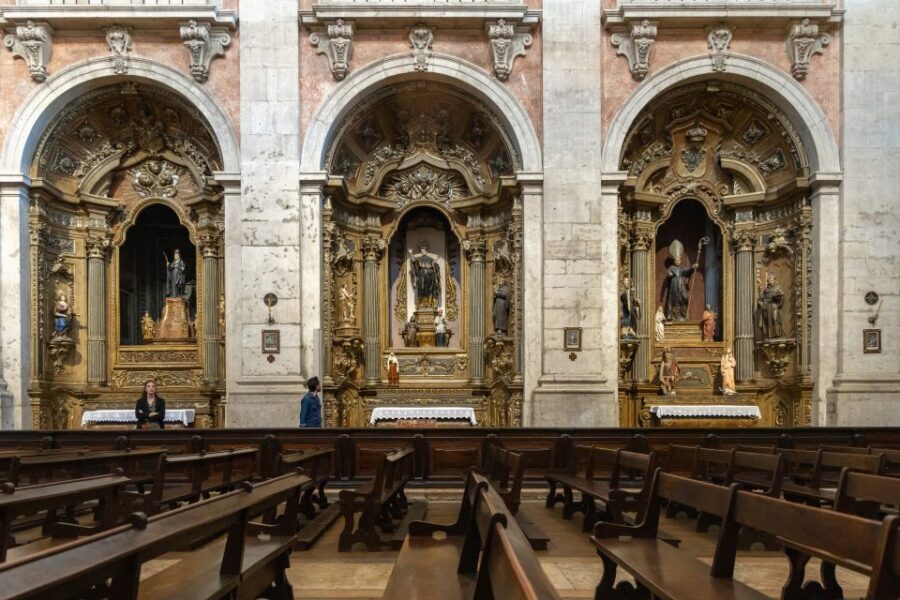
- Church details like gilded woodwork and a grisaille ceiling
- A quieter experience inside the church/monastery area compared with the main miradouro area
Graça Church and Convent Terrace: Why This One Works in 1 Hour
If you have only a little time in Lisbon, this is a smart way to spend it. You get both interior heritage and an actual panoramic view, without having to guess where to go or fight crowds at the city’s busiest viewpoint spots.
I like that the experience gives you context while you walk. Graça is not just a pretty building; it has been shaped by centuries of religious life, earthquakes, rebuilding, and even processions tied to specific objects of devotion.
Most importantly, the terrace view is the kind that changes how you see the map. From up here, Lisbon stops looking like distant neighborhoods and starts looking like a connected story of hills, river, and bridges.
You can also read our reviews of more tours and experiences in Lisbon.



Price and what $7 buys: more than a viewpoint ticket
At $7 per person, you are not just paying for a view. Your entry covers the Convent & Church of Graça and includes access to climb to the terrace, plus the high choir and upper cloisters.
That matters because many viewpoint tickets only get you outside. Here, you earn the view by spending time inside a complex that dates back to the 1200s, then you step back out onto the terrace when you’re ready for the big picture.
Also, this ticket is practical in the way it is planned: it is designed to fit into a valid 1 hour window from first activation. If you’re the type who likes to move at a comfortable pace, you’ll likely finish with time to take photos and still look at the details indoors.
One small note: drinks and merchandising are not included, so plan on water separately if you need it. And you should bring a camera and binoculars since the terrace is built for looking.
Stepping into the Graça story: 700+ years in one complex
Graça’s timeline starts early. Construction began in 1271 at a site then called Almofala, originally tied to Saint Augustine. Later, the invocation shifted to Nossa Senhora da Graça, with the change dated to 1305 or 1362.
That long timeline is part of why the site feels worth your attention. You are not touring one era. You’re touring a place that has been used, damaged, rebuilt, and reshaped over time.
The buildings you see were built in the 13th century and later rebuilt in the 16th century. Then came the major interruption: the 1755 earthquake destroyed the church and convent, and the site was restored in a late Baroque style.
As you walk, try to imagine the layers: medieval origins, Renaissance rebuilding, then a Baroque reset after the quake. You can feel that history in how the spaces look and how the decoration reads—especially when you slow down around the cloister and church interior.
Cloister and tile panels: the best reason to slow down
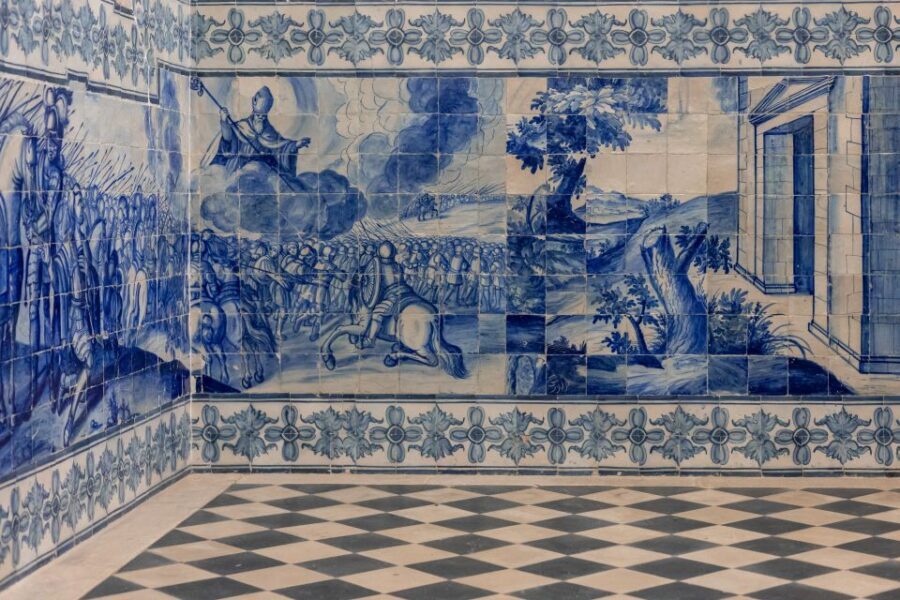
This is where I think you’ll enjoy the visit most if you like details. The cloister area and the 18th-century tile panels are the kind of thing you could race through in five minutes, but they are much more satisfying when you give them a bit of attention.
The tiles here do two jobs at once. They are beautiful, yes. But they also act like visual storytelling, lining the space with images that make the convent feel lived-in, not just preserved.
If you want to get the most out of your hour, spend your time in a simple rhythm: enter, look up, then look closer. You’ll find your eye adjusting to patterns and colors, and suddenly the visit feels less like a checklist and more like a place you’re passing through.
Also, if you’re trying to avoid crowd noise, this is a good zone. One of the advantages of this stop is that many people concentrate on the main outdoor viewpoint, while the church and monastery areas can feel calmer.
Inside the church: gilded woodwork and a ceiling you should actually look at
The church experience is not only about the big form; it is about the finishing. You’ll see gilded woodwork and grisaille paintings on the ceiling.
Grisaille is a great word to remember because it hints at the style: shades of gray used for a painted effect. In a ceiling setting, that kind of painting can look like depth or drama even when it is monochrome in tone.
Take a moment to look around before you rush onward. The church interior is where you can feel the Graça complex as a real functioning devotional space, not just a structure for selfies.
And since your ticket includes access to spaces like the high choir, you may get vantage points that help you understand the layout. Even if you’re not a religious-history buff, it helps to see where people would have gathered and watched.

The Senhor dos Passos connection and the Graça-to-São-Roque procession
Graça has a specific reputation connected to a devotion tied to Senhor dos Passos. In 1586, the convent became famous for housing Senhor dos Passos, and starting the following year, it was associated with a procession that ran from Graça to São Roque.
Why does this matter for your visit? Because it gives you a reason to connect what you see inside to what people did outside. The convent complex isn’t just architectural. It is part of a ritual calendar and a movement across Lisbon streets.
Even if you do not witness any ceremony yourself, that context changes the way you interpret the spaces. You start looking at the complex like it has hosted emotion, gathering, and repeated moments of meaning over centuries.
Climbing up to the terrace: São Jorge Castle, Tagus River, bridge, and Cristo Rei
Then comes the part that usually wins people over: the terrace. After exploring the convent and church, you climb up to a viewpoint facing one of Lisbon’s most impressive panoramas.
From here, the city opens up in layers. You can see São Jorge Castle, the Tagus River, and the old bridge. On clear days, the horizon stretches far enough that you can also see Cristo Rei, the Christ statue across the river.
That combination is what makes the view feel complete. Many viewpoints give you one highlight. This one threads multiple landmarks into a single visual story.
If you bring binoculars, you’ll likely enjoy how the distant details become more than shapes. And a camera helps you capture the feeling of scale, especially if you’re trying to remember how Lisbon looked before you moved on to the next neighborhood.
Making the most of the visit: how to plan your 1 hour well
A one-hour visit means you need a simple game plan. Here’s the approach I recommend:
- Start inside at a steady pace, then save the terrace for when you’ve let your eyes adjust.
- Give the cloister and tile panels a deliberate look, especially if you enjoy visual storytelling.
- When you reach the church, pause long enough to take in the gilded woodwork and the ceiling style.
- On the terrace, aim for photos first, then use binoculars second—your time on top should be relaxed, not frantic.
Weather can matter too. Lisbon can feel breezy at viewpoints, and one common experience is that the wind can make the terrace less comfortable if you’re underdressed. I’d bring a light layer even in milder seasons, especially because the climb and exposure can feel colder than the streets below.
Also, if you want a calmer interior experience, you’ll likely enjoy focusing your energy on the church and monastery areas rather than only hunting for the loudest outdoor spot.
Who should book this Graça access, and who should skip it
This visit is a great fit if you want an efficient Lisbon experience. It suits people who like:
- architecture and decorative details like tiles
- a quick history lesson you can actually see in front of you
- a strong viewpoint payoff without paying for a long tour
It is not a good match if:
- you use a wheelchair, since it is not suitable for wheelchair users
- you are sensitive to heights or altitude sickness (it is not suitable for people with altitude sickness)
- you dislike stairs, because the terrace climb is part of the deal
If you’re traveling with older legs, wear supportive shoes and assume you’ll be going up more than once.
Practical logistics: vouchers, language, and what to expect on-site
This is straightforward, but there are a couple steps to know. When you arrive, you must present your voucher at the ticket office and exchange it for an entrance ticket.
Once you’re in, the experience follows a timed structure. Your ticket entry is set up with a valid 1 hour from first activation, so don’t plan on lingering for hours.
Language support is helpful: the host or greeter is available in Portuguese and English. That makes it easier to ask quick questions if you’re unsure where to go next.
Your included access focuses on the key internal spaces plus the viewpoint climb: terrace, high choir, and upper cloisters. If you’re expecting guided narration the whole time, be aware that the data here doesn’t promise a full guided talk for the entire route.
Should you book Graça Church and Convent Terrace access?
Yes, I’d book it if your goal is to get authentic Lisbon heritage plus a top-tier view in a short time. The value is strongest for people who enjoy interior details like cloisters, tiles, and church ornamentation, then want the terrace payoff of Lisbon’s skyline with São Jorge Castle, the Tagus River, the old bridge, and Cristo Rei.
Skip it only if stairs are a deal-breaker for you or if altitude-related discomfort is an issue. Otherwise, it is a smart, compact experience that gives you more than a quick photo: you walk through centuries, then look out and understand why Lisbon feels built on dramatic geography.
FAQ
How long is the Graça Church and Convent terrace access experience?
It lasts about 1 hour.
How much does it cost?
The price is listed as $7 per person.
What is included with the ticket?
Entry to the Convent and Church of Graça, including access to climb to the terrace, the high choir, and the upper cloisters.
What should I bring for the terrace?
Bring a camera and binoculars.
Where do I need to use my voucher?
You must present your voucher at the ticket office and exchange it for an entrance ticket.
Is this experience suitable for wheelchair users?
No, it is not suitable for wheelchair users.
Is it suitable if I have altitude sickness?
No, it is not suitable for people with altitude sickness.
What languages are available?
Portuguese and English are available.
Is free cancellation available?
Yes, you can cancel up to 24 hours in advance for a full refund.
FAQ
Is drinks included?
No, drinks are not included.
What is the best part for photos?
The terrace viewpoint, with views including São Jorge Castle, the Tagus River, the old bridge, and Cristo Rei.