REVIEW · LISBON
City Tour, wonders of ancient Lisbon through the monuments
Book on Viator →Operated by Experience Tour · Bookable on Viator
Lisbon can feel like a puzzle at first. This tour is a smart way to fit major monuments into a short 1 hour 45 minutes without burning your legs on steep hills. I really like the private-group setup, and I like how guides like Carlos keep the route photo-friendly and flexible with pickup.
The other big plus is practical comfort: you ride in an air-conditioned vehicle with Wi-Fi and water, then hop out for key viewpoints. The main drawback is simple: the schedule is tight, so you’ll be doing quick stops rather than lingering for hours in each place—plan for lots of walking between scenic moments.
In This Review
- Key highlights to decide fast
- Getting Around Lisbon’s Slopes Without Losing Your Day
- Parque Eduardo VII: A Calm Start Before the Viewpoints
- Lisbon Cathedral: 1147 Beginnings on Mosque Ground
- Santa Engrácia’s Baroque Impact and the National Pantheon
- Alfama: Fado Lore, a Fountain Story, and Real Neighborhood Texture
- Miradouro Das Portas Do Sol: Tagus Views in a Quick Hit
- Miradouro Da Senhora Do Monte: Highest Point Feel and Castle-Edge Views
- Royal Palace Square After 1755: What Survived and What Changed
- The Marquis Monument: Reconstruction Mentorship in Stone
- Pedro IV/Pedro I Square and Rossio Train Station’s Grand Presence
- Price and Value: $36.05 for a Private Lisbon Highlights Sprint
- What a Great Guide Does Here (Carlos and Andre as Examples)
- Who This Tour Fits Best
- Should You Book This Lisbon City Tour Through Monuments?
- FAQ
- How long is the Lisbon monuments tour?
- Is pickup included?
- What language is the tour in?
- Is the tour private?
- Do stops require paid admission?
- When do I receive confirmation after booking?
Key highlights to decide fast
- A private tour means it’s just your group, not a big herd of strangers.
- Guide Carlos (and Andre) is known for clear explanations and lots of time for photos.
- Miradouros on two levels: Portas do Sol for Tagus views, plus Senhora do Monte for the highest lookout.
- Alfama + fado lore: you’ll hear about the fountain tied to where fado is said to have begun.
- Built-in Lisbon layers: from a cathedral dating to 1147 to sites tied to the 1755 earthquake and rebuilding.
Getting Around Lisbon’s Slopes Without Losing Your Day
Lisbon is beautiful, but it’s not flat. This kind of monuments tour helps you get your bearings fast, because you’re not guessing where the best views are or how to stitch together far-apart stops.
You start with pickup offered by the operator, in a comfortable vehicle with air conditioning plus Wi-Fi and water. That matters more than it sounds. On hot days, the ride keeps you from arriving wiped out. If you’re jet-lagged, you’ll still be able to enjoy the walk-and-view part instead of just surviving it.
The tour also uses a mobile ticket, so you’re not fiddling with paper. And since it’s offered in English, you can actually follow what you’re seeing while the guide points out details you’d likely miss on your own.
You can also read our reviews of more city tours in Lisbon


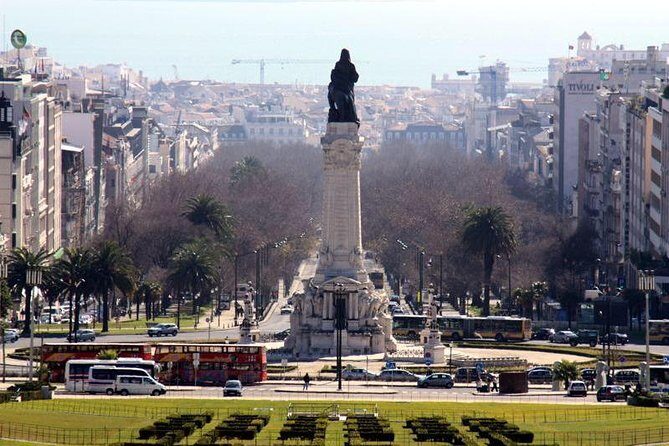
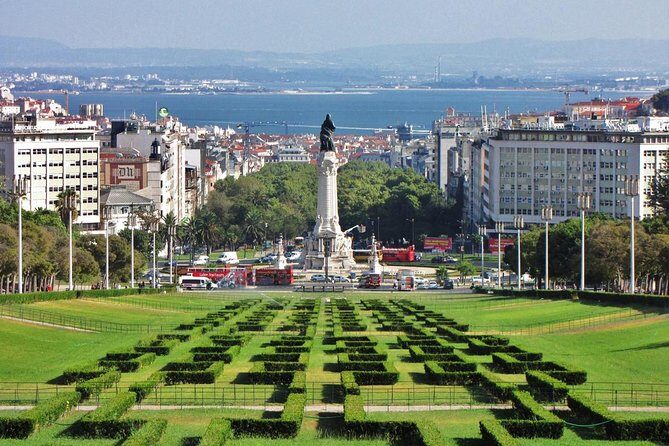
Parque Eduardo VII: A Calm Start Before the Viewpoints
The route kicks off at Parque Eduardo VII, a garden built in honor of the King of England. It’s a nice warm-up stop because it’s not a sprint into stone and artifacts right away. You get a breather, some shade if the weather is kind, and an easy place to reset your energy.
This stop is also a good reminder that Lisbon’s story isn’t only about cathedrals and earthquakes. It includes gardens, monuments to foreign ties, and public spaces that help the city feel lived-in, not museum-only.
Expect a contemplative visit—about five minutes—and treat it like a pacing tool. If you’re the type who likes to observe people and street life later, this is where you start slowing down.
Lisbon Cathedral: 1147 Beginnings on Mosque Ground
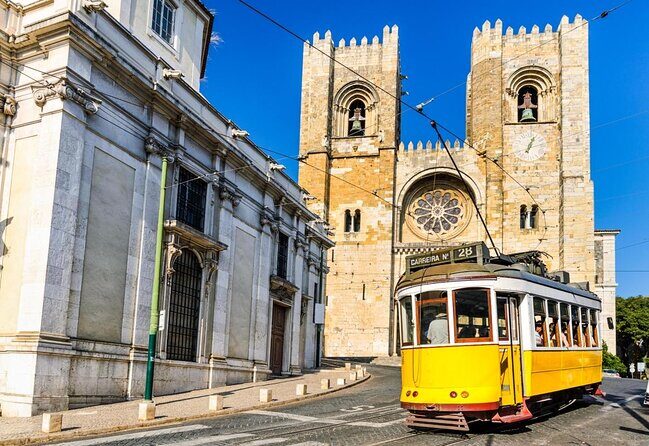
Next is Lisbon Cathedral, a site with construction beginning in 1147. The key detail here is the layered setting: construction began where there had once been a Muslim mosque. That single fact helps you read the city differently.
You’ll likely get a quick orientation on what the building represents and why this place stayed important over centuries. Even if you don’t consider yourself a history person, this stop can click because it’s tangible. The architecture and the location point to change over time rather than one single era.
The visit is about ten minutes. That’s short, but that’s also the point of this tour. You’re getting the “why this matters” version of the cathedral without turning the day into a scavenger hunt.
Santa Engrácia’s Baroque Impact and the National Pantheon
After the cathedral, the route shifts to the baroque church of Santa Engrácia, which was designated Pateão Nacional (National Pantheon) in 1966. The tour doesn’t treat Santa Engrácia like a background stop. It’s presented as a notable monument on its own.
Baroque churches tend to overwhelm you if you’re not paying attention. So in a shorter visit, it helps to listen for what your guide points out—big-picture style cues, what makes the space feel grand, and how the later national-pantheon status changes the meaning.
If you enjoy seeing how older architecture can take on new roles, this is where you’ll feel that shift most clearly. It’s also a good stop for photos, because baroque façades and church exteriors usually reward quick angles.
Alfama: Fado Lore, a Fountain Story, and Real Neighborhood Texture
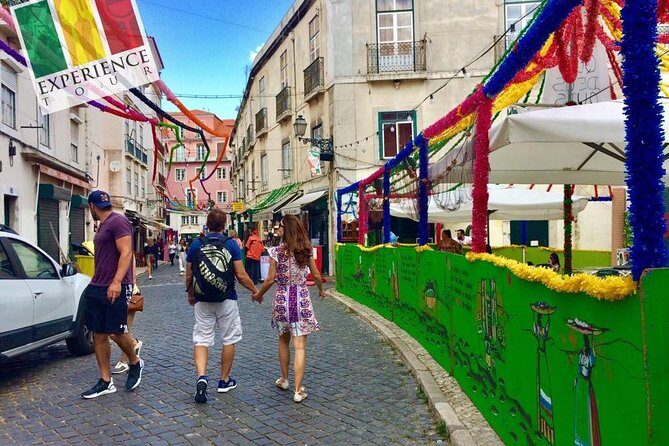
Then you drop into Alfama, Lisbon’s older, bohemian-feeling district. This stop is about more than views. It’s about atmosphere.
You’ll visit a fountain said to be where fado was born, plus you’ll get a feel for the neighborhood rhythm. Alfama is the kind of place where it’s easy to lose time just wandering, so a guided stop is a practical way to sample it without turning your schedule into chaos.
One extra note: you may be able to taste ginjinha here. The tour information frames it as part of the experience, and that’s a fun way to take Lisbon in with your senses, not just your eyes. If you do try it, keep the pace slow—this route still has viewpoints coming.
Because the stop is around fifteen minutes, I suggest focusing on one thing: either the fountain area and quick street scenes, or photographing the alleys and building texture. Trying to do everything at once can make you feel rushed.



Miradouro Das Portas Do Sol: Tagus Views in a Quick Hit
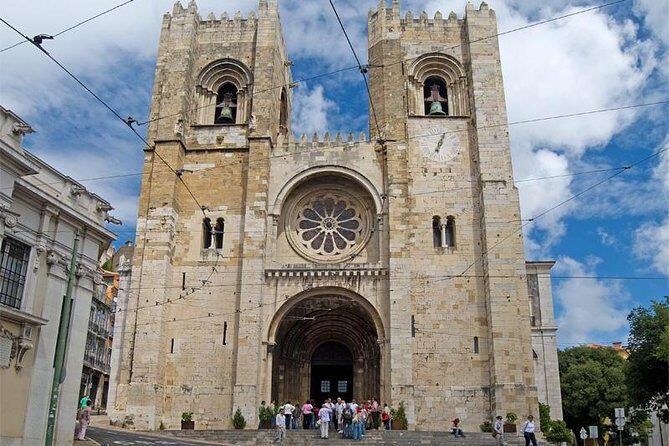
Now you hit one of the classic Lisbon move: the miradouro. Miradouro Das Portas Do Sol is described as a large balcony with a privileged view of the Tagus.
This is where the tour pays off for people who want real Lisbon scenery without spending half the day hiking uphill. The view doesn’t require a deep plan. You show up, you look, and suddenly the city makes sense.
You’ll get about ten minutes here. That’s enough to:
- spot the river and understand how the hills drop toward it
- grab photos without turning it into a half-hour wait for the perfect angle
If it’s sunny, this is the stop where you’ll want your phone charged and ready. If it’s hazy or windy, you can still appreciate the geometry of the river and the rooftops.
Miradouro Da Senhora Do Monte: Highest Point Feel and Castle-Edge Views
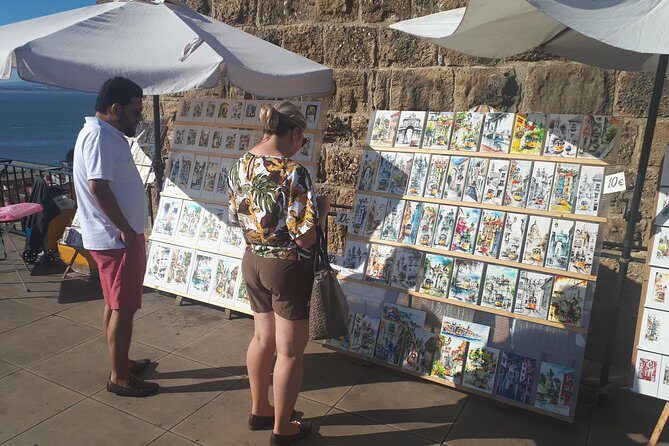
Next is Miradouro Da Senhora Do Monte, the highest point in Lisbon. It’s on the shores of São Jorge Castle, looking over the old city of Lisbon.
If Portas do Sol is your “main postcard” view, Senhora do Monte is your “zoomed-out proof” view. From here, you understand how the neighborhoods stack, how the hills guide movement, and why Lisbon feels dramatic at every turn.
This stop is about ten minutes. In that short time, I like to focus on the horizon line and the spread of rooftops. It helps you connect the earlier Alfama stop to the bigger map in your mind.
Also, because it’s the highest point, dress accordingly. Even mild weather can feel cooler and breezier at elevation.
Royal Palace Square After 1755: What Survived and What Changed

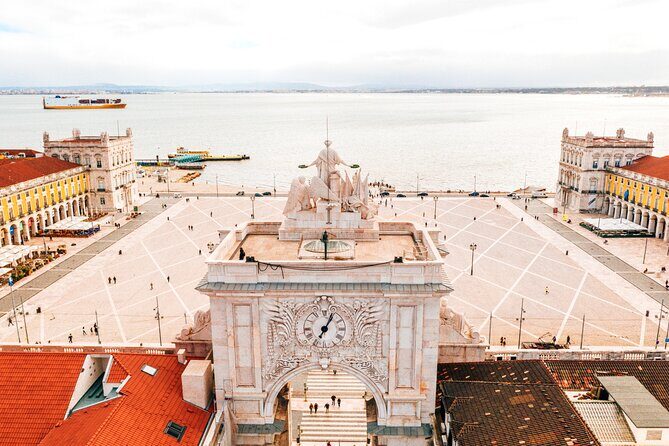
Then the route steps into Lisbon’s turning point: the 1755 earthquake era. You’ll visit the place where the Royal Palace was located before the earthquake. Today it’s a large square surrounded by 18th and 19th century buildings.
This is a powerful stop even when it’s brief. You’re looking at a site that represents loss and rebuilding, and the surrounding architecture hints at what came next. It’s one of those “you can feel the timeline” moments, because Lisbon’s present form is tied to what happened centuries ago.
The short duration works here too, because the goal is to make you remember the context when you see other rebuilt areas later. It’s less about memorizing dates, more about understanding why certain parts of Lisbon look the way they do.
The Marquis Monument: Reconstruction Mentorship in Stone
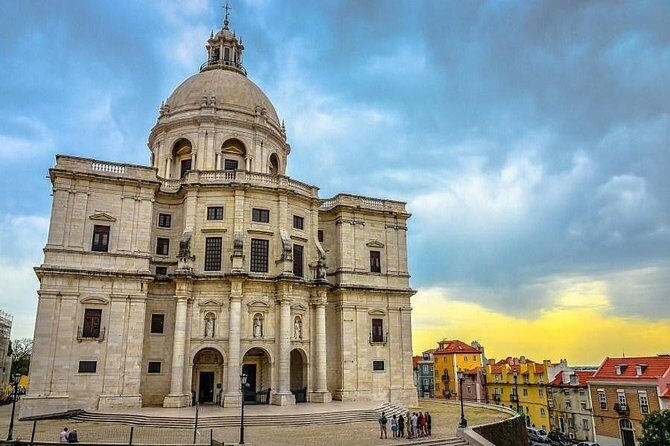
From the palace square, the route includes a monument honoring the Marquis who was the mentor of the reconstruction of Lisbon after 1755. This is another stop built around context: the city’s recovery wasn’t accidental. It was guided.
Even if you’re not a Portugal-studies person, I find these monuments useful because they give names and roles to what would otherwise feel like a big historical event with no human scale. A quick explanation at the right spot can make the whole earthquake story feel less vague.
Expect a short stop. Treat it like a mental bookmark. You’ll likely remember it later when you notice how the city is structured.
Pedro IV/Pedro I Square and Rossio Train Station’s Grand Presence
The tour also visits a square in the center with a statue of Pedro IV or Pedro I in Brazil. That’s a small detail with big cultural meaning, because it reminds you Lisbon’s influence and connections stretch beyond the Iberian Peninsula.
Then you end with one of the most beautiful train stations, inaugurated at the end of the 19th century and located on the outskirts of Rossio Square. Rail stations in big European cities are often more than transit. They’re civic symbols.
This final stop is a smart way to close the day. After hills, viewpoints, and older neighborhoods, you finish with a landmark that signals Lisbon’s movement into modern life. If you like photographing architecture, this is a great place to get one last strong shot before you head off on your own.
Price and Value: $36.05 for a Private Lisbon Highlights Sprint
At $36.05 per person for about 1 hour 45 minutes, this tour is priced in the “efficient highlights” category. The value comes from two things.
First, you’re covering multiple major sights in one loop: cathedral, Alfama, two miradouros, 1755-related sites, a major central square, and Rossio-area rail architecture. Doing that on your own would mean more time planning routes and dealing with transport logistics in hilly areas.
Second, the tour focuses on stops where admission is noted as free for several key points, including Parque Eduardo VII, Lisbon Cathedral, and the miradouros. Even when entry isn’t the headline, you’re not paying extra again and again just to access the experience.
It’s also private. Many short “highlights” tours end up feeling crowded, rushed, or hard to tailor. Here, the private-group format supports pacing. Guides like Carlos are specifically praised for caring for people at each stop and for keeping the route practical.
What a Great Guide Does Here (Carlos and Andre as Examples)
A big reason this tour earns top marks is the guide style. Carlos is praised for being friendly, flexible with pickup, and for finding good viewing points. The key skill is making sure you can actually see what you came for.
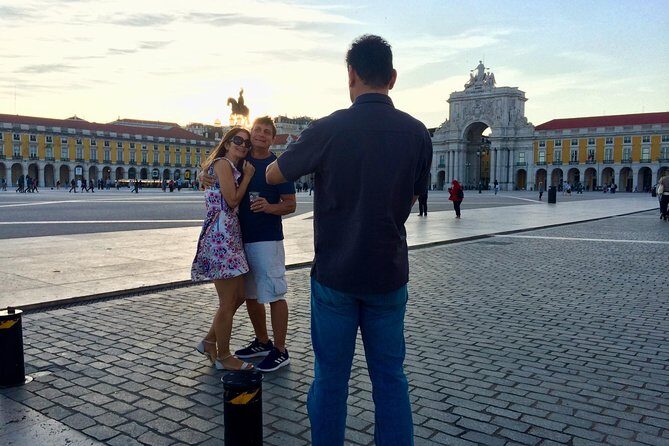
Another theme is photo management. Andre is mentioned as taking time for pictures at each viewpoint and even sending photos by email with permission. That’s the kind of extra that can make a difference if you’re traveling as a couple, with older parents, or without a confident photographer in the group.
Also, one helpful detail: guides are described as flexible, not rigid. If you want extra time at a viewpoint or need to slow down for photos, the tour has a reputation for working with you.
Who This Tour Fits Best
This is a good fit if you:
- want the biggest Lisbon landmarks without spending the day figuring out routes
- prefer guided context fast, especially for cathedral and earthquake-era sites
- like viewpoints but don’t want to do the uphill grind on your own
It also works well as a first-day tour. If you’re arriving feeling tired or jet-lagged, this type of route helps you get oriented quickly and then enjoy Lisbon more leisurely later.
If you’re the type who likes to stay inside churches for a long time or spend an hour in one neighborhood café, you might find the pace a bit quick. But for a highlights sprint, it’s built for that.
Should You Book This Lisbon City Tour Through Monuments?
I’d book it if you want a tight, efficient Lisbon overview with a private guide and real viewpoint time. The route connects the city’s major layers—older religious roots, Alfama neighborhood texture, river miradouro panoramas, and the 1755 rebuilding story—without forcing you to spend all day commuting uphill.
Skip it only if you strongly prefer slow travel, long museum-style stops, or deep time in one place. This tour is about seeing a lot and understanding the meaning behind it, not about lingering for hours at each monument.
If you can, plan to book ahead. The experience is typically booked about 25 days in advance, which suggests it moves quickly in peak periods.
FAQ
How long is the Lisbon monuments tour?
It lasts about 1 hour 45 minutes.
Is pickup included?
Pickup is offered, with a transfer in a comfortable vehicle with air conditioning, Wi-Fi, and water.
What language is the tour in?
The tour is offered in English.
Is the tour private?
Yes. It’s a private tour/activity, so only your group participates.
Do stops require paid admission?
The information lists admission as free for multiple stops, including Parque Eduardo VII, Lisbon Cathedral, and the miradouros.
When do I receive confirmation after booking?
Confirmation is received within 48 hours of booking, subject to availability.