REVIEW · LISBON
7 Days Private Tour In Portugal from Lisbon
Book on Viator →Operated by walkborder · Bookable on Viator
Portugal is a lot in one week.
This tour is built to cut your planning time. You get a complete 7-day route with hotel pickup/drop-off, private-vehicle travel between sights, and an English-speaking driver/guide who helps keep everything moving. I especially like how the day-to-day schedule hits big UNESCO wins (Sintra and Evora) without making you coordinate trains, tickets, and connections yourself.
Two more things I like: door-to-door pickup means you start the day without hunting for a meeting point, and WiFi on board helps you deal with maps, messaging, and ticket management on the go. One consideration: admission fees and meals are not included, so a few of the more famous stops will add cost once you’re there.
If you care about details, the human touch matters. The operator lists named coordination (Hugo Goncalves) to adjust the experience to your priorities, and one guide mentioned by name is Manuel Da Silva, described as attentive to preferences.
In This Review
- Key highlights that matter (not just nice words)
- One week, big distances: why a private loop is worth it
- Lisbon in a day: Baixa, Alfama, Belém, and Pastéis de Belém
- Sintra’s palaces and the Atlantic edge: Pena options, Cabo da Roca, Cascais, Estoril
- Fatima to Coimbra to Porto: sacred sites plus Portugal’s most photogenic library
- Porto by walking and tiles: São Bento, San Francisco, and a Gaia tasting
- Douro Valley from Pinhão: winery tasting and the Casal de Loivos viewpoint
- Back toward Lisbon: Aveiro canals, Nazaré waves, and Óbidos walls
- Evora’s Roman traces and the Bones Chapel, then wine and cork in Alentejo
- Price and value: what $2,165.28 per person really buys
- Who should book this tour (and who might want to slow down)
- Should you book this 7-day private tour from Lisbon?
- FAQ
- How long is the 7 Days Private Tour In Portugal from Lisbon?
- Where does the tour start, and what time do we begin?
- Do I need to go to a meeting point?
- Is transport private?
- What language is the tour offered in?
- What’s included in the price?
- What is not included?
- Does the tour provide WiFi?
- Is this tour really private for just my group?
- What is the cancellation policy?
Key highlights that matter (not just nice words)
- UNESCO-listed hits in a tight schedule, especially Sintra and Evora
- Private-vehicle comfort so you spend less time on logistics and more time on sights
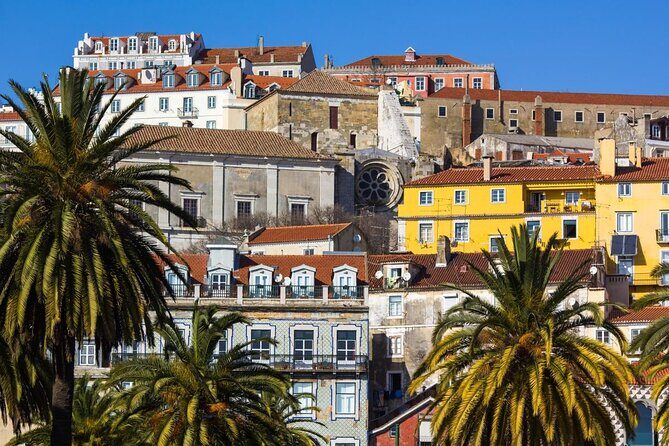
- Lisbon + Porto + Douro + Alentejo in one loop, with hotel pickup and drop-off
- Practical guide style, including named pre-trip adjustment support (Hugo Goncalves)
- Wine and cork experiences that go beyond photo stops (Gaia cellar, Douro winery, Corticarte)
One week, big distances: why a private loop is worth it
Portugal is not “one-city sightseeing.” It’s hopping between very different regions—coast, hills, religious centers, university towns, and wine country. This tour’s main value is the private vehicle routing: it turns a chaotic “I’ll figure it out” trip into a guided flow.
I also like that the itinerary is structured around neighborhoods and specific landmarks, not just long driving breaks. That means you’re getting walking time in places like Alfama in Lisbon and the old quarters in Coimbra and Evora, where the streets are part of the story.
There’s another quiet win: a private format usually makes it easier to adapt pacing. Even the description of pre-trip coordination (Hugo Goncalves) points to customizing based on your priorities, and the mention of Manuel Da Silva being attentive reinforces that this isn’t only about reading from a script.
You can also read our reviews of more private tours in Lisbon



Lisbon in a day: Baixa, Alfama, Belém, and Pastéis de Belém
Day 1 is a strong “state of the city” overview, and it’s paced so you see Lisbon’s layers. You start in Baixa de Lisboa, the rebuilt downtown after the 1755 earthquake. The grid plan—straight, perpendicular streets organized around Rua Augusta—was an anti-seismic response, and it’s a useful reminder that Lisbon’s beauty also comes from engineering choices.
Then you shift gears to Alfama, Lisbon’s oldest quarter. This is where the medieval maze feel makes sense: small rows and alleyways were part of a defensive system during the Arab period, then Alfama kept its authentic character through later changes. It’s also the setting for fado’s roots, and you’ll get the sense of saudade as more than a word—more like an atmosphere.
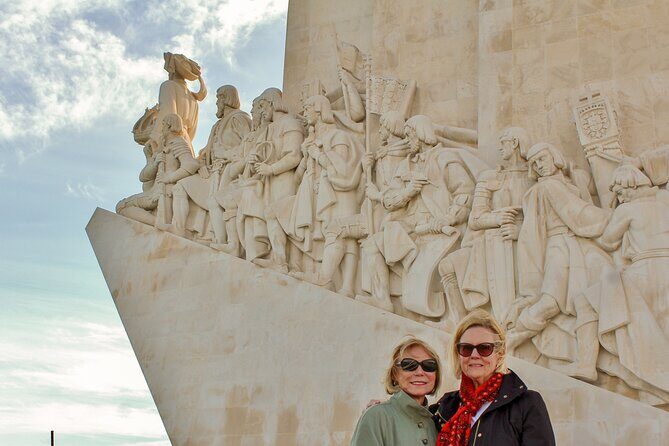
After that, it’s off to Belém, the historic launching point for voyages in Portugal’s Age of Discoveries. Expect Jerónimos Monastery area highlights, plus Belém Tower and the Monument to the Discoveries. These stops are worth it because they connect Lisbon’s waterfront to a bigger national story, not just “another tower photo.”
Finally, you end with the classic sweet stop: Pastéis de Belém at the century-old factory. Tickets there aren’t included, but this is one of those places where planning ahead saves you time and stress.
Practical note: Lisbon’s neighborhoods can mean hills and lots of steps. Comfortable shoes are non-negotiable if you want to enjoy the streets instead of just surviving them.
Sintra’s palaces and the Atlantic edge: Pena options, Cabo da Roca, Cascais, Estoril
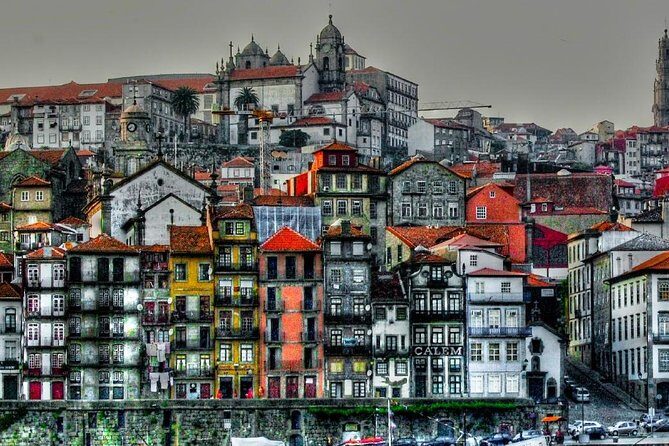
Day 2 is where the tour really earns its “more than a city day” reputation. Sintra is a UNESCO-listed standout, and you start with the Centro Histórico de Sintra—narrow lanes, regional shops, and classic snack stops. A highlight here is the Piriquita pastry stop for Queijadas de Sintra and Travesseiros de Sintra, which are simple but deeply Sintra.
Next comes the palace zone. The itinerary frames your choice around major possibilities near the area—Pena Palace, plus the Moorish Castle testimony of Islamic presence, and even Quinta da Regaleira as an option with striking decoration and symbolism. The key is that you’re not locked into one palace only; the guide suggests what might fit best and you’ll decide among these.
From there, you hit Cabo da Roca, the Snout of the Rock where the land meets the Atlantic. It’s famous for the poetic line about where earth ends and sea begins, and it’s also a practical spot to feel the scale of Portugal’s western coastline. You can also walk ecological rails in the Serra de Sintra area if you want a little stretching time.
Then it’s Cascais for an easy coastal break—an old fisherman’s village turned beach resort. The tour also includes the Estoril connection on the way back, with the casino tie-in and the Ian Fleming 007 writing story mentioned for historical flavor.
Tradeoff to know: palace and castle tickets are not included, so plan on paying for at least one major interior experience. The flip side is that you’ll likely get better timing and less “missed gate” stress than if you DIY.
Fatima to Coimbra to Porto: sacred sites plus Portugal’s most photogenic library
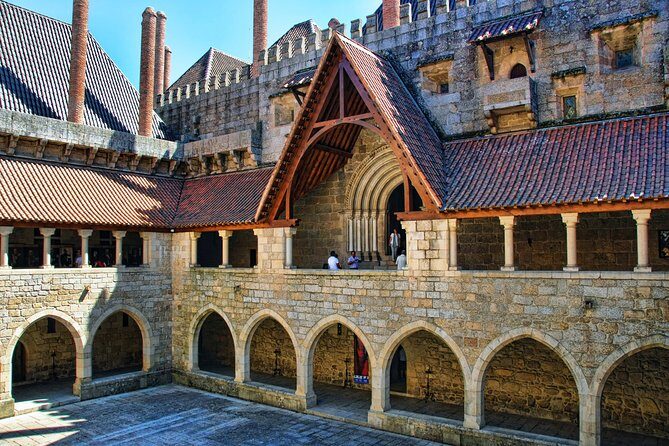
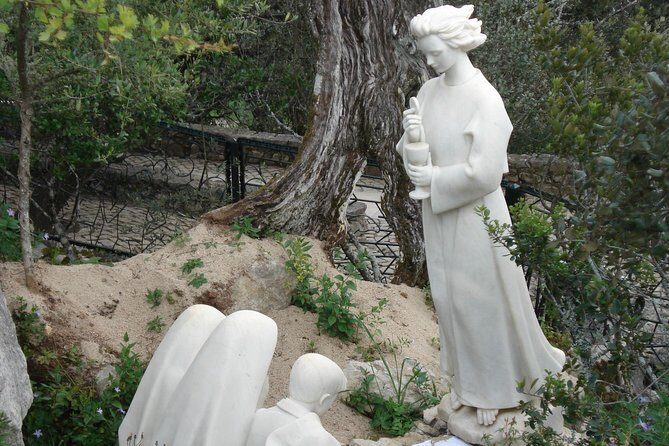
Day 3 is a long but meaningful shift away from coast. It starts at the Fatima Sanctuary area, beginning with the Museu do Santuario de Fatima. You then move through key spiritual stops: the Chapel of the Apparitions and the Basilica de Nossa Senhora de Fátima. The tomb details make it feel grounded, not abstract—children’s tombs and Sister Lucia’s tomb are part of what you see.
Mass is described as optional, and that matters because it changes the vibe. Even if you don’t attend, it’s still a place where you’ll notice how architecture and design keep the focus on devotion and movement through spaces.
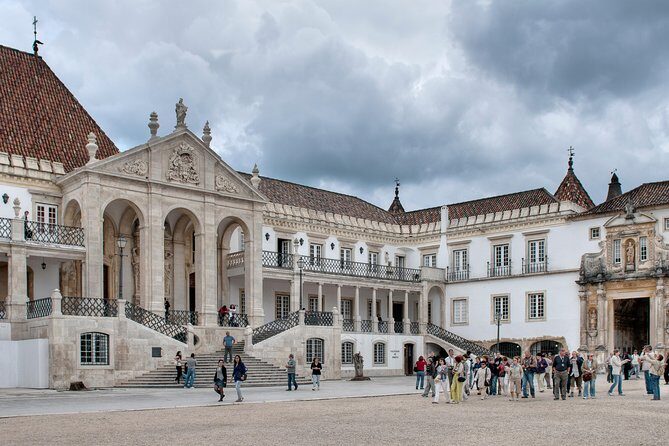
After Fatima, you head to Coimbra. The big cultural anchor is Coimbra University, including the Joanine Library. The library is called out as one of the most beautiful in the world, and the details you’ll hear—how it was built on the former prison of the University and the artwork—make it more than just a “pretty room” stop.
Then you get time in Se Velha de Coimbra, the downtown area between the Mondego River and the University. This is where you can slow down with cafés and pastry shops in the tight alleys and squares, which is a good reset after cathedral-and-library intensity.
You end the day in Oporto, with an overnight there so Day 4 can feel like a proper city day rather than a rushed drive-through.
Porto by walking and tiles: São Bento, San Francisco, and a Gaia tasting
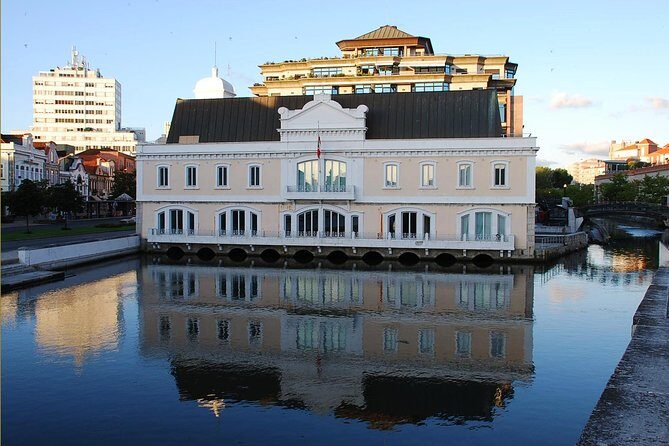
Day 4 is structured around Porto’s identity: streets, stations, churches, and port cellars across the river. You start at Avenida dos Aliados and the Porto City Hall, the kind of spot where the city’s “public life” energy shows up fast.
Next, you have the choice-heavy classic: Livraria Lello. The place is described as a major attraction for architecture lovers and Harry Potter fans, especially due to the staircase. Even if you’re not hunting literary connections, it’s a good stop for design and scale.
Then comes the “how is this so beautiful?” moment: São Bento Railway Station. The station is known for about 20,000 tiles by Portuguese artist Jorge Colaco, depicting scenes that create a visual trip through Portugal’s North. It’s a stop that works even if you only have an hour, because the details reward slow looking.
You also loop in the Oporto Cathedral area, with a Roman-Gothic structure dating from the 12th century and later renovations, plus the medieval rosacea and other tile-focused exterior notes you’ll hear.
After that, the itinerary turns to faith and art: Church of San Francisco. It’s described as Romanesque origin transformed into Gothic, then Baroque additions. The gold-dust mention and the Tree of Jesse sculpture are the kind of details that stick.
Finally, you cross into Gaia for port wine aging. Instead of just pointing at barrels, the tour includes a cellar visit with atmosphere and a tasting, plus an explanation from harvest through production. That pairing—story plus taste—makes the wine experience feel connected to place.
You can also read our reviews of more tours and experiences in Lisbon



Douro Valley from Pinhão: winery tasting and the Casal de Loivos viewpoint
Day 5 focuses on the Douro region, and it hits three essentials: rail-town tile beauty, a real winery visit, and the view that makes you understand why people keep coming back.
You start in Amarante at Igreja de São Gonçalo, with medieval references and strong local identity. A fun and slightly hilarious detail is the “quilhõezinhos de S. Gonçalo” sweets at the convent area, with a tradition tied to June festivities and young love. If you enjoy culture through food myths and local jokes, this stop lands well.
Next, the tour heads to Pinhão Railway Station, built in the 19th century and known for tile scenes showing Douro life—grape work, wine production, and rabelos boats that carry wine downriver. The station feels like a museum you can stand in while still traveling through a functioning rail area.
Then you visit Quinta do Tedo, described as part of the oldest wine region in the world. You’ll get a walkthrough of winemaking methods and then taste wines. It’s not just a sales stop; the itinerary emphasizes learning how grapes and wine styles are shaped by the region.
The day finishes with Casal de Loivos Viewpoint, described as the best viewpoint at the Douro Valley. Even with a short time window, it’s the kind of stop that helps everything else make sense—river, terraces, vines, and distance.
Time tip: keep a light layer for Douro viewpoints. Coastal winds can show up even when the rest of the day feels warm.
Back toward Lisbon: Aveiro canals, Nazaré waves, and Óbidos walls
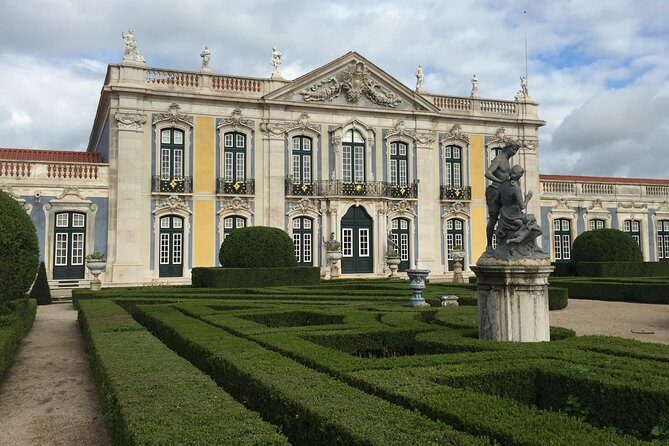
Day 6 is the return arc, and it’s packed with coastal and inland stops so it doesn’t feel like a travel day. You start with Aveiro, described as the Portuguese Venice. The tour suggests a boat ride on a moliceiro to understand the canals and how seaweed (moliça) and salt relate to the city.
Even if you skip the boat ride, Aveiro is still useful for how it shows Portugal’s mix of industry and leisure, and the Aveiro Railway Station is specifically called out for wrought iron and glass details similar to Eiffel-style metalwork.
Then you head to Nazaré, a pictorial village with churches and traditional houses that keep the atmosphere visual. The itinerary includes the Nazaré Cannon wave story, with a 2013 mention that McNamara broke a world record surfing around a 30-meter-high wave. You’ll also hear about the “seven skirts” tradition—another culture signal that’s easy to remember.
Finally, the day ends in Óbidos, which the itinerary calls out as a UNESCO world heritage site. This is your time-warp moment: narrow streets, whitewashed walls, and traditional shops inside medieval walls. It’s also framed with the story of Óbidos as a wedding gift from D. Dinis to D. Isabel and later use as part of the Casa das Rainhas until 1834.
What to expect: Óbidos is picture-friendly and compact. It’s also easy to lose track of time wandering inside the walls, so give yourself permission to slow down and snack.
Evora’s Roman traces and the Bones Chapel, then wine and cork in Alentejo
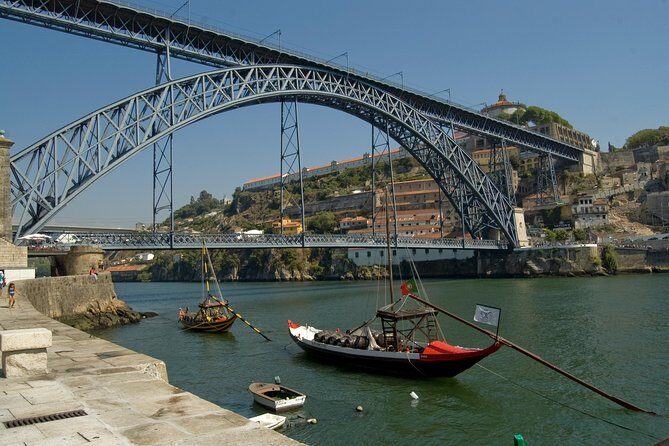
Day 7 is Alentejo. You go from Lisbon toward Evora, described as home to Portuguese kings and a convergence point for artists, supported by patronage. The itinerary also frames Evora as benefiting from the Discoveries era, which helped create favorable conditions for aristocratic mansions and institutions like the Jesuit university.
You start at the Centro Histórico de Evora, then see the Temple of Diana area and the aqueduct of Água da Prata, noted for 16th-century arches that still connect to the city story.
The standout emotional stop is the Chapel of Bones, connected to the Church of San Francisco. The tour highlights skulls and bones of 500 monks, plus the entrance message that invites you to reflect on mortality. It’s dramatic, and it’s one of those stops you either love for its blunt message or find heavy. Either way, it’s memorable.
After the city stops, the tour moves into regional production. Ervideira is included with a winery visit and tasting, with the note that the choice of winery follows the schedule. A specific example mentioned is Foundation Eugenio de Almeida and Cartuxa wines.
Then you finish with Corticarte – Arte em Cortica, a cork experience that’s actually more interesting than it sounds. You’ll learn about cork harvesting—bark removed about every nine years and thickness reaching around 25 centimeters—and why cork is light, elastic, and resistant to fire. The tour also connects cork to wine aging, explaining how cork allows small amounts of oxygen without spoiling the aging process, which helps you understand why cork matters beyond bottle tops.
Price and value: what $2,165.28 per person really buys
At $2,165.28 per person for an about 7-day private tour, you’re paying for logistics plus time. This price is not just “a guide in a car.” It includes a driver/guide, private-vehicle transport, WiFi on board, and all taxes, fees, and handling charges, plus personal accidents insurance.
What’s not included is just as important. Meals, hotels, and admission fees are listed as not included. The itinerary includes many stops with free admission (like some city-center walking areas), but several big-ticket sites have admission not included—examples include Pena Palace area options, the Jerónimos/Belém monuments grouping, and the Chapel of Bones, plus likely wine/cellar tastings and winery elements depending on the exact program.
Here’s the value angle I’d use: if you’d otherwise hire a private guide and figure out transport between multiple regions, you’d still pay for cars and scheduling help. The tour price packages those moving parts into one bill, and that reduces mistakes.
One more pricing reality: this is typically booked around 61 days in advance, so if you want a specific week or you’re traveling during peak season, start earlier rather than later.
Who should book this tour (and who might want to slow down)
This is a great fit if you:
- Want to cover Lisbon, Sintra, Coimbra, Porto, Douro, and Alentejo in one trip without playing transportation Tetris
- Care about UNESCO stops (Sintra and Evora) but still want wine, cork, and coastal flavor
- Like the idea of hotel pickup and drop-off so your days start clean
It might be less ideal if you prefer:
- Very slow travel with long free evenings in just one or two bases
- A trip where you don’t want to budget for admission fees on top of the tour price
The private format helps a lot. Since it’s only your group, you’re not sharing guide time with strangers, which usually makes pacing and small adjustments more realistic.
Should you book this 7-day private tour from Lisbon?
My take: book it if your goal is a well-run, high-efficiency Portugal week with minimal planning stress. The combination of private transport, major regions, and guided structure is exactly what you want if you’re short on time or you hate logistics.
I’d hold back only if you’re allergic to paying extra for entrances and tastings, or if you want long, unstructured days rather than a clear itinerary. If that sounds like you, you might be happier with a slower, smaller-region plan.
If you do book, do one thing that makes the biggest difference: share your priorities early so the guide can shape the pacing around what you actually care about.
FAQ
How long is the 7 Days Private Tour In Portugal from Lisbon?
It lasts about 7 days.
Where does the tour start, and what time do we begin?
The start time is 9:00 am.
Do I need to go to a meeting point?
No. Pickup is offered from your accommodation, and drop-off is included.
Is transport private?
Yes. The tour includes transport by a private vehicle.
What language is the tour offered in?
It is offered in English.
What’s included in the price?
Included items are the driver/guide, all taxes, fees and handling charges, private vehicle transport, WiFi on board, and personal accidents insurance.
What is not included?
Meals, hotels, and admission fees are not included.
Does the tour provide WiFi?
Yes, WiFi is provided on board.
Is this tour really private for just my group?
Yes. It’s described as private, with only your group participating.
What is the cancellation policy?
Free cancellation is available. You must cancel up to 24 hours in advance for a full refund.