REVIEW · LISBON
6-Day North Portugal Tour: Porto, Braga, Fátima, Coimbra, Guimaraes, Aveiro and Batalha, from Lisbon
Book on Viator →Operated by Cityrama · Bookable on Viator
Six days, one steady route through Portugal. This tour strings together the big Northern hits with real variety: medieval towns, Gothic monuments, and major sacred sites. I love the UNESCO stop power—Batalha and the Convent of Christ—because it gives you true “wow” moments without hunting for them on your own. I also love the built-in structure: timed guided visits plus enough breaks to breathe, not just rush.
Here’s the main reason this feels smart for many people: you’re not driving and parking, and you get five nights in superior-class hotels with breakfast. The one possible drawback is pacing. Even with a long free day in Porto, you still spend a lot of time moving by air-conditioned motor-coach, so if you want maximum time in one city, you may feel the schedule is tight.
A heads-up: places of worship and select museums require a dress code—no shorts or sleeveless tops, and shoulders and knees must be covered. Also, there’s no toilet on board the coach, so plan your timing around each stop.
In This Review
- Key highlights worth marking on your map
- Coach comfort and the reality of a full-route itinerary
- Óbidos, Batalha, Alcobaça, Nazaré: Day 1’s Gothic and seaside mix
- Fátima to Coimbra to Aveiro: University of Coimbra without the headache
- Porto’s guided morning: Bolsa, Saint Francis, and a port tasting
- Guimarães and Braga: the nation’s beginnings and Portugal’s Rome vibes
- Using Porto’s free day (Day 4) well
- Day 5 road trip: Amarante, Mateus gardens, Douro vineyards, and Lamego’s staircase
- Bussaco to Tomar: the forest pause and UNESCO Convento de Cristo
- Price and value: what you’re really paying for
- Who should book this tour, and who should skip it
- Should you book this North Portugal tour from Lisbon?
- FAQ
- Where does the tour start and end?
- Is pickup offered?
- How long is the tour?
- What’s included in the price?
- Are meals included besides breakfast?
- Which major attractions have admission included?
- Is there time to explore on your own?
- What dress code should I follow?
- What should I know about the coach?
Key highlights worth marking on your map
- UNESCO in two major styles: Batalha’s Gothic and Tomar’s Convent of Christ cover two very different architectural moods.
- Porto with a tasting built in: a guided morning in the city center plus a Port wine tasting in Porto city center.
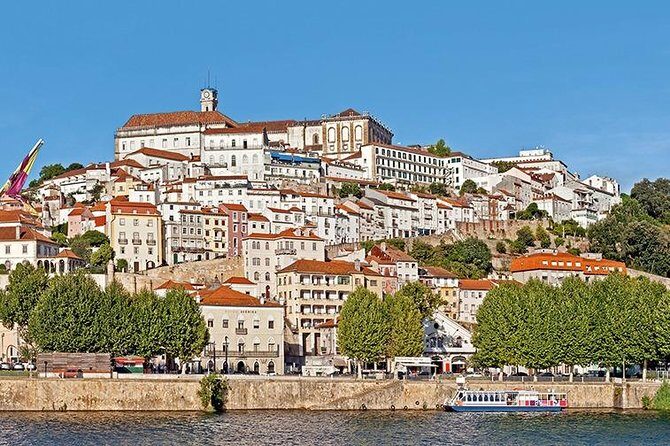
- Coimbra’s student traditions: the University visit includes the Baroque library and a feel for customs like black student capes.
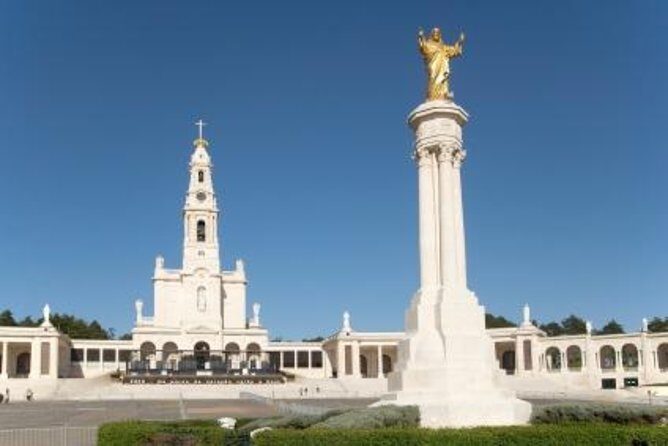
- Fátima’s core sites, not just the grounds: you visit the Basilica, the Capela das Aparições area, and the Sanctuary of Our Lady of Fátima.
- Guimarães “cradle of Portugal” viewpoints: Sacred Hill, the Castle area, and the Palace of the Dukes of Bragança.
- Aveiro time for canals and ovos moles: you get a dedicated stop for moliceiro-style canal cruising time and the local sweet.
Coach comfort and the reality of a full-route itinerary
This is a classic “see the North” style tour. You travel by a comfortable, air-conditioned motor-coach, with a professional guide and a maximum group size of 20 travelers. That small group limit matters. It usually means fewer awkward bottlenecks at gates and a smoother flow from one timed stop to the next.
Still, the rhythm is tour rhythm. Expect a moderate amount of walking, plus stairs at places like Bom Jesus do Monte. If you’re someone who likes to linger for an hour at one viewpoint, build your expectations around frequent stop-and-go.
One practical thing that affects your day: there’s no toilet on board. That makes timing important, especially on long transfer stretches. Use the scheduled stop windows wisely—when you see a chance, take it.
And yes, bring the right clothes. The tour calls for smart casual, but worship sites and selected museums are stricter: knees and shoulders must be covered, and you could be refused entry without it. I’d rather you pack a light layer than gamble on the outfit you wore for Lisbon.
You can also read our reviews of more tours and experiences in Lisbon
Óbidos, Batalha, Alcobaça, Nazaré: Day 1’s Gothic and seaside mix
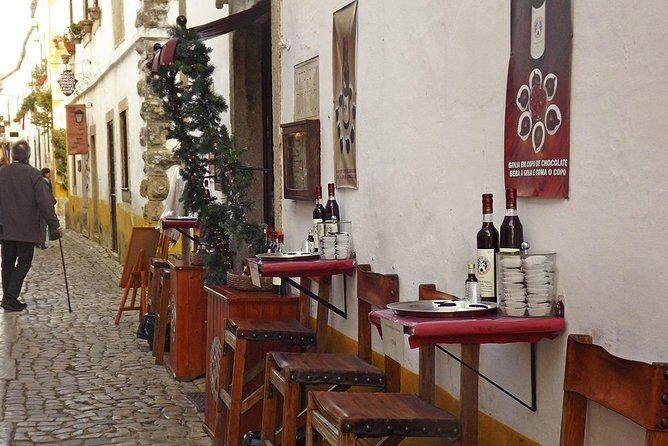
Day 1 is a full sweep from medieval Portugal to major religious landmarks. You start in Óbidos, a town wrapped by medieval walls with whitewashed houses and narrow streets. You get about an hour, which is long enough to walk the lanes and soak up the vibe without needing to plan anything complex.
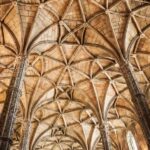
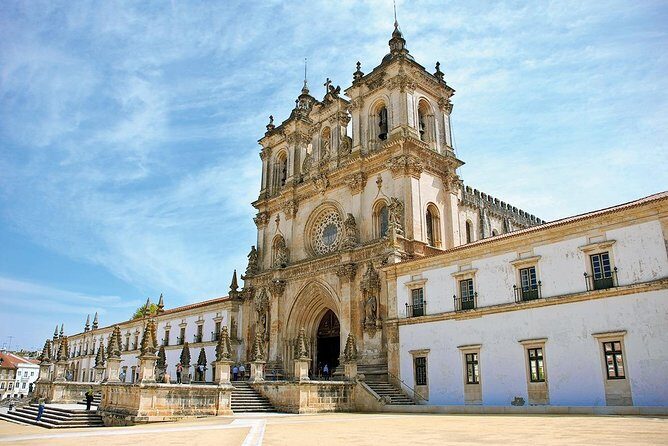
Next comes Batalha Monastery, a UNESCO World Heritage site and one of Portugal’s strongest Gothic statements. This stop is short—about 45 minutes—but the architecture is the point, so you’ll get value fast if you pace yourself and look up at the details.
After that, you stop in Nazaré for arts and crafts and time for lunch on your own. The key here is that you’re not only looking at the sea. You’re also catching a snapshot of local design culture. Lunch is not included, so budget for it, and keep it simple.
Then you visit Alcobaça Monastery (Santa Maria de Alcobaça), noted as the first fully Gothic work erected on the ground in Portugal. This one is worth slowing down for. Even if you only have an hour, you’ll notice how the space feels different from Óbidos: less “storybook town,” more monumentality.
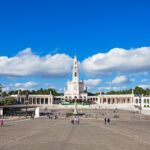
Then it’s straight into the big pilgrimage focus: Fátima. You’ll visit the Basilica of Nossa Senhora do Rosário de Fátima, the Capela das Aparicoes area, and the Sanctuary of Our Lady of Fátima. Each stop is timed, but together they cover the story in a way a quick roadside glance can’t.
Fátima to Coimbra to Aveiro: University of Coimbra without the headache
Day 2 starts with breakfast at the hotel, then heads toward Coimbra. You get around 30 minutes in the city on arrival, which is mostly for orientation. Coimbra’s advantage is simple: it has a preserved old feel, and the University district gives you a clear center of gravity.
The highlight is the University of Coimbra visit, with admission included. You’re not just walking past buildings; you’re getting into the University experience, including the Baroque library and a sense of student traditions, including black student capes and even the tradition of melancholic fado music around campus life. Even if you know little about Portuguese student culture, you’ll leave with a stronger sense of how this place became a symbol.
Afterward, you stop at Monastery of Santa Clara-a-Nova, focusing on Saint Clara Church and the tomb of Queen Saint Isabel, tied to the miracle of the roses. This is a good pairing with the University stop. It reminds you that Coimbra is not only academic—it’s also spiritual and historical.
In the afternoon, you head to Aveiro, often called the Venice of Portugal. You get about an hour here, which is enough for a walk, a look at canal life, and time to try local sweets like ovos moles. You’ll likely see the graceful moliceiro-style vessels mentioned in the tour description, and that makes Aveiro feel like a different kind of Portugal—slower, softer, and more water-centered.
At the end of the day, you return to Porto for the night. That’s a smart move. Porto gives you a reliable home base after you’ve handled the cultural center of the route.
Porto’s guided morning: Bolsa, Saint Francis, and a port tasting
Day 3 begins with Porto city center time, about 1.5 hours. The tour frames Porto as a UNESCO-classified riverside heritage city, and that’s accurate in the easiest way possible: the city’s river setting shapes everything. You’ll notice the old houses and palaces feeling “built into” the landscape.
You then visit Palácio da Bolsa (Palacio da Bolsa). Admission is included, and it’s a great choice for a coach tour because it’s contained and architectural. You learn why it was built (in connection with commerce needs) and you’ll have time inside to appreciate the mixed styles. The Arab Hall is a standout feature, with gold-capped stuccoes and Arabic characters covering walls and ceiling.
Next comes the Church of Saint Francis, with admission included. It’s Gothic in its bones, but the real star is the 18th-century Baroque gilded carving. If you like churches as art objects (not just for photos), this stop lands.
Then you switch from architecture to taste: a Burmester port wine tasting in Porto city center, included. That’s one of the most practical inclusions on the whole trip. Instead of guessing where to taste or hoping a random shop does a good job, you get a structured tasting time.
After that, the tour starts moving toward the northern interior: Guimarães and Braga. It’s a lot in one day, but Porto gives you the emotional anchor. This makes the later towns feel like chapters, not detours.
Guimarães and Braga: the nation’s beginnings and Portugal’s Rome vibes
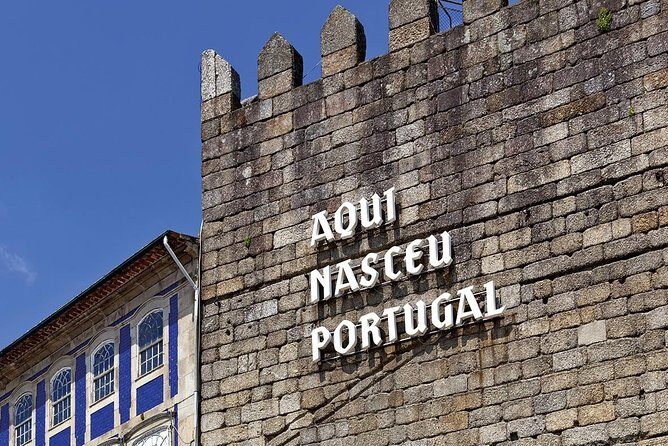
Guimarães is presented as the cradle of the nation and birthplace of the first king of Portugal. In practice, that means medieval streets and a strong “old Portugal” feel. You get time in the historic center, and then you head to Guimarães Castle area and the Sacred Hill.
This is where your legs start to matter. You’ll also visit the Palace of the Dukes of Bragança. The pacing here is important: you have around 45 minutes. So focus on key viewpoints from the Sacred Hill and take in the castle area before your time disappears.
Then you drive to Braga, often called Portuguese Rome for its concentration of religious architecture. You get time to explore the city and then head to Bom Jesus do Monte. The funicular is a big help if you’re not keen on climbing everything, but even with it, the visit includes staircases, fountains, and baroque statues in a garden-like setting.
Bom Jesus is one of those places where the tour description makes sense. It’s theatrical without being fake: it’s built as a pilgrimage experience, so your time there feels purposeful rather than accidental.




Using Porto’s free day (Day 4) well
Day 4 is your full breathing space in Porto, with about 8 hours free for leisure. This is the day that turns a “tour bus schedule” into a real vacation day. You can treat it like your personal Porto choose-your-own-adventure.
Use your guided morning from earlier as a warm-up. Then spend this day with the parts of Porto that you prefer: riverside viewpoints, old neighborhood wandering, and just sitting for a while with a coffee. The big benefit of this free day is that it balances out the earlier packed schedule.
One tip: because you’re coming from a full day of transfers and guided stops on the prior days, plan your pace. Don’t overcommit. You’ll get more pleasure out of Porto if you’re not trying to conquer it like a checklist.
Also, remember the tour’s overall walking demands. Porto can tempt you into long stair-and-hill loops. Keep your footwear comfortable.
Day 5 road trip: Amarante, Mateus gardens, Douro vineyards, and Lamego’s staircase
Day 5 starts again with breakfast, then heads to Amarante. This town is known for Saint Gonçalo and its connection to love and marriage traditions, plus a lively local market. You get around 45 minutes, which is enough to walk the center and get a sense of how locals shop and pass time.
Then you go to Vila Real for the gardens of the Mateus State. The tour notes the façade appearance on Portuguese rosé wine bottles, which is a clever detail. It helps you recognize it later if you’ve seen the bottles at home. You’ll get a short visit time, so prioritize what you can see and feel rather than trying to photograph every corner.
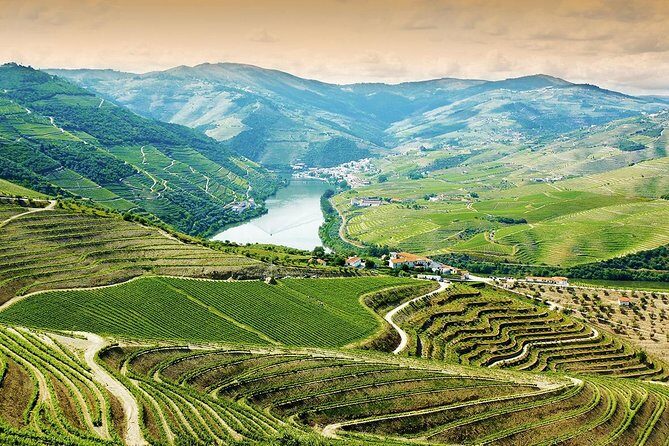
Next is the Douro Valley. This is a travel day with views and vineyards rather than a deep dive into wine production. You’re in the demarcated port region, so you’ll see the kind of terraced countryside that makes Douro wines possible.
Then you stop in Lamego, centered on the shrine of Nossa Senhora dos Remédios. The baroque staircase is the star here. You also get time for a snack-style tasting moment: local ham and a local baked item called Bola de Lamego. That’s a good use of time. You get a food story without needing a full restaurant plan.
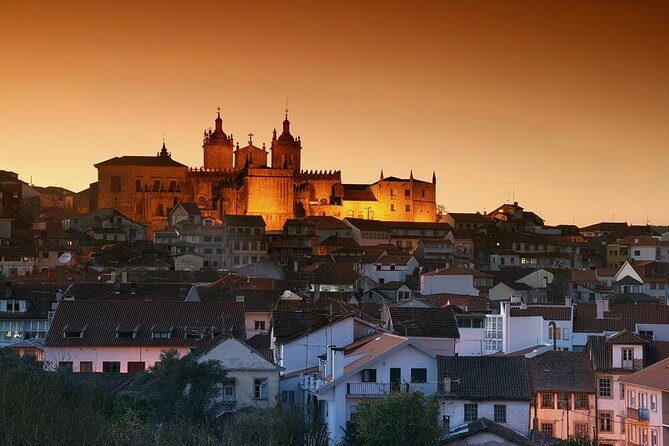
The day continues toward Viseu, where you’ll have a short arrival and orientation through narrow streets and granite doorways with carved coats of arms. You also get the cultural nod to Viriato, described as Portugal’s oldest hero.
Finally, the tour ends the night in Urgeiriça. That’s a practical overnight choice because Day 6 still needs more driving to reach Tomar and then Lisbon.
Bussaco to Tomar: the forest pause and UNESCO Convento de Cristo
Day 6 starts with breakfast at the hotel and then includes Bussaco, Tomar, and finally a return to Lisbon.
Bussaco is framed through its forest—lush in its variety of rare trees and plants—and also through its history. The tour notes a charming, romantic hotel that was formerly a royal hunting lodge. Even if you don’t go inside for a full visit, this stop gives you a reset from cities and monuments. It’s the kind of break that helps the last day feel less like pure sprinting.
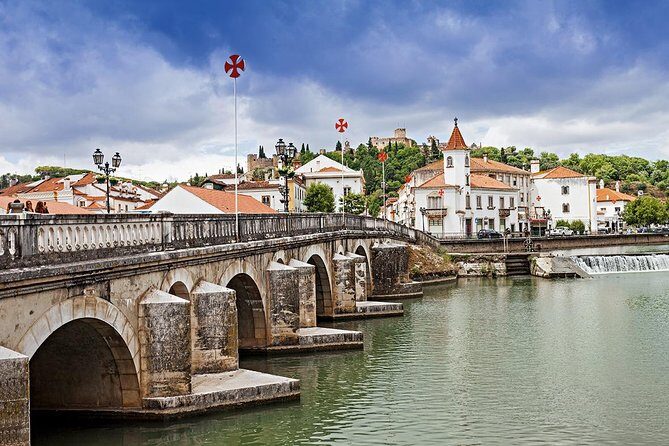
Then comes Tomar, strongly connected to the Knights Templar. The tour highlights that these lands were received in 1159 as a reward connected to Dom Afonso Henriques and that the Convent of Christ was founded by Dom Gualdim Pais, the first Grand Master in Portugal. This gives you a clearer storyline than just seeing walls and towers.
Finally, you visit the Convento de Cristo with admission included. It’s UNESCO-listed and the complex shows influences of different architectural styles. This is the second UNESCO heavy hitter of the trip, and it rounds out the “sacred Portugal” side that started in Batalha and Fátima.
After the visit, you return to Lisbon, back to the meeting point at Marquês Pombal (1070-051). So you finish where you started: no stressful end transfers, no guessing about how to reach your hotel from a faraway site.
Price and value: what you’re really paying for
The listed price may vary depending on your departure, but the value logic is consistent. You’re paying for a package that includes:
- 5 nights of superior-class accommodation plus breakfast
- Transportation in an air-conditioned coach
- A professional guide covering multiple regions
- Included admissions/tickets at key sites, including the University of Coimbra and Convento de Cristo, plus Palacio da Bolsa and Church of Saint Francis
- A port tasting in Porto city center
This matters because North Portugal’s highlights are spread out. If you plan these stops yourself, the cost often shifts from ticket prices to your own time, transport, and coordination effort. Here, the itinerary does the heavy lifting.
The trade-off is flexibility. You don’t control the stop timing, and you don’t get endless time in any one place. If you’re good with that, the value tends to feel strong because you’re not losing half your day to logistics.
Who should book this tour, and who should skip it
This tour is a strong fit if you want:
- A guided route that hits Porto, Coimbra, Fátima, Guimarães, Braga, and UNESCO sites without stress
- Enough structure to understand what you’re seeing, plus free time to breathe in Porto
- Comfort priorities like air-conditioning and booked hotel nights
You might want to think twice if:
- You’re obsessed with staying long in Porto or want deep time in just one city
- You’re sensitive to long travel segments and lots of stop-and-walk moments
- You have strict limits on walking or need private toilet access during transfers (since there’s no toilet on board)
Also, double-check your wardrobe. It’s easy to underestimate how often dress code comes up on tours focused on churches and monasteries.
Should you book this North Portugal tour from Lisbon?
If you want a stress-free sampler of Northern Portugal’s most famous landmarks, I’d say yes. The combination of UNESCO visits, Porto’s guided highlights plus port tasting, and a full free day in Porto makes this more balanced than many “whirlwind” tours.
If your priority is slow travel, or you want to linger for hours in Porto’s neighborhoods without the pressure of a schedule, you’ll probably enjoy the route better if you add extra days on your own before or after. Otherwise, the tour delivers a lot of real variety in six days, and it does it with enough comfort that you can focus on the places, not the logistics.
FAQ
Where does the tour start and end?
The tour starts at Marquês Pombal in Lisbon (1070-051) and ends back at the same meeting point in Lisbon.
Is pickup offered?
Yes, pickup is offered.
How long is the tour?
It’s listed as 6 days (approximately).
What’s included in the price?
The tour includes 5 nights of accommodation, a professional guide, port wine tasting in Porto city center, air-conditioned transportation, and breakfast (5). Admission is included for select sights noted in the itinerary.
Are meals included besides breakfast?
Food and drinks are not included unless specified. Lunch in Nazaré is listed as not included.
Which major attractions have admission included?
Admission is included for the University of Coimbra, Palácio da Bolsa, Church of Saint Francis, the Convento de Cristo, and the tour lists port wine tasting as included.
Is there time to explore on your own?
Yes. The itinerary specifically includes a long free day in Porto (8 hours), and other stops provide time for visits and independent exploration.
What dress code should I follow?
For places of worship and selected museums, you must cover knees and shoulders. No shorts or sleeveless tops are allowed for both men and women.
What should I know about the coach?
There is no toilet on board the coach, and you should expect moderate walking.