REVIEW · LISBON
Segway Medieval Tour of Alfama and Mouraria
Book on Viator →Operated by Boost Portugal · Bookable on Viator
Segways turn Lisbon’s toughest walking streets into an easy glide. This medieval-style tour uses the hills of Alfama and Mouraria like your personal classroom, with smooth cobblestone sections and real skyline stops. I love the hands-on Segway lesson that gets you rolling fast, and I also love the story-first guide style that makes landmarks feel connected instead of random. One thing to keep in mind: Segways are great for distance, but the ride still involves hills, tight corners, and city traffic awareness, so it’s not the best fit for super-nervous riders.
You’ll also like the payoff at the end. The tour includes a voucher for two free drinks at a medieval-themed bar nearby, which is an easy way to keep the mood going after you park the Segway. If you’re hoping for long indoor monument time, note that major sights here are more about seeing and learning from outside, and some entries aren’t included.
In This Review
- Key things to know before you go
- Segways and Alfama: why this combo actually works
- Getting started at Praça do Comércio (and how the ride begins safely)
- The first big stop: Terreiro do Paço and why Lisbon rebuilt itself
- Alfama: the medieval streets where the city feels like it’s still moving
- Castle of São Jorge: the hilltop lesson in power
- Sé de Lisboa: Lisbon’s oldest church and the scars of rebuilding
- Miradouro stops: the quick way to understand Lisbon’s steep logic
- Convento da Graça and São Vicente de Fora: two church stops with different vibes
- Portas do Sol: the moment Alfama makes sense
- Panteão Nacional (St. Engratia): the big baroque detour that adds contrast
- Post-tour medieval pub time: the beer voucher you’ll actually use
- How much walking (and stress) should you expect?
- Price and value: what $56.98 buys you in real terms
- Rain, time, and the small practical stuff that matters
- Should you book the Segway Medieval Tour of Alfama and Mouraria?
- FAQ
- How long is the Segway Medieval Tour of Alfama and Mouraria?
- How much does it cost?
- What’s included in the tour price?
- Are monument or church entrance tickets included?
- Is there a drink included after the tour?
- Where do I meet for the tour?
- Do I need a certain height or weight to ride?
- Does the tour run in rain?
Key things to know before you go

Beginner-friendly with a real instruction focus: you start with a safety and operations briefing plus time to adapt before cruising into Alfama.
Helmet and insurance are part of the package: safety gear is mandatory, and personal accident & liability insurance is included.
You get the view angles, not just the streets: miradouro stops help you understand why Lisbon grew the way it did on steep ground.
Sé de Lisboa and São Jorge are the big medieval anchors: these stops frame centuries of Lisbon rebuilding after disasters like the 1755 earthquake.
Small-group feel: capped at 24 people, so you’re less likely to get lost in a crowd.
Voucher for two drinks right after: you don’t have to plan a medieval pub moment after the tour.
Segways and Alfama: why this combo actually works
Lisbon’s old quarters were never designed for big vehicles, and Alfama proves it. Streets can be narrow, slopes can be steep, and turning corners can feel tight even when you’re walking. On a Segway, you still respect the rules of the road, but you can cover ground without doing the kind of leg-burn you’d face on foot.
What I like about this setup is the practical balance. You’re not just standing outside one viewpoint hoping you’ll see enough. You ride through the neighborhood itself, so you get a sense of the medieval street pattern, the way alleys lead downhill, and how lookouts helped people navigate a city built on hills.
The other big win is time. The tour runs about 1 hour 30 minutes, which is ideal if you want medieval Lisbon but don’t want to spend an entire day trekking between viewpoints. You’re also dealing with less fatigue, which matters because the best moments in Alfama are often the short ones—when a street suddenly opens into a view.
Finally, guides matter here, and the guide quality shows up again and again in the experience. Names like Ricardo, Matilda, Tony, Diogo, Simon, Luis, Inès, Hugo, and Peter come up for a reason: they focus on teaching riders how to handle the Segway while also explaining what you’re seeing in plain terms.
You can also read our reviews of more tours and experiences in Lisbon.



Getting started at Praça do Comércio (and how the ride begins safely)
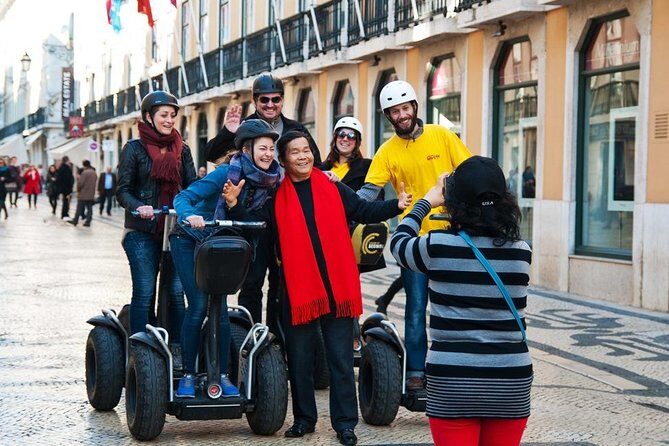
Your meeting point is at Boost Portugal – Urban Thrills, R. dos Douradores 16, near downtown transit. Plan to arrive early enough to check in—this tour requires you to check in 15 minutes prior to the start.
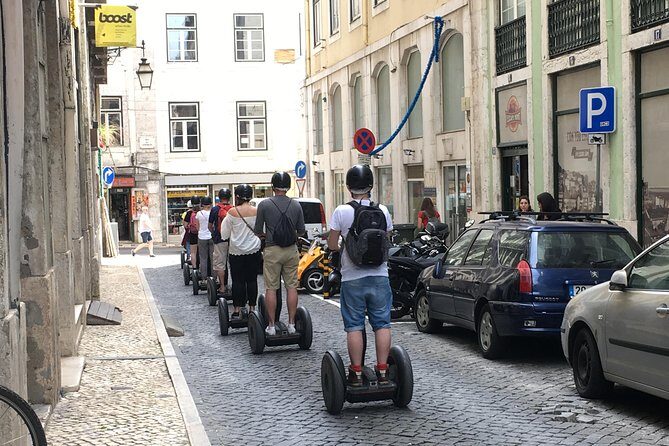
Before you move into the historic streets, you get a safety helmet and a pre-trip briefing. That briefing includes both how to operate the Segway and the basic riding habits that keep you steady on slopes and around pedestrians. I appreciate that the instruction isn’t treated like a formality. You’re on a device that needs coordination, so the tour gives you the start you need to feel comfortable.
Then you ease into the medieval areas. The route uses pathways designed to be workable for pedestrian walkways, which is key because Alfama is famous for tight street corridors. You still move at a human-friendly pace, and the guide keeps you grouped so you’re not trying to figure out turns and stops on your own.
One practical detail worth your attention: this is an activity with mandatory helmets and clear rider rules. You’ll need to meet the listed weight range (45 kg to 118 kg) and minimum height (1.5 m). It’s also forbidden for pregnant women and not recommended for people who are intoxicated or mentally or physically incapacitated, or for those with prosthesis. If you’re unsure, it’s worth double-checking before you book.
The first big stop: Terreiro do Paço and why Lisbon rebuilt itself
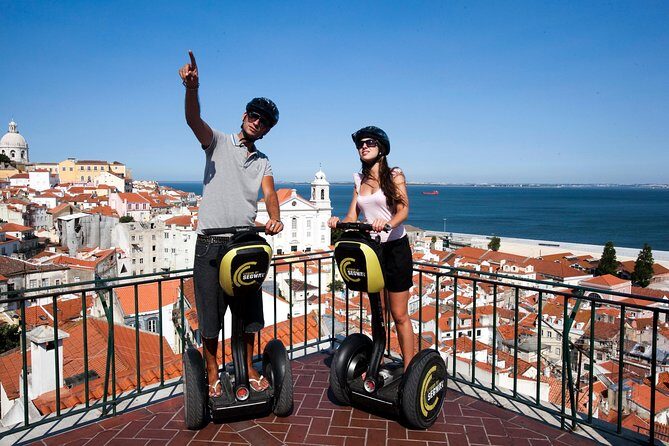
Right after you start downtown, you’re in Comércio Square (Terreiro do Paço). This is the river-facing centerpiece that marks how Lisbon rebuilt itself after the 1755 earthquake, when so much of the city was reduced to rubble.
Even if you’ve seen photos of this area, it hits differently when you connect it to the later medieval streets you’ll ride through. Lisbon wasn’t just a city that aged naturally. It was a city that got knocked down and rebuilt, and you’ll see that theme again at major church stops later.
This stop is quick, around 15 minutes, and it works best as your baseline. You get your bearings with a flat-ish open space, then you’re ready for the contrast: hills, alleys, and the stone layers that survived.
Alfama: the medieval streets where the city feels like it’s still moving
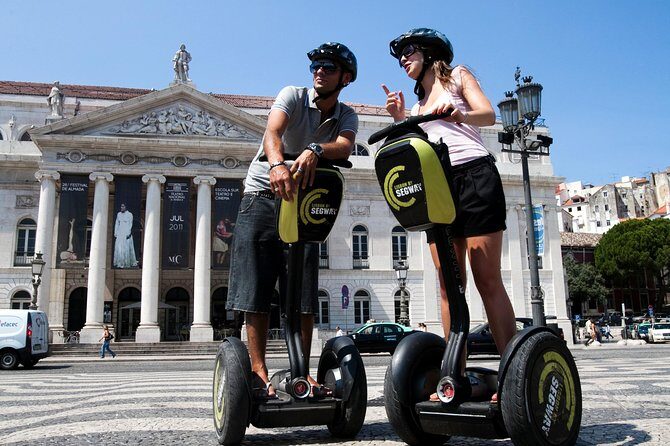
Once you roll into Alfama, the whole vibe changes. This is Lisbon’s oldest neighborhood and one of the most charming because it still feels medieval in layout. You’ll feel that in the ride itself: the small streets, the cobblestone texture, and the way the route threads through the district instead of skimming around it.
One of the most memorable parts is the way the tour helps you see the neighborhood from multiple angles. You don’t just look at sights. Your guide helps you understand why these places matter and what Moorish-influenced history means in daily Lisbon geography.
The tour also frames Lisbon as a place of survival after disasters. You’ll hear how structures were modified over time and why rebuilding shaped what stands today. That matters because Alfama can feel like a museum on a hill, but it’s also still a living neighborhood.
If you’re coming in expecting a slow sightseeing crawl, this tour is more kinetic. You’re moving, learning, stopping, and moving again. That’s the point—Alfama is best experienced as movement through real streets.
Castle of São Jorge: the hilltop lesson in power
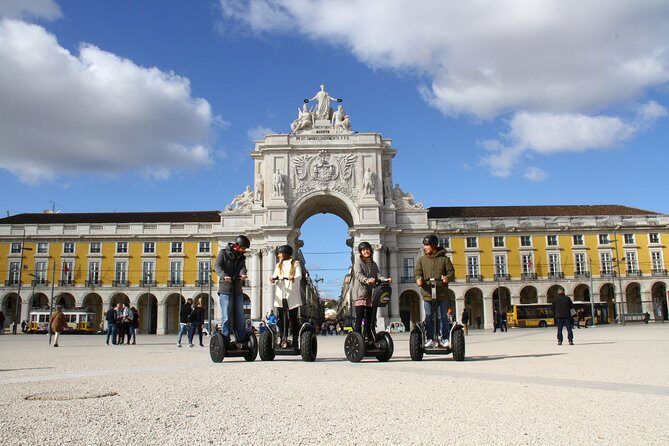
From Alfama’s network of lanes, you connect to São Jorge Castle perched above the city and the Tagus River. The castle stop gives you that “wait, so this is why people built here” feeling.
The views aren’t just scenic; they explain strategy. Hilltop fortifications control sight lines, movement, and safety. Even if you don’t go deep into the castle interiors on this tour, seeing its position gives you context for everything around it—the neighborhoods below, the lookouts, and the way the city grew around terrain.
This is one of those stops where you’ll likely take more photos than you planned. The ride helps you arrive with your legs fresh and your attention focused, instead of arriving exhausted from walking up.

Sé de Lisboa: Lisbon’s oldest church and the scars of rebuilding
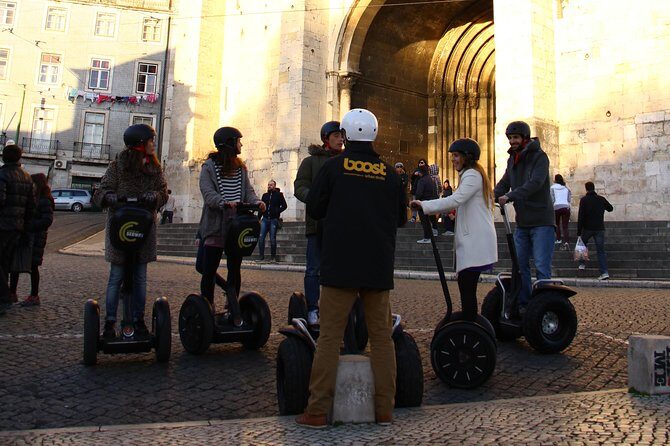
Next comes Sé de Lisboa, Lisbon’s cathedral known as Santa Maria Maior. This isn’t just an old church. It’s tied to the story of Lisbon itself, with construction dating to the XII century and a long survival history that includes surviving multiple disasters.
A big theme here is what happens after catastrophe. The guide points out how Sé de Lisboa endured major events, including the devastating Great Lisbon Earthquake in 1755, and how modifications and rebuilding efforts continued over centuries.
What I like about this stop is that it’s not just dates on a sign. You see how the building’s age and repairs create a layered feel—like the structure is a record of change, not a single snapshot.
A practical note: the tour describes Sé de Lisboa as a key stop, but monument entrance tickets aren’t included. Plan to either treat this as a look-and-learn stop during the Segway tour or be ready to pay if you want deeper time inside.
Miradouro stops: the quick way to understand Lisbon’s steep logic
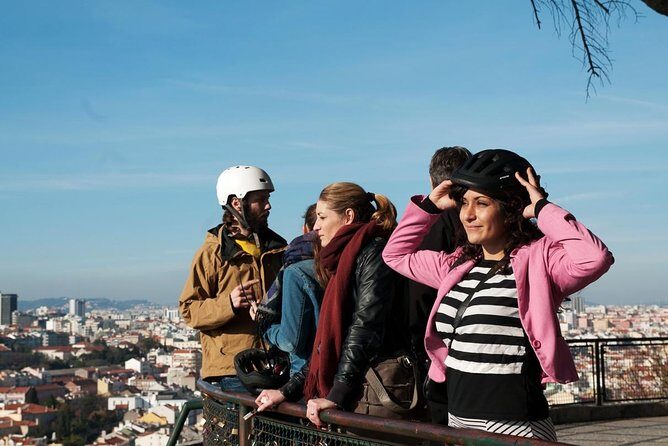
Lisbon is built for viewpoints, and this tour uses two of the most effective styles of them: iconic and high.
You’ll visit Miradouro de São Pedro de Alcântara, a major observation point near the top of Elevador da Glória. This kind of viewpoint works because it lets you see broad city geometry—streets, rooftops, and how the hills shape the way people built homes and churches.
Then you’ll go to Miradouro da Graça (Sophia de Mello Breyner Andresen), another high-hill angle with views over central Lisbon and the Tagus River. If you’ve ever wondered why Lisbon seems to have so many lookouts, this is the answer: the city’s levels create natural “pause points” where you can see how everything connects.
Each miradouro stop is relatively short, typically around 10 to 15 minutes, but it’s enough time to absorb the big picture. The Segway also helps, because you’re not losing your whole energy budget just getting to the top.
Convento da Graça and São Vicente de Fora: two church stops with different vibes
On the way through Alfama’s religious landmarks, you’ll pass key sites like Convento da Graça and São Vicente de Fora.
Convento da Graça is tied to the 18th century and offers another layer of how Lisbon’s faith buildings shifted through time. It’s the kind of stop where a quick explanation changes what you notice—materials, structure, and why a monastery location mattered on steep ground.
São Vicente de Fora is more specific and more famous for architectural importance. It’s a Romanesque Monastery that’s noted as one of the most important mannerist buildings in Portugal. That mix of labels can sound confusing until your guide explains how different rebuilds and stylistic layers show up on the same site.
Like Sé de Lisboa, entrance isn’t included for monuments. So treat these stops as guided viewing and storytelling during your ride. If you decide you want full interior access, you’ll need to plan tickets separately.
Portas do Sol: the moment Alfama makes sense
As your route climbs and shifts, you’ll reach Portas do Sol, a classic Lisbon viewpoint area known for its close-up look at Alfama’s maze of alleys and modest squares.
This stop is valuable because it connects earlier lessons. You’ve already seen castle positioning, cathedral survival, and miradouro sight lines. Portas do Sol ties it together: you can see how Alfama’s street grid makes sense on a hill, how neighborhoods stack, and why locals built in small pockets that could be defended and navigated.
It’s also where the ride feels most like a “tour” rather than a series of stops. The guide’s explanations make the view readable. Without that kind of framing, Alfama can feel like you’re looking at a beautiful blur of rooftops. With the guide, it feels like a map with meaning.
Panteão Nacional (St. Engratia): the big baroque detour that adds contrast
Not all the stops are medieval tight lanes. You also visit Panteão Nacional, also known as St. Engratia Church, a baroque monument that took centuries to build—from 1682 to 1966.
This stop gives you contrast to Alfama’s medieval streets. It’s a wide view of time: a site created over long stretches, reflecting how Lisbon kept building and redefining itself long after medieval layouts formed.
One practical detail: admission isn’t included here. Still, the stop is scheduled for about 15 minutes, which is plenty for a look-and-briefing moment.
Post-tour medieval pub time: the beer voucher you’ll actually use
After you finish riding, you return to the shop area to end the Segway portion. Then the tour isn’t over in the typical “thanks for coming” way.
You receive a voucher for two free drinks at a medieval-themed bar located about 50 meters (54 yards) away from the Segway shop. That’s a small but smart bonus. It gives you a place to sit, cool down, and process what you just saw, without searching.
If you’re traveling with kids, the tour notes that alternative beverages for children are available. It’s also a good moment to ask the guide for quick self-guided ideas in the same neighborhood while your route is still fresh in your head.
How much walking (and stress) should you expect?
Segways reduce walking, and that’s one reason the tour feels like a best-of Lisbon plan in a short time. Still, you should expect some walking at transitions and you should be ready for the feel of cobblestones underfoot while you line up and dismount.
The bigger factor is mental comfort with operating a device. The ride includes hills and involves navigating narrow streets where attention matters. That’s why the pre-ride instruction and the guide’s safety focus are such a big deal. Many of the strongest comments highlight guides who taught riders patiently and stayed alert around traffic.
My advice: if you’re thinking about doing this, choose flat, grippy shoes and stay calm during the first minutes. The tour starts with teaching for a reason, and once you’re steady, Alfama gets much easier to enjoy.
Price and value: what $56.98 buys you in real terms
At $56.98 per person, this is priced like a short guided activity with equipment and professional instruction included. But the value isn’t only that it’s cheaper than a long private tour.
You’re getting:
- Segway equipment plus an adaptation lesson
- Expert local guide with storytelling
- Mandatory helmet
- Personal accident & liability insurance
- All taxes (VAT 23%)
That bundle matters in Lisbon, where a lot of sight time is either pay-as-you-go (tickets) or energy-limited (too much walking in hilly streets). Here, the price is turning your energy into sightseeing.
And you still get added value through the two free drink voucher after the tour. It’s not a life-changing extra, but it turns the experience into something you remember, not just something you did.
Rain, time, and the small practical stuff that matters
This tour runs in rain, and the operator provides ponchos. That’s worth noting because cobblestones get slick. With a helmet and a guide, you’re still in safer hands than if you were trying to scooter around on your own, but the ride can feel different in wet conditions.
Timing is also important. Since it’s about 90 minutes, you’re not scheduling it as a half-day replacement for museums. I treat it as a strong opener or mid-trip orientation for Lisbon’s medieval quarters. It gives context, so your independent explorations afterward feel more intentional.
One more practical point: this experience has a maximum of 24 travelers, which keeps the group manageable for tight streets and stops.
Should you book the Segway Medieval Tour of Alfama and Mouraria?
Book it if you want a fast, fun way to see medieval Lisbon without paying in sore legs. It’s a smart choice when you care about understanding the city’s layers—Moorish-influenced Alfama, Lisbon’s rebuilding after the 1755 earthquake, and the “why” behind hilltop viewpoints like São Jorge and Portas do Sol. The included instruction, helmet, and insurance make it feel more secure than a casual Segway ride you might do on your own.
Skip it or reconsider if you’re very nervous about riding on hills, or if you’re looking for deep, long interior time inside churches and monuments. The stops are more about guided seeing and storytelling during your ride, and entrance tickets are not included for several key sites.
If you land in the middle—comfortable with slopes, curious about history, and wanting a memorable shortcut through Alfama—this tour is a very solid fit.
FAQ
How long is the Segway Medieval Tour of Alfama and Mouraria?
It’s about 1 hour 30 minutes.
How much does it cost?
The price is $56.98 per person.
What’s included in the tour price?
Segway equipment and an adaptation lesson, an expert local guide, a mandatory safety helmet, personal accident and liability insurance, and VAT are included.
Are monument or church entrance tickets included?
No. Tickets or monument entrance are not included.
Is there a drink included after the tour?
Yes. You get a voucher for two free drinks at a medieval-themed bar nearby, and alternative beverages are available for children.
Where do I meet for the tour?
You meet at Boost Portugal – Urban Thrills, R. dos Douradores 16, 1100-206 Lisboa, Portugal.
Do I need a certain height or weight to ride?
Yes. Riders must be between 45 kg and 118 kg and at least 1.5 meters tall.
Does the tour run in rain?
Yes, it operates in the rain, and ponchos are provided.