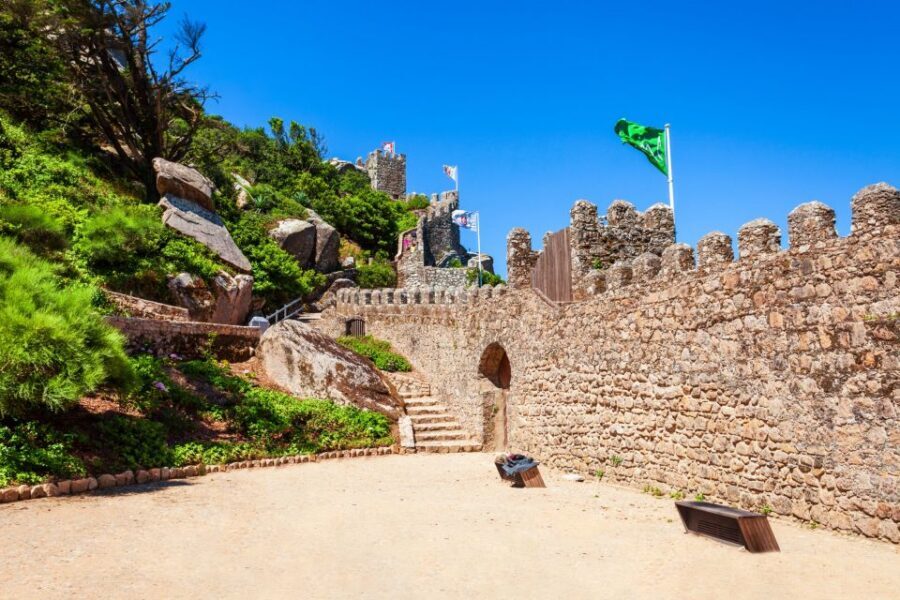
REVIEW · LISBON
Lisbon: Segway Medieval Tour of Alfama and Mouraria
Book on GetYourGuide →Operated by Boost Portugal · Bookable on GetYourGuide
Lisbon hills just got easier. This Segway tour turns the old alleys of Alfama and Mouraria into an efficient, story-filled ride, guided by a certified local. You cover more ground than on foot and still get time for stops, photos, and context around the places that shaped Lisbon.
Two things I like a lot: the way the guides teach you to ride (even if you’re nervous at first), and the tight route that hits major landmarks such as Sé de Lisboa and the National Pantheon. One thing to consider: entrance tickets aren’t included, and some stops are photo stops or pass-bys rather than full inside visits.
In This Review
- Key highlights worth your time
- Why a Segway works so well for Alfama and Mouraria
- The meet-up at Boost – Urban Thrills and the Segway lesson
- Commerce Square to Campo das Cebolas: the quick warm-up
- Alfama: old churches, tile façades, and steep-street views
- Sé de Lisboa (Lisbon Cathedral): the 12th-century anchor
- National Pantheon of Santa Engracia: why it took nearly 300 years
- Mouraria: multicultural streets, Fado corners, and street art
- Flea market stop: Feira da Ladra timing (Tuesday or Saturday)
- Safety, traffic, and the one thing I’d tell you upfront
- Guides make the tour: Tony, Peter, Ricardo, Eduardo, Thomas, Bruno
- Price and value: is $56 worth it for 1.5 hours?
- Who this Segway tour is best for
- Should you book this tour?
- FAQ
- FAQ
- How long is the Segway medieval tour?
- Where does the tour start?
- Do I need to know how to ride a Segway before I go?
- What languages are the live guides available in?
- What’s included in the price?
- Are entrance fees included?
- Is hotel pickup and drop-off included?
- What’s the age and ID requirement?
- Are there weight and height limits?
Key highlights worth your time

- Small-group feel with a guide who can slow down for questions and first-timers
- Sé de Lisboa and medieval Alfama lanes, the city’s oldest church and oldest neighborhood in one sweep
- Portas do Sol terrace photo time, plus high-point views tied to Nossa Sra. Do Monte
- National Pantheon of Santa Engracia with a long construction story and a dramatic dome silhouette
- Mouraria’s multicultural streets, with Fado-related corners and street art next to old life
- Feira da Ladra options on Tuesday or Saturday for flea-market browsing (when it’s running)
Why a Segway works so well for Alfama and Mouraria
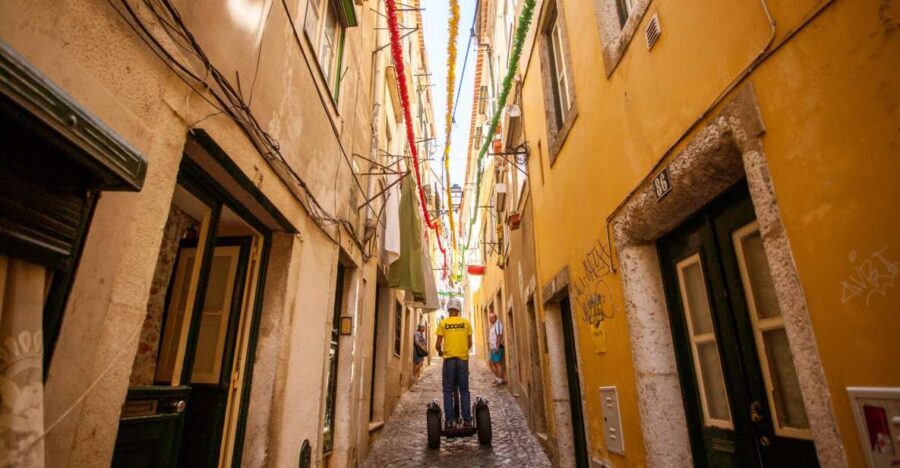
Lisbon’s old neighborhoods have a steep, bendy street problem. Alfama, in particular, can feel like you’re either climbing or dodging. A Segway fixes that. You still get the feel of narrow medieval lanes and old façades, but you’re not stuck walking uphill for the whole ride.
You’ll also move at a human pace. This is not a “speed through the city” thing. You get short segments of riding, then proper pauses to look, listen, and take photos. That matters because a place like Alfama isn’t just scenery. It’s a living layout: viewpoints, small squares, churches, and the kind of street turns where a good guide makes sense of what you’re seeing.
And yes, it’s fun. Multiple guides (Tony, Peter, Ricardo, Eduardo, Thomas, Bruno, and others) were praised for patience during the practice lesson. If you’re the type who worries about balancing on wheels, you’ll be glad you’re not just thrown into traffic and told good luck.
You can also read our reviews of more tours and experiences in Lisbon.



The meet-up at Boost – Urban Thrills and the Segway lesson
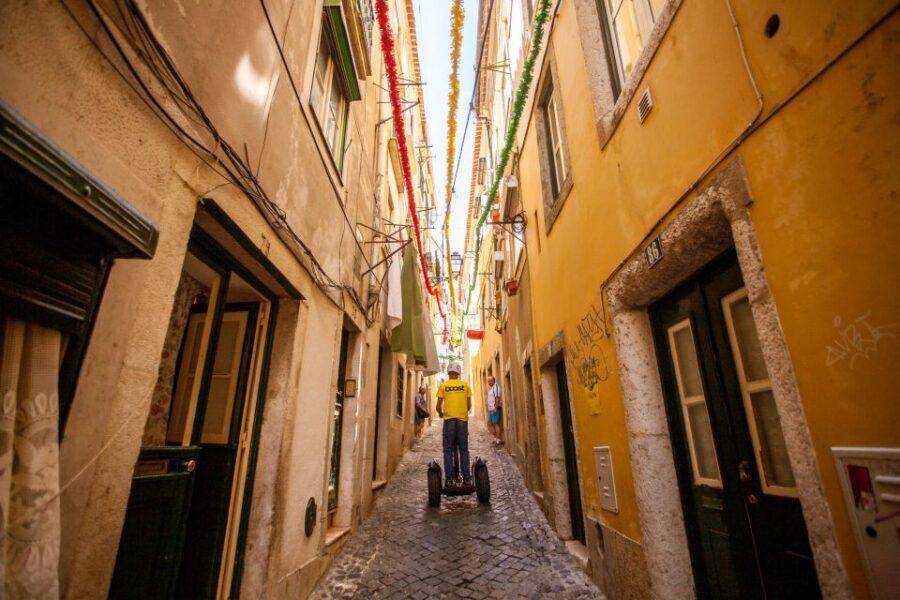
Your tour starts at Boost – Urban Thrills. Before you head into the old streets, you get Segway equipment, helmet, and an adaptation lesson. This part is quietly important. It sets the tone for the whole experience: calm start, safety rules, and the basics so you can ride smoothly when the street gets narrow.
The operator also has a useful downtown store setup. You can use restrooms, storage, filtered water, complimentary Wi‑Fi, and there’s comfortable seating while you wait. In a city where you may arrive early and do a bit of wandering, this is a nice comfort bonus.
From the guide feedback, the best starts are when the instructor takes time. People repeatedly highlighted how guides like Peter and Ricardo made beginners feel at ease. Thomas was specifically mentioned for being very patient with nervous riders. That’s exactly what you want before you roll into Alfama’s steep sections and tight corners.
Commerce Square to Campo das Cebolas: the quick warm-up
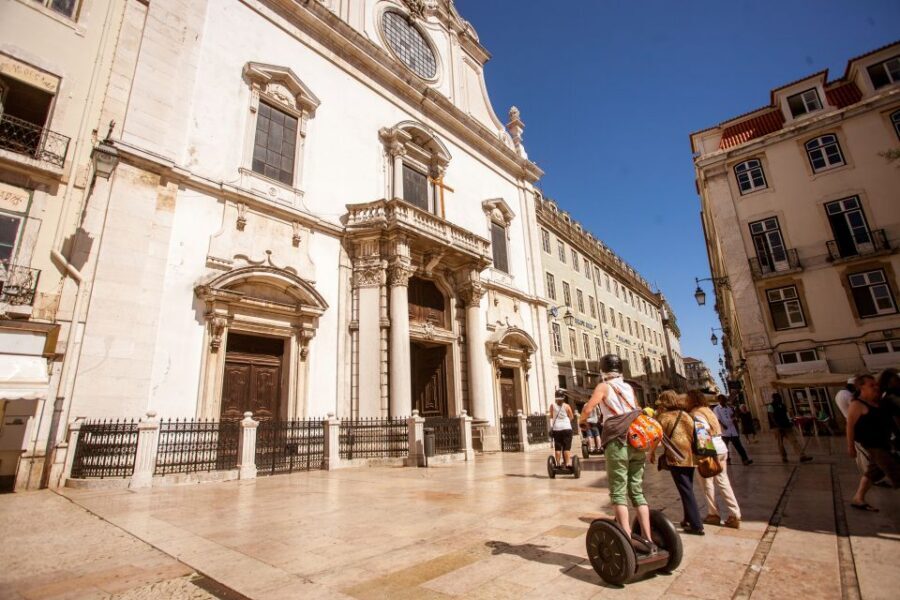
After you leave the start location, the ride brings you through a “Lisbon first impression” zone. You pass by Commerce Square (Praça do Comércio), then head toward Campo das Cebolas for a short sightseeing segment.
Commerce Square is open and grand, a contrast to the cramped medieval lanes you’ll soon be riding through. Think of it as your visual warm-up: you get the big-city feel first, so the old-town sections later land harder.
Campo das Cebolas is more in-between—less about monumental space, more about getting the Segway rhythm going. It’s a practical start. You’re still learning how turns feel when you’re controlling speed and balance, without having to immediately handle the narrowest streets.
Alfama: old churches, tile façades, and steep-street views
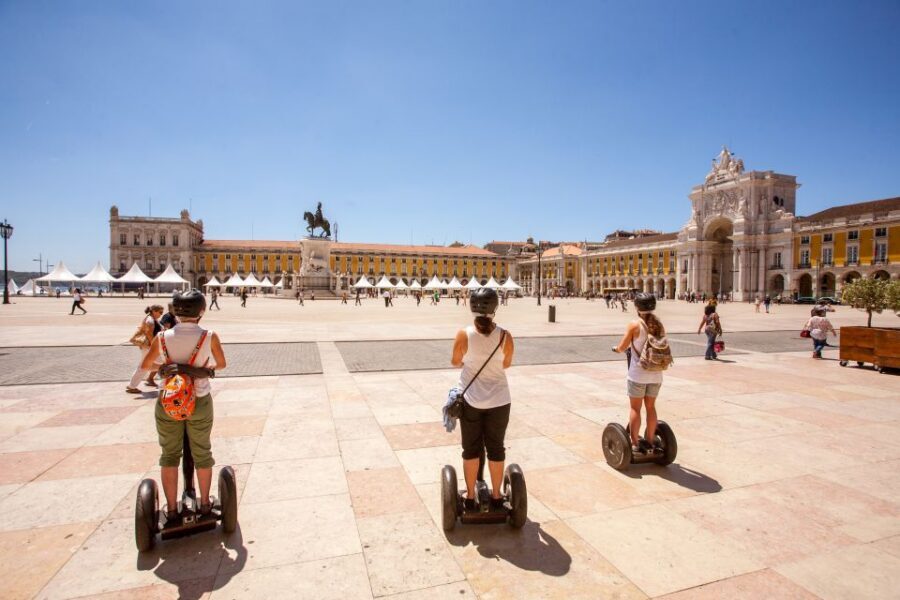
Then you’re in the heart of it: Alfama. This is the city’s oldest neighborhood and one of the most charming. The tour’s focus here isn’t just “drive past famous buildings.” It’s the full medieval feel—older Moorish-inspired architecture, colorful tile façades, and the street music vibe you’ll often hear drifting out from small taverns.
A big reason Alfama deserves a special approach is the hills. One guide point that kept coming up in feedback: using Segways or ebikes can be a better plan than doing it all on foot, because the effort adds up fast in this terrain. On a Segway tour, you still get the charm, but you arrive at viewpoints with energy left for photos and lingering.
You also get time at Portas do Sol terrace. That stop is built for pictures. You’ll look out over Lisbon from a high-point angle, with views tied to Nossa Sra. Do Monte—one of Lisbon’s highest zones. Even if you don’t know the geography before you arrive, the guide context helps you understand why this spot matters.
Sé de Lisboa (Lisbon Cathedral): the 12th-century anchor
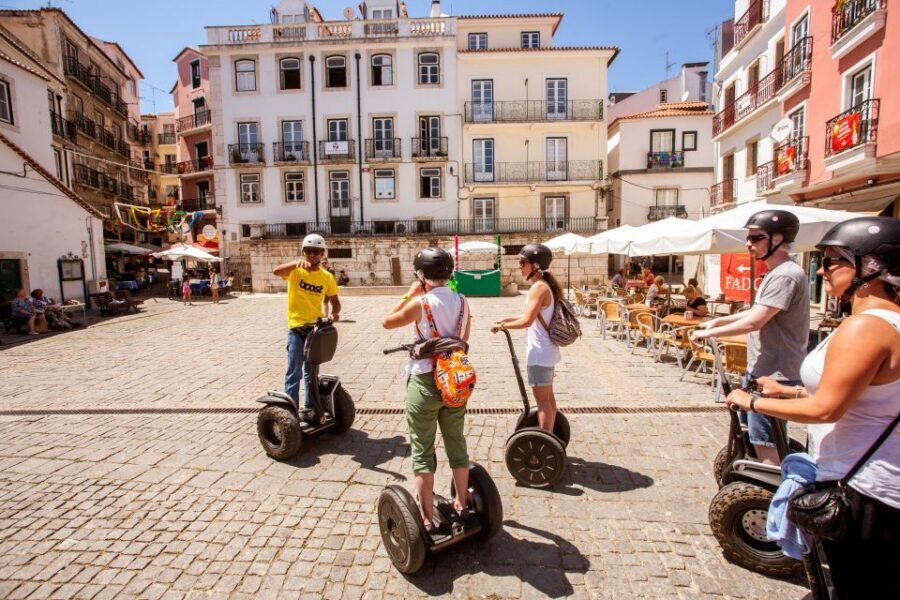
No Alfama tour is complete without Sé de Lisboa (Lisbon Cathedral). This is described as Lisbon’s oldest place of worship, dating back to the 12th century. It’s also nearly 900 years old, so it’s one of those buildings that quietly holds the city together while everything around it changes.
On this tour, you get a sightseeing pass with Segway ride time leading into the area. This is a good match for what you’ll want from a short tour: you see the cathedral as a landmark and understand its role without needing hours of museum-level study.
If you care about interiors or specific chapel details, plan for extra time and possibly entrance fees later. The tour is built around outside viewing, context, and movement. That’s not a bad thing—it just helps you set expectations.

National Pantheon of Santa Engracia: why it took nearly 300 years

Next comes a monument that looks like it belongs in a different era: the National Pantheon of Santa Engracia. You’ll have photo-stop time and a pass-by moment where the guide frames what you’re seeing.
The key detail here is the construction timeline: it took almost 300 years to complete. That kind of long build usually means the building carries layers of intent—changes in plans, shifts in taste, and the political or cultural push behind it. The guide explanation matters because the dome and scale can feel simply dramatic until someone gives you the why.
You’ll also get a silhouette moment. The dome can show up against the city skyline in a way that makes the photos come out looking like postcards, without you needing to go hunting for the perfect vantage point on your own.
Mouraria: multicultural streets, Fado corners, and street art
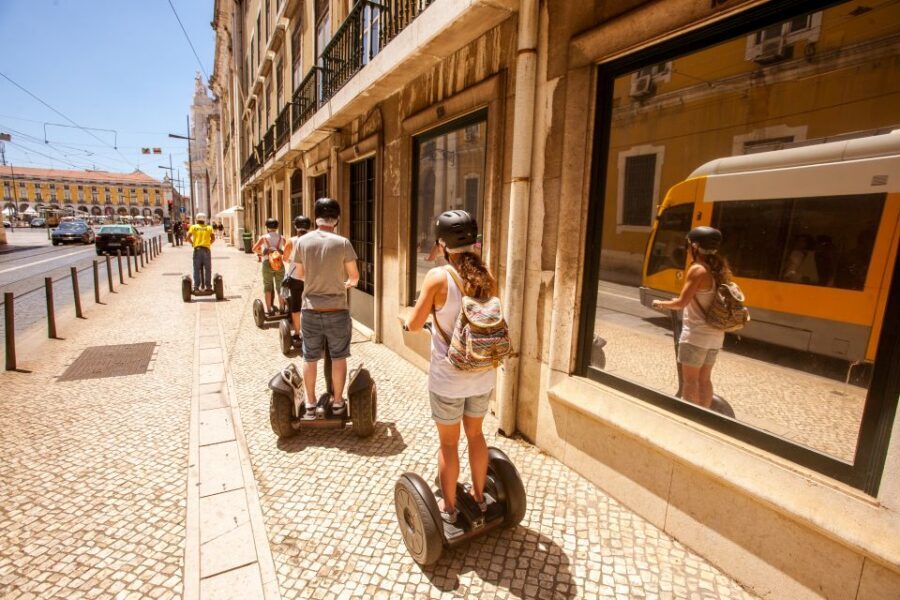
After the big monument stop, the tour shifts into neighborhood life. Mouraria is described as Lisbon’s most multi-ethnic neighborhood, and that shows in the street character. You’ll pass by lively streets, see a mix of old traditions and newer street art, and hear how the guide connects Mouraria to Portugal’s famous music culture.
Even if you don’t stop inside a Fado house, Mouraria still makes the idea feel real. It’s a place where music and everyday street life overlap, so the guide’s storytelling helps you understand why Fado belongs here as more than a tourist label.
You’ll ride through with a short sightseeing segment and Segway time. The stop pattern is designed to keep the flow of the tour. That’s a plus if you want energy for photos and conversation, not just watching the clock.
Flea market stop: Feira da Ladra timing (Tuesday or Saturday)

One of the easiest ways to make a city tour feel less scripted is to add a local marketplace. This tour can include the Lisbon flea market area with photo and visit time.
Here’s the important timing detail: if your tour runs on a Tuesday or Saturday, you may get Feira da Ladra, Lisbon’s famous flea market. That’s when locals browse for vintage finds, antiques, and handmade goods. If you’re a people-watcher, this can be a highlight because it adds Lisbon’s everyday commerce rhythm to the medieval storyline.
If your day isn’t Tuesday or Saturday, you may still see the area and get a market-adjacent stop, but Feira da Ladra itself is the big special event mentioned for those days.
Safety, traffic, and the one thing I’d tell you upfront
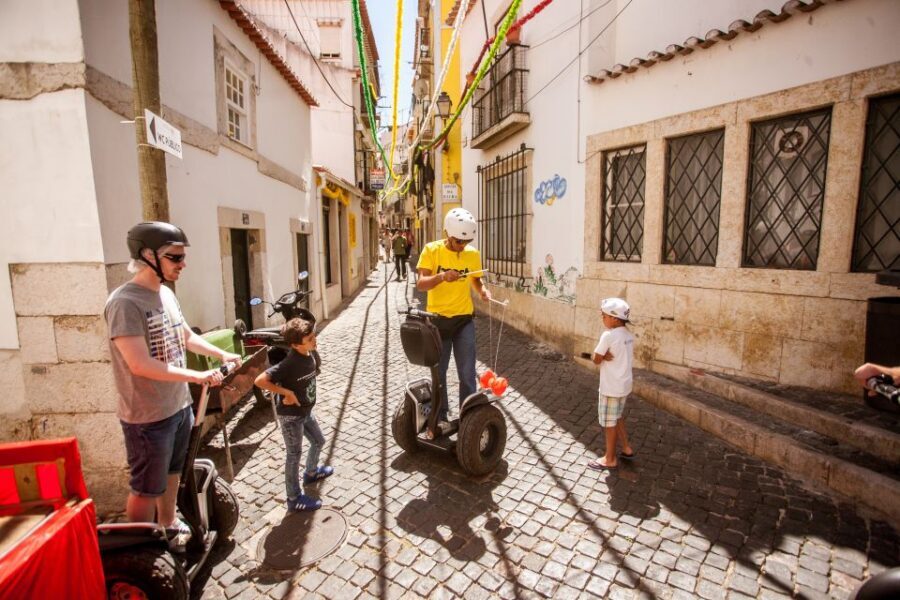
Segways are safe when you treat them like what they are: a controlled ride system, not a toy. The tour requires a safety helmet, and the trip includes liability and personal accident insurance, which helps take the edge off.
Still, I’ll say the practical thing: narrow old streets mean crowds, pedestrians, curbs, and cars squeezing by at times. One rider described a mishap after turning too sharply near a curb, which caused the Segway to throw them off. They ended up bruising a knee, and the guide was very attentive right away.
That story isn’t there to scare you. It’s a reminder for your own riding style:
- Keep your turns smooth.
- Don’t rush past curbs or crowded areas.
- If you feel unsure, ask the guide to slow down.
The good news: multiple guides were praised for patience with beginners. If you follow the instructions and take your time during the practice lesson, the odds of a smooth, confident ride are high.
Guides make the tour: Tony, Peter, Ricardo, Eduardo, Thomas, Bruno
This tour lives or dies on the guide. The standout praise is consistent: guides take time to teach the Segway, answer questions, and connect each stop to what you’re actually looking at.
Here are a few named examples that show the range:
- Peter was repeatedly mentioned for being patient and reassuring, even with riders who were nervous.
- Ricardo was singled out for patiently teaching people how to ride before starting the tour, then sharing lots of history and showing hidden corners.
- Eduardo was praised for being thoughtful about comfort on the Segway and for his historical storytelling.
- Thomas was called out for understanding nervousness and getting riders confident quickly.
- Bruno impressed a group of beginners with how well the Segway experience worked for them.
- Tony came up as engaging and safety-minded, with a strong history lesson and good instruction.
You don’t need a perfect rider personality. You just need a guide who can match your comfort level. This tour’s style, at least in the feedback, leans hard in that direction.
Price and value: is $56 worth it for 1.5 hours?
At $56 per person for about 1.5 hours, you’re paying for more than transportation. You’re paying for:
- the Segway and helmet
- the adaptation lesson
- a live local guide
- insurance coverage
- taxes (VAT included)
Entrance fees aren’t included, so you’re not buying a museum ticket bundle. But you are buying efficient access to multiple neighborhoods and monuments in a short time window—exactly the kind of Lisbon experience that usually costs more if you do it with taxis or multiple separate paid activities.
The real value is how the tour handles hills. Alfama without a Segway becomes a workout. Alfama with a Segway becomes a sightseeing flow: you can look up at façades, notice tiles, and get to viewpoints without arriving wrecked.
If you have limited time in Lisbon, or if walking steep streets would cut your sightseeing short, this is strong value. If you want long inside visits of cathedrals and museums, you may feel slightly short-changed, because this format is built for movement and storytelling rather than deep interior time.
Who this Segway tour is best for
This tour makes a lot of sense if you:
- are short on time and want to cover Alfama + Mouraria efficiently
- want the charm of medieval Lisbon without committing to hours of steep uphill walking
- enjoy photo stops and guide-led explanations more than DIY wandering
- are open to learning a new ride system with an instructor
It may not be the best fit if you:
- can’t meet the minimum height of 1.5 meters or the weight range of 45 kg to 118 kg
- are uncomfortable riding in crowded, older streets where you must share space with pedestrians and vehicles
- expect entrance tickets and long museum-style time at each stop
Should you book this tour?
If your goal is a fun, efficient Lisbon old-town sampler that gives you both viewpoints and landmark context, book it. The guide-led experience and beginner-friendly instruction are the biggest reasons this works so well. You get major sights like Sé de Lisboa and the National Pantheon, plus neighborhood atmosphere in Alfama and Mouraria, with an optional marketplace flavor depending on the day.
I’d only hesitate if you’re hunting for lots of indoor time or paid attraction entries, because entrances aren’t included and several stops are designed as photos and passes. Also, be honest with yourself about comfort on a Segway. If you take the lesson seriously and ride smoothly, that usually removes most worries.
FAQ
FAQ
How long is the Segway medieval tour?
The tour lasts about 1.5 hours.
Where does the tour start?
It starts at Boost – Urban Thrills in Lisbon.
Do I need to know how to ride a Segway before I go?
No. The tour includes a Segway equipment setup and an adaptation lesson, plus helmets for safety.
What languages are the live guides available in?
Live guides are available in French, German, Spanish, and English.
What’s included in the price?
Included are Segway equipment and adaptation lesson, helmets, an expert local guide, liability and personal accident insurance, and all taxes (VAT 23%).
Are entrance fees included?
No. Entrance fees are not included.
Is hotel pickup and drop-off included?
No. Hotel pickup and drop-off are not included.
What’s the age and ID requirement?
You’ll need a passport or ID card. Unaccompanied minors aren’t allowed, and minors must be accompanied by an adult.
Are there weight and height limits?
Yes. Participants must be between 45 kg and 118 kg and have a minimum height of 1.5 meters.