Chiado to Baixa is a perfect fast start. This private walking tour turns Lisbon into a story you can follow on foot, mixing politics, famous viewpoints, and old-city streets in a smart order. I especially like the undivided attention from your guide and the way you get tailored recommendations for the rest of your trip.
The main thing to consider is that it’s still a walking tour. You’ll need moderate physical fitness, since you’re moving through classic Lisbon streets and viewpoints for about two hours.
If you want to skip traffic stress and just get your bearings, this is a solid use of time. You also get a snack break with pastéis de nata, and you’ll use a simple mobile ticket.
In This Review
- Key things you’ll notice on this Lisbon walk
- Getting your Lisbon bearings fast, without the hassle
- Chiado’s revolutionary moment and the Santa Justa Elevator view
- Baixa Pombalina on foot: Rossio, Restauradores, and two meaningful interiors
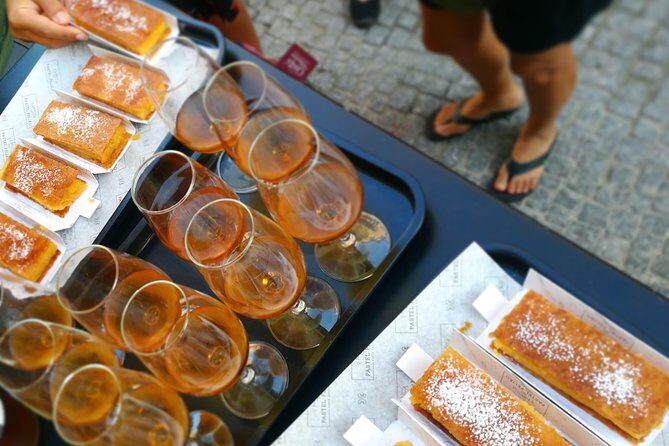
- Pastéis de nata that actually feel like a local pause
- What a private guide brings: story, pace, and trip-long tips
- Price check: why $36.05 can be good value for Lisbon
- Who this Chiado-to-Baixa walk is best for
- Should you book this Lisbon writer-style walking tour?
- FAQ
- How long is the Lisbon walking tour?
- How much does the tour cost per person?
- Is the tour private?
- What language is the tour offered in?
- Is a ticket needed for the attractions?
- What food is included?
- Where do I meet the guide, and where does the tour end?
- Is private transportation included?
- What is the cancellation policy?
- Is the tour suitable for people with limited mobility?
Key things you’ll notice on this Lisbon walk

- Private guide, small group: up to 10 people, so it stays personal instead of rushed.
- Chiado + Santa Justa viewpoint: you get the visual payoff early, then move into the historic center.
- Baixa Pombalina essentials: Rossio area squares plus a couple of meaningful stops indoors.
- Included pastéis de nata snack: a real break that doesn’t cost extra.
- No biking needed: it’s walking, so you won’t have to worry about bikes or ride skills.
Getting your Lisbon bearings fast, without the hassle
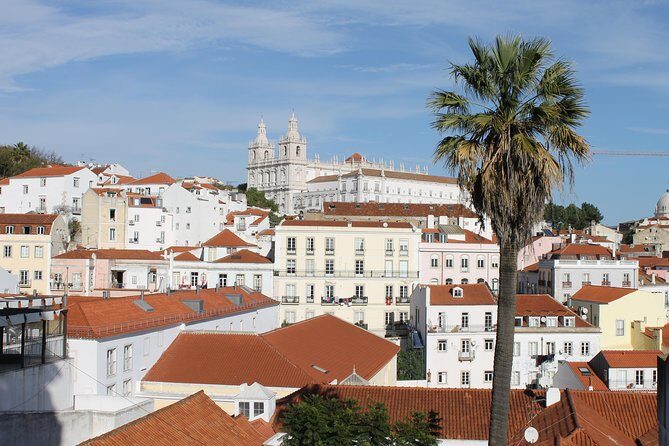
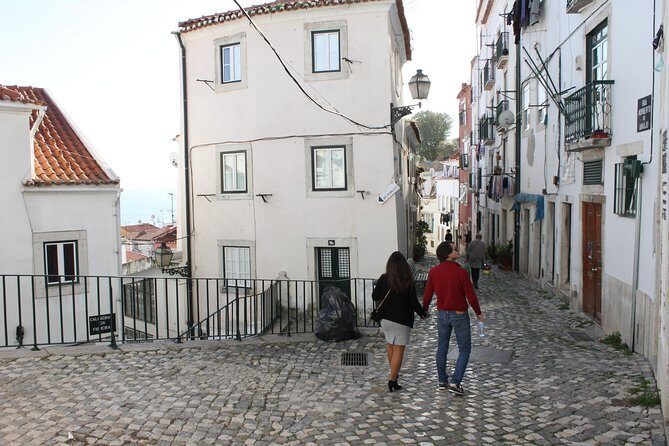
Lisbon can feel like it has a dozen layers fighting for your attention at once: hills, tiled facades, loud trams, and streets that twist just enough to make you question your map. This is why I like this kind of short, private walking format. In about two hours, you learn the city’s “geometry”—where Chiado sits, how Baixa connects, and how the big squares relate to each other.
You also avoid the stuff that eats travel time in a crowded city: waiting for taxis, negotiating pickup spots, and dealing with parking. A walking route means you spend your energy on the streets and views, not on logistics. And with a maximum of 10 people, it’s easier for your guide to keep the pace human, not factory-fast.
The other practical win is the meeting and ending points. You start at Largo do Carmo 16 and finish at Praça do Comércio, which is a great place to continue on your own afterward. If you’re the kind of traveler who likes to keep moving, this helps you avoid that end-of-tour stuck feeling.
One more value signal: this tour is frequently booked far in advance (about 123 days on average). That usually means it’s popular for a reason—people want an efficient orientation while they’re fresh in Lisbon.
You can also read our reviews of more tours and experiences in Lisbon.



Chiado’s revolutionary moment and the Santa Justa Elevator view
Your walk begins in Chiado, a neighborhood that sits right at the hinge between old Lisbon and the more polished central areas. The tour starts near a square tied to the Portuguese revolution of 1974. Even if you only know a little about the timeline, your guide can connect that political turning point to the way Lisbon looks and moves today.
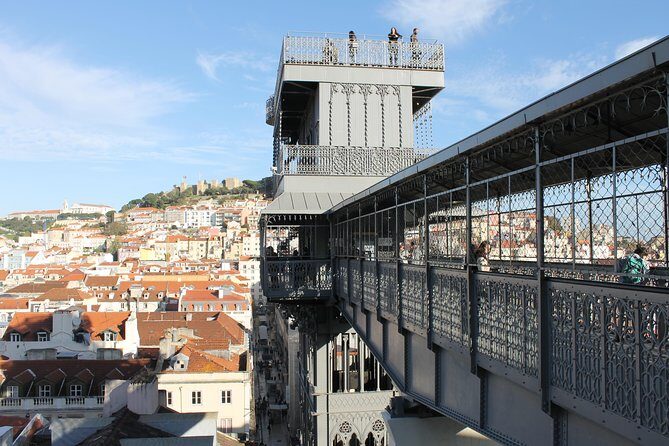
Then comes one of the most satisfying parts: time to enjoy the view from Santa Justa Elevator. This is the kind of viewpoint stop that does two jobs at once. First, it helps you understand Lisbon’s hills and rooftops without squinting at a phone screen. Second, it gives you an emotional memory—you’ll remember the moment you saw the city’s layout, not just the list of landmarks.
A small but important detail: the Santa Justa stop is marked free admission in the tour description. That matters for value, because viewpoint costs add up fast in Portugal if you’re doing multiple paid entrances.
How long does this section feel? About an hour. That’s long enough to get the meaning from the guide and still feel like you’re not being marched. It’s also a nice setup for what comes next: after the view, Baixa will make more sense, because you’ll have a mental picture of how everything drops down toward the riverfront.
Possible drawback here: elevator and viewpoint areas can involve stairs and tight spaces. If you’re sensitive to uneven ground or crowding, plan to wear supportive shoes and take short breaks when you need them.
Baixa Pombalina on foot: Rossio, Restauradores, and two meaningful interiors
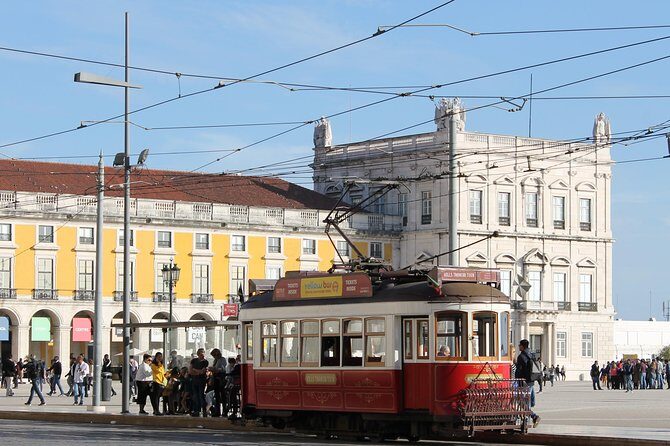
After Chiado, you shift into Baixa de Lisboa, specifically Baixa Pombalina, the planned older core built after Lisbon’s major 18th-century rebuilding. This is where Lisbon feels more grid-like, more direct, and more navigable. That’s a good thing for a walking tour, because you’ll start feeling confident about your direction.
In this stretch, you’ll pass by major anchors around the Dom Pedro IV Square, Rossio Station, and Restauradores Square. Those names aren’t just trivia—each one helps you map the city in your head. Rossio is the “pulse” area. Restauradores is your connection point up toward the hills. Dom Pedro IV is the open, recognizable square that tells you you’re in the center.
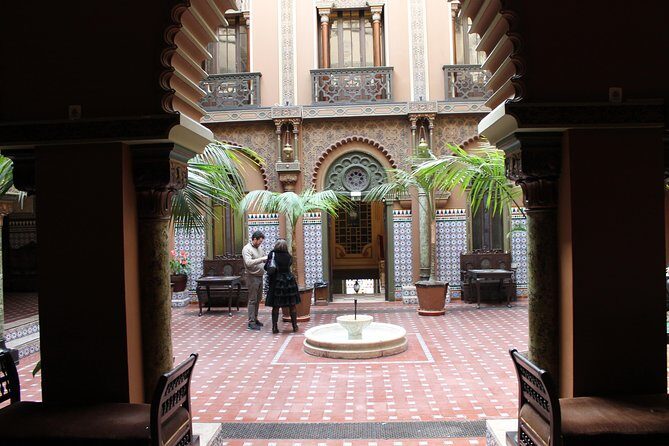
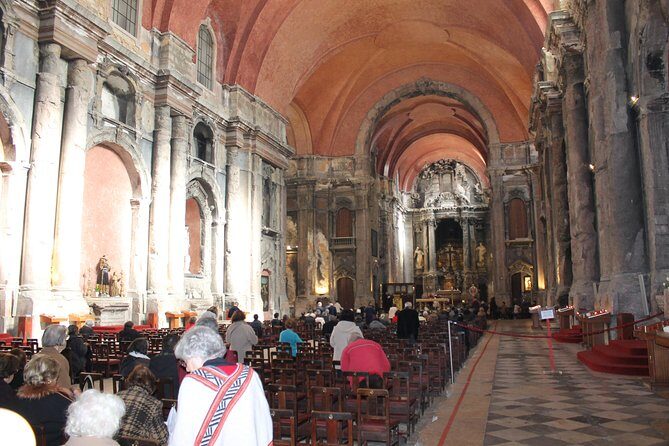
The tour also includes visits to House of Alentejo and Santo Domingo Church. This is where the experience becomes more than street sightseeing. Interiors give your guide room to explain cultural details you’d miss if you only walked past exteriors. It also breaks the outdoor walking rhythm, which can feel like a gift after you’ve been on your feet for a while.
The Baixa section is also about an hour, and it’s marked free admission for the stops listed. From a budgeting point of view, this is part of why the price works. You’re paying for guided time plus access value—not just for someone to point at buildings.
One thing to keep in mind: churches and historic buildings can have rules (quiet zones, photo limits, and basic entry requirements). The good news is that this tour keeps the number of stops reasonable, so you’re not stuck waiting around for a long time.
Pastéis de nata that actually feel like a local pause
I love tours that treat food as a small moment, not the whole event. Here, the included snack is straightforward: pastéis de nata (custard tarts). That gives you a quick sugar reset and keeps your energy up for the second half of the walk.
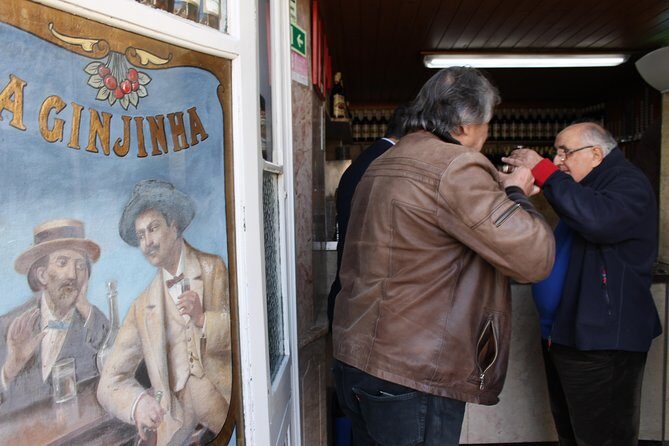
One of the best parts of the experience is how that snack moment can turn into something more “you’re here” than “we’re checking a box.” In a perfect tour, the pastel stop is tied to what you’re seeing—why the area is known for certain flavors, and what to look for when you order. The guiding style for this tour has that reputation, including a local pastel shop stop associated with the name Giginha in at least one run.
You don’t need to be a hardcore foodie to enjoy this. Think of it as a simple, Lisbon-style break that keeps the pace friendly.
What a private guide brings: story, pace, and trip-long tips
The standout praise for this tour is how guides make Lisbon make sense. One guide name that shows up is Miguel, and the impression is clear: he connects the city’s story in a fun way, then adds low-key places you might otherwise miss.
This matters because “iconic Lisbon” can be a trap. If all you do is hit the same top five spots, you get a checklist, not a trip. A good private guide helps you build a plan that fits your interests: where to spend extra time, where to avoid bottlenecks, and what to pair together so you’re not zigzagging across the city all day.
You’ll also benefit from the small group size. With private attention in a group of up to 10, you can ask questions in real time. That turns the tour into a two-way conversation instead of a monologue.
Also worth noting: the tour is offered in English and uses a mobile ticket, which is low stress if you’re juggling other tours or trying to keep your phone charged for maps and translations.


Price check: why $36.05 can be good value for Lisbon
Let’s be practical about the cost. At $36.05 per person for roughly two hours, you’re paying for a guided walking experience plus included touches. The included snack (pastéis de nata) is part of it, but the bigger value is that the tour description lists admission marked free for the key attraction points—like the Santa Justa Elevator view time and the other listed interior stops.
If you were trying to do this on your own, you’d likely spend money on at least one paid entrance (viewpoints and historic interiors are rarely free), plus you’d burn time figuring out the route and what each place means. Paying for a guide is also paying for speed: you get “where you are” and “why it matters” in the same walking session.
The only pricing caution is what’s not included: private transportation. In plain terms, you’re on foot for the route, and you’ll rely on public transportation or your own walking to reach the start. That’s fine if you like walking, but it can be annoying if you’re trying to minimize foot travel.
Who this Chiado-to-Baixa walk is best for
This tour is a strong fit if you want:
- A fast orientation around Chiado and Baixa Pombalina
- A private guide style experience without a long day
- A simple plan with a snack and viewpoint included
It also works well for couples, solo travelers, and small groups who like asking questions and getting personalized recommendations. Because it’s rated for moderate physical fitness, I’d think twice if you know you struggle with longer stretches of walking or uneven old-street surfaces.
And if you were worried about bikes—good news. This is a walking tour, so there’s no biking experience required.
Should you book this Lisbon writer-style walking tour?
Yes, I’d book it if you want to understand Lisbon quickly and you like getting the story behind the places you see. The combination of Chiado + Santa Justa, the central square stops around Rossio and Restauradores, plus included pastéis de nata makes it feel efficient, not skimpy.
I’d skip or choose something else if you need a fully car-assisted day, or if walking for about two hours is difficult for you. If you’re comfortable moving at a moderate pace, this is one of the better ways to start your Lisbon time with momentum.
FAQ
How long is the Lisbon walking tour?
It runs for about 2 hours, with roughly an hour spent in each main area (Chiado, then Baixa de Lisboa).
How much does the tour cost per person?
The price is $36.05 per person.
Is the tour private?
Yes. The experience is described as a private guide experience, with a maximum of 10 travelers.
What language is the tour offered in?
The tour is offered in English.
Is a ticket needed for the attractions?
The tour description marks admission tickets as free for the listed stops (including Santa Justa Elevator). You also receive a mobile ticket.
What food is included?
Snacks are included, specifically pastéis de nata (custard tarts).
Where do I meet the guide, and where does the tour end?
You start at Largo do Carmo 16, 1200-022 Lisboa, Portugal. The tour ends at Praça do Comércio, 1100-148 Lisbon, Portugal.
Is private transportation included?
No, private transportation is not included. The experience is near public transportation.
What is the cancellation policy?
You can cancel for a full refund if you cancel at least 24 hours before the experience start time. If you cancel later than that, the amount paid is not refunded.
Is the tour suitable for people with limited mobility?
It requires moderate physical fitness. Service animals are allowed, and it’s near public transportation, but the walking nature means you should be prepared for some movement on old streets.
If you want, tell me your travel dates and where you’re staying, and I’ll suggest the easiest way to time the start at Largo do Carmo and reach Praça do Comércio afterward.