Lisbon’s center is easier on foot—if someone shows you how. This private walking tour is a laid-back way to get your bearings fast, with a guide who knows Lisbon’s shortcuts so you avoid the worst climbs. I especially liked the way the route bundles classic landmarks (like Largo do Carmo and Chiado) with real photo stops, and the pacing feels like a casual chat, not a forced checklist. One thing to consider: you’ll mostly see several key places from the outside, including Santa Justa, so if you want the full elevator ride, you’ll need to plan that separately.
The walk starts near Praça Dom Pedro IV and finishes at the Miradouro das Portas do Sol, which is a smart way to end—views first, then you can wander on your own. If you care about Lisbon history and details, the guide adds context along the way, and the experience is praised for being warm and hands-on (including guide Raquel Rocha’s style). The biggest drawback for some people is simply time: with about 3 hours and a lot of walking through tight historic streets, you won’t get long stays at any single spot.
In This Review
- Key highlights to look for
- A practical first-timer route through Lisbon’s best-loved streets
- Where you start (Praça Dom Pedro IV) and where you end (Portas do Sol)
- Iglesia de São Domingos and Restauradores Square: a strong opening
- Largo do Carmo: politics, people, and a square that feels important
- Santa Justa from the outside: iconic, but not the full ride
- Casa do Ferreira das Tabuletas: Lisbon’s quirky streetside storytelling
- Chiado and Baixa: two neighborhoods that show different Lisbon moods
- Museu de Lisboa – Teatro Romano: history where you don’t expect it
- Santa Luzia viewpoint and Portas do Sol: the camera-friendly payoff
- Guide style and pacing: why private works on this route
- Price and value: what you’re paying for in a $113.45 private walk
- Who this Lisbon first-timer tour suits best
- Should you book this private walking tour?
- FAQ
- How long is the Lisbon first-timers private walking tour?
- Where does the tour start and where does it end?
- Is this tour private?
- Are there any admission tickets required during the tour?
- What happens if the weather is bad?
- Can I cancel for free?
Key highlights to look for
- Local shortcuts keep the walk manageable and skip the steepest pulls
- Photo-friendly viewpoints like Santa Luzia and Portas do Sol bookend the best skyline moments
- Historic-center hits from São Domingos and Carmo Square to Chiado and Baixa
- Roman Portugal in the middle of town with time at Museu de Lisboa – Teatro Romano
- Private-group pace means you can ask questions and move at your rhythm
A practical first-timer route through Lisbon’s best-loved streets
This tour is designed for people who want the Lisbon highlights without turning the day into a stair-climbing contest. You’ll move through central neighborhoods—Carmo, Chiado, and Baixa—where the streets are packed with stories, but also packed with other pedestrians. The value here is not just that the sights are famous; it’s that the guide keeps you moving in a way that feels sensible.
The tone matters. The tour is private, so you aren’t squeezed into a big group timeline. That also means the guide can adjust on the fly if you linger for photos at a viewpoint or want one extra minute to read a sign at a church façade.
Also, this tour is weather-dependent. Lisbon can look perfect one hour and windy the next, and the viewpoints at the end do matter. If the sky is rough, you may need to shift plans.
You can also read our reviews of more walking tours in Setubal District



Where you start (Praça Dom Pedro IV) and where you end (Portas do Sol)
You begin at Praça Dom Pedro IV (very central, in the historic core). That’s a good start because it puts you close to Lisbon’s main pedestrian arteries right away. If it’s your first time in town, starting here means you can learn the “shape” of the center quickly—where neighborhoods meet and how the viewpoints fit into the city’s layout.
You finish at Miradouro das Portas do Sol, which is one of those places where the walking effort makes sense. It’s a natural landing spot: once you’re done with the guided part, you’re still in an area where you can keep exploring at your own pace, grab a drink, or simply sit and watch the city.
One small consideration: because your end is a viewpoint zone, the final stretch can be busy, especially in peak hours. Plan to keep your camera ready, but don’t expect a quiet patio experience.
Iglesia de São Domingos and Restauradores Square: a strong opening
The walk kicks off with a visit to Igreja de São Domingos. Even if you’re not a big church person, this is worth it because it sets the mood of Lisbon’s historic center immediately. You get a short entry visit, so you’re not spending half your day inside, but you still see the kind of place locals use as a landmark.
From there, you pass through Restauradores Square, which works like a “transition moment.” It helps you connect the dots between Lisbon’s older layers and the commercial streets that pull people forward toward Chiado and Baixa.
If you like city rhythm, this opening is a win. You start with a recognizable landmark, then you’re quickly in the flow of the urban center.
Largo do Carmo: politics, people, and a square that feels important
Carmo Square (Largo do Carmo) is one of the stops where the guide’s context can make the place click. The tour description points out the square’s role in the conclusion of Portugal’s dictatorship, and that kind of detail changes how you look at a public space like this. It’s not just pretty stone and street life; it’s also a place tied to real national moments.
You spend time here, which matters. Lisbon squares tend to be short “photo stops” on many tours, but this one gives you breathing room. You can step back, look around, and understand where the square sits in relation to the streets you’ll walk next.
A practical note: squares can be windy and can get crowded. Bring a light layer if you’re sensitive to cool air, especially if you’re doing the tour when the evenings start to turn.
Santa Justa from the outside: iconic, but not the full ride
Next comes Santa Justa Lift. This stop is an exterior look—specifically time at the top area from outside rather than the full elevator experience. I like this approach for first-timers because it gives you the visual and the setting without turning your schedule into a line-and-wait situation.
But here’s the clear trade-off: you don’t get to do the elevator ride as part of the tour. If that ride is a “must” for you, factor in a separate plan before or after the walk. Treat Santa Justa here like a framing shot—then decide if you want more.
Even from outside, the lift is one of Lisbon’s most photogenic structures, and it helps you see how the city’s levels connect. That’s useful later when you reach the viewpoints.
You can also read our reviews of more private tours in Setubal District






Casa do Ferreira das Tabuletas: Lisbon’s quirky streetside storytelling
You also get a look at Casa do Ferreira das Tabuletas from the street. This is the kind of stop that many walking tours skip because it’s not as universally famous as the big plazas. I like it because it adds texture. It reminds you Lisbon isn’t just monuments—it’s street details, shapes, and historical layers you only notice when someone points them out.
The time here is short and focused, so don’t expect a long deep dive. Think of it as a palate cleanser between bigger neighborhoods and viewpoint time.
If you enjoy architectural hints and local character, this one tends to land well.
Chiado and Baixa: two neighborhoods that show different Lisbon moods
The tour spends time in Chiado and Baixa, and the pairing works. Chiado often feels like the smoother, more refined side of central Lisbon, with streets that invite strolling and lingering. Baixa, by contrast, is where the city’s grid and main downtown life shows up. It’s busy, practical, and full of movement.
What you’ll get from these segments is the “feel” of the center. You’ll see how the streets connect, where people gather, and how the built environment guides your walk. For first-timers, that’s valuable. It helps you stop seeing Lisbon as isolated postcard spots and start seeing it as a connected city you can navigate later.
One drawback to keep in mind: both Chiado and Baixa can be crowded. If you’re hoping for empty streets, plan for patience. The guide’s pacing helps you avoid the most frustrating moments, but it’s still a central area.
Museu de Lisboa – Teatro Romano: history where you don’t expect it
One of the more surprising stops is Museu de Lisboa – Teatro Romano. You spend about twenty minutes here, which gives you time to understand what you’re looking at without turning the tour into a museum day.
The key value is placement. Roman layers inside a modern city like Lisbon are a reminder that Lisbon’s history isn’t just on plaques. It’s literally under (and around) the streets. If you’re the type who likes understanding how a place stacks eras on top of each other, this stop adds context that makes the surrounding neighborhoods feel more meaningful.
Because the tour lists admission as free, it’s also a low-friction opportunity to add depth to your walking day.
Santa Luzia viewpoint and Portas do Sol: the camera-friendly payoff
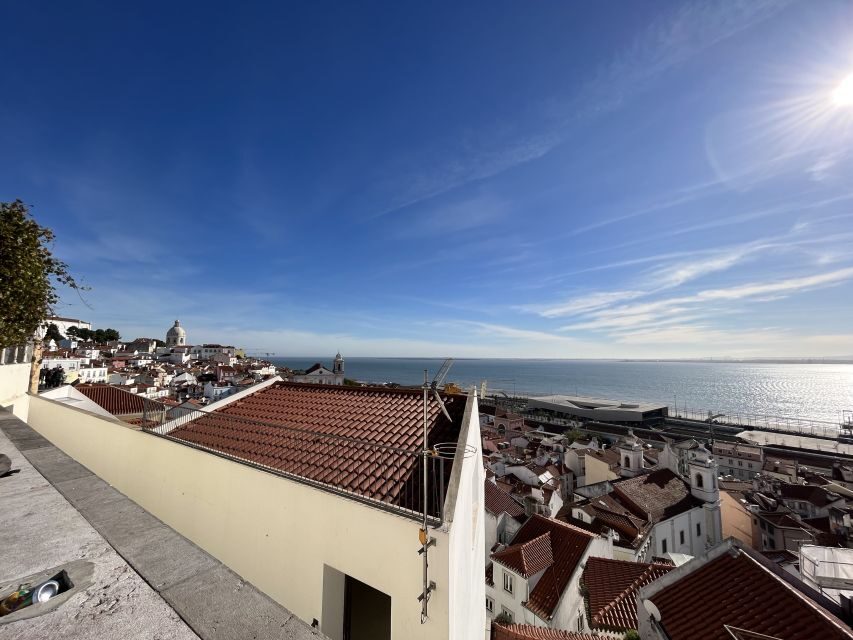
The tour ends with viewpoints, and that’s smart. Miradouro de Santa Luzia comes first, then Miradouro das Portas do Sol. Both are set up for photos and for simple people-watching. When you look at the city from here, you start to understand the city’s geometry—the hills, the rooftops, and the way neighborhoods tuck into different elevations.
I like the order. Santa Luzia gives you an early taste of the panorama, and then Portas do Sol acts like the final crescendo. You finish exactly where you’ll want to slow down.
Practical note: viewpoints can get windy and can attract crowds. Keep your jacket handy, and aim to keep your time flexible. If the weather is off, the provider may shift or cancel based on conditions, so have a little flexibility in your schedule.
Guide style and pacing: why private works on this route
This tour is private, and that’s a big deal on Lisbon’s uneven streets. A good guide does three things: chooses the right streets, manages the timing, and gives you context without making it feel like homework.
The reviews highlight the guide’s kindness and hands-on approach, and they specifically mention Raquel Rocha as a standout. In those experiences, she didn’t just talk history—she also added food-and-wine context and even tasting stops for some guests, which is a nice extra when you want Lisbon to include more than just architecture. Even if you aren’t going for food, that sort of street-level knowledge often makes the whole walk feel more alive.
Also, the tour description emphasizes shortcuts used to avoid strenuous climbs. That’s not just comfort. It keeps your legs fresher for the viewpoints where photos matter most.
Price and value: what you’re paying for in a $113.45 private walk
At $113.45 per person for about 3 hours, this isn’t the cheapest option compared to group tours. But it makes sense if you value a private guide and a route built for first-timers.
Here’s the value equation I’d use:
- You’re paying for private pacing (no waiting for others, easier to ask questions).
- You’re paying for efficiency (a route that connects key areas and viewpoints without turning the day into a long hike).
- You’re paying for added context—and the reviews suggest that the guide’s style can extend beyond monuments, sometimes including local food-and-wine stops.
If you’re traveling as a couple or small group and you want a guided “map lesson” of central Lisbon, the price can feel reasonable. If you’re traveling solo on a tight budget, you might compare it to cheaper group walks and decide what matters more to you: cost or personal attention.
Who this Lisbon first-timer tour suits best
You’ll likely love this tour if:
- You’re in Lisbon for the first time and want to orient yourself quickly through central neighborhoods
- You prefer a casual walk with clear stops and photo opportunities
- You want a guide to explain context at major landmarks, including political and historical details tied to Lisbon’s public spaces
- You like viewpoints and want to finish with a strong panorama moment
You might want to skip or supplement this tour if:
- You specifically want to ride Santa Justa Lift (this tour focuses on exterior viewing)
- You need long time in fewer places (this is a “see-and-understand” route, not a slow museum day)
- You’re unlucky with weather (the experience requires good conditions)
Should you book this private walking tour?
I’d book it if you’re a first-timer who wants a guided backbone for Lisbon’s center: churches, key squares, Chiado, Baixa, Roman ruins, and two viewpoints that make the walking feel worth it. The private format and the guide’s approach—praised for kindness and smart pacing—are exactly what you want when you’d rather spend time looking around than figuring out logistics.
Skip it only if your priorities are different. If your dream day is a long museum crawl or you need specific admissions and rides (like doing Santa Justa itself), plan those separately and use this tour for the orientation piece.
FAQ
How long is the Lisbon first-timers private walking tour?
It’s about 3 hours.
Where does the tour start and where does it end?
It starts at Praça Dom Pedro IV, and it ends at Miradouro das Portas do Sol (Largo Portas do Sol).
Is this tour private?
Yes. It’s a private tour/activity, and only your group participates.
Are there any admission tickets required during the tour?
The listed admissions for the stops are shown as free, and entry is included for the church stop.
What happens if the weather is bad?
The experience requires good weather. If it’s canceled due to poor weather, you’ll be offered a different date or a full refund.
Can I cancel for free?
Yes. You can cancel up to 24 hours in advance for a full refund.