REVIEW · SETUBAL DISTRICT
Half Day Megaliths Cromlech Tour from Evora by Archaeologists
Book on Viator →Operated by Iberian Heritage Tours · Bookable on Viator
Ancient stones, explained by real archaeologists. I like the hands-on, archaeology-first guiding from Bianca and Gonçalo, who explain what we know, what we guess, and why. I also love how the tour mixes monuments with the lived-in setting—cork trees, slow drives, and a short walk to the Menir of Almendres. One thing to consider: the path to the Menir is in poor condition, and reduced mobility may make it a no-go.
You’ll meet at the Roman Temple of Évora (Largo do Conde de Vila Flor), then head out by van for a 2–4 hour experience that includes drive time. The tour is in English, capped at up to 6 people, and it can include hotel pickup (with timing that may be up to 30 minutes earlier than the start). After the sites, you get a bit of free time at the Centro Interpretativo dos Almendres.
In This Review
- Key Things I’d Not Skip on This Tour
- Setting Out From Évora’s Roman Temple
- The Menir of Almendres: A Short Walk With Big Atmosphere
- Cromeleque dos Almendres: Why People Call It Portugal’s Stonehenge
- How Archaeologists Explain Theories Without Making It Feel Like a Lecture
- Cork Trees, Wildflowers, and the Drive That Feels Like Part of the Story
- Anta Grande do Zambujeiro: When the Tour Shifts From “Stone Circle” to “Burial Tomb”
- Centro Interpretativo dos Almendres: Short Context and Time to Browse
- Timing That Works: Half-Day With Drive Time Included
- Price and Value: What $78.44 Buys You (And What It Doesn’t)
- Footwear, Balance, and the Practical Limits
- Who This Tour Is Perfect For
- Should You Book the Half-Day Megalith Tour From Évora?
- FAQ
- How long is the half-day megalith tour?
- Where does the tour start and end?
- Is hotel pickup available?
- What’s included in the price?
- Do I need to buy tickets separately?
- What should I wear or bring?
- Is the tour accessible for reduced mobility?
Key Things I’d Not Skip on This Tour
- Archaeologists guide every stop: Bianca and Gonçalo speak from training, not script.
- Small group pace: up to 6 people means questions get real answers.
- Menir + cromlech, not just one stone: you see both the solitary standing stone and the stone-circle layout.
- Neolithic theories with context: they explain competing ideas and how scholars think.
- Cork-forest driving as part of the experience: the ride isn’t wasted time.
- Mud happens: bring footwear that can handle dirt footpaths, especially after rain.
Setting Out From Évora’s Roman Temple
The tour starts at the Roman Temple of Évora, a good place to orient yourself before you leave the city. From there, you’re in a van for about 25 minutes to reach the Menir area, which keeps the half-day feeling manageable even if you’re not a big hiker.
If you choose hotel pickup, expect some flexibility: pickup time may be as much as 30 minutes before the listed start, depending on how many groups are combined. You’ll be told when to be ready at least 24 hours in advance, and the guide meets you outside your hotel.
You can also read our reviews of more tours and experiences in Setubal District.



The Menir of Almendres: A Short Walk With Big Atmosphere
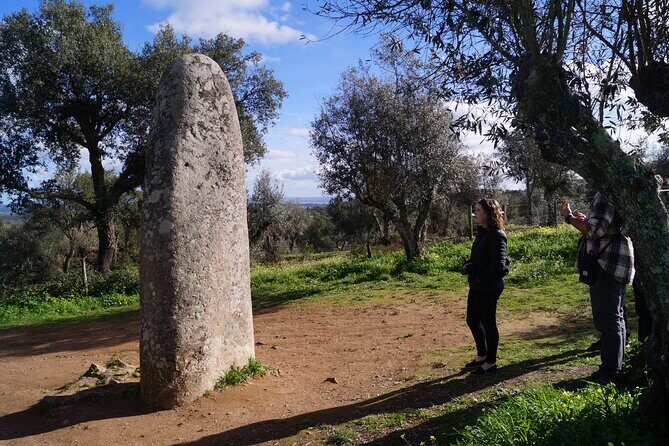
Stop One begins with a quick hop from the meeting area to the path leading to the Menir of Almendres. This is the solitary standing stone—a clear, awe-inducing subject because there’s nowhere for your eyes to hide. The walk is only about 5–10 minutes, but it’s on dirt paths and those paths can be muddy after rainy weather.
Here’s the practical warning that matters most. The route to the Menir is in poor condition, and people with reduced mobility may not be able to reach it. If you’re even slightly unsure, I’d plan to ask the operator about what you can realistically do on the day—because the tour is short, and you won’t have time to redo plans.
Cromeleque dos Almendres: Why People Call It Portugal’s Stonehenge
Once you’re done with the Menir, the van continues through the Almendres property, winding among cork trees. You’ll notice the drive is slow, mainly because the road is in poor shape. That’s not a dealbreaker—it’s part of why the experience feels like it actually reaches the countryside rather than just skimming a paved viewpoint.
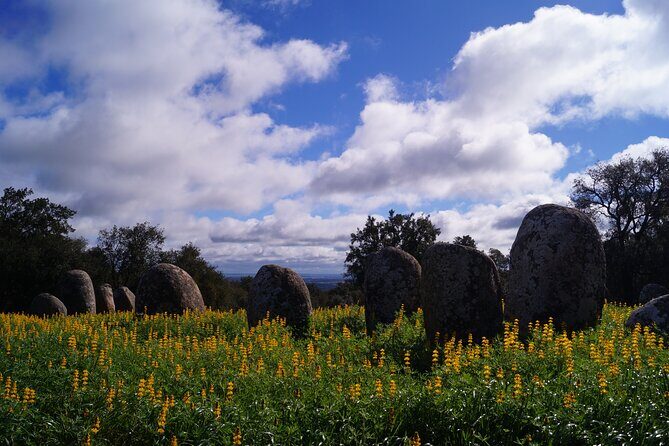
Then you reach the Cromlech of Almendres, often called the Stonehenge of Portugal. The stone circle layout gives you that “wait, how did they plan this?” feeling. This is where the guiding really earns its keep: you’re not just looking at stones—you’re learning how archaeologists interpret their placement.
Expect the guide to talk about the Neolithic period and share theories tied to what’s known about the monument. The big value is that this is coming from archaeologists trained in prehistory of the region, so you get informed context rather than generic “mystery” talk.
How Archaeologists Explain Theories Without Making It Feel Like a Lecture
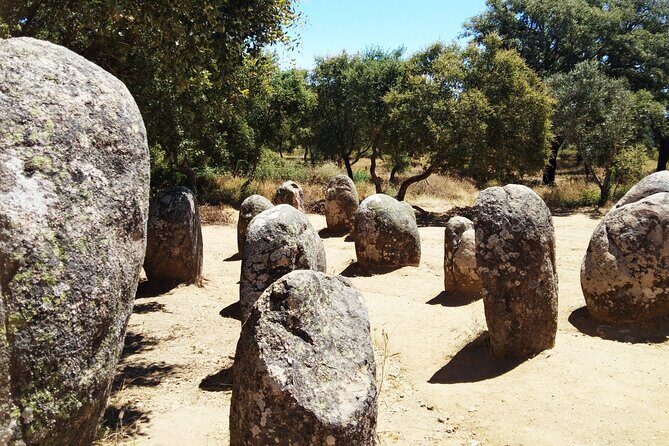
A lot of ruins tours drown you in facts. This one has a different rhythm. Bianca and Gonçalo are friendly and conversational, and the explanations are built to help you connect the dots: age, setting, construction clues, and why scholars propose different interpretations.
What I love about this style is the balance. You’ll hear what is supported, what is uncertain, and why uncertainty exists. That’s important with megaliths, because the stones don’t come with labels. When the guide can explain competing ideas clearly (instead of pushing only one), the whole site makes more sense—and you can look around with sharper questions of your own.
Cork Trees, Wildflowers, and the Drive That Feels Like Part of the Story
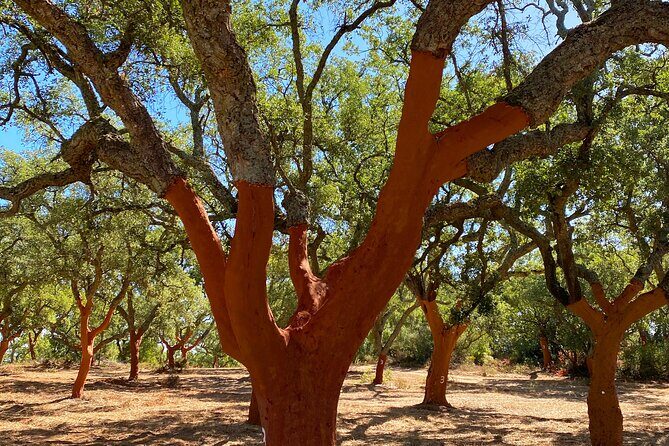
The countryside is not an extra here—it’s woven into the experience. Reviews and your own eyes will confirm the area around Almendres is beautiful and calm, with cork forests and enough open space to let the monument sink in.
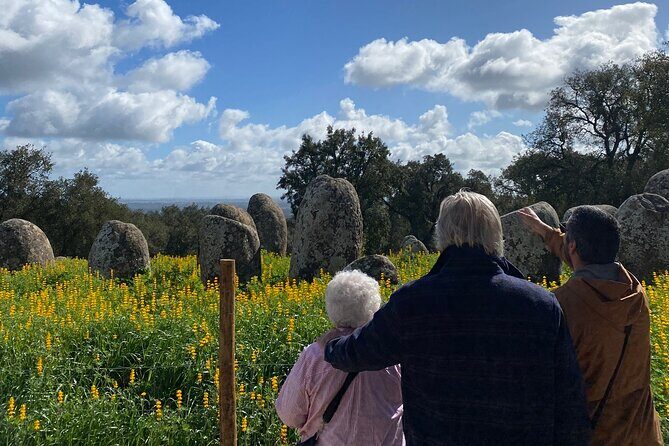
On your walk to the Menir, you might even spot wildflowers along the path. It’s a small detail, but it changes the feel of the tour: you’re not trudging from stop to stop in a crowded loop. You’re moving through a rural landscape where these Neolithic structures still sit close to the environment that surrounded them long ago.





Anta Grande do Zambujeiro: When the Tour Shifts From “Stone Circle” to “Burial Tomb”
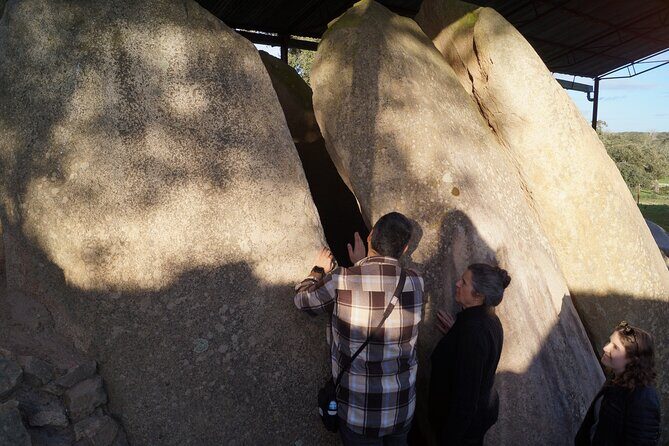
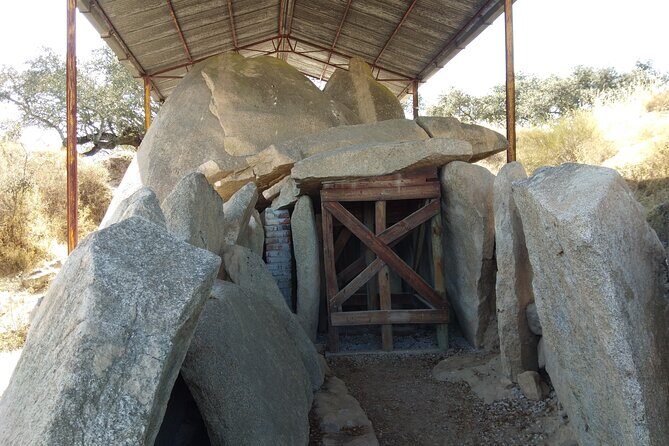
Many versions of this half-day include a third megalith stop in the wider area: the chamber tomb at Anta Grande do Zambujeiro, sometimes described as a dolmen. This is a strong contrast to Almendres. Instead of focusing on an arrangement like a cromlech, you get a burial monument designed around the idea of human remains and ritual space.
If your day includes Zambujeiro, you’ll likely spend it reflecting on how the region’s Neolithic people used different types of monuments for different purposes. This contrast also helps you avoid the common mistake of turning every standing stone into the same story.
Centro Interpretativo dos Almendres: Short Context and Time to Browse
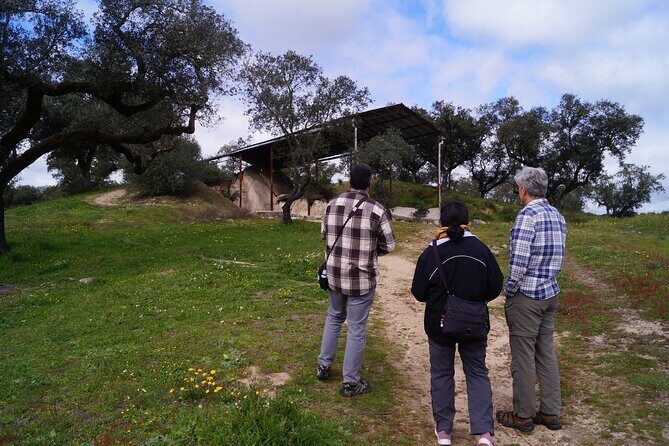
After the main megalith stops, you head back to the van and slowly drive out of the Almendres complex. Then you stop at the Centro Interpretativo dos Almendres, which works well as a “wrap your head around it” moment.
You’ll get free time to browse and explore at the interpretive center/gift shop. Admission is not a concern here because entrances to monuments visited are included, and you’re not paying extra just to understand what you saw outside. This is also where you can slow down if you want to read a bit more before heading back to Évora.
Timing That Works: Half-Day With Drive Time Included

This tour runs about 2 to 4 hours, and yes, that includes drive time. For me, that’s the sweet spot. You get enough time for actual site viewing—standing stone, stone-circle setting, and the contextual stop—without turning it into a full-day “logistics marathon.”
Drop-offs back in Évora are scheduled between:
- 12:00–13:00 for the morning tour
- 17:00–18:00 for the afternoon tour
That timing is handy. It means you can still plan a meal in Évora the same day instead of arriving at dinner time exhausted.
Price and Value: What $78.44 Buys You (And What It Doesn’t)
At $78.44 per person, this is not the cheapest thing you can do around Évora. The value comes from what’s bundled and from who’s doing the teaching.
You’re paying for:
- Entrance to all monuments visited
- Guided tours at each site
- Van transport and the benefit of getting to sites that aren’t a simple walk from central Évora
- Free time at the interpretive center
If you tried to self-guide the same route, you’d be doing the hard work: finding the sites, figuring out the best viewpoints, and interpreting what you’re looking at. The fee buys you a guided interpretation by archaeologists, plus the logistics you’d otherwise need a rental car for—especially with rough roads and dirt paths.
What’s not included is also straightforward: there’s no lunch, and car seats aren’t provided, so bring your own if you need one.
Footwear, Balance, and the Practical Limits
Wear sneakers or hiking shoes. You’ll be walking along dirt footpaths, and those footpaths may get muddy after rainy weather. The walking is not long, but it’s the kind of uneven ground where traction matters.
Also keep in mind two limits spelled out by the tour:
- Not recommended for people with balance problems
- The Menir path may be unreachable for those with reduced mobility
If you’re traveling with someone who uses mobility aids, I’d treat this as a “talk it through first” situation. Don’t assume a short walk means it’s easy ground.
Who This Tour Is Perfect For
This tour is a great match if you want prehistoric context without dry classroom energy. It’s especially good for people who like learning how archaeologists think—how evidence shapes theories, and why some questions stay open.
It’s also ideal if you appreciate small-group experiences. With a maximum of 6, the guide can respond to your questions and keep a steady pace instead of racing the group through snapshots.
And if you’re the sort of person who loves countryside drives, cork trees, and quiet routes, you’ll enjoy how much time you spend outside the city walls.
Should You Book the Half-Day Megalith Tour From Évora?
I’d book it if you want your Évora day trip to feel focused and meaningful. The combination of archaeologist-led guidance, small group size, and the mix of megalith types (standing stone and cromlech, with a possible chamber tomb stop depending on the day) makes it a smart use of a short window.
I’d hesitate if your group includes someone who can’t handle uneven, muddy paths—or if reaching the Menir is a dealbreaker. In that case, you may want a different tour format or a site plan that doesn’t depend on the poorer-condition trail.
Overall: for people who want real context for Portugal’s megaliths, this is one of the best ways to spend a half-day around Évora.
FAQ
How long is the half-day megalith tour?
It lasts about 2 to 4 hours, and that includes driving time.
Where does the tour start and end?
It starts at the Roman Temple of Évora (Largo do Conde de Vila Flor, 7000-863 Évora) and ends back at the same meeting point.
Is hotel pickup available?
Yes. Pickup time can vary depending on how many groups are booked together, and hotel pickup may be up to 30 minutes earlier. You’ll be told when to be ready at least 24 hours before the tour.
What’s included in the price?
Entrance to all monuments visited and guided tours at each site are included, plus some free time at the interpretive center.
Do I need to buy tickets separately?
No. Entrance to the monuments visited is included.
What should I wear or bring?
Wear sneakers or hiking shoes. Expect some walking along dirt footpaths that can be muddy after rain. Also bring any needed car seats for infants/children, since car seats are not provided.
Is the tour accessible for reduced mobility?
The path to the Menir of Almendres is in poor condition, and reduced-mobility travelers may not be able to reach it. The tour is also not recommended for people with balance problems.