REVIEW · SETUBAL DISTRICT
Jeep Safari Arrábida
Book on Viator →Operated by Discover The Nature - Outdoor Events · Bookable on Viator
Four hours, big variety.
This Jeep safari stitches together coast-country views, a fortress on a hill, a tucked-away cave chapel, and a stop at one of Setúbal’s oldest wineries. I love how the route mixes nature and culture without making you plan a full day. I also like the finish at Jose Maria de Fonseca, where you get visit + tasting in a cellar with six generations behind it.
One thing to consider: the tour moves at a steady pace, with about 30 minutes at several major stops, so it’s more “see and soak it in” than “linger and explore.” If you care a lot about commentary, it’s offered in English, but you should still expect a mostly guided, timed format rather than a slow walk.
In This Review
- Quick hits you’ll feel during the day
- Jeep Safari Arrábida: a 9:30 start with a tight, satisfying loop
- Castel(o) de Palmela: why this hilltop matters in the Setúbal story
- Parque Natural da Arrábida: 30 minutes in a protected reserve that’s bigger than it looks
- Lapa de Santa Margarida: the chapel inside the cave that’s hard to find
- Jose Maria de Fonseca: wine tasting with family roots in Setúbal
- The historic monastery stop: 16th-century art and archaeological finds
- Price and value: what about $96.33 actually buys you
- Language and guide style: when you care, ask early
- Who this Jeep safari suits best
- Should you book the Jeep Safari Arrábida?
- FAQ
- Where is the meeting point for the Jeep Safari Arrábida?
- What time does the tour start?
- How long is the Jeep Safari Arrábida?
- How many people are in the group?
- Is the tour offered in English?
- Is the mobile ticket used for check-in?
- What is included in the price?
- Are there meals included?
- What is the cancellation policy?
- Is the tour close to public transportation?
Quick hits you’ll feel during the day
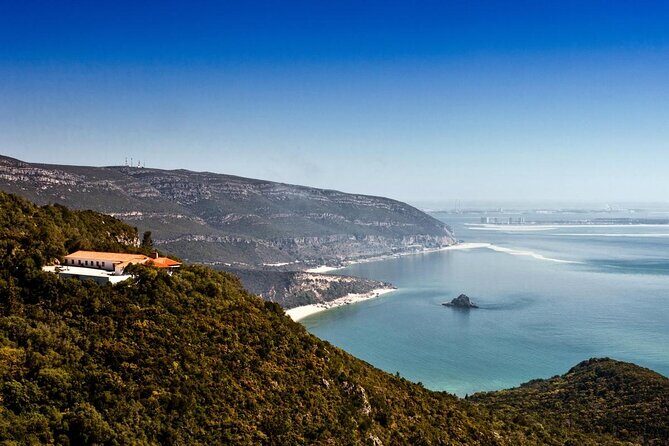
- Castelo de Palmela: a strategic hilltop tied to Islamic rule, Afonso Henriques, and the Order of Santiago
- Parque Natural da Arrábida: a protected reserve with multiple mountain ranges and a high point at Pico do Formosinho (501 m)
- Lapa de Santa Margarida: a cave setting with a 17th-century chapel that’s famously hard to find
- Jose Maria de Fonseca: a multi-generation wine cellar visit with tasting time included
- Small group size: maximum 12 travelers, which helps on viewpoints and tight spots
Jeep Safari Arrábida: a 9:30 start with a tight, satisfying loop
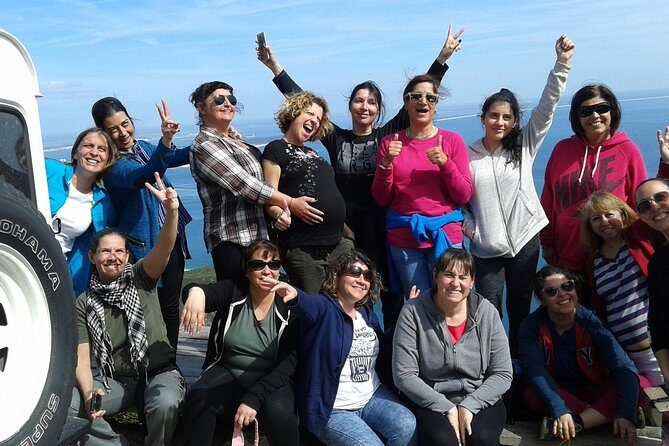
The day starts at 9:30 am in Setúbal, at Pç da Republica 13 (2900 Setúbal). You’re back at the same meeting point at the end, and the total time is about 4 hours. That closed loop matters: you don’t waste time figuring out transport between hilltop sights, a protected park area, and a winery.
This is a small-group tour, capped at 12 travelers, and it’s offered in English. For value, I like that bottled water is included, along with alcoholic beverages during the experience. You also get a mobile ticket, which makes the morning smoother when you’re juggling maps, bags, and snacks.
If your schedule is tight and you want variety without stress, this kind of format works. The trade-off is simple: you’ll have enough time to appreciate each stop, but not enough time to do long trails or repeat viewpoints.
You can also read our reviews of more tours and experiences in Setubal District.
Castel(o) de Palmela: why this hilltop matters in the Setúbal story
Your first real “wow” moment is Castelo de Palmela, where the timing is tight but the payoff is clear. The site sits in a strategic position overlooking parts of the Sado estuary, slopes of the Arrábida mountain range, and plains that separate it from the Tagus. In other words, this wasn’t just a nice view spot—it was a control-and-connection point.
The castle’s timeline is the kind that explains why the region feels layered. You’ll hear about Islamic occupation between the 8th and 12th centuries, then conquest by D. Afonso Henriques in 1147, and later recovery by D. Sancho I. After that, Palmela becomes a headquarters site for the Order of Santiago from 1443 until its extinction in 1834.
A detail I genuinely appreciate: it has been a National Monument since 1910, so you’re not looking at a random ruin. You’re looking at a protected fortification with recognized significance, and that makes the stop feel more intentional.
Practical expectation: plan for about 30 minutes here, and know you’ll likely spend some of that time moving between viewpoints and getting situated. If you’re sensitive to uneven ground, wear shoes with grip.
Parque Natural da Arrábida: 30 minutes in a protected reserve that’s bigger than it looks
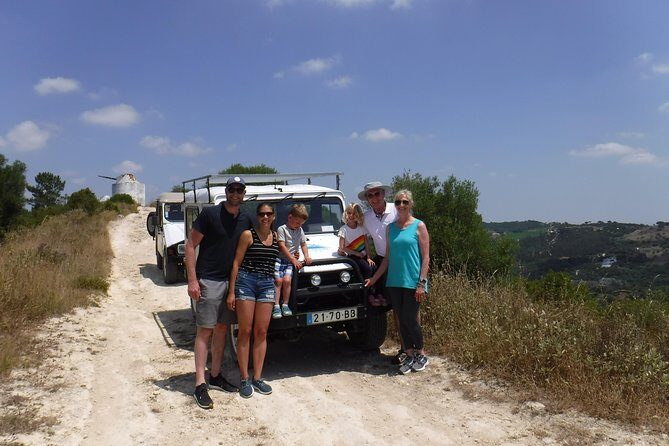
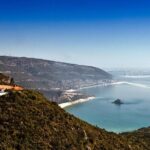
After the castle, you shift into Parque Natural da Arrábida, part of the Setúbal peninsula’s protected area. In one short stop you’re looking at a biogenetic reserve that covers parts of Palmela, Setúbal, and Sesimbra. The park’s top point is Pico do Formosinho (501 meters), and the protected area stretches 35 kilometers.
You’ll hear the park described through its mountain sections—names like Serra do Louro, Serra de São Luís, Serra dos Gaiteiros, Serra Longa, and Serra de São Francisco come up as part of the overall terrain. It’s useful context because it explains why the Arrábida area feels like multiple “mini regions” rather than one uniform view.
Admission here is free, and the time slot is about 30 minutes. That short window is exactly why this tour format works. You get a taste of why locals and visitors talk about Arrábida’s combination of hills, sea air, and protected natural space—without needing to commit to a full hike day.
What to do during this stop: treat it like a viewpoint-and-orientation break. Look at where the ridgelines run, then mentally connect what you saw from Palmela to the shape of the park around you. You’ll walk away with a better sense of the geography, not just pictures.
Lapa de Santa Margarida: the chapel inside the cave that’s hard to find
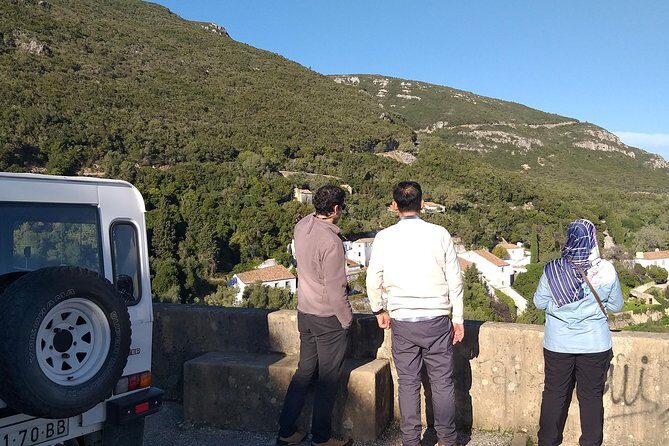
Then you get the most “how did anyone find this?” stop: Lapa de Santa Margarida. This is a natural cave at the base of the Arrábida mountains, with an in-cave chapel dating to the 17th century.
Here’s what makes it special: it’s described as well hidden, and it’s close to Portinho da Arrábida, but still not something most people spot without knowing where to look. That’s exactly the kind of place where a guided approach is worth its weight, because the value isn’t just standing at the entrance—it’s getting you to the right spot in the right amount of time.
You’ll spend about 30 minutes here, and admission is included. The smartest move is to show up mentally ready for a short, focused visit rather than a long explore. Bring your curiosity, keep your expectations grounded, and take a moment to look around the cave setting once you’re inside.
If you’re the type who loves quiet corners and oddball sacred spaces, this is the stop you’ll remember later.
Jose Maria de Fonseca: wine tasting with family roots in Setúbal

The tour closes with Jose Maria de Fonseca, a wine cellar in the Setúbal region known as one of the oldest in the area. This isn’t a quick drive-by photo stop. You get a visit and wine tasting, with admission included.
The family story is part of why this feels more human than generic cellar tourism. The winery’s origins are tied to José Maria da Fonseca, whose act is placed around 1834—a daring, “step of a visionary” kind of move for the family, as the story goes. The experience is described as spanning over six generations, which helps explain why it’s still presented as a living tradition rather than a museum artifact.
I like that alcoholic beverages are included. That means you’re not hunting for a separate pour after you’ve already spent the day walking and driving. This also makes the overall package feel more complete: you get culture, nature, and then the local taste of the region.
Time here is about 30 minutes, so it’s a snapshot tasting. It’s ideal if you want to understand the style and the place without committing to a full vineyard day.
The historic monastery stop: 16th-century art and archaeological finds
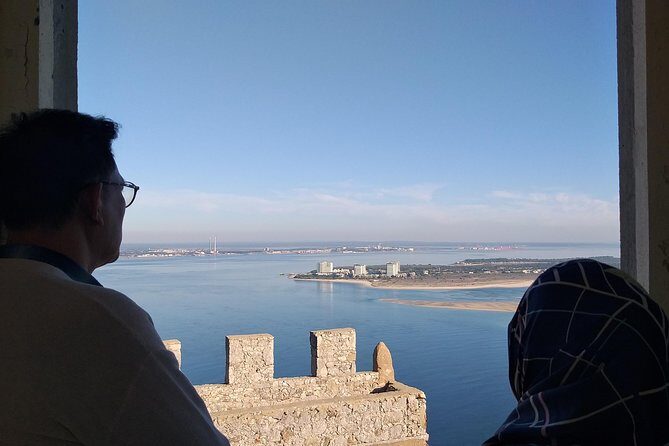
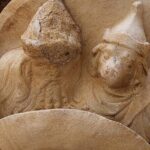
Before you fully get into castle and park energy, you’ll pause at a historic monastery with 16th-century art (noted as XV and XVI) and archaeological finds. This stop is shorter and calmer compared with the viewpoints, but it’s an important “tone setter.”
Why I think it’s worth including: it anchors the day in the human side of the region. The Arrábida area isn’t only about scenery—it’s also about the places where communities built, preserved art, and left layers of meaning behind. A monastery stop gives you that context, so the castle later feels like part of a bigger pattern, not a random fortress.
Because the itinerary details don’t specify admission for this monastery in the same way as the other stops, I’d treat it as a included visit within the route rather than a separate ticketed attraction. Expect to spend enough time to see the key features and move on promptly.
Price and value: what about $96.33 actually buys you
At about $96.33 per person for roughly 4 hours, you’re paying for transportation, a small-group route, timed access to key sights, and included extras. The value gets better when you look at what’s covered.
You have bottled water and alcoholic beverages included, plus multiple admissions baked into the stops. Castelo de Palmela includes admission, Lapa de Santa Margarida includes admission, and Jose Maria de Fonseca includes admission tied to the visit and tasting. Arrábida Natural Park is specifically noted as free admission for that stop.
There’s also a group discount element, and the tour is typically booked around 6 days in advance on average. That last point matters because it suggests the route is popular enough that waiting too long could mean fewer available slots.
The main “cost” you should account for is time. This isn’t a 1–2 day hiking trip. If you want long wander time in one place, another format would suit you better. But if you want a smart sampler of Arrábida without a car, this price starts to make sense.
Language and guide style: when you care, ask early
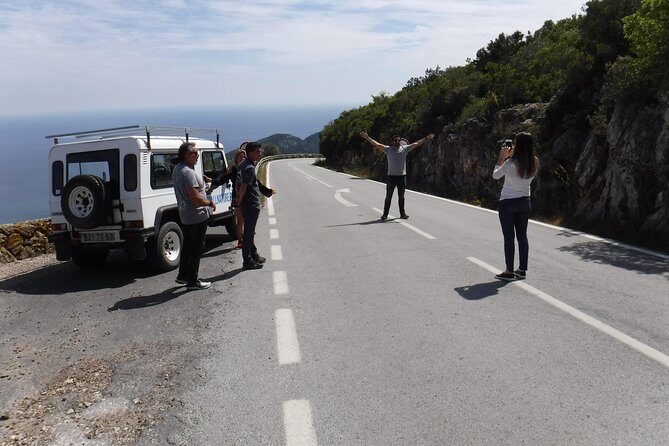
The tour is offered in English, and one experience notes a guide named Cam as friendly and great with a 7-year-old. That’s a strong signal that at least some days the guiding style leans warm and hands-on.
At the same time, another experience complained about a chauffeur who didn’t speak much and didn’t guide effectively. That kind of inconsistency is the only real caution I’d give. If you’re counting on lots of explanations, arrive on time, confirm the language and who you’ll be following, and be clear at the start that you want commentary, not just driving between stops.
This won’t change the route, but it can affect how much you get out of it.
Who this Jeep safari suits best
This is a good fit if you:
- want one afternoon that covers castle, park, cave chapel, and wine tasting
- prefer small-group pacing (max 12) over crowded tours
- like mixing viewpoints with stops that have real cultural detail
- are traveling with kids and still want adults-only moments like tastings
It may be less ideal if you:
- want to spend half a day hiking with long breaks
- dislike timed stops and quick transitions
- need very slow, fully flexible viewing time at each site
Should you book the Jeep Safari Arrábida?
I’d book it if your goal is a practical, high-reward day in the Setúbal area. The combination of Castelo de Palmela, a protected Arrábida nature break, Lapa de Santa Margarida, and Jose Maria de Fonseca wine tasting gives you a balanced mix that’s hard to replicate on your own without planning every leg.
Book with confidence if you’re curious and you’re okay with the pace. I’d skip it only if you want deep exploration of one spot or you’re expecting a totally open-ended itinerary.
FAQ
Where is the meeting point for the Jeep Safari Arrábida?
The tour meets at Pç da Republica 13, 2900 Setúbal, Portugal.
What time does the tour start?
The start time is 9:30 am.
How long is the Jeep Safari Arrábida?
The duration is approximately 4 hours.
How many people are in the group?
The maximum group size is 12 travelers.
Is the tour offered in English?
Yes, the tour is offered in English.
Is the mobile ticket used for check-in?
Yes, the tour includes a mobile ticket.
What is included in the price?
The price includes bottled water and alcoholic beverages, and admission tickets are included for some stops (like Castelo de Palmela, Lapa de Santa Margarida, and Jose Maria de Fonseca).
Are there meals included?
No lunch or dinner is included.
What is the cancellation policy?
Free cancellation is available up to 24 hours in advance for a full refund.
Is the tour close to public transportation?
The meeting point is near public transportation.