REVIEW · SETUBAL DISTRICT
Évora: Private walking tour with tickets to main monuments
Book on Viator →Operated by Évora Cultural Experience · Bookable on Viator
Évora can feel like a living textbook. This private walking tour threads together the city’s big eras—Roman power, Renaissance engineering, and the darker corners of religious history—while keeping the pace relaxed and the stories clear. It starts in the town’s main square and then moves by foot through the most iconic spots you’ll want to see.
Two things I particularly like: you get tickets included for the Cathedral of Évora and the Chapel of Bones, and the guide experience sounds personal enough that you can ask real questions. I also love how the route doesn’t treat Évora like a checklist; it connects monuments to what was happening in Portugal at the time. One drawback to plan for: the Chapel of Bones and the Inquisition memorial stop are intense, so if you prefer lighter sightseeing, you may want to mentally prepare.
In This Review
- Key highlights you’ll actually feel on the ground
- Entering Évora through Praça do Giraldo
- The Inquisition memorial stop: heavy topic, handled with context
- A quick hit of Alentejo craft culture on the commerce street
- Se Catedral de Évora: Gothic grandeur plus roof views
- Templo Romano de Évora (Templo de Diana): Roman power still visible
- Pátio de São Miguel: art-history fans will perk up
- The Renaissance fountain and Cardinal D. Henrique’s influence
- Igreja da Graça: Portuguese Renaissance meets symbolic storytelling
- Chapel of Bones (Capela dos Ossos): macabre, but explained
- Igreja de São Francisco and Dom Manuel’s royal connections
- Ruinas Fingidas: a photo-friendly poetic stop
- Muralhas de Évora: defensive walls from Roman to Napoleonic times
- Aqueduto da Água de Prata: the Renaissance showpiece
- Price and what you get for about $105 per person
- Who this tour fits best (and who should think twice)
- A quick heads-up on guides and the private experience feel
- Should you book this Évora private walking tour?
- FAQ
- How long is the Évora private walking tour?
- Is this tour private?
- What language is the tour offered in?
- Which monuments include entrance tickets?
- Are meals included in the price?
- Where does the tour start and end?
- Can I cancel for a full refund?
Key highlights you’ll actually feel on the ground
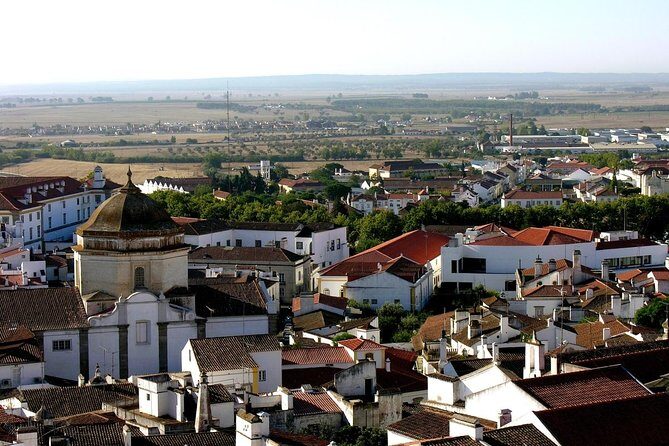
- Cathedral of Évora entry with cloisters plus roof access for a high, panoramic view over the city
- Chapel of Bones tickets included, built from real human bones, with stories and legends explained
- Temple of Diana (Templo Romano / Templo de Diana): one of the oldest and best-preserved Roman temples in the country
- Aqueduct of Água de Prata: the Renaissance civil-work landmark with 18 km behind its arches
- Muralhas de Évora pass-by: Roman-to-medieval-to-early-modern defensive walls in one sweep
- Private format so your group controls the questions and pace (guides like John, João, Elsa, Paulo, and Paolo are repeatedly praised)
Entering Évora through Praça do Giraldo
Start at Praça do Giraldo, the city’s social heart. This is where the story of Évora makes sense fast, because the square has long been the center for economic and political life in this UNESCO World Heritage city. Even before you reach the major monuments, the guide’s framing helps you understand why these buildings sit where they do.
What I like about beginning here is practical: it’s easy to orient yourself in the old streets afterward. And because the tour has an organized flow, you’re not wandering around trying to guess what to see next. It also tends to set a tone—historical, but not stiff.
You can also read our reviews of more tours and experiences in Setubal District
The Inquisition memorial stop: heavy topic, handled with context
Right after the square, the tour passes Homenagem as vitimas da Inquisição em Portugal. The tour explanation covers the Inquisition in Portugal starting in 1536 and lasting almost 300 years, and it points out how Évora was one of the most deadly of the Inquisition courts.
This is the one segment where I’d call out a real consideration. The themes are grim: intolerance, religious extremism, and victims burned alive in the past. If you’re sensitive to dark history, go in knowing this stop is part of the full Évora picture, not a side note.
A quick hit of Alentejo craft culture on the commerce street
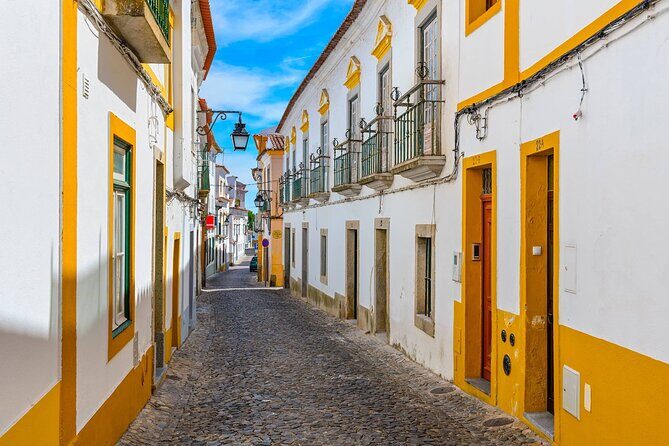
Between the big monument moments, you’ll pass through a traditional commerce lane in Évora. The focus here is on Alentejo handicrafts—things like cork objects, pottery, painted furniture, chocalhos (rattles), and Capotes (traditional Alentejo cloaks). Even if you don’t shop, this stop helps you shift from stone-and-stories to daily life and local identity.
I appreciate this because Évora can otherwise become all big architecture and no modern feel. It also gives you a mental break before the Cathedral and the heavier stops that come later.
Se Catedral de Évora: Gothic grandeur plus roof views
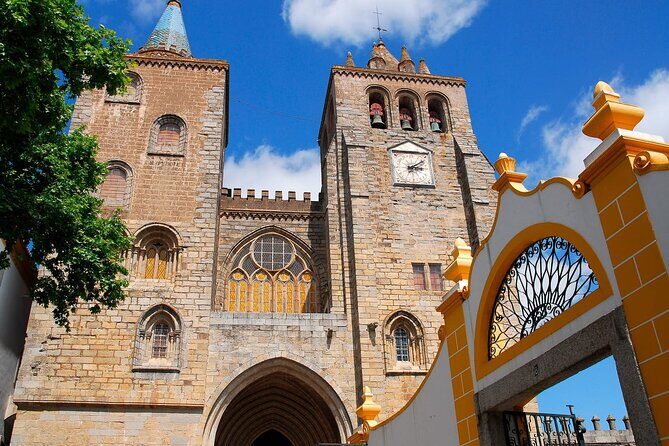
Next up is the Cathedral of Évora (Se Catedral de Evora), and it’s the mandatory centerpiece of the route. This is the largest Portuguese Gothic cathedral, built in the style associated with Notre Dame in Paris. The tour includes entry, so you don’t spend your time negotiating tickets once you arrive.
The Cathedral stop isn’t only about the outside. You’re able to visit the cloisters and then get to the roof for a panoramic view over Évora. That roof moment is the payoff when you want to connect streets and walls to the wider city layout. If you like architecture details, the guide’s talk about secret messages and unexpected references will also keep the visit from feeling like pure sightseeing.
A small practical note: you’ll want comfortable shoes here. Even with a moderate pace, cathedral visits involve time moving through sections and climbing or navigating roof access.
Templo Romano de Évora (Templo de Diana): Roman power still visible
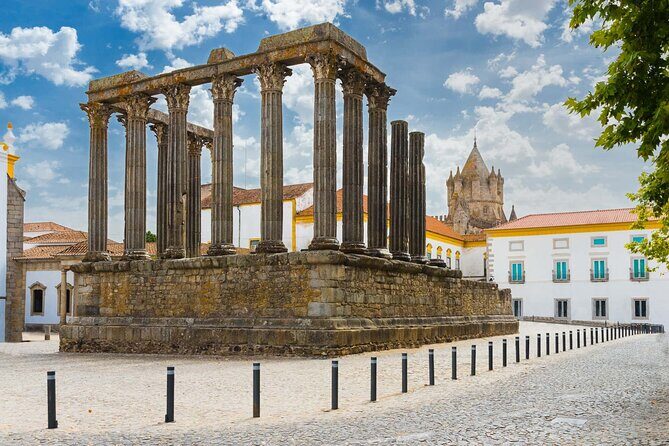
Then comes Templo Romano de Evora, commonly known as the Templo de Diana. The big point is simple: you’re looking at a monument with around two millennia of history, and it’s among the best preserved and oldest Roman temples of the ancient empire.
What makes this stop click is that Roman Évora isn’t abstract. The guide ties it to ancient power and to the idea of the city founded in the era associated with Júlio César. Even if Roman history isn’t your thing, it helps you understand why later civilizations kept choosing this exact spot.
You can also read our reviews of more walking tours in Setubal District


Pátio de São Miguel: art-history fans will perk up
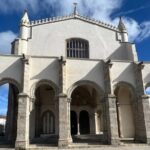
Pateo de Sao Miguel is described as one of Évora’s prettiest places that many people miss because it’s a bit hidden. The stop focuses on how it functioned as a fortified alcove in the old city, tied to governance and royal stays.
This is also where the tour brings in the thread of orders and Portuguese monarchy. The site is connected to the religious and military order of the Knights of Évora, which later originated the Order of Avis—the second dynasty of Portuguese kings. If you enjoy how a small courtyard can connect to major national shifts, this is a strong moment.
The Renaissance fountain and Cardinal D. Henrique’s influence
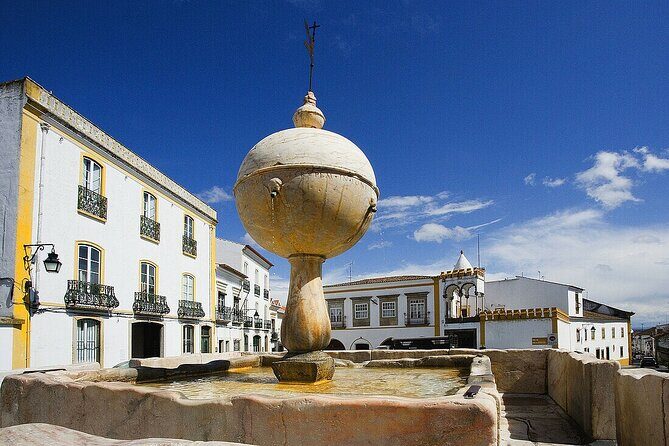
The next part of the walk includes a fountain called out as an early example of Mannerist art in Portugal. It was inaugurated in 1556, and the tour frames it as a major example of Portuguese urban architecture—linked to the government of Cardinal D. Henrique, a major patron of Évora and the last king of the Avis dynasty.
Even if you move through this area quickly, I like fountains on walking tours because they help you notice the civic design of a city, not just the religious big guns. The guide’s interpretation here gives you a reason to slow down for a minute.
Igreja da Graça: Portuguese Renaissance meets symbolic storytelling
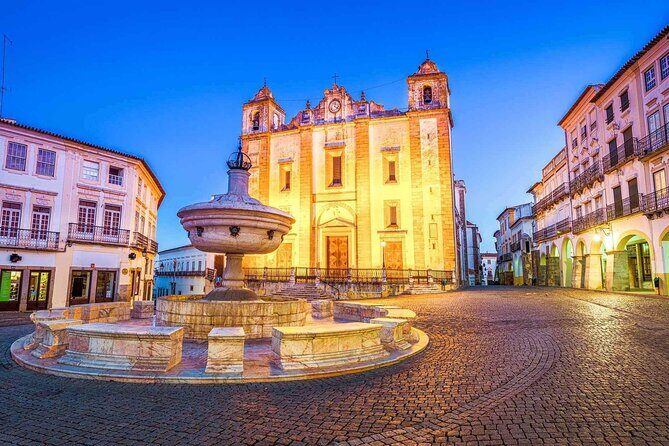
Then you’ll reach Igreja da Graca, a highlight for anyone interested in Portuguese Renaissance architecture with Mannerist inspiration. The facade is part of the attraction, and the tour points you toward stories behind the “boys” of Graça and the symbolic meaning of the hermitage’s look.
This is the kind of stop where a good guide matters. Instead of staring at stone and wondering what you’re missing, you leave with a narrative explanation you can actually remember later when you see similar art language elsewhere in Portugal.
Chapel of Bones (Capela dos Ossos): macabre, but explained
Now for the stop that gets talked about the most: Chapel of Bones. The famous message—bones that await yours—sets the tone, and the walls are covered with real human bones from thousands of people who lived in Évora. It was built in the 17th century, and the guide shares secrets and legends tied to it.
I’ll say this plainly: it can feel creepy if you come in with a light mind and no preparation. But it’s also not just shock value. With a guided explanation, the visit turns into a historical and cultural viewpoint on death and memory, rather than a horror set. Since the tour includes entry tickets here, you get the full experience without last-minute decisions.
Igreja de São Francisco and Dom Manuel’s royal connections
After that, you visit Igreja De Sao Francisco, also known as the golden convent. The tour describes it as a remarkable and innovative architectural work from its time, originally built on an older Franciscan convent from the 14th century. It also connects to royal life—royal weddings and baptisms that shaped the course of Portuguese history and even beyond.
From there, the route includes Palacio de Dom Manuel, specifically the Ladies’ Gallery, described as the most beautiful and romantic part of the 16th-century complex. The point isn’t romance for romance’s sake; it’s that you’re seeing how power, religion, and court life were physically built into the city.
Ruinas Fingidas: a photo-friendly poetic stop
You’ll also pass Ruinas Fingidas, a constructed romantic setting using elements and ruins from an old palace. The tour frames it as end-of-19th-century romanticism, and it encourages you to ask the guide to take a picture of you there.
This is a lighter moment in the middle of more serious monuments. It gives you a chance to reset and also gives your camera a backdrop that looks like it belongs in a storybook. Even if you don’t care about photos, it’s worth a pause because it changes the tone of the walk.
Muralhas de Évora: defensive walls from Roman to Napoleonic times
The tour then shifts outward for Muralhas de Évora, the defensive walls with layers from multiple periods. You’ll hear about Roman walls from the 3rd and 4th centuries, used and reused by later civilizations such as Visigoths and Muslims who lived in the city between the 8th and 12th centuries. The route also highlights impressive medieval walls from the 14th century and bastioned structures from the 17th century, reinforced in the early 19th century to support French troops during Napoleonic invasions.
This is one of my favorite types of stops: when a city’s defenses become a timeline you can walk past. You don’t need to be an expert in fortifications to appreciate that Évora was strategic long before modern borders. It also helps you understand why the city layout feels so enclosed.
Aqueduto da Água de Prata: the Renaissance showpiece
The final big named monument is the Aqueduto da Agua de Prata, the aqueduct of the Silver Waters. The tour calls it perhaps the most iconic Portuguese civil work of the Renaissance, opened in 1537 with an extension of 18 km.
The architecture detail matters here. The aqueduct isn’t just stone arches; the tour notes how houses inserted between its arches create a kind of Renaissance urban design statement. When you see it, you get why the guide treats it as a landmark, not a background object.
Price and what you get for about $105 per person
At $105.26 per person for roughly 2 hours 30 minutes, this tour costs like a quality guided experience, not a budget group shuffle. The value gets stronger because entry tickets are included for the Cathedral of Évora and the Chapel of Bones—two stops that can take real planning time on your own.
You’re also paying for the private format. With only your group participating, it’s easier to keep questions going and adjust pacing if someone needs a slower moment. Based on guide feedback I’ve seen around this tour style, that personal approach is a big part of why people rate it so highly.
The main consideration is that you’ll be walking for most of the experience. The tour is listed as requiring moderate physical fitness, so plan for cobblestones and time on your feet, even though the pace is designed to feel manageable.
Who this tour fits best (and who should think twice)
This is a great match if you want a guided walk that covers the big names in Évora without turning your day into a frantic museum sprint. It suits history and architecture lovers, and it also works well for first-timers because the route gives you context early (especially starting in Praça do Giraldo).
It may be less ideal if you prefer only light, cheerful sightseeing. Between the Inquisition memorial and the Chapel of Bones, the themes run heavy. Also, if you want long free time in shops or deep time for photography, the 2.5-hour structure might feel tight, since the tour is built to cover multiple monuments.
A quick heads-up on guides and the private experience feel
One of the clearest patterns in the guide praise is how much people like the explanations and interaction. Names that come up again and again include John, João, Elsa, Paulo/Paolo—and the consistent theme is that they ask questions, answer what you want to know, and keep the mood relaxed.
I also like that this tour’s route encourages questions at each major stop. If you’re the type who wonders why a facade looks a certain way, why a city made a choice centuries ago, or what you’re supposed to notice in a cathedral cloister, you’ll probably feel satisfied here.
Should you book this Évora private walking tour?
If you have one half-day to understand Évora and you want the two big ticket stops handled for you, I think booking makes sense. The route is built to connect Roman, Renaissance, and medieval layers, and the included Cathedral + Chapel of Bones entries remove two common friction points.
I’d book this tour if you like guided storytelling, want a clean overview of the key sights, and can handle darker historical subject matter with respect. Skip it only if you strongly dislike bone-themed or Inquisition-linked content, or if you need a very slow, no-stairs, no-crowds style day.
FAQ
How long is the Évora private walking tour?
The duration is about 2 hours 30 minutes.
Is this tour private?
Yes. It’s private, so only your group participates.
What language is the tour offered in?
The tour is offered in English.
Which monuments include entrance tickets?
Entrance fees are included for the Cathedral of Évora and the Chapel of Bones.
Are meals included in the price?
No. Meals are not included.
Where does the tour start and end?
It starts at Praça do Giraldo 7, 7000-508 Évora, Portugal (Giraldo Square Fountain) and ends back at the meeting point.
Can I cancel for a full refund?
Yes, with free cancellation up to 24 hours in advance for a full refund.