REVIEW · LISBON
Lisbon (All City) Private Tour – Including Belém & Cristo Rei
Book on Viator →Operated by Yellow Cab TT Tours, Unipessoal, Lda. · Bookable on Viator
Lisbon from the top and the street. This private 8-hour Lisbon tour strings together classic viewpoints and big landmarks across the city, from Expo 98’s futuristic waterfront to the Christ statue over the Tagus. I like that it’s truly private, so your guide can steer the day to your pace, including a flexible feel around the stops. Two standouts for me are the photo-friendly miradouro views (you’ll get that “I finally get Lisbon” panorama) and the chance to cover Belém and Cristo Rei in one go without juggling transport. One thing to keep in mind: you’ll cover a lot of ground in a day, so expect shorter time windows at each major stop, plus some entrances where admission isn’t included.
You’ll ride in an air-conditioned minivan with hotel pickup and drop-off, and you can communicate preferences ahead of time. In one recent positive experience, the guide Catarina was praised for tailoring the tour and even pointing guests toward excellent local food, including sardines. That mix—big sights plus real Lisbon guidance—is the main value here. The possible drawback is also practical: Lisbon has hills (especially around Alfama), so comfortable shoes matter, and you’ll want to be ready for lots of stairs and quick photo stops.
In This Review
- Key highlights to look for
- How a private full-day Lisbon tour actually helps you
- Parque das Nações: Expo 98’s futuristic Lisbon on the Tagus
- Alfama and São Jorge Castle Hill: the steep, old soul of Lisbon
- Miradouro da Senhora do Monte and Lisbon Cathedral: where the photos make sense
- Baixa’s 1755 rebuild story: Rossio, Terreiro do Paço, Rua Augusta, and more
- Avenida da Liberdade to Eduardo VII Park and Chiado connections
- Basilica on a hill and a bridge you’ll recognize instantly
- Cristo Rei: the big south-bank view of Lisbon
- Belém in one day: Jerónimos, Belém Tower, and the Age of Discoveries monuments
- Price and value: when $259.50 per person makes sense
- Who this tour is best for
- Should you book this Lisbon private tour?
- FAQ
- How long is the Lisbon private tour, and what time does it run?
- Is hotel pickup and drop-off included?
- Is this tour private or shared?
- What’s included in the price?
- Is lunch included?
- Are attraction tickets included for every stop?
- What language is the tour offered in?
- Do I need to worry about tickets during the day?
- Can I bring a service animal?
- How does cancellation work?
- What’s the meeting point?
Key highlights to look for
- Expo 98 at Parque das Nações: modern architecture, the Tagus waterfront, and easy city orientation fast
- São Jorge Castle Hill in Alfama: a fortress site with centuries of layered control and use
- Miradouro da Senhora do Monte: one of Lisbon’s highest viewpoints for standout panoramas
- Baixa rebuild stops after 1755: Rossio, Terreiro do Paço, Rua Augusta, and the reconstruction story
- Cristo Rei from the south bank: a big, iconic view of the city across the Tagus
- Belém’s Manueline and seafaring symbols: Jerónimos, Belém Tower, and the Discoveries monument
How a private full-day Lisbon tour actually helps you
A big reason to choose a private format in Lisbon is simple: the city is spread out and hilly, and the best moments are scattered. This tour is designed as an all-day “map-building” route. Instead of picking one neighborhood and hoping you’ll see everything else later, you get a guided sweep that covers the waterfront, old districts, downtown reconstruction landmarks, and the big south-bank view.
The logistics also matter. Hotel pickup and drop-off remove the stress of coordinating buses and taxis across multiple neighborhoods. You also ride in an air-conditioned minivan, which is a real comfort upgrade if you’re touring in warmer months or you’re doing long walks. And because it’s private, your guide can adapt timing and stops to your needs—use that flexibility. If you’re photo-heavy or you’re more interested in religious architecture than bridges, say so early in the day.
You can also read our reviews of more city tours in Lisbon


Parque das Nações: Expo 98’s futuristic Lisbon on the Tagus
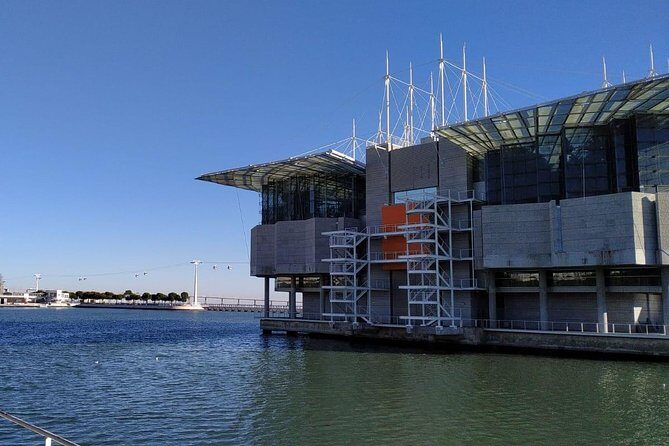
You start in Parque das Nações, the newer part of Lisbon built for Expo 98, when the riverfront was redesigned and the waterfront returned to the city. If you’ve only seen Lisbon in postcard photos, this stop is a quick reality check in a good way: it shows the city’s modern side, with wide promenades and engineering landmarks you’d never guess would sit next to historic Lisbon.
Expect a waterfront feel and a big “orientation moment.” You’ll see the Vasco da Gama area and get views of the Vasco da Gama Bridge, described as the longest bridge in Europe. There’s also the Vasco da Gama Tower, a 145-metre lattice tower named after the Portuguese explorer Vasco da Gama. The height makes it a strong visual anchor for photos, and it helps you understand where everything sits along the Tagus estuary.
Another excellent detail here is the architecture around the Expo 98 legacy. You’ll visit features built as part of the Expo 98 entrance and the area’s key intermodal station designed by Spanish architect Santiago Calatrava. At the time of opening, it was considered a major project and recognized with a Brunel Award in a large new construction category. Even if you’re not an architecture person, it gives you something Lisbon does well: mixing utility with drama.
Practical note: this part of the day is mostly about seeing, not lingering. The time windows are short, so use the moments to look back toward older Lisbon too—you’ll get a clearer mental map by comparing waterfront modernity with the hills you’ll hit later.
Alfama and São Jorge Castle Hill: the steep, old soul of Lisbon
Next comes Alfama, Lisbon’s oldest district, built along the slope between São Jorge Castle and the Tagus River. The name comes from Arabic origins, connected to “hot fountains” or baths. That etymology is a reminder that Lisbon’s layers go deep, and Alfama is one of the easiest places to feel it quickly.
The highlight is the castle hill. You’ll get time focused on São Jorge Castle Hill, which has been used by multiple civilizations thanks to its strategic location. After Lisbon’s conquest in the 12th century, the castle served as a royal palace, military barracks, and even a national archive. Today it’s a national monument and museum. What makes this stop worth your time is that you’re not just looking at old walls—you’re standing on a site that has repeatedly been the “control point” over Lisbon.
Then there’s the vibe. Alfama isn’t only a history stop. It’s also where you find fado bars and restaurants. Even if you don’t plan to do fado that day, Alfama gives you that Lisbon atmosphere: narrow lanes, sudden turns, and views that appear where you least expect them.
If you have mobility limits, plan accordingly. You can expect steep, uneven walking. Even when a tour is “only” 15–30 minutes at a stop, the walking between the stops adds up.
Miradouro da Senhora do Monte and Lisbon Cathedral: where the photos make sense
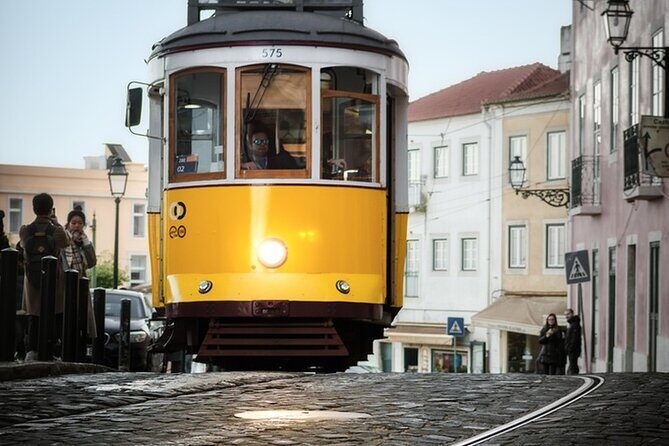
From Alfama you jump to one of the highest viewpoints: Miradouro da Senhora do Monte. This is one of those places where the payoff is fast. The viewpoint sits above Mouraria and Graça and faces over the older neighborhoods with major landmarks on the horizon. It’s described as mandatory for pictures for a reason: the composition makes sense, and it’s a natural place to reset your eyes after hours of tight streets and slopes.
Then the day turns to a different kind of stop: Lisbon Cathedral. You’ll find it presented as the city’s oldest church. Built after the conquest led by D. Afonso Henriques in 1147, it survived earthquakes and has been modified over time, leaving you with a mix of architectural styles. It was classified as a National Monument in 1910, which matters because it signals long-term preservation and careful restoration through the centuries.
What I like about pairing Miradouro and Cathedral is that you get two sides of Lisbon’s identity in one flow. One stop gives you perspective over the city. The other gives you perspective through time—literal changes layered on top of each other.
A small time tip: if you want cathedral photos without crowds, arrive with patience and aim for the best light you can find in that moment. This tour’s schedule is tight, so don’t plan on long museum-style exploring here.
Baixa’s 1755 rebuild story: Rossio, Terreiro do Paço, Rua Augusta, and more
After the viewpoints and old district atmosphere, the tour hits Baixa downtown, the area redesigned after the 1755 Lisbon earthquake. This is one of the most useful parts of any first-time Lisbon tour, because you stop thinking in neighborhoods and start seeing Lisbon as a planned city rebuilt with a strategy.
You’ll spend time around Praca Dom Pedro IV, better known as Rossio. It sits at the heart of Baixa with late 18th-century buildings connected to the reconstruction plan after 1755. From here you can access walking routes toward the river through Rua Augusta and Praça do Comércio.
You also get a stop connected to legends and city memory: Martim Moniz, linked to a story from the Reconquest. The tour ties it to a square where multiple cultures gather today, plus an earthquake-era reshaping of what used to occupy the area (the Hospital Real de Todos os Santos). The point isn’t to memorize every legend. It’s to understand that Lisbon’s “center” wasn’t just rebuilt—it was replaced, and old meaning got new forms.
From Rossio you move toward Terreiro do Paço (the area once connected to Paços da Ribeira, the old royal waterfront palace). After the 1755 earthquake, it was remodeled under the rebuilding plan of Marquês de Pombal. This is described as one of Europe’s biggest city squares. Standing in a massive open space like that helps you understand the earthquake rebuild ambition. Lisbon isn’t only romantic; it’s also methodical.
Then you’ll see Rua Augusta and the Arco da Rua Augusta, a grand triumphal arch built in the 19th century to celebrate reconstruction after the earthquake. If you want a quick “Lisbon has style” moment, this is it—especially if you like architecture photography.
Finally, you’ll touch the area connected to Portuguese restoration and national identity, including the square dedicated to independence restoration in 1640. From there, the tour flows toward Avenida da Liberdade, where you can see the classic Portuguese sidewalk art, calçada, made by hand with light and dark stone cubes. It’s the kind of detail you’d otherwise miss at street level.
If you’re not used to walking, this section can feel like a lot of moving around. The upside is that it’s flat compared to Alfama, and the stops are built for quick orientation and photo moments.
You can also read our reviews of more private tours in Lisbon





Avenida da Liberdade to Eduardo VII Park and Chiado connections
Next comes a more elegant stretch of Lisbon. You’ll pass through Avenida da Liberdade, Lisbon’s main central boulevard, known for its large sidewalks and the calçada look. The tour also includes the area around Marquês de Pombal—with mention of the statue acknowledging his role in the downtown reconstruction plan after 1755.
From there, you reach Eduardo VII Park, a public park near Avenida da Liberdade and Marquês de Pombal Square. The park’s name pays homage to King Edward VII, connected to his 1902 visit to Portugal to strengthen relations between the two countries. Even if you don’t spend time relaxing, the park is helpful as a breathing space mid-tour. It also gives you a green break before you move into the next cluster of major landmarks.
The route also references the connection toward Chiado, an old neighborhood that grew after the 16th century due to population expansion and commercial development. Chiado links into the downtown and is described as a trendy area for art and fashion. That makes it a good “transition stop” mentally: you go from reconstruction and national identity back into modern Lisbon’s street culture.
Basilica on a hill and a bridge you’ll recognize instantly
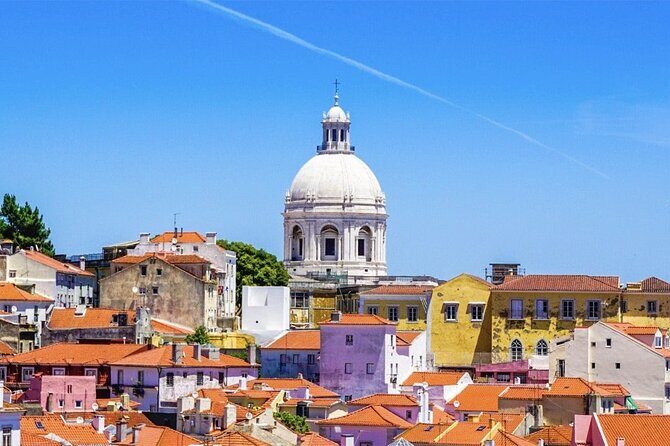
The tour includes the Basilica built on a hill as the fulfilment of Queen Maria I’s vow linked to the Sacred Heart of Jesus. You’ll hear that it’s the most important architectural endeavor of her reign, with a huge dome visible from far away. The style is described as similar to Mafra National Palace, mixing late Baroque and neoclassical elements, and featuring twin bell towers in front of statues and allegorical figures.
Why this matters in a tour route: it’s not just another church stop. It’s a major skyline element. Even a short visit gives you a sense of Lisbon’s vertical city design—structures that can be seen long before you reach them.
Then you hit the main bridge connecting south and center of Portugal, finished in 1966. It shares a project concept with the San Francisco–Oakland Bay Bridge and is described as one of the most popular and photographed monuments in Lisbon. This is one of those sights where you don’t need a long explanation to enjoy it; you just want the view and the photo angle.
Cristo Rei: the big south-bank view of Lisbon
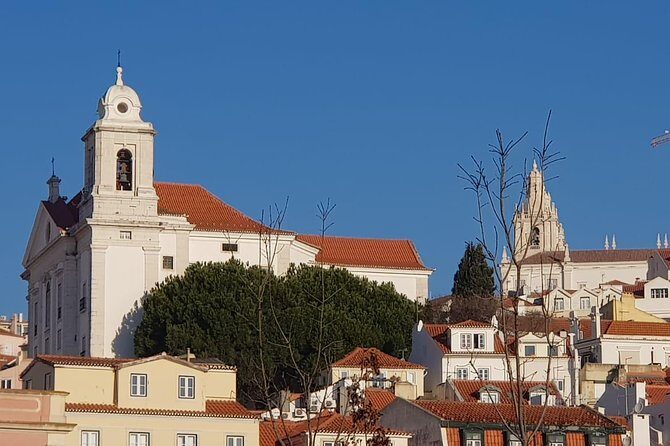
Now for the famous viewpoint: Santuario Nacional de Cristo Rei. This is presented as the best view of Lisbon from the south side of the Tagus River. The structure is described as over 100 meters tall and finished in 1959. It was built as part of a vow by the Portuguese episcopate to keep the country in peace during World War II.
This stop is worth treating as a “pause.” Yes, it’s a landmark, but it’s also a perspective shift. From earlier stops you’ll have seen Lisbon from the hills and the center. Here you see it across the water, with the Tagus acting like a frame around the city’s shape.
One practical detail: the admission ticket is not included for this stop, so if you plan to go up inside, budget extra or be ready to pay on arrival.
Belém in one day: Jerónimos, Belém Tower, and the Age of Discoveries monuments
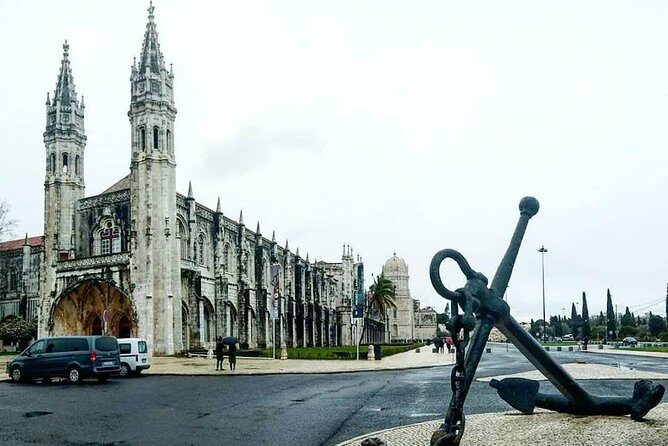
The Belém section gives you Lisbon’s seafaring identity in a tight sequence. You’ll start with Mosteiro dos Jeronimos, a standout example of Portuguese Late Gothic Manueline architecture. Construction began in 1501 and took over 100 years to finish. It’s also UNESCO World Heritage listed since 1983, which is a helpful stamp if you want to understand why this is a major priority in Lisbon.
Admission isn’t included at Jerónimos on this route, so plan for entry fees if you want full access. Still, even if you’re just absorbing the exterior details, this is a major architectural “why Lisbon matters” stop.
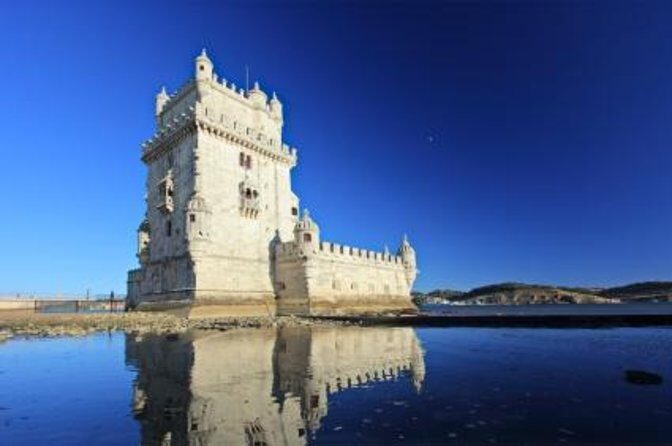
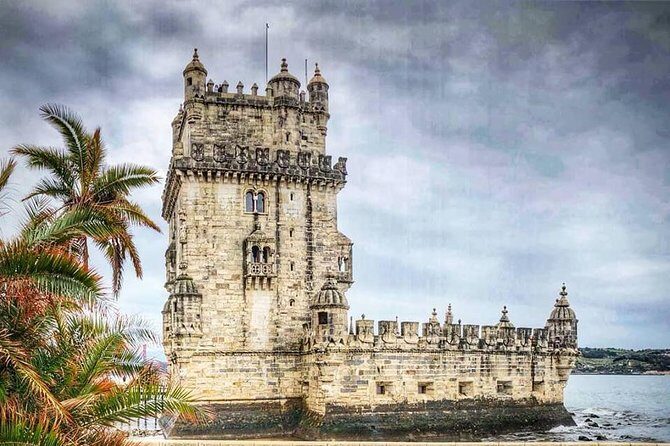
Then it’s Torre de Belém, one of Lisbon’s most iconic images. Originally built in 1520, it was commissioned by King Manuel I as a fortified tower near the harbor to protect the city as Portuguese ships set out overseas. It’s called a mandatory stop for pictures. Because admission isn’t included here either, do the usual planning math: if you only care about quick photos, you can keep expectations realistic. If you want deeper access, budget extra time and ticket cost.
You’ll also see the Padrão dos Descobrimentos, built for the Great Exhibition of the Portuguese World in 1940 and later renewed in 1960 for the 5th centenary related to Henry the Navigator. Even if the monument isn’t the main reason you’re in Belém, it helps connect Belém’s buildings to the wider story of Portuguese exploration.
Price and value: when $259.50 per person makes sense
At $259.50 per person for an 8-hour private tour, the value comes from what you avoid: ticket hunting across multiple neighborhoods, time spent figuring out transit, and the headache of packing in too much on your own.
This price is especially worth it if:
- You want a private guide to explain what you’re seeing as you go.
- You’re combining Belém plus Cristo Rei in one day, because that’s a long hop across the city.
- You’re traveling with others who can share the private experience. Even though the price is per person, a private day can cost less than you’d think once you compare transport + taxis + paid guide time.
Where the cost may feel less sharp is if you’re the type who wants long time inside museums. This schedule is built for coverage, not deep dives. For most first-timers, that’s exactly right. For people who want long indoor time, you might prefer a route that centers fewer landmarks with longer stays.
Also note what’s included and what isn’t: you’ll get hotel pickup, air-conditioned vehicle transport, and a private format. But some major sights (like Cristo Rei, Jerónimos, and Belém Tower) have admission tickets marked as not included, so you should expect extra spending on entry.
Who this tour is best for
This is a strong fit for:
- First-time visitors who want a fast, accurate sense of Lisbon across multiple districts.
- People who prefer being driven between stops in comfort rather than hopping transit all day.
- Travelers who want the mix of viewpoints (Miradouro and Cristo Rei) and historic landmarks (Alfama, Cathedral, Jerónimos).
It may be less ideal if:
- You dislike walking uphill and taking stairs, because Alfama and some hilltop sights involve real elevation.
- You want long, slow museum time at each stop. This route is built for seeing a lot.
A final small tip: if your guide recommends food stops, take it seriously. In a recent experience involving a guide named Catarina, guests were pointed to excellent sardines. Lisbon rewards people who eat like locals, not like checklists.
Should you book this Lisbon private tour?
I’d book it if your goal is a one-day hit list that still feels guided, not rushed. The private format, hotel pickup, and air-conditioned van make the route feel manageable, while the itinerary covers the exact sights most people struggle to string together—Expo 98, Alfama, Baixa reconstruction landmarks, Belém, and the Christ viewpoint.
Skip it only if you’re looking for a slow, museum-first itinerary. This is for getting your bearings fast and seeing Lisbon’s biggest “this is the city” moments in one day.
FAQ
How long is the Lisbon private tour, and what time does it run?
The tour lasts about 8 hours. The listed operating window is 8:30 AM to 5:00 PM, Monday through Sunday.
Is hotel pickup and drop-off included?
Yes. Pickup and drop-off from your Lisbon hotel are included. You just share where you’re staying and the provider will pick you up there.
Is this tour private or shared?
It’s a private tour. Only your group participates.
What’s included in the price?
The tour includes private guiding, transport by air-conditioned minivan, hotel pickup and drop-off, and a Covid-clean and safe regulated tour.
Is lunch included?
No. Lunch is not included.
Are attraction tickets included for every stop?
Not for every stop. Some stops list admission ticket free, while others list admission ticket not included, including Cristo Rei, Mosteiro dos Jerónimos, and Torre de Belém.
What language is the tour offered in?
The tour is offered in English.
Do I need to worry about tickets during the day?
The tour includes a mobile ticket. For stops where admission isn’t included, you should be prepared to pay entry separately.
Can I bring a service animal?
Yes. Service animals are allowed.
How does cancellation work?
Free cancellation is available. You can cancel up to 24 hours in advance for a full refund.
What’s the meeting point?
There’s no fixed meeting point listed. Pickup is arranged from where you are staying in Lisbon.