REVIEW · LISBON
History-mistery of Lisbon (secrets societies and black arts)
Book on Viator →Operated by Walking Tours - RagnarokTour.com · Bookable on Viator
Lisbon at dusk turns into a storybook with teeth. This walking tour strings together city landmarks with darker theories about secret societies and symbols, then points you at the architectural details that people love to ignore.
I really like the guide, Slava. His pacing is relaxed, he’s warm and personable, and he answers questions instead of tossing mystery breadcrumbs and disappearing. I also love how the route uses real places—gardens, viewpoints, stations, church ruins—to make the ideas feel grounded instead of purely spooky.
The only real catch is the walking. Lisbon’s center has hills, so expect some uphill effort even though the stops are frequent and the vibe stays unhurried.
In This Review
- Key things to know before you go
- Price and Logistics: value for a private, symbol-focused walk
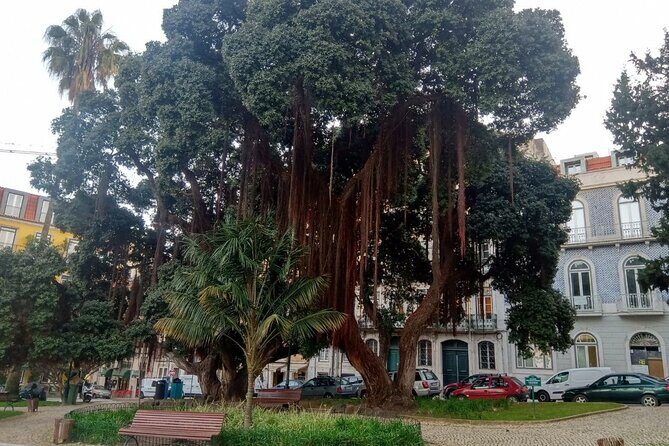
- Entering Alfredo Keil Garden under ceiba trees
- Jardim do Príncipe Real: aqueduct clues and underground mystery
- Chafariz da Rua do Século and the Marques de Pombal link
- Bairro Alto and the Masonic Lodge stop
- Miradouro São Pedro de Alcântara: coats of arms and Lisbon myths
- Estação do Rossio: the Manueline station and the Sintra magnet
- Praça Dom Pedro IV: royal images and ties to Rio
- Largo do Carmo: Carmo monastery ruins, 1975 memories, and political comparisons
- What makes Slava’s version of this tour work
- Who this tour suits best (and who should skip it)
- Quick checklist for your 6 pm start
- Should you book this Lisbon secrets and black arts walk?
- FAQ
- What time does the tour start?
- How long is the experience?
- Where do I meet the guide, and where does the tour end?
- Is the tour offered in English?
- Is this a private tour?
- Will there be uphill walking?
Key things to know before you go
- Twilight start at 6:00 pm that keeps the mood tense without feeling rushed
- Slava leads in English with a clear focus on symbols and their links across Lisbon
- You’ll stop at 8 places ranging from Alfredo Keil Garden to Largo do Carmo ruins
- Site entry is listed as free at each stop, so you’re not paying extra at every corner
- Bring comfy shoes for the uphill streets in the historic center
Price and Logistics: value for a private, symbol-focused walk
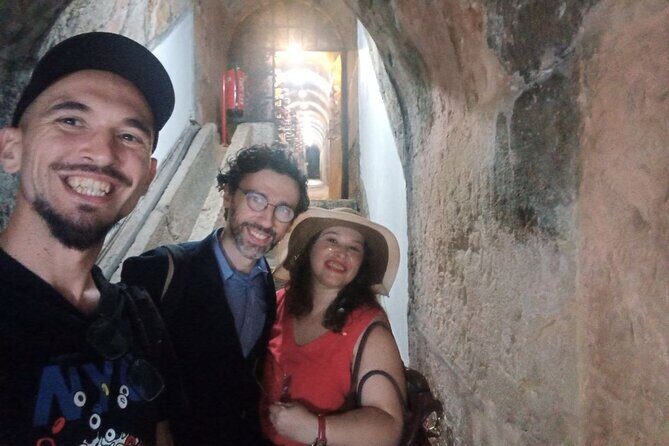
At $44.58 per person, this is priced like a serious guided experience, not a quick photo stop. The value comes from two things: you get a private tour for your group, and you’re moving through multiple landmark types (gardens, a viewpoint, major public architecture, and monastery ruins) rather than only one neighborhood.
Duration is about 2 to 3 hours, and the tour starts at 6:00 pm. That early evening timing matters in Lisbon. You get cooler air for walking, and the light makes stone details—coats of arms, carved symbols, and building facades—easy to notice.
You’ll end in the central area at Praça Dom Pedro IV (72), after meeting at Av. da Liberdade 89. It’s also close to public transportation, which is handy if you’re mixing this with other plans. And yes, it’s a walking tour, so wear shoes that can handle uneven pavement and steep stretches.
You can also read our reviews of more historical tours in Lisbon


Entering Alfredo Keil Garden under ceiba trees
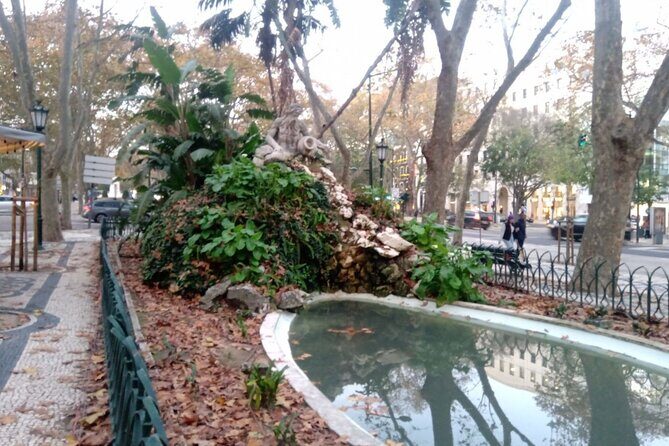
The tour begins at Alfredo Keil Garden, starting under branches of majestic ceiba trees. Right away, the theme is not just Lisbon, but what came before Lisbon as Portuguese territory. You’ll be pushed to think about who lived here first and what they believed—less “facts only,” more “why this place might have mattered long before modern borders.”
This first stop is short, around 20 minutes, and that’s a good thing. It sets the tone without tiring you out early. Even if you’re skeptical about secret-society claims, the garden itself gives you something tangible: mature trees, quiet corners, and a sense that the city’s story starts deeper than its tourist headlines.
Jardim do Príncipe Real: aqueduct clues and underground mystery
Next is Jardim do Príncipe Real, described as an English-style garden with an old cedar and an underground reservoir. This is where the tour shifts from atmosphere to infrastructure—how water shaped Lisbon, and how engineering becomes legend when people don’t stop asking questions.
You’ll hear about the Aqueduct of Lisbon, including the detail that it predates the 1755 earthquake. Then the focus goes underground: the idea of a branched system of underground passageways connected to the city’s water story.
Why you’ll like this stop: it trains your eyes. After this, you start noticing how Lisbon’s myths often ride on top of practical city systems—water, walls, tunnels, and the places where people could hide or move unseen. It’s still only about 20 minutes, so you won’t feel stuck waiting for a lecture.
One small consideration: this stop is more about theories and symbols than about a single “look here” monument. If you like your city facts very concrete, keep an open mind and treat the stories as prompts to look harder.
Chafariz da Rua do Século and the Marques de Pombal link
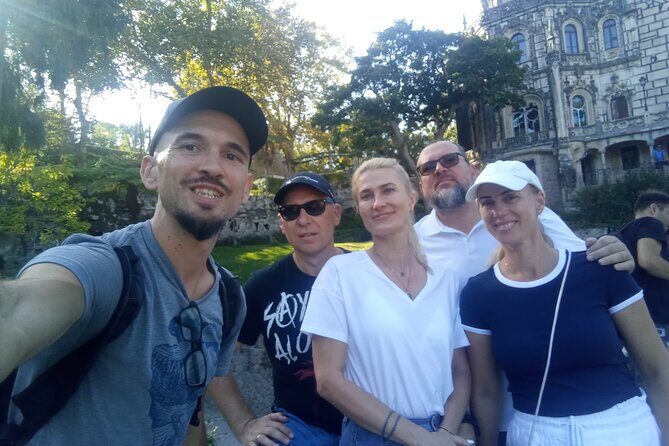
At Chafariz da Rua do Século, the tour pauses at a fountain in front of the house where Marques de Pombal was born. This is where the tour leans into the “mystery” side of the theme—secret societies, symbols, and connections that the story frames as possible rather than proven.
You’ll also hear how this figure helped shape modern Lisbon, plus a link to a wider history stretching beyond Portugal and toward South America. Then the tour connects those bigger historical currents back to the specific street you’re standing on.
The visit is around 15 minutes, and the time is used well: you’re given a reason to look at a fountain as more than decoration. Lisbon has countless water features. This one gets framed as a hinge between political power and symbolic storytelling.
Bairro Alto and the Masonic Lodge stop
From there, you pass through Bairro Alto, a neighborhood many people associate with bars. But this walk isn’t there for nightlife. You stop near a Masonic Lodge to talk about Masonic influence in Portugal—past and present—and how symbols can ride along with politics.
This part is about 15 minutes. It’s not a long debate. It’s more like a guided scan: you learn what to watch for when people claim coded meanings—geometry, emblems, and the way certain ideas repeat across places.
If you’re the kind of traveler who likes noticing details others step over, this stop is for you. If you’d rather stick to mainstream sightseeing, it can feel more specialized than the city’s usual “wow” factor. Still, it’s brief enough to keep the pace moving.




Miradouro São Pedro de Alcântara: coats of arms and Lisbon myths
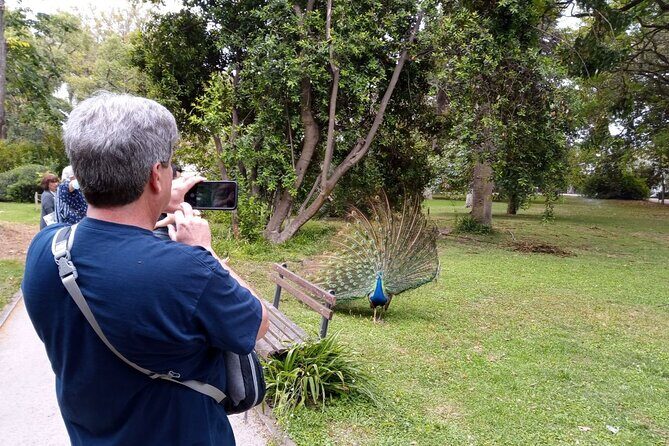
At the Miradouro São Pedro de Alcântara, you get a viewpoint over the center—looking toward Avenida de Liberdade and Restoration Square. This is one of the better “mental resets” in the route. After the symbolic stops, you get elevation and context.
The story here focuses on the coat of arms of Lisbon and foundation myths. This is where the tour answers an important travel question: why do cities build identities out of symbols? You’re not just staring at a skyline. You’re learning how governments and communities wrap meaning around their origin stories.
Time at this stop is short—about 10 minutes—so you’ll want to pause, look around, then let the explanation land. The viewpoint is your reward for the earlier walking.
Estação do Rossio: the Manueline station and the Sintra magnet
The next stop is Estação do Rossio, a Manueline-style train station that’s described as a suburban masterpiece and also a departure point for discovering Sintra.
This is not just architecture spotting. The tour uses Rossio to talk about Sintra’s special pull—why famous people from different countries seem to want a bit of land there. It’s a quick cultural angle, but it matters: Lisbon and its rail connections weren’t only about commuting. They helped turn nearby places into status symbols.
You’ll spend about 10 minutes here. If you like transport history, you’ll probably enjoy the nod to how movement shaped power and taste. If not, just appreciate the building. The Manueline style is eye candy for anyone who loves stonework details.
Praça Dom Pedro IV: royal images and ties to Rio
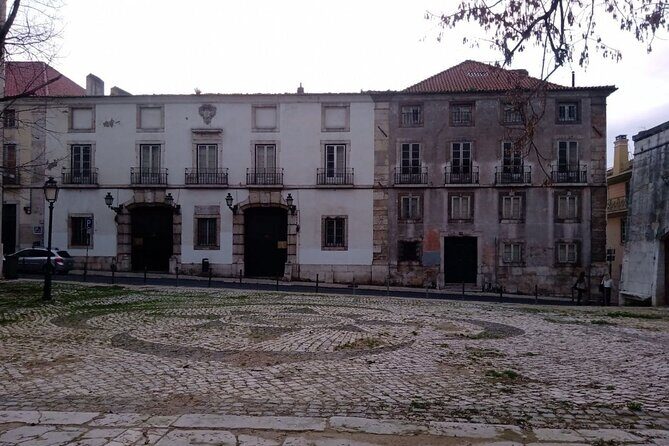
Next comes Praca Dom Pedro IV, also called a major square with a final stretch of storytelling. You’ll learn about stories of various buildings around the southern part of the square. Then the tour ends with a “psychological picture” of the royal family connected to Dom Pedro IV and a link to Rio de Janeiro.
This is about 15 minutes, and it works best when you slow down for a moment and let the square make sense. Squares in Lisbon don’t just hold monuments. They stage power, memory, and national identity in public view.
If you’ve been to Brazil or have an interest in how Portuguese influence echoes across oceans, you’ll find this connection satisfying. Even without that background, the idea is simple: Lisbon’s story isn’t trapped inside Portugal.
Largo do Carmo: Carmo monastery ruins, 1975 memories, and political comparisons
The final stop is Largo do Carmo, featuring the ruins of Carmo monastery, now a museum, plus a National Guard presence with a museum connected to the 1975 revolution.
This part is around 15 minutes, and it’s the most politically reflective moment of the walk. You’ll be asked questions that are meant to make you think: was the revolution romantic or more like a coup? What similarities exist between Salazar’s Portugal and life in the Soviet Union?
This isn’t a dry history lecture. It’s framed as a comparison of how different systems control daily life and shape public narratives. The ruins help. You’re ending the tour in a place that’s literally broken and rebuilt—perfect for a walk about hidden meanings and what survives.
What makes Slava’s version of this tour work
A big reason this experience earns such strong ratings is Slava’s style. He’s enthusiastic, warm, and clearly invested in the topic, but he also keeps it human. He stays engaged, and he doesn’t treat questions as interruptions. He also adjusts the balance of how much detail you get, which helps if you want a lighter pace or more depth.
The walkthrough also balances “creepy theories” with concrete street-level observation. One person even described it as far creepier than they expected. That’s a fair heads-up: this is not just decorative symbolism. The stories aim to make you feel that there’s subtext in ordinary Lisbon corners.
And on the practical side, the route isn’t a marathon. The tour includes uphill moments, but the pacing stays calm, with time built in at each stop.
Who this tour suits best (and who should skip it)
You’ll love this if you enjoy:
- history that mixes architecture, politics, and symbolism
- secret-society style theories, especially Knights Templar and Freemason connections
- Lisbon as a place where myths can be read into public spaces
You might want to choose another tour if you’re mainly after classic sightseeing with minimal interpretation. This walk is for people who like thinking while walking and noticing symbols in plain sight.
Quick checklist for your 6 pm start
- Comfortable walking shoes (hills are real)
- A jacket if you get chilly after sunset
- Bring curiosity. If you treat the stories as prompts, you’ll get more out of it.
Should you book this Lisbon secrets and black arts walk?
If your Lisbon plan includes one more “thinking tour,” this is a strong pick. The price is reasonable for a private guided experience, and the route uses real places—gardens, viewpoints, a major station, and monastery ruins—to tie together mystery and city identity.
Book it when you’re in the mood to look at Lisbon with sharper eyes. If you want postcards only, save your energy. But if you like the idea that streets hide meaning in their stones and symbols, this one will keep you talking long after you reach the end at Praça Dom Pedro IV.
FAQ
What time does the tour start?
The tour starts at 6:00 pm.
How long is the experience?
Plan for about 2 to 3 hours on foot.
Where do I meet the guide, and where does the tour end?
Meet at Av. da Liberdade 89, 1250-096 Lisboa, Portugal. The tour ends at Praça Dom Pedro IV 72, 1100-202 Lisboa, Portugal.
Is the tour offered in English?
Yes, it’s offered in English.
Is this a private tour?
Yes. It’s a private tour/activity, so only your group participates.
Will there be uphill walking?
Yes. Lisbon’s center has hills, so there is some uphill walking. Most people can participate, but comfortable shoes help.