REVIEW · LISBON
Fátima and Tomar – Heritage, History & Religion
Book on Viator →Operated by BLUELANE® · Bookable on Viator
Fatima and Tomar in one day feels oddly perfect. I like how this trip mixes religious pilgrimage with Templar-era architecture, so you get both the emotional side of Portugal and the stone-and-stone history. I also appreciate the more personal pace: it’s private transportation, with an air-conditioned ride and bottled water, and your guide-driver can explain as you go.
Two standout parts for me are the chance to slow down at the Sanctuary of Fátima and then shift gears to Tomar’s UNESCO Convento de Cristo. One thing to keep in mind: some key sights can involve crowds (especially around big pilgrimage dates like May 13 and October 13), and the Convento de Cristo admission is not included, so you’ll want to budget for tickets.
Key highlights you’ll care about
- Private day flow: only your group, with pickup offered from Lisbon
- Two free “starter” stops: Fátima church + Aljustrel shepherd houses (both free entry)
- UNESCO centerpiece at Tomar: Convento de Cristo is where the day’s big-ticket value lands
- Templar context you can actually picture: Tomar’s story ties directly to the Knights of Christ
- A calmer finish: the Forest of Seven Hills gives you shade and a break from crowds
In This Review
- Fatima and Tomar: faith meeting Templar heritage
- Lisbon pickup and an 8-hour private rhythm
- Church of Nossa Senhora do Rosário de Fátima: what to plan for
- A small “time” tip that matters
- Aljustrel and Os Três Pastorinhos: shepherd homes in real life
- Tomar’s Templar story in street-level time
- Convento de Cristo: where the day’s UNESCO weight lands
- Don’t forget the ticket detail
- Mata Nacional dos Sete Montes and the Charolinha tower
- Price and value: $286.91 for a private heritage day
- Who this Fatima and Tomar tour suits best
- Should you book this Fatima and Tomar tour?
- FAQ
- How long is the Fatima and Tomar tour?
- Is pickup from Lisbon included?
- What does the tour include?
- Are tickets included?
- Which stops have free admission?
- Do I get a mobile ticket?
- Can I cancel for a full refund?
- Is this tour private?
Fatima and Tomar: faith meeting Templar heritage
Portugal has a talent for turning belief and politics into the same piece of geography. This day trip makes that easy to understand. You start at Fátima, one of the world’s biggest sanctuaries, then head to Tomar, where the Templars and their successors shaped the city’s identity for centuries.
What I like most is the handoff between the two worlds. You’re not just ticking off churches and castles. You’re watching how different eras used the same basic ingredients—power, faith, land, and memory—to build real places you can walk through.
And because it’s a private experience (not a cattle-car bus day), you’re better positioned to linger when something grabs you—like religious details, tomb-like quiet corners, or that UNESCO-scale sense of history at Convento de Cristo.
Lisbon pickup and an 8-hour private rhythm

This tour runs about 8 hours, with opening hours listed from 8:00 AM to 7:00 PM. It’s designed to work as a single, smooth day: pickup offered, then guided time at each major stop, with enough independence that you don’t feel rushed the whole way.
The practical setup helps. You get air-conditioned vehicle and bottled water, plus free Wi‑Fi on board. You also get a mobile ticket, which can make entry feel simpler (less paper, less scrambling).
One more detail I’d treat like a tip: the day includes at least one stop where entry is not included. Plan for at least one “paid entry” moment so you’re not standing at a ticket counter trying to do math in your head.
You can also read our reviews of more historical tours in Lisbon


Church of Nossa Senhora do Rosário de Fátima: what to plan for
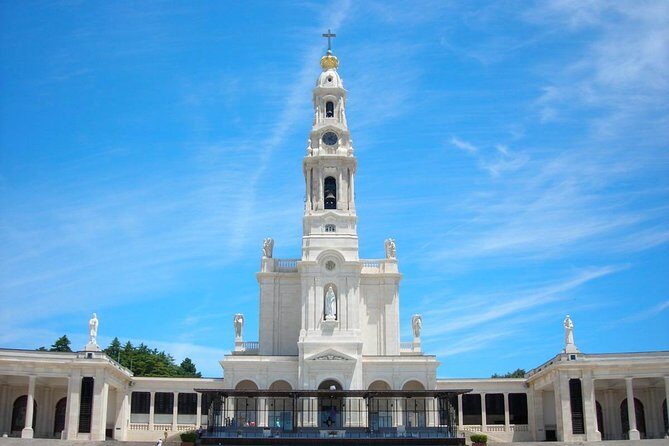
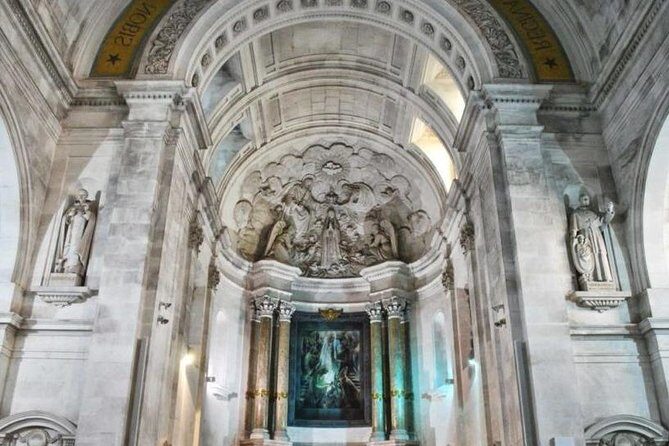
Your first major stop is the Church of Nossa Senhora do Rosário de Fátima within the Sanctuary area. The big idea here is simple: this is where the story of the apparitions is commemorated, and where a massive number of pilgrims come each year.
The tour timing matters because the sanctuary’s crowds rise around the key dates in the Fátima calendar—May 13 (the first apparition) and October 13. Even if you’re not there on those dates, it helps to expect a lively religious atmosphere. If you prefer quieter viewing, earlier hours often make a difference.
I also love how your visit is framed by nearby context. The sanctuary is tied directly to the witnesses of the apparitions and to the lives of the three children who grew up in Aljustrel (about two kilometers away). That sets up the next stop so the story doesn’t feel like it’s jumping around.
A small “time” tip that matters
One review highlights that if you want to light a promised candle, give yourself time to do it properly. That’s exactly the kind of thing a tight schedule can steal from you—so I’d treat the first stop as your slow anchor, not a quick photo stop.
Aljustrel and Os Três Pastorinhos: shepherd homes in real life
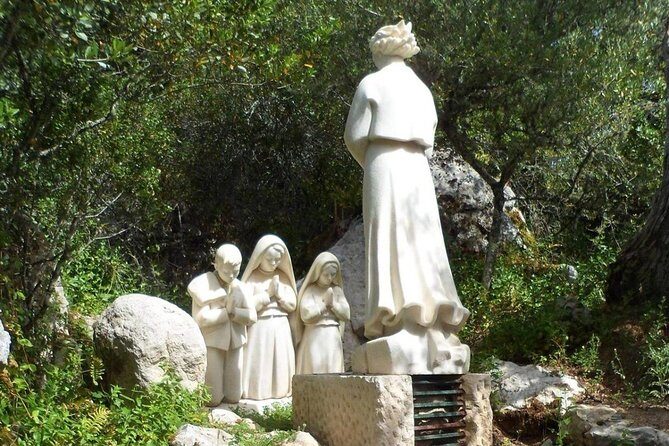
Next comes Os Três Pastorinhos, centered on Aljustrel, the small village where Lucia, Francisco, and Jacinta grew up. The cottages are described as simple, single-storey houses, and they’re open to the public—so you can see what “ordinary life” looked like for the children before the sanctuary story dominated everything.
This stop is very walkable, and it’s built around two specific homes. Francisco and Jacinta’s house is said to date to 1888, while Lucia’s home dates to 1885, with the distance between them noted as about 200 meters. That proximity makes the visit feel more human. You’re not looking at a distant museum; you’re looking at a neighborhood-scale memory.
There’s also a House-Museum element (the material focus is everyday objects like agricultural tools, cooking utensils, clothes, and furniture). That “what they used to use” detail makes the story less abstract and more grounded in daily work.
Bonus: this stop is marked as free entry, so it’s a great value moment in the day. If you’re trying to balance faith, culture, and cost, this is one of the smartest places to spend your time.
Tomar’s Templar story in street-level time

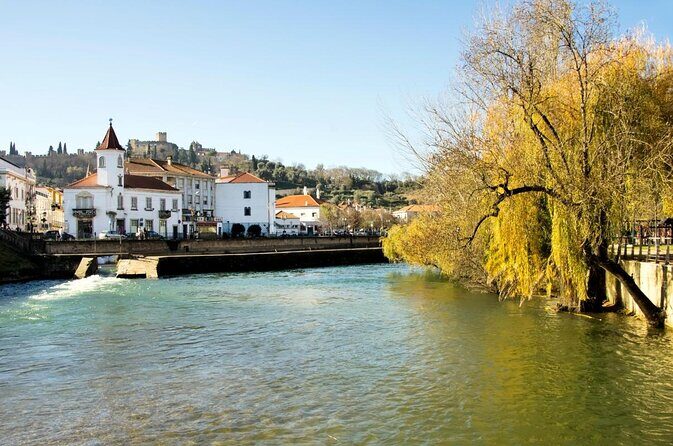
Then you head into Tomar, the city closely tied to the Order of the Templars. The key historical link given here is that the order received these lands in 1159 for assistance during the Christian reconquest, connected with Dom Afonso Henriques, Portugal’s first king.
Tomar’s identity is often summarized as the city of the Templars, but what I find useful is how the tour connects legend, power, and architecture. The order’s first Grand Master in Portugal, Dom Gualdim Pais, is tied to the founding of the castle and the Convent of Christ inside it. Once you know that, Tomar doesn’t feel like a random medieval stop. It feels like a planned statement in stone.
This segment is about setting the stage. You get time in Tomar to absorb the city’s rhythm and understand why the next stop is such a big deal.
And it’s helpful that Tomar time is listed as 2 hours with free admission for this portion. That gives you breathing room to see more than one angle of the town before you focus fully on the UNESCO monument.




Convento de Cristo: where the day’s UNESCO weight lands
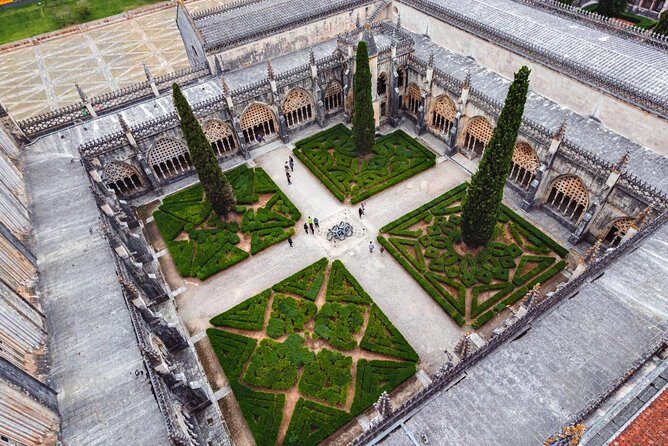
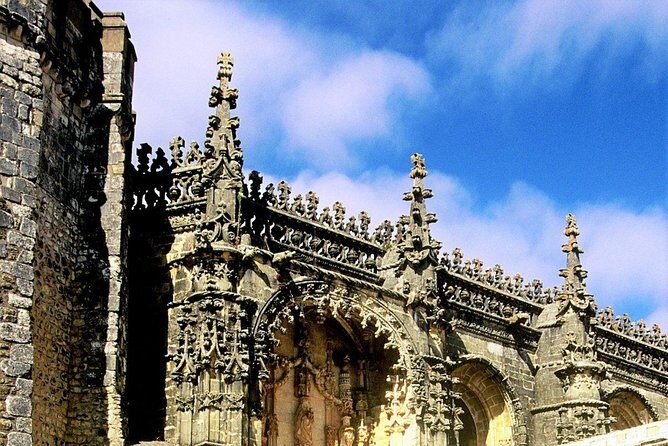
If you like your history big and physical, Convento de Cristo is the moment. This is the complex associated with the Knights of Christ, and UNESCO classified the Templar Castle and the Convent of the Knights of Christ as World Heritage.
The tour describes it as unique in the history of the western world, built on a site that originally had Roman worship. That matters because it explains why the complex can feel layered—different eras leaving their fingerprints on the same ground.
You’ll also get time framed by the “seven centuries” idea. The site has been enlarged and altered across centuries and includes multiple architectural influences. In practical terms, that means you’re not walking through one uniform design. You’re moving through a timeline you can see.
Don’t forget the ticket detail
The Convento de Cristo stop lists admission ticket not included, and it’s about 1 hour. So budget for an entry fee here. Also, plan your attention: this is not a quick hallway. If you want the most from it, slow down at major viewpoints and read what’s in front of you rather than trying to see everything at full speed.
Mata Nacional dos Sete Montes and the Charolinha tower
To keep the day from feeling like stone-only history, the itinerary includes Mata Nacional dos Sete Montes, the Forest of Seven Hills. It’s a 39-hectare woodland tied to the city and connected to the castle area.
What I like about including this park is that it gives you a break without breaking the theme. The woodlands are described as providing a link to the castle and being known historically as the Convent Enclosure, since the Order of Christ used the area for growing and harvesting crops.
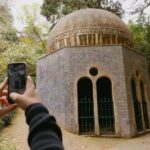
You’ll see a mix of long-lived trees mentioned in the description—cypresses, Judas trees, oaks, and olive trees. And there’s a specific feature that’s easy to picture: a miniature church called the Charolinha, built as a cylindrical tower. The stone carving appears as a replica of the lantern towers of the Convento de Cristo, built in accord with the description.
This is a great “cool down” stop after dense sights. It’s also free entry and listed at 30 minutes, which is just enough to reset your eyes and mind without dragging the schedule.
Price and value: $286.91 for a private heritage day
The price listed is $286.91 per person for a roughly 8-hour day. At first glance, it’s not a budget excursion. But the value comes from what’s included and how the day is structured.
You get:
- Private transportation (not shared transit)
- Pickup offered
- Air-conditioned vehicle
- Bottled water
- Free Wi‑Fi
- Group discounts (when applicable)
- Mobile ticket
That’s a lot of comfort and logistics handled in one go—especially if you’re starting from Lisbon and want an organized, driver-supported route.
One more value point comes from the human side. Reviews praised guides by name—Ricardo and Clayton—for being explanatory and knowledgeable. If you’re the kind of visitor who likes context (why a place matters, how the story connects), that added explanation can make the same sights feel like more than photos.
The main “cost consideration” is simple: tickets and meals are not included. Convento de Cristo admission is specifically listed as not included. So you’ll want to plan for at least that ticket fee, plus any snacks or drinks you want during the day.
If you’re traveling as a smaller group, private transport can also feel more reasonable. It’s the kind of day where buying time and clarity often beats trying to coordinate everything yourself.
Who this Fatima and Tomar tour suits best
This works best if you want a full-day cultural and religious route but still like flexibility. Because it’s private, you’re not stuck waiting on strangers to finish a slow moment. And the guide-driver approach—especially with people like Ricardo who focus on explanations—fits well with visitors who enjoy learning in transit.
It’s also ideal if you care about connections. Fatima isn’t only about one church visit here. The story links to Aljustrel homes. Tomar isn’t only a castle stop. It’s tied back to the Templars and the Knights of Christ, and the UNESCO site becomes the centerpiece.
You might think twice if you dislike religious crowds or prefer fully self-guided walking. The sanctuary area can be busy, and the Convento de Cristo entry isn’t included, so you’ll need to handle that ticket piece during the day.
Should you book this Fatima and Tomar tour?
I’d book it if you want a single, organized day that truly connects the dots between Fátima and Tomar. The route is strong: a major sanctuary setting, Aljustrel’s shepherd homes, then a UNESCO-grade complex at Convento de Cristo, finished with a calmer woodland stop.
I’d be a little cautious if you’re extremely budget-sensitive or hate paying for add-on admissions, since Convento de Cristo isn’t included. Also, if you’re visiting around May 13 or October 13, expect bigger crowds and consider adjusting your expectations for how fast you can move.
If your goal is a meaningful day with good pacing and an informed guide like Ricardo or Clayton, this is the kind of trip that makes the history feel real.
FAQ
How long is the Fatima and Tomar tour?
The duration is listed as about 8 hours.
Is pickup from Lisbon included?
Pickup is offered, and the tour includes private transportation.
What does the tour include?
It includes free Wi‑Fi, an air-conditioned vehicle, bottled water, and private transportation.
Are tickets included?
Tickets are not included, and the Convento de Cristo admission is specifically listed as not included. Some stops have free admission.
Which stops have free admission?
Church of Nossa Senhora do Rosário de Fátima, Os Três Pastorinhos, Tomar (as listed), and Mata Nacional dos Sete Montes are listed with free admission tickets.
Do I get a mobile ticket?
Yes, the tour features mobile ticketing.
Can I cancel for a full refund?
Yes. You can cancel up to 24 hours in advance for a full refund.
Is this tour private?
Yes. It’s a private tour/activity, and only your group participates.