REVIEW · LISBON
City Center – Belém
Book on Viator →Operated by Coffee Time Tour Lisbon · Bookable on Viator
Lisbon by bus feels like turning pages fast. This one takes you through the sights that shape the city’s story, then finishes in Belém with a smooth, commentary-led ride. I like that you get a big-picture orientation early, without needing to plan every turn yourself.
I also like the comfort factor for a short trip: air-conditioned vehicle plus onboard Wi‑Fi, and Portuguese pastries with coffee or tea (or juice). One thing to keep in mind: there’s no restroom on board, so if you’re the type to need one, plan for it before you board.
In This Review
- Highlights You’ll Actually Use
- Getting Oriented Fast: City-Center to Belém in About an Hour
- The comfort choices that matter
- Restauradores Square to Avenida da Liberdade: Lisbon’s “Main Streets” Energy
- Rossio Square and Praça do Comércio: Two Squares, Two Moods
- Practical note: how much you’ll actually see
- The Waterfront Story: Cais do Sodré to Praça dos Remolares and Ribeira Velha
- Why this section is valuable
- A Quick Detour that Feels Like a Secret: Christ the Redeemer Inspiration
- Tagus River Power View: 25 de Abril Bridge and Cables of Cordoaria
- What to look for as you ride
- MAAT and Tejo Central: When Lisbon’s Waterfront Gets Modern
- Why mixing art museum and old power plant works
- Palace of Belém and the Jerónimos Area: Political Power to Cultural Memory
- A quick reality check for expectations
- Price, Time, and Value for a Lisbon Highlights Day
- Who Should Book This Bus Tour (And Who Might Skip It)
- Should You Book City Center to Belém?
- FAQ
- How long is the Lisbon city-center to Belém bus tour?
- What’s included on board?
- Is there a restroom on the bus?
- Can children join the tour?
- Where does the tour start and end?
- Can I cancel for a full refund?
Highlights You’ll Actually Use
- Onboard Wi‑Fi keeps your maps and messages working while you ride
- Portuguese pastries + coffee/tea/juice make the tour feel more like a local break than just sightseeing
- Landmark-by-landmark narration covers why each place matters (not just what it looks like)
- Air-conditioned bus helps in warmer months or during long midday sun
- Ends in Belém near the Planetarium, so you can keep exploring after the bus stops
Getting Oriented Fast: City-Center to Belém in About an Hour
If you’re short on time, this is a smart way to get your bearings. The route threads together Lisbon’s civic core and its riverfront identity, so you start seeing patterns: squares for public life, avenues for power and architecture, and the Tagus River as the city’s main stage.
The whole thing runs about 1 hour, so the ride is more “highlights in context” than “slow, deep museum time.” That can be exactly what you want. It’s also why the narration matters: you’re not just passing landmarks—you’re being told what to pay attention to as the bus moves.
You can also read our reviews of more city tours in Lisbon


The comfort choices that matter
Lisbon can be warm, and buses can feel stuffy. Here, you get an air-conditioned vehicle, plus onboard Wi‑Fi. For me, that combo means you can stay present (camera ready, eyes up) instead of doing frantic phone battery triage.
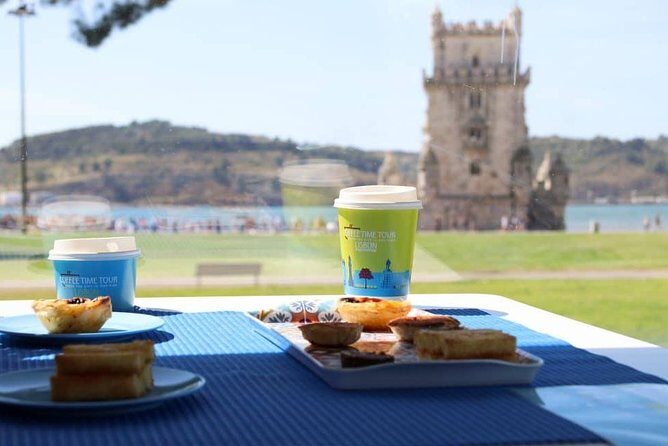
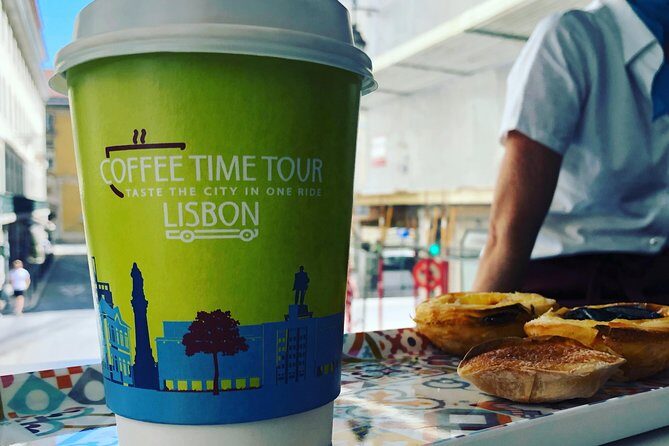
And yes, you get snacks. You’ll be offered a selection of Portuguese pastries, plus coffee and/or tea (and juice is included too). For a one-hour tour, that’s a real perk, not filler.
Restauradores Square to Avenida da Liberdade: Lisbon’s “Main Streets” Energy
The tour starts at Restauradores Square, a good first stop because it’s designed for attention. The centerpiece is the Monumento dos Restauradores, topped by a tall obelisk about 30 meters high. It was inaugurated on April 28, 1886, celebrating Portugal’s liberation from Spanish rule on December 1, 1640.
I like how quickly this sets tone. Lisbon isn’t only postcards. It’s also politics, memory, and public space.
From there, you move onto Avenida da Liberdade, one of Lisbon’s key avenues connecting Restauradores Square to Marquês de Pombal Square. This street works like a timeline: it’s a showcase of how Lisbon expanded its grand urban style beyond the older, tighter neighborhoods.
Then the bus swings toward Marquês de Pombal, closely tied to major architectural changes in Lisbon. The point isn’t to memorize dates. It’s to understand that Lisbon rebuilt itself again and again—by leaders with strong ideas about how the city should look and function.
Rossio Square and Praça do Comércio: Two Squares, Two Moods
Next up is Rossio Square, one of Lisbon’s oldest and most beautiful squares. It’s been the stage for important events for more than six centuries, so it’s worth noticing how many layers of the city coexist there.
Then comes Praça do Comércio (Terreiro do Paço), and this one is huge. The information you’re given highlights its scale—about 36,000 m²—which helps you grasp why it has always been a major public meeting point.
This square also makes a great viewpoint mindset. When the bus rolls through the area, you can start to see the logic of Lisbon’s layout: civic center near the river, open space for gatherings, and the city facing outward.
Practical note: how much you’ll actually see
Because it’s a bus tour and you’re not hopping out at each stop, don’t expect perfect photo angles at every landmark. If you care about photos, use the ride time to spot which buildings line up best from the bus window, then switch to video so you can track what you might want to walk later.




The Waterfront Story: Cais do Sodré to Praça dos Remolares and Ribeira Velha
This part of Lisbon has a working-city vibe. The route includes Cais do Sodré and Praça dos Remolares, which were common place names for a long time. The explanation given is classic Lisbon: the term remolares connected to workers involved with oars and tugboat activity in the past.
There’s also an interesting detail about timekeeping: in 1906, the Regulador clock was built and marked the legal hour of Lisbon for years. That’s the kind of fact that makes a city feel real. It turns a random clock into a piece of daily life history.
From there, the narration moves you toward Ribeira Velha Market, linked to Lisbon as a merchant city. With the discoveries and the rise of merchants in the 16th century, the city began rearranging to place merchants in specific areas. Ribeira Velha Market is described as having been located in front of Casa dos Bicos.
Why this section is valuable
You’ll be tempted to treat Belém as the “main event,” but this middle stretch helps you understand why Belém matters at all. Lisbon’s maritime links, merchant activity, and industrial development weren’t separate themes. They all connect to the same river economy.
A Quick Detour that Feels Like a Secret: Christ the Redeemer Inspiration
One stop on this route includes a surprising connection: Christ the Redeemer in Rio de Janeiro is said to have inspired a similar monument in Lisbon. The information provided explains that in 1934, during a visit to Rio by Cardinal-Patriarch of Lisbon Mons. Manuel Gonçalves Cerejeira, the idea took hold for a Lisbon version.
Even if you don’t go hunting for the monument afterward, the takeaway is useful. Lisbon exports ideas and also borrows them. The city’s religious art and public symbols travel across the Atlantic, carried by people and visitors.
This is exactly the kind of story that works well on a short tour: it adds texture without eating your whole day.
Tagus River Power View: 25 de Abril Bridge and Cables of Cordoaria

Now you hit the big geography moment: the 25 de Abril Bridge over the Tagus River (Rio Tejo). The bus description emphasizes it’s a suspension bridge connecting Lisbon (north bank) to Almada (south bank).
The narration also calls out the bridge’s structure being similar to the Golden Gate Bridge in San Francisco, plus the idea that its engineering calculations came earlier than the later addition of the train. That’s a rare bit of transport history for a bus ride—and it gives you a better reason to look up at the span instead of just admiring it.
Then you move into the story of Cordoaria Nacional (National Factory of Cordoaria), connected to the Portuguese Navy. Built in 1771, the factory made cables, sisal ropes, sails, and flags—equipment for the ships. The building is now treated as a national monument.
What to look for as you ride
From a bus, you can’t tour a factory. But you can still take in the scale and the ship-support mindset. If you picture a navy at work—ropes, cables, sails—the area stops being just architecture. It becomes Lisbon’s logistics network for the sea.
MAAT and Tejo Central: When Lisbon’s Waterfront Gets Modern

The tour then spotlights MAAT, the Museum of Art, Architecture and Technology. The key detail here is architectural: the project was designed to highlight the river-facing façade, rather than the back side meant to merge with urban space. If you’ve ever felt that modern buildings look like they were dropped into cities, MAAT is the opposite story: it’s designed to face the river.
Next is the older-industrial side of the same riverfront story: Tejo Central, originally known as the Tejo Central. It was built between 1908 and 1951, with stages of expansion. It uses western iron architecture with bricklaying that decorates the sides in styles ranging from new art to classicism.
Why mixing art museum and old power plant works
This pairing is smart because it shows change without pretending Lisbon forgot its past. You’re seeing how the Tagus River zone shifted from industrial utility to culture and design. Even without stepping out, you’ll come away with a clearer sense of Belém’s role: not only historic monuments, but also modern spaces built on former power and industry bones.
Palace of Belém and the Jerónimos Area: Political Power to Cultural Memory
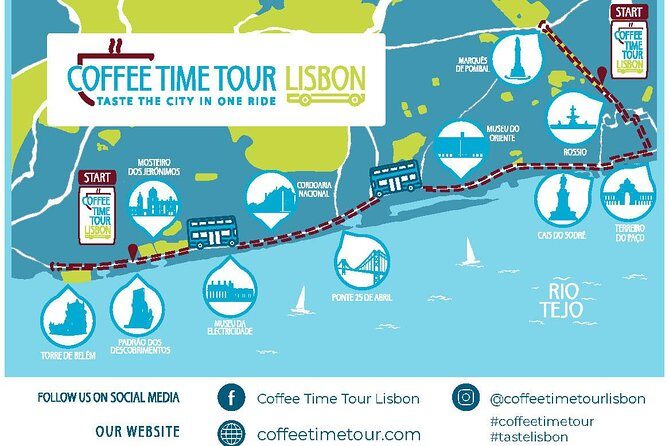
The route includes the Palace of Belém, described as the official residence of the President of the Republic starting in 1912. The text also notes that presidents of the First Republic had to pay income to the State to live there, so it wasn’t a free luxury under the new republican arrangement.
That tidbit helps Lisbon feel less like a list of sights and more like a system with rules, compromises, and shifts in power.
Finally, the tour reaches the monastery area and Belém’s big cultural landmarks. The Monastery is described as a cultural landmark that endured for five centuries, connected to reception and burial of kings and later poets. That’s the kind of legacy detail that makes the site feel tied to people, not just dates.
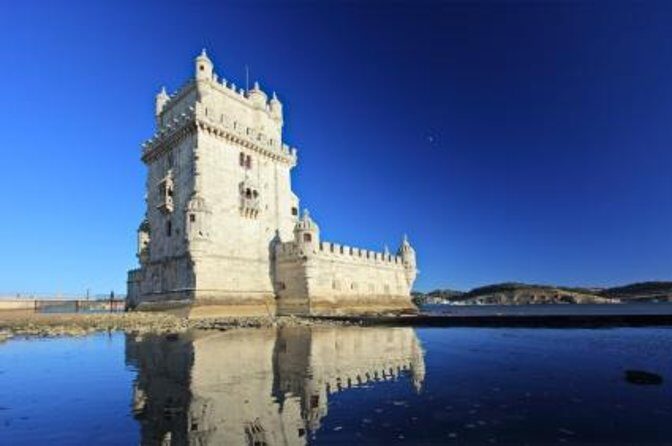
At the very end, the bus circuit ends in front of the Planetarium at Belém. The information you’re given also says a cultural and conference center associated with this end area received a definitive project decision in 1988 and was transformed in 1993, with a program emphasizing music, theatrical arts, and photography. This is useful if you’re planning your next stop after the bus.
A quick reality check for expectations
This isn’t a long-walk pilgrimage. You’re getting the story and orientation, then you’re moving on. If you want to spend serious time inside the most important historic sites, use this tour as the “map maker,” then pick one or two walking priorities afterward.
Price, Time, and Value for a Lisbon Highlights Day
At $15.43 per person for about 1 hour, this is priced like a fast orientation package. That’s good value if your goal is to:
- see a lot without navigating
- get background narration while you ride
- keep your afternoon open for walking neighborhoods on your own
You also get practical extras baked into that price: Portuguese pastries, coffee/tea or juice, and Wi‑Fi. For many short tours, food is either symbolic or absent. Here, it’s included and you’re not paying separately for snacks.
One more value angle: the bus ends in Belém near the Planetarium. That matters because Belém is often where visitors get stuck planning how to get there next. This route hands you a logical exit point.
Who Should Book This Bus Tour (And Who Might Skip It)
I’d recommend this tour if you:
- want an easy, time-saving way to get Lisbon’s city center into your head fast
- like hearing context while you look at streets, squares, bridges, and riverfront zones
- prefer comfort and quick pacing, not constant getting on and off transit
I’d think twice if you:
- need a restroom during the trip (there isn’t one on board)
- expect long stops to go inside buildings or museums
- travel with small children who need onboard flexibility (children under 6 aren’t allowed on board)
And one more thing to consider: there’s a specific caution from one older booking comment about the tour provider being closed after Covid, while bookings still appeared online. I can’t confirm what’s currently happening, but it’s worth doing one quick check before your day. Make sure your confirmation is valid and you have the right operator name for your date.
Should You Book City Center to Belém?
If you want a solid introduction and you’ll be doing more walking later, I think this is a good buy. The strongest reasons are the short duration, the included snacks and drinks, the air-conditioned comfort, and the way the narration connects Lisbon’s squares and river story into one ride.
If you’re the type who likes to linger at every major stop, skip this and build your own half-day with train/tram and a couple of timed entries. But if you’re trying to make a one-day Lisbon plan work, this tour helps you start the city in the right place: with context, not just photos.
FAQ
How long is the Lisbon city-center to Belém bus tour?
It runs for about 1 hour.
What’s included on board?
You get a selection of Portuguese pastries, coffee and/or tea (and juice), plus onboard Wi‑Fi and an air-conditioned vehicle.
Is there a restroom on the bus?
No, there is no restroom on board.
Can children join the tour?
Most travelers can participate, but children under 6 years old are not allowed on board. Children prices apply for ages 6 to 14.
Where does the tour start and end?
It starts at Restauradores (Restauradores 1249-970 Lisbon) and ends in Belém in front of the Planetarium (Mosteiro Jerónimos 1400-206 Lisbon).
Can I cancel for a full refund?
Yes. You can cancel up to 24 hours in advance for a full refund. If you cancel less than 24 hours before the start time, the amount paid is not refunded.