REVIEW · LISBON
Lisbon Historical Downtown Private Tour
Book on Viator →Operated by João's Journeys · Bookable on Viator
Lisbon feels like it’s built on layers, and this short private tour makes that visible fast. You’ll see the big names (Lisbon Cathedral, national pantheon) plus the classic viewpoint stops that explain why Lisbon looks the way it does. I especially like the stacked miradouro viewpoints and the fact that several stops are marked free-entry, so your money goes toward time and guidance instead of ticket lines. The one drawback: with about 2 hours, each place is a quick hit, not a slow, linger-and-read kind of day.
This is also a smart value format if you want a calmer experience. You get private transportation, pickup is offered, and you start and end at Praça da Figueira (1100-241 Lisboa), which is convenient for organizing the rest of your day. If you’re the type who likes to ask questions and get context while you move, this works well—just know you’ll cover more ground than you’ll personally “explore deeply.”
In This Review
- Key Highlights You’ll Feel Right Away
- A 2-Hour Downtown Loop That Actually Gives Context
- Lisbon Cathedral: 1147, First in the City, and a Real Sense of Time
- Portas do Sol: The Highest Alfama View (and the Wall Remnant)
- Senhora do Monte: Another Big Panorama, Now From the Center
- St. Vincent Church and the National Pantheon: Faith Meets Portuguese Memory
- Alfama Time: Narrow Streets, Crooked Buildings, and a Ginjinha Taste
- Convento do Carmo Ruins and Santa Just Lift: After the Earth Moved
- Bairro Alto and Sao Pedro de Alcantara: Maritime-Era Streets to Castle Views
- Price and Value: What You’re Actually Paying For
- Who This Tour Fits Best (and Who Might Want a Different Plan)
- Practical Tips Before You Go (Simple Stuff That Helps)
- Should You Book This Lisbon Historical Downtown Private Tour?
- FAQ
- How long is the Lisbon Historical Downtown Private Tour?
- What is the price per person?
- Is pickup available, and where does the tour start?
- Is this tour private?
- What language is the tour offered in?
- Are there any entrance tickets mentioned for the stops?
- Is it weather-dependent?
- Can I cancel for free?
Key Highlights You’ll Feel Right Away
- Two viewpoint stops up high so Lisbon’s neighborhoods make sense in your head
- Alfama time plus ginjinha—a small tasting moment that fits the old streets
- 1755 earthquake ruin + nearby Santa Just Lift for a strong change-of-pace stop
- St. Vincent references throughout, tying together church, patronage, and statues
- Bairro Alto explanation tied to Portugal’s maritime era
- Private group only for a more personal pace and easier Q&A
A 2-Hour Downtown Loop That Actually Gives Context
This tour is built for orientation. In a couple hours, you’re not just taking photos—you’re learning how Lisbon’s geography and history connect. That matters because Lisbon’s charm isn’t only in monuments. It’s in the hills, the viewpoints, the way neighborhoods grew, and how events like the 1755 earthquake reshaped the city.
You’ll also get a practical rhythm: drive/walk, quick stop, short story, then you move again. That keeps the pace lively and helps the city “click” faster—especially if you’re visiting for the first time. Since admission at multiple stops is marked free, you’re not constantly deciding if a site is worth paying for; you just follow the route and absorb the meaning.
One more plus: it’s private, so you’re not stuck with a loud, slow group or a rigid schedule. I like that kind of flexibility, even on a short tour.
You can also read our reviews of more private tours in Lisbon



Lisbon Cathedral: 1147, First in the City, and a Real Sense of Time
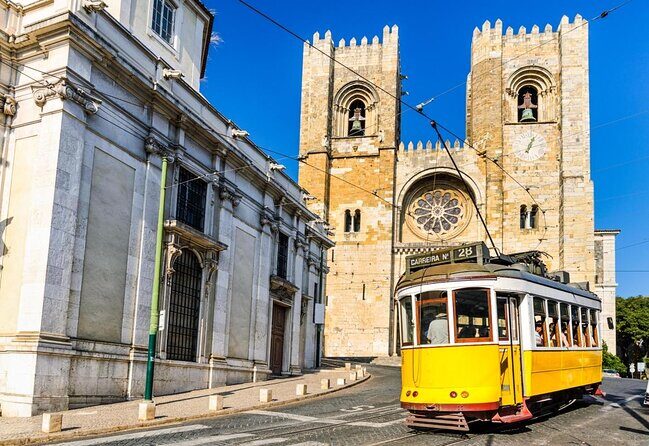
Your first major stop is Lisbon Cathedral, ordered by Portugal’s first king in 1147. That date isn’t trivia fluff. It sets the tone: you’re starting in a place tied to the earliest Portuguese-era push for Lisbon.
What makes this work on a short tour is that the cathedral isn’t just a pretty building. It’s an anchor point—an early reference point for everything else you’ll see later. When you later stand in viewpoints overlooking Alfama and hear about older walls and neighborhood origins, the cathedral helps you understand that Lisbon didn’t form all at once. It was built, rebuilt, and layered over centuries.
If you want a first-day “aha” moment, this is it. You’re setting a historical baseline before the city starts shifting from religious sites to viewpoints to neighborhood streets.
Practical note: since the cathedral stop is brief, aim to look first, then ask questions. If you spend too long scanning every detail, you’ll rush the rest.
Portas do Sol: The Highest Alfama View (and the Wall Remnant)

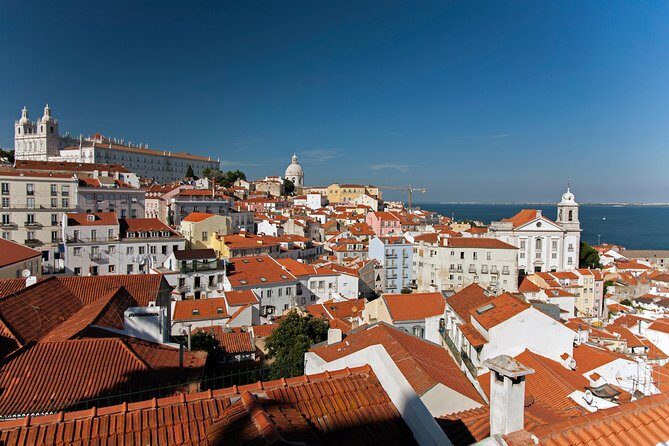
Miradouro das Portas do Sol is one of those places that makes Lisbon look like Lisbon. It’s described as the highest viewpoint of Alfama, and you’ll feel why immediately. Alfama is old, tight, and steep. From up here, the neighborhood’s shape becomes clearer.
This stop also has specifics that add meaning beyond the view. You’ll notice a small remaining section of Lisbon’s medieval wall, plus the statue of St. Vincent, Lisbon’s patron saint. That combination—surviving architecture fragments and a figure tied to local identity—gives you a more grounded way to see the panorama. You’re not only looking at rooftops. You’re seeing continuity.
Plan for a quick photo spree, then use the time to orient yourself. I find viewpoint stops work best when you choose a few landmarks to remember. Later, when you’re walking nearby (Alfama), you’ll recognize what you saw from above.
The ideal mindset: treat Portas do Sol like a map.
Senhora do Monte: Another Big Panorama, Now From the Center
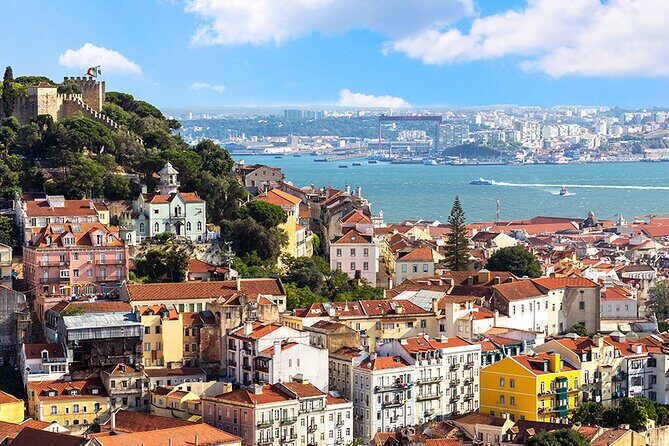
Next comes Miradouro da Senhora do Monte, the highest viewpoint of central Lisbon. It’s a second viewpoint stop, and that’s not redundant—it’s instructional.
From one miradouro you learn a neighborhood. From another, you understand the city layout at a higher level. The shift from Alfama-focused framing to a broader city panorama helps you connect the hills, the downtown area, and where the “center” sits relative to older quarters.
This is also where you’ll likely start imagining the route you’ll take later in the day. Even if you don’t memorize streets, you’ll understand the slope logic and why certain areas feel tucked away.
Because this is only about 20 minutes here, keep your feet ready and your phone charged. Short viewpoint time is common in Lisbon; you’ll enjoy it more if you don’t try to treat it like a long museum visit.
St. Vincent Church and the National Pantheon: Faith Meets Portuguese Memory
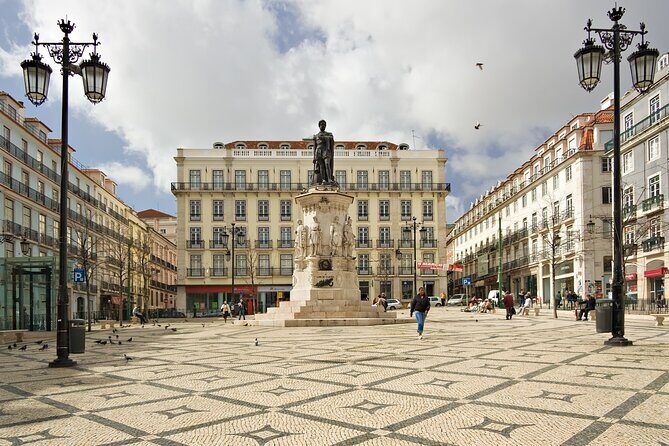
Some Lisbon landmarks feel like they belong to the city’s daily life. Others feel like they belong to its story—who Portugal honors, and why.
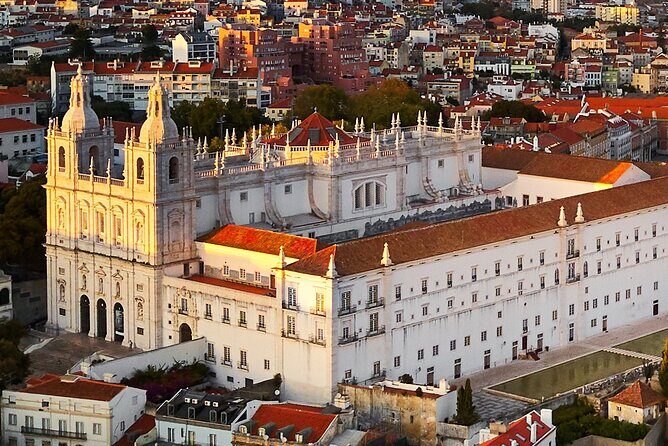
You’ll visit a 16th-century church dedicated to Lisbon’s patron saint, St. Vincent. That continues the pattern you started at Portas do Sol with the statue. The point is simple: patronage isn’t only a name on a sign. It shows up in churches, public symbols, and what locals emphasize.
Then you’ll head to the national pantheon, described as the final resting place for some of Portugal’s most important people from recent history. That mix—religious architecture alongside national remembrance—helps you grasp how Lisbon holds both personal faith and public identity in one place.
For me, this pairing is powerful because it explains the emotion behind the stone. Even if you don’t want a full religious lesson, you’ll still walk away with better context for what people value in this city.
You can also read our reviews of more historical tours in Lisbon





Alfama Time: Narrow Streets, Crooked Buildings, and a Ginjinha Taste
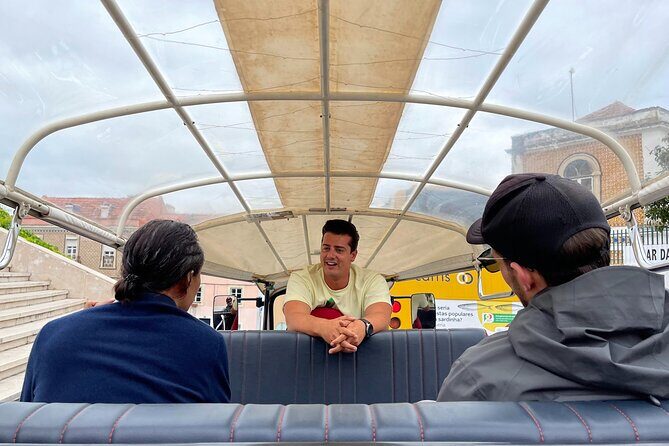
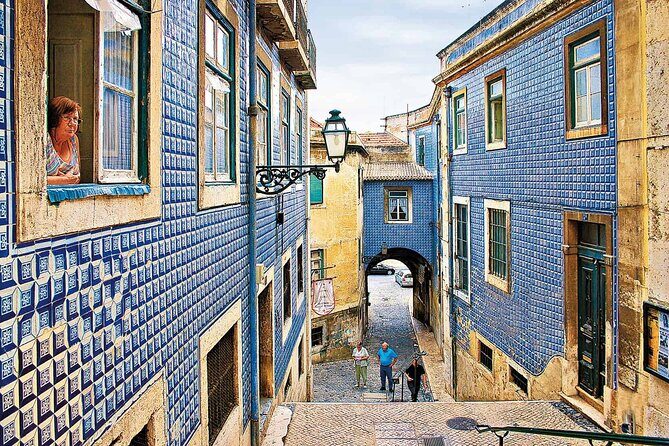
This is the neighborhood stop you’ll remember. Alfama is Lisbon’s oldest neighborhood, and the experience here is less about one single monument and more about the feel of the streets—narrow lanes, crooked buildings, and an older urban texture you can’t fake.
The tour also builds in a small sensory moment: a taste of ginginha (wild cherry licor of Lisbon). This isn’t just a fun extra. It’s a way to connect the neighborhood’s identity to something you can actually taste. Food and drink are often where cultural memory sticks, especially in a short tour.
What to do with your 15 minutes in Alfama: slow down for a few steps. Don’t only look ahead for the next viewpoint. Turn your head, notice façades, and take in the street scale. Alfama is compact. If you treat it like a corridor, you’ll miss the charm.
Also, since this segment is brief, decide in advance what you want most: photos, street-watching, or the taste. You can do all three, but don’t let one steal the time from the rest.
Convento do Carmo Ruins and Santa Just Lift: After the Earth Moved
Convento do Carmo is where the tour gets real. The Carmo Convent was destroyed during the big earthquake of 1755, and the stop lets you see the ruins. Lisbon’s history isn’t only “old.” It includes moments when the city was physically broken and then reshaped.
Ruins change how you look at the present. When you stand near surviving structures, you understand why some areas feel different in material and form. You also get a clearer sense of how Lisbon rebuilt itself afterward.
This stop includes a quick visit to Santa Just Lift next door. So you’re not only looking back—you’re also seeing a modern Lisbon solution beside a historic wound. It’s a nice shift of pace and it fits the way Lisbon keeps reinventing itself.
If you’re sensitive to walking on uneven ground, keep an eye on your footing here. Ruins and nearby areas often have surfaces that aren’t flat in the way you might expect.
Bairro Alto and Sao Pedro de Alcantara: Maritime-Era Streets to Castle Views
Bairro Alto comes next, and it’s explained as a 16th-century neighborhood created to house people working on the Portuguese maritime discoveries. That detail matters because it turns a neighborhood into a story: work, travel, ships, trade, ambition. Lisbon’s coastline history isn’t a museum topic here—it shaped where people lived.
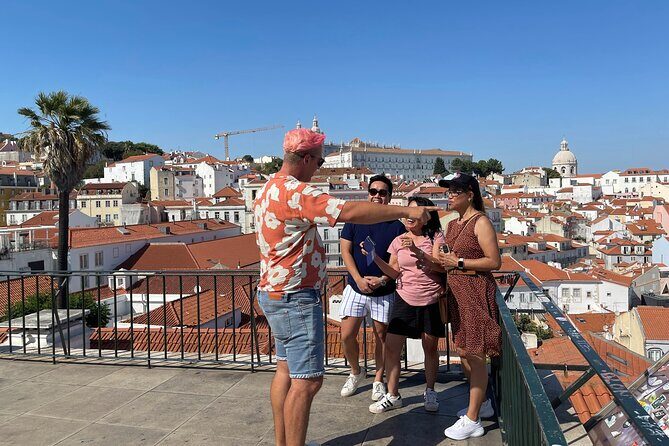
Then you’ll finish at Miradouro Sao Pedro de Alcantara, described as a viewpoint where you can see downtown Lisbon with the castle sitting on top. That final framing is the payoff. After cathedral, Alfama, pantheon, ruins, and Bairro Alto, you end with the city’s structure pulled into view by height.
I like that ending because it helps you “close the loop.” You’ve learned pieces from different angles, and now you look at the whole picture again. It’s a good moment to decide where you want to return later on your own.
Price and Value: What You’re Actually Paying For
At $155.77 per person for about 2 hours, the price is less about a pile of included tickets and more about service. You’re paying for private transportation, pickup offered, and a guide who connects the dots quickly while you move through central Lisbon.
Here’s why this can be good value:
- Several stops are marked free-entry, which keeps your costs predictable.
- The tour is private, so you’re paying to avoid the hassle of crowd pacing.
- You get both viewpoints and neighborhood walking, so you don’t spend the entire time locked in one type of sightseeing.
The biggest reason to choose this price point is your time. If you only have a short window and want orientation, a structured private loop can save hours of trial-and-error wandering.
If you’re the type who loves long museum time and deep, slow reading, you might feel the 2-hour limit. But if you want context plus movement, you’ll likely feel it was time well spent.
Who This Tour Fits Best (and Who Might Want a Different Plan)
I’d suggest this tour if you:
- Want quick orientation in Lisbon’s historic core
- Like viewpoints and short stops with explanation
- Prefer a calmer, private pace with the chance to ask questions
- Are traveling in a pair or small group and want the city to feel manageable
It may not be ideal if you:
- Want long time inside buildings
- Dislike hills or short walks between tight areas
- Need a very slow schedule with lots of free time
One more practical reality: the experience requires good weather. If Lisbon is doing its usual dramatic cloud thing, plan to be flexible.
Practical Tips Before You Go (Simple Stuff That Helps)
Since you’re doing a viewpoint-heavy loop with neighborhood walking, I recommend:
- Wear shoes you trust on uneven old-street surfaces
- Bring a charged phone for viewpoints, then take one “no-phone” moment too
- Be ready for short photo windows—this tour is built for quick stops
- Keep an eye on timing so you don’t run ahead of the group
The meeting point is Praça da Figueira (1100-241 Lisboa), and the tour ends back there. That’s a plus if you want to continue your day nearby without figuring out new transit logistics.
Also, this tour is offered in English, which helps if you’re trying to understand details fast. Service animals are allowed, and it’s near public transportation, so you’re not trapped if plans change.
Should You Book This Lisbon Historical Downtown Private Tour?
I think this is a strong pick if you want a fast, guided way to understand Lisbon’s bones: hills, viewpoints, the oldest neighborhood, and the earthquake history that still shapes the city. The viewpoint pairing makes the geography click, and the mix of religious sites, neighborhood streets, and ruins gives you variety without forcing long transit days.
Book it if you’re arriving with questions and want answers while you’re still fresh in the city. Consider another option if you prefer slow museum time or you want one neighborhood to be your whole day. For most first-timers, though, this format is one of the easiest ways to leave Lisbon feeling oriented rather than overwhelmed.
FAQ
How long is the Lisbon Historical Downtown Private Tour?
It runs for about 2 hours (approx.).
What is the price per person?
The price is $155.77 per person.
Is pickup available, and where does the tour start?
Pickup is offered. The meeting point is Praça da Figueira, 1100-241 Lisboa, Portugal, and the tour ends back at the meeting point.
Is this tour private?
Yes. It’s a private tour/activity, so only your group participates.
What language is the tour offered in?
The tour is offered in English.
Are there any entrance tickets mentioned for the stops?
The stops on the route are marked as having admission tickets free.
Is it weather-dependent?
Yes. The experience requires good weather. If it’s canceled due to poor weather, you’ll be offered a different date or a full refund.
Can I cancel for free?
Free cancellation is available. You can cancel up to 24 hours in advance for a full refund, and changes within 24 hours are not accepted.