REVIEW · LISBON
All Lisbon History via TukTuk
Book on Viator →Operated by Lisbon Point · Bookable on Viator
Lisbon feels like a puzzle of layers. This All Lisbon History via TukTuk route strings them together fast—Belem Tower, Jeronimos Monastery, and the city’s older quarters—without making you tackle every steep street on foot. You ride in a private vehicle, get a mobile ticket, and you can still step out for short visits where the story really shows.
I especially like the mix of UNESCO landmarks with “real Lisbon” streets and viewpoints. You also get the comfort of hotel pickup in central Lisbon, which matters a lot in a city built on hills. The one caution: the quality of the narration can depend on the guide, and the road noise can make explanations hard to hear if the audio setup is limited.
In This Review
- Key Highlights Worth Your Time
- How the TukTuk Pace Makes Lisbon’s Hills Feel Smaller
- UNESCO Stops: Belem Tower and Jeronimos Monastery Without the Stress
- Torre de Belem
- Mosteiro dos Jeronimos
- Starting in Lisbon’s Oldest Quarter: Narrow Streets and the 1755 Earthquake Story
- Chiado and the Convent Ruins: A Fancy Quarter With Scars
- Lisbon Cathedral: How One Building Holds Romans, Arabs, and Christians
- Panteao Nacional: Architecture That Took Centuries
- Miradouro Da Senhora Do Monte: The View Stop Worth Its Food Break
- Belem to Jeronimos: How the Route Keeps It From Turning Into a Tram Ride of Doom
- Private Guide Quality: When the Narration Clicks (and When It Doesn’t)
- Price and Value: What $226.37 Per Group Really Buys
- Timing Tips: Sunset Views and a Faster Day
- Who This Tour Suits Best
- Should You Book This Lisbon History TukTuk Tour?
- FAQ
- How long is the tour?
- What’s the price?
- Do you get pickup in Lisbon?
- Is the tour private?
- What language is the tour in?
- Do I need a ticket on my phone?
- Are any stops with entrance fees included?
- Is the tour near public transportation?
- Can service animals join?
- Can I cancel for free?
Key Highlights Worth Your Time

- Two UNESCO-listed stops on one efficient route: Belem Tower and Jeronimos Monastery
- Short, focused stops that reduce backtracking on foot in hilly neighborhoods
- A guide-led history loop through Chiado, Lisbon Cathedral, and the Pantheon area
- Miradouro Da Senhora Do Monte for classic Lisbon views plus a licor and pastel moment
- Private TukTuk for up to 6, so you can move at your group’s comfort level
How the TukTuk Pace Makes Lisbon’s Hills Feel Smaller

Lisbon can be a workout. One minute you’re admiring old stone, the next you’re climbing stairs that seem designed by a mischievous cartographer. This tour’s big advantage is the TukTuk ride between key zones, so you spend energy where it counts: looking up, taking photos, and absorbing details you’d miss if you just dashed between buses.
The itinerary is built around quick stops—often around 10 to 20 minutes each. That means you’re not stuck waiting in line for hours or wandering without direction. It’s more like a guided “greatest hits” walk-through of Lisbon’s timeline, with enough time at each stop to register what you’re seeing.
Private also changes the vibe. Instead of fighting for view angles, your group can ask a question, linger briefly if something grabs you, and generally keep things smooth. One review even praised a guide for extending time when asked, which is exactly the kind of flexibility that makes a short visit feel less rushed.
The other practical win: pickup is offered from any central Lisbon hotel. That saves you the hassle of figuring out where the meeting point actually is and how to get there when your first day is full of map anxiety.
You can also read our reviews of more historical tours in Lisbon


UNESCO Stops: Belem Tower and Jeronimos Monastery Without the Stress

This is where the tour earns its keep. You get both UNESCO-listed powerhouses tied to Portugal’s maritime era—Torre de Belem and Mosteiro dos Jeronimos—but you’re not doing it as a lonely self-guided slog.
Torre de Belem
Belem Tower is the city’s iconic defense-from-the-water statement. It’s a XVI century war tower built for protection of Lisbon, and even in a quick stop you can see why people remember it: it looks like a fortress dressed for history class. The tour schedule keeps it to about 10 minutes, which is enough to appreciate the form and setting without chewing up your whole day.
A tip for your photos: try to frame it with the surrounding waterfront context if you can. You’ll catch the “why it was built here” feeling more than just the shape.
Mosteiro dos Jeronimos
Then you hit the monastery—another UNESCO heavyweight—listed as a XVI century masterpiece with Manueline/Renaissance architecture. The big idea here is scale and craft. Manueline style is known for decorative complexity, so even a short stop can feel like stepping into a stone handbook of Portuguese identity.
The planned visit is also about 10 minutes, so don’t treat it like a slow museum. Instead, use the time to pick one or two architectural features to focus on: entrances, carvings, and overall proportions. If you want deeper detail, consider pairing this tour with a longer self-guided revisit later.
Starting in Lisbon’s Oldest Quarter: Narrow Streets and the 1755 Earthquake Story

The route begins in Lisbon’s oldest area, where the street geometry does the talking. You’re led through narrow streets with locals and shown old buildings that survived the big earthquake of 1755.
This is one of those stops that can shift how you understand the rest of Lisbon. After that, Chiado and the cathedral don’t just look old—they start to look resilient. It also helps explain why certain neighborhoods feel rebuilt or reshaped over time, even when you can still see older layers.
Even though the stop is described as a short visit, it’s the kind of place where the guide’s framing matters. If the explanation is clear (some guides are better than others, more on that later), you’ll connect the architecture to the city’s survival story.




Chiado and the Convent Ruins: A Fancy Quarter With Scars

Next up is Chiado, described as a “fancy” old quarter. Here you get a quick look at the ruins of the Chiado convent, and that ruins feeling hits differently than a preserved monument.
The scheduled time is about 15 minutes, and it’s a sweet length for this kind of stop. You don’t need hours to recognize what happened; you need time to stand back and view the architectural style and the damage/repairs over time. It’s a reminder that Lisbon’s history isn’t all smooth marble and perfect postcards—it includes destruction, recovery, and change.
If you’re the type who likes seeing how cities adapt after major events, this stop is worth leaning into with one focused question for your guide, like what the ruins are meant to represent.
Lisbon Cathedral: How One Building Holds Romans, Arabs, and Christians
This is a must-do stop on the history side: Lisbon Cathedral (an estimated quick 15 minutes). It’s presented as the oldest monument in Lisbon and described as passing through Romans to Arabs to Christians. That kind of layered timeline is rare to experience in one place.
The cathedral’s core identity is 12th-century, and the point of a tour like this isn’t just to say that—it’s to notice how long a site can stay meaningful even while powers and beliefs change.
Practical advice: treat it like a fast orientation stop. Don’t try to see every corner. Use the guide narrative to help you know what you should look for first, because otherwise cathedrals can blur together in a whirlwind itinerary.
Also, expect that you’ll spend part of your time just absorbing the mood and layout, not shopping for details. Short visits work here because the cathedral gives you a lot visually in a compact space.
Panteao Nacional: Architecture That Took Centuries

Then comes Panteao Nacional, described as a Lisbon Pantheon with magnificent architecture that took centuries to build. Your visit time is about 10 minutes, so you’ll want to move with purpose.
In this kind of stop, you’re not trying to read a wall like a textbook. Instead, stand in a spot that gives you a sense of the building as a whole. The goal is to grasp the “centuries in the making” feeling—how the structure’s presence seems to say the project outlived generations.
If your guide gives you a clean story about how long it took and what that implies, you’ll get more out of the time. If the guide is quieter or harder to hear, you may feel the stop is more visual than educational—which isn’t bad, just know what to expect.
Miradouro Da Senhora Do Monte: The View Stop Worth Its Food Break
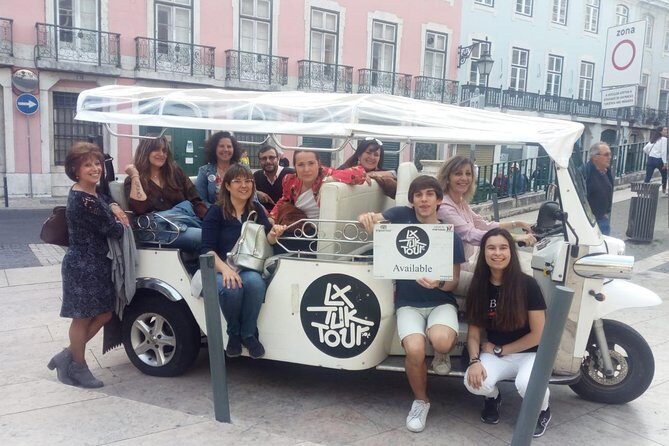
One of the best moments in the route is Miradouro Da Senhora Do Monte. The schedule gives you about 20 minutes, which is great because viewpoint stops work best when you can actually breathe and take photos instead of power-walking.
This is where you get the amazing overview of Lisbon. And yes, the plan includes time for a drink and a snack: you can grab a licor and eat a pastry from Portugal. That combination matters because it turns a view into an experience. You’re not just looking—you’re pausing like a local would on a break.
If you like your photos, this is a smart place to aim for better light. One review specifically recommended the tour at sunset. Even if you don’t go full sunset mode, late afternoon often gives you softer angles and less harsh contrast.
Belem to Jeronimos: How the Route Keeps It From Turning Into a Tram Ride of Doom
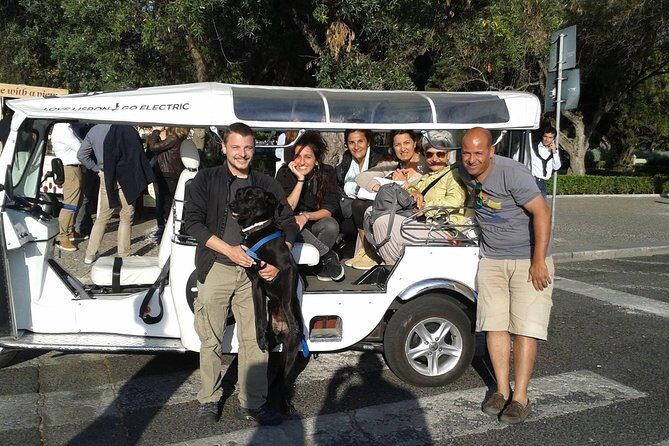
A lot of “big city” tours fail for one reason: time loss. You spend more time figuring out transport than seeing places. Here, the TukTuk route helps you connect zones efficiently, with short step-outs that keep your day moving.
That matters most for Lisbon because distances can feel short on a map but long in real life when streets twist and you’re climbing constantly. The private format also helps. If your group is slower, you still keep momentum. If you’re energetic, your guide can keep you from lingering too long.
One review praised guides for being friendly and funny, which helps because these stops aren’t just facts—they’re chances to make sense of the city quickly. When the guide is engaged, the itinerary becomes a story you can follow.
Private Guide Quality: When the Narration Clicks (and When It Doesn’t)
This tour can be excellent, and it can vary a bit depending on your guide. The names that show up in the feedback—Sergio, Tercio, Tiego, Ivo, and Thomas—range from high-energy storytellers to more info-light explanations.
Here’s the real takeaway for you:
- If your guide is strong, you get clear context and you’ll understand why each site matters.
- If the guide explanation is light, the tour shifts closer to a sighting route than a deep history lesson.
Audio is also a factor. One review noted that without a microphone, it was very hard to hear explanations while driving. That’s an important consideration if you care about learning every stop, not just seeing it. If you want the history angle, I’d treat this as a conversation-based tour: ask questions, and don’t rely only on what you catch over road noise.
There’s also occasional hiccups. One review described a guide missing for about 10 minutes during a cathedral visit, which is the kind of thing that can throw off your rhythm. You can’t control every moment, but it’s a reminder to keep expectations realistic on any short private excursion.
On the positive side, one guide—Tercio—was praised for having enormous Portuguese history knowledge about Lisbon. Another—Ivo—was called friendly, knowledgeable, and funny, with a strong recommendation for sunset.
If your guide is great, you’ll leave with more than photos. You’ll have a mental timeline of Lisbon that sticks.
Price and Value: What $226.37 Per Group Really Buys
At $226.37 per group (up to 6), the price is less about per-person cost and more about how you divide it. If you’re traveling with a small crew—friends, family, or a couple plus extra—you’re buying convenience, time, and reduced walking.
Two hours to three hours is a sweet window. It’s long enough to hit multiple major sights and still short enough to keep the day flexible. You’re also getting hotel pickup from central Lisbon, which saves time and transport hassle that would otherwise eat into your sightseeing.
The “value math” here is simple:
- If you’re trying to see UNESCO landmarks and multiple old-quarter stops in one go, a TukTuk-based private route can be efficient.
- If you plan to do everything slowly and deeply on your own, you might spend less, but you’ll work harder for the coordination.
Also consider the stop design: short visits with free admission listed for each stop on the route. That means you’re not paying to enter multiple sites on this tour plan—so the fee is really paying for guidance and transport time.
Timing Tips: Sunset Views and a Faster Day
If you can pick a time, aim for sunset or late afternoon. The route includes a major viewpoint (Miradouro Da Senhora Do Monte), and that kind of light makes the city look cinematic.
That said, the itinerary works at other times too. The core logic doesn’t change: UNESCO stops first for the big anchors, then old quarters and viewpoint moments to give you balance between monuments and atmosphere.
Because each stop is fairly short, your biggest control knob is your curiosity. If you’re the type who asks follow-ups, you’ll naturally absorb more. If you just want to see everything with minimal thinking, the guide will still get you oriented, but you may want to add self-guided time later.
Who This Tour Suits Best
This tour is a strong fit if you want:
- A private experience with pickup and minimal walking
- A guided loop that covers old quarters plus UNESCO landmarks
- A realistic 2–3 hour plan that helps you understand Lisbon’s timeline quickly
It’s especially good for people who don’t want to spend a whole day planning logistics: you show up, get picked up, and the route is handled.
It may be less ideal if you only want deep museum-level explanations at every stop. The time at each place is short. You’ll get the big picture, not a full academic lecture.
Also, if your group is very sensitive to audio, be ready for that possible microphone issue during driving. Choose this tour because you want motion and storytelling, not because you expect perfect sound quality the whole time.
Should You Book This Lisbon History TukTuk Tour?
I’d book it if your goal is efficiency with personality. This is the kind of tour that helps you get your bearings fast and connect major landmarks—like Belem Tower and Jeronimos Monastery—to the older, more human parts of Lisbon.
I’d think twice if you’re the kind of visitor who needs uninterrupted, highly detailed explanations at every stop, because narration quality can vary and street noise can get in the way. Still, the private format and short, well-paced visits make it a smart option for most people.
If you have the chance, go when the light is good and bring one or two questions you genuinely care about, like how 1755 shaped what you see today or how the cathedral changed across centuries. With the right guide, you’ll leave with both photos and a clear sense of Lisbon’s story.
FAQ
How long is the tour?
It runs about 2 to 3 hours.
What’s the price?
The price is $226.37 per group, for groups of up to 6.
Do you get pickup in Lisbon?
Yes. Pickup is offered from any central Lisbon hotel.
Is the tour private?
Yes. It’s a private tour/activity, so only your group participates.
What language is the tour in?
The tour is offered in English.
Do I need a ticket on my phone?
You’ll receive a mobile ticket.
Are any stops with entrance fees included?
The tour plan lists admission ticket free for the stops shown on the route.
Is the tour near public transportation?
Yes, it is listed as being near public transportation.
Can service animals join?
Yes, service animals are allowed.
Can I cancel for free?
Yes. There is free cancellation up to 24 hours in advance for a full refund.