REVIEW · LISBON
Tuk Tuk Lisbon: Old Lisbon 2-Hour
Book on GetYourGuide →Operated by TukGuide Portugal · Bookable on GetYourGuide
Lisbon by tuk-tuk feels like a shortcut. This 100% electric ride with hotel pickup turns Old Lisbon into a fast, guided walk-through of narrow lanes and big views. What I like most is the panoramic, covered vehicle (even in bad weather) and the way the route hits Lisbon’s key districts in just two hours.
One thing to consider: it’s a tight schedule. You’ll see a lot, but you won’t have long stretches to linger like you might on foot.
In This Review
- Key highlights worth planning around
- Why this 2-hour electric tuk-tuk format works in Lisbon
- The route: from Praça do Comércio through Old Lisbon to Rossio Square
- Starting strong at Praça do Comércio and Baixa de Lisboa
- Rua Augusta Arch: quick photo power and an easy transition
- Sé de Lisboa and the “big stone” feel of Lisbon’s old core
- Viewpoint rhythm: Portas do Sol, Santa Luzia, and the miradouros
- Alfama and Graça: where the city feels oldest
- São Jorge Castle area: Moorish roots and panorama payoff
- Convents, monasteries, and the quieter side of the route
- Fado Museum and Estrela Basilica: music and melody in plain sight
- Big moments through central Lisbon: Carmo, Luís de Camões, and Bica
- Practicalities that make or break the experience
- Languages and guide style: what you should look for
- Price and value: is $70 for 2 hours actually fair?
- What you need to know before you go
- Should you book this Old Lisbon 2-hour tuk-tuk tour?
- FAQ
- How long is the Tuk Tuk Lisbon Old Lisbon tour?
- What does the tour cost?
- Is hotel pickup and drop-off included?
- Where does the tour start and where does it end?
- Is entry to monuments included?
- What’s included during the tour besides sightseeing?
- Is the tuk-tuk electric and weather-ready?
- What languages are available for the live guide?
- Is this tour suitable for children?
- What’s the cancellation policy?
Key highlights worth planning around

- Small streets, big narration through Old Lisbon’s tight lanes and historic quarters
- Multiple viewpoint stops built into the route, not tacked on at the end
- A guide you can actually hear, thanks to a speaker system
- Weather-friendly comfort with transparent waterproof covers and blankets in colder conditions
- Local flavor included: you’ll taste ginjinha during the tour
- Private group feel for up to 6 people, with pickup and drop-off by request
Why this 2-hour electric tuk-tuk format works in Lisbon
Lisbon is a city of angles. Hills, viewpoints, stone churches, and sudden view corridors are everywhere. A tuk-tuk helps because it keeps you moving when your legs start bargaining. In this 2-hour format, the goal is clear: get your bearings fast, then focus your time on the parts you’ll want to revisit later.
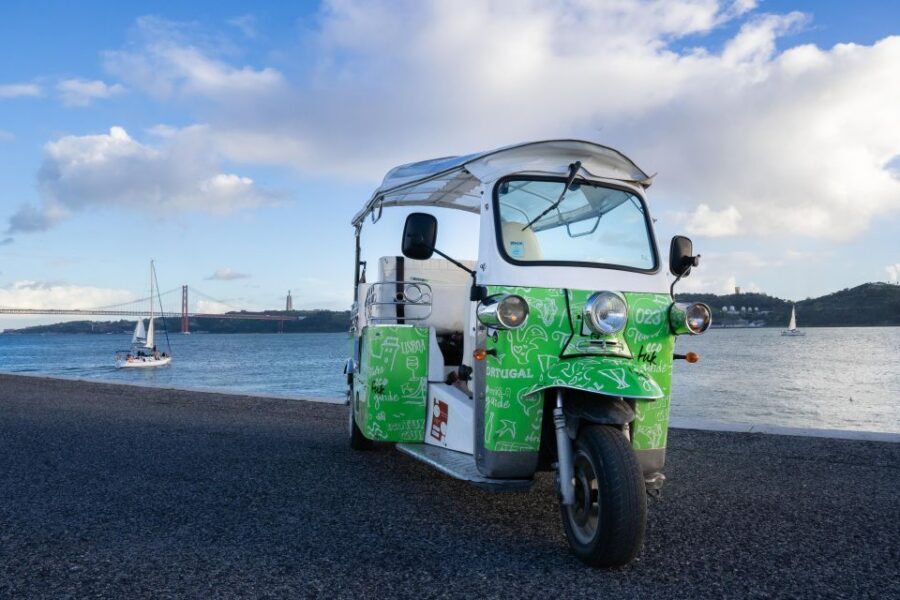
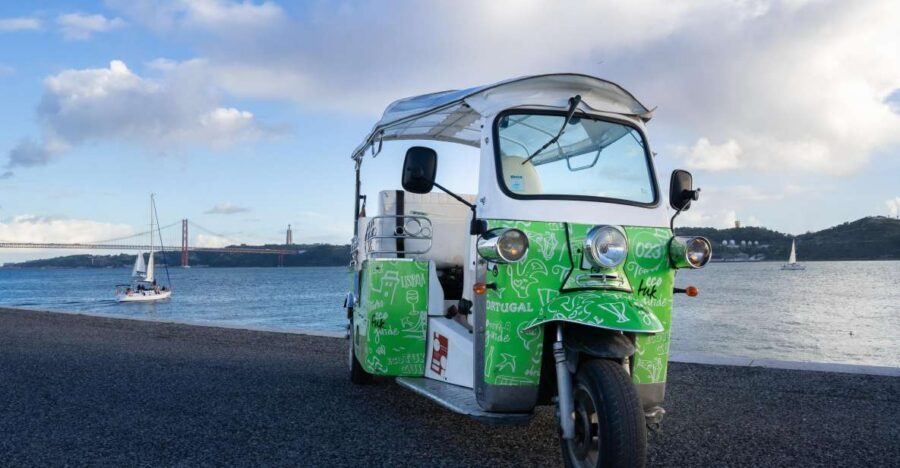
I also like how the ride is designed for real-world weather. The vehicle has transparent and waterproof covers, so you still get a panoramic view when it’s rainy. There’s also a speaker so the guide stays clear, which matters on a moving vehicle. And if the day is chilly, blankets are included for the coldest days.
Finally, this tour is built for groups up to 6 people. That private-group setup is a practical advantage in a small city like Lisbon: you spend less time waiting, and the guide can adjust as the route gets busy.
You can also read our reviews of more tours and experiences in Lisbon



The route: from Praça do Comércio through Old Lisbon to Rossio Square

The tour starts with a classic Lisbon moment: Praça do Comércio (Commerce Square). It’s a great opening because it’s open and iconic, which makes the whole trip feel more grounded. From there, the tuk-tuk shifts you into the tighter fabric of the city—streets that are too narrow for many cars, but perfect for a small, open-air-style ride with covers.
As the tour moves along, you’ll bounce between districts and viewpoints. Some stops are short photo moments; others include a guided walk or a proper stop to absorb what you’re seeing. That balance is important. In two hours, you don’t want only photos—you want context.
The tour ends at Rossio Square, one of Lisbon’s main meeting points. It’s a handy place to finish because you can easily continue to nearby sights, restaurants, or hop onto other transport without backtracking.
Starting strong at Praça do Comércio and Baixa de Lisboa
The first big anchor is Praça do Comércio. Expect a guided start that sets the stage—where you are and why this area matters in the layout of the city. It’s the kind of first stop that helps you stop guessing where everything is.
Right after that, you’ll move into Baixa de Lisboa, which functions like Lisbon’s central “connector” neighborhood. Even if you don’t spend a long time here, this stretch helps you understand the geography of where the old areas sit above the river and how the streets feed into one another. If you’re visiting for the first time, you’ll appreciate the way this tour helps you build a mental map.
Rua Augusta Arch: quick photo power and an easy transition
Next up: Rua Augusta Arch. You pass through and get a guided moment tied to the street beyond it. This stop is practical. It’s a visual landmark, and it also helps you orient toward the denser parts of central Lisbon where streets tighten again.
In a two-hour tour, these “landmark transitions” are smart. They’re the difference between feeling lost and feeling like you’re following a storyline.
Sé de Lisboa and the “big stone” feel of Lisbon’s old core
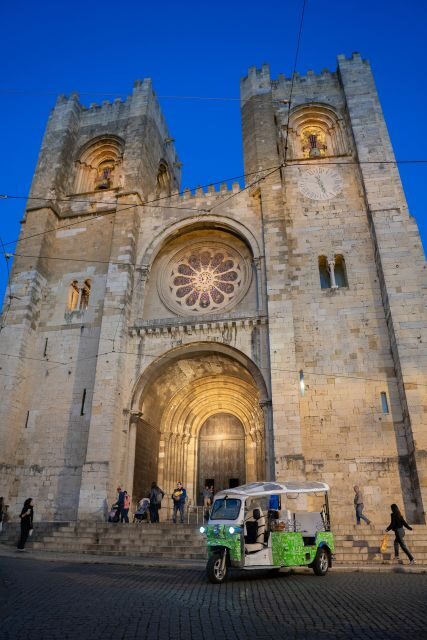
At Sé de Lisboa (Lisbon Cathedral), you’ll make a proper stop. The cathedral is described as a Roman Catholic building dating back to the 12th century. That kind of date stamp isn’t just trivia—it’s a way to connect what you’re looking at to the city’s long timeline.
This is also where a speaker system really pays off. In stone churches and busy streets, it’s easy for audio to get swallowed. Here, the tour is set up so you can follow the guide and not just stare at the facade.
If you like architecture and religious landmarks, this stop is one of the clearer “value moments” on the route: you get both a physical landmark and an explanation tied to its age and role.




Viewpoint rhythm: Portas do Sol, Santa Luzia, and the miradouros
Lisbon runs on viewpoints. The tour leans into that with multiple stops where you’ll get different angles of the city and the Tagus River.
Two early viewpoint moments are Portas do Sol Terrace and Miradouro de Santa Luzia. These are described as photo stops with short guided guidance. In practice, that’s ideal: you get the best view you can in limited time, plus just enough narration so the view feels meaningful instead of random.
Then comes a bigger one: Miradouro da Senhora do Monte, one of the highest points in the city. You’ll get a photo stop with extra time compared to some other viewpoints. If you want the classic Lisbon look—red rooftops and the river in the same frame—this is the stop where you should be ready to take lots of pictures and also look up from the screen.
Alfama and Graça: where the city feels oldest
Old Lisbon gets real in Alfama District, described as one of the oldest and most traditional neighborhoods. The tour includes guided time in Alfama, plus guided segments through the Graça Historic District.
This is the part you’ll feel most in your body. Narrow lanes, viewpoints stacked above each other, and street corners that seem to appear out of nowhere—Lisbon does that all the time, but Alfama makes it look intentional.
What I like here is the mix: you’re not just driving past. The tour includes guided explanation in the neighborhood so you understand what you’re seeing as you move through it.
São Jorge Castle area: Moorish roots and panorama payoff
You’ll also include Castelo de São Jorge (St. George’s Castle), described as a Moorish castle with history dating back to the 11th century. There’s a guided component plus panoramic viewpoints from the castle’s vantage points.
If you’re the type of traveler who thinks: I want the main views, but I also want the why—this is the stop that best balances both. And because it’s built on history, it gives the rest of the route a sense of direction. You’re not just collecting pictures; you’re seeing how Lisbon’s layers connect.
Convents, monasteries, and the quieter side of the route
The itinerary includes several religious and historic sites that often get overlooked when people rush through Lisbon. Convento da Graça is one of the guided stops, followed by the Monastery of São Vicente de Fora. You’ll also visit National Pantheon of Santa Engracia.
Some of these are listed as guided tour stops with sightseeing time. That means you should expect moments where you’ll step away from pure “look and go” and instead take in the building details with the guide’s context.
This part of the tour is good if you’re curious about Lisbon beyond the postcards. It’s still sightseeing—but it’s sightseeing with structure.
Fado Museum and Estrela Basilica: music and melody in plain sight
Two culture-linked stops are built into the route:
- Fado Museum (guided tour with sightseeing)
- Estrela Basilica (guided tour with sightseeing)
Even if you aren’t planning to do a full fado show that night, this can help you understand what the city means by fado culture. And Estrela Basilica is another “anchor” building, useful for breaking up all the street-and-viewpoint time.
In a short tour, these cultural stops help prevent the whole day from becoming only photos. You walk away with themes, not just locations.
Big moments through central Lisbon: Carmo, Luís de Camões, and Bica
After the older neighborhoods and viewpoints, the route keeps moving across central Lisbon. Stops include:
- Largo do Carmo Square
- Praça Luís de Camões
- Elevador da Bica (guided tour and sightseeing)
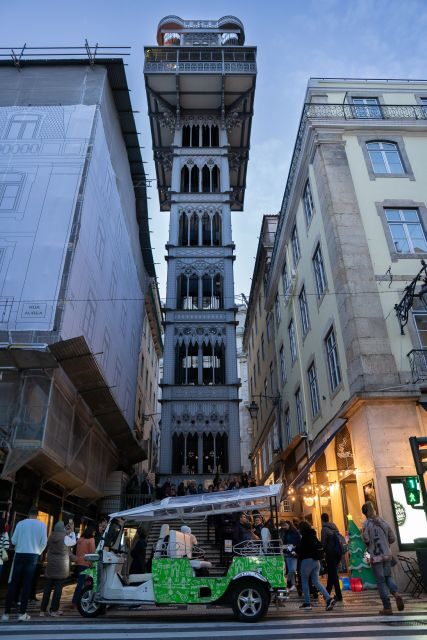
These are helpful when you want Lisbon to feel like a complete city, not only a historic district maze. Squares give you breathing space and easy orientation. And seeing Elevador da Bica adds that fun Lisbon flavor: the city’s “vertical travel” is part of its identity.
Practicalities that make or break the experience
This tour is designed around comfort and clarity, which you’ll notice in small ways.
Audio and communication: a speaker helps you hear the guide even while the tuk-tuk is moving. That matters more than you’d think, especially if the streets get busy or the guide is switching languages.
Weather readiness: transparent waterproof covers and blankets for colder days mean you’re not trapped in a “cancel or suffer” situation. You still get panoramic views.
Group size: up to 6 people keeps things personal enough for a private-group feel, without the awkwardness of a one-person tour that’s forced into a rigid plan.
Practical limit: the electric tuk-tuk can accommodate up to 6 people with a maximum weight of 400kg. If you’re traveling with multiple people, it’s good to confirm everyone is within comfort limits for the ride.
Languages and guide style: what you should look for
The tour is offered in English, French, Italian, Portuguese, and Spanish. That’s a strong range for visitors who want their guide to match their language comfort level.
One of the most praised parts of this experience is the guide’s energy and clarity. The name Adriana shows up repeatedly, associated with a great mood, strong kindness, and very clear communication. If you’re booking with French, you’ll especially appreciate how well she’s described as speaking the language.
That matters because a two-hour tour needs tight delivery. A guide who keeps things lively—and understandable—turns a fast ride into a story you can actually remember.
Price and value: is $70 for 2 hours actually fair?
At $70 per person for a 2-hour private-group tour, the value comes from three things you’d otherwise have to piece together:
- Hotel pickup and drop-off (so you don’t waste time coordinating transit)
- A guided route through multiple districts and viewpoints
- A weather-friendly vehicle with panoramic visibility plus audio support
If you’re only spending one or two days in Lisbon, this is the kind of spend that can save time and reduce stress. You’re not just paying for the tuk-tuk—you’re paying for an efficient route that helps you decide what to revisit afterward.
The tradeoff is also clear: it’s short. You won’t get a long, slow, sit-and-stay experience in one neighborhood. It’s a sampler designed to point you toward your next move.
What you need to know before you go
This tour includes ginjinha tasting, which is a fun local touch that feels more authentic than a generic snack. It also includes blankets and the tour audio system, plus visits to main Lisbon highlights like viewpoints and Old Lisbon.
Not included are monument entry tickets and food and drinks beyond the ginjinha. So if there’s a specific site you want to go in deeply on your own, plan extra time or separate tickets.
Also note the tour isn’t suitable for:
- Children under 7
- Pregnant women
If either of those applies, you’ll want a different Lisbon option.
Should you book this Old Lisbon 2-hour tuk-tuk tour?
Book it if you want:
- a time-efficient introduction to Old Lisbon
- a guided route through Alfama, viewpoints, and major landmarks
- a comfortable ride with rain-ready covers and clear audio
Skip it if you want:
- lots of time to linger in fewer places
- an unhurried museum-style day
- to travel with participants under 7 or if anyone is pregnant
For most first-timers and busy travelers, this is a practical way to learn Lisbon’s layout and feel the neighborhoods in a short window. Then you can return on foot where you felt the strongest pull.
FAQ
How long is the Tuk Tuk Lisbon Old Lisbon tour?
It’s a 2-hour tour. Starting times vary, so you’ll want to check availability for your preferred time.
What does the tour cost?
The price is listed as $70 per person.
Is hotel pickup and drop-off included?
Yes. Hotel pickup and drop-off are included, and pickup/drop-off can also be arranged at the customer’s choice.
Where does the tour start and where does it end?
It starts with pickup at one of two pickup location options and ends at Rossio Square.
Is entry to monuments included?
No. Monument entry tickets are not included.
What’s included during the tour besides sightseeing?
Hotel pickup/drop-off, a speaker for the guide, blankets for cold days, the tuk-tuk ride with panoramic covers, and a ginjinha tasting are included.
Is the tuk-tuk electric and weather-ready?
Yes. The tour uses a 100% electric tuk-tuk with transparent and waterproof covers, designed to keep the view even on rainy days.
What languages are available for the live guide?
The live guide options listed are English, French, Italian, Portuguese, and Spanish.
Is this tour suitable for children?
No. It’s not suitable for children under 7 years old.
What’s the cancellation policy?
Free cancellation is available up to 24 hours in advance for a full refund.