REVIEW · LISBON
Tour Évora and Alentejo in a private tour
Book on Viator →Operated by Kitzel Tours Portugal · Bookable on Viator
Cork, bones, and a Roman temple. This private day trip is interesting because it stacks the best of Évora into one calm, guided route, with round-trip hotel pickup and a plan you can adjust. I especially like the cork factory stop—it’s hands-on and makes cork make sense fast—and I like that the pacing stays private, not jammed into bus-tour timing. The main drawback is the time: Évora is far enough from Lisbon that you’ll spend a solid chunk of your day on the road.
Évora itself is the reason this works. The walled historic center is a UNESCO site, with narrow lanes and layers of Roman, Celt, Arab, Jewish, and Christian influences, plus that 15th-century golden-age feeling from when Portuguese kings lived here. With a guide, you don’t just “see monuments”—you connect the dots.
Plan your expectations on logistics. Some sights have free entry, but others require tickets (notably the Chapel of Bones, and the Cathedral is listed as ticketed), and lunch isn’t included, so you’ll want to coordinate where you’ll eat. Still, the included transport, insurance, and Wi‑Fi on board keep the day easy.
In This Review
- Key highlights you’ll feel right away
- Why Évora Works as a Day Trip From Lisbon
- Private Pickup and a Comfortable Ride in the Alentejo
- Corticarte Cork Factory: From Cork Oak to Wine-Ready Stoppers
- Inside Évora’s Historic Center and the Água de Prata Aqueduct
- The Chapel of Bones and São Francisco Church: Big Feelings, Great Craft
- Praça do Giraldo and the Church of Graça: Local Power in Stone and Figures
- Temple of Diana and Évora Cathedral: Roman Lines to a Cathedral Dome
- Diana’s Garden: A Calm Finish Right by the Roman Temple
- Timing, Entrance Fees, and Lunch Planning
- What Makes This Private Tour Good Value
- Should You Book This Évora and Alentejo Private Tour?
- FAQ
- How long is the private tour to Évora and Alentejo?
- What time does pickup start?
- What’s included in the price?
- Is lunch included?
- Are entrance fees included?
- Is this tour private?
- What language is the tour offered in?
- Does it include hotel pickup and drop-off?
- Is free cancellation available?
- Is the tour suitable for most people?
Key highlights you’ll feel right away
- Corticarte cork visit: see cork extraction and how it becomes everything from wine stoppers to sports and home materials
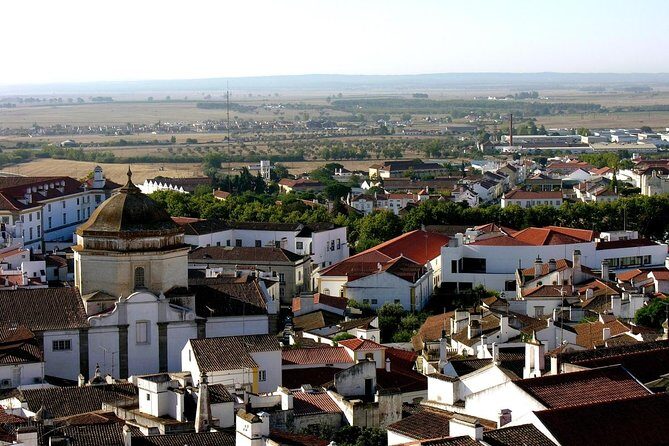
- UNESCO walled center: medieval streets plus white houses, tilework, and wrought-iron balconies
- Chapel of Bones: a shockingly direct meditation on mortality (with human bones and skulls)
- Gothic-Manueline churches and Roman monuments: São Francisco, the Temple of Diana, and the Cathedral all in one circuit
- Renaissance engineering at the Água da Prata Aqueduct: built for water supply in 1537, about 18 km of reach
- A flexible private day: you can shift pacing and focus while still hitting the big anchors
Why Évora Works as a Day Trip From Lisbon
Start at 8:30am, and you’re back the same day. That’s the big promise here: you get a full Emblem-and-Architecture sampler of Évora without needing an overnight plan.
Why Évora makes sense for a one-day format is simple. The historic core is compact inside medieval walls, and your route is designed to move you between standout stops—cork factory first, then monuments clustered in and around the city center. Even with travel time, you’re still doing more than “one church and a photo.” You’re getting a sequence: Roman remains and aqueducts, medieval religious sites, then the cathedral and its visual payoffs.
Also: cork is the right opener. When you start with cortiça (cork oak material), you get a local lens for the region. Alentejo is not just stone buildings; it’s also industries that shaped everyday life and trade.
You can also read our reviews of more private tours in Lisbon



Private Pickup and a Comfortable Ride in the Alentejo
This is built around convenience. Pickup and drop-off happen at your accommodation (including hotels, apartments, and Porto de Cruzeiros), and you travel by air-conditioned private vehicle. Wi‑Fi on board helps if you want to map a little on the way or just rest your eyes.
In practice, the car time matters because you’re leaving Lisbon early and driving out and back. Expect a full-day rhythm: early start, a concentrated site circuit, and a later return than you might get on shorter Lisbon excursions.
Corticarte Cork Factory: From Cork Oak to Wine-Ready Stoppers
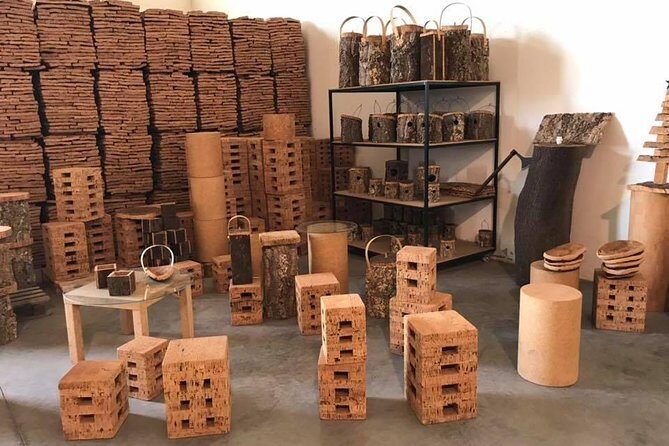
The cork stop is more than a showroom. At Corticarte – Arte em Cortica, you learn the full process, starting with the cork oak tree and moving through extraction, preparation, and what becomes the final products.
Here are the details that make it click:
- Cork oak bark grows back yearly, and it’s harvested by stripping the bark about every nine years
- The removed bark can reach around 25 cm thick, and it’s valued for resistance to heat, cold, and fire
- Portugal produces about 55% of the world’s cork, so this isn’t a niche craft here—it’s a real regional engine
- Wine stoppers get a special explanation: cork lets tiny amounts of oxygen interact with wine so it can age while keeping quality
You’ll also see that cork isn’t only for wine. The way cork can become things like flooring and decorative panels, sporting goods (the tour mentions baseball-related use), and even fishing-gear related products shows how versatile the material is.
Practical tip: if you like souvenirs, this is where you’ll find the most meaningful purchases—items that actually connect to the process you just saw, not just generic “made in Portugal” branding. Give yourself time here for questions and browsing; the guided explanations make the products more understandable.
Inside Évora’s Historic Center and the Água de Prata Aqueduct
After the cork factory, you’re straight into the UNESCO core: the Centro Histórico de Évora. Think medieval walls enclosing a living city-museum feeling—narrow streets, patios, wide lanes, and layers from multiple civilizations.
The city’s timeline is part of the experience. Évora’s central nucleus preserves traces connected to Roman times, then later influences from Celts, Arabs, Jews, and Christians. It hit a golden stretch in the 15th century when it became a residence for Portuguese kings. The look you’ll notice as you wander is very specific: white houses, tilework, and wrought-iron balconies that date from the 16th to 18th centuries.
Time-wise, you’ll also hit the Água de Prata Aqueduct (Aqueduto da Água da Prata). This one is easy to overlook if you’re rushing, so it helps that the guide threads it in. It’s Renaissance hydraulic engineering with a clear purpose: supplying water to Évora. Inaugurated in 1537 under King João III and designed and built by the royal architect Francisco de Arruda, it carries water from springs in the Graça do Divor area to the city—about 18 km of transport.
What I like about including an aqueduct in a city walk is that it shifts you from “buildings only” to “infrastructure and survival.” In a region with heat, water systems weren’t optional. They shaped where people lived and how cities functioned.
The Chapel of Bones and São Francisco Church: Big Feelings, Great Craft
The Chapel of Bones is the stop that changes the mood.
You’re looking at a chapel lined with human bones and skulls—estimated to include more than 5,000 monks. The tone is not meant to be theatrical; it’s built for reflection on life and death. The entrance explanation points you toward that mindset, so go in expecting a quiet, slightly eerie moment rather than a normal church visit.
Give yourself the full time here. Even if you don’t like dark symbolism, it’s one of those experiences that makes Évora memorable in a way a “pretty façade” won’t.
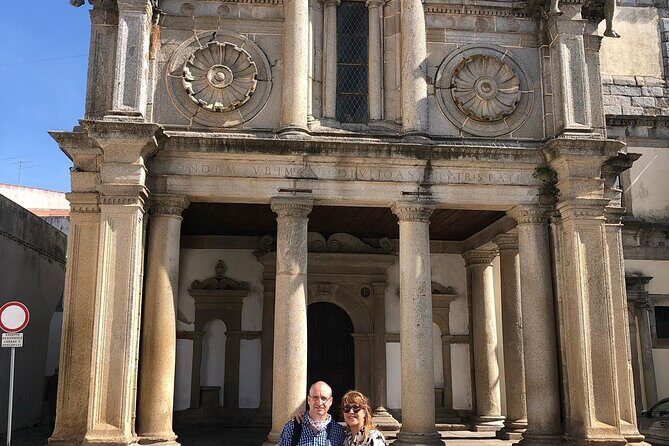
Then you pivot to São Francisco (Igreja de São Francisco). This church is Gothic-Manueline, built between 1480 and 1510, with stone masters Martim Lourenço and Pero de Trilho, and decoration tied to royal painters Francisco Henriques, Jorge Afonso, and Garcia Fernandes. The maritime expansion connection is a nice detail because it explains why the church feels loaded with meaning beyond local devotion.
Look for the symbols on the monumental nave: the cross of the Order of Christ and emblems connected to D. João II and D. Manuel I. That’s where the architecture becomes a historical document you can see.



Praça do Giraldo and the Church of Graça: Local Power in Stone and Figures
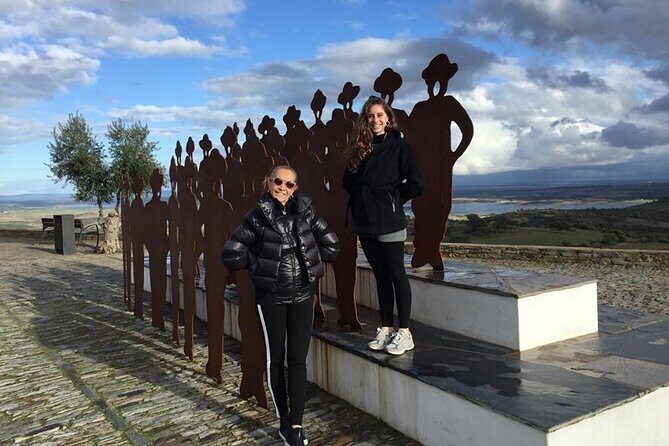
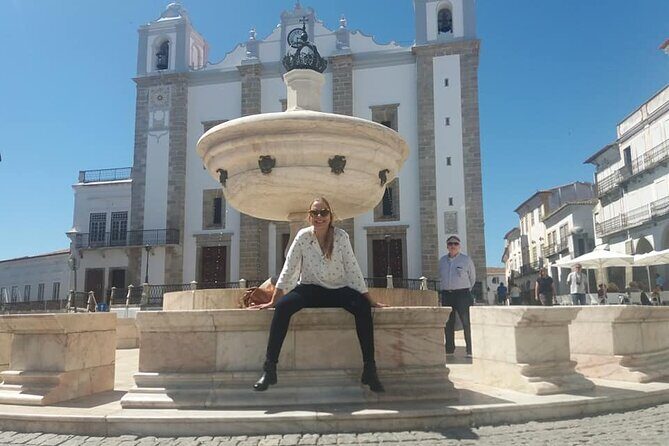
Praça do Giraldo is the kind of square that makes you understand how cities work. It’s the civic center where major streets funnel people toward a focal point. The square dates to 1571/1573 and honors Geraldo Geraldes, known as Sem Pavor, who conquered Évora from the Moors in 1167. He was then named mayor and frontier leader for the Alentejo region.
This isn’t just a statue moment. It gives you a way to interpret the layout of the town: power, defense, and administration all mapped onto public space.
A little later you’ll reach the Church/Convent of Graça (Nossa Senhora da Graça). It’s a Renaissance religious monument founded in 1511 by Augustinian hermit monks and designed by Miguel de Arruda. The façade features the famous Atlantean figures the locals call Meninos da Graça. These stone “boys” aren’t decorative for decoration’s sake—they add personality and a sense of local identity to the architecture.
If you like face-to-face details (the kind you might miss alone), this stop rewards you. It’s also one of the better moments to slow down, because the façade tells its story.
Temple of Diana and Évora Cathedral: Roman Lines to a Cathedral Dome
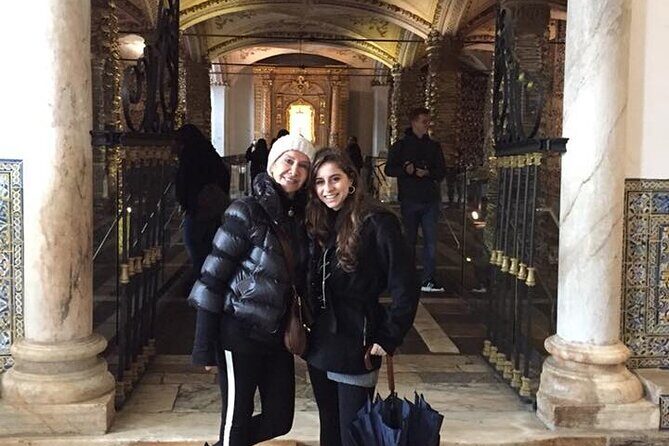
Temple of Diana (Templo Romano de Evora) is a signature moment. This Roman temple sits near the cathedral area, and it helps you see Évora as a city with layers—Roman presence followed by centuries of reinvention.
It’s also visually paired with the aqueduct story of the region. From nearby, you can spot the “Water of the Silver” aqueduct area outside the city walls, with some arches still visible inside the city. Your tour weaves this into the Temple-of-Diana viewpoint so it doesn’t feel random.
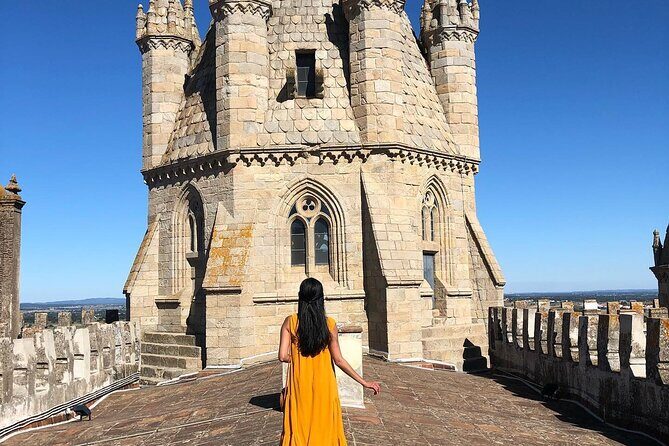
Then it’s on to the Se Catedral de Evora. This cathedral is granite, imposing, and built across a transition period—Romanesque moving into Gothic. Construction started in 1186, it was consecrated in 1204, and it was completed in 1250.
The two towers on the façade are medieval. The south tower is the bell tower that rings on city time. The portals also carry sculptures of 14th-century Apostles by Mestre Pêro, which gives the front of the cathedral an extra “read this slowly” feel.
Now for the part you’ll talk about later: the dome. The Cathedral’s lantern tower is described as resembling a ship’s cruise from the reign of D. Dinis, crowned with a stone scales needle. It’s not just pretty—it’s a strange and memorable detail that makes the cathedral feel like it has personality, not only age.
Heads up: the Cathedral is listed as ticketed. Your guide will handle the flow so you’re not left figuring it out on your own.
Diana’s Garden: A Calm Finish Right by the Roman Temple
To wrap the city circuit, you’ll spend time at Diana’s Garden (Jardim de Diana). It sits in the cultural center and is planned to harmonize with the Roman Temple of Diana.
This stop is useful because it turns the day from “inside monuments” to “outside breathing space.” If your feet are tired, this is the kind of place where you can sit, look, and let the sights settle into place.
It’s also a natural ending point for photos—especially after the intensity of the Chapel of Bones and the scale of the cathedral.
Timing, Entrance Fees, and Lunch Planning
This day is efficient, but it’s not automatic. You’ll see both free and ticketed sites, so budget for some entrances even if several major stops are listed as free.
From the tour details:
- Cork factory entry is listed as free
- Many city stops are listed as free (historic center, several churches/temple viewpoints)
- Chapel of Bones: ticket not included
- Cathedral of Évora: ticket not included
- Museums tickets are listed as about €10.00 per person
Lunch is not included, and that matters because it changes how you should plan your day. If you arrive hungry, you’ll want a strategy: eat something simple inside the walled city or ask your guide for the best match for your tastes and pace. The private setup is helpful here because you can take a lighter meal and keep exploring rather than getting forced into a set sit-down program.
Also, for comfort: wear shoes you can handle on uneven old-stone streets. Évora’s charm comes from lanes and steps, not smooth sidewalks.
What Makes This Private Tour Good Value
At $169.31 per person, this isn’t a budget “grab-and-go” ticket. It’s closer to buying time and reducing friction.
You’re paying for:
- A private guide who stays with you through the full monument circuit
- Round-trip transport with pickup and drop-off at your accommodation
- Air-conditioned private vehicle and Wi‑Fi on board
- Compulsory insurance
Now add the structure: cork factory education plus major architectural anchors in the historic core. If you tried to replicate this yourself, you’d spend on transportation, lose time hunting tickets, and likely spend more energy coordinating fewer meaningful stops.
Value also comes from pacing. A private guide can adjust the day when you want to linger—say, on cathedral details or on the aqueduct viewpoint—without the pressure of a fixed group schedule.
The other quiet value factor: demand seems steady. The experience is commonly booked about 57 days in advance, so if your dates are tight, locking it in early can keep your options open.
Should You Book This Évora and Alentejo Private Tour?
Book this if you want a one-day Évora hit that goes beyond a checklist. It’s a strong choice for couples, friends, and small families who like architecture, a human-size historic town, and the one-two pairing of cork-making with landmark sights. The cork factory stop is also a great match if you like local industries and want a souvenir with a story.
Skip it if you’re not excited by longer driving days. This is a full-day route from Lisbon, and you’ll feel that in your schedule. Also, if you expect lunch to be fully handled, plan to sort food yourself since it isn’t included.
FAQ
How long is the private tour to Évora and Alentejo?
The tour is about 9 hours long.
What time does pickup start?
Pickup starts at 8:30am.
What’s included in the price?
The private guide, air-conditioned vehicle, private transportation, pick up and drop off at your accommodation, compulsory insurance, and Wi‑Fi on board are included.
Is lunch included?
No. Lunch is not included.
Are entrance fees included?
Some sites are listed as free, but not all. Chapel of Bones is not included, and Cathedral of Évora is listed as ticketed. Museum tickets are listed as about €10.00 per person.
Is this tour private?
Yes. It’s a private tour, and only your group participates.
What language is the tour offered in?
It’s offered in English.
Does it include hotel pickup and drop-off?
Yes, pickup and drop-off are included at your accommodation (including hotels, apartments, and Porto de Cruzeiros).
Is free cancellation available?
Yes. You can cancel up to 24 hours in advance for a full refund.
Is the tour suitable for most people?
The tour notes that most people can participate. It also states it’s near public transportation.