REVIEW · SETUBAL DISTRICT
South of Lisbon : Local Market & Canned Sardines Factory Tour
Book on Viator →Operated by Follow Me - Portugal Tours · Bookable on Viator
Setúbal hits you fast, in the best way. This 3-hour walk strings together viewpoints, market life, and factory-era sardine culture, so you get a real feel for the city without burning an entire day. I especially like the mix of free stops and the two ticketed sights that give context behind Setúbal’s famous fish.
My favorite part is the guided storytelling from Raquel—professional, calm, and clear—and it makes the city’s details click quickly. I also love that you’re not stuck in one museum room: you bounce between the viewpoint at Miradouro de São Sebastião, the working vibe of Mercado do Livramento, and the church interior at the former Monastery of Jesus.
One possible drawback: the whole route is a walking tour with short stays at many stops, so if you want long, slow time in one place, you may feel slightly rushed.
In This Review
- Key highlights you’ll feel right away
- Setúbal in three hours: views, fish, and old streets
- Miradouro de São Sebastião: get your bearings fast
- Museu do Trabalho Michel Giacometti: sardines, tools, and real work
- Arrábida Roman Ruins at Ask Me Arrábida: a quick time-travel hit
- Mercado do Livramento: where local products tell the story
- Praça do Bocage and the historic-center thread
- Convent of Christ at the former Monastery of Jesus: the longer payoff
- Troino fishing neighborhood: see the Setúbal that matches the sardines
- Igreja de São Julião: finishing with a calm, local touch
- Price and value: $74.10 for a guided Setúbal sampler that pays off
- Who should book this tour—and who might skip it
- Should you book South of Lisbon’s Local Market and Sardines Factory Tour?
- FAQ
- How long is the tour?
- What does the tour include?
- Where does the tour start and end?
- Is the tour offered in English?
- Is this a private tour?
- How much does it cost?
- What is the cancellation policy?
- Do I get confirmation after booking?
- Is the meeting point near public transportation?
- FAQ (booking and practical questions)
- Is there a mobile ticket?
- How far in advance is it typically booked?
Key highlights you’ll feel right away
- Miradouro de São Sebastião first: you get the skyline and river feel early, so the rest of the walk makes sense.
- Museu do Trabalho Michel Giacometti: a sardine canning factory museum tied to Portuguese labor and tools.
- Ask Me Arrábida Roman Ruins: a quick, easy hit of ancient atmosphere.
- Mercado do Livramento + Praça do Bocage: market sights and historic-center energy without overplanning.
- Former Monastery of Jesus (Convent of Christ): the one longer paid stop that gives you a payoff.
- Troino fishing neighborhood walk: you see the side of Setúbal that actually fits the seafood story.
Setúbal in three hours: views, fish, and old streets
This tour is built for getting oriented quickly. You start at a major lookout—Miradouro de São Sebastião—and you’ll understand where you are in Setúbal within minutes. Then the route steps you through the city’s daily rhythm: market, squares, churches, and the fishing neighborhood called Troino.
What makes this format work is the pacing. The paid museum and church give depth, while the free streets-and-sights stops keep the experience lively and you’re always moving toward the next point of interest. It’s a smart way to see more than just one attraction.
If you like tours that feel practical—like someone is helping you see what matters—you’ll probably enjoy this one. Expect a guided walk with multiple short stops, not one giant deep museum session.
You can also read our reviews of more tours and experiences in Setubal District.



Miradouro de São Sebastião: get your bearings fast
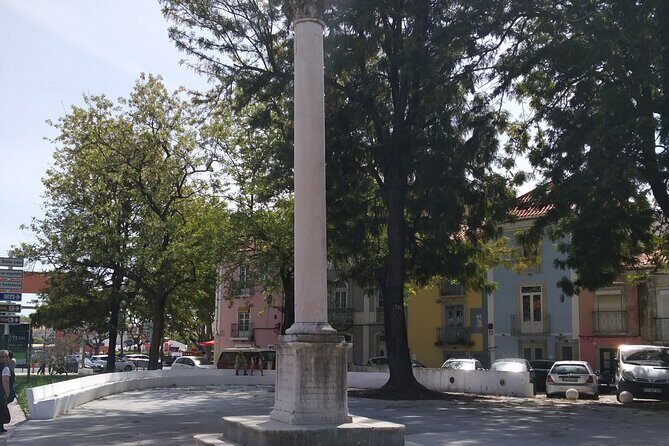
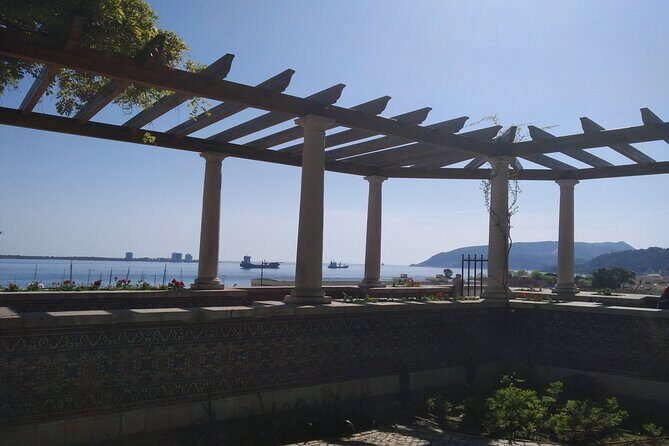
Your first stop is Miradouro de São Sebastião, and it’s a classic move for a reason. In about ten minutes, you get one of the best views of Setúbal, which helps you read the city as you walk. Even if the viewpoint time feels short, the payoff is huge: you’ll know what direction everything sits in and why certain spots look the way they do.
This is also where the “walking tour” becomes more than just moving between addresses. A good first view turns later sights—markets, waterfront neighborhoods, and historic streets—into something you can place in your mind.
Tip: wear shoes you trust. You’re on a short timetable, and viewpoints tend to have uneven bits, so comfortable footing matters.
Museu do Trabalho Michel Giacometti: sardines, tools, and real work
The museum stop is where the tour earns its name. Museu do Trabalho Michel Giacometti is a museum of labor heritage, and it’s connected to the sardine canning industry. The setting matters: it’s located in a former canning factory, which means the rooms and exhibits don’t feel like generic displays.
You’ll spend around fifteen minutes here, which is just enough time to understand the big idea: sardines weren’t just a product, they were a whole system of jobs, tools, and craft. You’ll see objects and equipment connected to the tradition, and you’ll come away with a clearer sense of how Setúbal’s economy and identity link to the sea.
The smart value play is that this admission is included. You’re not paying extra for this core theme, and the museum gives you context you can carry into the rest of the walk—especially the market stops.
Small consideration: because the museum time is limited, you won’t see every single item in exhaustive detail. If you’re the type who likes to read every label slowly, you might want to return on your own after the tour.
Arrábida Roman Ruins at Ask Me Arrábida: a quick time-travel hit
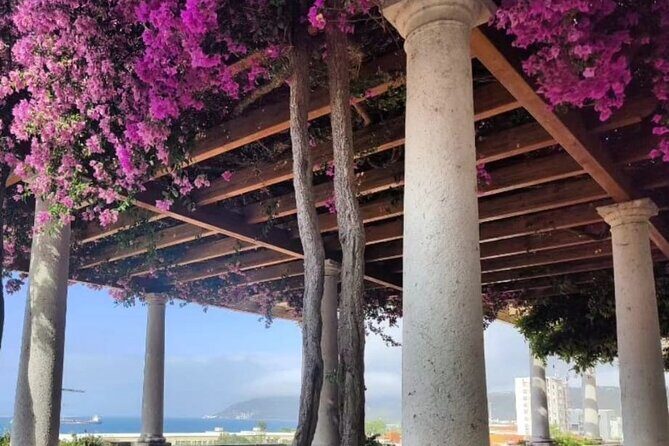
Next comes Ask Me Arrábida, Roman Ruins. This is a shorter stop—about ten minutes—and that’s exactly how it works best here. You’re not trying to complete a full archaeology visit; you’re grabbing a snapshot of ancient presence that keeps the tour varied.
Even in a short visit, ruins change the vibe of the route. Setúbal starts to feel layered: labor heritage and religious sites in the center, and older traces when you step into this stop.
If you want a tour that doesn’t bounce only between food and churches, this stop helps. It breaks the rhythm without taking up a long chunk of your day.
Mercado do Livramento: where local products tell the story
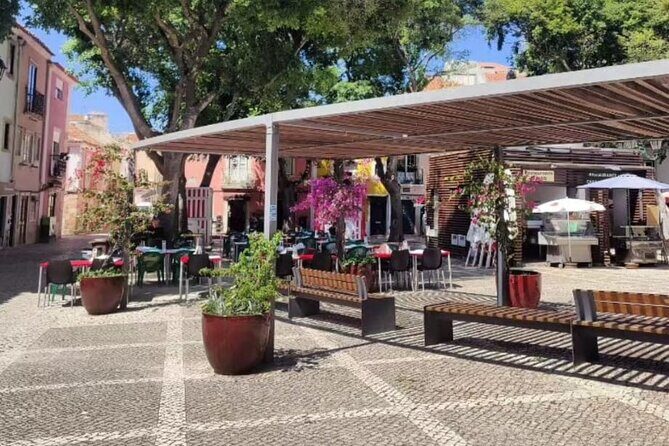
Then you’re at Mercado do Livramento, one of Setúbal’s best-known markets. This is where the tour turns practical. You’ll see fish and seafood, but also other local products, plus the look of Portugal in small details like tiles.
Markets can be noisy and crowded in real life, but on a guided walk you’re not left alone to figure out what you’re seeing. The benefit is that you’ll know where to look: what’s typical, what stands out, and how the market connects to the city’s seafood identity.
This is also a great moment for a quick snack plan. The tour itself doesn’t mention a tasting component, so you may want to decide on your own whether to buy something right there. Either way, you’ll leave with stronger opinions about what you want to eat next—because you’ve just seen the options laid out in front of you.


Praça do Bocage and the historic-center thread
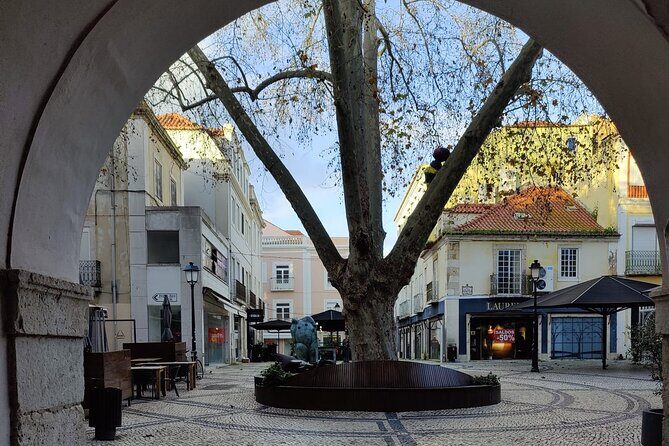
From the market area, the route carries you toward Praça do Bocage, the heart of the historic center. You’ll spend about twenty minutes here, and that timing is ideal: long enough to absorb the square, short enough that you don’t lose momentum.
You’ll also pass by cultural stops along the way, including Casa da Cultura and the Setúbal Tourism House. Even if you don’t go inside, they help reinforce that this isn’t only a “pretty streets” stop—it’s a city that organizes culture right in the center.
Add to that Ave. Luísa Todi (about five minutes) and you get a sense of where people walk, meet, and live. These are the kinds of details you’d miss if you only focus on one big headline attraction.
Convent of Christ at the former Monastery of Jesus: the longer payoff
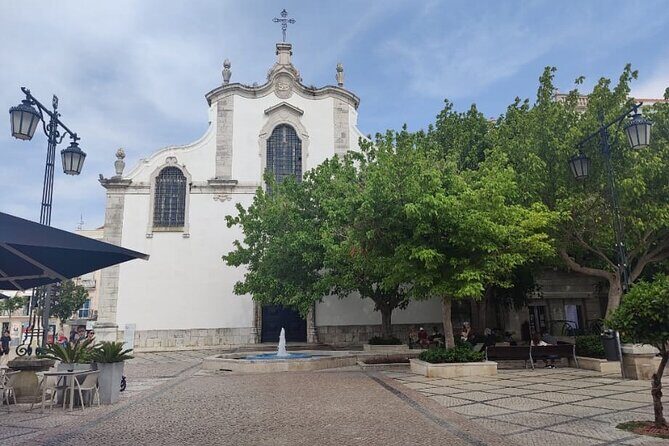
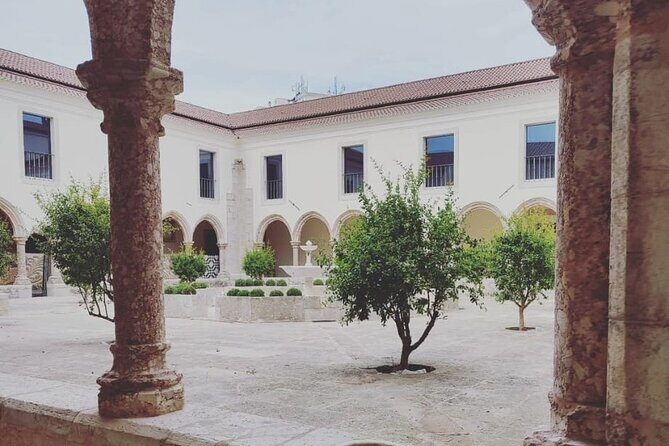
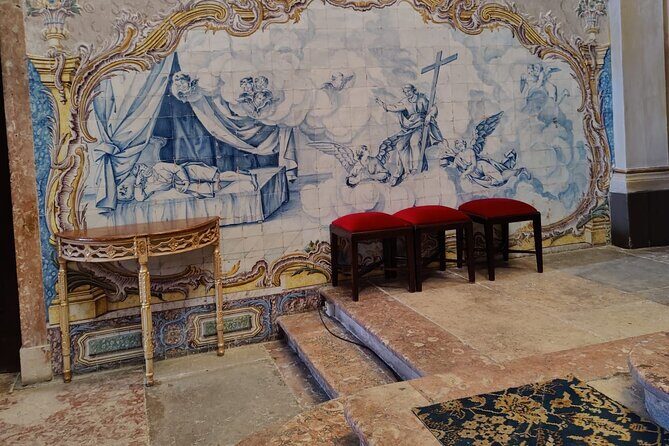
Stop seven is the big interior moment: the Church of the former Monastery of Jesus—connected with the Convent of Christ—and it comes with included admission. You’ll have about fifty minutes here, which is notably longer than most other stops.
This is the part where the tour gives you space to slow down. Churches and monastery interiors can be visually dense, and when you’re spending almost an hour you’ll likely get past the “look and move on” stage. Instead, you’ll take in what matters: structure, atmosphere, and the feeling of how religion shaped the city’s public life.
Drawback to flag: if you don’t enjoy spending time in churches or interiors, this will be the hardest stop to tolerate. On the other hand, if you like architecture, spiritual art, or just understanding a place’s past, this is the payoff stop.
Troino fishing neighborhood: see the Setúbal that matches the sardines
After the monastery, you head into Troino, the historic fishing neighborhood. This segment is about thirty minutes. It’s a smart choice because it connects the dots.
When you’ve just learned about the sardine canning tradition, Troino feels more meaningful. You’re not just looking at “old houses.” You’re walking through a part of town shaped by fishing life—exactly the context the museum is trying to help you understand.
Troino also works well as a photo walk without turning into a pure photo shoot. You’ll notice street scale, how people move through the neighborhood, and where sight lines lead you. It makes the earlier museum and market stops feel less random.
Igreja de São Julião: finishing with a calm, local touch
To close out the main route, you visit Igreja de São Julião. It’s a short stop—about ten minutes—and it functions like a gentle landing. You’ve gone from viewpoint to industry to markets to major interior space; this is your last chance to tune into a local, everyday Setúbal church moment before the tour ends at Troino.
Short stops can feel like blur, but this one is useful. You get a final historic anchor without adding a long time commitment.
Price and value: $74.10 for a guided Setúbal sampler that pays off
At $74.10 per person for about three hours, the first question is simple: what are you getting that’s worth paying for? The answer is that the included admissions do real work for the price.
This tour includes:
- admission to the Museu do Trabalho Michel Giacometti (the sardine canning factory museum)
- entrance fee to the Convent of Christ / former Monastery of Jesus church site
That means a chunk of your cost is tied to actual ticketed content, not just someone walking with you between free corners. The rest of the route is largely free stops—viewpoint, market time, and historic-center wandering—which is a good model for value in Portugal’s walkable cities.
Another value factor: this is described as private, meaning only your group participates. That typically makes Q&A and pace easier, and it avoids the “constant regrouping” feel you can get on larger join-in groups.
If you’re comparing alternatives, count the admissions you’d otherwise pay on your own and remember you’re also paying for a guide who helps connect the dots between Setúbal’s seafood culture and the city’s historic spaces.
Who should book this tour—and who might skip it
Book this if you want:
- a fast orientation to Setúbal’s center and fishing areas
- the sardine story explained with an actual factory museum experience
- a guided route that mixes food culture with major historic stops
- a group format that stays contained (private group)
Consider skipping or pairing it with extra time on your own if you:
- hate churches or interiors (the Monastery/Convent site is the longest stop)
- prefer slow travel in one place instead of short stops throughout a walk
- need long market free time for shopping, since the market segment is capped
It’s also a solid pick if you like English-language guidance and want someone to help you see what matters quickly. Raquel’s feedback in the reviews points to clear, professional pacing—exactly what you want in a city walk where you’re moving every few blocks.
Should you book South of Lisbon’s Local Market and Sardines Factory Tour?
I’d book it if you want a practical introduction to Setúbal that doesn’t treat seafood as a generic theme. The combination of a sardine canning factory museum, a major church interior, and the market-and-neighborhood walk gives the day structure and meaning.
If you’re the type who needs more time in fewer places, you might do better with a museum-focused plan plus a separate longer market evening. But for a half-day window, this tour is a strong value: ticketed sights are included, the route stays walkable, and Raquel’s delivery makes the whole experience feel coherent.
FAQ
How long is the tour?
The tour runs for about 3 hours.
What does the tour include?
It includes a walking tour, admission to the sardine conservation factory/museum, and the entrance fee to the Convent of Christ.
Where does the tour start and end?
It starts at Miradouro de São Sebastião (R. Forte, 2910 Setúbal, Portugal) and ends in Troino (2900-112 Setúbal, Portugal).
Is the tour offered in English?
Yes, it’s offered in English.
Is this a private tour?
Yes. Only your group will participate.
How much does it cost?
The price is $74.10 per person.
What is the cancellation policy?
You can cancel for a full refund up to 24 hours in advance. If you cancel less than 24 hours before the start time, the amount paid is not refunded.
Do I get confirmation after booking?
Yes. Confirmation is received at the time of booking.
Is the meeting point near public transportation?
Yes, it’s described as near public transportation.
FAQ (booking and practical questions)
Is there a mobile ticket?
Yes, the tour offers a mobile ticket.
How far in advance is it typically booked?
On average, it’s booked about 37 days in advance.